DRIFT AUDIO
Listen to this story
Choose a voice, then press play.
Four songs cut during the Songs in the Key of Life sessions reached streaming at 4:54 a.m. Pacific on the album’s 50th birthday, each one chosen by Wonder himself.
Somewhere in the small hours of the final studio session for Songs in the Key of Life, bassist Nathan Watts looked at the clock, saw 4:54, and shouted it out. Fo’FiftyFo’ stuck. From then on the phrase told everyone in Stevie Wonder‘s orbit that a session was over, and it has survived as an inside joke among his musicians ever since. On Monday, September 28, the album’s 50th anniversary, the same timestamp was put to the opposite use: at 4:54 a.m. Pacific, four recordings from those sessions that had never been released went live on streaming services.
Signal. What happened: Stevie Wonder released four previously unheard recordings from the Songs in the Key of Life sessions, selected by him personally and newly mixed by the album’s original engineers. Exact object: a four-song anniversary EP made up of “It’s Easier” (5:09), “My Life Story of Love” (3:59), “I Can See the Sun In Late December” (4:37) and “I’m Into Livin'” (5:45). When and where: on streaming services worldwide from 4:54 a.m. Pacific on September 28, 2026, through the official listening link. Source: the official announcement issued alongside the release. Why it matters: the EP opens a door on sessions long said to have produced far more material than the 21 songs that made the finished package, and it arrives two weeks before Wonder starts performing the album in full on an 18-date tour.
The set runs about nineteen and a half minutes, bookended by its two longest pieces. According to the official announcement, the recordings were mixed recently by John Fischbach and Gary O Adante, the same two engineers who recorded and mixed the original album. Adante’s name may look unfamiliar to anyone who has studied the 1976 sleeve, because he was credited there as Gary Olazabal. Fischbach’s connection to the record runs past the mixing desk, too: the original liner notes list him among the percussionists on the album’s trilingual “Ngiculela” medley.
The rel also chips at one of the longest-running questions about the record. Accounts of the era have long held that Wonder’s two-year stretch on the album produced far more than the 21 songs eventually pressed, with some tallies running as high as 200 songs in varying states of completion. Four is a modest number against that figure. It is also four more than anyone outside his circle had officially heard until this week.
the share
Wonder handled the selection himself rather than leaving it to a label archive team. In a statement issued with the release, he said the songs never made the album but “were part of what I was feeling and discovering as we made it.” He described the recordings as a way back into that period of his life, now handed over to listeners, and noted that even after fifty years with the finished record there is more left to hear.
Every track was written and produced by Wonder. The only other writing credit on the EP belongs to Susaye Greene, who co-wrote the lyrics to “My Life Story of Love.” Greene was a Motown artist and a former member of The Supremes, and she is already woven into the album people know: her voice is among the backing vocals on “Joy Inside My Tears.” Her songwriting partner with Wonder would later produce “I Can’t Help It,” which the two wrote for Michael Jackson.
The official notes describe the four selections as moving between contemplation, the pain and joy of living, and the beauty of love. That maps closely onto the ground the finished album covers, a record that ranged across faith, romance, childhood memory, parenthood, inequality and racial discrimination, sometimes within a single side of vinyl. Beyond the credits and running times, the announcement offers little in the way of track-by-track explanation, leaving the songs to speak for themselves.
people
The personnel list reads like a snapshot of Wonderlove, Wonder’s band, at a moment when several careers were only beginning. Keyboardist Greg Phillinganes was, per the release notes, at the very start of his professional life with the group. He turns up throughout the finished album as well, on “Isn’t She Lovely,” “Joy Inside My Tears” and the bonus track “Saturn.”
Guitarists Michael Sembello and Ben Bridges, both Wonderlove members at the time, play on the new tracks. Sembello’s tie to the era goes beyond his parts: he co-wrote “Saturn” with Wonder. Bridges supplies rhythm guitar across the released album, from “Sir Duke” to “Summer Soft.”
Drummer Raymond Pounds was taking part in his first major recording sessions, the same sessions that produced his drumming on “Sir Duke” and “I Wish.” Saxophonist Jim Horn, whose credit on the original sits on “Ebony Eyes,” appears here too. Then there is Watts, the man behind the timestamp. His first studio work with Wonder followed a stretch on the road together and opened a partnership that, according to the announcement, is still going. Watts carries the bass on “Sir Duke,” “I Wish,” “As” and “Another Star,” and one well-worn story from the sessions has him getting home at 3 a.m. after a marathon day, only for Wonder to phone and ask him to come straight back to work on “I Wish.”
“I’m Into Livin'” adds a three-voice backing section. Shirley Brewer was already on the album, part of the chorus on “Ordinary Pain.” Thelma Houston was close to landing her own No. 1 with “Don’t Leave Me This Way.” And Deniece Williams, a longtime Wonderlove vocalist, was on the edge of a solo breakthrough that came quickly. In the UK, her single “Free” is the record that held “Sir Duke” at No. 2.
a triple
The record nearly never existed. In March 1975, Wonder was seriously weighing an exit from the music business and a move to Ghana to work with children with disabilities, and plans for a farewell concert were already in motion. He changed course and, on August 5, 1975, signed a new contract with Motown covering seven years and seven albums, with full artistic control. At the time it was the largest deal a recording star had ever signed. Then he took a year off.
The album was first pencilled in for around October 1975. Wonder kept remixing, the date slipped, and Motown’s marketing team leaned into the wait by printing T-shirts that read “We’re almost finished.” At one stage the working title was Let’s See Life the Way It Is.
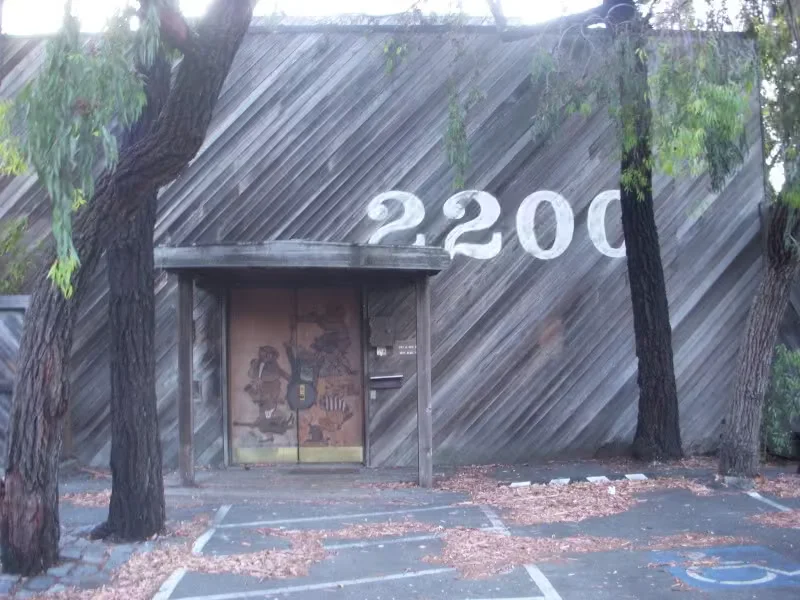
Most of the recording took place at Crystal Sound in Hollywood, where the final mix was also done, with further sessions at the Record Plant studios in Hollywood and Sausalito. When Crystal Sound had a prior booking with another artist, the team decamped to The Hit Factory in New York City for about six weeks and came away using a single basic track from that stretch.
The scale was enormous. Around 130 people worked on the album, among them Herbie Hancock on Fender Rhodes for “As,” George Benson on guitar for “Another Star,” and Minnie Riperton alongside Williams on the backing vocals of “Ordinary Pain.” Wonder still wrote, played and arranged the majority of it himself.
When it finally arrived on September 28, 1976, through Motown’s Tamla imprint, the package was built to overflow: a double LP, a 24-page lyric and credit booklet, and a bonus 7-inch titled A Something’s Extra holding four more songs, “Saturn,” “Ebony Eyes,” “All Day Sucker” and the instrumental “Easy Goin’ Evening (My Mama’s Call).” Half a century later, the anniversary release follows the same arithmetic. Four extra songs rode along with the original. Four more arrive now.
The launch itself was staged as an event. Reporters, critics and the people who had worked on the record were brought out to Long View Farm, a recording studio in Massachusetts, for a press preview, where everyone left with an autographed copy and Wonder sat for interviews. The Village Voice‘s Pazz & Jop critics poll later named it the best album of 1976.
extend
The wait paid off immediately. The album debuted at No. 1 on the Billboard 200, only the third album ever to do so and the first by an American artist, following two Elton John records from 1975. It held the top spot for thirteen straight weeks, slipped to No. 2 behind Eagles‘ Hotel California in January 1977, then climbed back for a fourteenth week. “I Wish” and “Sir Duke” both reached No. 1 on the Hot 100.
The run blocked a crowded field. During its eleven weeks on top in 1976 alone, it kept Boz Scaggs’ Silk Degrees, Earth, Wind & Fire‘s Spirit, Led Zeppelin‘s The Song Remains the Same soundtrack and Rod Stewart’s A Night on the Town from reaching No. 1. By the end it had logged 35 weeks in the top ten, 80 weeks on the chart overall and 20 weeks at the top of the R&B albums chart, and it finished 1977 as the country’s second best-selling album, behind only Fleetwood Mac‘s Rumours.
At the 19th Grammy Awards, it won Album of the Year, Wonder’s third win in the category after Innervisions and Fulfillingness’ First Finale. A year earlier, while accepting that same award, Paul Simon had joked his thanks to Wonder for not releasing an album. Wonder wasn’t in the room to collect the prize in 1977. He was traveling in Nigeria and took the win over a satellite hook-up, with the picture so poor the audience saw little more than him smiling at a phone.
The honors kept coming long after. The Recording Academy added the album to the Grammy Hall of Fame in 2002. In 2005 the RIAA certified it Diamond, a count that treats each disc in the set as a unit, and the Library of Congress inducted it into the National Recording Registry. Rolling Stone placed it at No. 4 in its 2020 ranking of the 500 greatest albums of all time. Fellow musicians have been just as emphatic. Elton John has said he carries a copy wherever he travels, Michael Jackson named it his favorite Wonder album, and George Michael called it his favorite album of all time. Its songs have also traveled far beyond their original form: Coolio’s “Gangsta’s Paradise” reworked “Pastime Paradise,” and Will Smith built “Wild Wild West” on the bones of “I Wish.”
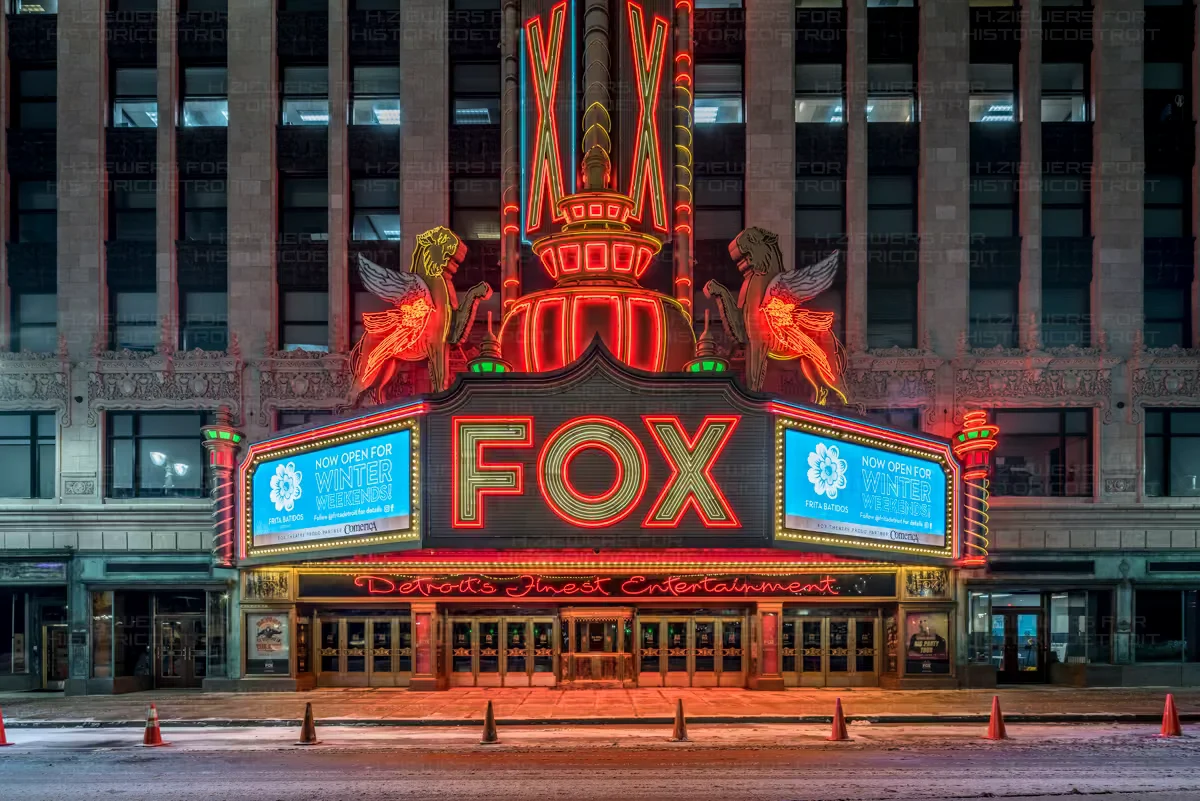
The brightly illuminated Fox Theatre marquee at night, featuring glowing red and yellow neon signs, digital displays, and ornate architectural details.
fin
The EP lands two weeks before the Songs in the Key of Life Performances, 50th Anniversary Tour gets underway. Promoted by Live Nation and produced by Wonder Productions, the run was announced on September 8 with 18 dates, and at every one of them Wonder is set to play the album in its entirety.
The European leg opens October 13 in Birmingham and moves through Paris, Copenhagen, Oslo, Stockholm, Hannover, Cologne, Amsterdam and Dublin before returning to the UK for London’s The O2 on November 3, then Manchester, then Glasgow on November 11. The U.S. leg is short: Madison Square Garden on November 19, Chicago’s United Center on November 21, and Washington’s Capital One Arena on November 23.
Detroit, the city where Wonder grew up and signed to Motown as a child, gets two nights at the Fox Theatre on December 8 and 9. Tickets for those shows went on sale September 15, several days after the other North American dates opened on September 10.
He has done this before. In December 2013, Wonder played the full album at the Nokia Theatre in Los Angeles for his 18th annual House Full of Toys benefit, with some of the original record’s singers and musicians alongside him, and in November 2014 he took the full-album show on the road across the U.S. and Canada. The new run is his first full tour since his 2024 Sing Your Song! As We Fix Our Nation’s Broken Heart concerts.
The finished album on its own runs 17 songs and close to 90 minutes. Whether the A Something’s Extra songs, or any of the four recordings released this week, will join the nightly set has not been announced. The tour closes December 19 at the Intuit Dome in Inglewood, in the same metro area where Crystal Sound’s Hollywood rooms hosted most of the sessions fifty years ago.