DRIFT AUDIO
Listen to this story
Choose a voice, then press play.
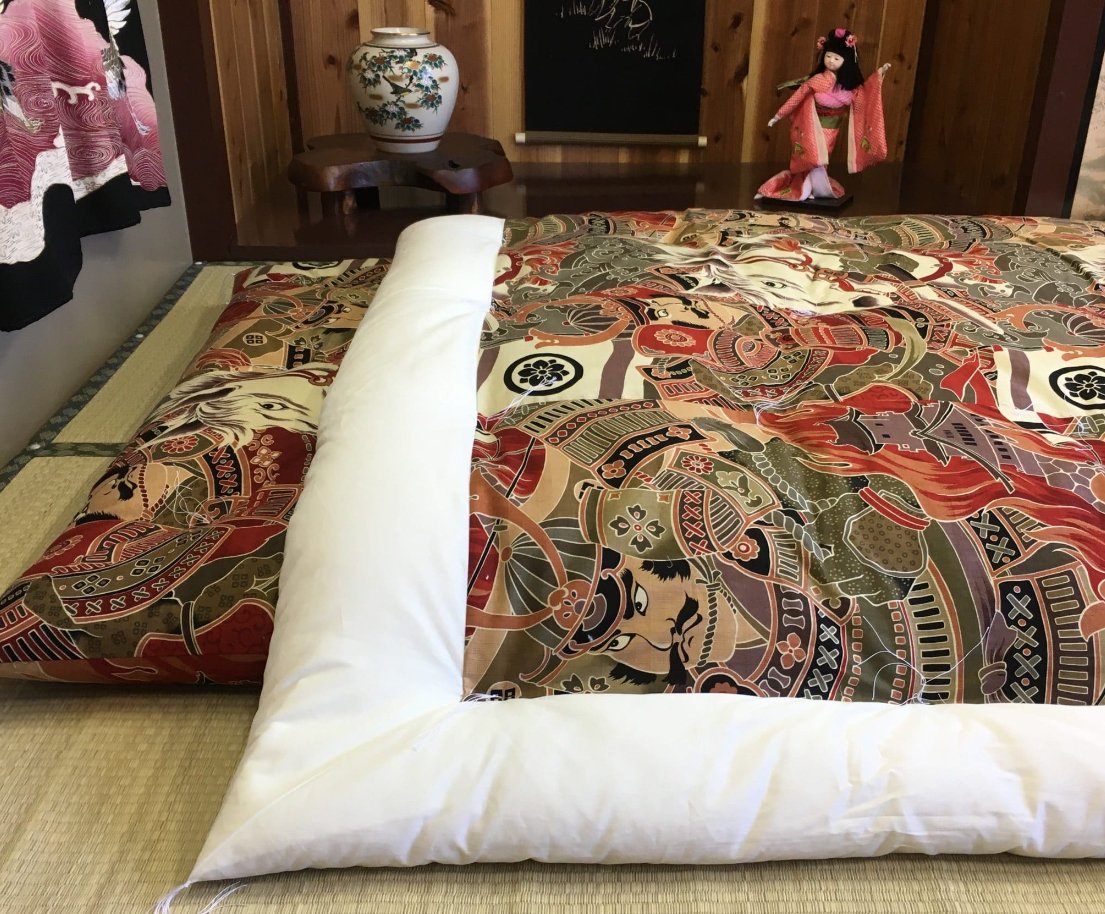
A Japanese futon is not one universal mattress or a guaranteed route to better sleep. In Japanese usage, futon can describe the complete bedding set: a foldable floor mattress, or shikibuton, and the covering quilt, or kakebuton. Its practical appeal comes from the way the set can be aired, folded and stored, allowing one tatami room to change purpose between day and night.
This guide separates the cultural history from the sales language. It explains how futons are used, how modern materials differ, what to check before buying and how to care for the bedding without damaging it.
Japanese Futon: The Essential Facts
- A futon may mean a complete set. The shikibuton is the mattress placed below the sleeper; the kakebuton is the quilt or duvet placed above.
- Traditional use is on tatami. In a ryokan or a Japanese-style room, staff commonly lay the bedding directly over the tatami in the evening and store it after use.
- Materials vary. Covers and fillings may include cotton, wool, down, polyester or a blend. “Japanese futon” does not automatically mean handmade, all-natural or biodegradable.
- Care depends on the filling. Airing frequency, sunlight exposure, washing and storage instructions differ by product.
- Firmness is personal. A floor futon can feel very different from a deep Western mattress and does not guarantee relief from back pain or other health conditions.
What “Futon” Means in Japan
Japan House London describes futon as a complete, foldable bedding set rather than only the sofa-bed commonly associated with the word outside Japan. The lower layer is the shikibuton; the upper covering is the kakebuton. A pillow and seasonal blankets may complete the arrangement.
The Japan Ryokan Association notes that the layers used with a futon change with the season. That adaptability is central to the form: it is bedding designed to be handled, aired and reorganized rather than treated as a permanent piece of furniture.
From Edo-Period Cotton Bedding to the Modern Futon
People in Japan slept on mats, layered cloth and other forms of bedding long before the modern cotton-filled futon became familiar. It is more accurate to describe the futon as an evolving tradition than as a product that has remained unchanged for a thousand years.
A cotton mattress associated with Tokugawa Ieyasu and dated to the late sixteenth or early seventeenth century survives as an Important Cultural Property in Japan’s Cultural Heritage Online. The Japan Ryokan Association also points to futon forms visible in Edo-period ukiyo-e. Wider access to cotton, changing production methods and later industrial manufacturing all shaped the bedding sold today.
Modern futons now range from artisan-made cotton sets to factory-produced products using synthetic or blended fillings. The historical connection is real, but material, thickness, construction and intended use must be checked product by product.
Materials and Construction Vary
Traditional specialists may build a futon by arranging cotton batting by hand, shaping the edges and closing the outer fabric with careful stitching. Japan House London has documented this process with fifth-generation bedding craftsperson Niwa Takuya, showing how trained hands distribute cotton to create an even surface.
That craft example should not be applied to every product carrying the futon name. A modern futon may use:
- Cotton: breathable and familiar in traditional construction, but capable of holding moisture and becoming compressed with use.
- Wool: resilient and moisture-managing, with care instructions that differ from cotton.
- Polyester or mixed fibres: common in contemporary products and often lighter or easier to manage, but not biodegradable in the same way as natural fibres.
- Down or feather: more often used in the upper kakebuton than in the floor mattress.
If Japanese manufacture matters to you, look for a clearly identified maker, country of manufacture and full fibre composition. The Japan Futon Association also operates a “Japan Futon” label for qualifying products made at certified domestic factories. A Japanese-sounding product name by itself is not proof of origin or construction.
The same balance of inherited technique and contemporary purpose appears in Hosoo’s Nishijin brocade and Japanese design practice.
Why Futons Work in Multipurpose Rooms
The domestic logic of the futon is spatial. Web Japan explains that a traditional room can function as a living or dining space during the day and a bedroom at night, with bedding folded and stored in an oshiire cupboard in the morning.
The Japan Tourism Agency similarly identifies two practical advantages: futons save space because they can be put away, and they can be moved and dried in Japan’s humid climate. That does not mean every futon should be placed on any bare floor. Follow the maker’s instructions and use the recommended tatami, underlay, ventilation mat or bed base so moisture does not remain trapped underneath.
Ryokan, Tatami and Omotenashi
In a traditional ryokan, the room often changes while the guest is at dinner: staff prepare the futon on the tatami for the night, then restore the room the following day. The Japan National Tourism Organization lists tatami rooms, futon bedding, yukata and seasonal meals among the defining elements of the ryokan experience.
The bedding participates in omotenashi through timing and attention to the guest, not through an abstract claim that one mattress represents all Japanese hospitality. The significance lies in the complete ritual—clean bedding, a carefully prepared room and a space adjusted to its next use.
Comfort and Support: What a Futon Can—and Cannot—Promise
A shikibuton generally creates a firmer, lower sleep surface than a deep sprung or foam mattress. Some sleepers prefer that direct support; others may find it uncomfortable, especially if they are accustomed to substantial cushioning.
There is no sound basis for promising that a futon will automatically align every spine, relieve back pain, eliminate muscle tension or improve long-term health. Comfort depends on body size, sleep position, the surface below the futon, filling, thickness and personal preference. People with persistent pain, reduced mobility or a medical condition should seek appropriate clinical advice and, where possible, test the sleep surface before changing their regular bed.
A futon is also not inherently allergen-free. Covers still need washing, bedding must be dried correctly, and moisture control matters because neglected bedding can support mould and dust mites.
Buying Checklist
Before ordering, confirm the following:
- What is included? Check whether the listing is for a shikibuton only, a kakebuton only or a complete set.
- Exact composition: Read the cover and filling percentages instead of relying on “natural,” “traditional” or “Japanese-style” in the product name.
- Finished dimensions and thickness: Japanese sizing may not correspond exactly to US or European mattress sizes.
- Weight and storage: Make sure you can lift, fold and store the bedding comfortably.
- Approved sleep surface: Confirm whether the product is intended for tatami, a ventilation mat, a slatted frame or another base.
- Care label: Check whether the cover is removable, whether professional cleaning is required and how the filling should be aired or dried.
- Return policy: Firm floor bedding is a substantial change in feel; a clear trial or return policy reduces the risk of an unsuitable purchase.
How to Care for a Futon
Care should begin with the manufacturer’s label. Nishikawa’s official futon guidance gives different airing schedules for down, wool, synthetic and silk-filled bedding, demonstrating why one rule does not fit every futon.
As a general routine:
- Air both sides in dry conditions because moisture accumulates on the floor-facing surface.
- Use direct sun only when the care label permits it; some materials should be dried in shade.
- Do not strike the futon forcefully. Nishikawa warns that strong beating can damage the filling and outer fabric.
- Wash removable covers regularly and treat stains according to the care label.
- Dry the bedding fully before storage, use a low-humidity cupboard and avoid leaving heavy objects on top for long periods.
- If using a bedding dryer, confirm that the product and its materials are compatible with the machine.
Visible dampness, a persistent musty smell or mould requires more than ordinary airing. Stop using the bedding until it can be cleaned or assessed safely.
Is a Japanese Futon Sustainable?
A futon can support a lower-furniture, multipurpose room and some products use renewable natural fibres. Those are potential advantages, not universal guarantees. Environmental impact depends on raw materials, manufacturing, transport, durability, cleaning, repairability and what happens at the end of the product’s life.
A cotton or wool product is not automatically low-impact, and a futon containing polyester cannot accurately be described as wholly biodegradable. The most defensible choice is a well-documented product that suits the sleeper, can be cared for correctly and remains useful long enough to avoid premature replacement.
Impression
The Japanese futon is best understood as a practical bedding system shaped by adaptable rooms, seasonal habits and long-developed craft. Its appeal is not a promise of perfect sleep for everyone. It is the relationship between a foldable shikibuton, a covering kakebuton, the surface beneath them and the daily discipline of airing and storage.
For the right household, that can mean a firmer sleep surface, a room that changes purpose easily and a direct connection to a distinct Japanese design tradition. The purchase should still be made on evidence: composition, dimensions, maker, care requirements and personal comfort.
Sources and Further Reading
- Japan House London: The History and Craftsmanship of Futon
- Japan Ryokan Association: Futon
- Agency for Cultural Affairs: Tokugawa Ieyasu Cotton Futon
- Japan Futon Association: Japan Futon Label
- Web Japan: Multipurpose Japanese Rooms
- Japan Tourism Agency: Ryokan and Futon
- JNTO: Japanese Ryokan Guide
- Nishikawa: Official Futon Care FAQ
Related Articles

Garage Italia’s Electric Spiaggina Puts the Fiat 500’s Riviera Years on Battery Power
Ten kilowatts, rattan seats and a €85,000 starting price: Garage Italia's 500 Spiaggina rebuilds Ghia's 1958 beach car for the yacht crowd.