
DRIFT AUDIO
Listen to this story
Choose a voice, then press play.
How many times have you decided to watch a full movie, podcast, or sports match after stumbling upon a compelling clip in your feed? And how often, perhaps without realizing it, did you judge its worth based solely on the visible metrics—views, likes, shares, and comments?
For decades, short-form content served as a gateway: a trailer teasing the feature film, a highlight reel building anticipation for the full game, or a podcast snippet luring listeners to the complete episode. That model has fundamentally flipped. Today, the clip has become the content—the primary product, the destination, and often the only version most people will ever consume.
This shift defines the emerging “clip economy,” where attention is harvested in seconds, virality trumps depth, and the economics of media are being rewritten in real time. As we sit in mid-2026, with platforms like TikTok, Instagram Reels, YouTube Shorts, and X dominating daily consumption, understanding this phenomenon is essential to grasping how culture forms, how value is assigned, and how power operates in the digital age.
View this post on Instagram
stir
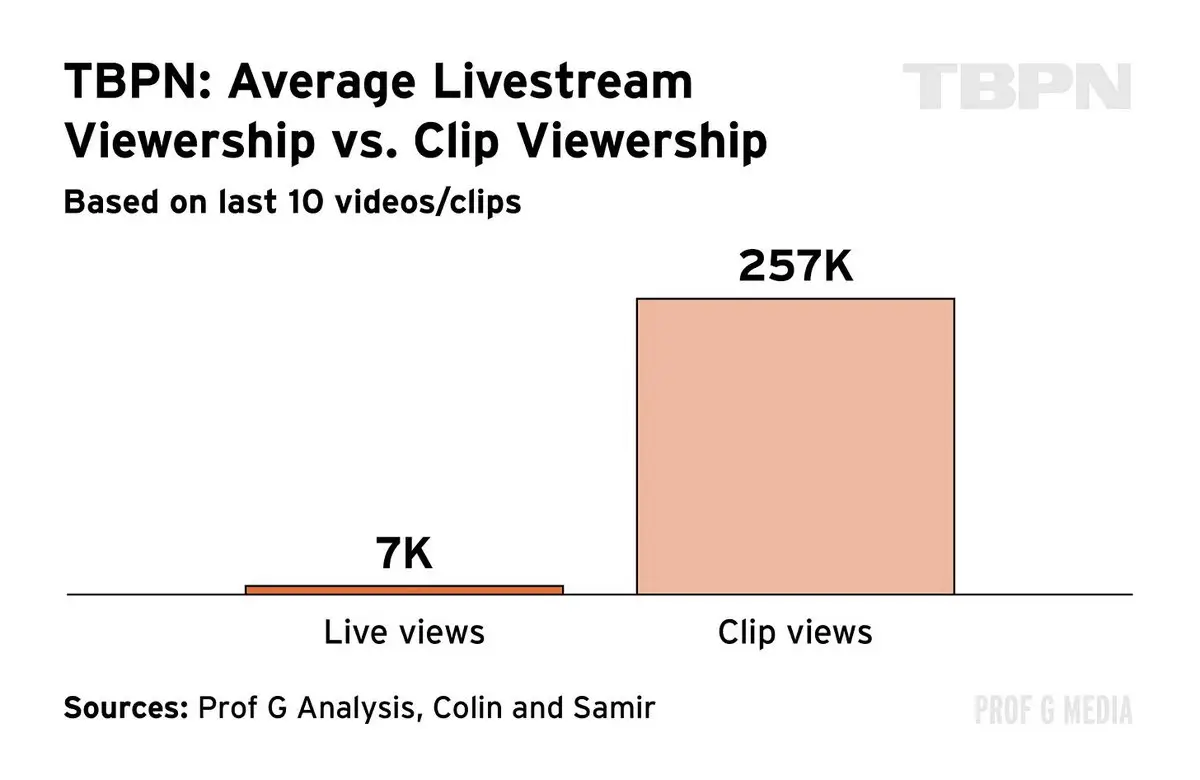
The transformation is stark and accelerating. Consider the April 2026 acquisition of TBPN, a popular tech podcast and livestream, by OpenAI for a reported low hundreds of millions of dollars (around $200 million). On the surface, the numbers seemed modest: TBPN averaged roughly 7,000 live viewers per episode and generated about $5 million in ad revenue in 2025, on track for $30 million in 2026. But the real value lay in the clips. Each episode generated short segments that collectively reached an average of 257,000 people. For the vast majority of that audience, the clip was the podcast.
This pattern repeats across domains. In sports, only about 31% of fans aged 18–24 watch entire matches, compared to 75% of those over 55. Younger viewers overwhelmingly prefer highlights and short recaps. The same logic applies to entertainment: many fans of stand-up comedy, reality TV (like X Factor auditions), or political commentary have never sat through a full episode—they engage exclusively through viral clips.
Streaming giants have adapted. Netflix introduced “Moments,” a feature allowing users to create and share clips up to two minutes long directly from shows and movies. Prime Video followed with its own Clips vertical feed, designed for quick discovery. These tools don’t just accommodate short attention; they actively promote the clip as the new primary unit of consumption.
This isn’t merely a symptom of shrinking attention spans. It represents a deeper semiotic shift. Marshall McLuhan’s famous dictum—“the medium is the message”—applies powerfully here. The clip format inherently carries meanings of immediacy, shareability, emotional punch, and decontextualized intensity. A 15–60 second snippet prioritizes the most dramatic, funniest, or most controversial moment, often stripping away nuance, setup, or counterarguments. What remains is optimized for algorithmic distribution and dopamine-driven engagement.
As a result, long-form content increasingly functions as raw material—a “production cost” for generating clips—rather than the end product. Creators and brands now structure entire episodes or events with clip-worthiness in mind, planting “clip moments” throughout.
flow
In an era of infinite content, attention is the scarcest resource. Clips solve a practical problem: they allow people to stay connected to the cultural conversation without investing hours in every source. To participate in collective discourse—whether about politics, sports, tech, or pop culture—one must sample widely. Short-form makes that possible.
Yet the deeper question is: Who decides what bubbles up?
Most clips circulating online do not originate from official brand or artist accounts. They come from fan pages, anonymous users, meme accounts, or dedicated clipping agencies. This creates a powerful illusion of organic consensus. When we see a clip racking up millions of views and thousands of shares, we interpret those social signals as validation: “If so many others are watching and engaging, it must be important or good.”
Social proof becomes the primary curator. In information-overloaded environments, humans default to trusting what appears popular. This dynamic makes the clip economy particularly susceptible to manipulation. Likes, views, and shares can be manufactured or amplified through coordinated campaigns, bots, or paid networks. What feels like spontaneous collective taste is often engineered.
This raises profound questions about authenticity and gatekeeping. Traditional media had editors, producers, and critics deciding prominence. The clip economy decentralizes this—but replaces it with whoever can most effectively game algorithms and social signals. The result is a feedback loop where sensationalism, controversy, and emotional extremes are rewarded, while subtlety and complexity struggle for oxygen.
snip
The economics are straightforward and highly incentivized. Specialized agencies and freelance networks focus exclusively on extracting and distributing clips. Compensation typically ties directly to performance—often around $1–$5 per 1,000 views, sometimes higher for targeted campaigns. Virality is the sole metric that matters.
MrBeast has leaned heavily into this model. In late 2025, he launched Vyro, a platform connecting long-form creators with freelance clippers. Clippers earn based on views generated across TikTok, Reels, and Shorts (reportedly $3 per 1,000 views in many campaigns). Top performers earn six- or even seven-figure incomes annually. This system has become central to the MrBeast ecosystem, which saw Beast Industries valued at around $5 billion in 2026.
For creators and brands, clipping offers “organic” validation without the stigma of obvious advertising. Artists like Drake have benefited from third-party clips that appear fan-driven rather than promotional. A labeled “sponsored” TikTok ad might cost significantly more and face viewer skepticism; a seemingly grassroots clip achieves better results at lower apparent cost.
Entire marketplaces now exist for this labor. Platforms like Content Rewards and Vyro host campaigns where anyone can clip approved content for cash rewards. Agencies manage networks of thousands of clippers, optimizing for platform algorithms with trending sounds, captions, and posting times. Some operations run like digital factories—clipping farms producing thousands of pieces of content daily.
This economy creates winners: independent clippers who master the craft, agencies scaling operations, and big creators or brands that leverage the system for massive reach. It also creates losers: traditional long-form producers who see their work devalued, and audiences fed a steady diet of decontextualized fragments.
scope
One of the clip economy’s most disruptive features is the erosion of traceability. A professionally produced and seeded clip looks identical to one shared spontaneously by a genuine fan. There are no reliable markers distinguishing organic enthusiasm from orchestrated promotion.
This blurs the line between authentic culture and manufactured consent. Joe Lim, who ran Floodify for three years, managed up to 65,000 fake accounts to boost content for major clients across music, entertainment, and politics. He has estimated that 90% of what people see online is some form of disguised advertising. Lim eventually shut down the operation, predicting declining trust in social platforms and a future dominated by AI agents directly shaping preferences.
The advantage for marketers is clear: clips sell the appearance of spontaneity, which carries more culture credibility than overt ads. The risk is profound: as audiences grow savvy to these tactics, cynicism rises. Trust in online signals erodes. We may reach a point where people discount popularity metrics entirely, or where new verification layers (watermarks, blockchain provenance, or platform controls) become necessary.
Yet origin does still matter in subtler ways. Clips from trusted creators or communities carry different weight than anonymous ones. The best clippers don’t just cut highlights—they reframe, add context, or pair with commentary that adds new value. In this sense, the clip economy can democratize discovery, surfacing overlooked moments from niche long-form content.
@theatlantic“The clips are the content. That’s what people are consuming. That’s where they’re spending their time,” the writer and podcaster Ed Elson tells Charlie Warzel. Watch their full discussion on the “clip economy” at the link.
length
The clip economy reshapes more than media consumption—it influences how we think, remember, and form opinions. By prioritizing peak moments, it encourages binary thinking: a speech is reduced to one “gotcha” line, a sports game to a single highlight, a complex debate to its most inflammatory exchange. Nuance is edited out for pace.
This affects politics profoundly. Soundbites have always mattered, but now entire campaigns are built around clip virality. It influences education (students learning via TikTok explainers) and journalism (articles written to be easily clipped). Even personal identity and relationships are filtered through this lens—people curate their lives for clip potential.
On the positive side, short-form lowers barriers to entry. Emerging voices, small creators, and global talents can gain massive audiences without traditional gatekeepers. Cultural exchange accelerates as clips cross borders and languages instantly.
Economically, it commodifies attention more efficiently than ever. Platforms profit from endless scrolling, creators chase clip-optimized formats, and advertisers access granular, performance-based distribution. Yet it also risks exhausting the creative well: if long-form becomes mere feedstock, where will the rich source material of the future come from?
fin
As we move deeper into 2026 and beyond, several trends are emerging. AI tools are making clipping faster and more sophisticated—auto-detecting emotional peaks, generating captions, and even suggesting optimal distribution strategies. Platforms may introduce better attribution or revenue-sharing for original sources.
Regulation could play a role. Concerns about deceptive practices have already prompted discussions around disclosure requirements for paid clipping campaigns. Meanwhile, some creators are pushing back, building direct communities (newsletters, Discords, paid apps) that value full experiences over fragments.
The clip economy is not a temporary fad but a structural evolution driven by technology, psychology, and economics. It rewards speed, emotion, and shareability. Understanding it means recognizing that our collective attention is now a traded commodity, shaped as much by unseen clippers and algorithms as by the creators we think we’re following.
In this new landscape, the challenge for individuals is to cultivate deliberate consumption—seeking context when a clip hooks us, questioning sources, and occasionally stepping back for the full picture. For creators and media companies, success lies in embracing the clip as a powerful entry point while protecting the depth and integrity that make the full experience worthwhile.
The clip didn’t just change how we watch. It changed what we value—and, in doing so, is quietly rewriting culture itself.
Related Articles

Garage Italia’s Electric Spiaggina Puts the Fiat 500’s Riviera Years on Battery Power
Ten kilowatts, rattan seats and a €85,000 starting price: Garage Italia's 500 Spiaggina rebuilds Ghia's 1958 beach car for the yacht crowd.