DRIFT AUDIO
Listen to this story
Choose a voice, then press play.
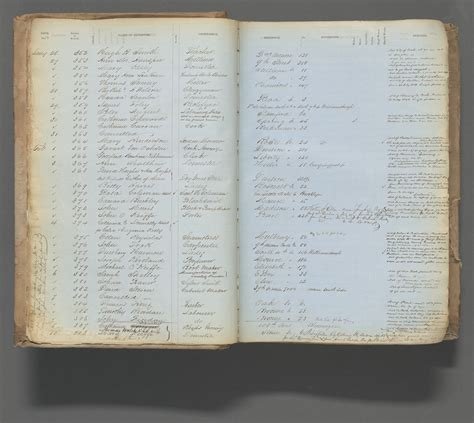
Identity verification has long been a critical aspect of financial security, ensuring that only authorized individuals have access to sensitive financial data and assets. While modern banking institutions utilize advanced security techniques such as multi-factor authentication, encryption, and biometric verification, earlier financial systems relied on innovative yet simple methods to safeguard their customers. One such historical method was the use of “test books” by the Emigrant Savings Bank, a 19th-century financial institution that catered primarily to Irish immigrants in the United States.
The Emigrant Savings Bank’s test books were a precursor to today’s security questions, serving as a means of identity verification long before the advent of digital banking. These records contained a series of personal questions and answers unique to each customer, enabling bank tellers to confirm a customer’s identity when transactions were requested. The test books highlight the early banking industry’s commitment to security and provide an interesting historical parallel to contemporary authentication methods.
This paper explores the significance of the Emigrant Savings Bank’s test books, their function in 19th-century banking, and how they compare to modern digital security measures. It also examines the evolution of identity verification in the financial sector, highlighting the advancements that have made banking more secure while maintaining the fundamental principle of personal authentication.
The Emigrant Savings Bank and Its Role in 19th-Century Banking
The Emigrant Savings Bank was established in 1850 by the Irish Emigrant Society in New York City, primarily to serve the financial needs of Irish immigrants. Many of these individuals had recently arrived in the United States seeking refuge from the Great Irish Famine (1845–1852). Unlike wealthier individuals who had access to private banks, immigrants often lacked formal banking relationships, making them vulnerable to fraud, theft, and financial instability.
The bank was founded with the mission of providing a safe place for immigrants to deposit their earnings and build financial security in their new homeland. Given that many of the bank’s customers were unfamiliar with formal banking procedures and often lacked official identification documents, the institution had to develop a reliable method to verify customer identities. The solution was the introduction of test books.
The Function of Test Books in Identity Verification
Test books were detailed records containing unique personal information provided by each customer upon opening an account. These records typically included:
• Full name and aliases
• Birthplace and date of birth
• Parents’ names
• Siblings’ names and details
• Name of spouse and children
• Occupation and employer
• Immigration details, including the name of the ship they arrived on
• Personal memories or distinctive events in their lives
When a customer wished to withdraw money or conduct a transaction, the bank teller would consult the test book and ask the account holder to answer some of the recorded questions. Only if the responses matched the information in the test book would the teller proceed with the transaction.
This method ensured that only legitimate account holders could access their funds, effectively preventing fraud and unauthorized withdrawals. In an era before government-issued identification cards were common, this system provided a practical and secure way to verify a person’s identity.
The Significance of Test Books in Financial Security
The use of test books at the Emigrant Savings Bank represented an early effort to implement security measures in financial transactions. This system underscored the importance of safeguarding customer funds, particularly for a demographic that was vulnerable to financial exploitation.
Prevention of Fraud and Unauthorized Transactions
By requiring customers to answer personal questions, the test book system acted as a safeguard against individuals attempting to access someone else’s funds. This was especially crucial in a time when banking fraud and identity theft were serious concerns.
A Personalized Security System
Unlike modern banking, which often relies on standardized security questions, the test book method was uniquely tailored to each customer. This level of personalization made it difficult for impostors to guess or falsify information.
Adaptation to an Era Lacking Formal Identification
Since official identification documents such as driver’s licenses, passports, and Social Security numbers were not widely available in the mid-19th century, the test book system provided a practical alternative. It leveraged personal knowledge rather than physical documentation for identity verification.
Early Foundations of Modern Authentication Practices
The principles behind the test books—using personal details to verify identity—mirror today’s security questions and multi-factor authentication methods. This historical practice laid the groundwork for future advancements in identity verification.
Comparison to Modern Security Measures
The concept of using personal information for authentication has carried over into modern banking in the form of security questions. Today, banks and online financial platforms often require users to answer pre-selected security questions as an additional layer of authentication. These questions are designed to be unique to each user, much like the test books of the 19th century. Common security questions include:
• “What is your mother’s maiden name?”
• “What was the name of your first pet?”
• “What was the make of your first car?”
• “What is your favorite book?”
Despite the similarities, there are some key differences between the test book system and modern security questions
• Standardization vs. Customization: Unlike the highly personalized nature of test books, modern security questions are often chosen from a predefined list. This makes them more predictable and potentially vulnerable to social engineering attacks.
• Static vs. Dynamic Information: Test books contained personal details that were unlikely to change, whereas modern security questions sometimes rely on information that can be discovered or guessed through online research (e.g., social media presence).
• Integration with Digital Security Measures: Security questions today are often just one component of a larger authentication system that may also include passwords, two-factor authentication (2FA), and biometric verification.
The Evolution to Multi-Factor Authentication and Biometric Security
Over time, security measures in banking have evolved to incorporate more sophisticated techniques, ensuring greater protection against fraud and cyber threats. Some key advancements include:
Multi-Factor Authentication (MFA)
Banks now require users to provide multiple forms of verification, such as a password, a one-time verification code sent to their phone, or a biometric scan. MFA significantly enhances security by making it harder for unauthorized users to gain access.
Biometric Authentication
Fingerprint scans, facial recognition, and voice recognition are increasingly being used to verify customer identities. These methods provide a higher level of security than traditional security questions, as biometric data is unique to each individual.
Encryption and Secure Access Methods
Modern banking systems employ encryption to protect customer data and prevent unauthorized access. Secure socket layer (SSL) protocols, tokenization, and blockchain technology have all contributed to safer financial transactions.
Behavioral Analytics and Artificial Intelligence
Banks now use AI-driven security measures that analyze user behavior to detect suspicious activities. If a login attempt or transaction deviates from a customer’s usual patterns, additional verification steps may be required.
Final Thought
The test books used by the Emigrant Savings Bank in the 19th century provide an early example of identity verification in financial security. By recording personal details and using them as authentication measures, the bank was able to safeguard customer funds and prevent fraudulent transactions.
While this method was effective for its time, advancements in technology have led to more sophisticated security measures, such as multi-factor authentication and biometric verification. However, the fundamental principle of using personal details for authentication remains a cornerstone of financial security.
The evolution from test books to modern security systems reflects the ongoing efforts of the banking industry to balance convenience with security. As cyber threats continue to evolve, financial institutions will likely develop even more advanced authentication methods, ensuring that customers’ sensitive information and assets remain protected.
Despite these advancements, the history of the Emigrant Savings Bank’s test books serves as a reminder that security measures have long been a crucial aspect of banking, adapting to the needs of each era while maintaining the core objective of protecting customer identities and financial assets.
Related Articles

Garage Italia’s Electric Spiaggina Puts the Fiat 500’s Riviera Years on Battery Power
Ten kilowatts, rattan seats and a €85,000 starting price: Garage Italia's 500 Spiaggina rebuilds Ghia's 1958 beach car for the yacht crowd.