DRIFT AUDIO
Listen to this story
Choose a voice, then press play.
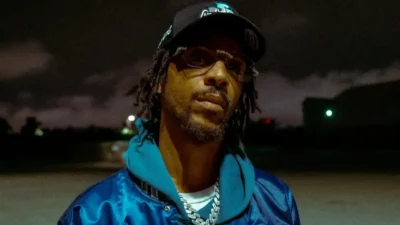
In a cultural era saturated by immediacy, oversharing, and curated personas, Phora’s “The Lonely Ones” plays like a quiet room with one light on. The song doesn’t yell to be heard. It doesn’t masquerade pain in metaphor. Instead, it breathes in silence, sculpted by confessional lyricism, understated instrumentals, and the vulnerable cadence of a voice that has always seemed more interested in truth than triumph.
Phora—born Marco Archer—has long worn his heart with reverence and reluctance, a balancing act for an artist raised not just by pain, but by a deep moral tether to emotional transparency. “The Lonely Ones” is less a song than a diary entry set to music, stripped of posturing or performative grief. Over somber, ambient production, he outlines the contours of depression and disconnection—not as trends or traumas to be mined, but as the lived emotional architecture of his world. “I don’t want to feel numb no more,” he murmurs, and it doesn’t come across as a hook. It lands more like a prayer.
There’s a weight to his delivery that signals more than melancholy—it’s exhaustion. The emotional timbre of “The Lonely Ones” reflects the fatigue of someone who’s explained themselves too many times, who has tried to heal in public while the wounds still bleed in private. The track resists easy catharsis. There are no epiphanies, no climactic turns toward hope. Instead, Phora sits in the loneliness with the listener, neither romanticizing it nor trying to escape it prematurely.
Lyrically, “The Lonely Ones” doesn’t rely on ornamentation. There are no verbal gymnastics or layered double entendres. Its simplicity is its power. Lines like “I’m surrounded, but I still feel alone” echo the collective experience of many, especially in the digital age where presence rarely equates to connection. Phora’s genius lies in his ability to compress complex emotional realities into language that feels conversational yet profound.
The production mirrors that ethos—minimalist, atmospheric, almost translucent. The instrumentation floats beneath Phora’s vocals, never interfering, simply existing as an extension of his breath. It’s a canvas rather than a curtain. The beat isn’t designed to drive forward; it’s meant to suspend, to hold the listener in place just long enough to hear themselves inside the spaces he leaves between lines.
In a genre often driven by bravado, spectacle, and external markers of success, “The Lonely Ones” is a reminder that music still has room for vulnerability without agenda. It doesn’t strive to be playlist-friendly or algorithmic. It’s human, and that’s precisely what makes it stand out.
Phora doesn’t chase belonging. He documents the ache of its absence. And in doing so, he offers a kind of companionship to those who feel the same. “The Lonely Ones” is not just a song—it’s a mirror held softly to the face of the invisible.
Related Articles
Two Chicago Lifers, One Wave: Kaicrewsade and Luke Titus on ‘#SWAG SURF’
Kaicrewsade's new album RAINBOW_ arrived on October 14, and its second track pulls in Chicago drummer and singer Luke Titus.