DRIFT AUDIO
Listen to this story
Choose a voice, then press play.
There are shoes—and then there are Off-White™ shoes. Under the vision of the late Virgil Abloh, Off-White™ footwear didn’t just step into fashion history; it trampled the boundaries between luxury and street, high concept and commercial appeal. From quotation marks to zip ties, Abloh’s designs became both commodity and conversation, rewriting footwear culture one drop at a time.
The phrase “Off-White™ c/o Virgil Abloh” became more than a brand credit—it was a signature. A design fingerprint. A symbol that what you were wearing had passed through the mind of a man who saw shoes as sculpture, status symbol, and social commentary all at once.
The Design Language That Changed the Game
Virgil Abloh’s Off-White™ sneakers weren’t just hyped—they were deliberate. Each pair bore his conceptual fingerprints: Helvetica text, ironic quotes, industrial tags, inside-out stitching, and unapologetic visual deconstruction. He treated shoes as if they were museum artifacts—and sometimes, they were.
The now-iconic “AIR” printed on the midsoles of Off-White™ x Nike collaborations wasn’t just branding—it was meta-commentary. The plastic zip tie was a provocation. Abloh wanted you to question the object, not just desire it.
The “c/o” in Off-White™ c/o Virgil Abloh stood for “care of,” but also suggested curation. This wasn’t just design—it was authorship.
The Ten: A Blueprint for Collaboration Culture
In 2017, Abloh redefined the shoe flow forever with The Ten, a reimagining of ten classic Nike silhouettes. The Air Jordan 1, Blazer Mid, Presto, Air Max 90, and others were taken apart and rebuilt in Abloh’s conceptual language. Every seam, stitch, and material was exaggerated to highlight the shoe’s construction.
But The Ten wasn’t just about aesthetic. It was about access—sneakers as both aspiration and artifact. These were shoes you could wear or display. And for many, they were the entry point into fashion as critical design.
Today, The Ten is legend. Resale prices are astronomical. But more importantly, they birthed an entire design wave—visible labels, deconstruction, industrial references—that now ripple through shoe design across brands and price points.
Beyond Nike: Luxury Disruption
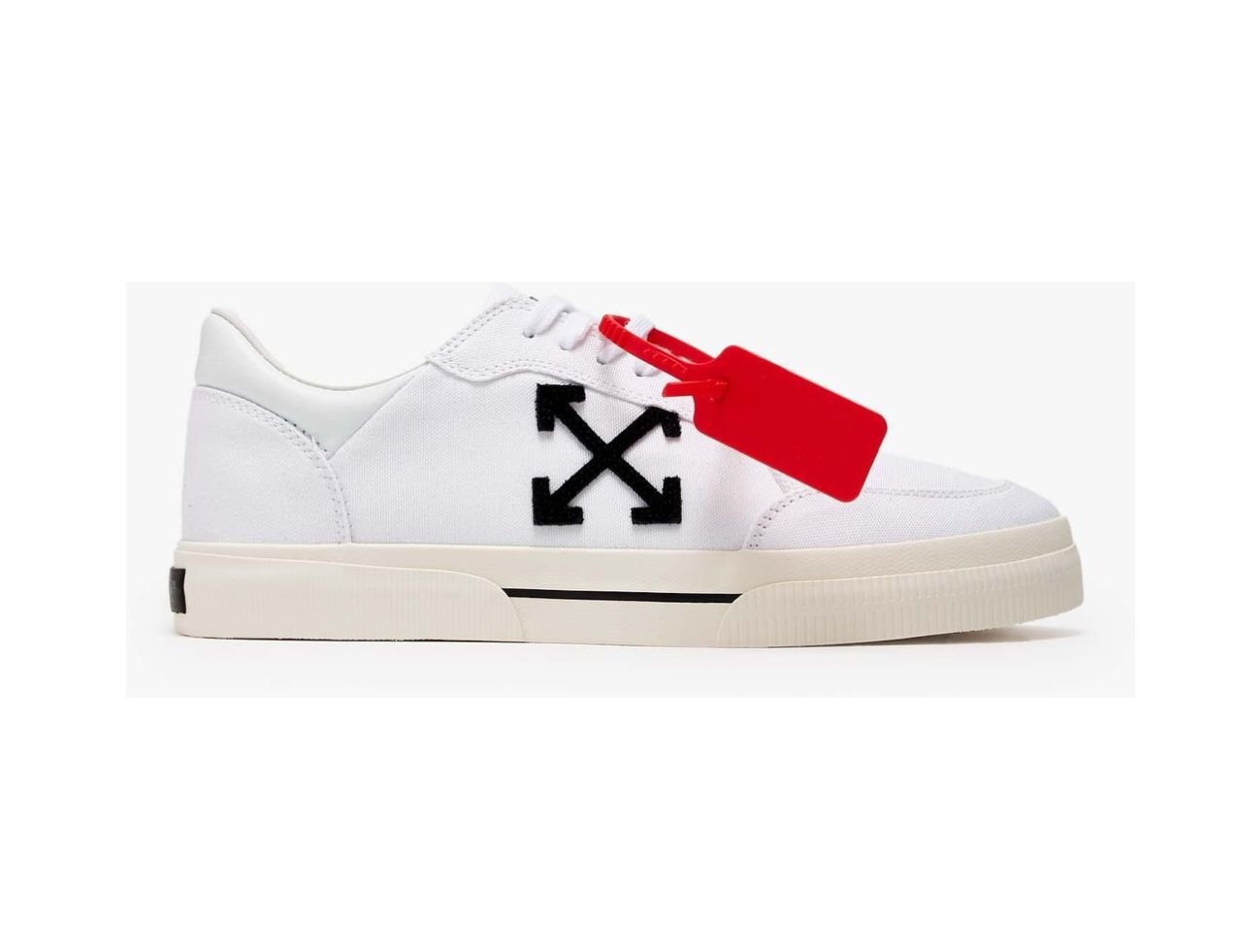
Though his Nike connections stole headlines, Abloh’s Off-White™ shoes with his own label were equally transformative. The Out of Office shoe, Odsy-1000, and the Vulcanized Low blurred the lines between designer footwear and skate shoes. These weren’t just fashion footwear—they were wearable architecture.
The details mattered. Zip ties weren’t removed—they were flaunted. Branding was purposefully overdone. His now-signature quotation marks turned every shoe into a caption. A shoe didn’t just have laces—it had “SHOELACES.” It didn’t just exist—it declared itself.
This self-referential style became part of Abloh’s philosophy: fashion should be transparent, not elitist. And with every shoe, he let people into the process.
Cultural Capital, Not Just Hype
Virgil’s shoes weren’t just bought—they were studied. Critics debated them. Collectors hoarded them. Students in design schools referenced them. And kids in barbershops argued about them. That’s rare air.
But Abloh’s genius wasn’t just in aesthetics—it was in context. He understood that in 21st-century fashion, the object is only half the story. The moment, the drop, the caption, and the placement carry just as much weight.
Off-White™ became a case study in how to blend limited-edition scarcity with digital culture. Virgil knew how to release sneakers like albums—and that’s exactly how people consumed them.
Virgil Abloh: More Than a Designer
To talk about Off-White™ shoes is to talk about Virgil Abloh, not just as a designer, but as a force. He was the first African-American artistic director at Louis Vuitton Menswear. A trained architect. A DJ. A cultural sponge. He didn’t just design shoes—he designed context, moments, and meaning.
Virgil’s shoes were never just about fashion. They were about identity. Access. Belonging. He made it possible for kids who grew up in the margins to feel like they could not only wear high fashion—but make it.
He connected streetwear to luxury in a way that wasn’t co-optive—it was authentic. Because he came from that world. He wasn’t guessing. He was speaking his own language.
Off-White™ Shoes in the Post-Virgil Era
Since Abloh’s passing in 2021, Off-White™ continues, but it’s different. The DNA is still there, but the cultural gravity has shifted. Every new release is measured against the myth of Virgil. And that’s not a bad thing—it’s a testament to how singular his voice was.
Collectors treat early Off-White™ shoes like sacred artifacts. The first run of “The Ten,” the OG Vulcanized Lows, the early Chuck 70 collabs—they’re not just sneakers. They’re pages in a book that Virgil helped write.
And yet, the influence remains. Designers still borrow his visual language. Brands still chase the hype-release formula he perfected. He shifted the way we think about shoes—not as accessories, but as commentary.
Why They Still Matter
Off-White™ c/o Virgil Abloh shoes matter because they were never just about sneakers. They were about democratizing design. About inserting complexity into streetwear. About giving credit to culture while remixing it through a high-fashion lens.
They were worn by kids in Queens and by artists in Venice. They showed up in music videos, museums, and red carpets. They were—and still are—one of the few shoes that could live in every room and still make sense.
Most importantly, they reminded us that fashion could be smart. That shoes could mean something. That style didn’t have to be silent.
Flow
The Off-White™ c/o Virgil Abloh shoe is now part of fashion’s permanent vocabulary. It sits in closets, collections, and memory banks. But its real power is how it expanded what shoes could do.
The zip tie, the quotes, the exposed foam—these weren’t just design gimmicks. They were Virgil’s way of tagging the moment, leaving a mark. And even as fashion evolves and trends shift, that mark remains.
Because when you wear Off-White™ shoes, you’re not just stepping into a look. You’re stepping into a legacy.
Related Articles
adidas Originals Tokyo Off-White/Rich Green/Dark Brown: A Timeless Silhouette Reborn for the Streets of Tokyo and Beyond
In This Story Design & Heritage Colorway Breakdown Key Features Styling Guide Cultural Context & […]