DRIFT AUDIO
Listen to this story
Choose a voice, then press play.
SUBU’s tenth-anniversary collection turns the loafer, the setta, the sneaker and the ballet shoe into winter sandals, on sale in Japan October 9.
Ten sil, 22 colorways and one thesis: footwear has evolved alongside human history without ever producing a winter sandal, and SUBU considers that an oversight. The Tokyo label’s DOTS COLLECTION 2026, titled The Winter Evolution, marks its tenth anniversary by presenting the winter sandal as the missing branch of the shoe family tree. The brand’s manifesto describes a decade of research into a question nobody asked, namely whether people need sandals in winter, and concludes that SUBU is not merely a sandal but a product that rewrites the season starting at the feet.
Signal. What happened: SUBU, the Tokyo winter sandal label, is rel its tenth-anniversary DOTS COLLECTION 2026 on October 9. Exact object: ten models in 22 colorways, priced from ¥9,900 to ¥14,300 including tax, each packed with a drawstring pouch cut from the same fabric as its upper. When and where: reservations opened October 2 on the official online store, and sales start October 9 at that store and at stockists across Japan, except MATORY Raven Black, which takes reservations October 9 and rel October 16. Why it matters: SUBU is using its anniversary to define the category it created as a lineage, building each model from an existing footwear form instead of leaning on colorways and collision alone.
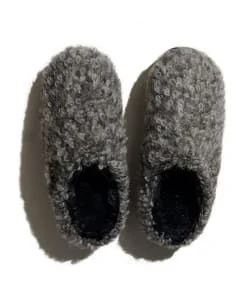
The manifesto sketches the logic in a few steps. People wrapped grass, wove leather and wore fur against the cold, and shoes later became a vehicle for fashion and self-expression, yet the idea of wearing sandals in winter never entered that lineage. SUBU’s hypothesis was that a foot able to enjoy the cold instead of enduring it would make winter freer. Ten years of prototyping, in its telling, produced insulation, comfort and a sole built to walk outside, all framed as steps toward a more relaxed future. The brand calls the result a winter fork in the road of footwear evolution. The collection site is styled as an illustrated field guide, with readings spelled out beside the title, a timeline run from 2016 through shoes made for tools and jeweled shoes to 2026, and SETTA billed as the main attraction.
stir
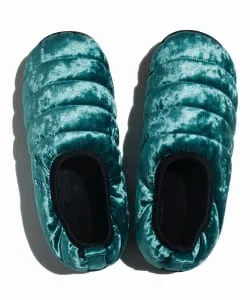
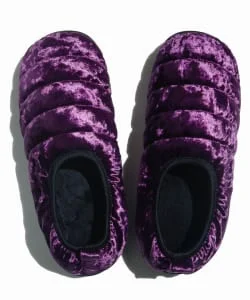
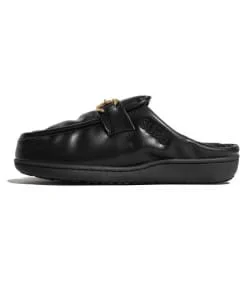
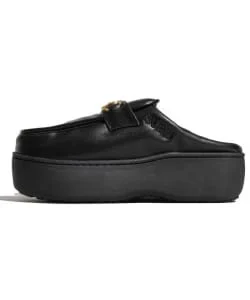
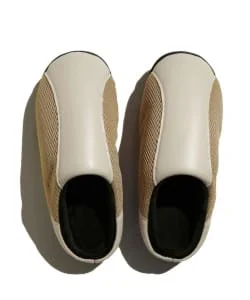
Each model starts from a footwear shape borrowed from another era. SETTA carries the anniversary: a raised-thong profile taken from the traditional setta sandal, worn either as a slip-on or hooked over the strap, in white or black at ¥9,900. SUBU’s copy notes that the two-way design has long accompanied formal Japanese dress, and the brand’s key visual pairs the white version with an uchikake, a formal outer kimono. LOAFER takes the horse-bit loafer and leaves the heel open to make a slide at ¥12,100, while the PLATFORM LOAFER at ¥14,300 is the collection’s most expensive pair.
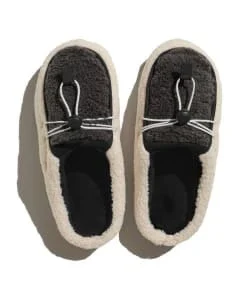
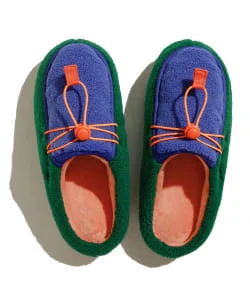
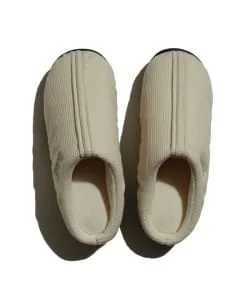
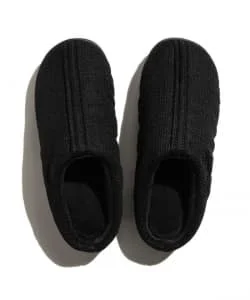
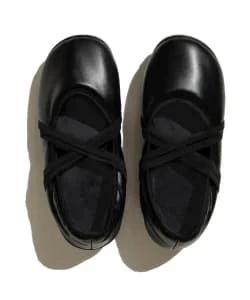
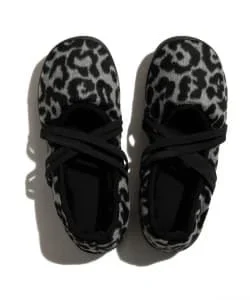
Others reach further back. SHIKAI comes from cloth footwear made for the performing arts, designed so a performer’s steps made no sound, and SUBU leaves it unadorned in black or natural at ¥9,900. FROZZO lays lacing across a boa instep for something closer to a mountain boot, at ¥12,100 in blue and green or charcoal and white. SNEAK keeps a sneaker’s outline and drops the heel at ¥9,900 in slate or biscuit, and BALLET nods to the ballet shoe at ¥11,000 in black, leopard or a shade called Noctine.
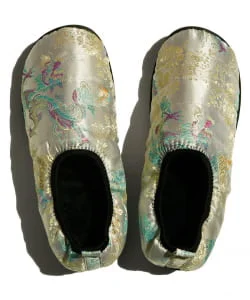
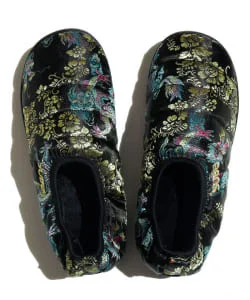
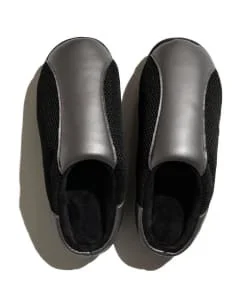
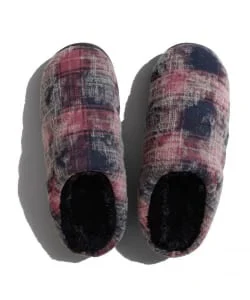
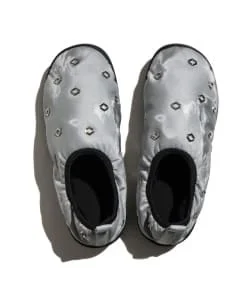
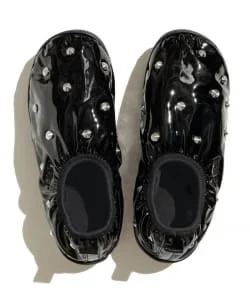
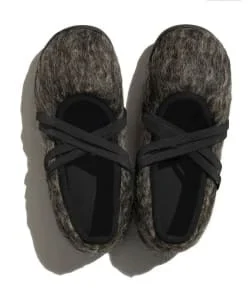
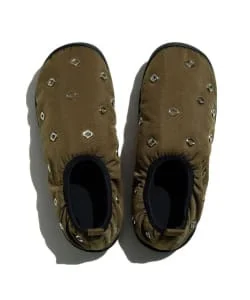
The fabric-led models run decorative. VAMP NOBLE draws on aristocratic footwear, using a lustrous cloth embroidered with floral and damask motifs across its damask, burgundy and bloom colorways at ¥11,000. VAMP STUDCORE, imagined as footwear from the future, pairs a shallow upper with studs in Null Noir, Axis Silver and Synth Olive at the same price. MATORY uses a fabric meant to recall winter, in Dove Gray and Deca Red at ¥11,000, with a third colorway, Raven Black, arriving a week later.
Pricing falls into four tiers. SETTA, SHIKAI and SNEAK sit at ¥9,900, the MATORY, BALLET, VAMP STUDCORE and VAMP NOBLE models at ¥11,000, LOAFER and FROZZO at ¥12,100, and the PLATFORM LOAFER alone at ¥14,300.
Construction stays consistent underneath. SUBU’s listings for SHIKAI and FROZZO specify a polyester upper over a brushed polyester insole and a synthetic rubber sole, and sizes run in six bands, labeled 00 through 4, from 20.0 to 31.5 centimeters.
length
SUBU was founded in Tokyo in 2016 by designer Toshihiko Fukawa, and Ideaport, the Shinagawa company that operates the brand, describes its identity as pursuing everyday goods as fashion. Its partners span fashion, art, outdoor and lifestyle names, and it secured a three-dimensional trademark in 2025. Ideaport dates to July 2000. Elsewhere on the store, a new PLATFORM line, a Matcha colorway of the ORIGINALS F-LINE and a collaboration with ODAKHA sit alongside the anniversary collection.
View this post on Instagram
The 2026 collection is the brand’s eleventh season, following last year’s tenth. DOTS is SUBU’s yearly concept line, which the brand’s store archives back through TWEED and BUMPY in 2023 and HAREMOKEMO in 2024. Last year’s HORROR collection, rel October 10, 2025, staged the brand’s comfort as a horror story built on the idea that once the shoes are on, there is no going back. It was split into three collections, including a Concept Collection built on unsettling patterns such as Kaleidoscope, Vivid Mosaic and Cosmic Wave, each ¥9,900 including tax. This year’s concept swaps the horror story for an evolutionary one.
fin
To mark the anniversary, SUBU is taking the collection on a five-city pop-up tour titled Thank You for Wearing Them. It opens in Kyoto’s Gion district, running October 23 to November 3, then continues in Tenjin, Fukuoka (November 3 to 8), Nagoya (November 14 to 23), Shibuya, Tokyo (November 21 to December 27) and Umeda, Osaka (December 4 to 27). Shibuya has the longest run at 37 days, followed by Osaka at 24 and Kyoto at 12.
An Asia leg is planned, with pop-ups in Chengdu, Taipei and Seoul. Dates and venues for those three have not yet been published.
Related Articles
Moncler Re/Icons Takes On Four Archive Jackets at Once, and Isetan Shinjuku Gets Them First
Moncler’s 2026 Re/Icons chapter reworks four archive down styles dating from 1954 to 2009, and […]