DRIFT AUDIO
Listen to this story
Choose a voice, then press play.
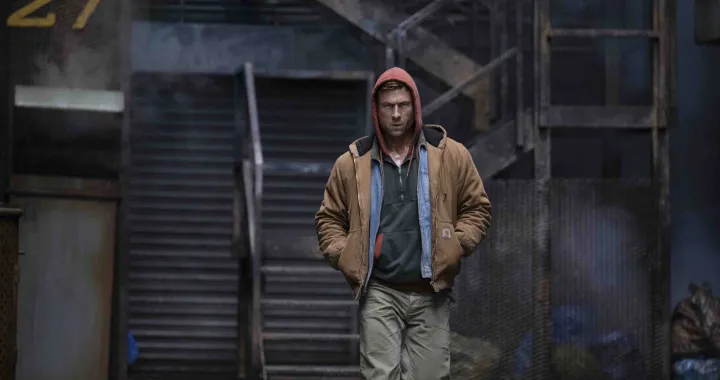
The year is 2025, and dystopia has become more than just a narrative trope — it is an artistic mirror reflecting society’s deepest anxieties and yearnings. This summer, Hollywood prepares to revisit one of its most potent dystopian visions with The Running Man, a brand-new adaptation of Stephen King’s (under the pseudonym Richard Bachman) 1982 novel. The film’s first trailer has just dropped, sending shockwaves through film communities and King aficionados alike.
This isn’t the first time The Running Man has sprinted across the silver screen. The 1987 film starring Arnold Schwarzenegger transformed King’s bleak, cautionary tale into a muscular, explosive sci-fi action flick — all neon lights and bombastic charisma. Yet the novel’s essence, which delves deeply into social decay and media manipulation, remained largely unexplored. With the new adaptation, directed by Edgar Wright and starring Glen Powell, Hollywood promises a return to the story’s grim heart. Let’s delve into the history, cultural context, and potential future impact of this reimagining.
The Origin Story: King’s Fearsome Vision
When Stephen King wrote The Running Man under his Bachman alias, America was immersed in the Reagan era, a time marked by economic shifts, technological optimism, and a media landscape evolving at breakneck speed. King envisioned a future where society had become obsessed with televised violence and reality programming, turning human suffering into prime-time entertainment.
His protagonist, Ben Richards, is a desperate man forced to participate in a lethal game show where he is hunted across a dystopian America. The narrative is raw, feral, and politically charged, weaving in critiques of capitalism, media exploitation, and systemic oppression.
The Bachman books often provided an outlet for King’s grimmer, more nihilistic impulses, and The Running Man stands out as one of his most vicious indictments of contemporary culture. While it has been overshadowed by other Bachman works like Thinner and The Long Walk, its themes feel more urgent today than ever.
The 1987 Adaptation: Action Over Allegory
Paul Michael Glaser’s 1987 adaptation took significant liberties with the source material. It shifted the focus from scathing social commentary to a gladiatorial spectacle — an aesthetic choice reflective of late-1980s Hollywood’s appetite for big-budget action films.
Arnold Schwarzenegger’s Ben Richards became less an everyman and more a quip-spewing action hero. The Running Man’s dystopian TV show was presented with a gleeful, campy energy, leaning into satire but sidestepping the existential horror of King’s narrative.
While the film gained a cult following and is beloved for its kitschy charm and memorable one-liners (“I’ll be back!”), it left many readers longing for a more faithful exploration of King’s original story. The recent surge in serious, prestige adaptations of King’s work — think Doctor Sleep, Gerald’s Game, and 1922 — suggests audiences are finally ready to engage with these darker, more reflective visions.
Why Now? The Cultural Relevance of The Running Man
The return of The Running Man in 2025 is no accident. Over the past decade, the lines between entertainment and reality have blurred beyond recognition. From social media’s algorithm-driven spectacles to the proliferation of “death games” in reality TV and streaming narratives (Squid Game being the most prominent example), the themes of King’s novel feel prescient and chillingly close to home.
Edgar Wright, known for his kinetic visual style (Baby Driver, Last Night in Soho) and sharp social commentary, seems uniquely positioned to resurrect The Running Man as both a thrilling cinematic experience and a cultural critique. In interviews, Wright has emphasized his desire to remain faithful to the book’s tone, promising a narrative that is “as much about survival as it is about complicity and the grotesque thirst for spectacle.”
The casting of Glen Powell, recently celebrated for his roles in Top Gun: Maverick and Anyone But You, signals a pivot from Schwarzenegger’s hulking superhero persona toward a more vulnerable, morally conflicted lead. This choice reflects the shifting landscape of hero archetypes in cinema — audiences today crave flawed, human protagonists over invincible demigods.
Visual Style and Aesthetic Choices
The trailer teases a world that is both eerily recognizable and hauntingly alien. Stark urban landscapes, intrusive surveillance drones, and massive, LED-drenched billboards evoke a hybrid of cyberpunk aesthetics and brutalist dystopia. Wright’s signature dynamic editing and music-driven sequences are present, but there is an unmistakable sense of menace underpinning every frame.
Costume and production design lean heavily into a near-future realism rather than outlandish sci-fi flamboyance. The show’s hunters, rather than cartoonish gladiators, appear as sleek, terrifying instruments of state power. This design choice grounds the narrative in a believability that the 1987 film intentionally sidestepped.
Literature and Dystopian Storytelling Traditions
The Running Man is part of a grand dystopian tradition in literature that includes works like Orwell’s 1984, Huxley’s Brave New World, and Bradbury’s Fahrenheit 451. These novels critique societal structures, technology’s encroachment on humanity, and media’s power to shape consciousness.
King’s contribution to this genre is uniquely visceral. While Orwell and Huxley employed intellectual analysis, King immerses readers in a bodily experience of fear and desperation. In The Running Man, you don’t just understand oppression — you feel it clawing at your lungs.
As contemporary society grapples with issues like data surveillance, wealth disparity, and the commodification of human experience, dystopian narratives have surged back into mainstream popularity. Rather than serving as mere cautionary tales, they have become tools for processing collective trauma and anxiety.
The Stephen King Renaissance
In the past fifteen years, Stephen King adaptations have undergone a renaissance, shifting from pulp horror cash-ins to thoughtfully crafted prestige projects. The success of It (2017), Doctor Sleep (2019), and The Outsider (2020) demonstrated that King’s stories, when taken seriously, resonate deeply with modern audiences.
This renaissance isn’t merely aesthetic; it reflects a broader cultural readiness to engage with horror as a form of social critique rather than escapism. Wright’s The Running Man thus arrives at a moment when audiences are primed for a deeper, more authentic exploration of King’s themes.
Recent Trends: The Popularity of Death Games
The 2020s have been marked by an obsession with “death game” narratives. From The Hunger Games revival to Netflix’s Squid Game phenomenon, stories that pit individuals against lethal systems for the entertainment of the masses have captivated audiences worldwide.
This fascination reveals a collective unease with surveillance capitalism and the power dynamics inherent in media consumption. We watch these fictionalized games with the knowledge that, while they are fiction, their commentary on society is terrifyingly real. In this context, The Running Man feels less like a relic from the 80s and more like a prophetic vision coming full circle.
What to Expect: Hopes and Concerns
With Wright at the helm, there is optimism that The Running Man will finally receive the adaptation it deserves. Fans hope for a film that retains the novel’s harsh societal critique while offering a gripping, emotional journey through Richards’ eyes.
Yet, there are concerns. Hollywood’s commercial pressures often sanitize radical narratives to ensure broader appeal. If the film dilutes its critique in favor of spectacle, it risks repeating the 1987 film’s mistakes. Moreover, translating the relentless, episodic structure of the novel into a coherent film narrative poses significant challenges.
However, Wright’s track record of balancing style with substance inspires confidence. His previous films have deftly navigated genre conventions while delivering biting satire and emotional depth.
A Glimpse Into the Future
As The Running Man races toward its release, it symbolizes more than just another blockbuster reboot. It represents a cultural moment in which audiences confront the ethics of entertainment, the cost of complacency, and the seductive power of spectacle.
If successful, this film could inspire a wave of similarly serious adaptations of dystopian and speculative fiction, pushing Hollywood to engage with source material in more meaningful, thoughtful ways.
Impression
The first trailer for The Running Man offers more than a glimpse of cinematic thrills; it provides a lens through which to examine our relationship with media, power, and human dignity. As we prepare to watch Ben Richards run for his life once again, we are also forced to consider what we’re running from — and toward — as a society.
Stephen King’s dystopian tale is as relevant now as it was over 40 years ago. In revisiting it, we are given a rare chance to reexamine the dark corners of our cultural psyche. If Edgar Wright and his team can deliver on the promise of this trailer, The Running Man may yet become the definitive cinematic exploration of one of King’s most prescient works.
Related Articles
Two Chicago Lifers, One Wave: Kaicrewsade and Luke Titus on ‘#SWAG SURF’
Kaicrewsade's new album RAINBOW_ arrived on October 14, and its second track pulls in Chicago drummer and singer Luke Titus.