DRIFT AUDIO
Listen to this story
Choose a voice, then press play.
For decades, archaeologists and historians have believed that the iconic Altar Stone at Stonehenge, one of the most mysterious and important megalithic monuments in the world, originated from Wales. However, new research has challenged this long-held assumption, revealing that the Altar Stone was actually transported from Scotland, more than 700 kilometers away.
The Discovery
A team of researchers led by Dr. Rob Ixer from the University of Leicester, along with experts from the universities of St. Andrews, Southampton, and Glasgow, conducted extensive research using advanced geochemical techniques to pinpoint the stone’s source. By analyzing the composition of the Altar Stone, the team determined that it came from an area near Inverurie in Aberdeenshire, Scotland.
Significance of the Findings
This groundbreaking discovery has far-reaching implications for our understanding of Neolithic Britain and the people who built Stonehenge. It reveals that the prehistoric communities responsible for Stonehenge’s construction had a wider network of connections than previously thought. They were capable of transporting massive stones over great distances, showcasing an impressive level of organization, communication, and cooperation between different regions.
Uncanny Nature of Stonehenge’s Origins
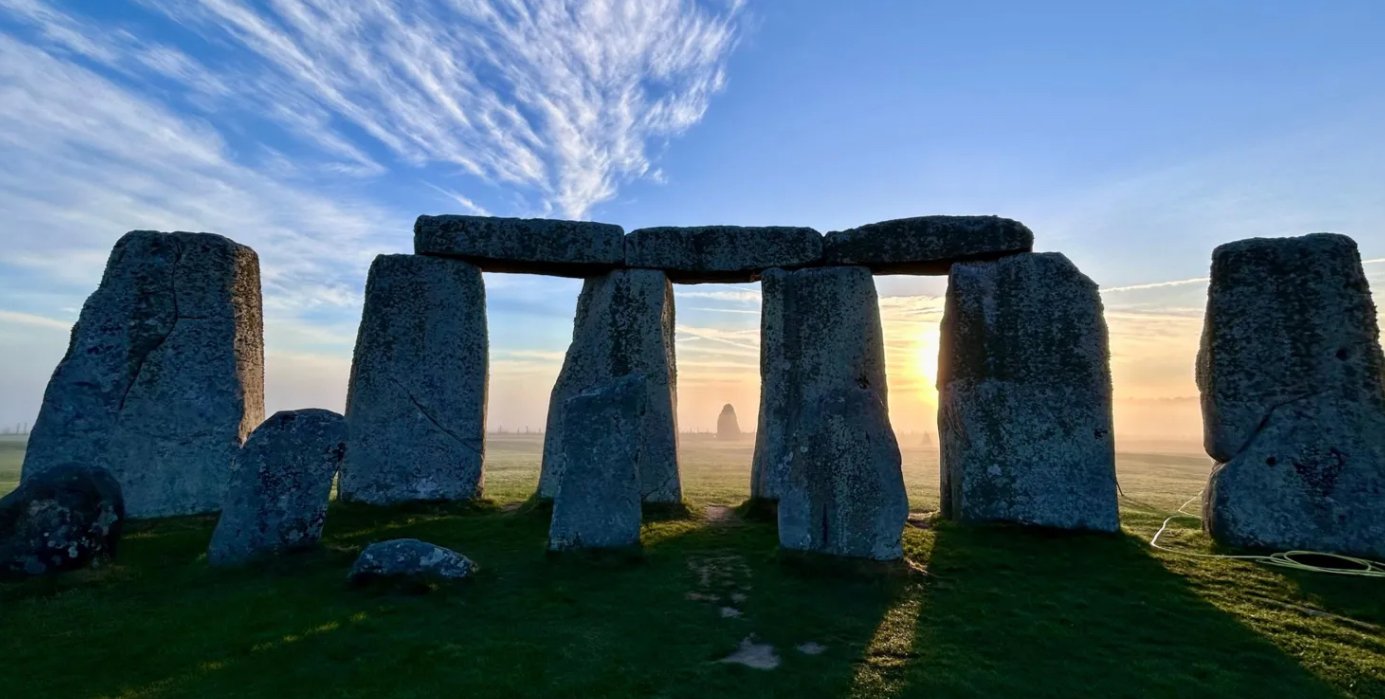
Stonehenge, a UNESCO World Heritage site, has captivated historians, archaeologists, and the general public for centuries. Constructed between 3000 and 2000 BCE, the monument comprises a circular arrangement of standing stones, some weighing up to 40 tons. While the Altar Stone’s Scottish origin is a surprising revelation, the exact purpose and meaning of Stonehenge remain shrouded in mystery.
Theories on Stonehenge’s Purpose
Several theories have been proposed to explain the function of Stonehenge, including:
a) sacred burial site for elite individuals
b) celestial observatory for tracking the solstices and seasonal changes
c) place of healing, with the stones believed to possess mystical properties
Regardless of its original purpose, Stonehenge continues to inspire awe and fascination, reminding us of the ingenuity and capabilities of our ancient ancestors.
Discovery that Stonehenge’s Altar Stone originated in Scotland, rather than Wales, challenges our understanding of Neolithic Britain and the people who built this enigmatic monument. As research continues, we can expect more surprises and insights into the lives of these ancient communities and the secrets of Stonehenge.
Related Articles

Ameri Put Wrangler On Drive And Cut It To Two Denims
First Ameri × Wrangler drop. Jacket ¥30,800. Pants ¥26,400. Blue, black, pink. 29 September. Drive […]