DRIFT AUDIO
Listen to this story
Choose a voice, then press play.
Since 1985 the Tommy Hilfiger flag has carried a block of red. On Hiroshi Fujiwara’s first capsule for the brand, that red is gone and light blue sits in its place.
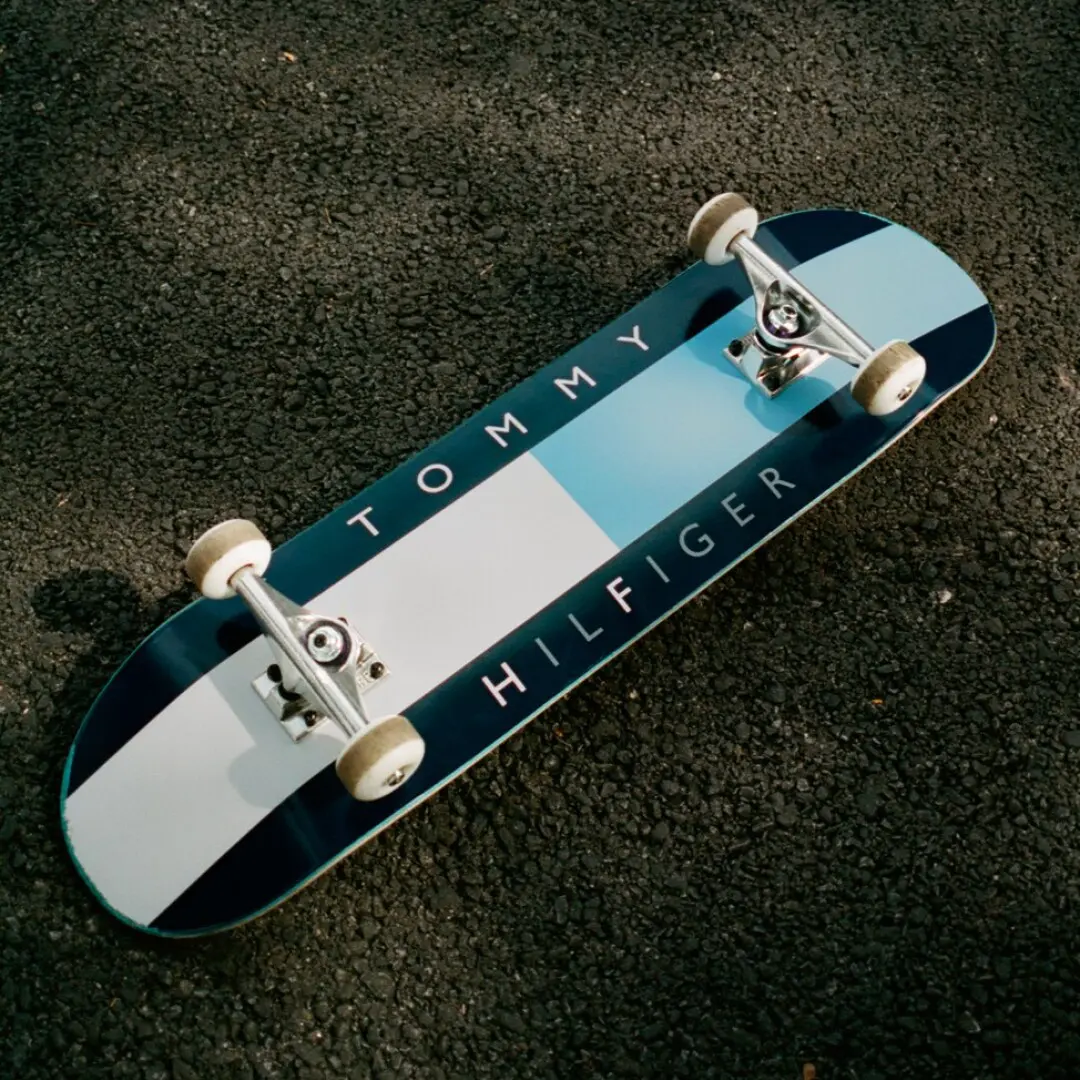
The edit that defines Tommy Hilfiger x FRGMT is small enough to miss at a glance. On the brand’s rectangular flag, the red field that has anchored the logo for four decades has been recolored light blue, a shade Hiroshi Fujiwara favors in his own wardrobe. Everything else in this first collaboration between Tommy Hilfiger and Fujiwara’s fragment design grows out of that single swap: a capsule that keeps the label’s preppy American codes readable while pushing them somewhere the house would not usually travel on its own. The official Tommy Hilfiger Japan campaign page frames it as a limited capsule that updates the brand’s emblematic 1990s style through fragment’s sensibility, and it reaches Japanese shoppers this week.
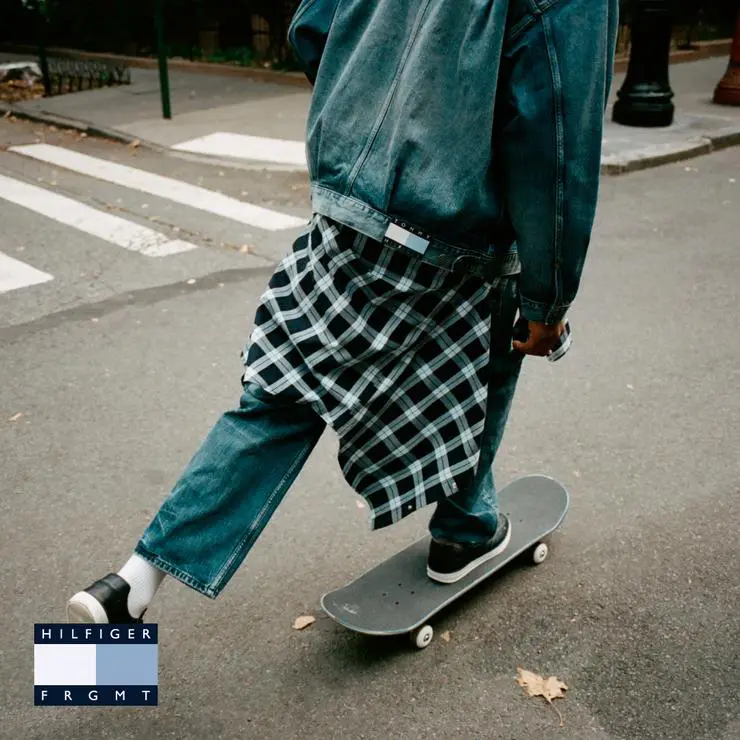
Signal. What happened: Tommy Hilfiger and fragment design announced their first collision, a limited Japan-market capsule titled Tommy Hilfiger x FRGMT, on October 9, 2026. Exact object: a small apparel capsule built on Tommy Hilfiger’s 1990s icons, with the flag logo’s sig red replaced by light blue and fragment’s thunderbolt running across a paneled denim piece; prices and full SKUs had not been published at the time of writing. When and where: a members-only presale on Tommy Hilfiger’s Japanese online store from 12:00 JST on October 14, then general online sales from midnight and in-store and pop-up sales across Tokyo, Kawasaki, Osaka, Fukuoka and Nagoya from October 15. Source: Tommy Hilfiger Japan’s own campaign and store-list pages, plus a sponsored interview. Why it matters: Fujiwara altered one of Tommy Hilfiger’s core brand colors instead of simply stamping a second logo onto existing product, and the brand has so far kept the release inside Japan.
stir
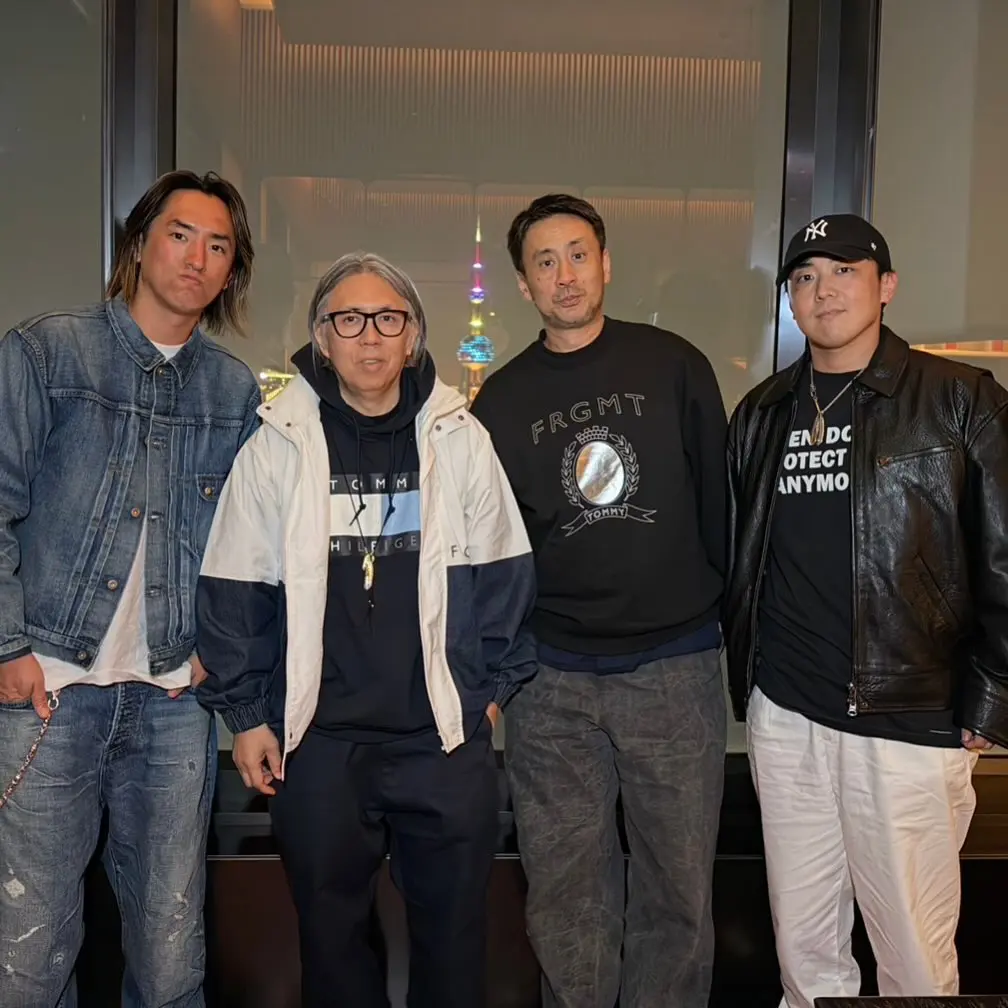
The project did not start with a pitch deck. Fujiwara recalls that a mutual friend simply asked whether he would be interested. Hilfiger says he agreed almost as soon as his team raised the idea, calling the chance to work beside a talent like Fujiwara a point of personal pride. The two compared notes in person at Hilfiger’s Manhattan office the day after the brand’s Spring 2027 runway show, in a brand-sponsored conversation published by WWDJAPAN shortly before the release.
That show carried its own symbolism. Tommy Hilfiger’s parent company PVH announced in July that the brand would take over The Plaza for its Spring 2027 presentation on September 10, 2026, returning to the hotel where Hilfiger and his wife Dee kept a duplex penthouse above Central Park for more than a decade. On the runway, the Spring 2027 collection revisited Hilfiger’s prep staples with looser proportions, shortened hemlines and a few shirts styled backwards. The fragment capsule, cut loose by design, now carries that same vocabulary to Tokyo.
Fujiwara’s reason for saying yes is rooted in a specific decade. He has described Tommy Hilfiger as an indispensable, iconic presence in New York’s 1990s culture, hip-hop above all, and that era is the brief the capsule works from.
View this post on Instagram
flow
Tommy Hilfiger was founded in New York in 1985, built on nautical references and an East Coast prep look. Then the clothes found an audience the label had not planned for. By the mid-1990s hip-hop artists had adopted roomy, logo-heavy Hilfiger pieces, and when Snoop Dogg wore a Hilfiger top on Saturday Night Live, it sold out of New York City stores the following day. Hilfiger leaned in, courting the new market rather than backing away from it.
Fujiwara’s reading of that history is the engine of the collection. In his telling, the public image of Tommy Hilfiger was clothing for the straight-laced honor student, the kid from a good home. What made it interesting was what happened when street kids took the same pieces and wore them several sizes too big. That mismatch, and the energy it gave off, is what he set out to recreate: honor-roll clothes thrown over the shoulders of kids who look like they might skip class.
In practice that meant cutting silhouettes deliberately loose. Fujiwara has said he wants people to wear the pieces oversized without second-guessing it, ideally with a faint outsider edge rather than a faithful copy of 1990s prep. Hilfiger, for his part, argues there should be no rules at all, and that mixing proportions and adding personal quirks is what keeps style moving.
The balance Fujiwara describes is a light one. Tommy Hilfiger has several icons that register instantly, the regatta jacket among them, and the jacket Fujiwara wore for the WWDJAPAN conversation was one of those pieces. Rather than repainting the whole canvas in his own colors, he layered small fragment elements on top, slipping a slight sense of the foreign into a familiar shape. Strip away the brand’s underlying DNA, he argues, and the result stops being a collaboration at all. Hilfiger says he still recognizes his label in the finished pieces, only now seen through someone else’s eyes.
show
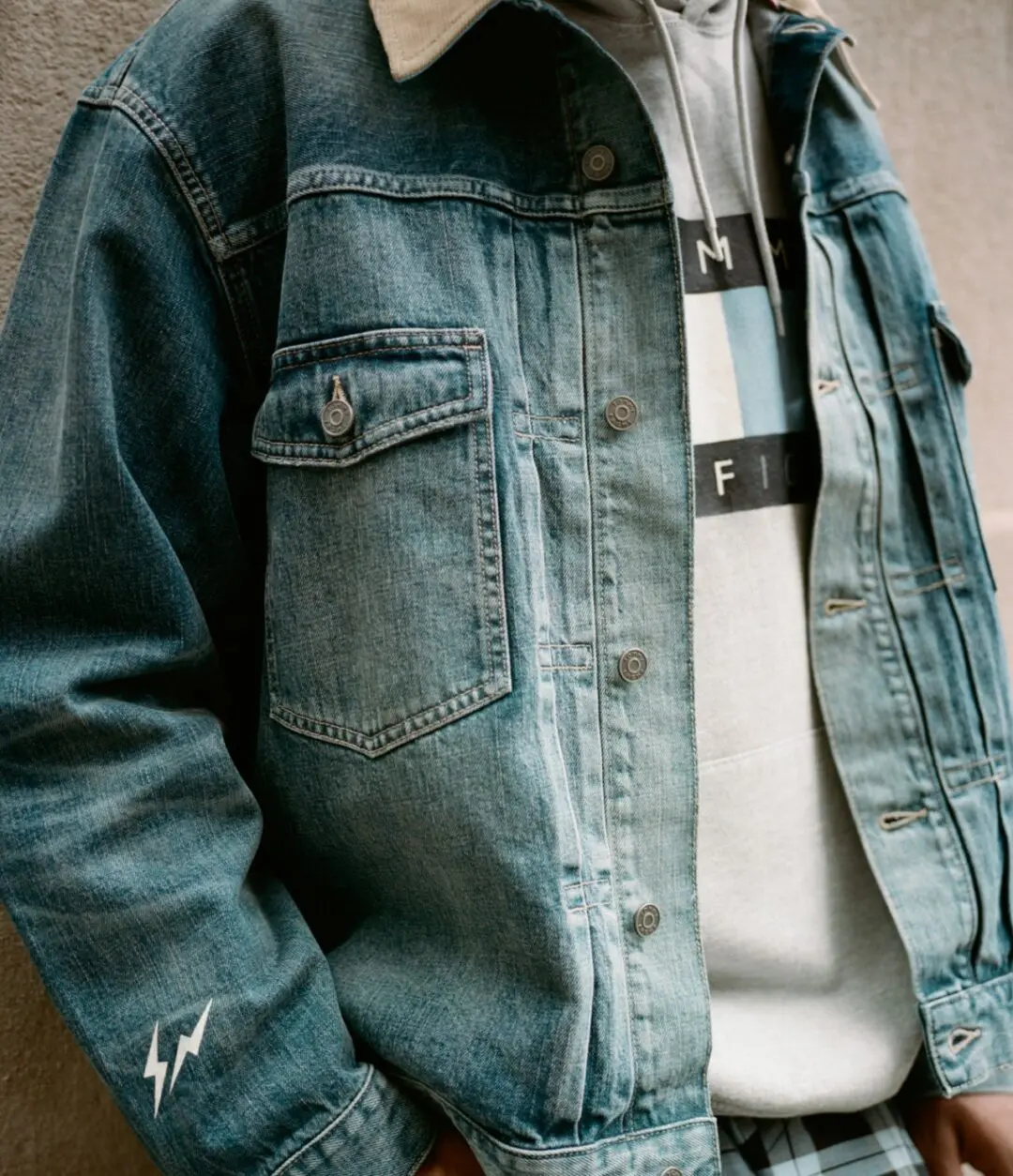
Hilfiger has already named his favorite piece. It is a paneled denim garment with fragment’s thunderbolt running across it, and he likened the effect to “an electric current running through the clothes.” The bolt is fragment’s best-known mark, and running it through denim panels is the most direct meeting of the two brands’ signatures described so far.
A Japan market release notice lists four items in the lineup: a denim jacket, denim pants, a hoodie and a check shirt, with graphics that borrow the outline of Tommy Hilfiger’s logo box and set the fragment name inside it. Tommy Hilfiger Japan has not yet published its own full product list. The brand says item details will appear on its online store’s product pages from noon on October 14, and no retail prices had been released at the time of writing.
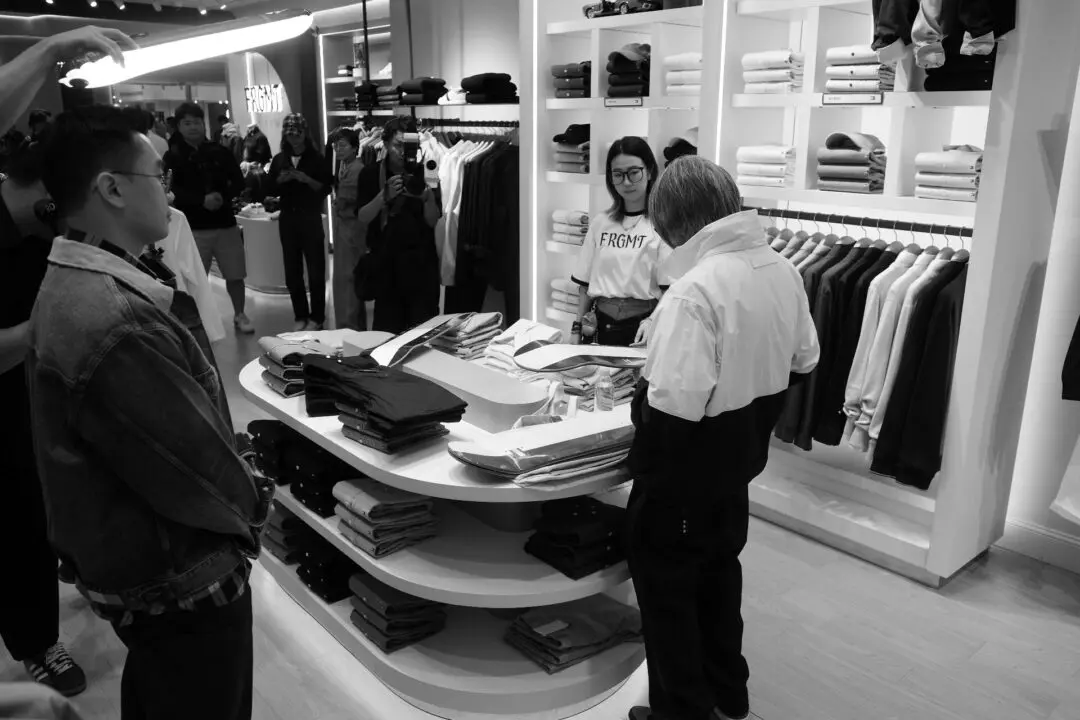
The photographs accompanying the WWDJAPAN conversation add a few clues without settling the question. One shows Fujiwara wearing pieces from the collaboration; another shows him studying a polka-dot field jacket and a cable-knit sweater, which the caption describes as items from the collection. Neither appears in the four-piece list from the release notice, so whether they are part of this drop remains unconfirmed until the product pages go live.
to
Fujiwara says he began by asking how to subvert the brand’s image. Samples were made first in Japan. He then traveled to Tommy Hilfiger’s headquarters in Amsterdam to work directly with the in-house design team, sketching his own additions over ideas they brought to the table. The target, as he describes it, was clothing that is unmistakably Tommy yet something Tommy would never normally make.
The research went beyond archive pulls. Fujiwara says he studied the maritime signal flags that stand for letters of the alphabet, treating the project as a chance to relearn the brand’s context from scratch. That detail matters because Tommy Hilfiger’s logo is itself a piece of maritime code: the red and white fields at its center are drawn from the International Code of Signals flag for H, for Hilfiger. Swap the red for light blue and the block no longer reads as H in that system, which gives the color change more weight than a seasonal palette tweak.
Fujiwara says the swap partly reflects his own habit of wearing blue, and partly a deliberate test of how far a brand’s core signature color could be bent before it broke. Hilfiger calls the choice refreshing. Blue, he points out, has always mattered to the brand’s DNA, and this particular shade gives the collection an entirely different mood while keeping a thread back to the original.
region
The rel runs in two stages. On Wednesday, October 14, Tommy Hilfiger’s Japanese online store opens a presale from 12:00 to 23:59 JST for MY TOMMY members only, with registration required to buy. General online sales begin at midnight on Thursday, October 15. Online orders ship only within Japan.
From October 15 the capsule is also stocked at four permanent stores: Tommy Hilfiger Omotesando from 10:00, Tommy Hilfiger Lazona Kawasaki Plaza from 10:00 through October 30, Tommy Hilfiger Canal City OPA in Fukuoka from 10:00, and Tommy Jeans at LUCUA Osaka from 10:30.
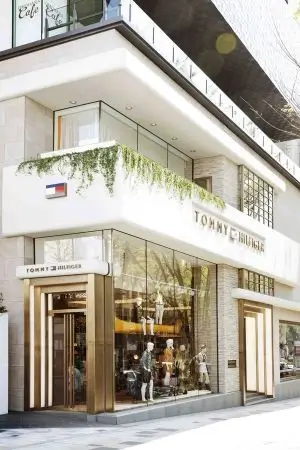
Three dedicated pop-ups run alongside them. Shibuya PARCO hosts one at its first-floor POPUP SPACE GATE from 11:00 on October 15 until October 21, and Shinsaibashi PARCO in Osaka runs another at THE WINDOW on its first floor from 10:00 on the same dates. The longest stand is in Nagoya, where JR Nagoya Takashimaya sets up a special venue on its seventh floor, separate from its regular Tommy Hilfiger shop on the eighth, from October 15 through October 27. On opening day, entry there between 10:00 and 13:30 is limited to shoppers who reserved a slot through the department store’s booking page, which opened on October 10.
The store list Tommy Hilfiger Japan published also sets the house rules. Purchases are capped at two units per style and color per person, in store and online, and nothing can be returned or exchanged. The capsule is excluded from every discount campaign, birthday perks included. Staff will not disclose stock levels, and any location may close early once inventory runs out. If crowds build, stores will hand out numbered tickets, one per person and non-transferable; at Omotesando, distribution starts from 9:00 at the second-floor entrance.
No release outside Japan has been announced. Tommy Hilfiger’s English-language notice for the capsule covers the same Japanese locations and the same domestic-only shipping restriction.
flow
The Tommy Hilfiger capsule is not the only fragment project landing on October 15. Mammut releases its Barryvox S2 FRGMT Edition the same day, a special version of the avalanche transceiver that Fujiwara had already been using in the mountains, alongside a fragment-supervised hooded midlayer jacket at ¥20,900 and a crewneck at ¥17,600, each in two colors.
The overlap is a reminder of how much ground fragment covers. Fujiwara founded GOODENOUGH in 1990, stepped away to build fragment design as a studio for one-to-one partnerships, and formalized it around 2003. Its double lightning bolt has since landed on everything from sneakers to watches, and Fujiwara was named artistic director of ComplexCon 2026 alongside Playboi Carti. His recent output has also circled back to the same collegiate territory Tommy Hilfiger owns, most visibly through FRGMTmini’s 1990s college wardrobe capsule in September. Denim has been a recurring thread this year too: in May, a capsule with A.P.C. was built around a denim work jacket and jeans, with the French label’s guitar-and-dagger emblem reworked using fragment’s lightning bolt. The Tommy Hilfiger project takes a different route with the partner’s emblem, keeping its shape and changing its color.
Fujiwara, for his part, has been candid that this first round with Tommy Hilfiger was a cautious one. He says he spent much of the process feeling out how far he could step in and how much he was allowed to break, and that if there is a second collaboration, he believes he could go deeper and much bolder. Tommy Hilfiger has not announced one.
Related Articles
A Decade After ALYX, fragment and ROA Meet Again on the Andreas
Black leather, suede at the heel, a thunderbolt pressed into the back and a thin […]