DRIFT AUDIO
Listen to this story
Choose a voice, then press play.
A Tokyo shop named for its first street address now sells New York magazine’s archive covers as ¥9,900 long sleeves, with a tonal logo cap riding alongside.
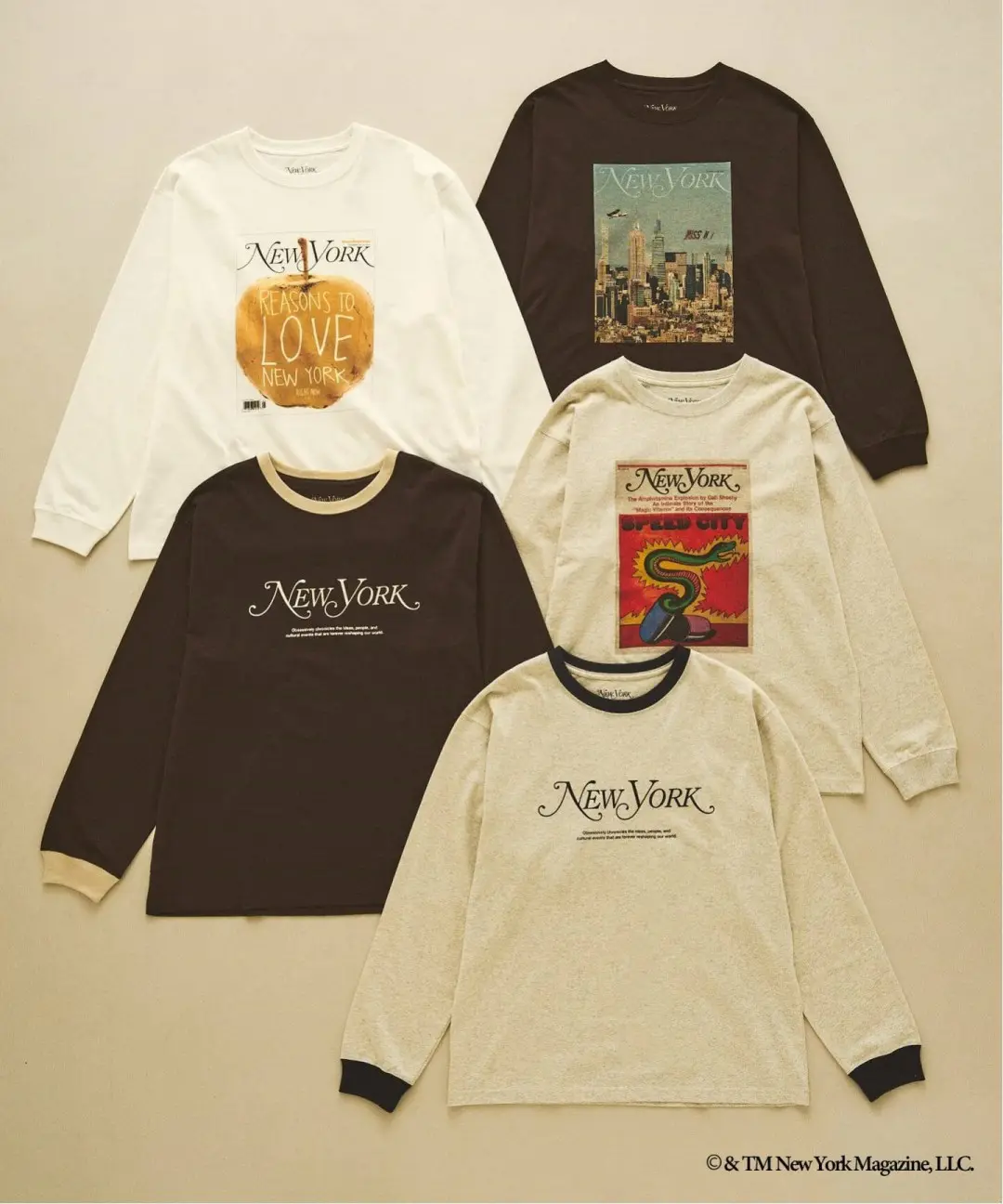
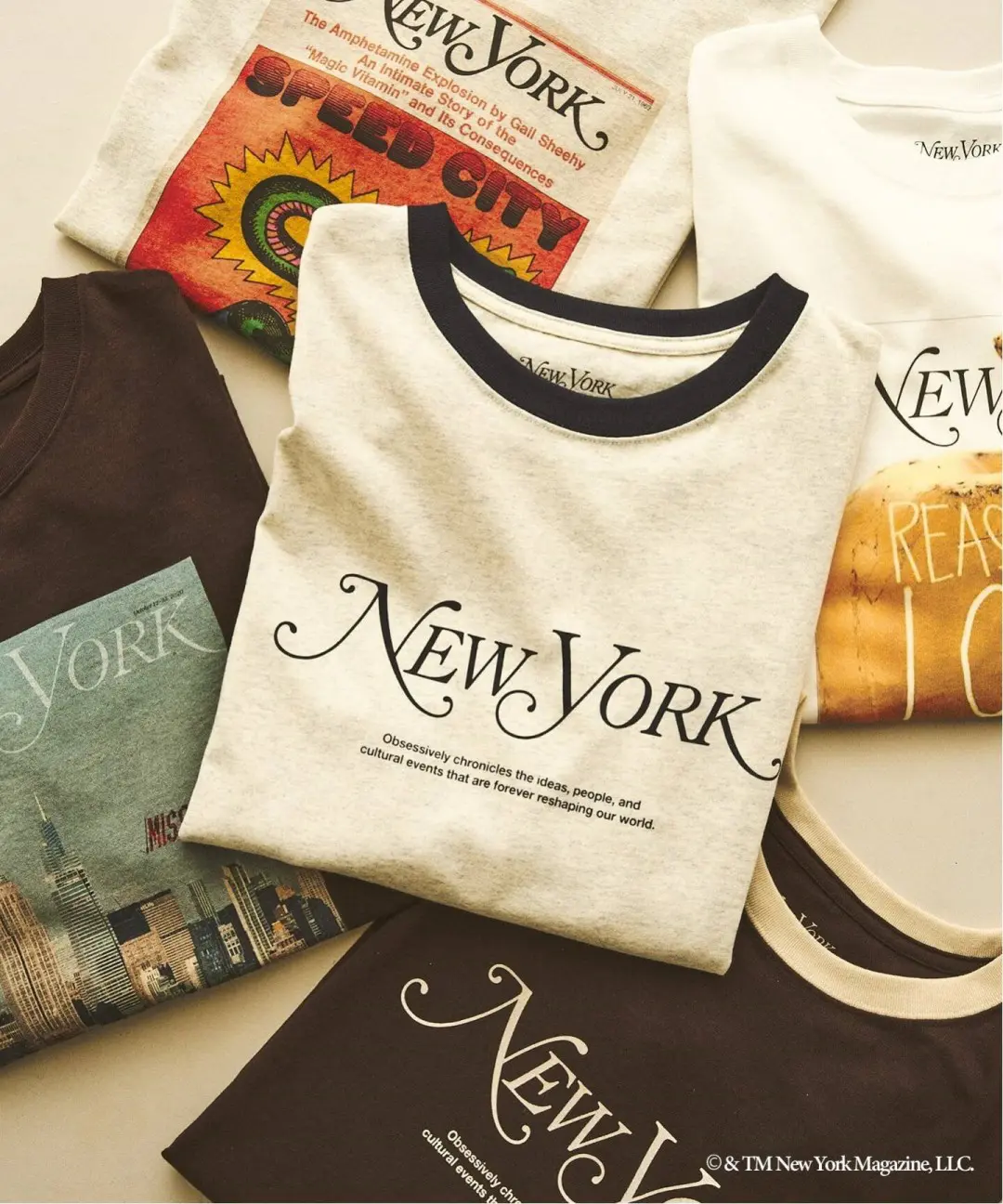
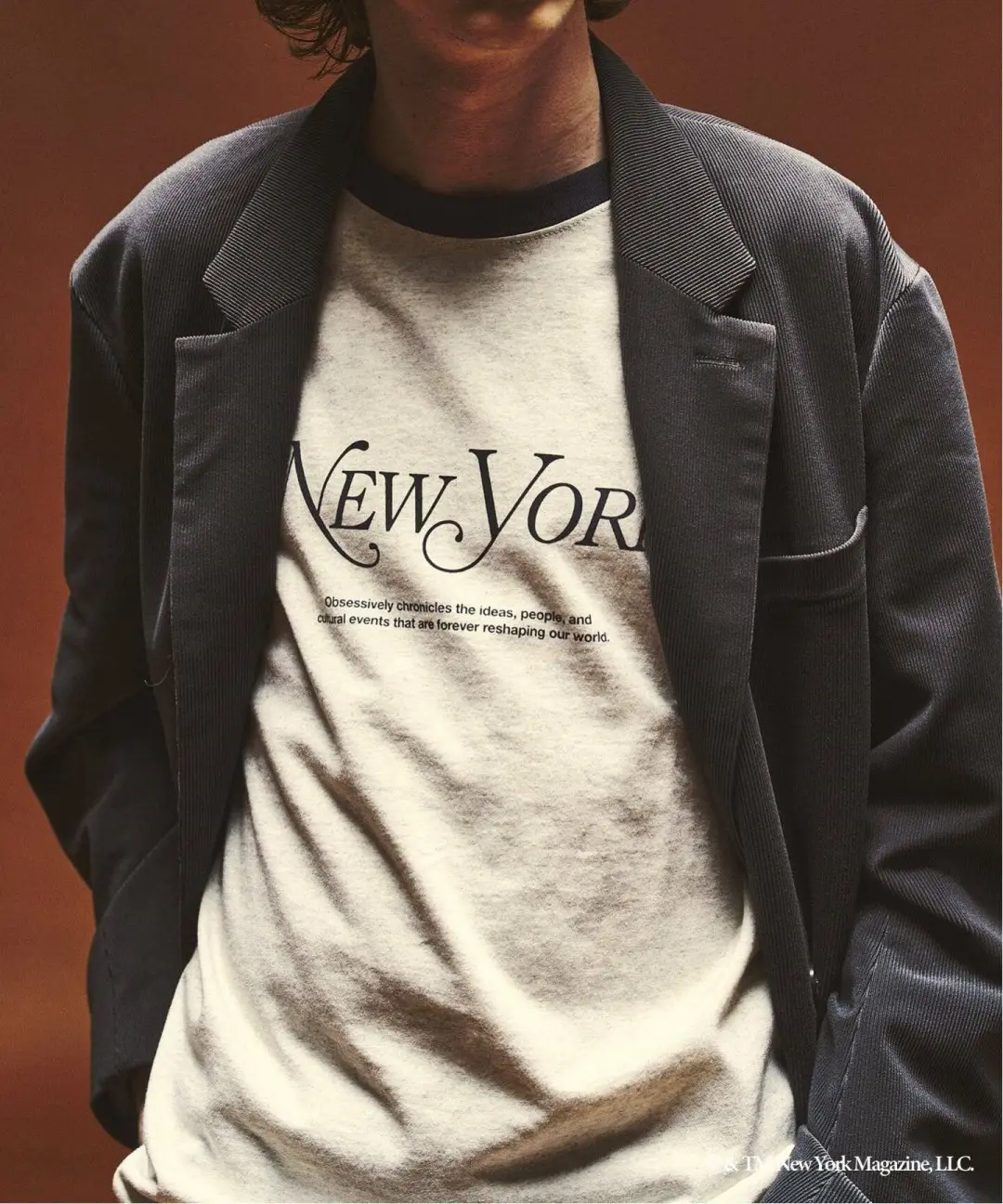
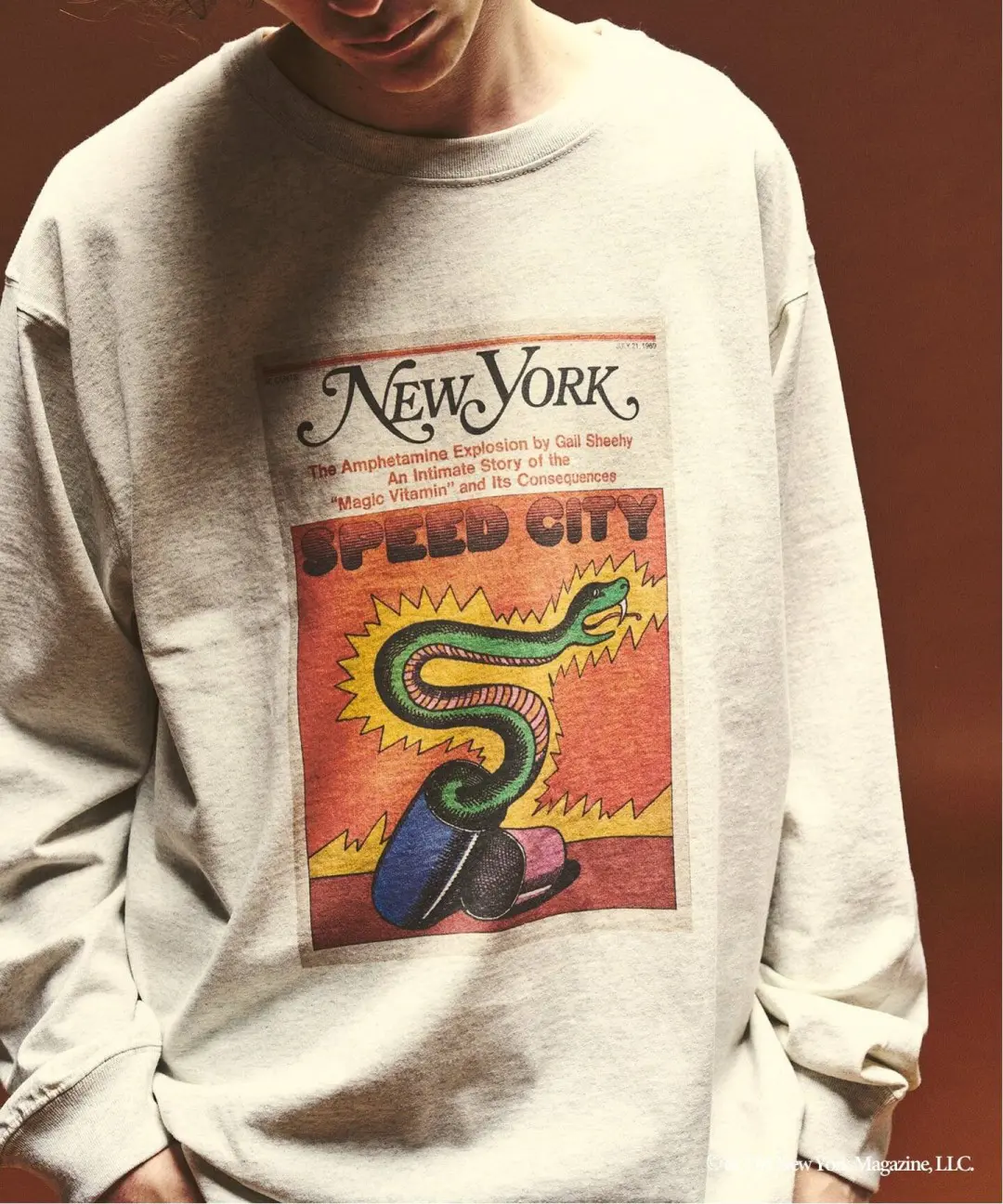
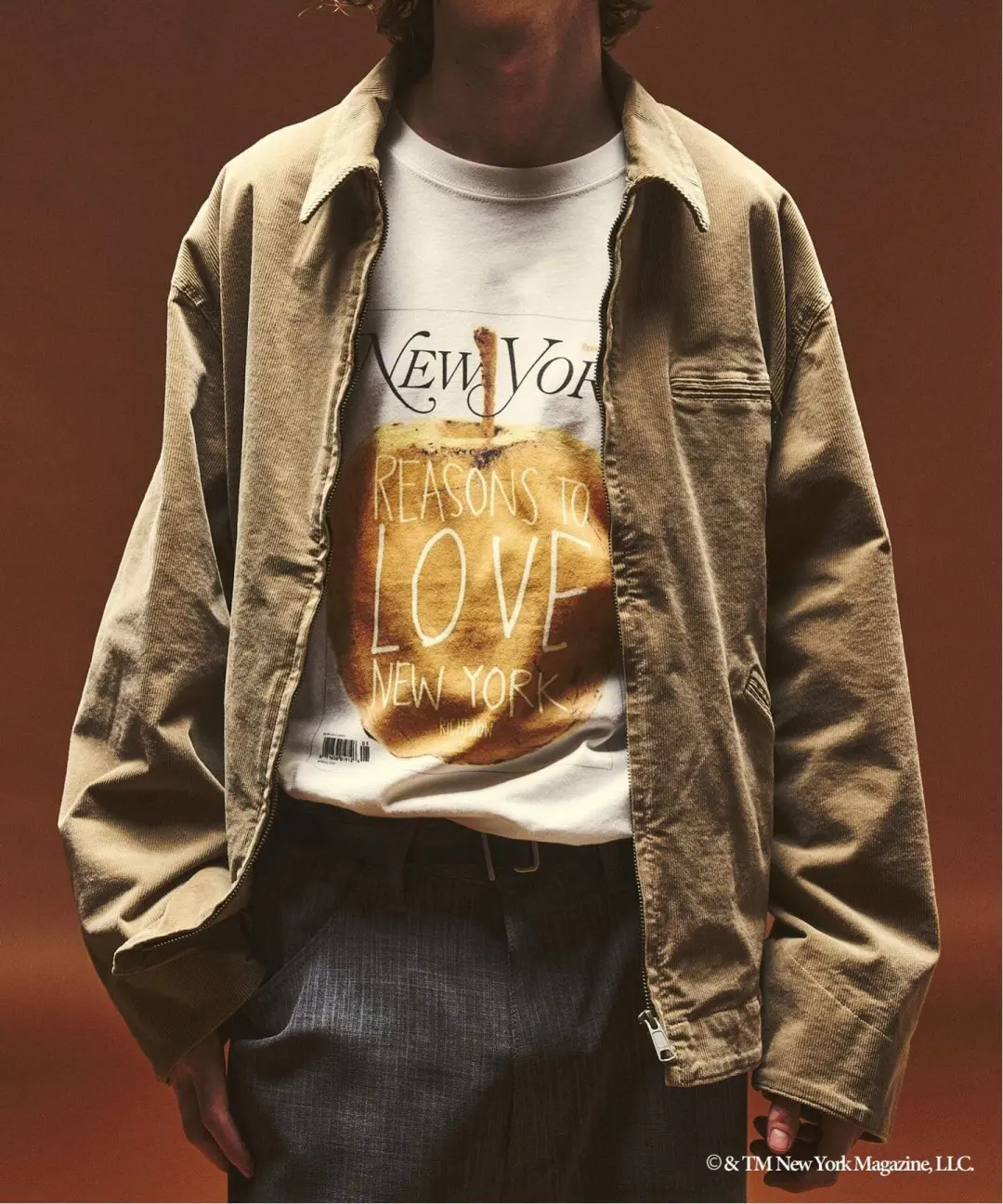
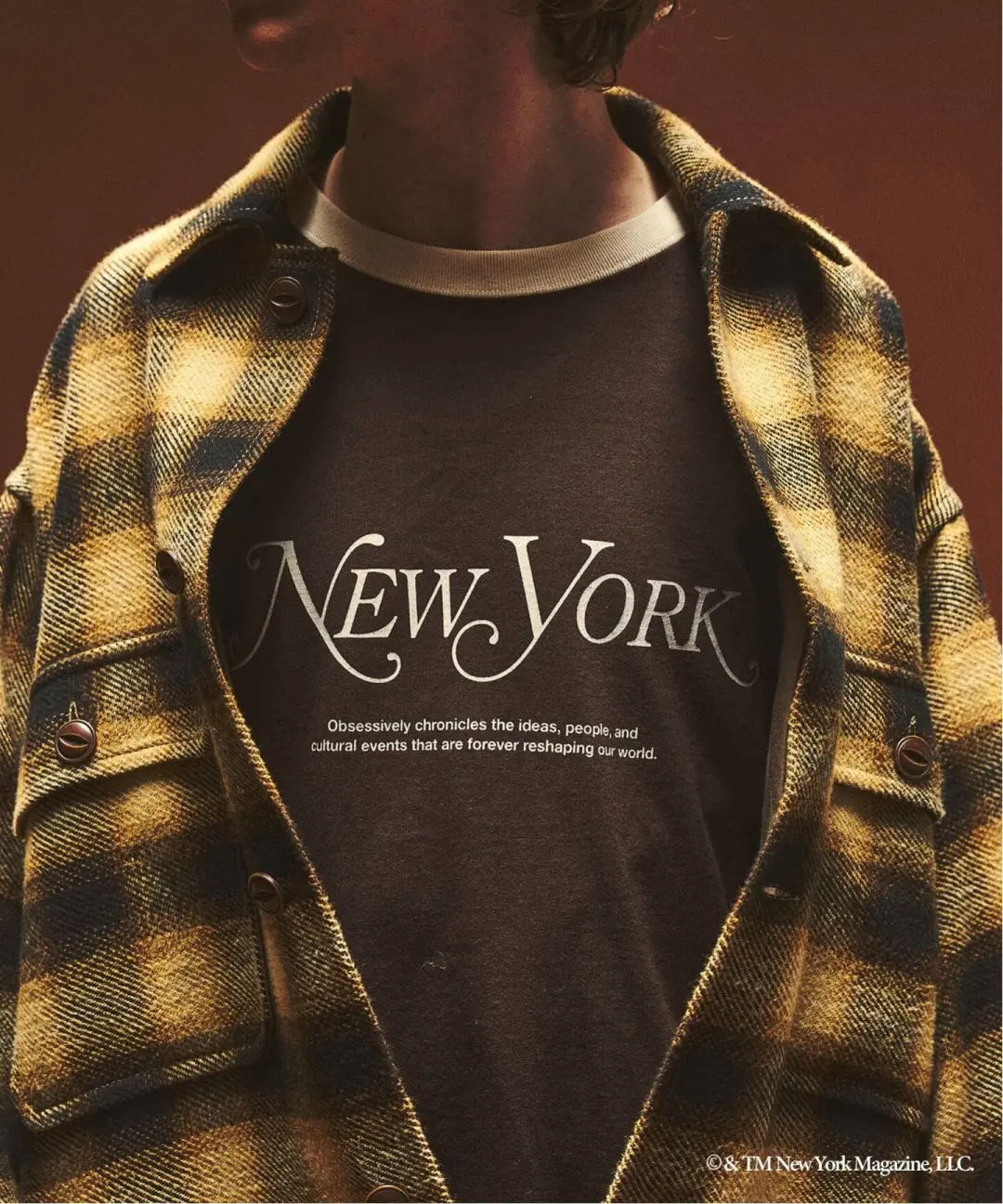
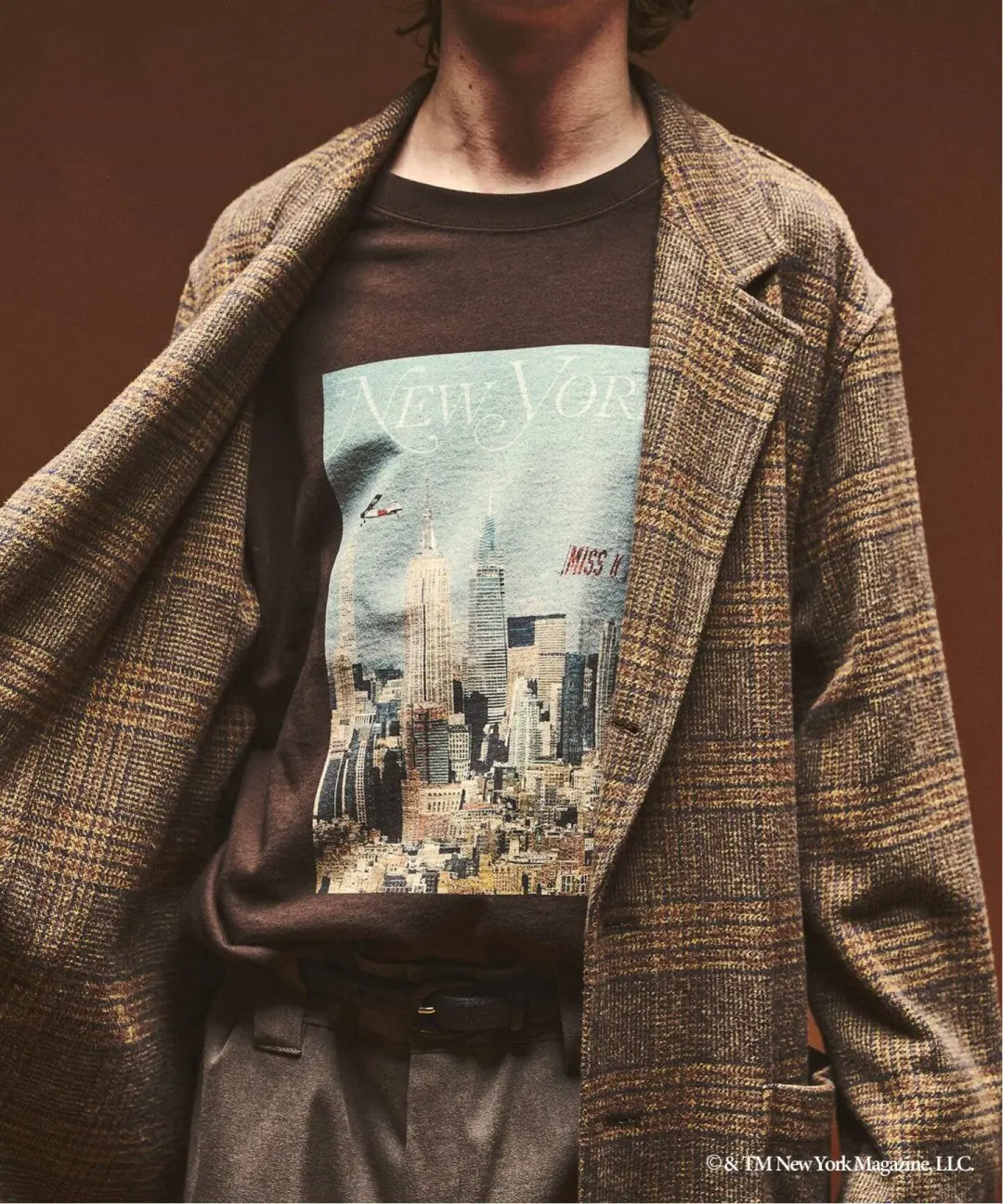
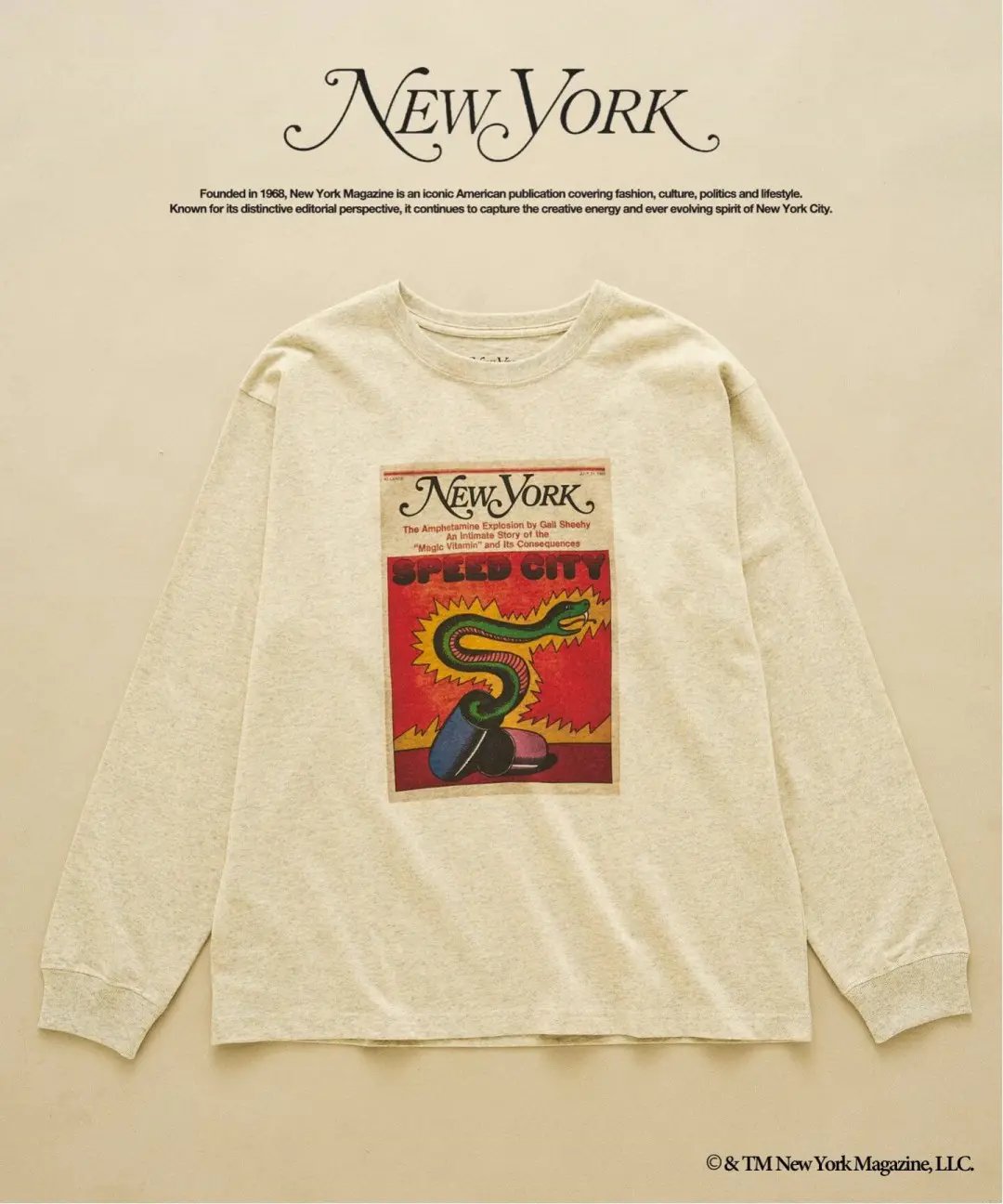
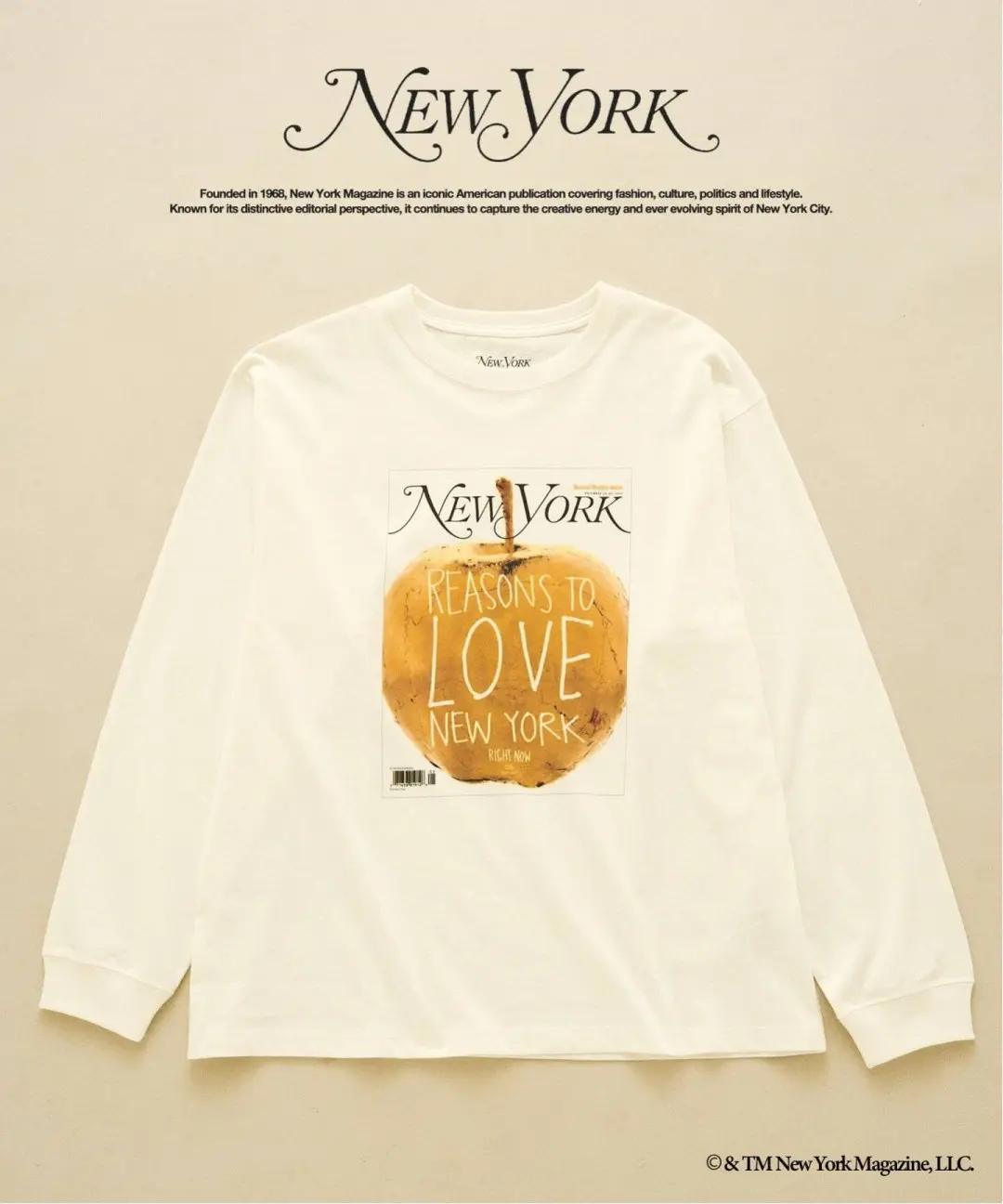
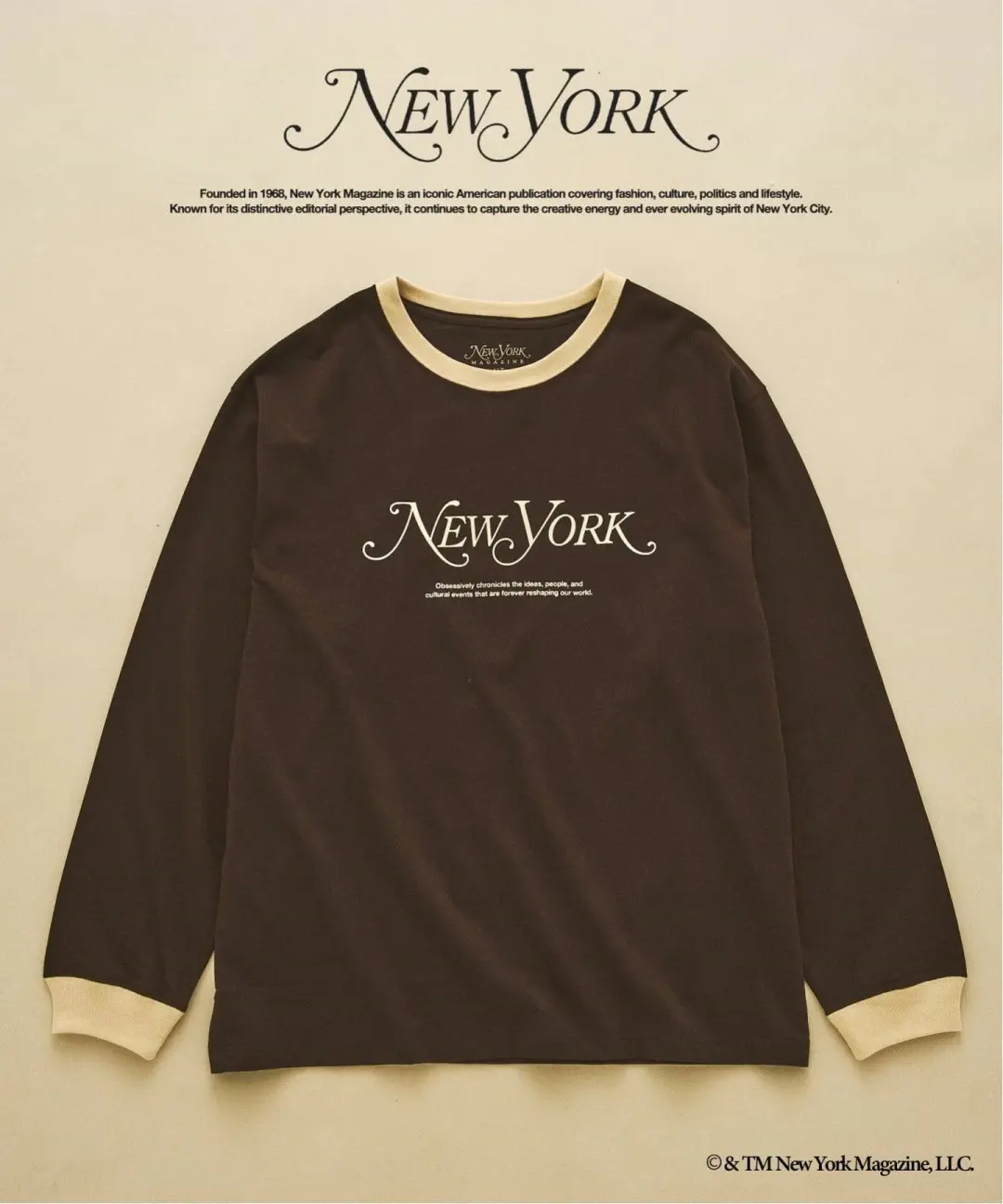
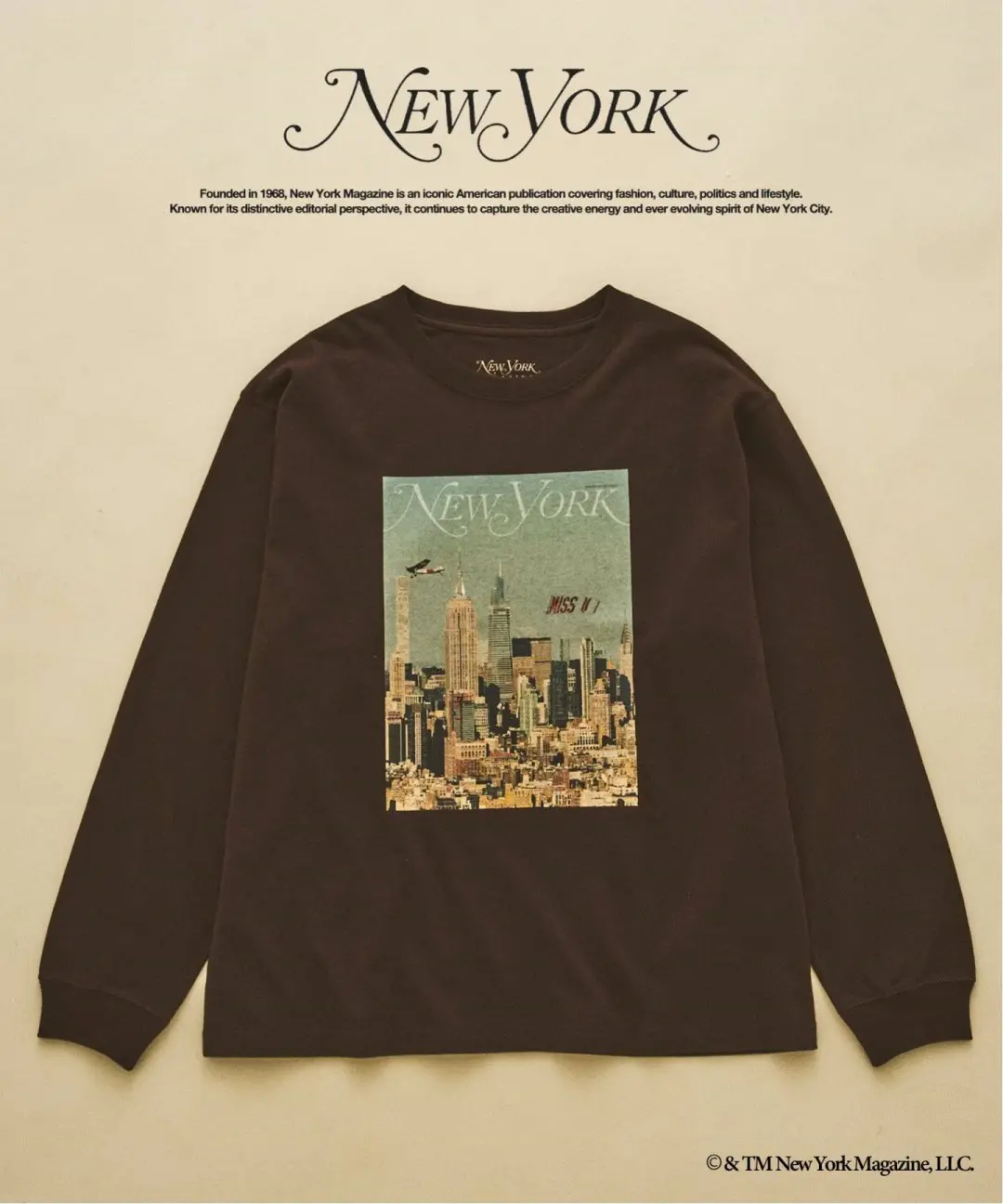
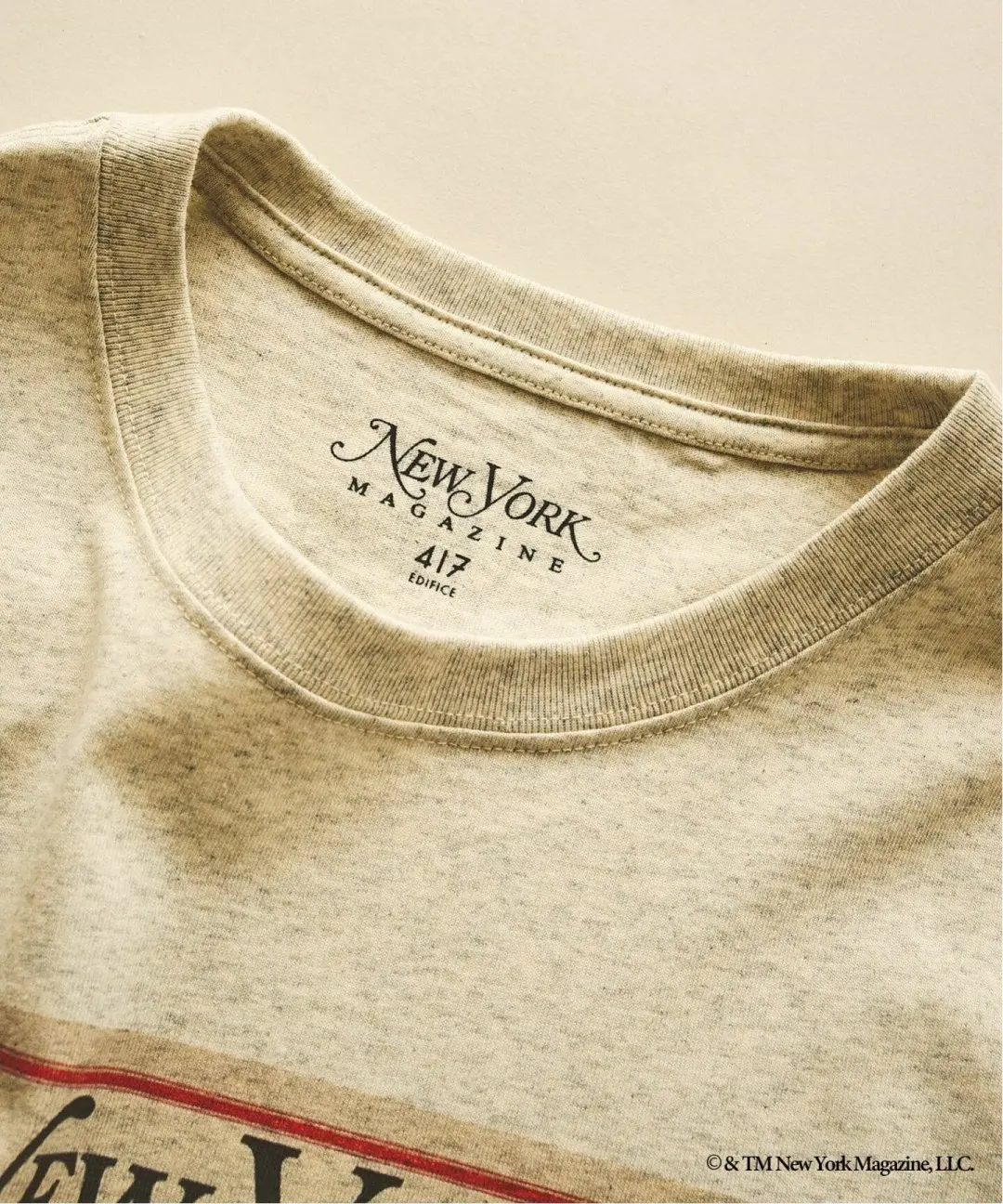
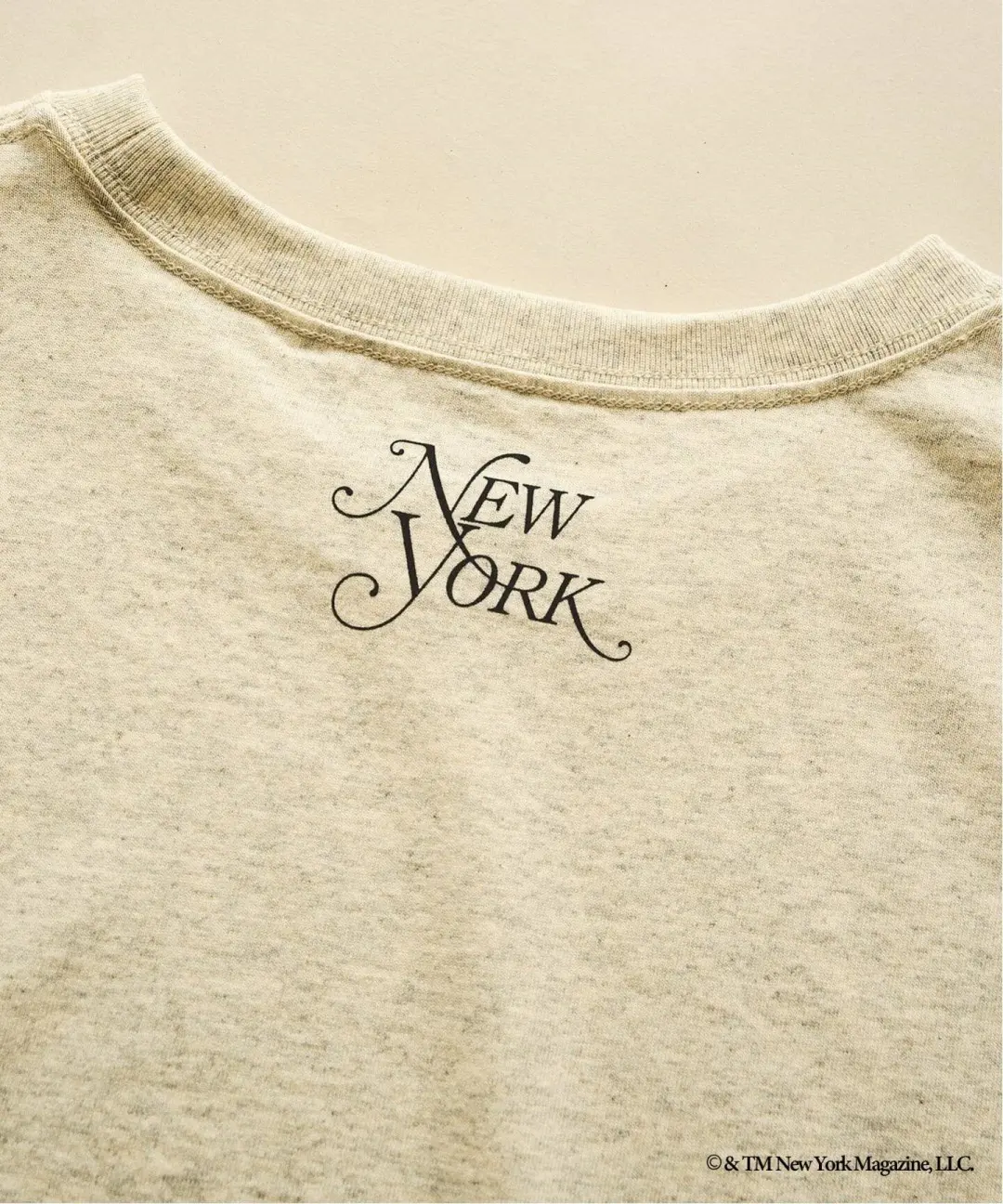
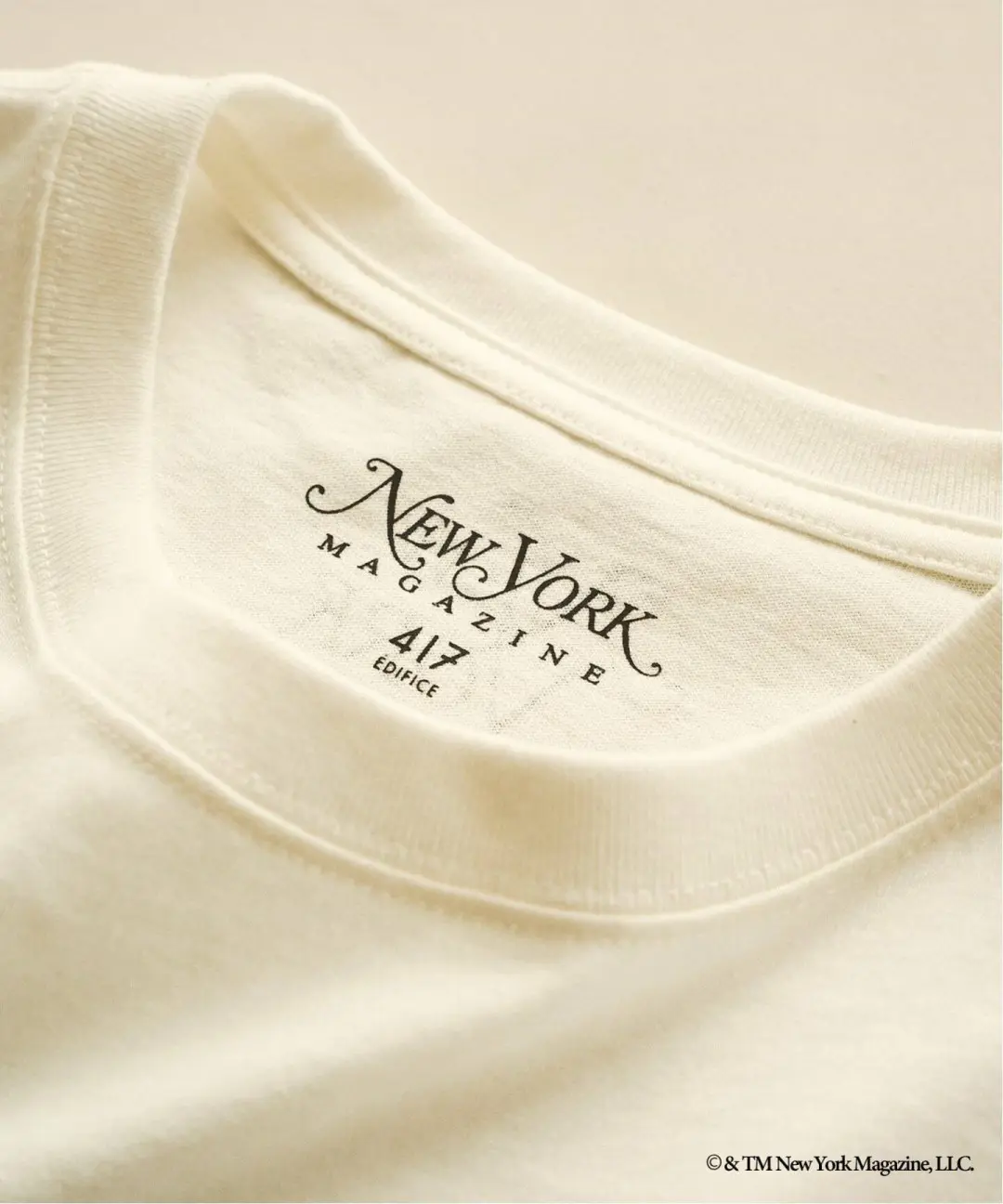
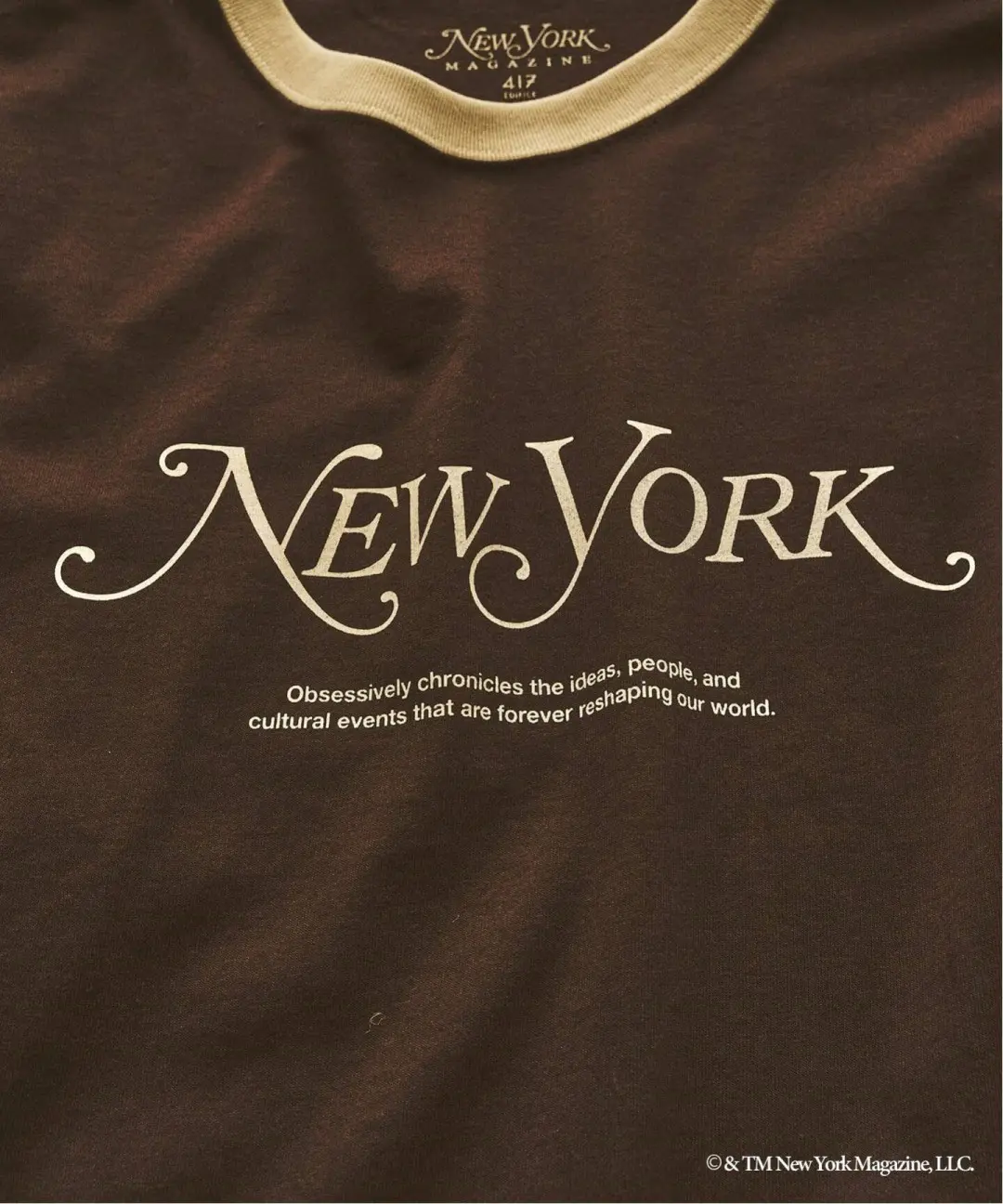
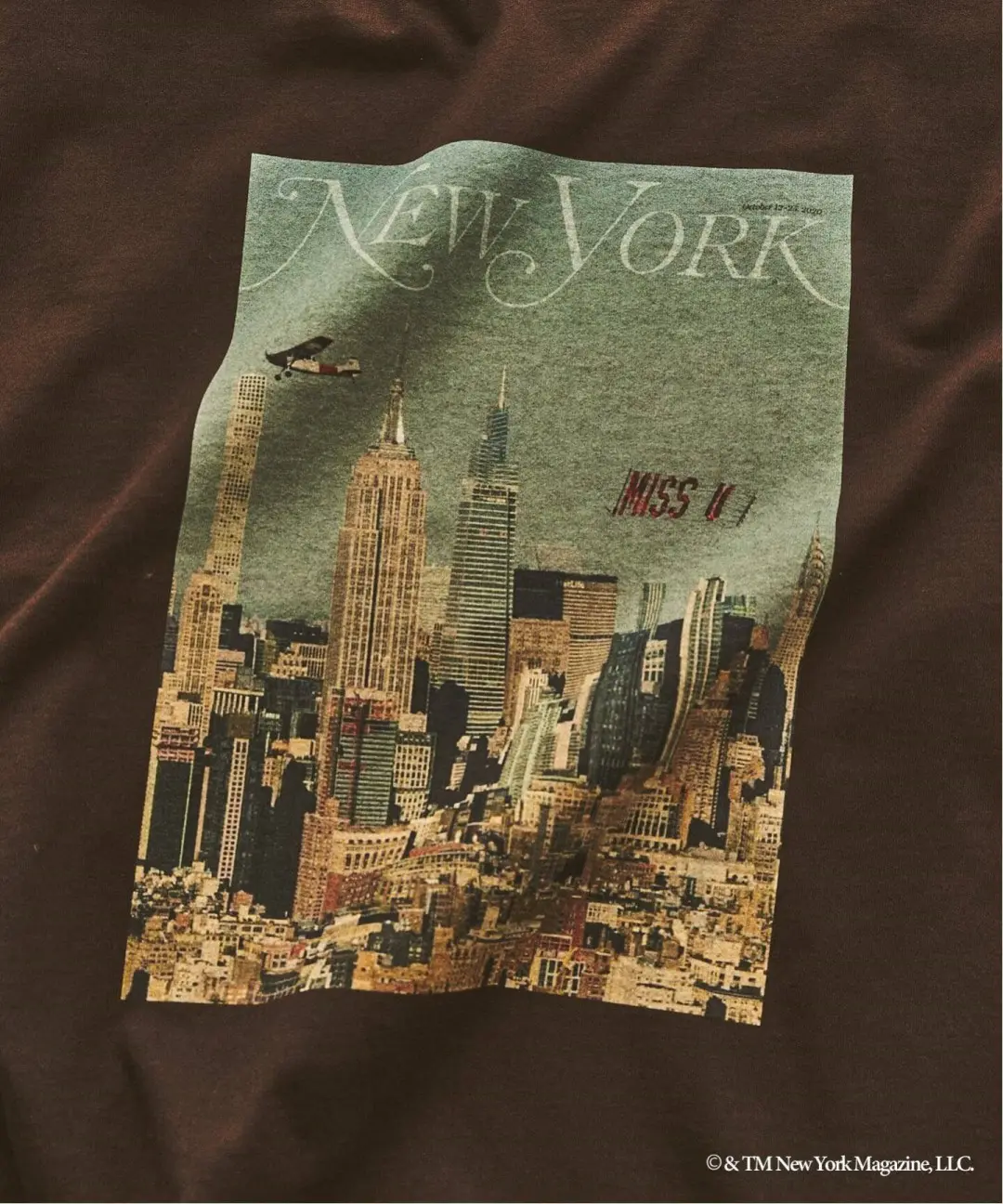
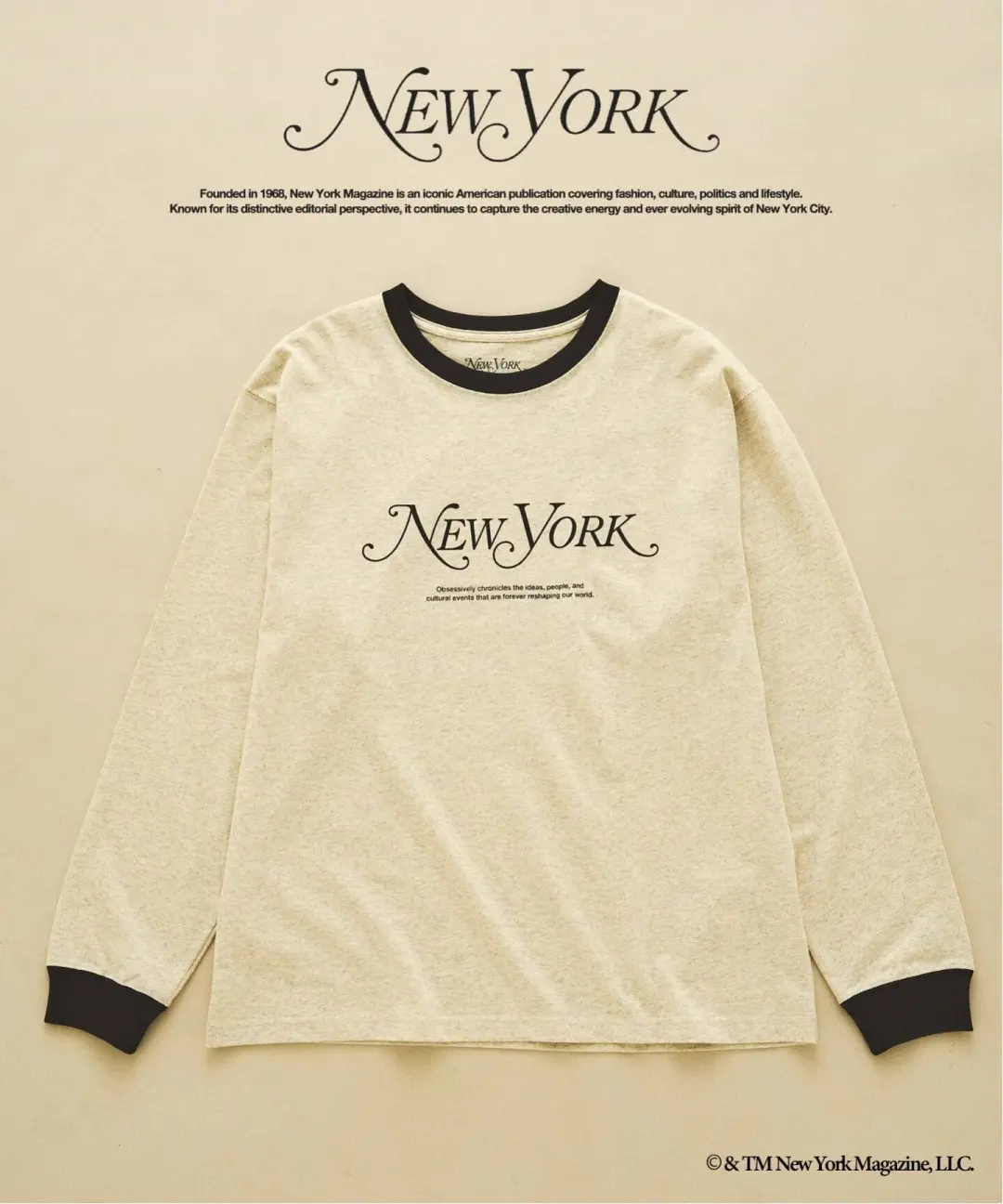
Five long sleeves sit under a single product number, TC2076, on 417 EDIFICE’s Rakuten Fashion storefront, each tagged NEW and priced at ¥9,900 including tax. None of them carries a generic skyline. The fronts are lifted from New York magazine itself: a photograph of the city’s streets, a saturated cover headlined “SPEED CITY,” the cover art from the magazine’s long-running “Reasons to Love New York” franchise, and a straight logo version set in the title’s swash italic nameplate. Next to them, under product number TC2074, sits a ¥6,930 cap with that same nameplate stitched small across the front.
Signal. What happened: 417 EDIFICE, the entry-price select shop run by the BAYCREW’S group, has released a Fall/Winter 2026 special-order collide with New York magazine made up of a printed long sleeve Tee and an embroidered cap. Exact object: the NY MAGAZINE x 417 special-order Long Sleeve T-shirt (TC2076, ¥9,900, 100 percent cotton, sizes M and L, colorways listed as Grey B, Grey C, White, Brown and Brown A) and the NY MAGAZINE x 417 special-order Cap (TC2074, ¥6,930, one size, listed in Black and Grey). When and where: live and showing stock on 417 EDIFICE’s Rakuten Fashion store as of October 10, 2026, with a Japan market release notice dated the same day also pointing to a department-store web channel; no separate in-store date or overseas release has been announced. Source: 417 EDIFICE’s own Rakuten Fashion listing for the long sleeve and its companion cap listing on the same store, plus a Japan market release notice. Why it matters: a Tokyo chain that built its reputation on special-order versions of heritage clothing labels is now treating an American magazine’s archive the same way, a few months after that magazine changed hands.
stir
The product copy 417 EDIFICE wrote for the shirt does most of the explaining. It introduces New York as a culture and lifestyle magazine founded in the city in 1968, covering fashion, art, politics and urban life, and it describes the long sleeve as a garment built from the title’s archive covers and its signature logo. The copy is precise about what it names and quieter about where each image came from, so the four fronts are worth taking one at a time.
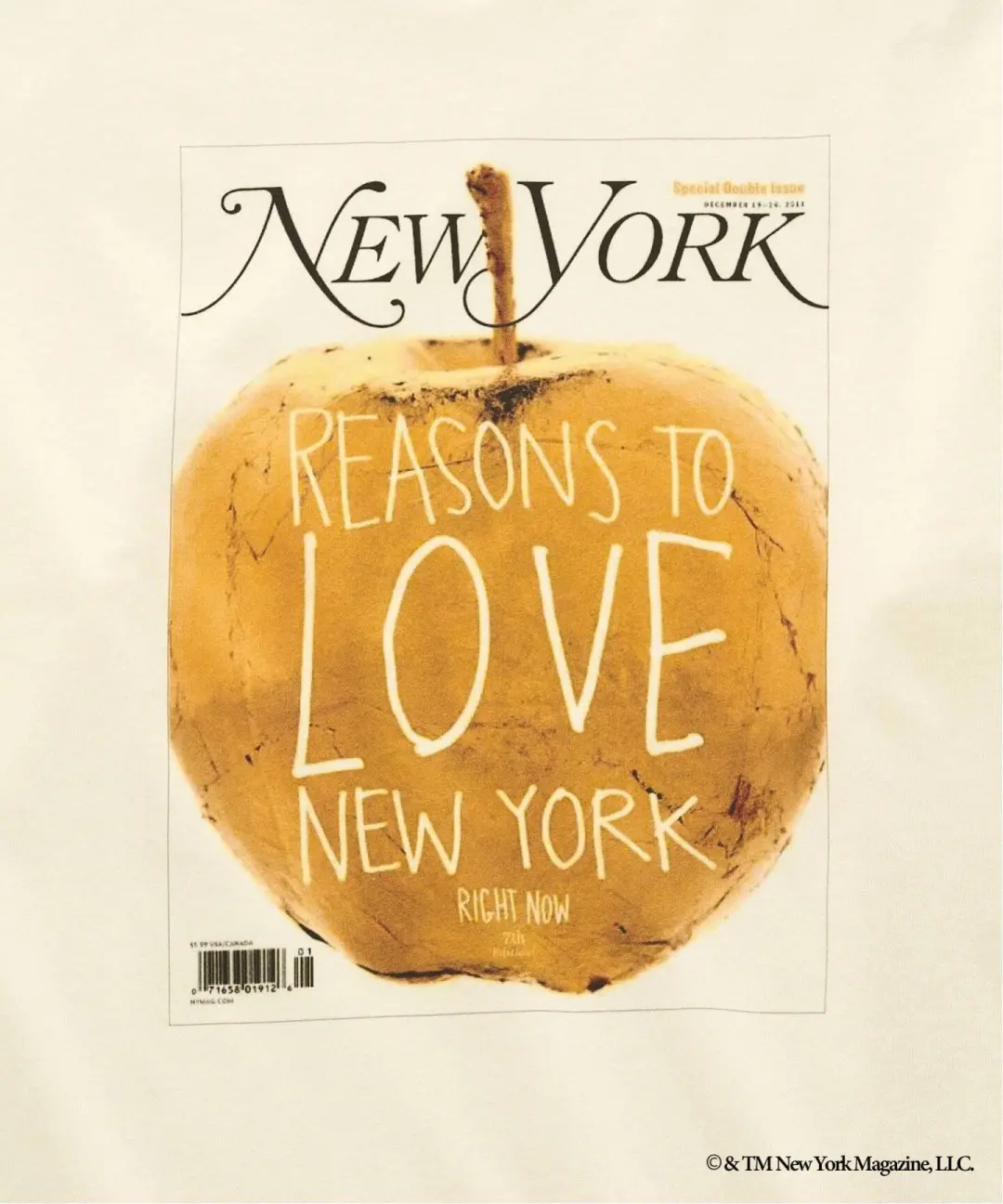
The most recognizable is “Reasons to Love New York,” the year-end issue the magazine has turned into an annual list of the city’s small wins and oddities. Its December 2025 edition, discussed in a NY1 interview with editor-at-large Erik Maza shortly after publication, ran 39 entries under a set of covers showing famous New Yorkers sharing headphones on the subway. The franchise has now run for about two decades. 417 EDIFICE does not say which year’s cover is printed on its shirt, and the retailer photography is the only way to tell.
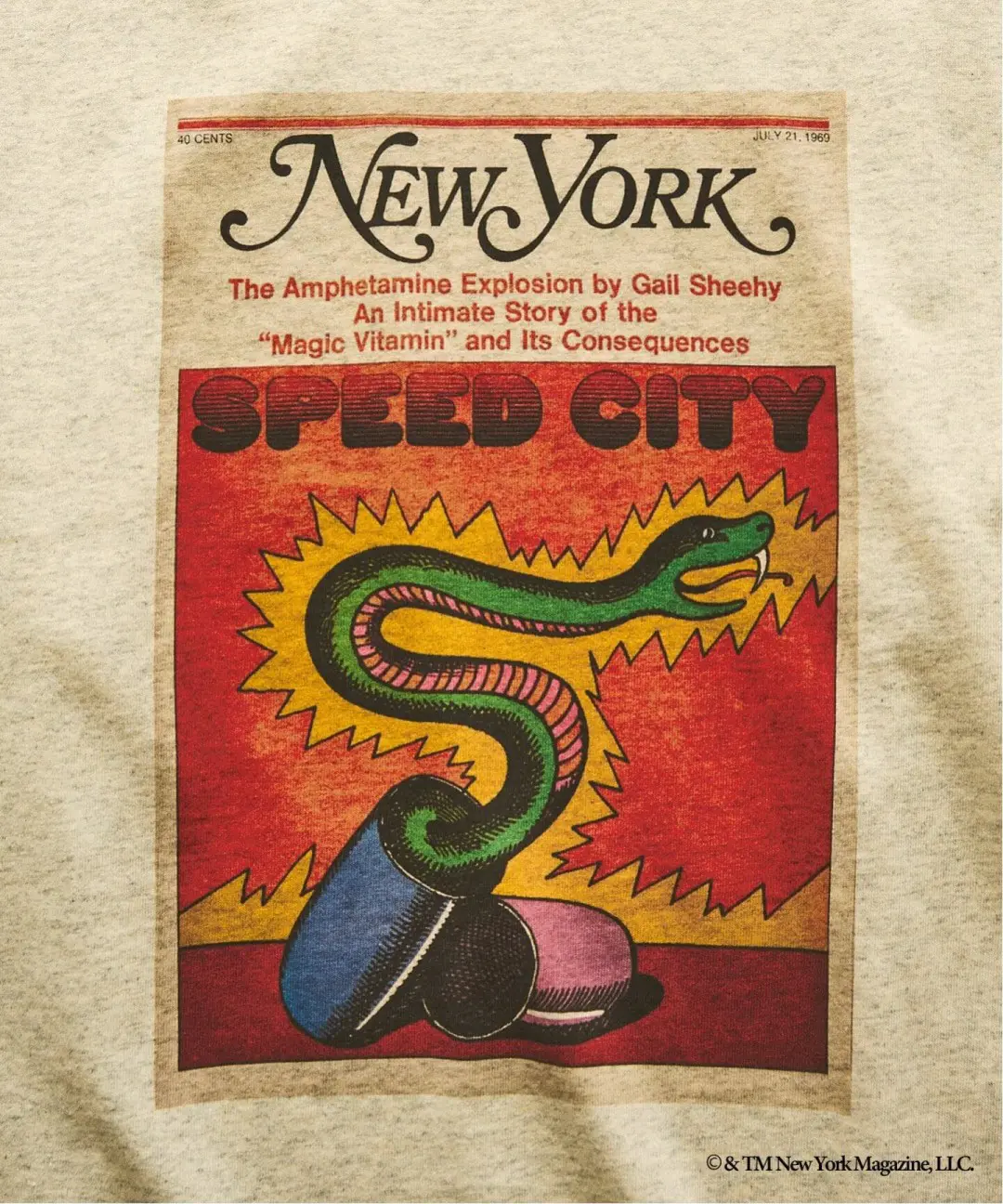
“SPEED CITY” is harder to pin down. The listing calls it a cover with vivid coloring and stops there. It gives no issue date, no cover artist and no story, and DRIFT could not match the title to a dated New York issue before publication. The streetscape front is similarly uncredited, described only as a photograph that captures the city’s streets.
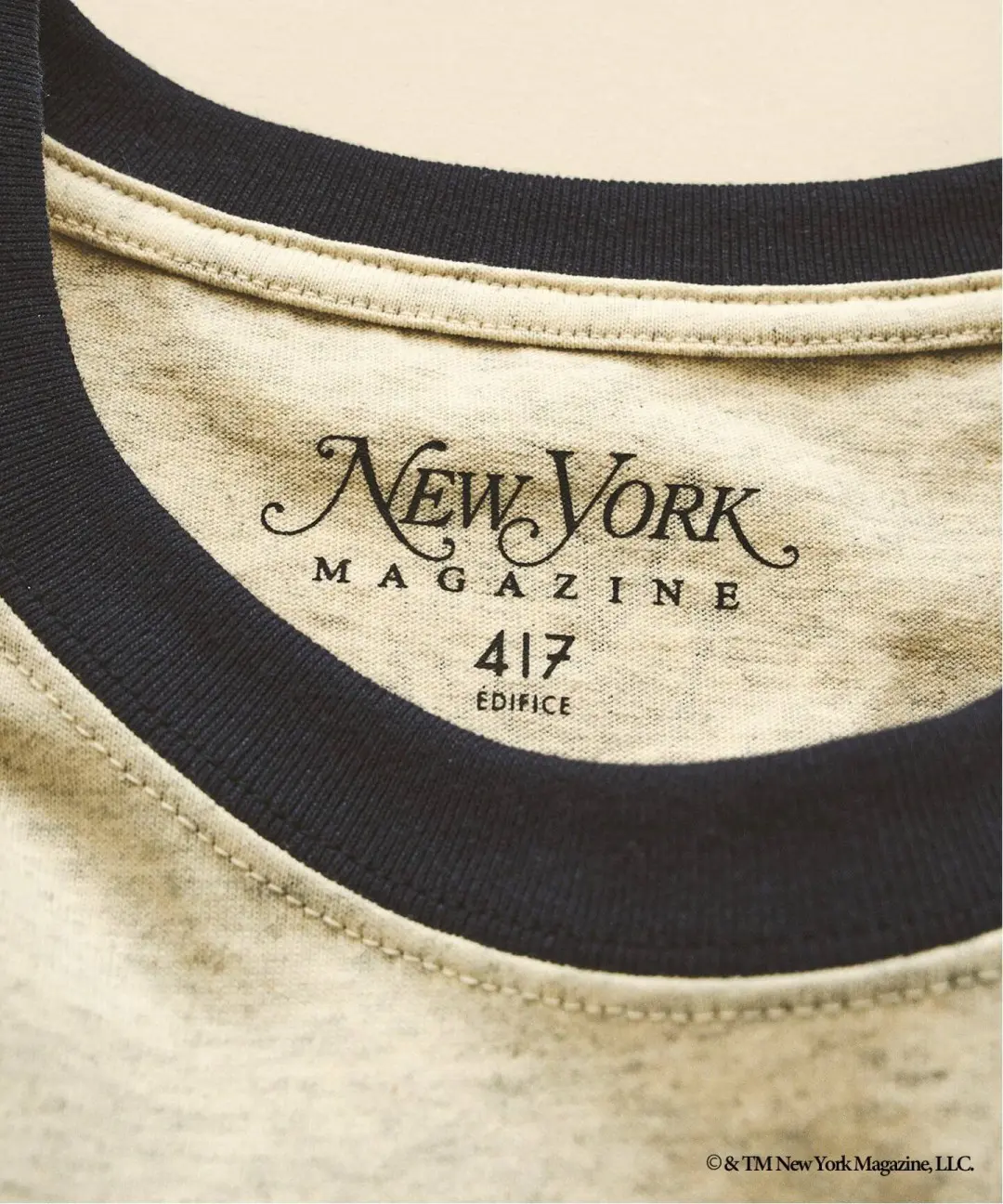
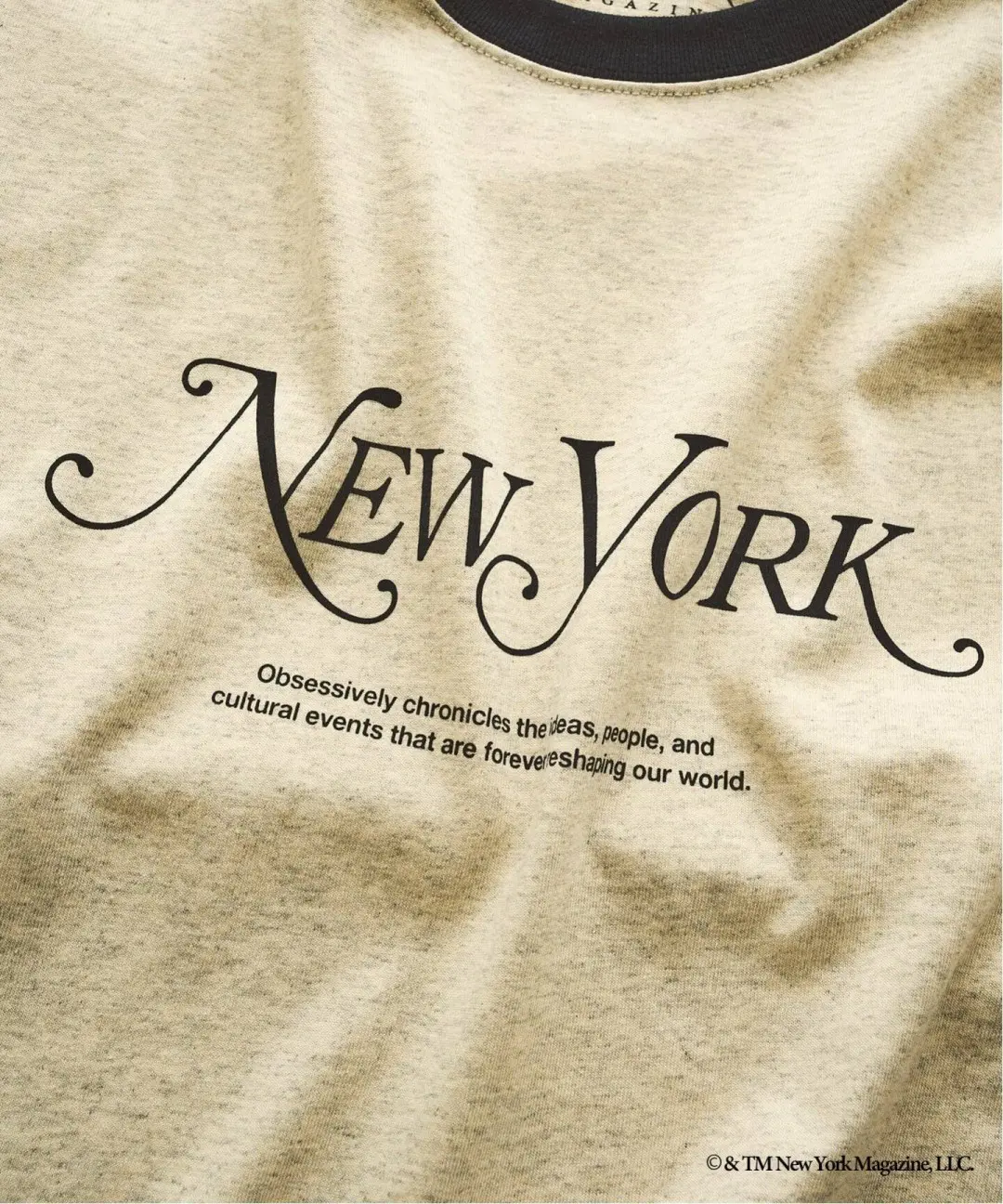
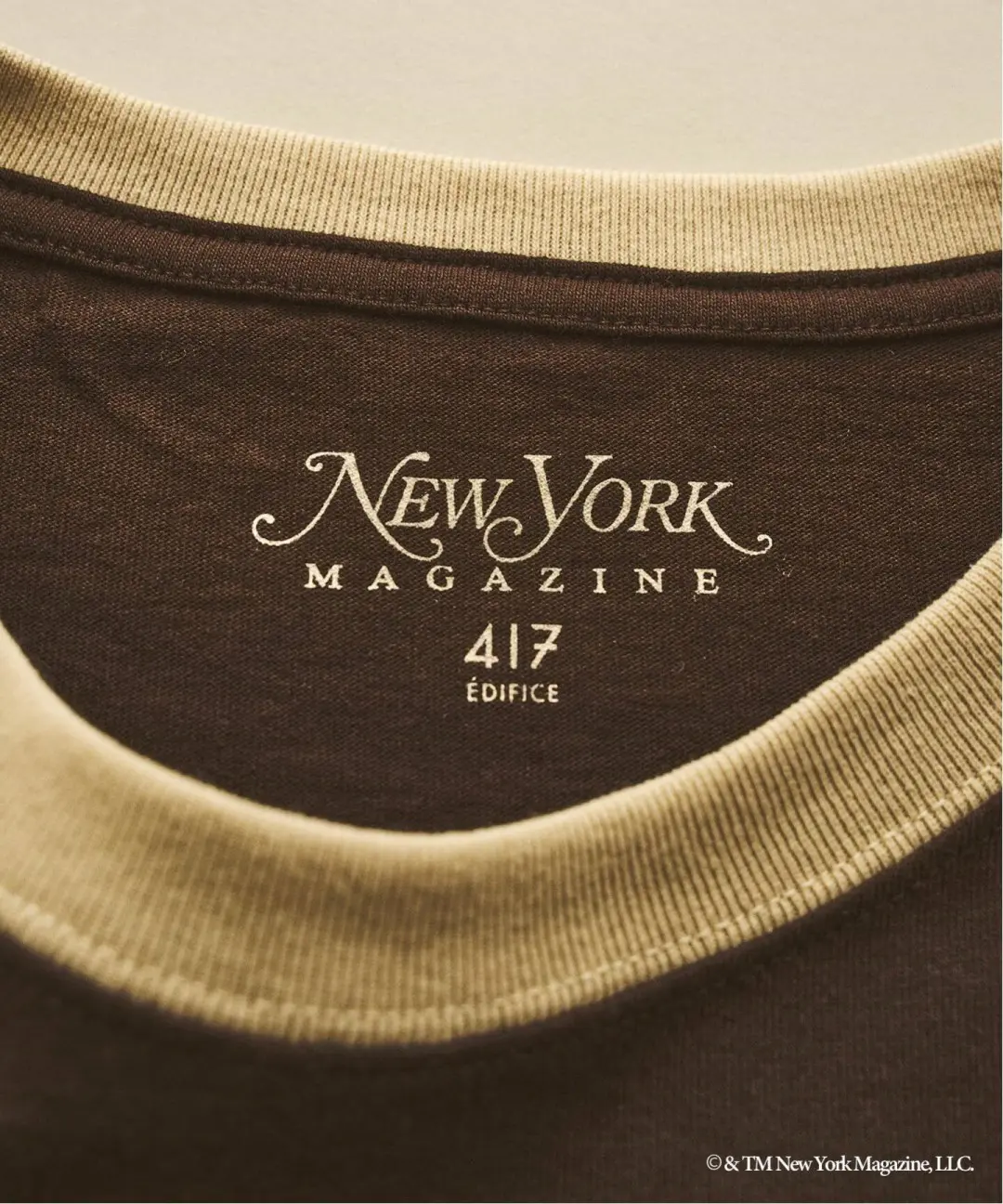
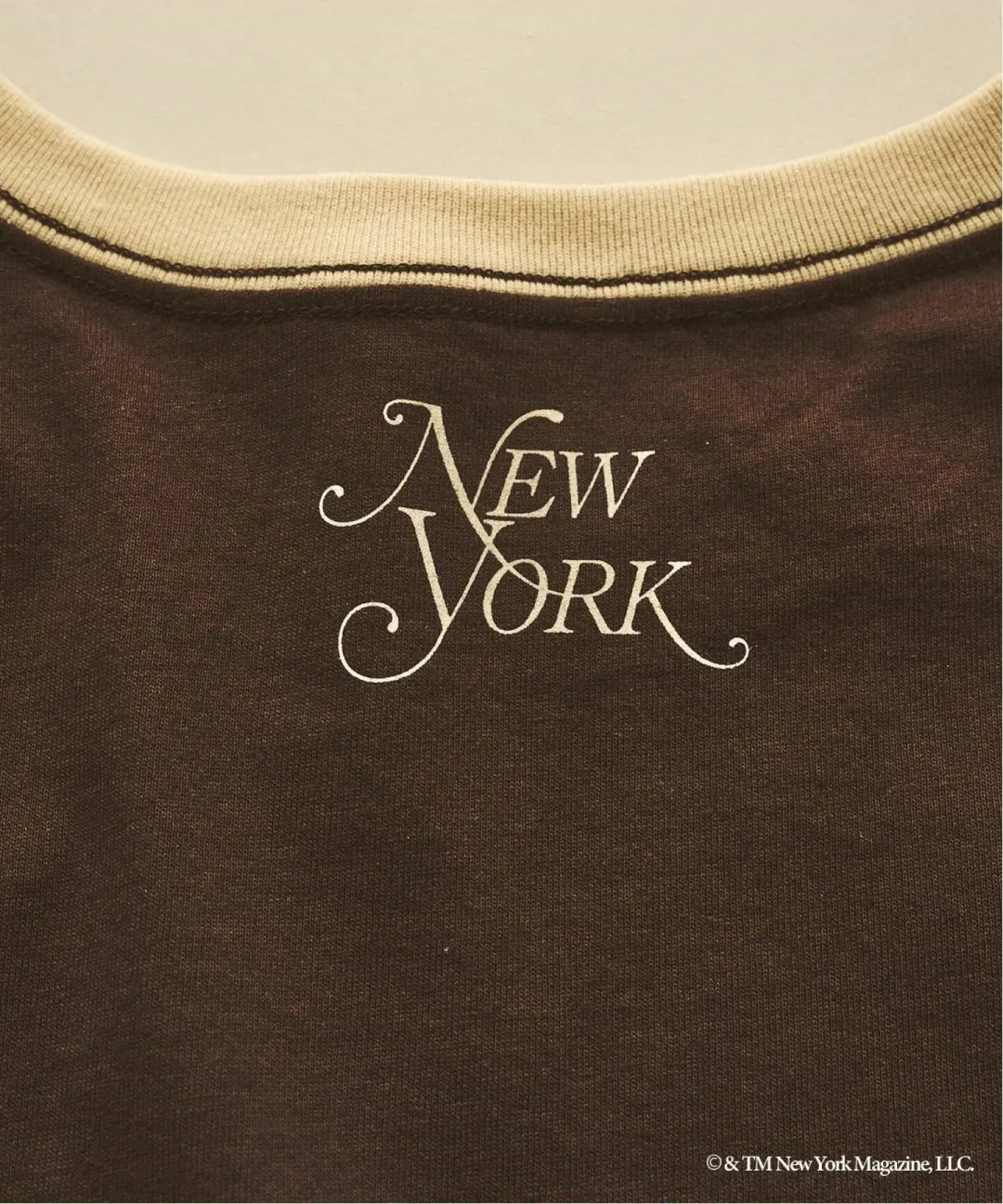
The fourth design drops imagery altogether in favor of the nameplate, set in what the copy calls a classic typeface. It is the only version the listing ties to a ringer treatment, with trim in a contrasting color that 417 EDIFICE says gives the shirt a vintage mood.
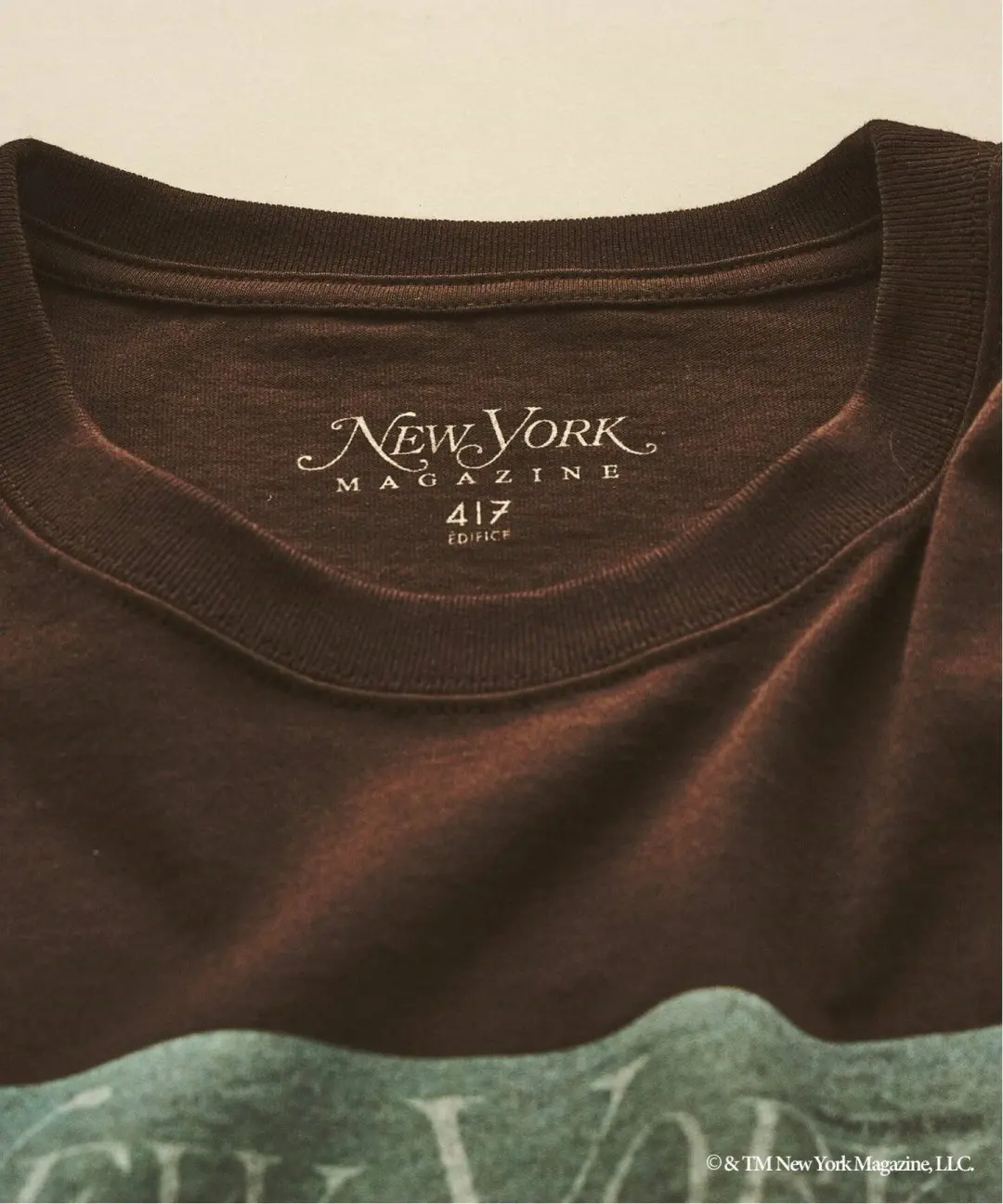
The cut is relaxed rather than oversized. In size M the body measures 66 cm long and 56.5 cm across, with 53.5 cm shoulders and a 61 cm sleeve; size L runs to 68.5 cm long and 60 cm across. Body and rib are both 100 percent cotton, the shirt is made in China, and the care instructions ask for a gentle machine wash. M and L are the only sizes listed. The copy suggests wearing it with denim or chinos, or with slacks for something cleaner, which is a fair summary of how 417 EDIFICE styles most of its own racks.
shh
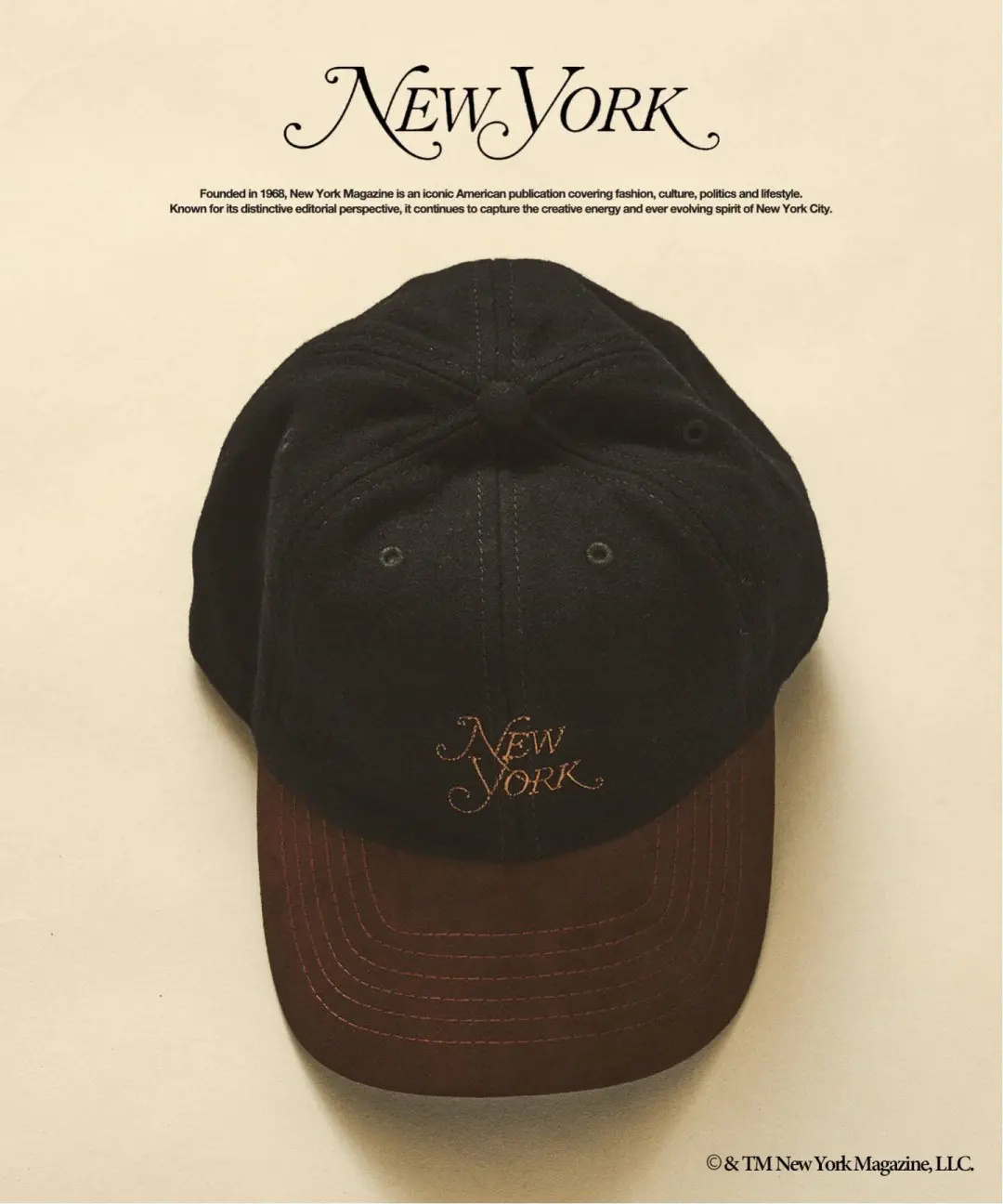
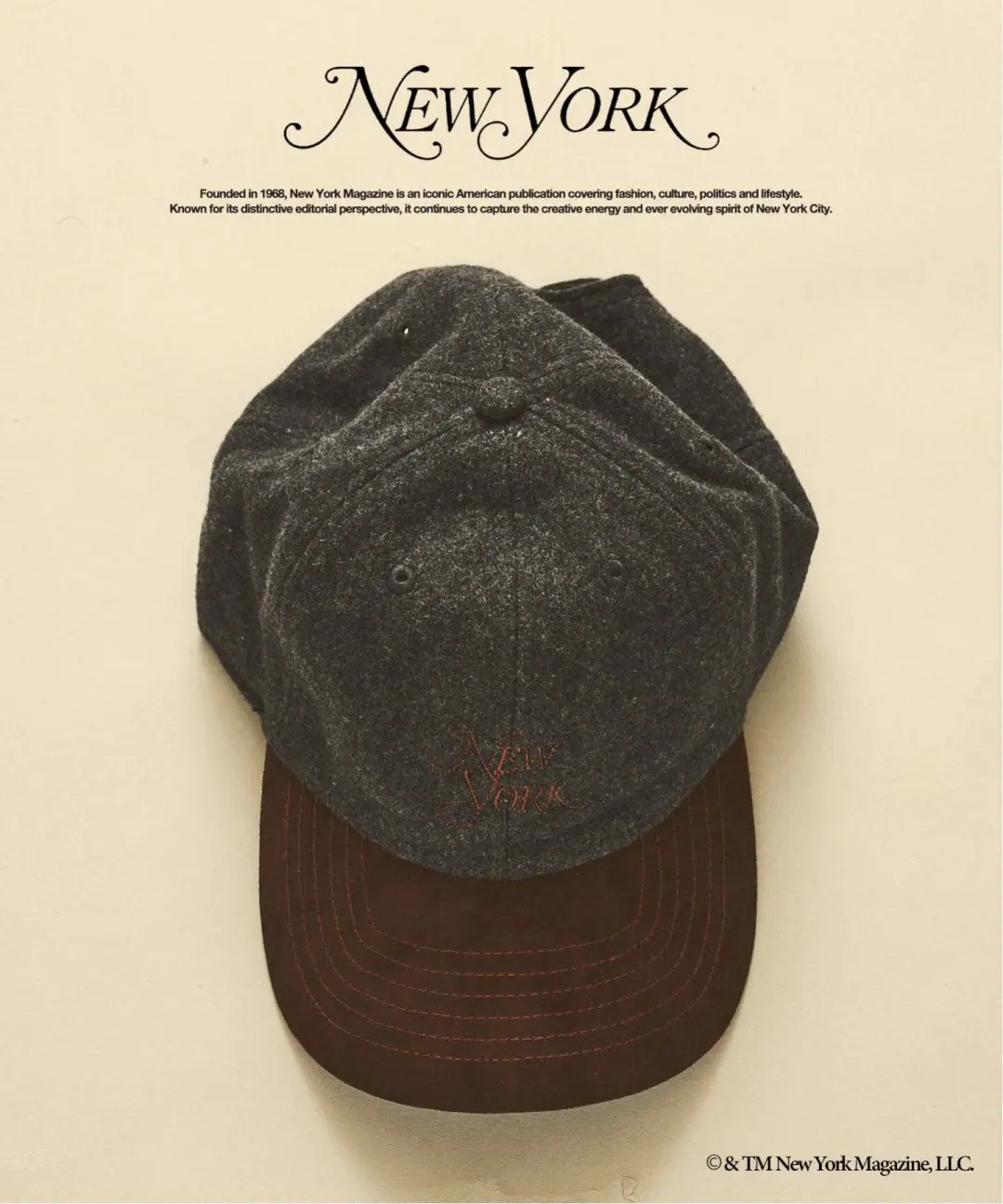
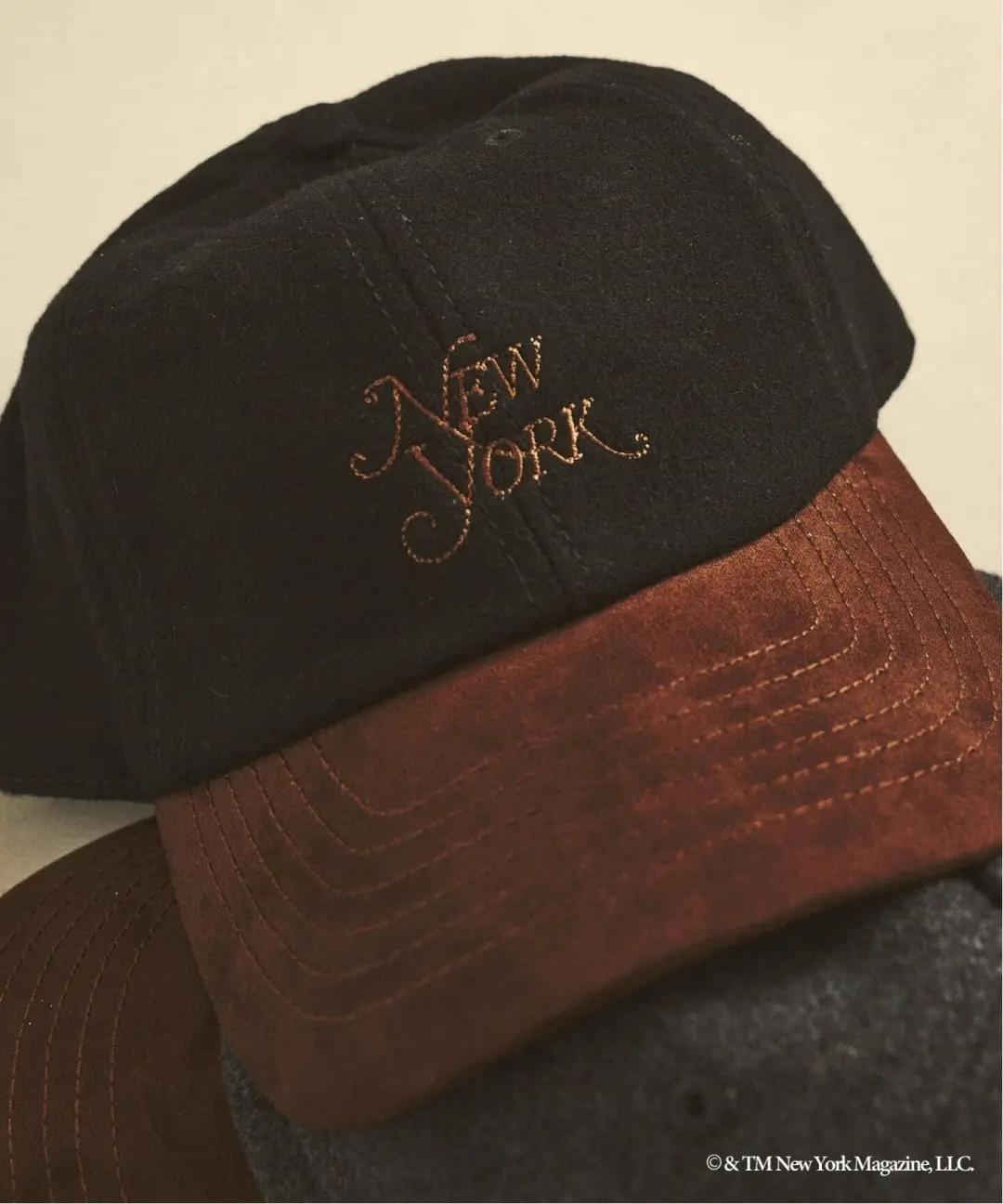
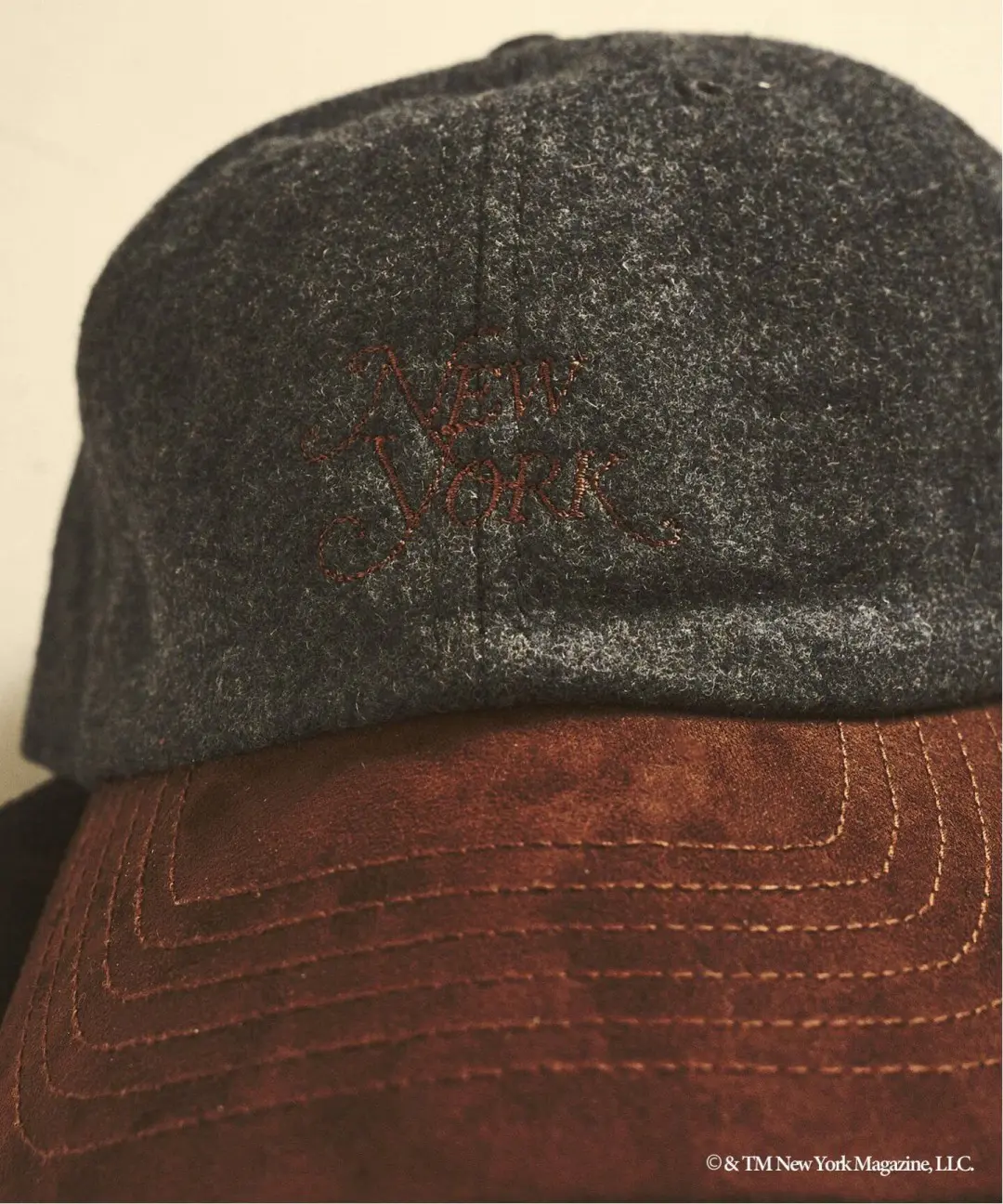
Where the shirts lean on pictures, the cap leans on restraint. It carries only the magazine’s nameplate, embroidered compactly on the front panel in a thread chosen to sit close to the body color instead of contrasting with it. The fabric is described as having a warm, wool-like hand, which is not the same thing as wool, and the listing gives no fiber composition at all.
The body colors are charcoal and black, each paired with a brown-toned visor. The copy presents the combination as a classic color scheme meant to add an understated accent, and in the product shots the brown brim is the one detail that pulls the cap away from plain logo merchandise and toward an older ballcap silhouette.
There is one small naming wrinkle. The description talks about charcoal and black, while the color selector on the same page lists Black and Grey, so the grey option appears to be the charcoal body. The cap comes in one size with no measurements published. Suggested styling runs from sweatshirts and denim to tailored jackets and fall outerwear, which positions the cap as a cold-weather piece rather than a summer souvenir.
flow
The lettering on that cap has passed through several hands. New York started in 1963 as the Sunday magazine of the New York Herald Tribune, outlived the paper’s 1966 closure, and was relaunched as a standalone glossy once editor Clay Felker and designer Milton Glaser bought the rights to the nameplate. Wikipedia’s history of the magazine dates the first independent issue to April 8, 1968, and credits Glaser and his deputy with designing and laying out the early magazine.
A long discussion thread on the typography archive Fonts In Use traces the swash italic itself. Contributors there note that Glaser based his version on Bookman Swash Italic, replacing a Caslon italic logo from the Herald Tribune years, and that the magazine’s mid-2000s redesign brought the older Caslon form back. That lineage, a newspaper supplement’s lettering redrawn by a founding designer and later restored by another, is what 417 EDIFICE is now embroidering onto a ¥6,930 cap.
The magazine has an address story of its own, too. Its first office sat on the top floor of the old Tammany Hall clubhouse at 207 East 32nd Street in Kips Bay, a Beaux Arts building Glaser owned. New York worked from there from its founding until 1974, and in the fall of 2023 it moved its office back into the same building.
Ownership has been less settled than the address. Rupert Murdoch took the magazine in a 1976 hostile takeover that forced Felker and Glaser out. Vox Media bought its parent company in 2019. In May 2026, James Murdoch and his Lupa Systems holding company struck a deal to acquire New York along with Vox.com and the Vox Media Podcast Network, reportedly for more than $300 million. The 417 EDIFICE rel lands nearly five months after that deal was announced, and it is the archive, not the new ownership, that the shirts put on display.
scope
417 EDIFICE took its own name in the same plain way. In a 2018 interview with the Tokyo web magazine Houyhnhnm, buyer Takaaki Yamaguchi explained that the digits are simply the address of the first store, 4-1-7 in Shinjuku. The team had built the concept around being in the city, he said, and wanted both the shop and its location visible in the name.
The line began as a diffusion offshoot of EDIFICE, the group’s more grown-up menswear shop, and at first it was not a store at all but a category inside EDIFICE locations, meant to offer interesting products at entry-level prices. The earliest range was entirely original and almost austere: shirts in oxford, broadcloth and denim, plus three styles of chinos. Customer demand pushed the company toward a standalone shop, which Yamaguchi dated to 2009.
The parent company is considerably bigger than that origin story suggests. BAYCREW’S was founded in 1977 and, per WWDJAPAN’s company profile, runs fashion, furniture, food and fitness businesses from its Shibuya headquarters, with consolidated sales of ¥138.9 billion and 409 stores at the close of its August 2023 fiscal year. Within that portfolio, 417 EDIFICE now describes its look as “French preppy”: French trad worn loosely by a younger, freer sensibility, with day clothing derived from marine, military, work and sport styles and sold at what it calls fair prices.
That description undersells how much of the shop is curated rather than designed in house. The same Houyhnhnm interview walked through racks of outside labels and found the special-order program running through almost all of them.
extend
The Japanese word on both new listings is betchu, a special order: a retailer commissioning its own version of another label’s product, usually with a color, fabric or detail the original line does not carry. In 2018, 417 EDIFICE’s press representative called the breadth of those projects the shop’s main strength, named roughly ten partner labels for a single fall season before adding that there were many more, and mentioned that the shop printed catalogs devoted only to its special orders.
The habit has not faded. Shop listings on LUMINE’s online mall still show Barbour’s Old Bedale and Wrangler’s Wrancher Midway as 417 special orders, and for its tenth anniversary 417 EDIFICE spun off a unisex label, FAMOUS DEPARTMENT STORE, which WWDJAPAN reported launched with a black-only run of bags, a hat and a cap.
Licensed institutions have joined heritage labels on those rails. The shop’s current preorder list on Rakuten Fashion includes a Liverpool FC blouson at ¥15,400, and New York magazine has become a recognizable name in Japanese special orders more broadly. B:MING by BEAMS sold a New York Magazine print long sleeve at ¥7,700 as part of its fall/winter 2025 range, according to a staff styling post. Set beside that, 417 EDIFICE’s version costs ¥2,200 more, offers four distinct fronts instead of one print, and adds the cap.
What separates a magazine license from a skyline graphic is the edit. A cover is a dated object with a headline and a point of view, chosen by editors for a specific week, and 417 EDIFICE’s copy leans on exactly that, pitching the shirt as a way to bring New York’s culture into everyday dressing rather than as a picture of the city.
fin
For now the collaboration is a Japanese domestic release. 417 EDIFICE’s Rakuten Fashion store has both pieces live, with the long sleeve offered in M and L across its five colorways and the cap in a single size, and Rakuten quotes shipping within three to six days. A Japan market release notice published October 10 also lists a department-store web channel among the stockists. Neither 417 EDIFICE nor New York magazine has announced a US release, a store-by-store launch date or a production quantity. When DRIFT checked the listings on October 10, the Grey B long sleeve showed stock in both M and L.
Related Articles
Nice Things, Heavier: CABARET POVAL Moves Its Summer Slogan Onto an AW26 Crewneck
A two-word graphic from CABARET POVAL’s summer tees returns on a ¥19,800 crewneck, and the […]