DRIFT AUDIO
Listen to this story
Choose a voice, then press play.
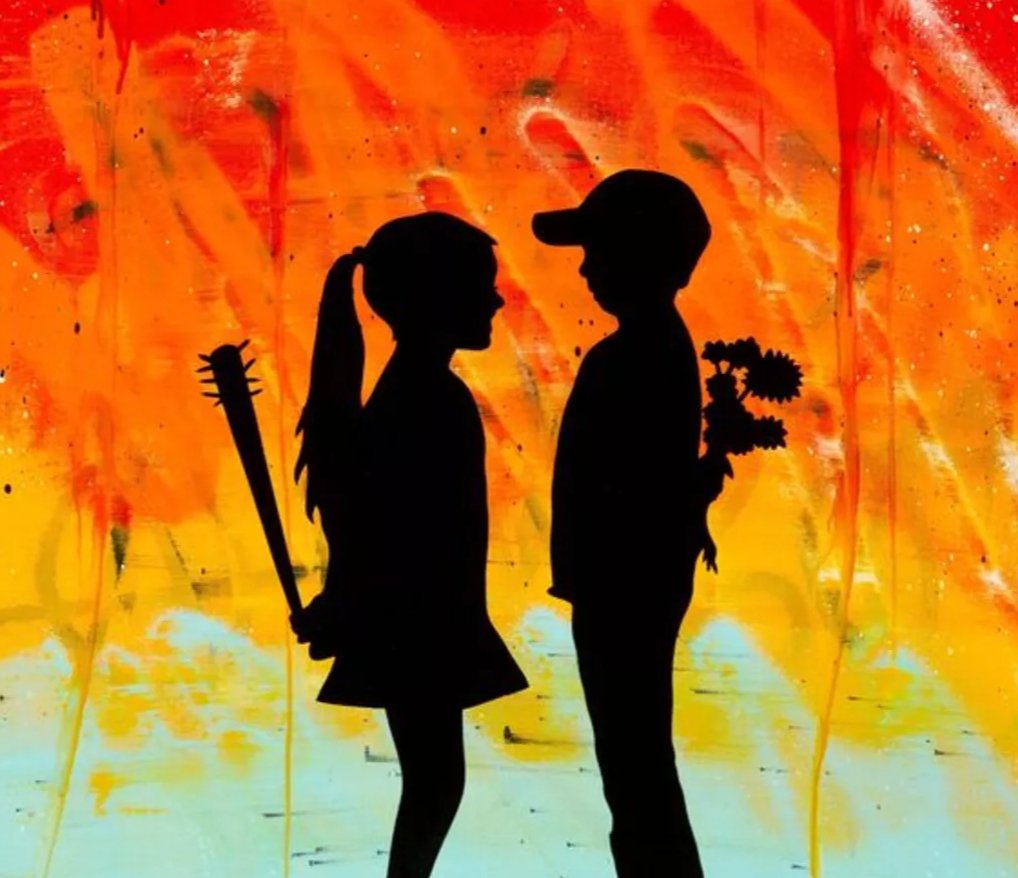
The 2018 urban art piece titled “Fake Love” by the anonymous artist known as Fake is a striking example of contemporary street art, blending social commentary with bold visuals. Fake, known for creating provocative pieces that challenge societal norms, uses “Fake Love” to examine themes of disillusionment, superficiality, and the complexities of modern relationships in a world dominated by appearances.
Visual Composition and Technique
The first thing that stands out about “Fake Love” is its vibrant, almost hyper-realistic use of color and contrast. The piece is executed in Fake’s signature stencil style, drawing from techniques popularized by other street artists like Banksy. However, Fake’s use of colors — particularly the contrast between soft pastel hues and stark, bold lines — adds a unique dimension to the work. This balance between smooth gradients and crisp edges evokes a sense of both fragility and permanence, echoing the transient yet impactful nature of street art itself.
The central figure in the piece, typically a woman in a moment of emotional vulnerability, is rendered with intense detail. Her facial expression, a mixture of sadness and longing, draws the viewer in, creating an emotional connection. In her hands, she holds a spiked bat, visibly cracked and splintered, symbolizing the theme of broken love. Around her, the word “FAKE” is scrawled in large, graffiti-style letters, connecting the title with the core message of the artwork: a critique of insincere affection, deception, and the façades people often present in relationships.
The medium itself adds an important layer of meaning to “Fake Love.” By choosing the public space of the street as his canvas, Fake taps into the democratizing potential of urban art — this is a message that can be viewed by anyone passing by, from all walks of life. The setting underscores the universality of the work’s themes, allowing it to resonate with a broad audience.
Themes of Disillusionment and Modernity
“Fake Love” taps into a broader cultural critique of modern relationships, which Fake often addresses in his work. The piece suggests that love in the digital age has become increasingly performative, superficial, and commodified.
In a world where social media amplifies the importance of appearance over substance, the piece critiques the fake personas and relationships that are curated for public consumption. The woman’s heartbreak becomes a symbol of the disillusionment many people feel in a culture where the distinction between genuine connection and performative affection has blurred.
The Public’s Response and Cultural Impact
Since its debut in 2018, “Fake Love” has garnered significant attention within the urban art community and beyond. Its location in a bustling city environment, where passersby can engage with it on a daily basis, has sparked discussions about the impact of digital culture on personal relationships. Many viewers have commented on how the piece resonates with their own experiences of heartbreak and emotional vulnerability, especially in the context of social media’s tendency to amplify inauthentic expressions of affection.
The artwork’s simple yet emotionally charged message taps into the zeitgeist, making it a timely commentary on the nature of love in the 21st century. By placing this piece in the public domain, Fake not only draws attention to the personal experiences of individuals but also encourages broader societal reflection. The anonymous nature of the artist adds to the mystique and impact, making the artwork seem less about the artist’s personal perspective and more about a universal experience.
Fake’s “Fake Love” is a masterful piece of urban art that succeeds both visually and conceptually. Its bold color palette and carefully crafted composition draw the viewer in, while its deep emotional and social themes leave a lasting impression. The piece’s commentary on the performative nature of love in the digital age resonates widely, making it a powerful and thought-provoking addition to the urban art scene. By presenting a critique of inauthenticity in such a public, accessible way, “Fake Love” transcends its medium, offering both an aesthetic experience and a cultural critique that is relevant to the modern world.
Through this work, Fake continues to solidify his place as an important voice in contemporary urban art, using his platform to provoke thought and challenge viewers to reconsider their perceptions of love, authenticity, and connection in a world that increasingly values appearance over substance.