DRIFT AUDIO
Listen to this story
Choose a voice, then press play.
At a tournament famous for demanding “almost entirely white,” this year’s Wimbledon has turned that single restriction into its own kind of runway
In This Story
- One Rule, a Hundred Ways Around It
- Naomi Osaka’s Kimono Entrance
- Djokovic and Fritz Play Dress-Up in Heritage Tailoring
- Coco Gauff’s Miu Miu Crossover
- Marta Kostyuk’s Wedding-Dress Sequel
- Frances Tiafoe’s Lululemon Showstopper
- Off-Court Glamour: Sinner’s Gucci Night and Sabalenka’s Jewels
- Why Tennis Became Fashion’s Favourite Loophole
The All England Lawn Tennis and Croquet Club’s dress code is one of sport’s strictest: players must be dressed almost entirely in white from the moment they step onto the grounds, a rule that dates back gen and shows no sign of loosening. What’s changed is how players and their sponsors are treating that constraint. Rather than reading the rule as a limitation, this year’s field, including Naomi Osaka, Novak Djokovic, Coco Gauff, Marta Kostyuk, Frances Tiafoe, and Taylor Fritz, has used it as a brief, with brands like Nike, Lacoste, Wilson, Lululemon, New Balance, and Boss all building custom, technically engineered pieces that read as much as fashion statements as performance kit.
View this post on Instagram
View this post on Instagram
stir
The result is a tournament where walk-on looks have become their own news cycle, dissected on style sites and fashion verticals with the same intensity usually reserved for red carpets. It’s not an entirely new phenomenon, tennis has flirted with couture since Suzanne Lenglen wore Jean Patou in the 1920s, but the scale and intentionality of this year’s Wimbledon slate marks a clear escalation.
Part of what makes this moment distinct is who’s driving it. Rather than a stylist or brand quietly dressing an athlete for a single appearance, several of this year’s standout looks were built through ongoing creative partnerships where the player has direct input, closer to how a musician might work with a fashion house on tour wardrobe than a typical athlete endorsement deal. Djokovic’s blazer was designed specifically with Lacoste’s creative director around his own personal milestones; Kostyuk has spoken about actively shaping her Wilson pieces alongside the brand’s chief creative officer; and Gauff’s New Balance x Miu Miu collaboration functions as an ongoing collection rather than a single tournament capsule. That shift in process, from brand-supplied kit to genuine creative collaboration, is arguably a bigger story than any single outfit.
View this post on Instagram
edition
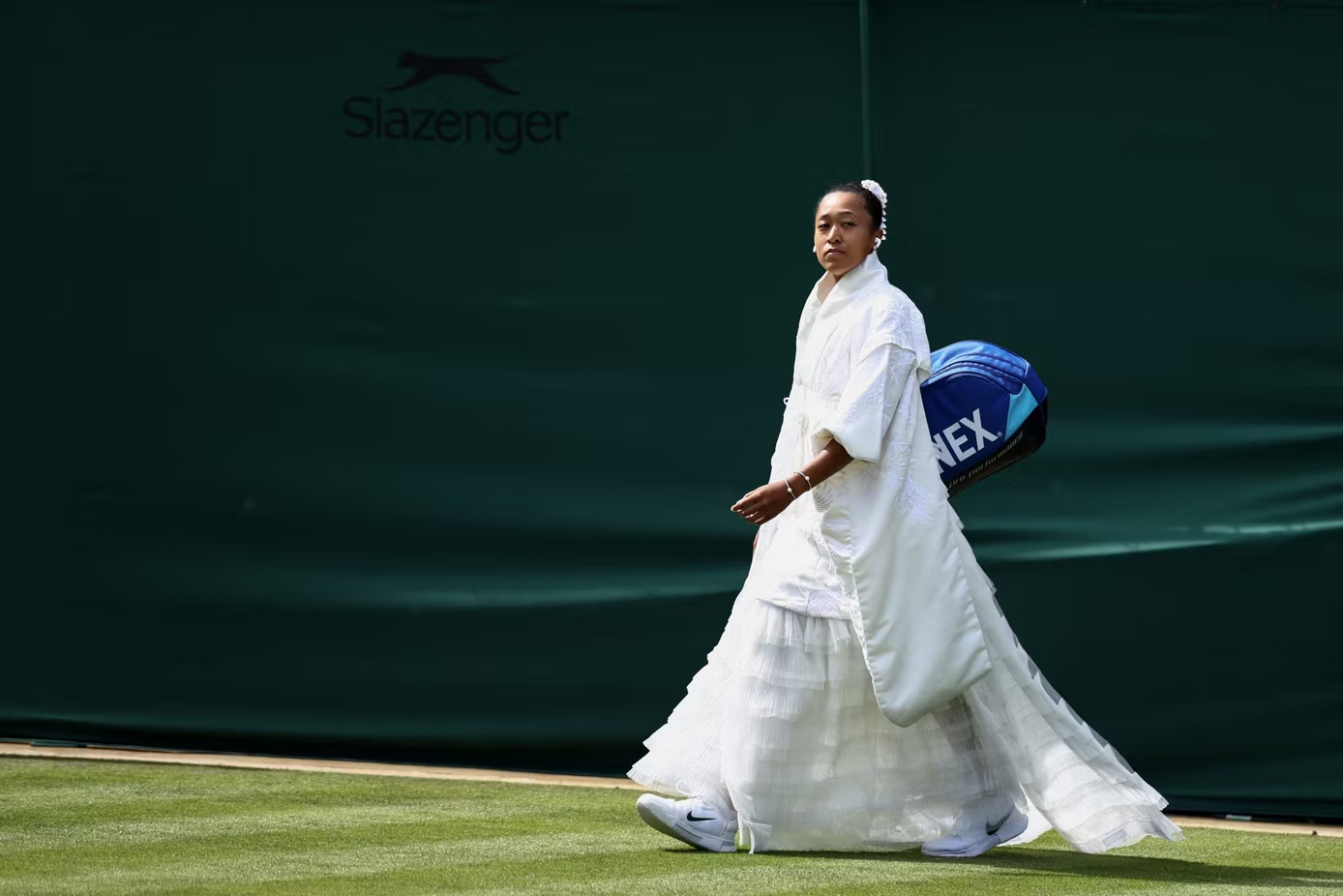
No player has leaned harder into the moment than Naomi Osaka, whose opening-match entrance on Court 3 built a two-part narrative into a single walk-on. Osaka arrived in a maximalist, multi-layered white kimono robe by Tokyo-based designer Hana Yagi, upcycled entirely from vintage bridal wear and worn over a custom Nike performance dress finished with intricate 3D floral rosettes on one shoulder and along the hem. When the robe came off ahead of her match, it revealed the Nike piece underneath, structuring the look as two distinct chapters rather than one outfit.
Osaka has said the design draws on her Japanese heritage as much as her personal taste for the theatrical, citing Lucy Liu’s character in “Kill Bill” as a direct visual reference and describing her own on-court persona as something closer to a video game character than her day-to-day self. Yagi has described the robe as functioning almost like a ceremonial garment, built to be removed quickly to reveal the “athlete in competition” underneath, treating the walk-on and the match as two acts of the same performance. It’s Osaka’s second major fashion moment of the year following an elaborate custom look at the French Open in May, cementing a pattern where her Grand Slam entrances are treated as previews rather than afterthoughts.
Osaka’s approach to tournament dressing has evolved into something closer to a running visual diary of her career, with her looks across the year’s majors forming an intentional arc rather than isolated one-off statements. At January’s Australian Open, she wore a jellyfish-inspired creation; at the French Open, a custom piece by Swiss couturier Kevin Germanier built from recycled fragments of her own past competition gear. For her second-round match at this year’s Wimbledon, she opted for a comparatively quieter look, an all-white ensemble with a wide belt and long train, before continuing to mix formality with show-ready pieces as the tournament progresses. That range, from maximalist cultural statement to pared-back minimalism within the same fortnight, has become as much a signature as any single garment.
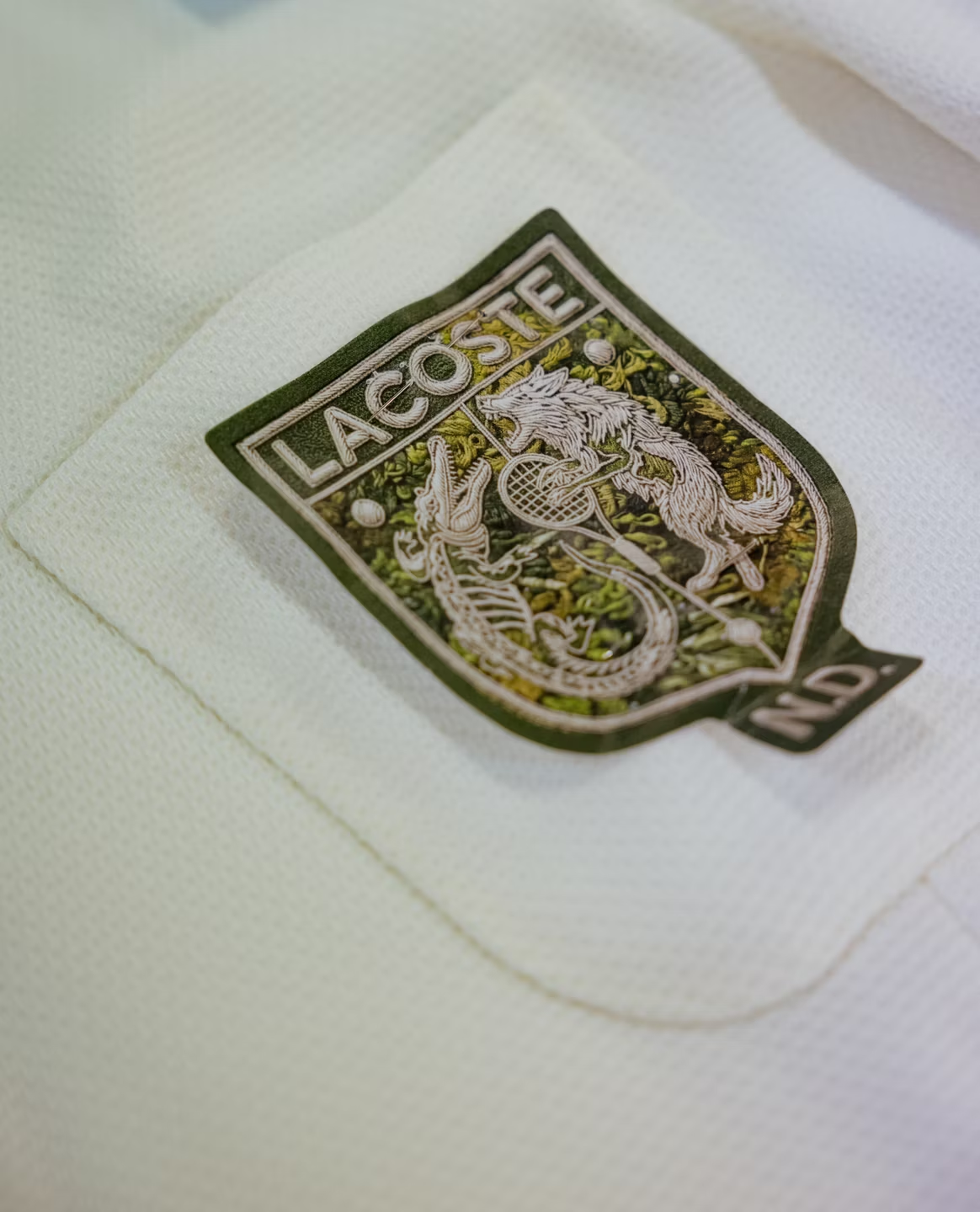
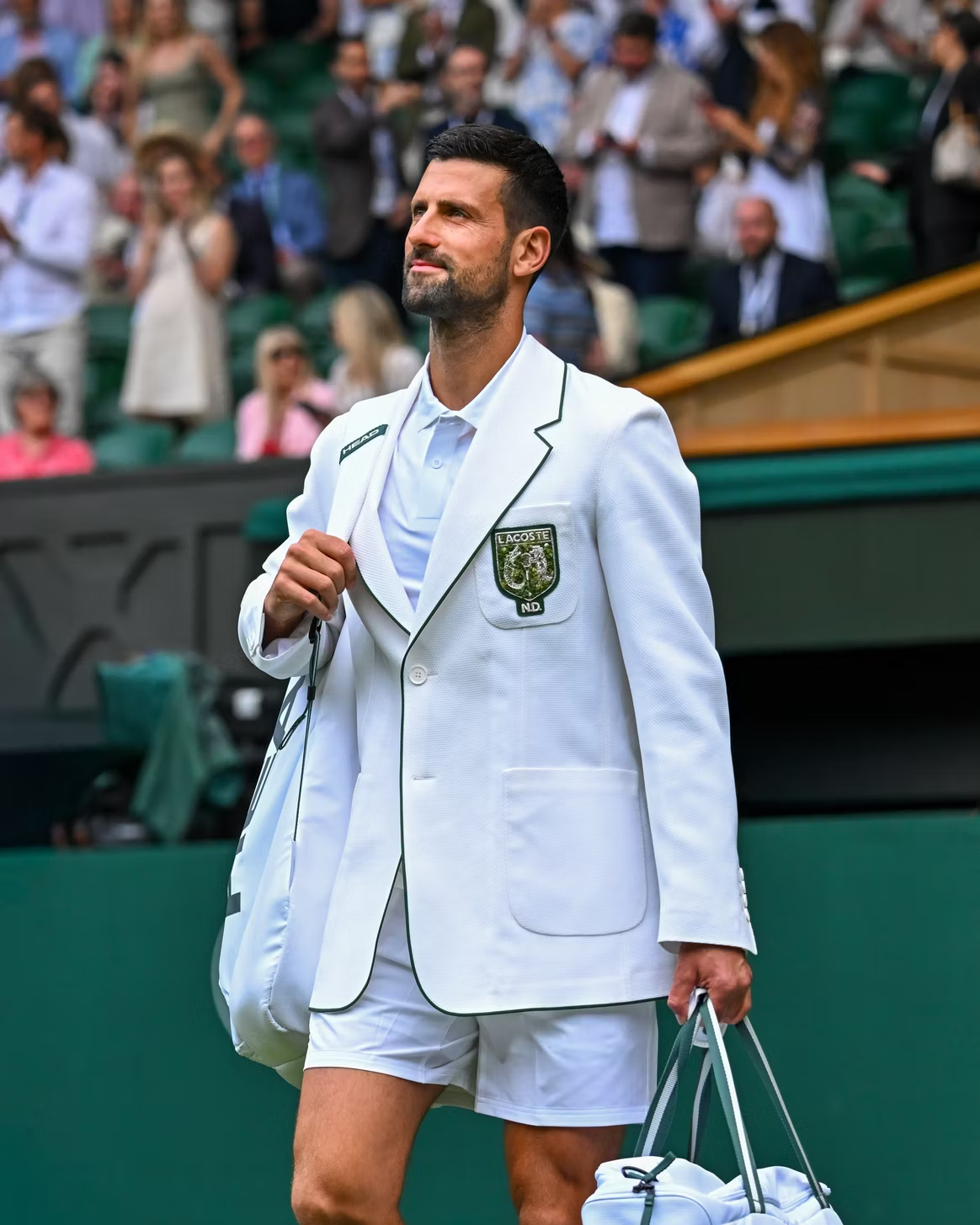
Intricate Lacoste championship crest embroidered onto Novak Djokovic’s white Wimbledon jacket, blending heritage craftsmanship with tennis tradition.
tailor
Where Osaka’s look leans theatrical, Novak Djokovic and Taylor Fritz both used their Wimbledon walk-ons to dig into tennis’s tailoring past. Djokovic, marking his twentieth Wimbledon appearance, wore a one-of-a-kind blazer designed by Lacoste creative director Pelagia Kolotouros, referencing the white-piped jackets worn by René Lacoste and the tennis champions of the 1920s. The piece is built from an exclusive technical nylon developed specifically for the project, finished with an oversized piqué texture, and carries a hand-embroidered felt crest on the chest showing the Lacoste crocodile facing off against a wolf, a nod to Djokovic’s Serbian heritage and personal symbolism. Inside the jacket, Lacoste embroidered a personal message in Serbian alongside a family photograph, turning the garment into something closer to a keepsake than a uniform.
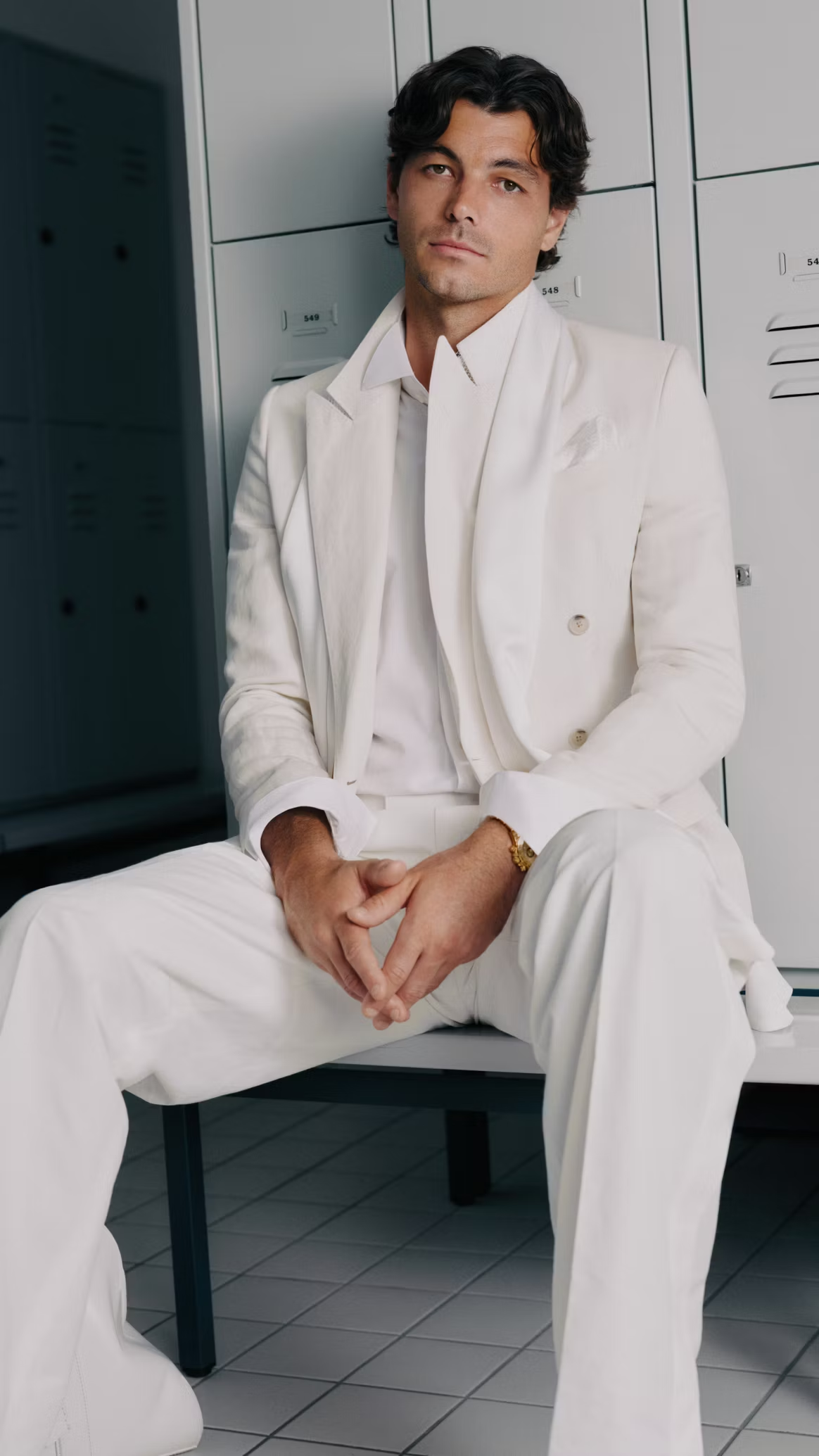
Fritz took a similar heritage approach with his apparel sponsor Boss, wearing a custom double-breasted blazer in white cotton with a distinctive slub texture, paired with matching wide-leg trousers fitted with an integrated hook-and-loop side opening for a quick costume change into match gear. The look was explicitly built as homage to Roger Federer’s own tailored Wimbledon entrances, finished with a silk paisley scarf pulling from Boss’s autumn/winter runway collection shown at Milan Fashion Week in February, along with a white version of the brand’s Madison B1 bag. Fritz has described the walk-on as designed to set a tone of tradition before shifting quickly into competition mode, a description that applies just as well to Djokovic’s Lacoste piece.
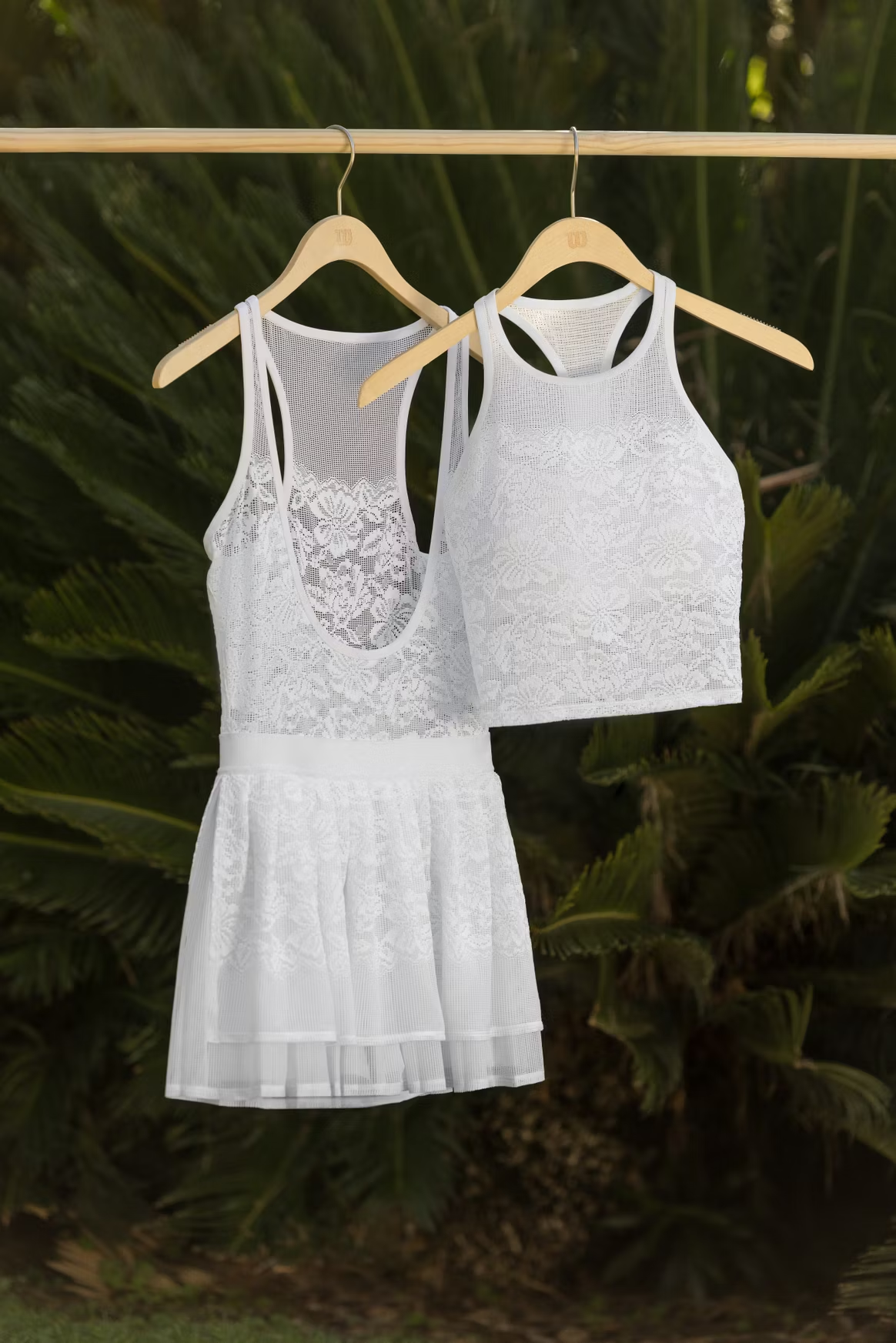
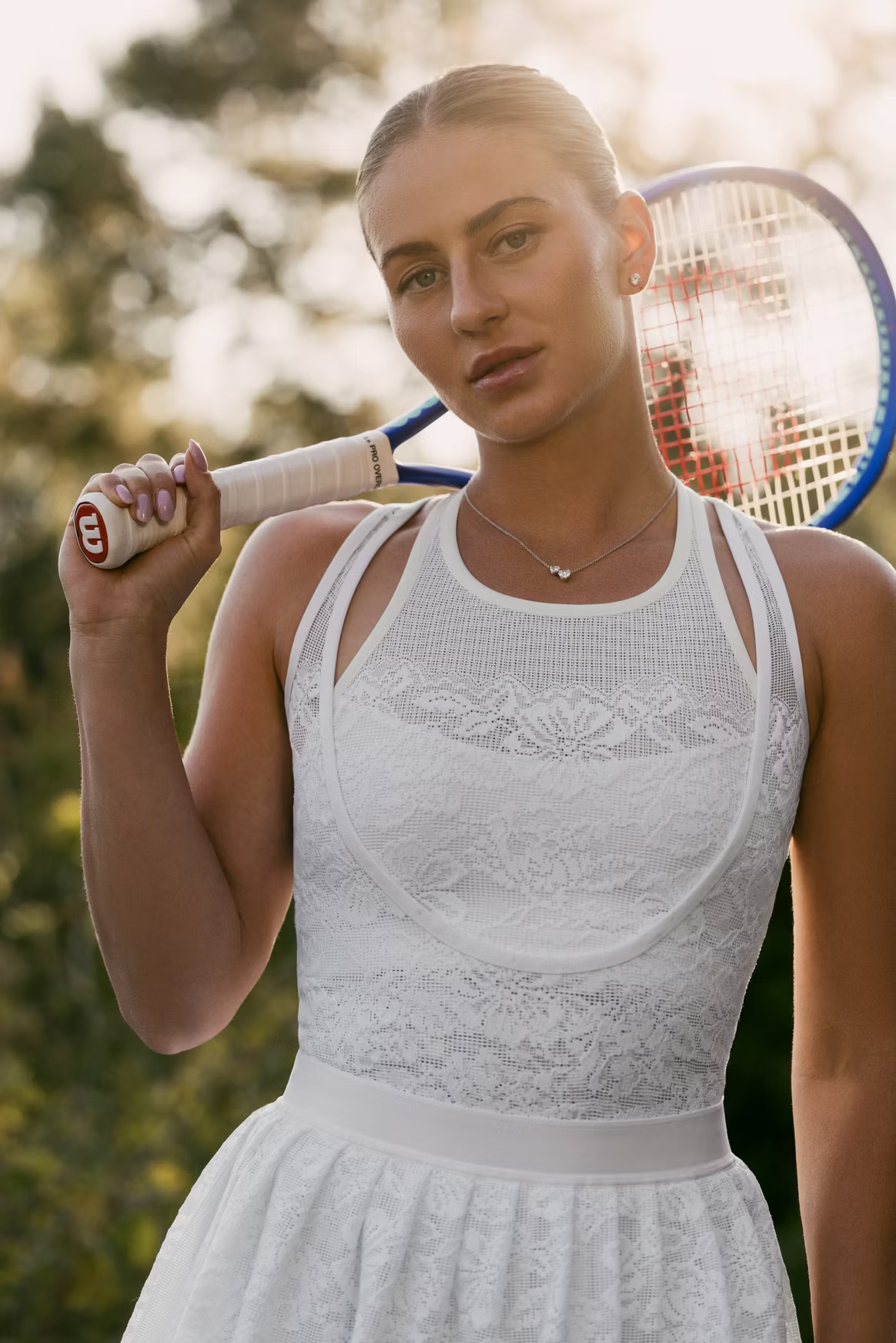
Delicate lace tennis dress and coordinating crop top from the Wilson Sportswear by France collection, blending performance design with elegant court-inspired style.
center
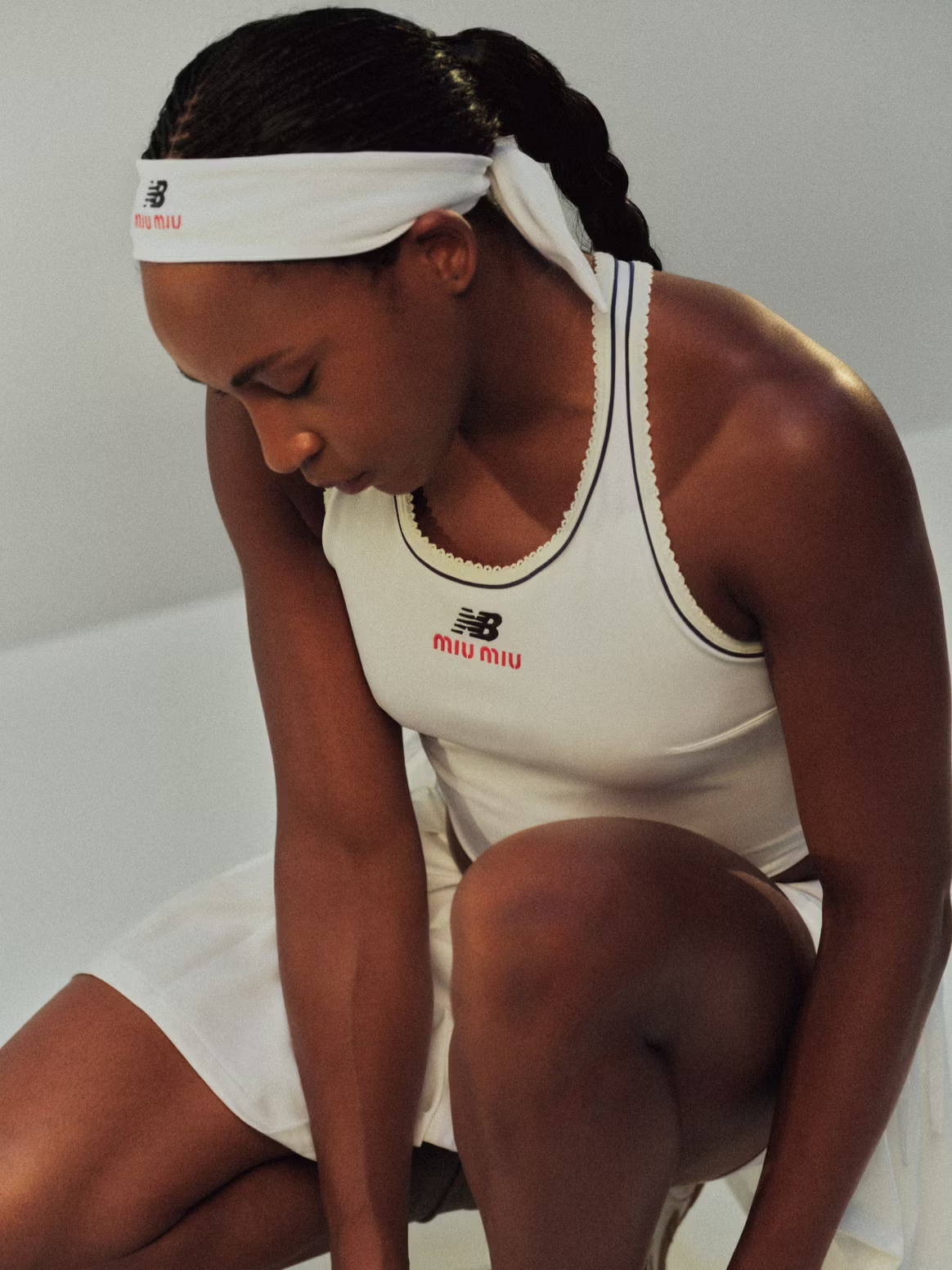
Coco Gauff arrived at Wimbledon carrying one of the more unusual sponsor pairings on tour: an ongoing collaboration between New Balance and Miu Miu, framed around what the brands describe as honouring the elegance of tennis as a sport. Her Wimbledon wardrobe includes a sleek, minimal white tennis dress alongside a two-piece co-ord look that blends performance-grade technical fabric with lingerie-inspired detailing, including delicate scalloped edging along the necklines, sleeves, and hemlines. The result reads closer to a runway crossover than a typical athletic kit, and it’s part of a wider trend of luxury houses partnering directly with performance sportswear brands rather than working through licensing deals alone.
Gauff’s collection launch in the lead-up to the tournament drew its own coverage independent of her results on court, an indication of how much weight these off-court fashion rollouts now carry for players ranked among the sport’s biggest global stars.
flow
For Ukrainian player Marta Kostyuk, Wimbledon marked the return of one of Wilson’s more personal design projects: the second iteration of “The Martha Dress,” a piece originally inspired by Kostyuk’s own wedding dress that became a sell-out style for Wilson following its 2024 debut. The updated design is a two-piece construction, a sleeveless top with a built-in bra paired with a skirt, built from four-way stretch performance fabric and finished with technical lace detailing that echoes the romantic reference point without sacrificing the flexibility a professional match demands.
Kostyuk has described working on the project with Wilson’s team, and chief creative officer Joelle Michaeloff, as central to helping shape looks that function on court as much as they read as fashion statements. Michaeloff has framed the collaboration as an attempt to blend genuinely high-performance fabric construction with clearly fashion-driven silhouettes and cuts, rather than treating the two as separate priorities the way most technical tennis wear historically has.
tiafoe
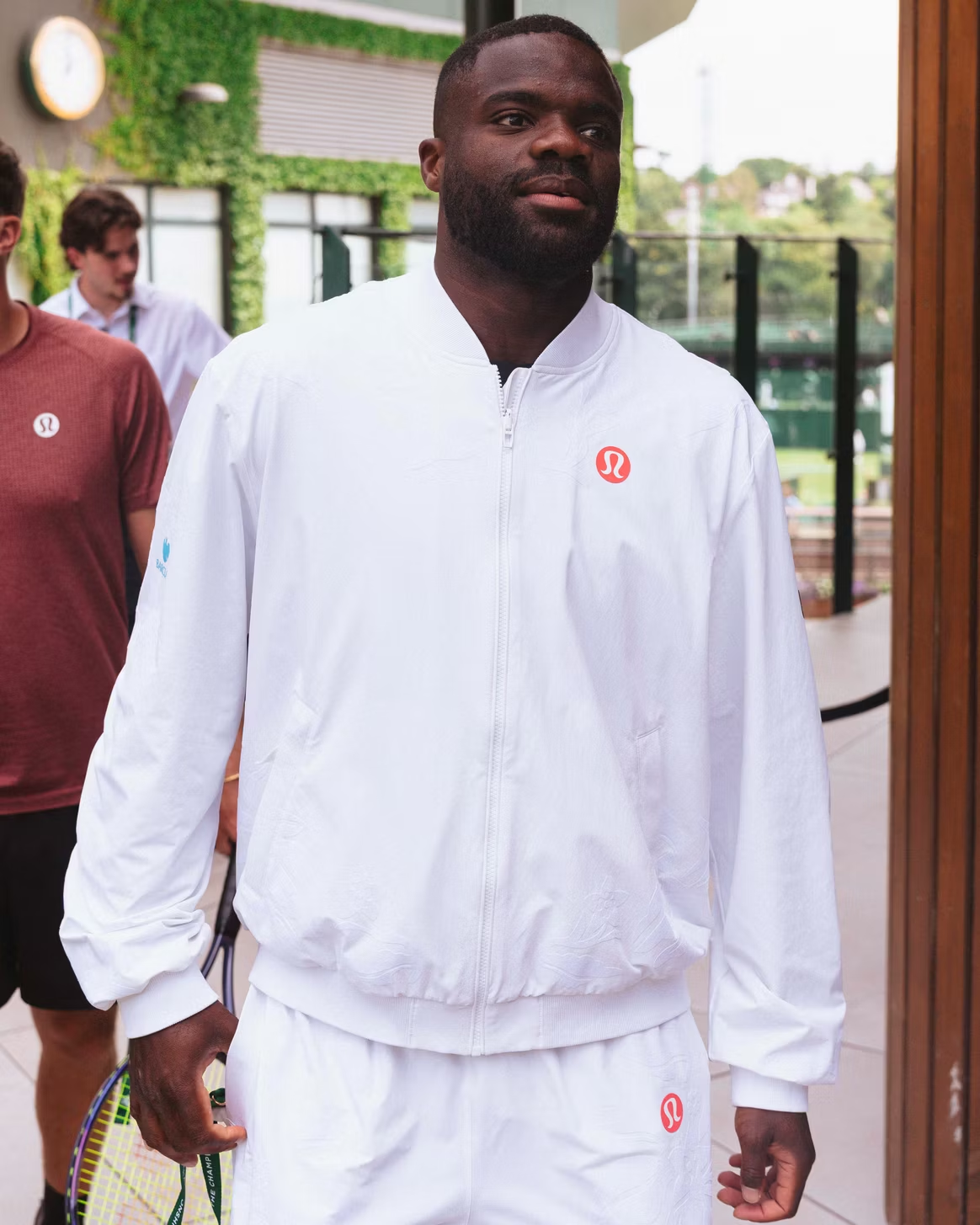
If one look defined the crowd reaction at this year’s tournament, it was Frances Tiafoe’s custom Lululemon wardrobe on Court 1. The all-white kit centres on a performance bomber jacket built with an innovative back panel designed to maximise overhead shoulder rotation, paired with tear-away trousers that turned his walk-on into a moment closer to a strip-tease reveal than a typical entrance. The tracksuit is finished with a subtle flocked motif drawing on the flora and fauna of Tiafoe’s Sierra Leonean heritage, giving the piece a personal layer beneath its more headline-grabbing construction.
Tiafoe’s look has been widely cited as the single most talked-about walk-on of the tournament so far, a reminder that a well-executed piece of theatre, tear-away trousers included, can generate as much conversation as any high-concept couture reference.
View this post on Instagram
off-court
Not every Wimbledon fashion moment happens on court. World No. 1 Jannik Sinner, marking his fifth consecutive Wimbledon appearance and defending his 2025 title, swapped his tournament whites for an olive green Gucci ensemble to host an intimate cocktail dinner at Claridge’s, celebrating his role as a Gucci ambassador. Sinner has described the partnership as an entry point into the world of fashion, crediting the house’s reputation for craftsmanship and calling himself privileged to represent an Italian brand built on decades of design heritage. Gucci marked the tournament separately with a tennis-themed window display at its New Bond Street store, alongside a racket collaboration with Head.
On the women’s side, Aryna Sabalenka has turned her Wimbledon jewelry into its own subplot. As the WTA’s newly named first Jewelry Ambassador for New York label Material Good, Sabalenka opened her tournament in a bespoke suite built around emerald and brown diamond stones, including a heart-motif necklace, matching earrings, and an emerald-studded anklet, the brand’s first foray into that category. The pieces follow a broader trend of fine jewelry houses treating Grand Slam broadcasts as sustained advertising real estate, since a necklace or pair of earrings stays in frame throughout a match in a way a watch or handbag never does. Sabalenka has worn custom Material Good suites at every Grand Slam so far this season, turning what started as a single sponsorship into a running visual signature.
Sabalenka is far from the only player treating jewelry as a courtside uniform. Osaka has become closely associated with Mikimoto pearls across her recent Grand Slam appearances, Gauff has worn pieces from Vivienne Westwood and Coach during past tournaments, and Emma Raducanu has competed in Tiffany & Co. Jewelry brands have been explicit about why tennis works so well for this kind of visibility: unlike a watch, which can add weight and get in the way of a serve, or a bag, which disappears once play begins, necklaces and earrings stay fully in frame through every point, reaction, and changeover, giving sponsors a form of continuous, unscripted product placement that few other sports can offer.
why
Tennis’s relationship with high fashion isn’t new. Suzanne Lenglen and Helen Wills were dressed by Paris’s leading couturiers in the 1920s, while René Lacoste’s own innovations, developed for his playing career, eventually became one of sportswear’s most recognizable brands. What’s shifted is the intent behind today’s designs. Where earlier eras treated tennis whites primarily as a practical uniform occasionally softened by a designer’s touch, this year’s Wimbledon slate treats the all-white restriction itself as the creative brief, pushing brands to develop pieces that are as aesthetically ambitious as they are technically sound.
Adidas has taken a similarly experimental approach with its grass-court kits this year, introducing Climacool cooling technology to tennis after using it in Formula 1 and football during the 2026 World Cup, while Jack Draper’s technical sponsor Vuori built a ventilated, sculpting jersey specifically engineered around his physique. Even brands without the theatrical instincts of Lacoste or Lululemon are treating this year’s tournament as a testing ground for technical storytelling. Whether Wimbledon’s all-white rule ends up producing more moments like Osaka’s kimono or Tiafoe’s tear-away trousers in future years remains to be seen, but this year’s tournament has made a clear case that a strict dress code, far from limiting creativity, can be exactly what pushes it further.
Related Articles
WACKO MARIA Brings Its Leopard Lining to the Big Leagues
Black nylon outside, leopard fur inside: WACKO MARIA’s first Major League Baseball collection reached Japan […]