The Supercharger W.O. Bentley Fought Against Is Heading Back to Christies

August 9, 2026
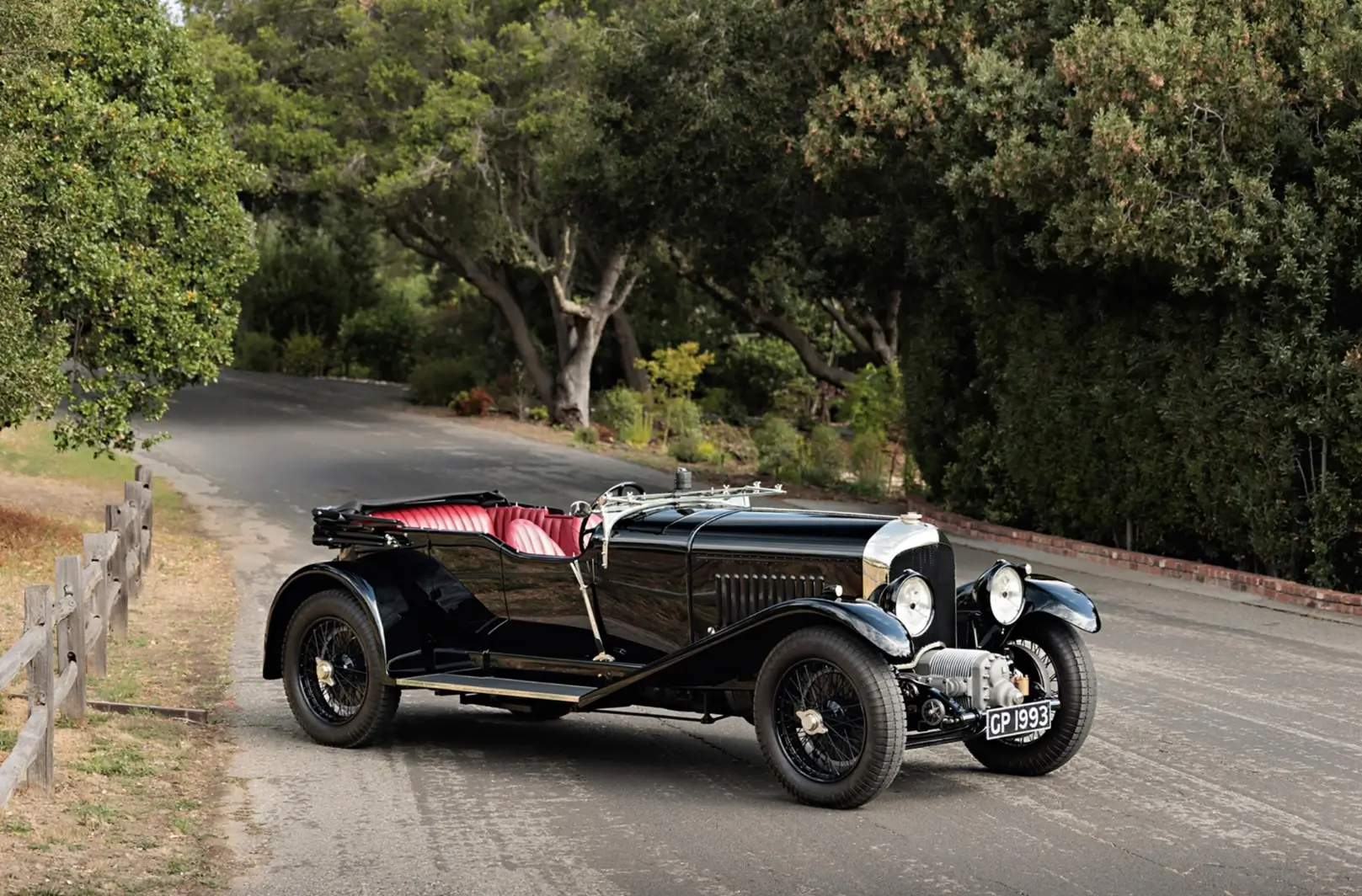
Chassis MS3927, one of just 50 factory Blowers built to homologate Bentley’s Le Mans team cars, crosses the block at Gooding Christie’s this August.
W.O. Bentley did not want a supercharger anywhere near his 4½ Litre engine. He believed in displacement, not forced induction, and he said so plainly, warning that bolting a blower onto the front of the car would only “compromise its design and dull its show” He lost that argument to Sir Henry “Tim” Birkin, one of the so called Bentley Boys, who partnered with engineer Amherst Villiers to design a Roots type supercharger mounted ahead of the radiator rather than tucked into the engine bay. Birkin needed money to build it, and he found it through Dorothy Paget, an heiress with a habit of funding motorsport ventures that interested her. The result was the car now known informally as the Blower Bentley, a designation W.O. Bentley never used himself and reportedly disliked for the rest of his life.
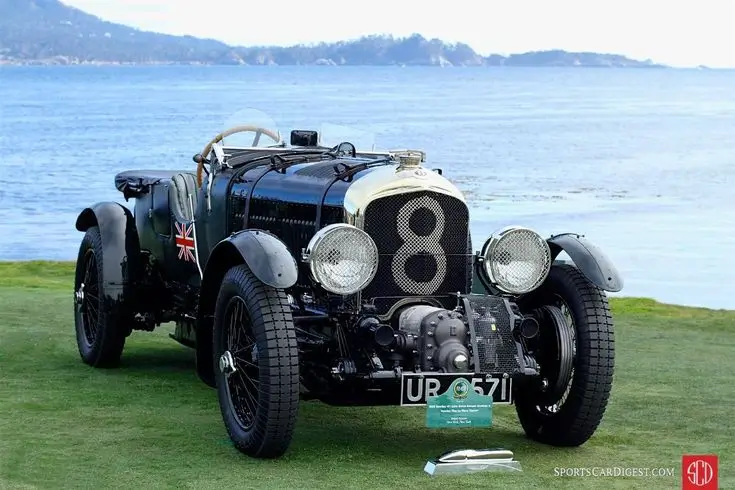
1929 Bentley 4.5 Litre “Blower” open-top race car in black, featuring a large number 8 grille, exposed supercharger, round headlights, and British flag detail, displayed on grass beside the water.
score
Racing rules of the period required a manufacturer to build a minvnumber of road cars before a competition variant could be homologated. Bentley needed five genuine team cars to campaign at Le Mans and Brooklands, and the regulations of the day meant getting there required building 50 production examples for paying customers first. Those customer cars, MS3927 among them, left the works between 1929 and 1931 wearing open touring coachwork from Vanden Plas, the London coachbuilder that had become Bentley’s default partner for sporting bodies. The bodies were alloy paneled over an ash frame to keep weight down, finished with the rare Le Mans type bucket seats that echoed the team cars rather than the more upright touring seats fitted to lesser 4½ Litre chassis. Underneath sat the same single overhead camshaft four cylinder engine as the unsupercharged car, now displacing 4,398cc and fitted with the Villiers built Roots type supercharger, twin SU carburetors, and a close ratio D type gearbox. Output is generally cited in the 175 to 182 horsepower range at around 3,900 rpm, a startling figure for a production road car in 1930.
legend
Here is the detail that makes the Blower’s reputation stranger than most: the supercharged cars never won Le Mans outright. That distinction belonged to the conventional, unsupercharged Bentley Speed Six, which W.O. Bentley had championed all along. The Blower team cars were fast in a straight line but fragile under sustained racing load, and Birkin’s own number 1 car famously blew its engine at Le Mans in 1930 while running down Rudolf Caracciola’s Mercedes-Benz SSK, a stunt that arguably helped Bentley win the race by wearing down the competition even as the Blower itself failed to finish. It is a strange kind of victory lap for a car that lost the race it was built to win, but the Blower’s outlaw reputation only grew from there. Sales of the production cars were modest, the model was something of a financial disaster for Bentley at the time, and Rolls-Royce absorbed the company within a couple of years of the last chassis leaving the factory. None of that mattered to history. The Blower is now widely regarded as the most desirable prewar British car at auction, more mythologized than the Speed Six that actually won.
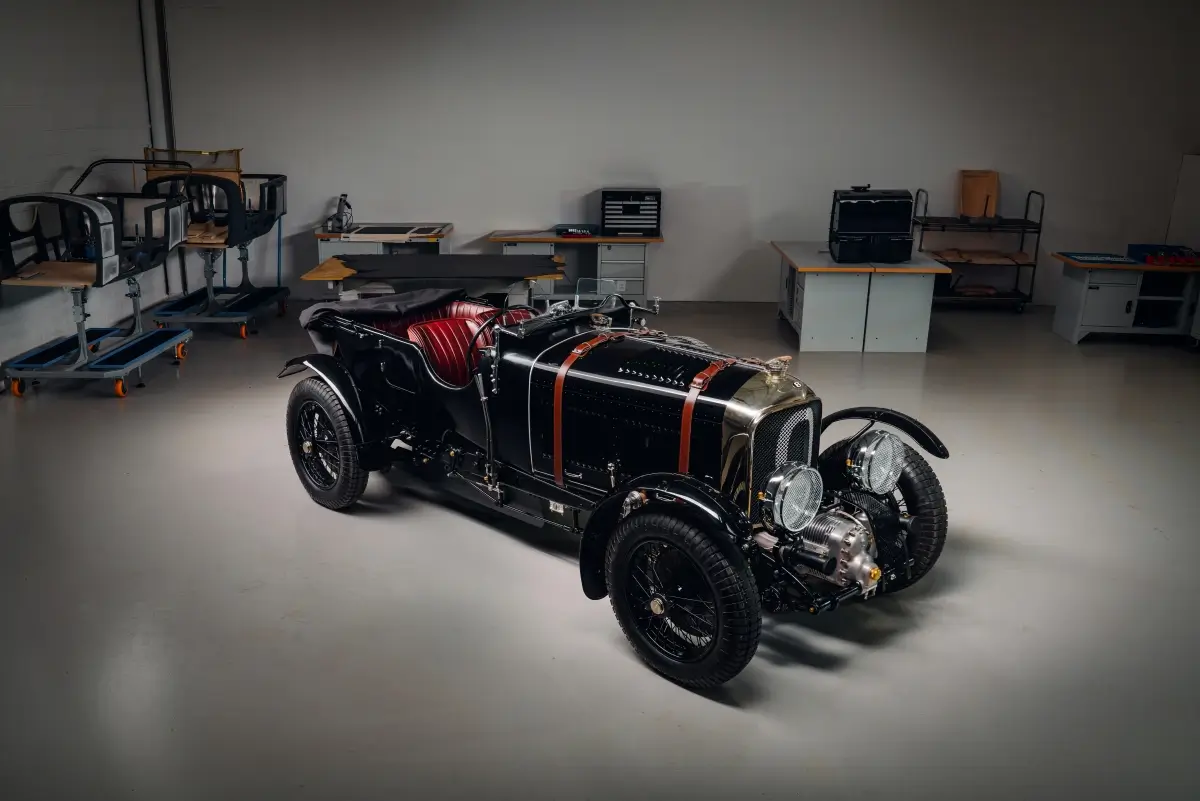
AMHERST VILLIERS ROOTS-TYPE SUPERCHARGER
nar
MS3927 retains its original chassis frame, steering box, and both front and rear axles, a meaningful claim given how many Blowers were rebuilt, crashed, and re-framed by the factory itself during the 1930s when a bent chassis was treated as a routine service item rather than a historical artifact to be preserved. The engine now fitted, numbered MS3930, is documented in factory records as the car’s original replacement unit, a distinction the auction catalogue flags directly as “saw text” rather than obscure it, in keeping with how these cars are typical catalogued. Engine swapping was common practice among Blower owners even in period, since the supercharged engines saw hard use and factory replacement was the normal remedy rather than an exception. Bentley historian Dr. Clare Hay, whose research is treated as the definitive record for the model, has argued that a car’s continuous document history matters more than a strict match number standard when so many of these engines were changed by the factory itself decades before anyone cared about originality as a market concept. Her documentation covers MS3927 from new, tracing its ownership chain and giving prospective bidders a level of confidence that undocumented Blowers, of which there are more than a few claimants, simply cannot match.
auth & restore
The car’s most recent restoration was carried out by marque specialists VBE Restorations in the United Kingdom in partnership with McDonald Vintage Restoration in Oregon, a transatlantic collaboration that speaks to how specialized this corner of the restoration trade has become. Vintage Bentleys of this type require craftsmen fluent in a specific vocabulary: white metal bearings, ash body framing, hand formed alloy panels, and mechanical brakes that behave nothing like anything built after the war. The result of that work was validated on the lawn at the 2022 Pebble Beach Concours d’Elegance, where MS3927 took First in Class, the kind of award that functions as both a historical seal of approval and a market signal ahead of any eventual sale.
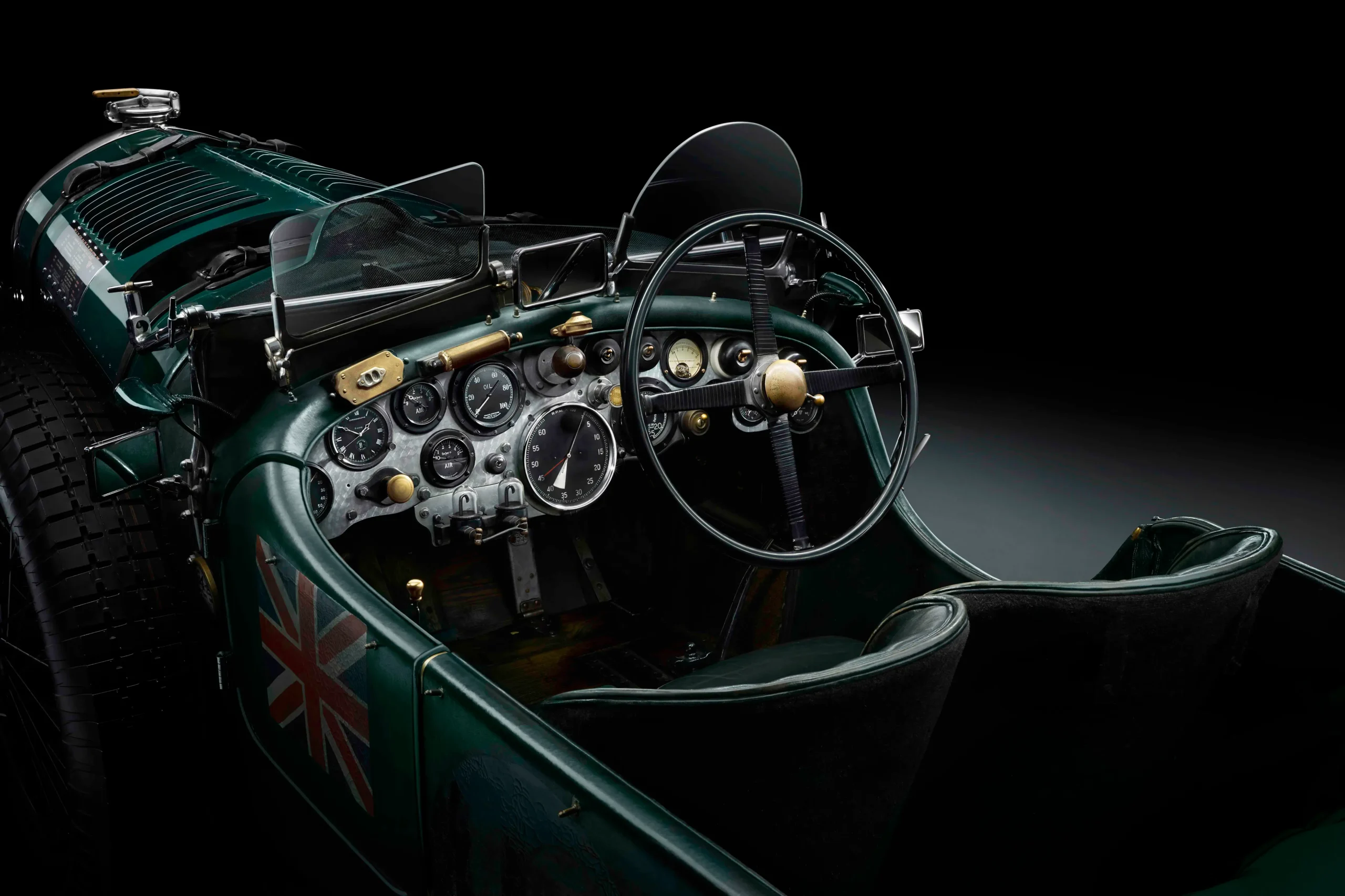
Close-up of a vintage Bentley racing cockpit with dark green bodywork, large steering wheel, metal dashboard filled with analog gauges, twin windscreens, bucket seats, and a British flag graphic on the side.
extend
MS3927 is now lot 139 at Gooding Christie’s Pebble Beach Auctions, scheduled for August 14 and 15 at the Parc du Concours, carrying a presale estimate of $3,500,000 to $4,000,000. That places it within the range recent Blower sales have established. A sister car, chassis MS3929, sold for $4,015,000 at a previous auction, and the model’s broader price history at public sale has climbed steadily as fewer genuine, well documented examples remain in private hands rather than institutional or long term family collections. Of the original 50 production chassis, a sig number have been lost to accidents, wartime disruption, or outright scrapping over nine decades, and among the survivors only a minority retain both original chassis and original coachwork the way MS3927 does. That scarcity, combined with Dr. Hay’s documentation and a concours winning restoration, is the case the auction house is making to bidders this month. Whatever the hammer price turns out to be, MS3927 will cross the block as one of the more completely verified examples of a car Bentley built almost against its own founder’s wishes, in a batch of 50 that exists today mostly because racing rules of the 1920s demanded it.
Related Articles

A Boston Cap Maker and Japan’s Ice Cream Institution Compare Notes for the First Time
’47 pairs with 31 Ice Cream on a debut headwear line built from six flavors […]