DRIFT AUDIO
Listen to this story
Choose a voice, then press play.
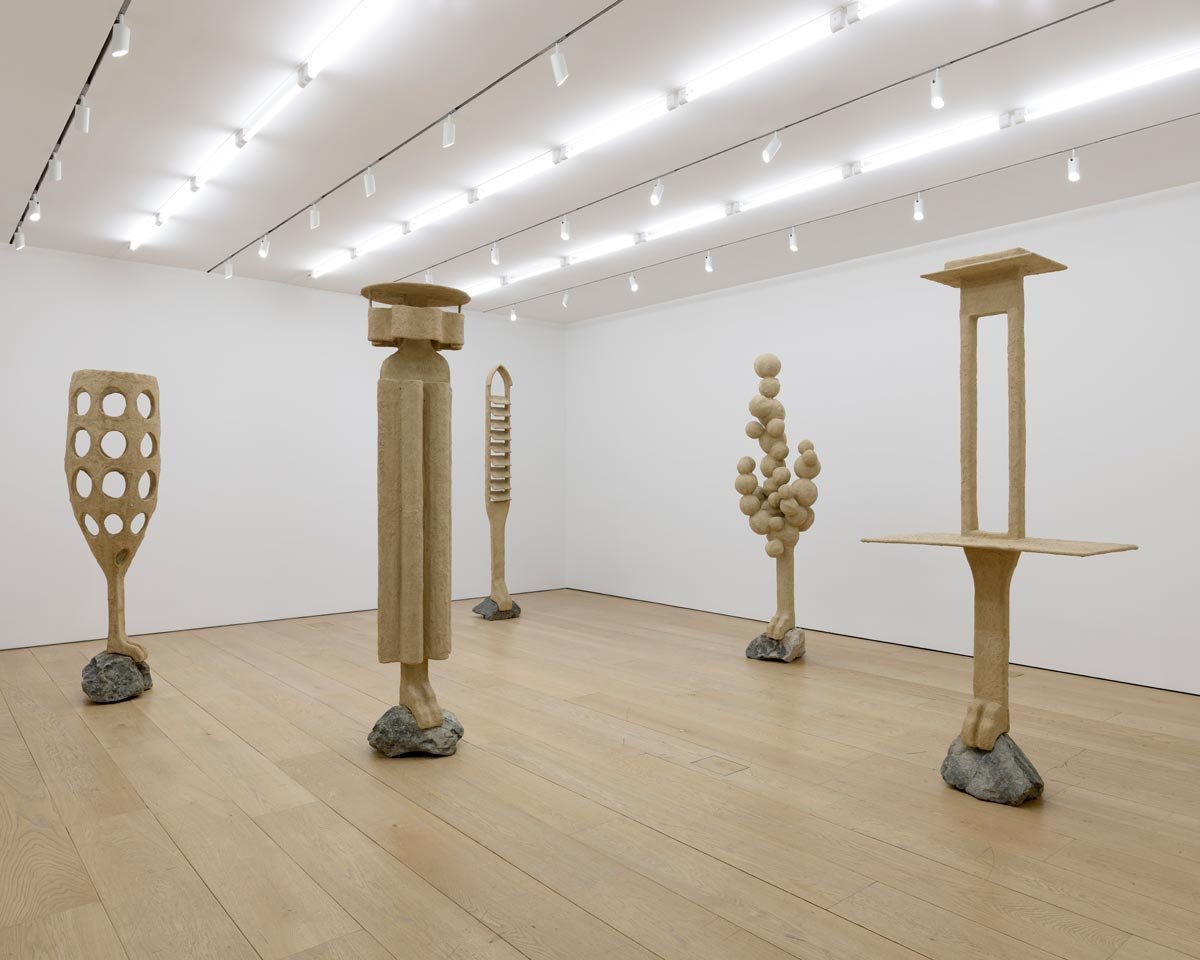
Oren Pinhassi’s humanoid sand sculptures, currently on display in New York, embody a unique form of artistic decay. With faces deliberately erased, replaced by gaps that stare back, these figures represent more than mere physical erosion; they embody the artist’s response to a changing world. In Pinhassi’s words, “Losing face is a willingness to say goodbye to a structure that is disappearing or falling apart, and the willingness to look for new language or new ways of understanding the world.” In these works, Pinhassi takes the idea of absence and transforms it into an invitation for viewers to seek new narratives in a world of vanishing certainties.
Sand, as a medium, is inherently transient—susceptible to touch, gravity, and time. This impermanence becomes central to Pinhassi’s expression, reflecting a broader societal vulnerability. In choosing sand, he embraces fragility and acknowledges that our understandings, identities, and structures are as unstable as the grains in his sculptures. The facelessness of his figures is not an omission but a deliberate act, an erasure that speaks volumes. Without traditional facial features, these figures defy easy categorization, forcing viewers to confront the emptiness, to project their ideas into the void, and to reflect on what it means to lose one’s self amid shifting times.
The concept of “losing face” has long been associated with shame or social misstep. However, Pinhassi reinterprets it as an opportunity—an intentional surrender to the natural cycle of creation, erosion, and reinvention. In his sculptures, gaps where faces once were highlight the beauty of absence, leaving space for viewers to encounter the work personally and introspectively. This absence creates a language that transcends facial expression, where the silence of these gaps allows for a new kind of communication—a reflection of our evolving social and personal identities.
Pinhassi’s process, as explored in his recent film, merges a structured approach with a poetic openness to the unknown. The artist’s construction of these sand figures is itself a cycle: casting, shaping, and ultimately accepting that time will dismantle them. This tension between creation and inevitable decay mirrors the broader human experience, where we build structures and ideas that will one day crumble. Yet, within this inevitable erosion lies an invitation to look beyond—to find beauty and meaning in impermanence and change.
In a world increasingly preoccupied with identity, image, and continuity, Pinhassi’s sculptures challenge the viewer to see identity in its absence, in what is left unsaid or unseen. These works resonate as cultural reactions to the digital age, where our public faces are curated and controlled, and where embracing the idea of “losing face” may be radical. By turning his figures into empty vessels, Pinhassi leaves us with a haunting but hopeful message: that in surrendering what we know, we create space for something new, something transformative. His art invites us to consider our identities not as static but as fluid, continually reshaped by time, memory, and shifting worlds.
Related Articles
Modigliani’s Limestone ‘Tête’
Carved from a single block of limestone in Montparnasse more than a century ago, one of Modigliani's rare stone heads goes to auction for the first time…