DRIFT AUDIO
Listen to this story
Choose a voice, then press play.
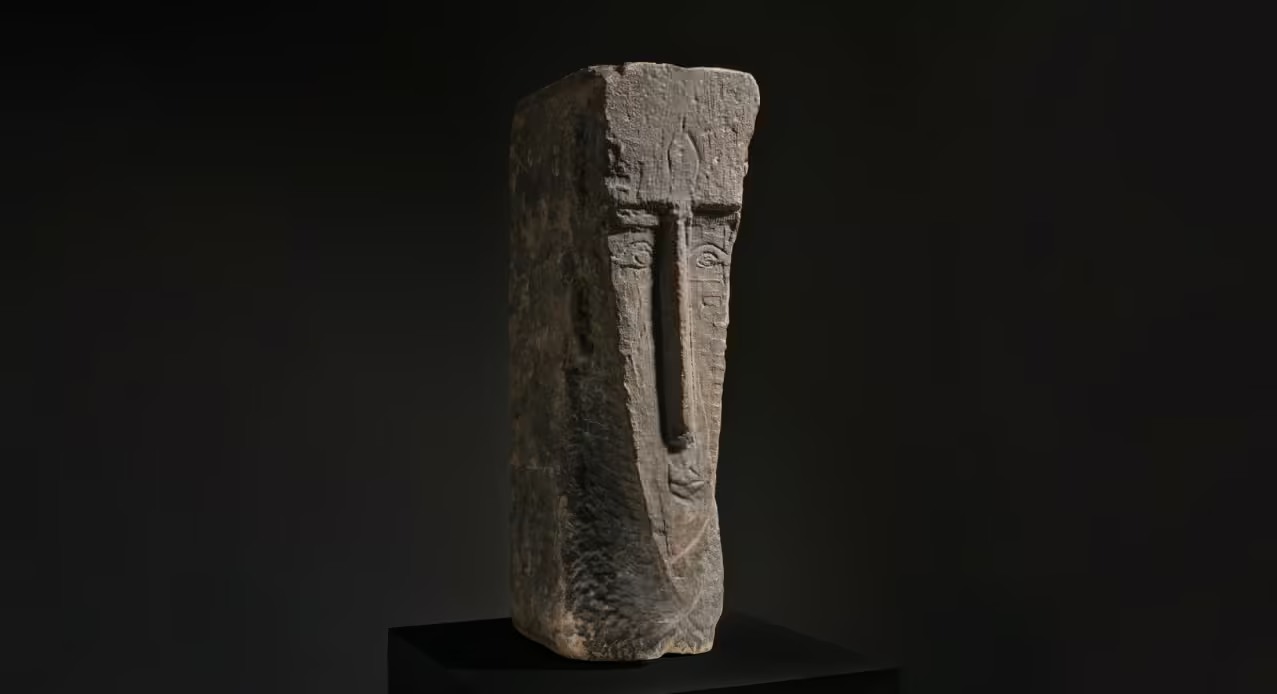
Carved from a single block of limestone in Montparnasse more than a century ago, one of Modigliani’s rare stone heads goes to auction for the first time on November 18.
For three days this week, a limestone head nearly 30 inches tall stood in Phillips’ Berkeley Square rooms in London, the first stop on a tour that ends in a New York saleroom. The work is Amedeo Modigliani’s Tête, carved between 1911 and 1912, and it has never before been offered at auction. It has spent roughly five decades in a single private collection, and on November 18 it will anchor the Modern & Contemporary Art Evening Sale at Phillips in New York with an estimate of $28 million to $35 million.
Signal. What happened: Phillips is offering a carved limestone head by Amedeo Modigliani as the centerpiece of its New York evening sale, the work’s first appearance at auction. Exact object: Amedeo Modigliani, Tête, 1911-1912, limestone, nearly 30 inches tall, consigned after roughly five decades in one private collection. When and where: public viewings in London (October 13 to 15) and Paris (from October 17), then New York at 432 Park Avenue from November 7, with the sale on November 18 at 5pm ET and an estimate of $28 million to $35 million. Source: Phillips’ own announcement and sale listing. Why it matters: almost all of Modigliani’s stone carvings now sit in museums and only a handful remain in private hands, so a head reaching the open market is one of the rarest events in the Modern sculpture trade.
Phillips presents the head as one of the largest of the few examples still outside institutions, and Jeremiah Evarts, the house’s deputy chairman for the Americas, called the sale “a once-in-a-generation opportunity for collectors.” Auction houses reach for that kind of phrasing often. With Modigliani’s sculpture, the numbers largely support it.
stir
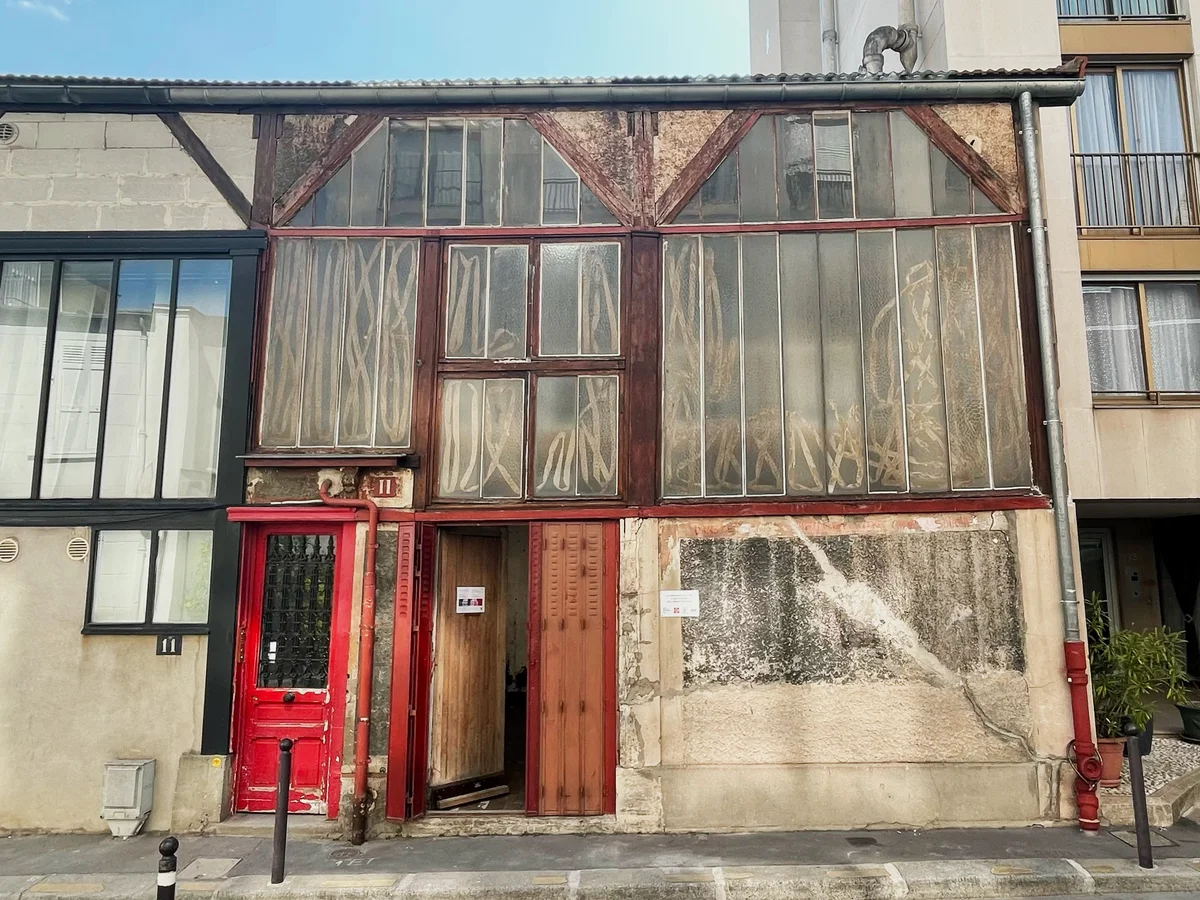
Modigliani was born in Livorno in 1884 and trained in Italy, first in his home city and then in Florence and Venice, where Renaissance and ancient sculpture was part of the daily landscape. He arrived in Paris in 1906 as a painter, but the work he most wanted to make was sculpture. The turning point came in 1909, when he met Constantin Brancusi. The Romanian sculptor had passed briefly through Rodin’s workshop and walked away from its methods, choosing to carve directly into stone and wood rather than model in clay for casting. Modigliani took up the same discipline and settled into a studio at the Cité Falguière, a cul-de-sac of cheap workshops in Montparnasse close to Brancusi’s own.
Materials were the first problem. Modigliani had very little money, and good stone was expensive. According to the catalogue note Sotheby’s published for a related head in 2014, he scavenged blocks from construction sites around Paris and wheeled them back himself, learning to carve with Brancusi’s guidance. Direct carving left no room for correction: every cut was permanent, and the figure had to be found inside the block rather than built up from nothing. Phillips describes Tête in exactly those terms, freed from a single piece of limestone in the manner of Michelangelo. Most of the surviving heads are limestone, with a few in sandstone, both stones soft enough to be worked by hand with chisels by someone without a foundry or assistants.
Between roughly 1911 and 1914, sculpture became close to his only practice. He painted very little in those years and drew constantly, filling sheets with caryatids and heads that read as studies for stone. His sources were unusually wide for the moment: Egyptian and Cycladic carving, the African masks and figures then circulating among Paris artists and dealers, the stiff verticality of archaic Greek work. What came out was unmistakably his own. The faces are long and narrow, the noses run like ridges from brow to mouth, the eyes are almond shapes, the mouths are small and closed, and the necks rise like columns.
Set beside Brancusi’s heads of the same years, the difference in temperament is easy to read. Brancusi’s Sleeping Muse, first carved in marble around 1909, lies on its side as a smooth, closed oval, close to an egg. Modigliani’s heads stand upright and stretch vertically, keeping a face’s features as shallow relief on the surface of the block. Harvard Art Museumshas suggested that one of the more elongated heads may owe something to Brancusi’s Head of a Girl of 1907, but where Brancusi pushed toward pure form, Modigliani held on to the idea of a portrait, even an idealized one.
flow
The heads were never meant to stand alone. Modigliani imagined them as parts of a larger architectural project, a temple of beauty, with the carved heads crowning caryatid columns, the figures that hold up a roof in classical buildings. He called them “columns of tenderness.” The temple was never built, and there is no sign it ever progressed beyond drawings and the heads themselves.
Those drawings survive in large numbers, many of them through Paul Alexandre, a young doctor who became Modigliani’s first real patron and bought much of what he made in those years. The sculptor Ossip Zadkine later remembered visiting to see large caryatid drawings in which slender bodies seemed barely able to bear the weight of what they carried. A Portuguese sculptor who knew him in the period compared the heads to exotic temple divinities, mysterious and refined.
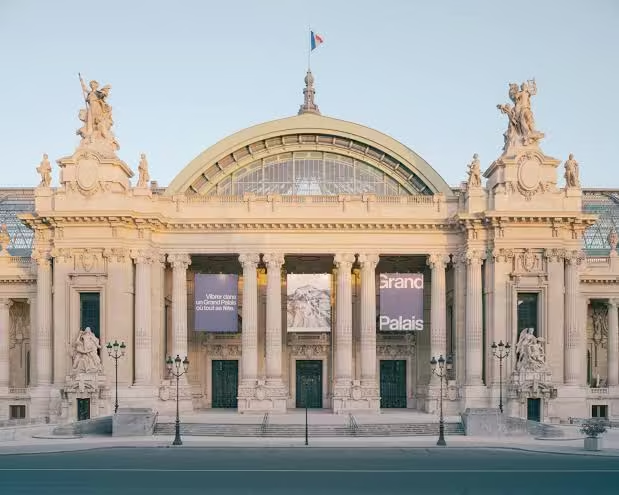
The closest the project came to existing was a single exhibition. At the Salon d’Automne of 1912, held at the Grand Palais from October 1 to November 8, Modigliani showed seven stone heads as one group under the title Têtes, ensemble décoratif. One of those seven is now in the Metropolitan Museum of Art, and another belongs to a museum in Washington. A friend who visited the studio that year later recalled Modigliani explaining that he had conceived the heads as a set, and remembered them installed in stepped heights at the Salon, like the pipes of an organ.
The British painter Augustus John bought a stone head directly from Modigliani in 1912 and later wrote that the heads “affected me strangely.” The sculptor Jacob Epstein, a fellow direct carver who was in Paris in 1912 to install his tomb for Oscar Wilde at Père Lachaise and saw Modigliani often that year, recalled Modigliani placing candles on top of the heads at night. Stories like that have fed a century of mythmaking about Montparnasse, but they also say something plain about how he saw the work: as objects for a sacred room, not ornaments for a mantelpiece.
endure
The sculpture years ended abruptly. By around 1914 Modigliani had largely put down the chisel, and accounts usually give a cluster of reasons. The outbreak of the First World War upended Montparnasse and the small market for avant-garde work. Stone was costly and heavy for an artist with no money. And carving was punishing work for a body that had been fighting lung disease since childhood, with stone dust about the worst possible environment for someone with tuberculosis.
He went back to painting, and from 1914 he had a dealer in Paul Guillaume, who photographed him in his studio around 1915 and began placing his canvases with collectors. The sculpture came with him. The long necks, tilted ovals and blank almond eyes of the portraits and nudes he made from 1915 onward all trace back to the stone heads, and nearly all of the canvases that now command the highest prices date from those last five years. Seen that way, the carvings are not a detour in his career but its root, the place where the face that defines a Modigliani painting was first worked out in three dimensions.
Modigliani died in Paris on January 24, 1920, at 35, of tubercular meningitis. By most counts he had made only about two dozen carvings, nearly all of them heads.
extend
Nobody agrees precisely how many stone sculptures Modigliani made. The Met puts the figure at about 25. Christie’s cited roughly 26 when it offered a head in 2019. Phillips now says approximately 28. Whatever the exact total, most of them are institutional property, held by major museums in New York, London, Paris and Washington, and Phillips counts Tête among only a handful still in private hands.
That scarcity explains the price history. The paintings set the overall ceiling: at Christie’s Artist’s Muse sale in November 2015, the reclining nude Nu couché sold for $170.4 million, still the artist’s auction record. The stone heads have followed close behind. In June 2010, at Christie’s in Paris, a head dated 1910 to 1912 from the collection of French retail magnate Gaston Lévy, who had owned it since 1927, was estimated at €4 million to €6 million and sold for €43.2 million. Close to twenty bidders, most of them on the telephone, chased it for more than ten minutes. At the time that was a record for the artist and the highest price paid for any artwork at auction in France.
Four years later, in November 2014 at Sotheby’s in New York, a 1911-1912 head that Augustus John had bought from Modigliani in 1912, and which had been shown at the 1912 Salon d’Automne, had carried a presale estimate of around $45 million and sold for $70.7 million, in an evening that also featured Alberto Giacometti’s bronze Chariot. That remains the auction record for a Modigliani sculpture. In 2019 Christie’s placed another limestone head in its May evening sale in New York at $30 million to $40 million, describing it as the first carved head offered at auction in five years. That head was backed by a third-party guarantee before the sale; Phillips has not said publicly whether Tête carries one.
Size matters in this small group, and at nearly 30 inches the Phillips head is taller than the 26-inch Lévy example. Against those markers, the Phillips estimate of $28 million to $35 million sits well below the 2014 result and slightly under the 2019 range. Phillips, founded in London by the auctioneer Harry Phillips in 1796 and marking its 230th year in 2026, is also framing the consignment as a continuation of momentum. The house says its spring 2026 auction totals rose more than 60 percent year over year, and that its May evening sale in New York realized more than double the equivalent sale a year earlier.
fin
Part of the pitch is the provenance itself. Roughly fifty years with one owner means the head arrives without a recent public price attached, leaving bidders to set its value largely from scratch. Phillips cites its state of preservation and its scale, and Evarts pointed to the way the work bridges ancient Egyptian, Cycladic and African sources with early Modernism. The house has not publicly named the consigning collection. It is also offering the head in an evening sale that mixes Modern and contemporary material in a single session, the format Phillips uses for its marquee New York auctions.
After London, the head travels to Phillips’ Paris space on the Rue du Faubourg Saint-Honoré from October 17, then to New York, where it goes on view at 432 Park Avenue from November 7. The sale is scheduled for November 18 at 5pm Eastern, 114 years after the Salon d’Automne where Modigliani first showed his stone heads as a group.
Related Articles

Twelve Albums on a Pharmacy Shelf
Damien Hirst has shelved Eminem's twelve albums beside pill packets, and one cabinet stocks every drug the rapper has named in a lyric.