DRIFT AUDIO
Listen to this story
Choose a voice, then press play.
Forty years after the crew of the Nostromo met their second Xenomorph, HUF has wrapped a skate deck and a shop jacket in the franchise’s own grime.
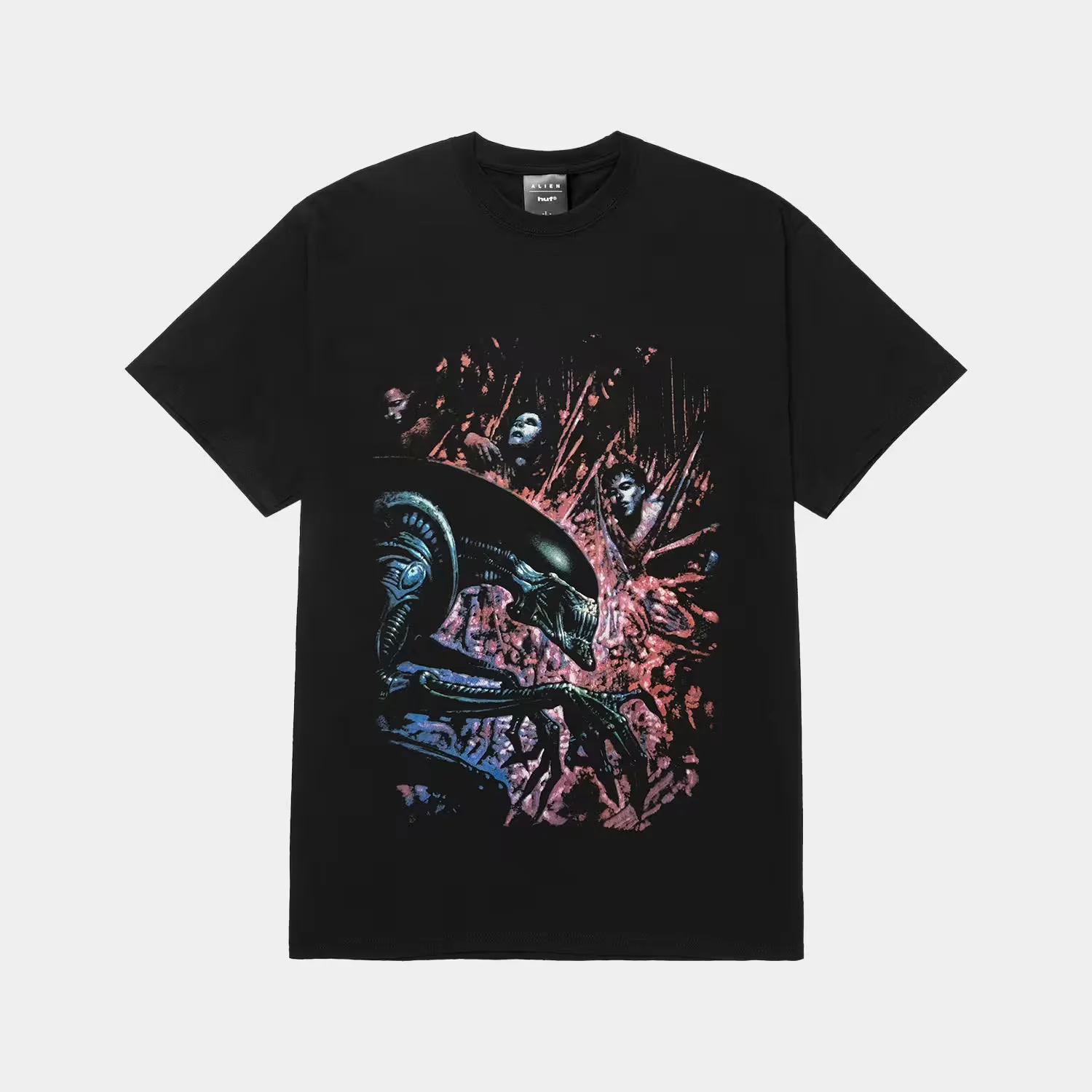
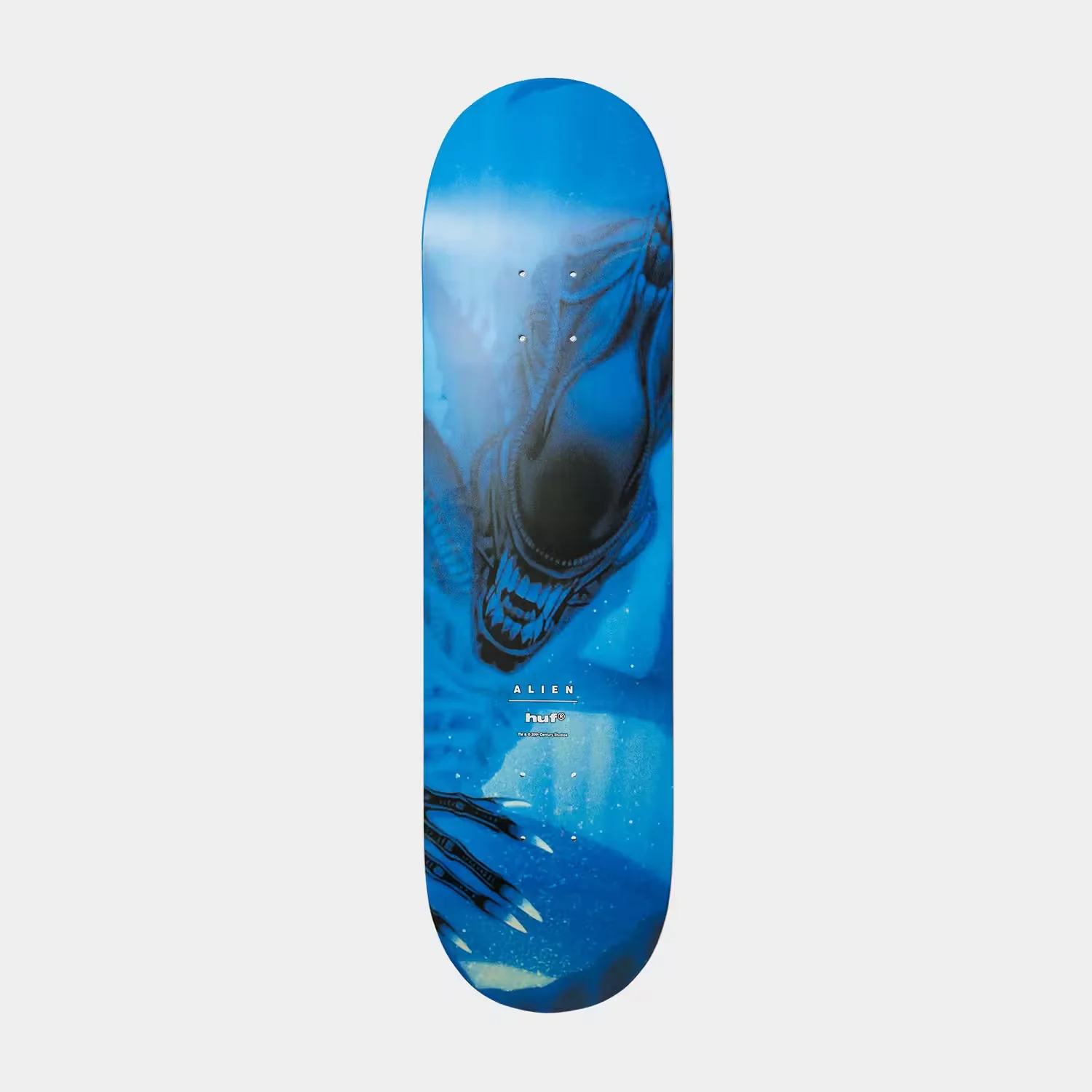
The bottom of a new skateboard deck sitting in HUF Worldwide‘s new arrivals section looks unremarkable under normal light. Cut the lights, and a Xenomorph skull rises out of the grain: a glow in the dark effect built into the underside of the Xenomorph Glow-in-the-Dark Skate Deck, the centerpiece of a capsule HUF has built entirely around the Alien franchise. The collection has landed on HUF’s Japan storefront alongside the brand’s ongoing Fall ’26 rollout, giving the new arrivals page its most conspicuous addition in weeks: a run of hardware, outerwear, knitwear and headwear that HUF’s own retail partners describe as tied to Aliens‘ 40th anniversary. The same new arrivals grid also carries HUF’s own New Essentials line and the rest of the Fall ’26 rollout, but neither has drawn anything close to the attention the Alien tie-in has picked up since it went live.
HUF’s own collection page keeps the frame broad, describing the rel simply as a collide with 20th Century Studios‘ Alien property. The individual pieces, and the lang HUF uses to sell them, point more specifically at James Cameron’s 1986 sequel, the film that introduced Colonial Marines, pulse rifles and the queen Xenomorph, and that turns 40 this year. It isn’t the brand’s first pass at licensed pop culture either: HUF’s own brand history already runs through collaborations with Marvel and Street Fighter, so a horror franchise tie-in fits a pattern the label has worked before rather than a one-off experiment.
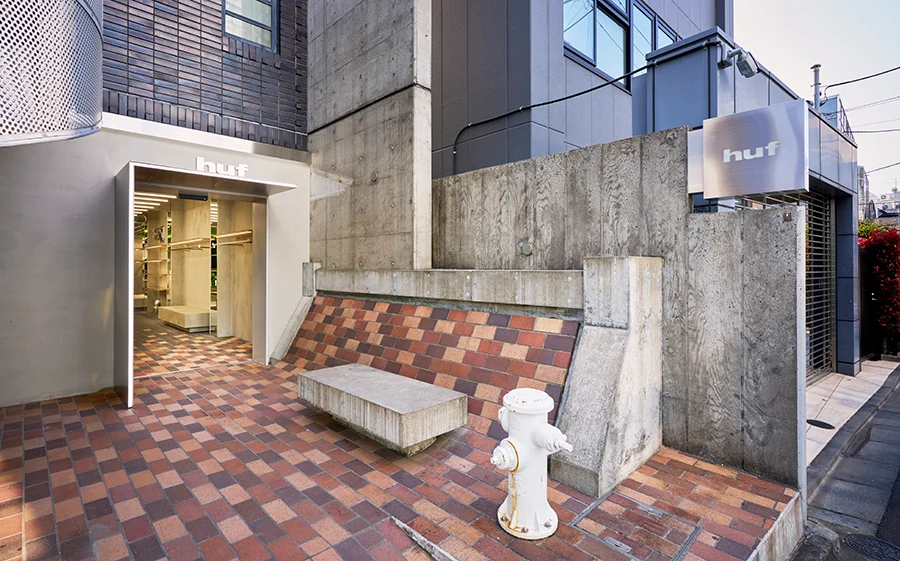
The exterior of a HUF store featuring a geometric concrete and brick facade, a white fire hydrant on the patterned brick sidewalk, and an open doorway leading into a brightly lit retail space.
stir
The deck itself (style AC01366_GLOW) is a 7-ply maple popsicle shape in HUF’s standard 8.25 by 32.0 inch dimensions, with heat transfer artwork printed on both the top and bottom. The glow in the dark treatment is confined to the underside, so the board rides and grips like any other HUF deck in daylight and only reveals its Xenomorph artwork once the lights go down, or the board’s been left somewhere dark for a few minutes beforehand.
It’s a workable gimmick for a franchise built on the idea that nothing good happens once the lights cut out, and it puts the deck in company with a run of licensed collectibles that have quietly stacked up around this specific anniversary. Hot Toys, the Hong Kong-based collectibles maker, marked the same 40-year mark this year with sixth-scale figures of Ellen Ripley and the “Alien Warrior” Xenomorph, and Cold Iron Studios shipped a 40th Anniversary Premium Edition of its Aliens: Fireteam Elite 2 video game in late August, bundling in Ripley-themed gear for the occasion. Taken together, the pattern makes clear that Aliens, plural (the 1986 film), rather than the 1979 original Alien, is the specific milestone driving this year’s wave of licensed product, HUF’s deck included.
Skate hardware is a comparatively rare category for HUF to lead a collection with, even though the brand’s own roots are squarely in skateboarding. HUF was built by a professional skateboarder and still runs its own team of sponsored riders, but the label’s collaborations more often land in apparel and footwear than in decks themselves. Putting the deck at the center of this particular capsule, rather than treating it as an afterthought accessory bundled in behind the clothing, signals how much weight HUF is putting on the collectible angle of this specific rel.
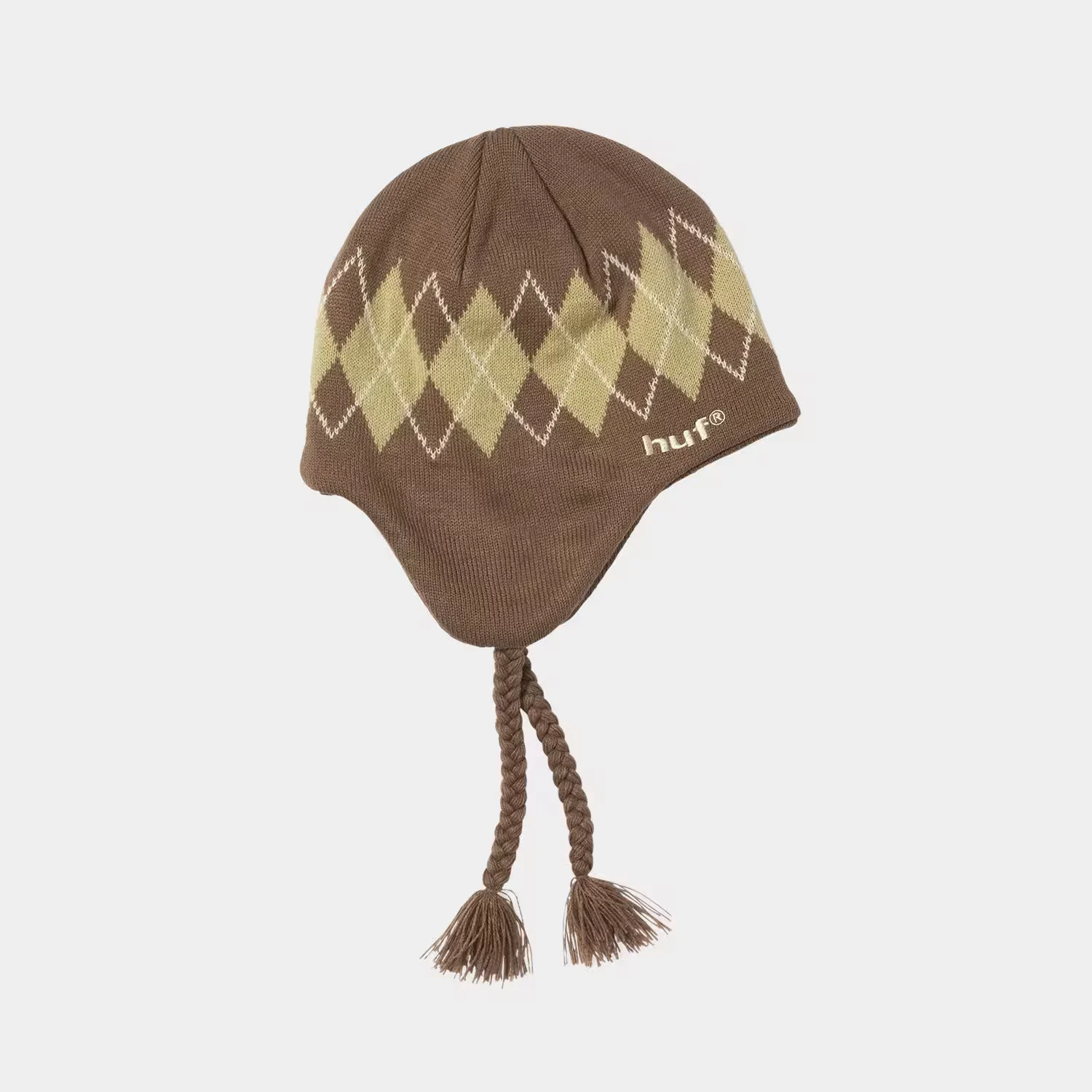
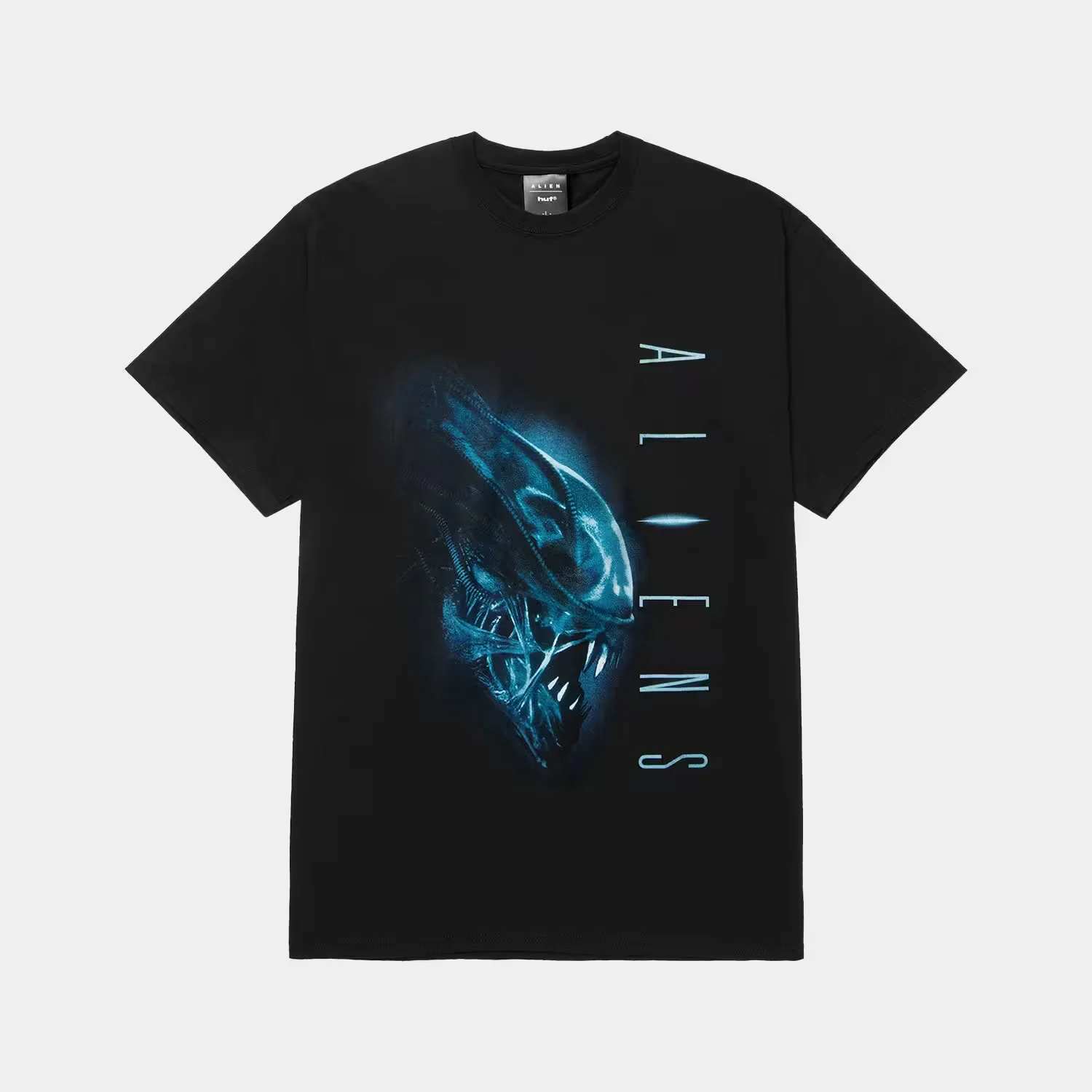
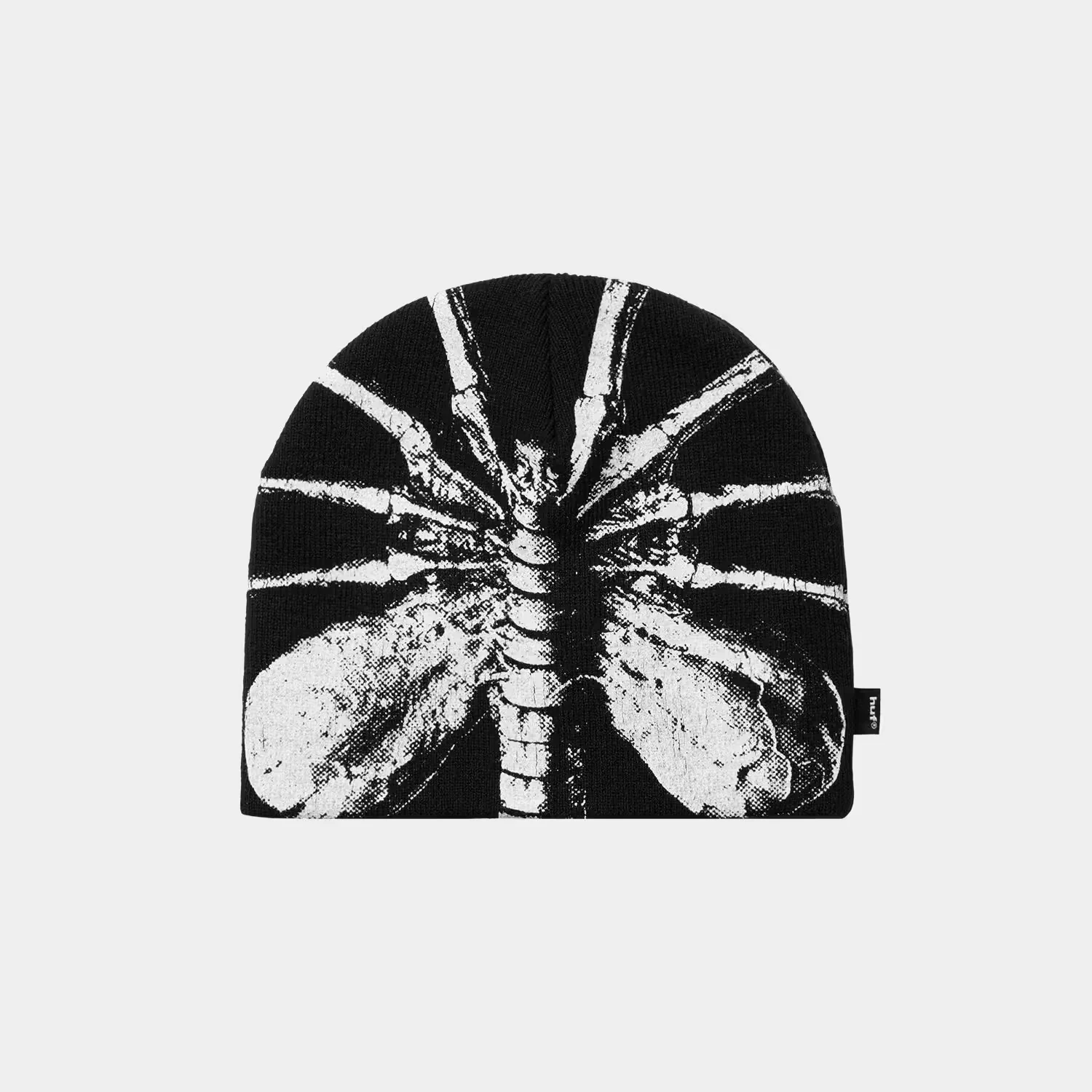
The deck anchors a wider run that stretches to at least eight pieces across HUF’s global product pages: the skate deck itself, a shop jacket, a pullover hoodie, a long sleeve thermal, two graphic tees, and headwear that includes a snapback and beanies. Not every one of those has been individually confirmed live on the Japan storefront specifically, since HUF’s collection pages render their product grids through scripts that a plain page fetch can’t read, but the collection banner on hufworldwide.jp does confirm the rel itself is live in Japan, describe it direct as HUF’s release of a collection with 20th Century Studios’ Alien.
View this post on Instagram
run
Where the deck leans on gimmick, the apparel leans on reference. The Work Jacket (JK00547_VIBLK), a shop jacket in 290 gsm cotton twill, is the collection’s most literal piece: full zip front, dual welt hand pockets, elastic cuffs and hem, printed artwork across the front, sleeves and back. HUF’s own product copy ties its design directly to “the cold corridors of the Nostromo,” the mining ship at the center of the original films, going for what the brand calls a “movie crew” vibe rather than a monster-forward graphic.
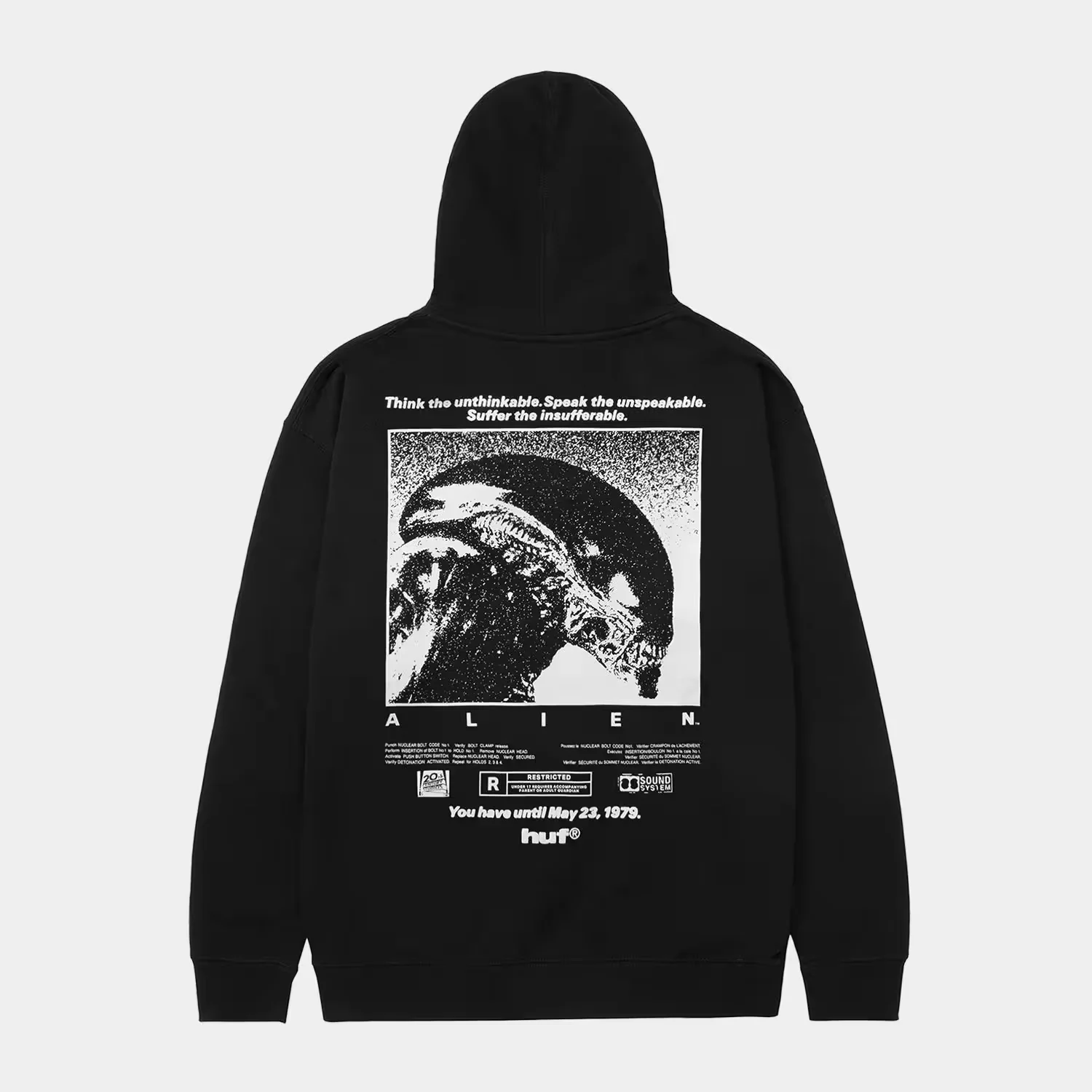
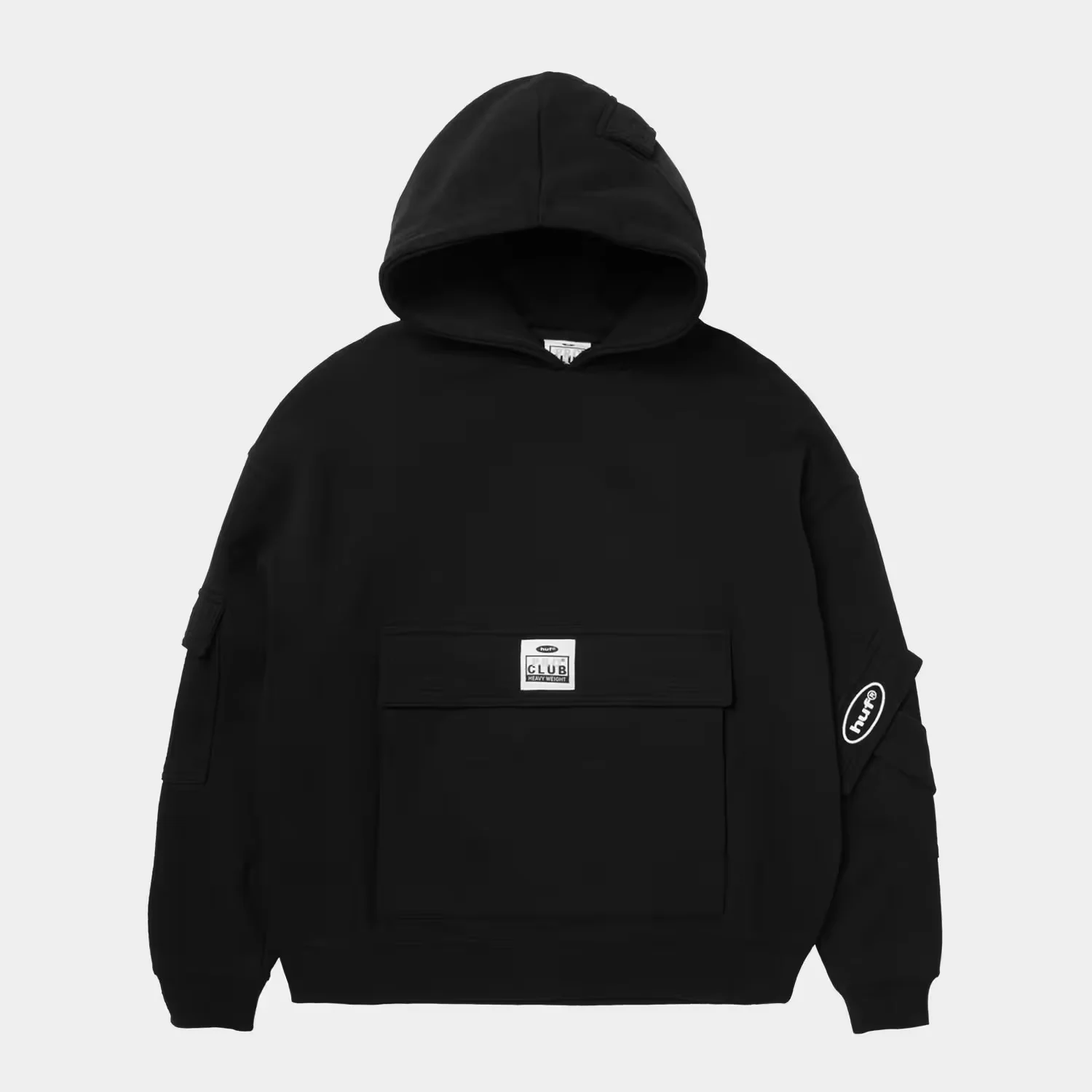
The Fossilized Pullover Hoodie (PF00886_BLACK) does the opposite. Built in an 80/20 cotton-poly fleece at 330 gsm, it puts a fossilized Xenomorph skull front and center on the chest, then turns the back into the collection’s deepest cut: reproduced poster art carrying what HUF describes as an early, since-rewritten tagline for the film, one the brand says was changed before release into the line now stitched into the franchise’s reputation. HUF’s own copy doesn’t spell out that earlier wording, and it isn’t independently confirmed anywhere else, so it’s presented here as the brand’s claim rather than a verified fact.
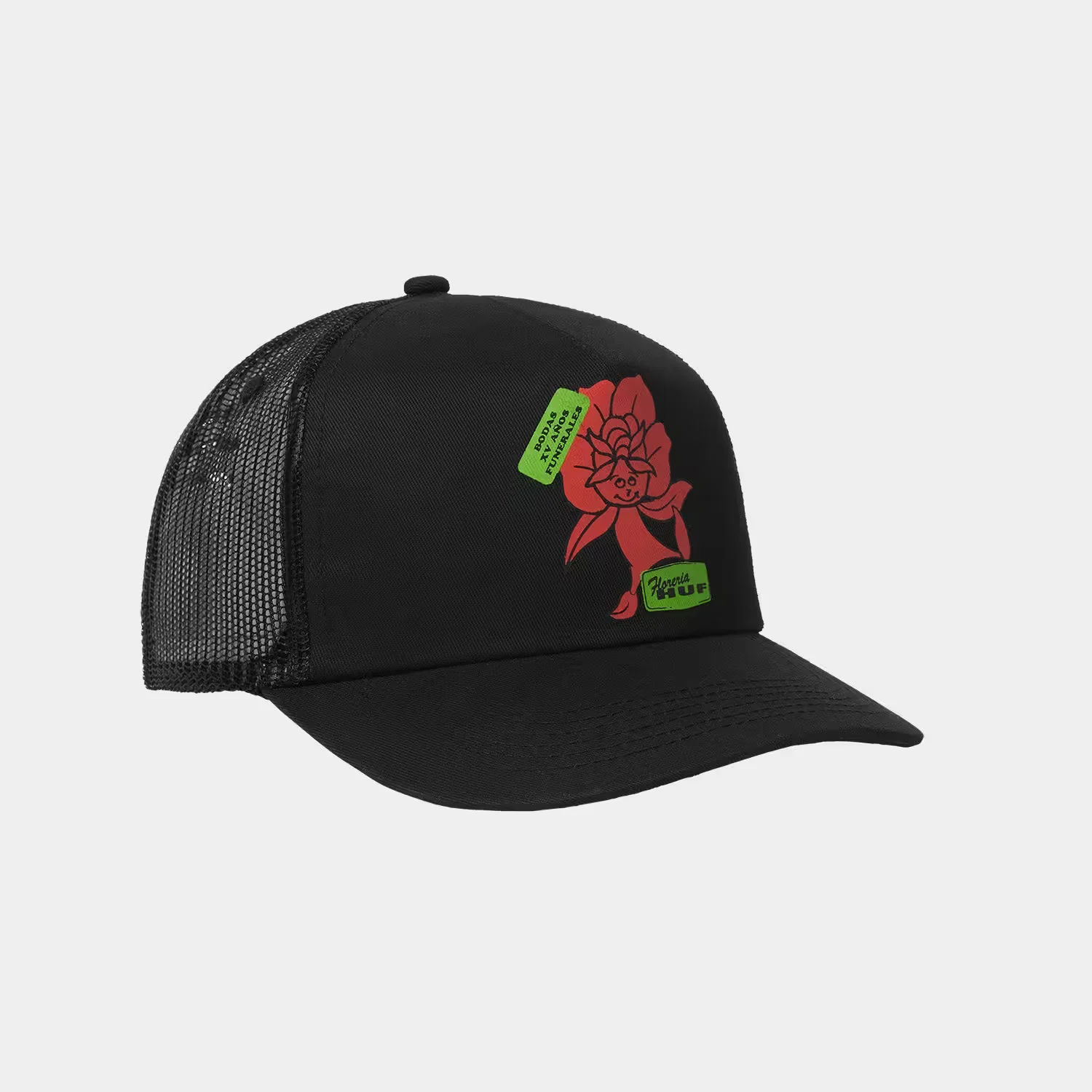
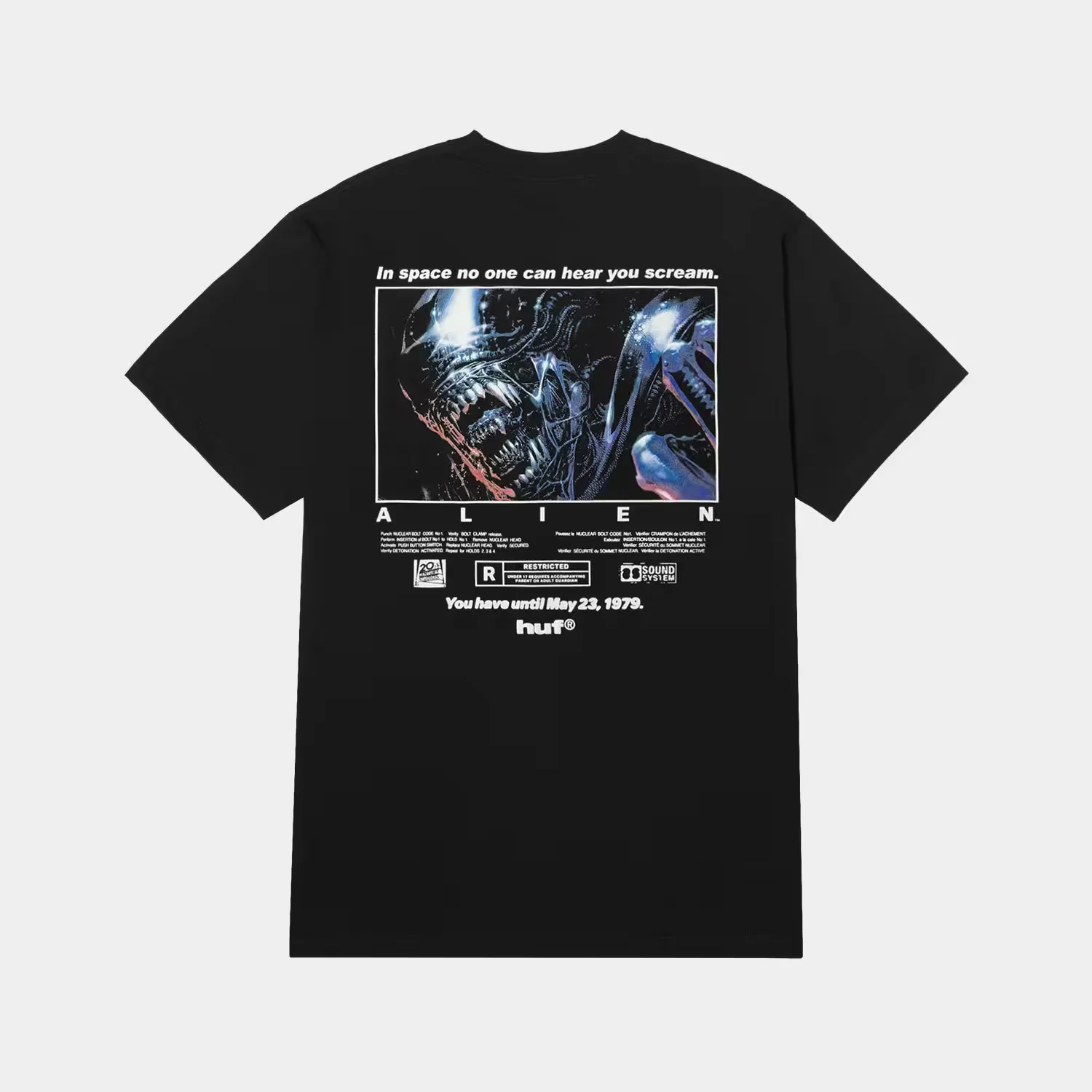
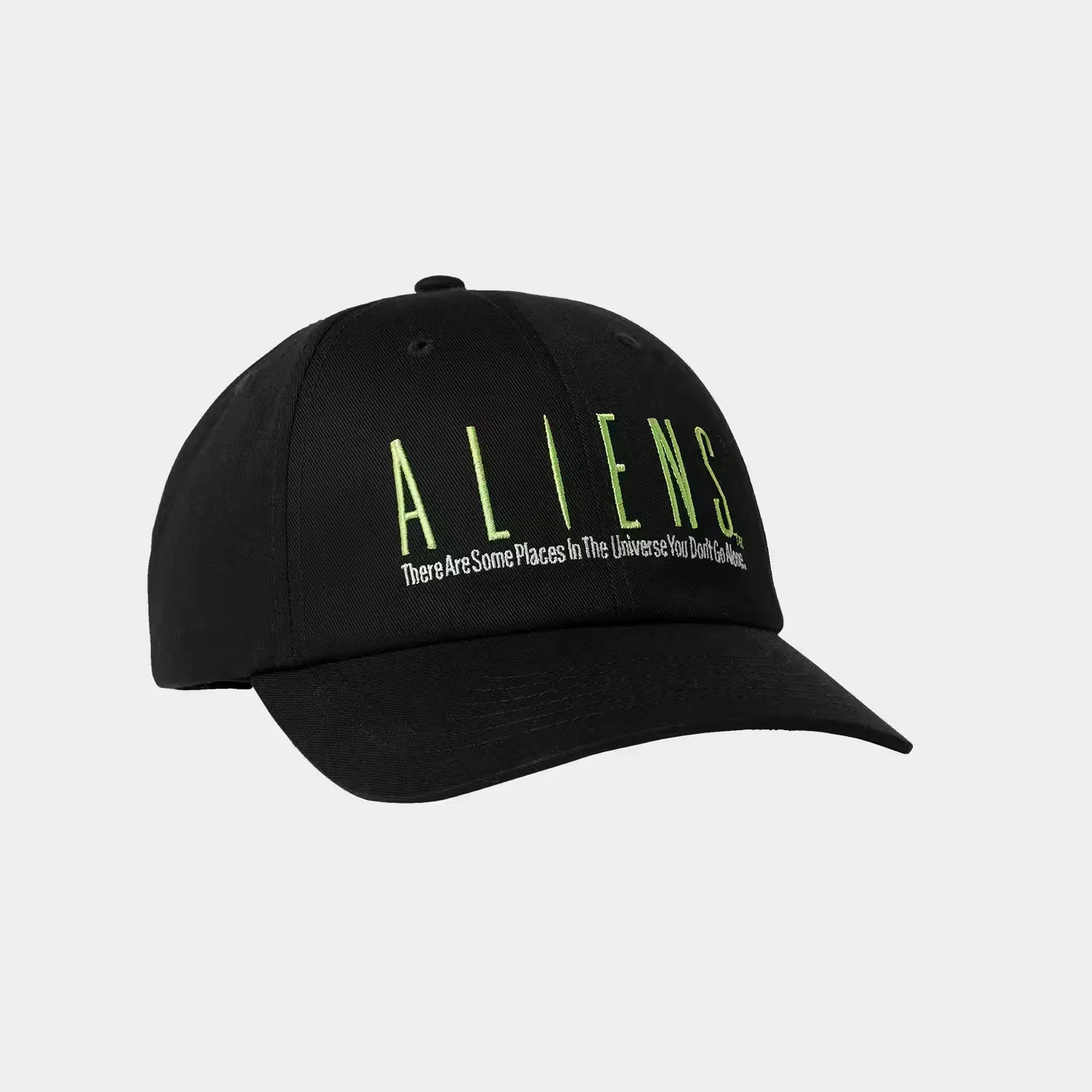
That rewritten line gets its full, unaltered billing on the Scream T-Shirt (TS02937_BLACK), a 200 gsm cotton tee that plays the reference straight in its own product copy: “Remember… in space, no one can hear you scream.” The Manifest T-Shirt (TS02935_BLACK), printed front and back on the same 200 gsm cotton base, is described by HUF itself as the most graphic-heavy piece in the run, mixing horror and tech signifiers with what the brand calls a 90s flare in graphic direction. Rounding out the knitwear is the Xenomorph Long Sleeve Thermal Shirt (KN00635_VIBLK), a ribbed 98/2 cotton-spandex thermal at 370 gsm with printed artwork on the front and back panels, and an Aliens Snapback listed on HUF’s own global site at $38. Every apparel piece in the run carries co-branded HUF x Alien trims, a small detail that runs consistently from the jacket down to the tees, and HUF’s own sizing notes for the Work Jacket list a six-foot model wearing a size Large, the brand’s usual reference point across its outerwear line.
huh
A licensed capsule like this one would normal read as a global drop that happens to also be for sale in Japan. HUF’s own corporate history complicates that reading. In December 2017, TSI Holdings, the Tokyo-listed apparel and fashion conglomerate, acquired a 90 percent stake in HUF Holdings LLC for a reported $63 million, buying out the San Francisco private equity firm that had held a stake in the brand since 2014. The deal folded HUF into the same corporate structure as Lakai and a stable of Japanese fashion labels under TSI, and it formalized a relationship that already existed: TSI’s own Japan subsidiary, Jack, Inc., had been operate as HUF’s exclusive Japan distributor since 2015, two years before the acquisition made it official. TSI’s own portfolio beyond HUF spans a cluster of Japanese fashion labels, including Nano Universe, giving HUF a retail and distribution infrastructure inside Japan that few of its West Coast skate-brand peers can match.
That history shows up today in how thoroughly HUF has built out its Japan retail footprint, which by the brand’s own store locator now runs to more than two dozen locations: storefronts in Tokyo’s Harajuku and Shibuya neighborhoods, additional shops in Sapporo, Yokohama, Nagoya, Osaka, Kyoto, Kobe, Hiroshima, Fukuoka and Okinawa, a scatter of outlet locations from Saitama to Mie, and three further stores in Taiwan operating under the same regional storefront. HUF’s Japan site is also just one piece of a wider network of regional storefronts the brand runs on its own for the US, Canada, UK and Europe, each carrying its own assort and pricing, which is part of why a piece confirmed as live on hufworldwide.jp can still be missing the exact yen pricing or release timing that only shows up on hufworldwide.com.
Founder Keith Hufnagel, a New York City-raised skateboarder who moved to San Francisco in 1992 and opened the first HUF boutique in the city’s Tenderloin district a decade later, didn’t live to see the brand reach this scale in Japan. Hufnagel rode professionally for Real Skateboards for more than 25 years alongside running the label, a dual identity as rider and founder that shaped HUF’s early reputation as a brand made by skate rather than a fashion label borrowing skate imagery. He died in March 2020 at age 46, after a two-and-a-half-year fight with brain cancer, roughly two years after the TSI deal closed. HUF is now headquartered in Los Angeles, still built around the skate-team identity Hufnagel gave it, even as its ownership and much of its physical retail network now run through Tokyo.
View this post on Instagram
fin
HUF’s own naming splits the difference between the film and its sequel. The banner on hufworldwide.jp calls the release simply “HUF X ALIEN,” pointing at the franchise as a whole, while the individual product names on HUF’s global site (the Aliens Snapback, the Aliens Work Jacket, the Aliens Xenomorph Long Sleeve Thermal Shirt) all use the plural “Aliens,” the specific title of Cameron’s 1986 sequel. That plural framing lines up with the anniversary math: Aliens was released July 18, 1986, putting 2026 at the 40-year mark, the same milestone Hot Toys and Cold Iron Studios are marking elsewhere this year. The original 1979 Alien, by contrast, hit its own 40th anniversary back in 2019, when 20th Century Fox, before the studio’s rebrand under Disney, ran a dedicated Alien Day campaign built around that earlier milestone.
The capsule’s most quotable print complicates that framing rather than settle it. The Scream Tee line, “in space, no one can hear you scream,” isn’t from Aliens at all. It’s the tagline that ran on the poster for Ridley Scott’s original 1979 Alien, the film that predates the sequel HUF’s own product naming otherwise points to by seven years. Whether that’s a deliberate blend of the wider franchise’s single most recognizable line with a capsule built around one specific sequel’s anniversary, or simply HUF reaching for the phrase most shoppers associate with the franchise regardless of which film it’s from, isn’t something the collection’s own copy resolves. It’s presented here as an observed detail rather than a corrected error.
That 40-year milestone is getting recognition well beyond retail, regardless of which film gets credited for which line. Cast members from the 1986 film, include Michael Biehn, Jenette Goldstein and Mark Rolston, appeared on a dedicated Aliens 40th anniversary panel at WonderCon in March 2026 and returned for a second one at San Diego Comic-Con that July, trade story about the film’s practical effects and Ripley’s evolution into an action lead. The film has also been circulating back through theater this year: repertory houses and revival series have run 40th anniversary screen time to its July 18 rel date, include a 70mm print in the American Cinematheque‘s own summer revival series, distribute under Disney’s current ownership of the 20th Century Studios library. Against that backdrop, HUF’s capsule read less like an isolate license deal and more like one storefront’s entry in a wider run of 2026 tie-ins built around the same 40-year mark, whichever poster its own tees happen to borrow from.
Specific yen pricing and a standalone Japan release date for individual pieces hadn’t surfaced anywhere beyond the hufworldwide.jp collection banner itself as of this writing.
Related Articles
Nubian Put Distressed Cotton Jersey On Needles Track
20th Exclusive Vol.7. Needles. Four shapes. Black and grey. 19 September 2026. All NUBIAN doors […]