DRIFT AUDIO
Listen to this story
Choose a voice, then press play.
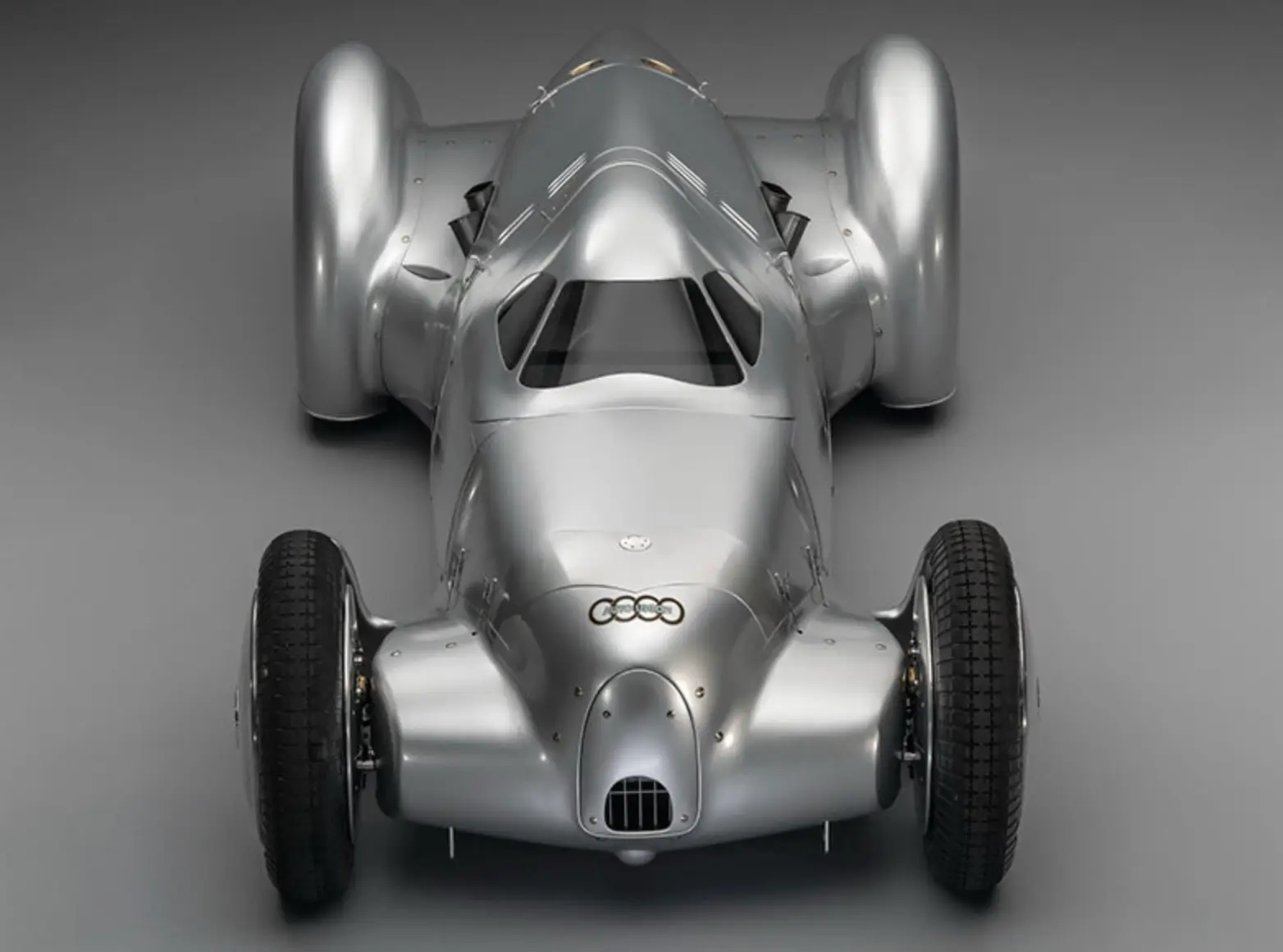
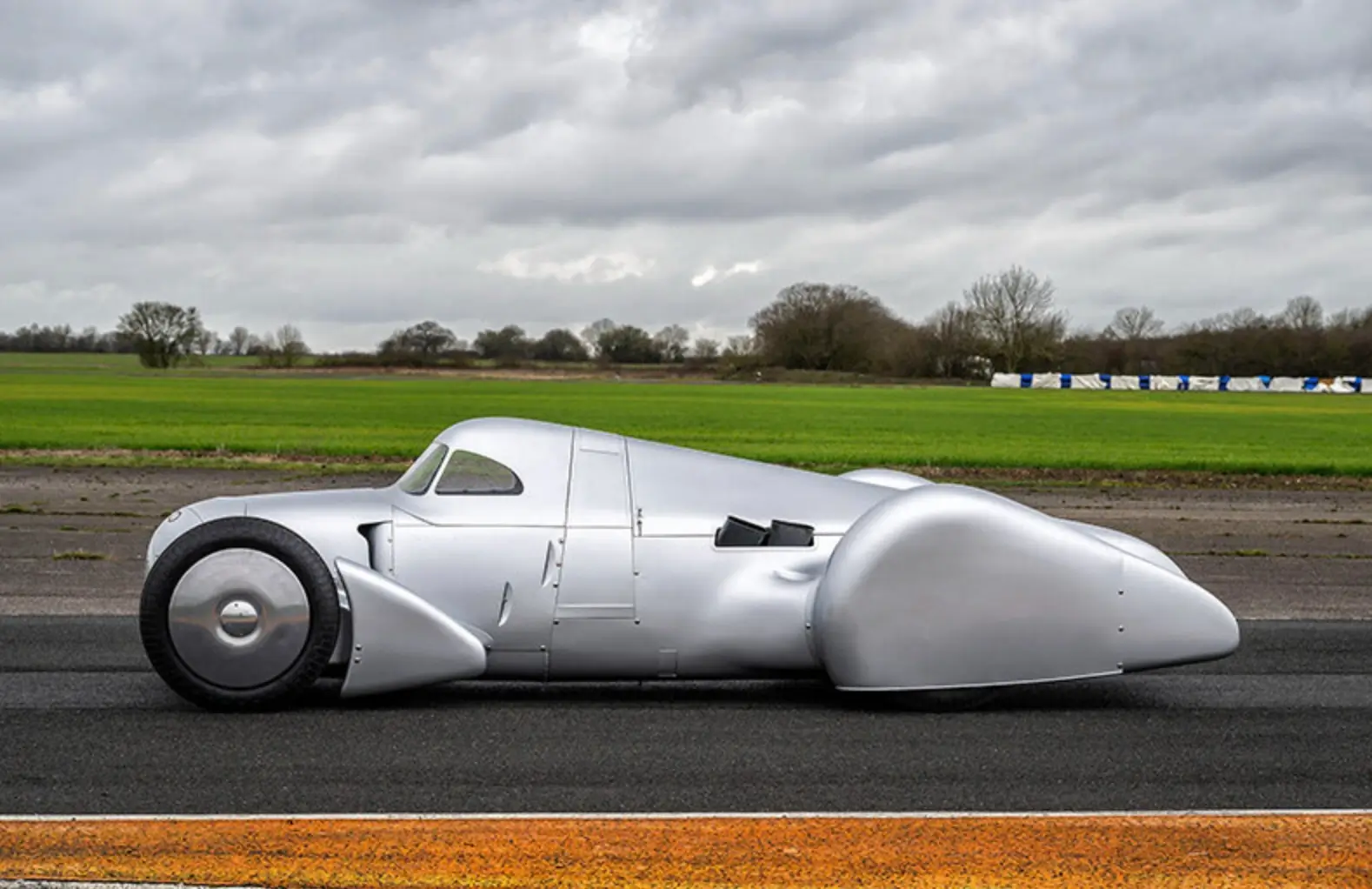
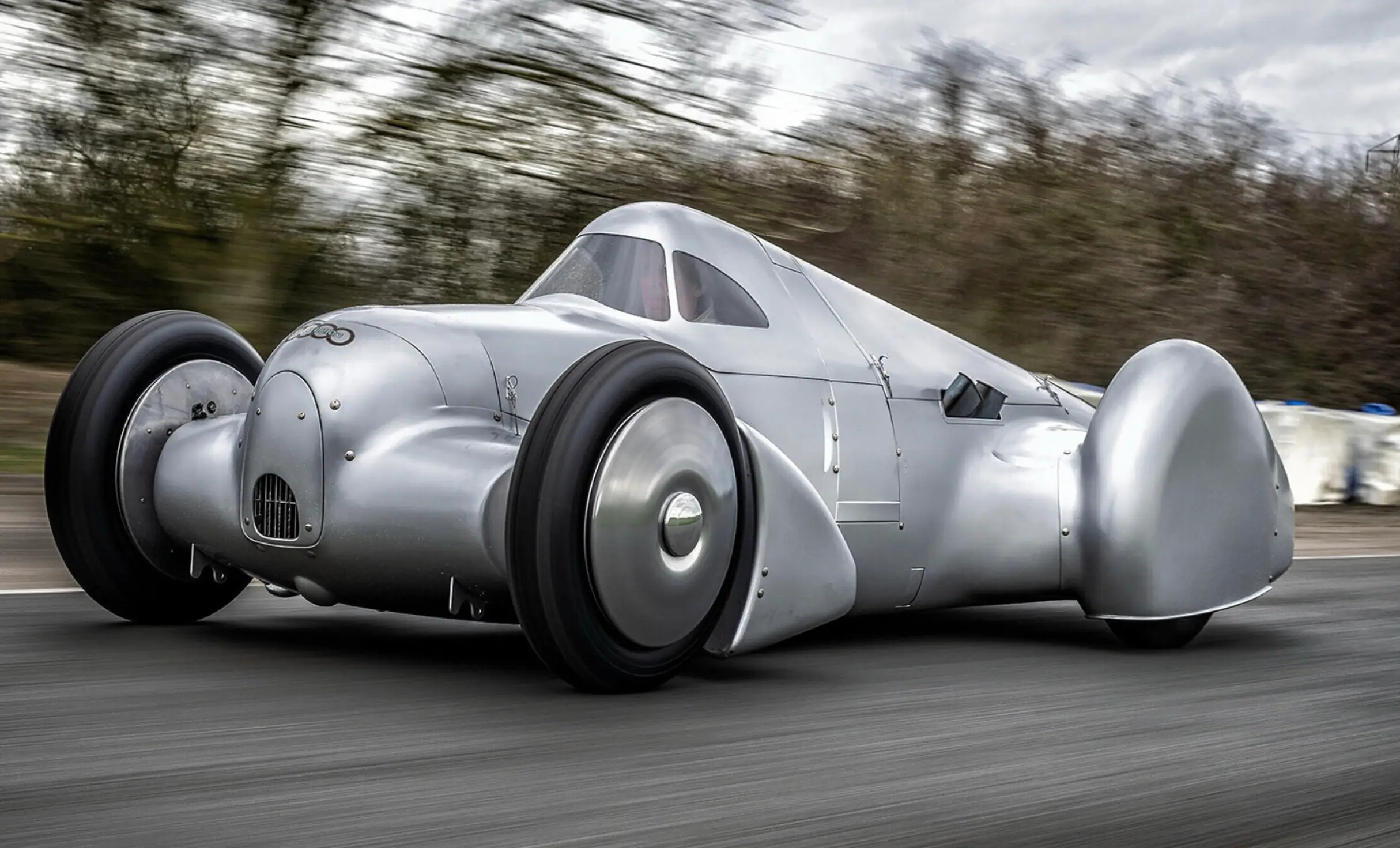
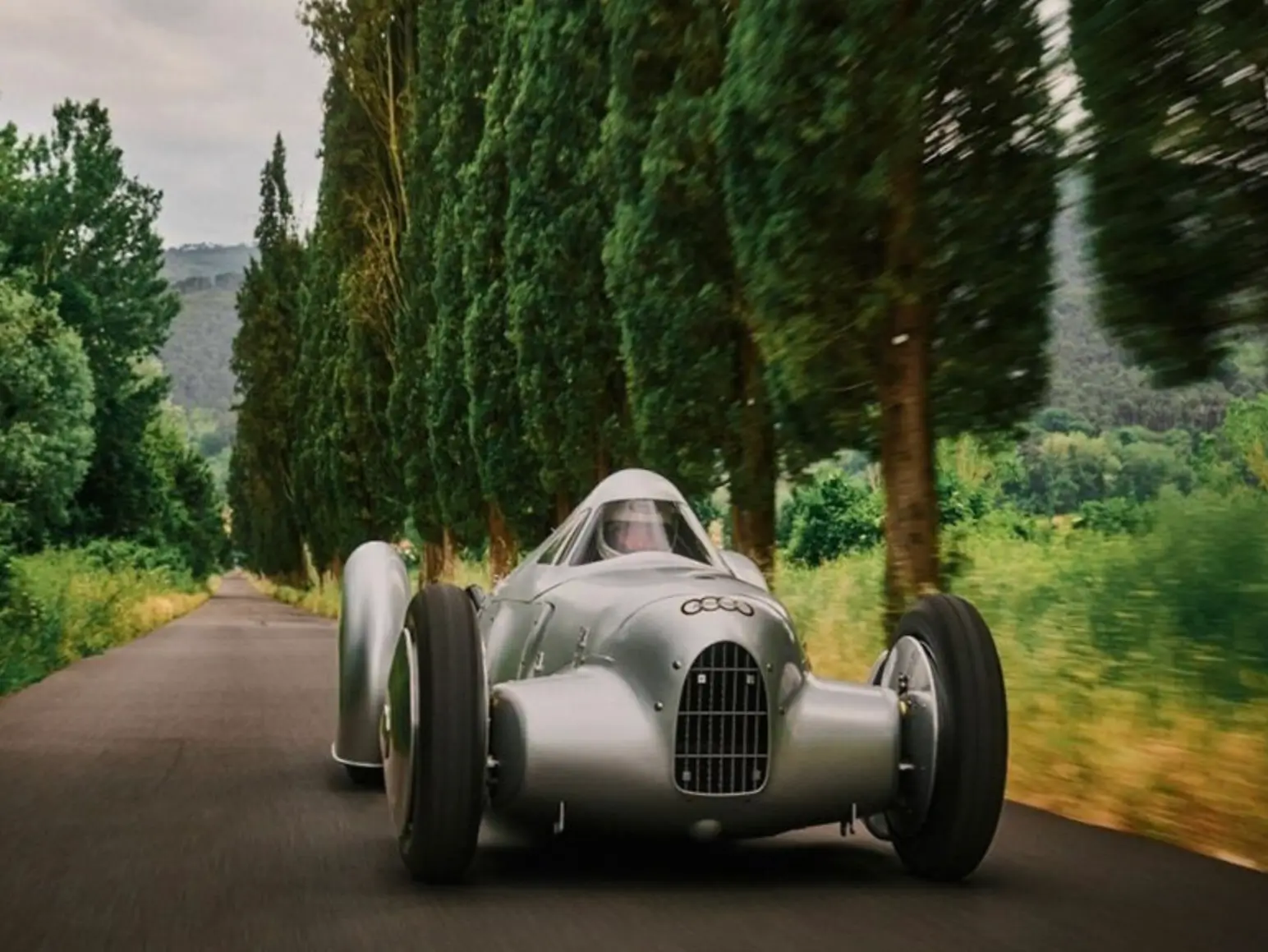
Audi has recreated the Auto Union Lucca, the streamlined record car that reached 326.975 km/h (203 mph) on a road near the Italian city in 1935. The one-off reconstruction, completed in spring 2026 by Audi Tradition, returns a missing piece of early Grand Prix engineering to the marque’s historic vehicle collection. Known in period language as a Rennlimousine, or racing sedan, the car joins the Silver Arrow family after more than three years of work by British restoration specialists Crosthwaite & Gardiner.
This is more than a restoration. It is a resurrection of one of the most audacious machines from the golden age of pre-war motorsport—a time when speed was pursued with almost reckless ambition, national prestige hung in the balance, and engineering boundaries were redrawn almost weekly. The Lucca embodies the raw mix of aerodynamics, power, and human daring that defined the 1930s Silver Arrows era. Its return to Italy, unveiled in the very city that lent it its name, closes a circle nearly a century in the making.
View this post on Instagram
stir
To equip one’s thoughts around circumference with the Lucca, one must step back to the early 1930s. In 1932, four Saxon manufacturers—Audi, DKW, Horch, and Wanderer—merged to form Auto Union AG. The new entity needed a bold identity. Motorsport offered the perfect stage. Germany’s government, eager to showcase technological superiority amid rising nationalism, provided substantial backing for racing programs. The 750 kg Grand Prix formula, introduced for 1934, leveled the playing field by limiting weight while allowing engine displacement freedom. Both Auto Union and rival Mercedes-Benz seized the opportunity.
Auto Union’s cars were revolutionary. Designed under Ferdinand Porsche’s influence initially, they featured a mid-mounted V16 engine (later evolving through types), independent suspension, and a rear-engine layout that challenged conventional front-engined norms. Drivers like Hans Stuck, Bernd Rosemeyer, and Achille Varzi piloted these silver projectiles, earning them the collective nickname “Silver Arrows” alongside Mercedes’ machines. The silver paint was partly pragmatic—legend has it that Mercedes stripped white paint to meet weight limits in 1934, revealing the gleaming aluminum beneath—but it became iconic.
By late 1934, the rivalry with Mercedes had spilled beyond circuits into outright speed records. Public roads and autobahns became battlegrounds. Mercedes driver Rudolf Caracciola set a flying-start mile record near Gyón, Hungary, at 316.592 km/h. Auto Union, fresh off multiple records with Stuck at the wheel, needed to respond. Engineers in Zwickau worked through a frantic winter, transforming a Type A-derived chassis into a purpose-built record breaker.
flow
The Lucca began life as a heavily modified racing chassis. Its heart was a 5.0-liter (approximately) V16 engine producing around 343 PS in early form—later Type C variants pushed higher. The engine sat behind the driver in true Auto Union fashion, delivering power through a complex drivetrain. But the standout feature was the body: a fully enclosed, streamlined “Rennlimousine” crafted from lightweight metal.
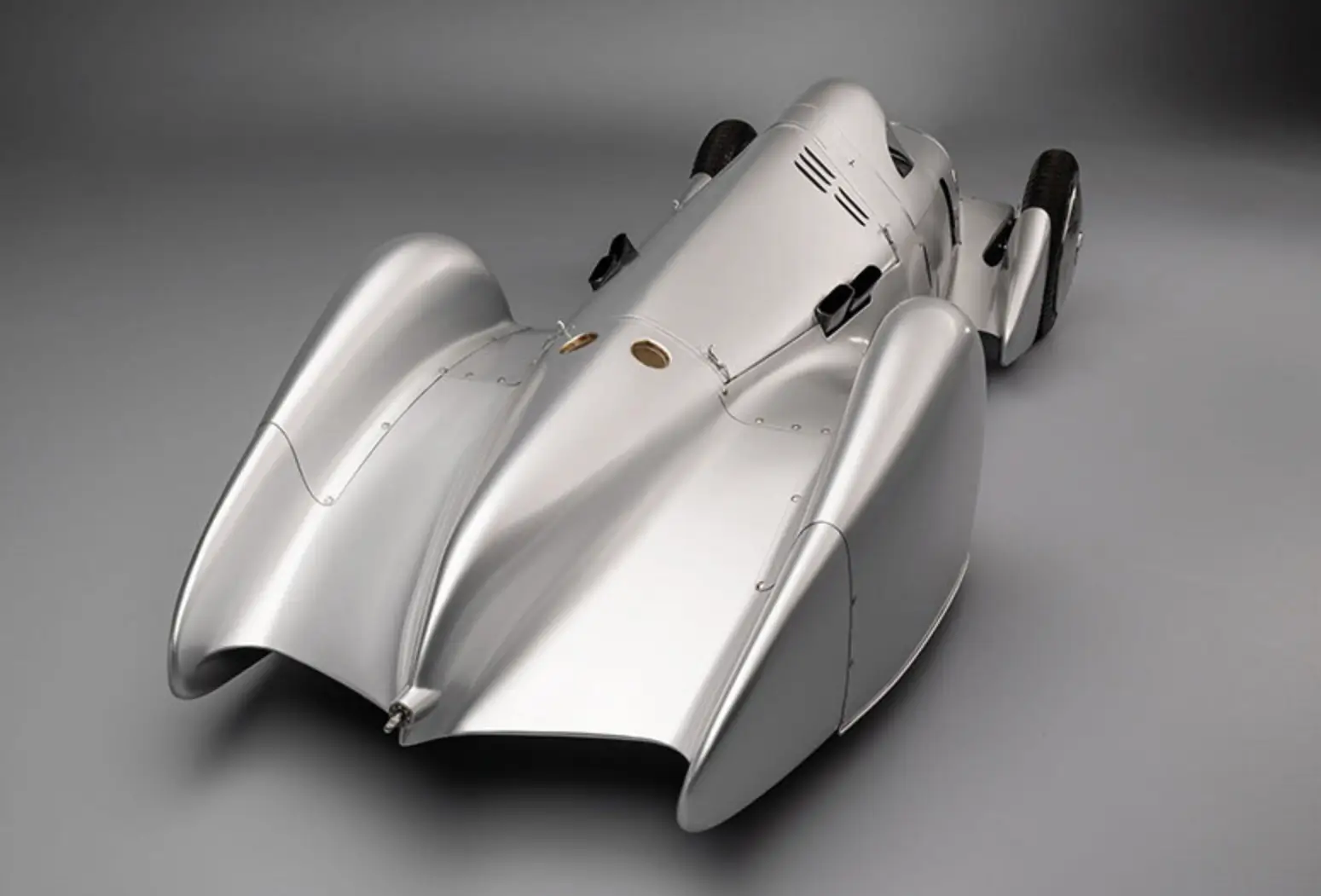
Wind tunnel testing at Berlin-Adlershof Aeronautical Research Institute guided the shape. Engineers experimented with open and closed cockpits. The final design featured a long, tapering silver fuselage, teardrop wheel arches over covered spoked wheels, a pronounced rear fin for stability, and circular rear air intakes for carburetor breathing. Exhaust pipes exited upward in grouped outlets. Every curve served airflow; the result was both functional and sculptural—almost alien in its elegance.
The car weighed around 1,030 kg with driver for later races. Aerodynamics were cutting-edge for the era, minimizing drag while managing cooling and heat from the massive engine. It was not a pure land-speed record car like those built for dedicated runs but a hybrid capable of circuit work—a racing sedan optimized for straight-line velocity.
scope
Plans targeted Gyón, Hungary, but weather intervened. Snow and poor conditions forced a southward retreat—first toward Milan, then to the autostrada between Pescia and Altopascio near Lucca, Tuscany. This stretch was ideal: flat, grippy, eight meters wide, and arrow-straight for about five kilometers.
On February 14-15, 1935, with Hans Stuck at the wheel, testing commenced amid growing excitement. Spectators and Italian sports figures gathered. Official timekeepers used advanced photocell chronometers. Adjustments were iterative: radiator grille partially sealed for better aero, wheel covers refined, minor body tweaks.
Success came on February 15. Over two averaged runs, the Lucca set a flying-start mile record in International Class C at 320.267 km/h (approximately 199 mph). On a return-run section, instruments captured 326.975 km/h—203 mph. Headlines proclaimed it “the fastest road racing car in the world.” The achievement was immediate propaganda gold. A near-identical car appeared at the Berlin Motor Show with promotional materials already touting the record.
Stuck, a hill-climb specialist and veteran, handled the beast with skill. The car’s mid-engine dynamics and power delivery demanded precision at such velocities. In an era without modern safety or tires, 200+ mph on a public road was extraordinary.
transition
The Lucca’s story continued. Modified with a larger grille and other updates, it and a sister car raced at the 1935 Avusrennen in Berlin. Prince Hermann zu Leiningen and young Bernd Rosemeyer piloted the Rennlimousinen. Rosemeyer impressed in practice at 290 km/h but suffered a tire failure. Leiningen retired with cooling issues. Mercedes prevailed, underscoring the intense competition.
These runs provided data for further development, but the cars’ competition life was short. Both prototypes were eventually lost, likely during World War II’s chaos. For decades, no physical example survived in Audi’s collection—until now.
length
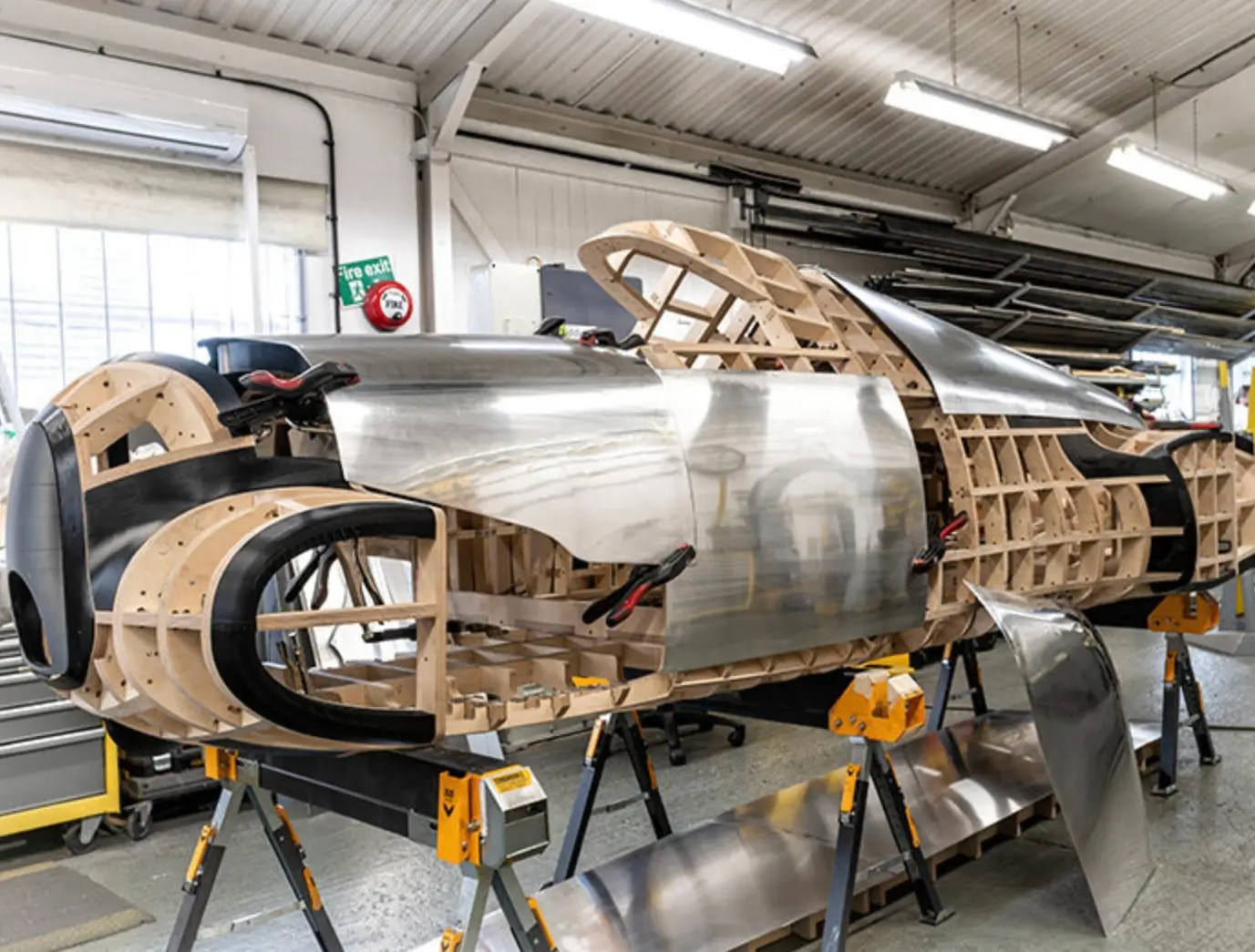
Audi Tradition commissioned Crosthwaite & Gardiner in Britain, renowned for historic restorations, to rebuild the Lucca using archival photos, documents, and engineering drawings. The project spanned over three years, with every component handcrafted.
The bodywork proved most challenging: the cockpit canopy, tapered tail, and flowing lines required meticulous metal shaping. Modern wind tunnel testing at Ingolstadt yielded a drag coefficient of 0.43—impressive even today.
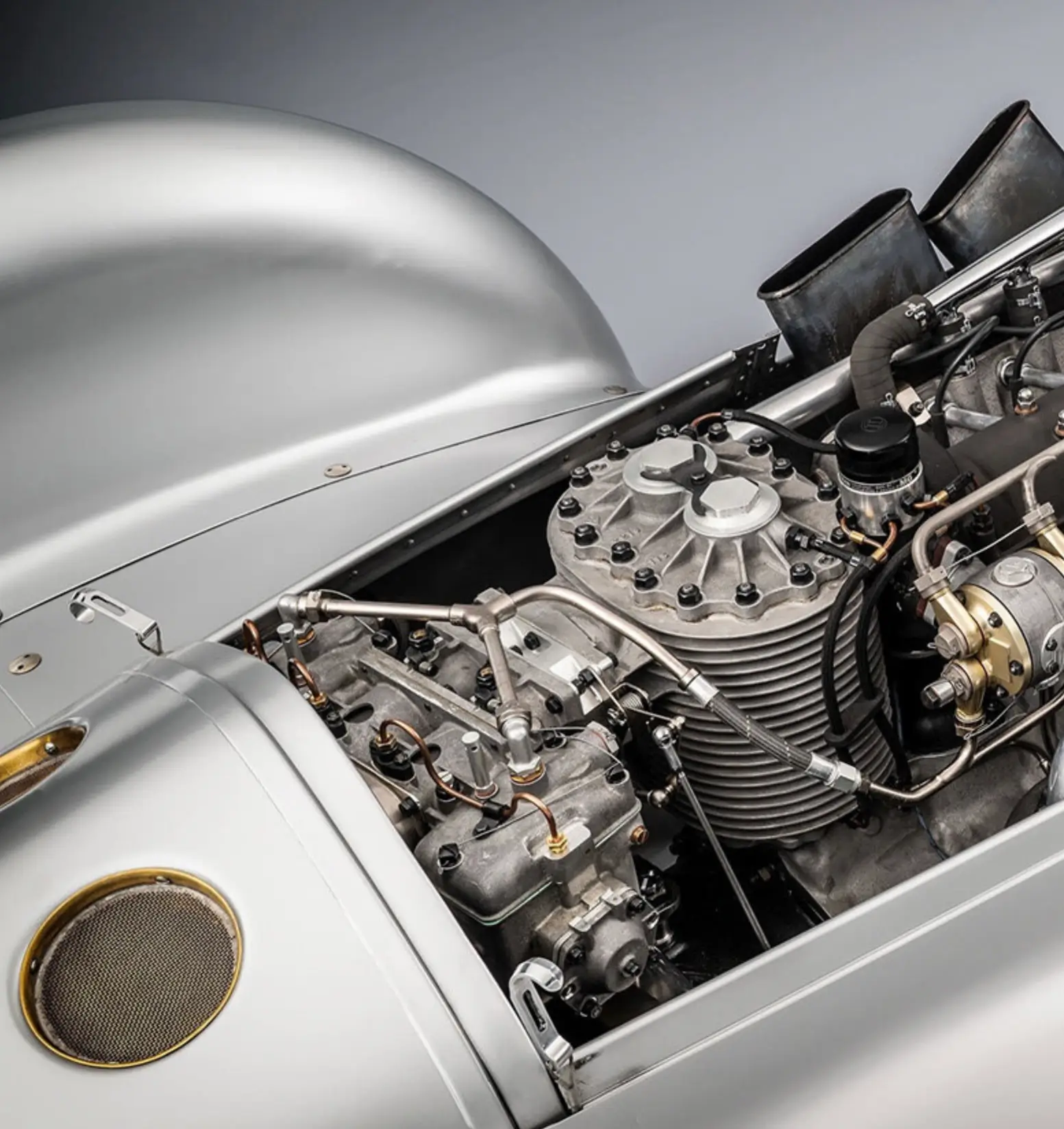
Power comes from a 6.0-liter V16 derived from the Type C, producing around 520 PS (513 hp in some reports). It runs on a methanol-premium-toluene mix. Visually faithful to the original 5-liter unit, it allows integration with other Silver Arrows for demonstrations. Avus-era ventilation modifications improve thermal management for modern runs. Minor tweaks enable conversion between Lucca and Avus configurations.
Project lead Timo Witt, head of Audi’s historic collection, emphasized authenticity balanced with practicality. The result is drivable, reliable, and true to the spirit of 1935 innovation.
sig
The Lucca fills a glaring gap. Audi’s Silver Arrow collection lacked an early Grand Prix-era record car. This addition celebrates “Vorsprung durch Technik” roots—innovation under pressure. It highlights aerodynamics, lightweight construction, and high-output engines that prefigured modern performance.
In 2026, with motorsport shifting toward electrification and sustainability, the Lucca reminds us of raw mechanical drama. Its unveiling in Lucca, followed by a dynamic debut at the 2026 Goodwood Festival of Speed (July 9-12), bridges eras. Audi Tradition continues building bridges to the past while inspiring future engineers.
impression
The original’s mid-engine layout provided traction advantages but required skilled handling at speed. The recreated car retains this character. Expect thunderous V16 exhaust note, progressive power delivery, and stability from the fin and long wheelbase. At Goodwood’s hillclimb, it will showcase not just speed but presence—its sculptural form turning heads as it did in 1935.
Comparisons to contemporaries: Mercedes streamliners and later Auto Union efforts pushed even higher speeds, but the Lucca’s public-road achievement on standard infrastructure remains legendary. Drag coefficient and power-to-weight placed it at the forefront.
hx
The 1930s Silver Arrows era was glamorous yet shadowed by politics. State support fueled excellence but tied racing to regime propaganda. Drivers like Stuck navigated this while delivering brilliance. The rivalry produced technological leaps—supercharging, advanced chassis, aero research—that influenced post-war automotive design.
Post-war, surviving Auto Unions were scattered; some smuggled from Eastern Europe. Recreations like the Lucca and earlier Type 52 preserve heritage when originals are lost. They educate new generations about engineering courage.
leg
The Auto Union Lucca’s return is a triumph of craftsmanship and corporate memory. It honors Hans Stuck’s daring, the Zwickau engineers’ ingenuity, and the relentless pursuit of speed that defined an age. As it roars again on Italian roads—or ascends Goodwood’s hill—it carries the soul of the Silver Arrows forward.
In an era of autonomous vehicles and EVs, the Lucca stands as a visceral reminder: cars were once not just transport but dreams cast in aluminum and propelled by fire. Audi has not merely rebuilt a car; it has revived a legend, bringing the Auto Union Lucca back to Italy—and to the world.
From the DRIFT archive: PANTONE’s 2026 Color of the Year Takes Shape With Play-Doh and Post-It Editions
Related Articles
Under Rue de Castiglione, Liaigre Gives Hôtel Costes a Spa With No Hard Corners
A 20-meter lap pool, eight treatment rooms and not one sharp angle: Studio Liaigre’s spa […]