DRIFT AUDIO
Listen to this story
Choose a voice, then press play.
During Copenhagen Fashion Week, the Italian sportswear house turned its own archive into the exhibit, using the garments themselves as evidence rather than décor.
There is no jacket without the person who cut it, and no person recognizable as themselves without the jacket they chose to put on. That loop is the whole premise of C.P. Company‘s new archive exhibition, staged this week in the Danish capital under the title “People Make The Clothes, Clothes Make The People.” It sounds like a slogan until you walk the two rooms and realize the brand means it structurally: the show is organized around the idea that a garment only becomes meaningful once someone wears it into the world, and that the wearing changes the garment right back. Half a century into its own existence, C.P. Company has decided the best way to mark that milestone isn’t a highlight reel. It’s a demo of the mechanism that produced the highlights in the first place.
View this post on Instagram
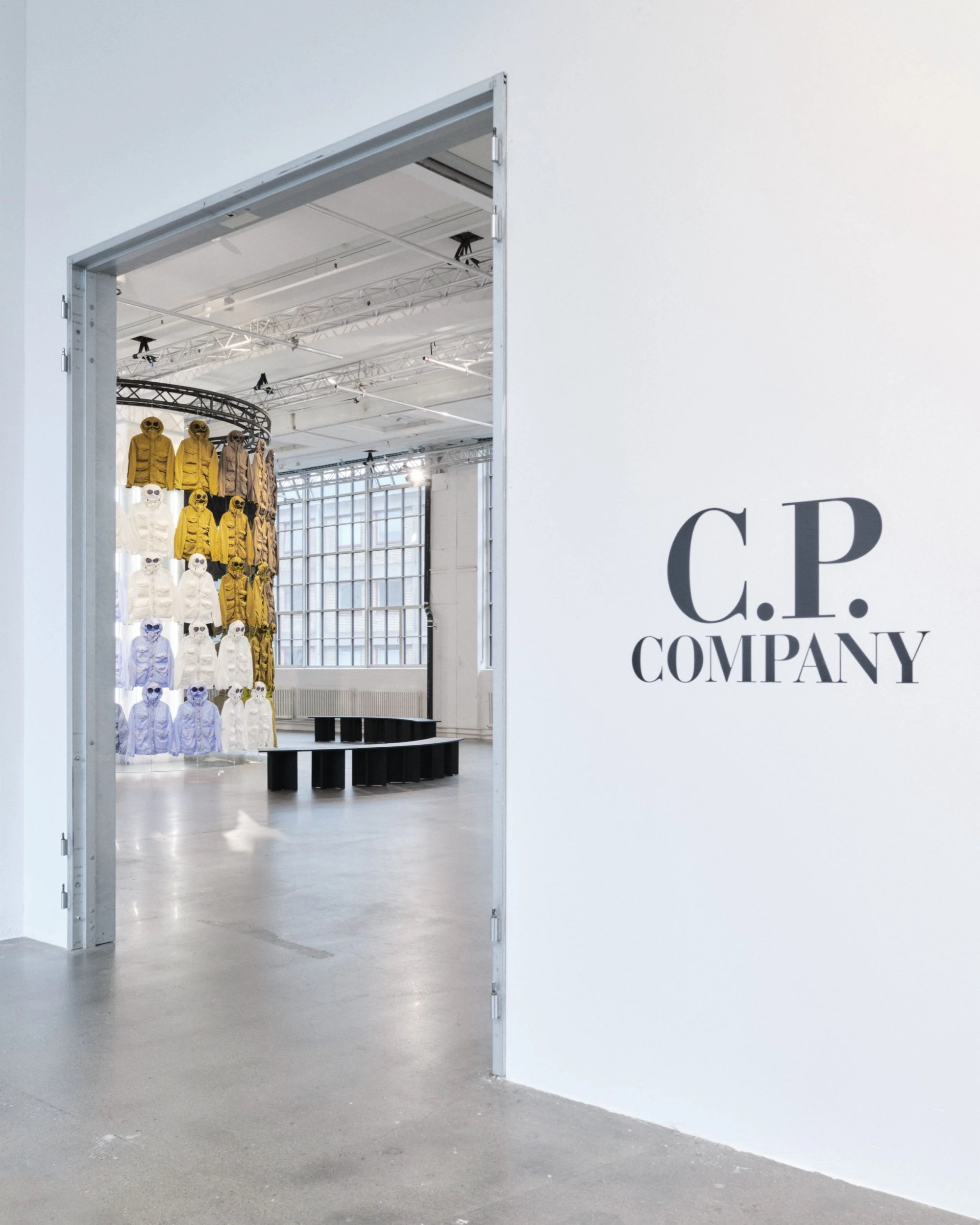
The exhibition landed during Copenhagen Fashion Week‘s SS27 edition, hosted inside the galleries of Other Circle, the Copenhagen platform that has spent the past two years positioning itself as a meeting point for design, fashion and contemporary culture rather than a single-discipline showroom. That pairing matters. C.P. Company isn’t a Scandinavian label and this isn’t a runway presentation. It’s an Italian outerwear brand, built out of a small research obsession in Bologna, choosing to explain itself somewhere that treats explanation as a legit form of exhibition-making.
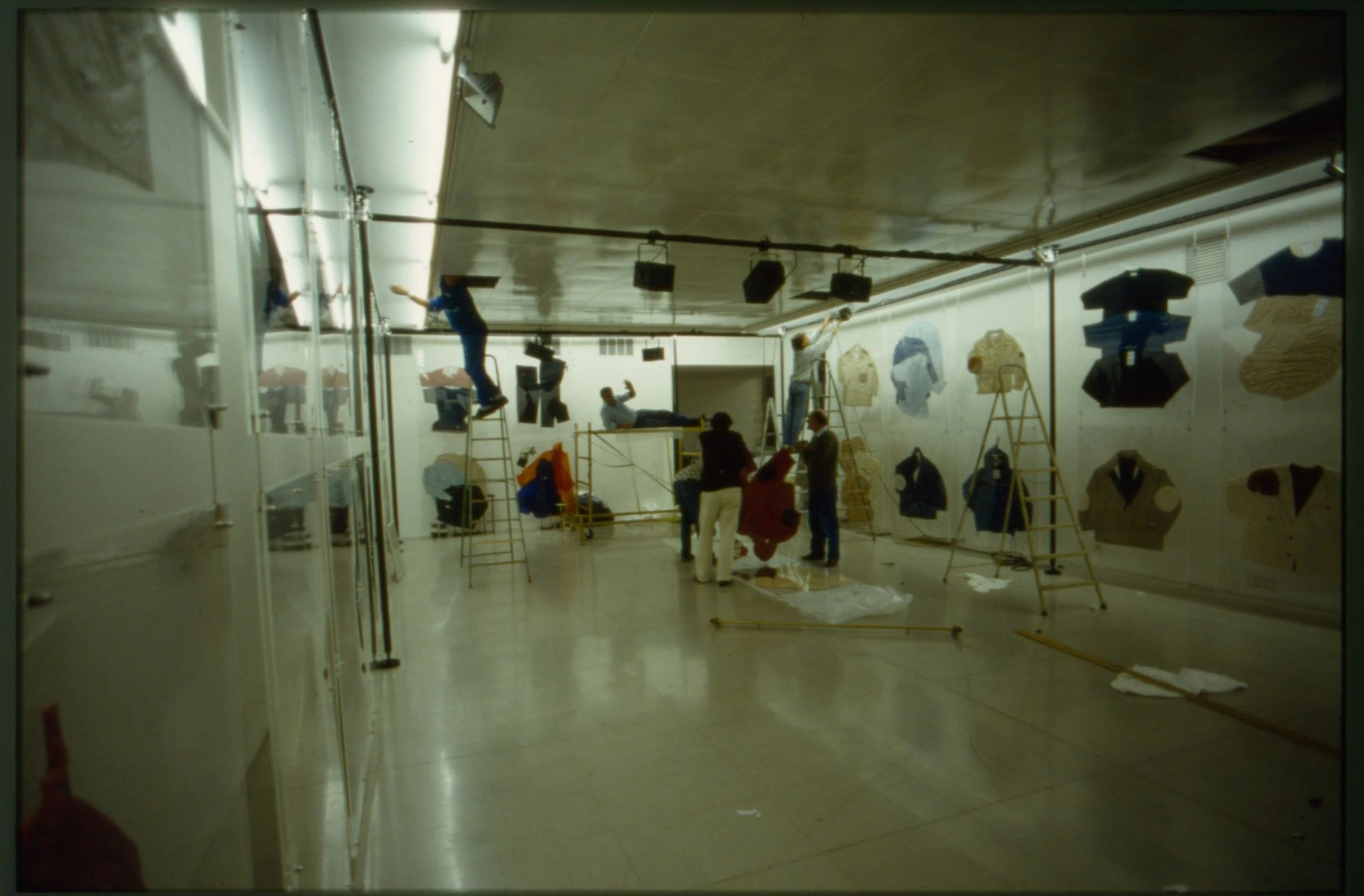
It also isn’t a first outing for this exact material. The exhibition system on display in Copenhagen was originally built for the brand’s own fiftieth-anniversary show back in 2021, and this version brings it to a city and a week that has nothing directly to do with C.P. Company’s own calendar. That choice reads as confidence more than convenience. A house with fifty years of archive behind it doesn’t need a hometown crowd to make its case; it can set the same evidence down in front of an audience that has never handled a garment-dyed jacket in person and let the work do what wall text usually has to.
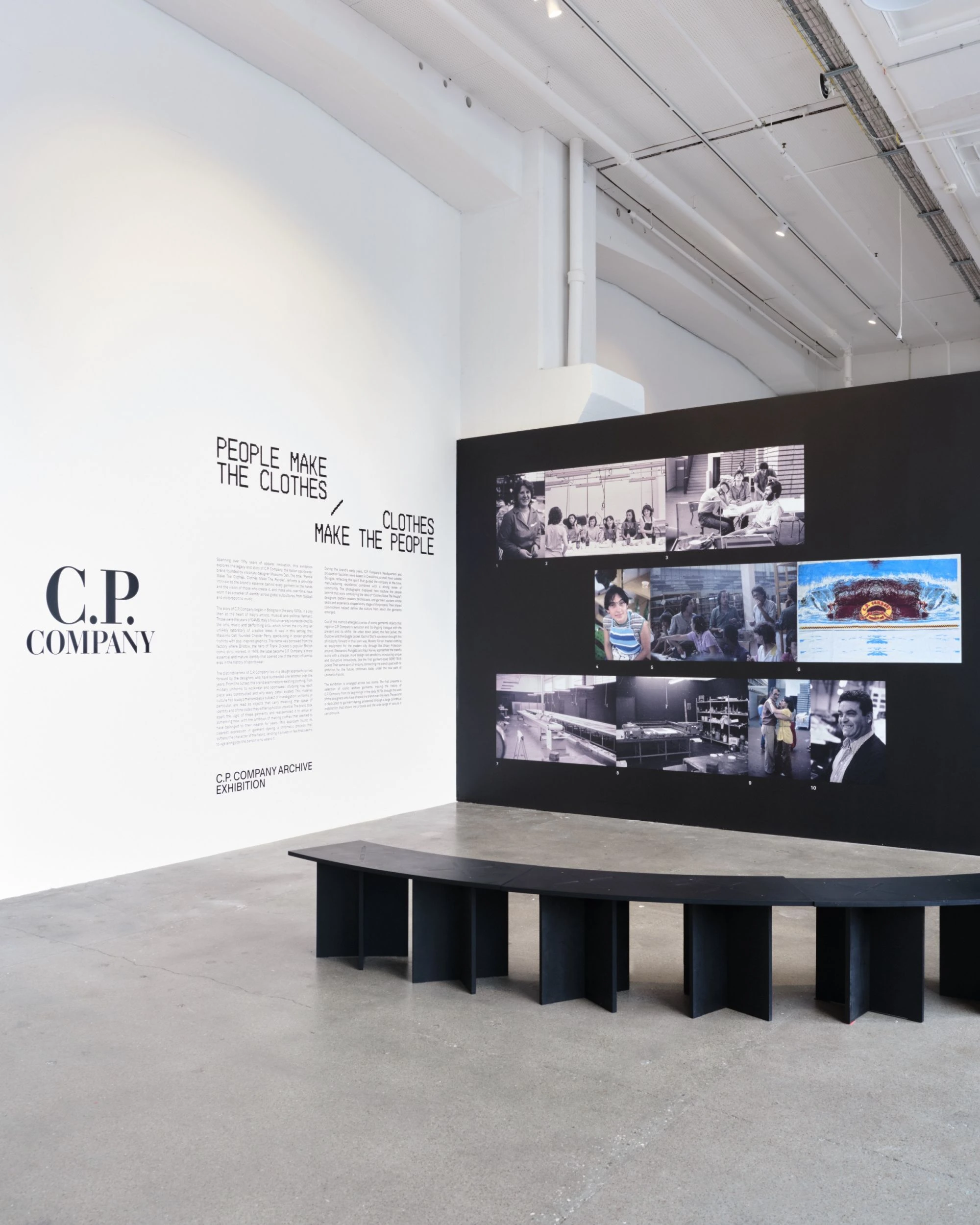
C.P. Company archive exhibition with historical photographs, wall text reading People Make the Clothes, Clothes Make the People, and a curved black bench.
stir
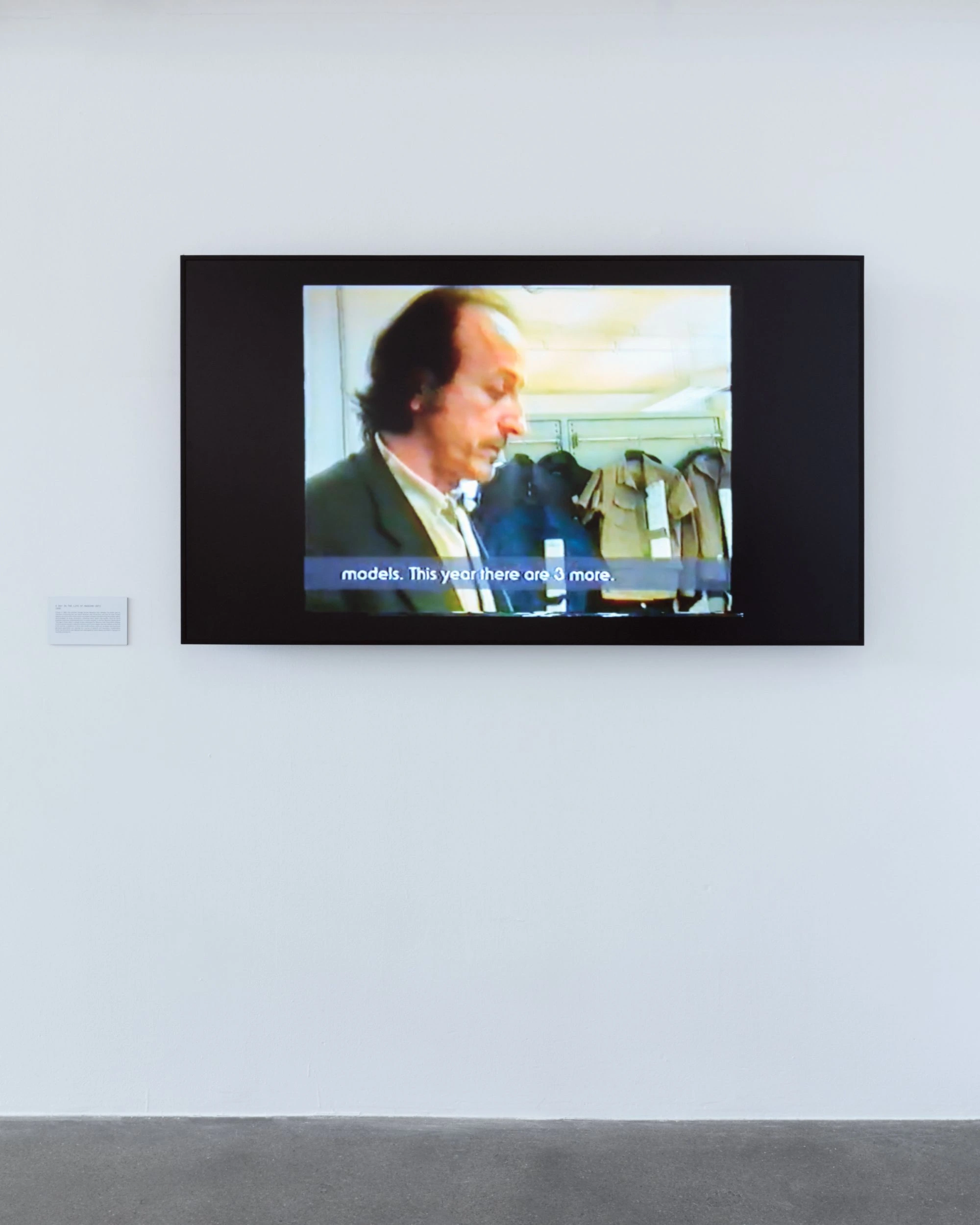
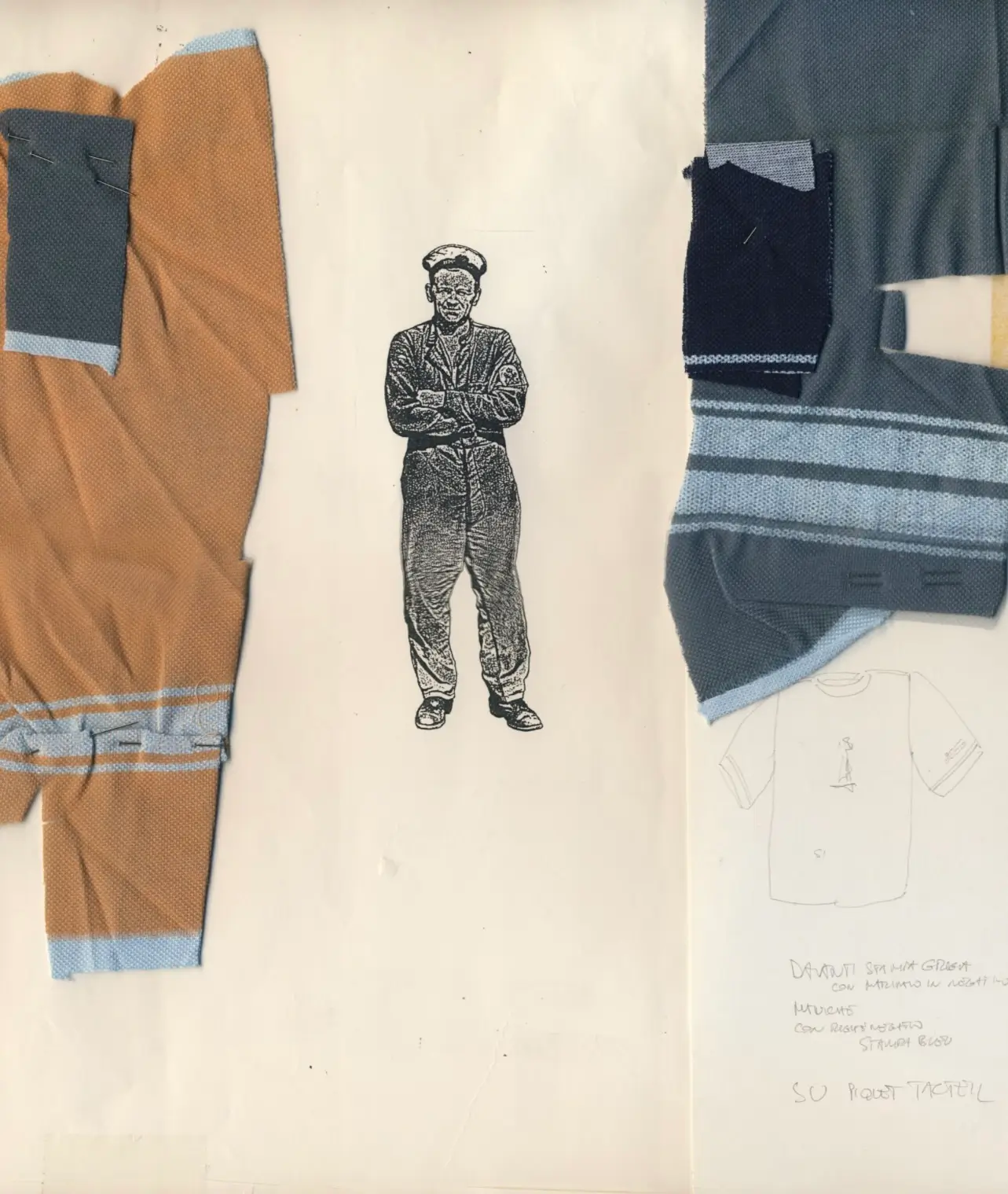
In register why C.P. Company treats its own back catalog as a working laboratory rather than a shrine, it helps to remember who built the catalog. Massimo Osti was a graphic designer with no formal training in fashion when he started the label in Bologna in 1971, originally under the name Chester Perry. He renamed it in 1978 after a trademark dispute with Chester Barrie and Fred Perry, and the new initials stuck for the same reason the work underneath them did: they were plain, functional, and got out of the way of the clothes. Osti’s method looked less like design and more like fieldwork. He bought up military surplus and civilian workwear by the crate, then pulled the garments apart to study why a D-ring sat where it sat, or why a map pocket was cut at a particular angle, before rebuild those solutions for people who were never going to see combat, just rain.
That habit of dismantling utility and reassembling it as day clothing is the reason Osti is still referred to inside the industry as the godfather of Italian sportswear, and it’s the same habit that led him to found Stone Island a decade later. C.P. Company’s Copenhagen show opens with this earliest period, tracing Osti’s graphic experiments on Tee and knitwear before the label had settle into the outerwear it would become known for. It’s a deliberate slow start for an exhibition marking fifty years, and that’s the point: nothing that arrived after makes sense without it.
By 1973, the label had already moved past screen-printed Tee into jackets, trousers and shirts, and the pace of that shift is part of what the first room documents. Osti wasn’t working toward a single ideal garment. He was running a continuous set of small experiments on ordinary items, and the exhibition treats even the unglamorous early knitwear as worth close reading, because the same instinct to take something apart and rebuild it slightly better shows up again decades later in a technical shell jacket. Seen in sequence, the early Tee stop looking like a footnote before the real story starts and start looking like the first draft of a method the brand never abandoned.
flow
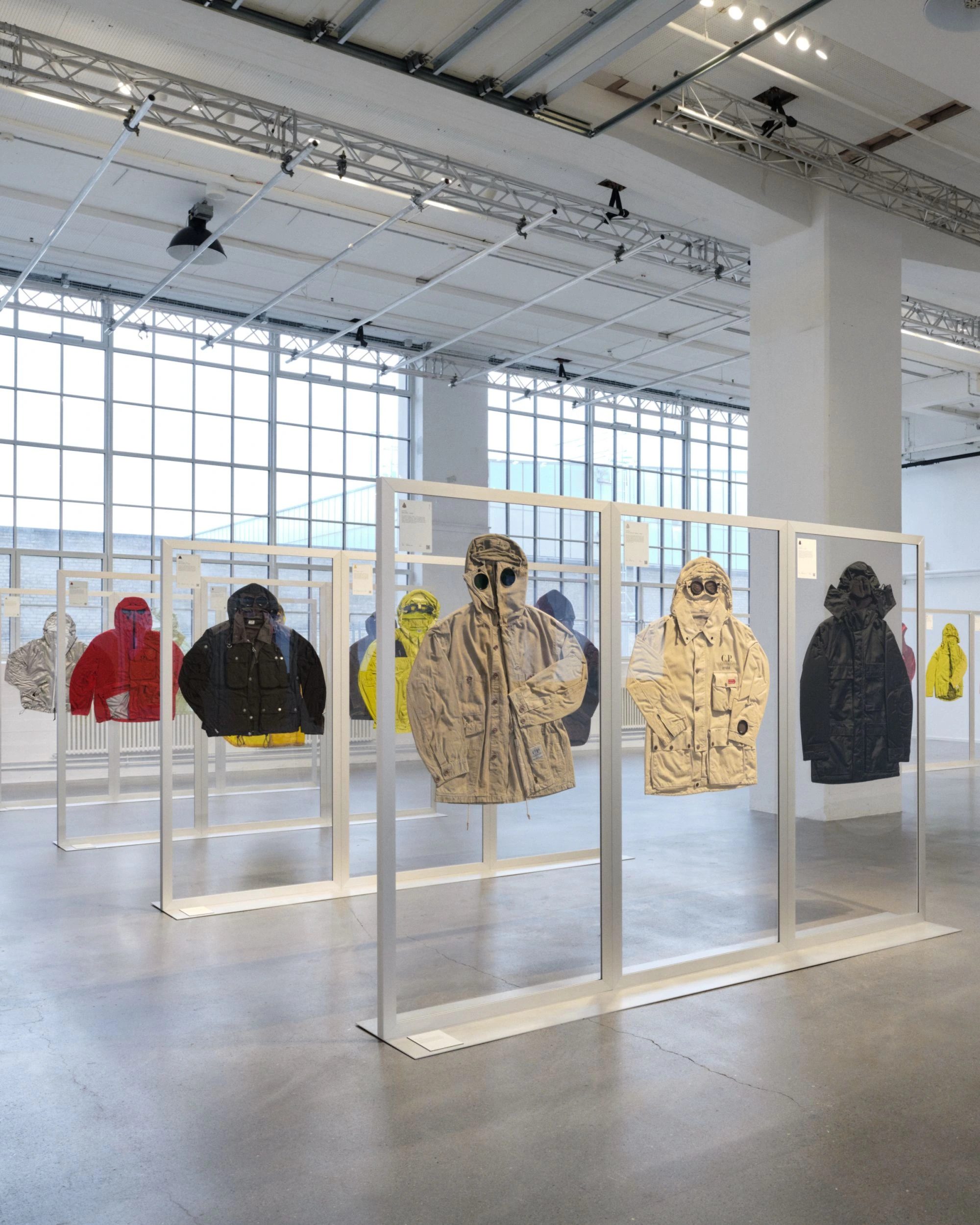
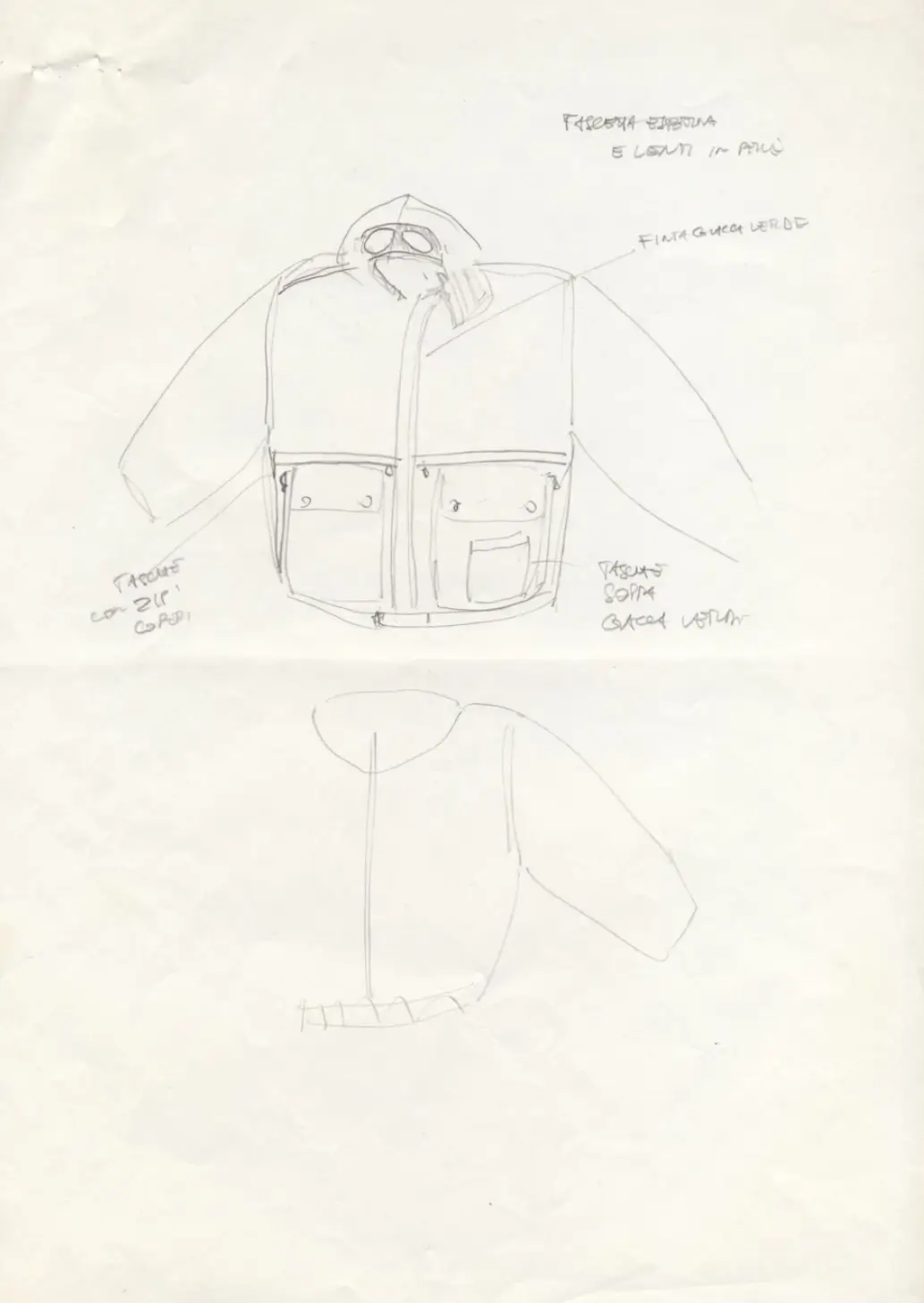
If one object explains C.P. Company to someone who has never encountered it, it’s the piece the exhibition builds its second thematic section around: the Goggle Jacket, also catalogued as the Mille Miglia jacket after the Italian endurance road race it was created for in 1988. Osti had been looking at a Japanese civil defense hood with lenses built into it, and reworked the idea into something a driver or a spectator could wear on the street: two clear lenses set into the hood itself, with a third position at the wrist so a watch face stayed visible without pulling back a sleeve. It reads today as a design flourish. In 1988 it was closer to an engineer answer to a real problem, dressing people who spent long hours exposed to wind, glare and weather at a road race that no longer runs but whose name the jacket still carries.
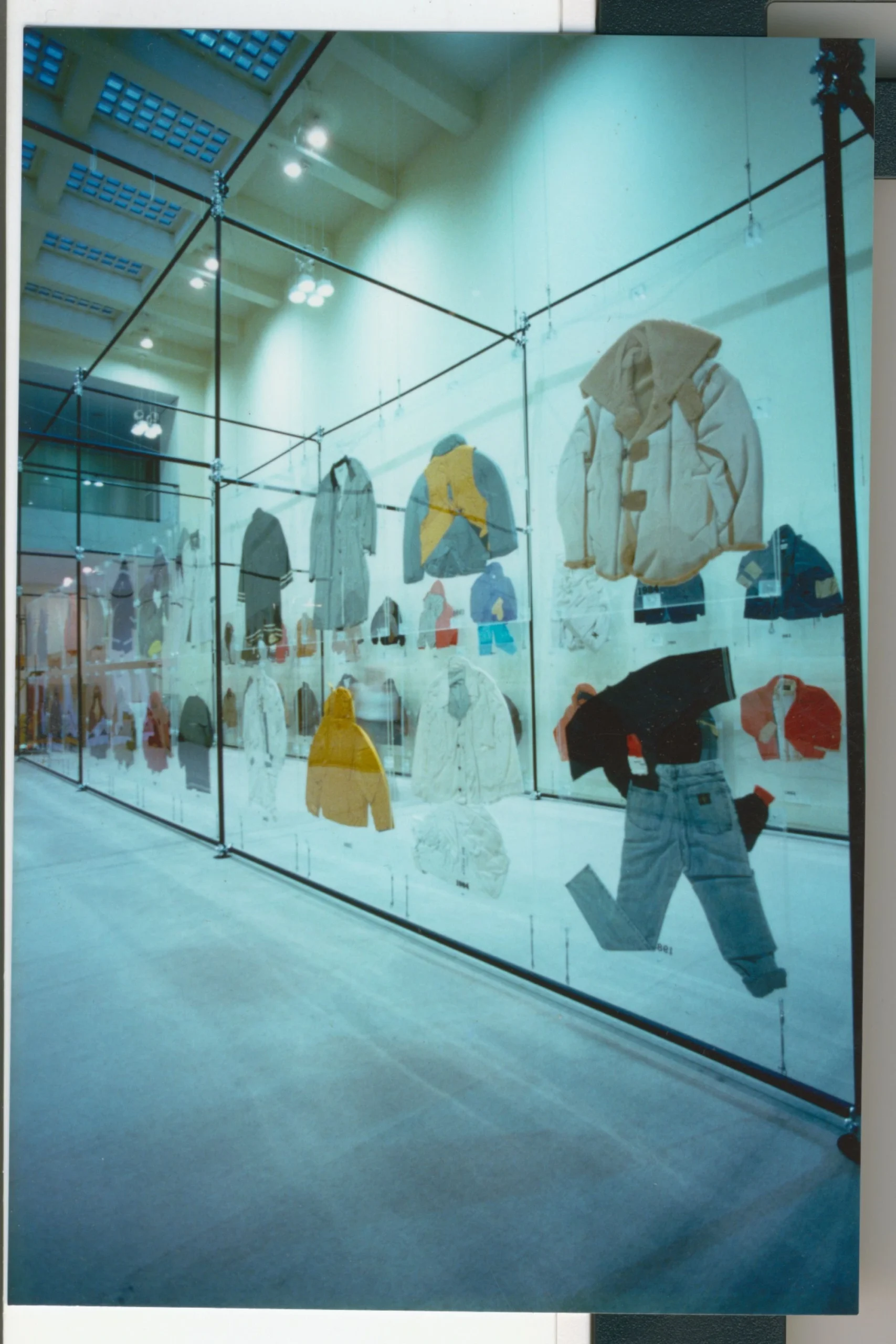
The exhibition doesn’t just display a Goggle Jacket. It displays a progression of them, laid out to show how a single profile gets reinterpreted season after season without losing the detail that makes it legible at a glance. That continuity, more than any single archive piece, is what the Copenhagen show is arguing for: that a strong idea doesn’t need to change to stay relevant, it just needs someone willing to keep making it well.
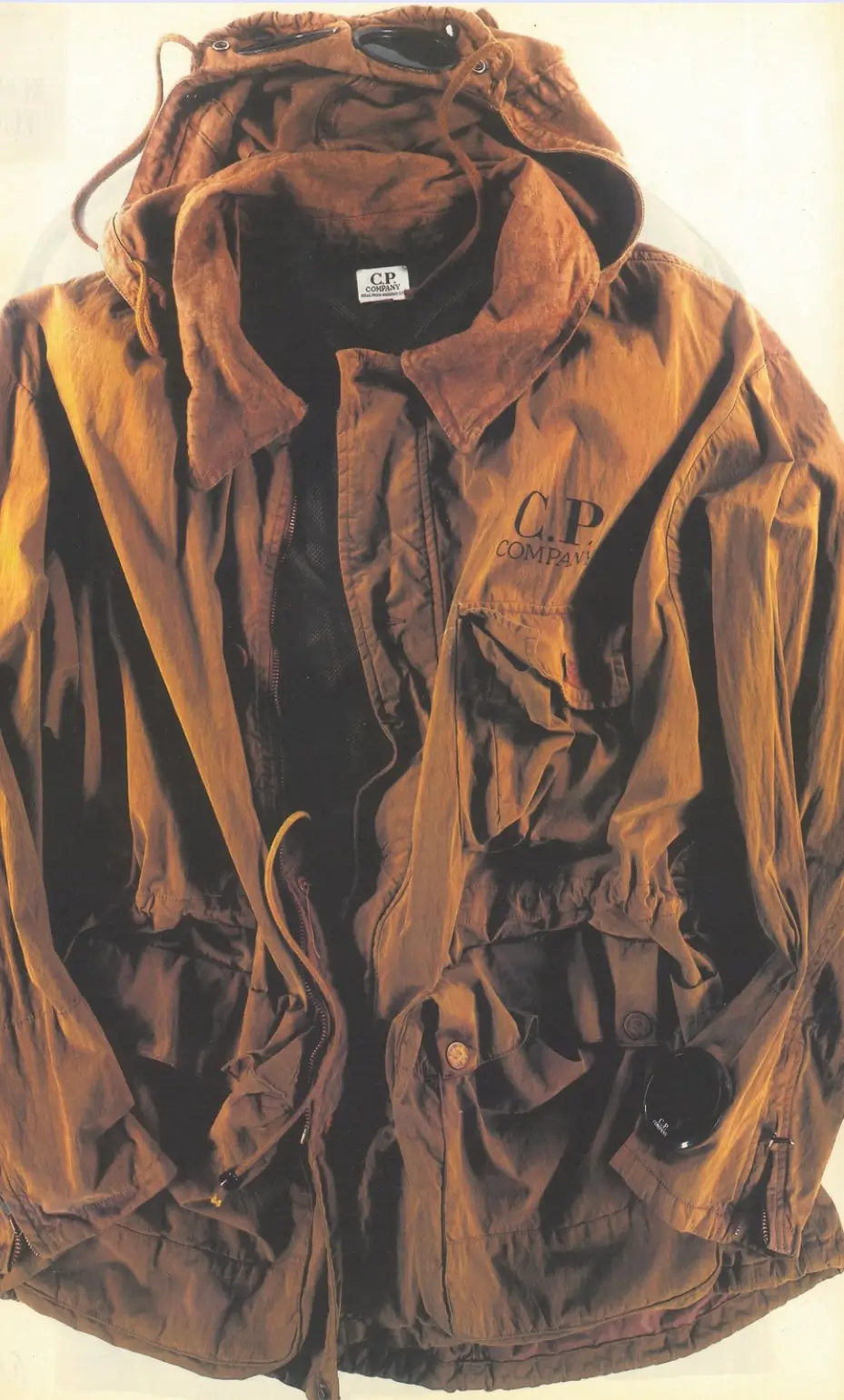
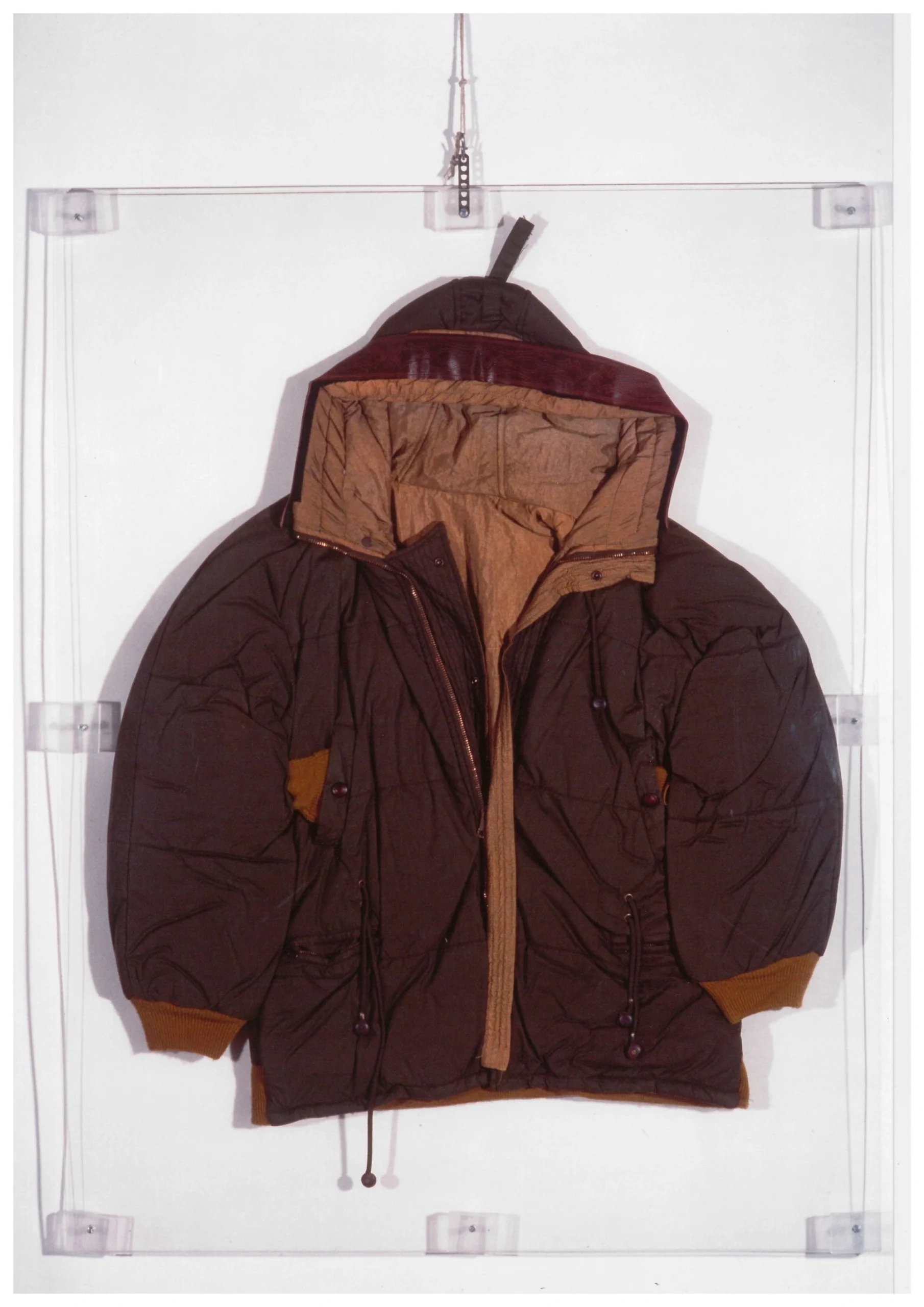
Vintage brown C.P. Company multi-pocket jacket with integrated hood goggles, utility pockets and visible C.P. Company brand.
scope
The second room of the Copenhagen exhibition is given over entirely to the technique that arguably defines C.P. Company more than any single jacket does: garment dyeing. Most clothing is colored at the fabric stage, before it’s cut and stitched. Osti inverted the order, submerging finished, fully assembled garments into vats of pigment so the color settled unevenly into seams, folds and stress points that a flat piece of cloth simply doesn’t have. The result is a depth and irregularity that’s almost impossible to fake by dyeing the fabric first, and it’s why a C.P. Company jacket from three decades ago can still look distinct from anything hanging near it on a rack.
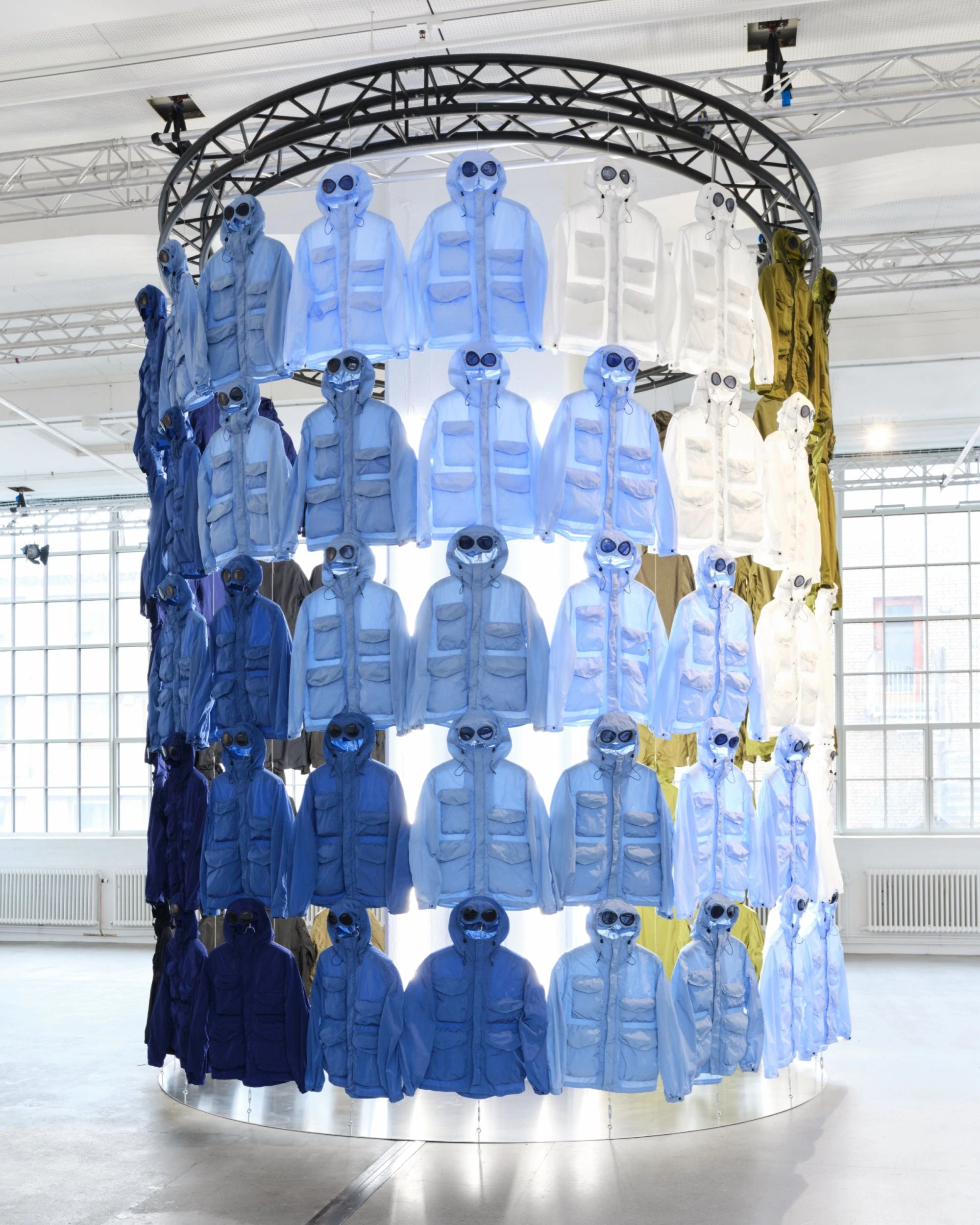
Copenhagen makes the point physically rather than explaining it in wall text. At the center of the dyeing room sits a cylindrical installation holding the same jacket rendered in a run of different colors, one structure repeated until the only variable left is the pigment. Standing in front of it, the technique stops being an abstract manufacturing detail and becomes something closer to a demonstration: identical construction, transformed entirely by what happens to it after it’s already finished. The brand has carried this experimentation into newer materials too, including garment-dyed GORE-TEX, a pairing that would have been a genuine technical problem to solve twenty years ago and now sits in the exhibition as evidence that the original 1970s idea still has room to grow.
theory
What separates this show from a standard heritage exhibition is the framing C.P. Company puts around its own history. Nowhere in the two rooms does the brand present its archive as something to be preserved behind glass and left alone. Instead, the pieces are staged as research documents, the same way a scientist might display lab notes: proof of a process, not just a finished result. That framing has a specific origin. The display method used in Copenhagen revives an exhibition system Osti first developed in 1987, for a retrospective staged in Berlin to mark the brand’s fifteenth anniversary. It resurfaced again for the fiftieth-anniversary show the brand mounted in 2021, and it returns now as something closer to house style than a one-off curatorial choice.
The underlying claim is that an archive which only looks backward is dead weight, while one that gets reopened, re-measured and argued with stays useful to the people currently working inside the company. It’s a claim worth taking seriously given how literally C.P. Company’s design team seems to treat it. New collections routinely pull construction details, dye recipes and even specific silhouettes directly from pieces sitting in storage, which means the Copenhagen exhibition isn’t really showing visitors what the brand used to be. It’s showing them the source material for what the brand is about to become.
That distinction matters more for C.P. Company than it would for most heritage labels, because so much of what the brand sells today is, in one way or another, an argument with its own past. A current-season jacket might resolve a construction problem Osti never fully cracked, or push a dye recipe further than the equipment of the 1980s allowed. Displaying the archive as a laboratory rather than a mausoleum isn’t just a curatorial preference. It’s an honest description of how the company actually works.
design
Osti stepped back from day-to-day design duties in the mid-1990s, and the exhibition is careful not to treat everything after his departure as a footnote. The brand changed hands more than once over the following decades, from GFT to Carlo Rivetti’s ownership in 1993, through FGF Industry and eventually to Tristate Holdings, and its creative direction changed with comparable frequency: Romeo Gigli, then Moreno Ferrari, then a long stretch under Alessandro Pungetti and Paul Harvey working jointly from 2012 onward. Each of those hands left something in the archive the Copenhagen show pulls from directly, whether it’s Ferrari’s Urban Protection research from the late nineties or the technical refinements Pungetti and Harvey brought to garment-dyed outerwear over their decade at the brand.
The current chapter belongs to Leonardo Fasolo, named design director in January 2025 and now a full season into shaping collections entirely on his own. Fasolo has been explicit about seeing the job as continuation rather than reinvention, and Copenhagen reads as an extension of that instinct rather than a separate marketing moment. Lorenzo Osti, Massimo’s son, has served as the brand’s president since 2019, which gives the current leadership a direct family line back to the person the entire exhibition is ultimately about, even though his name doesn’t appear on a single garment tag in either room.
fin
Location shapes how an exhibition like this reads, and Other Circle is a deliberate choice rather than a convenient one. The platform built its reputation on refusing to sort creative work into fashion, design, art or food, treating a well-made jacket and a well-made chair as expressions of the same underlying instinct. Placing a fifty-year Italian sportswear archive inside that kind of space, during a fashion week better known for its own emerging Nordic labels than for legacy Italian brands, puts C.P. Company in conversation with an audience it doesn’t usual share a room with. According to report from Italian outlets including Panorama, the brand paired the exhibition with a shop-in-shop presence in the city, extending the archive story into something visitors could actually buy into rather than just observe.
By the time the two rooms close to the public, the exhibition will have made its case less through wall text than through repetition: the same jacket in different colors, the same silhouette across different decades, the same founding instinct running through five different design directors. Fifty years in, C.P. Company isn’t asking Copenhagen to admire what it used to make. It’s showing its work.
Related Articles

Fragment and Mammut Bring the Barryvox Back in Glacier Blue
Hiroshi Fujiwara’s second Mammut avalanche beacon leaves the Barryvox S2’s rescue brain untouched and changes […]