DRIFT AUDIO
Listen to this story
Choose a voice, then press play.
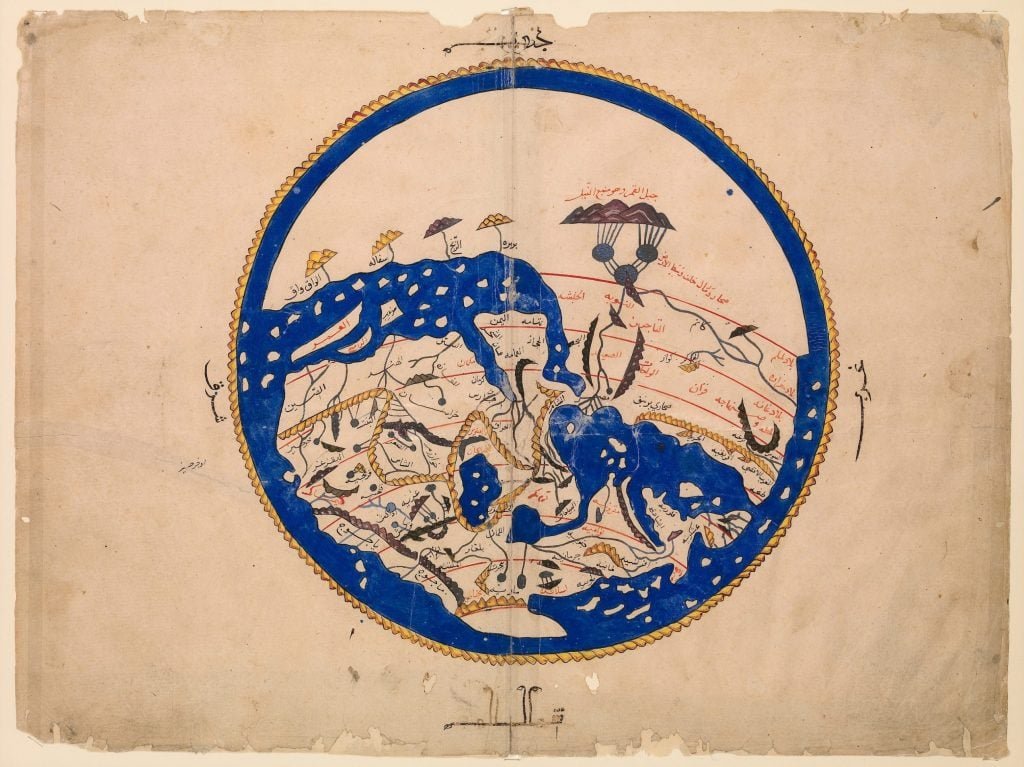
The British Museum’s latest exhibition, a grand showcase of the historic Silk Road, has become the center of a heated debate among art historians and cultural commentators. While the exhibit has been widely praised for its ambitious scope, rare artifacts, and immersive storytelling, it has also been criticized for what some see as a glaring omission: the underrepresentation of India’s critical role in the centuries-old trade network.
The exhibit, which explores the exchange of goods, culture, and ideas along the Silk Road, features over 300 artifacts, including textiles, ceramics, and precious jewels, from regions spanning China, Persia, and the Mediterranean. However, renowned art historian Dr. Aarti Mehta has argued that the exhibition downplays India’s pivotal influence on the trade routes and the flow of cultural exchange, giving it “drastically short shrift” compared to other regions.
According to Dr. Mehta, India was not only a vital economic hub but also a cultural powerhouse that shaped the Silk Road’s evolution over several centuries. “The exhibition focuses heavily on China and the Middle East, but India’s contributions to the arts, science, and trade are treated almost as an afterthought,” Mehta said in a recent interview. She points out that Indian silk, spices, and textiles were among the most sought-after commodities on the Silk Road, fueling commerce and connecting diverse civilizations.
Dr. Mehta’s criticism has sparked discussions among academics and visitors alike, some of whom believe that the exhibit’s curators have overlooked India’s cultural impact, particularly in areas like Buddhist art and architecture. While the exhibition includes a few select Indian artifacts, critics argue that they are insufficient in conveying India’s historical significance and are overshadowed by a disproportionate emphasis on Chinese and Persian influences.
The controversy over the Silk Road exhibition has highlighted a broader issue in the curation of global history exhibitions: the challenge of balancing representation and narrative scope. Exhibitions like this one are often constrained by space, availability of artifacts, and interpretive choices that aim to provide a cohesive story. However, when certain regions or cultures are underrepresented or misrepresented, it can perpetuate skewed historical narratives that downplay their contributions.
Supporters of the exhibition have pointed out that it was never intended to be a comprehensive account of every region connected to the Silk Road but rather a thematic exploration of trade, migration, and cross-cultural interactions. Nevertheless, the backlash has prompted the museum to consider supplementary programs, such as lectures and guided tours, that delve deeper into India’s role in the Silk Road network.
In response to the criticism, the British Museum has issued a statement acknowledging the concerns raised and affirming its commitment to providing a more inclusive representation in future exhibitions. “We recognize the importance of India’s contributions to the Silk Road and are exploring ways to address this in our programming,” said a museum spokesperson.
As the debate continues, the Silk Road exhibition remains a fascinating—if contentious—exploration of one of history’s most vibrant trade networks. For now, it stands as a reminder of the complexities involved in representing global history and the need for continuous dialogue between curators, historians, and the public to ensure a balanced portrayal of the past.
The controversy surrounding the exhibition may ultimately serve as a catalyst for the British Museum and other institutions to rethink how they approach the curation of multi-cultural histories, emphasizing a more holistic perspective that honors all regions and their unique contributions to human civilization.
Related Articles
Modigliani’s Limestone ‘Tête’
Carved from a single block of limestone in Montparnasse more than a century ago, one of Modigliani's rare stone heads goes to auction for the first time…