DRIFT AUDIO
Listen to this story
Choose a voice, then press play.
The Autumn/Winter 2026 campaign sends the actor to Goodwood Motor Circuit, where five new styles anchor a looser, more casual take on formal dressing.
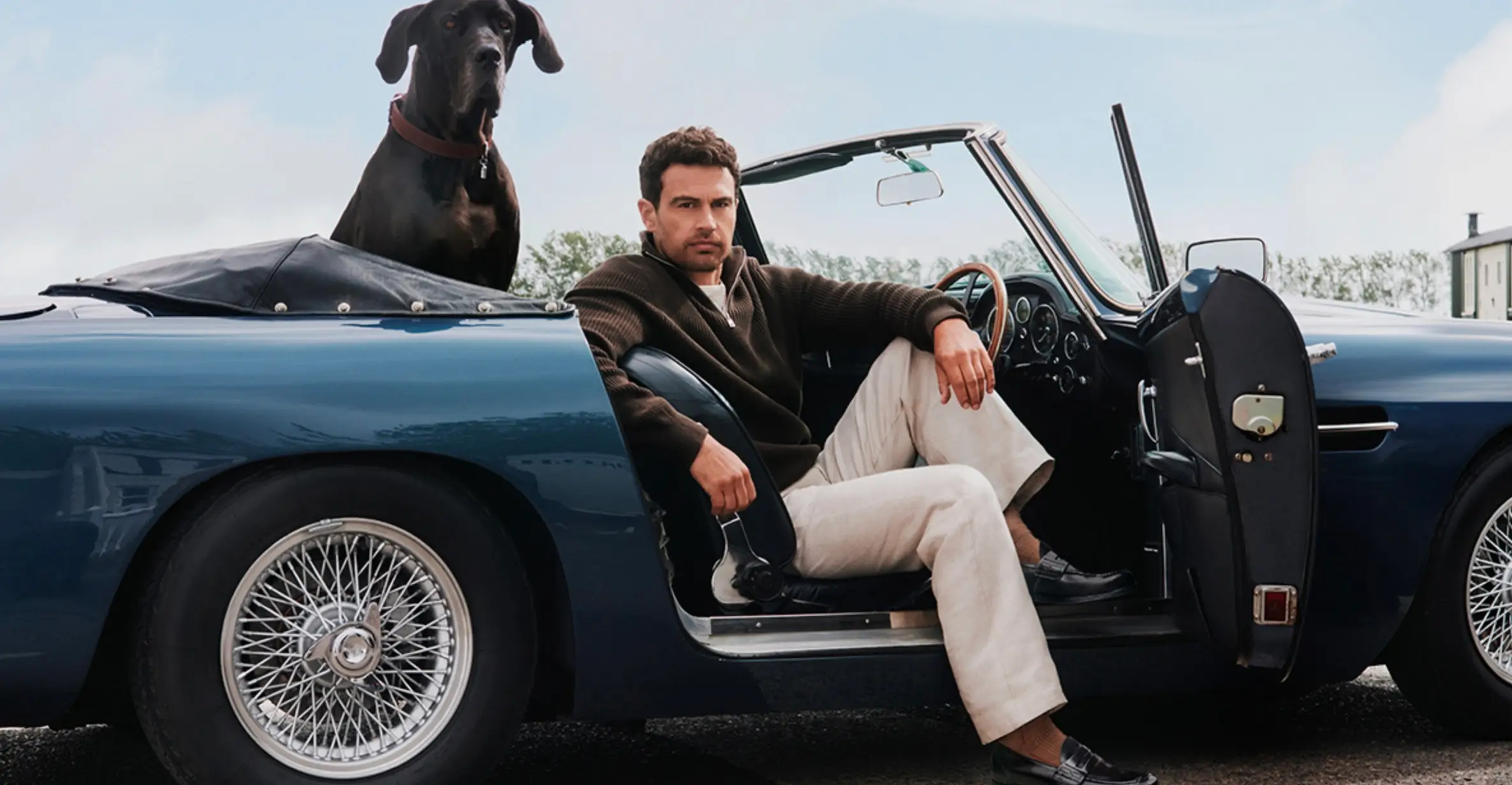
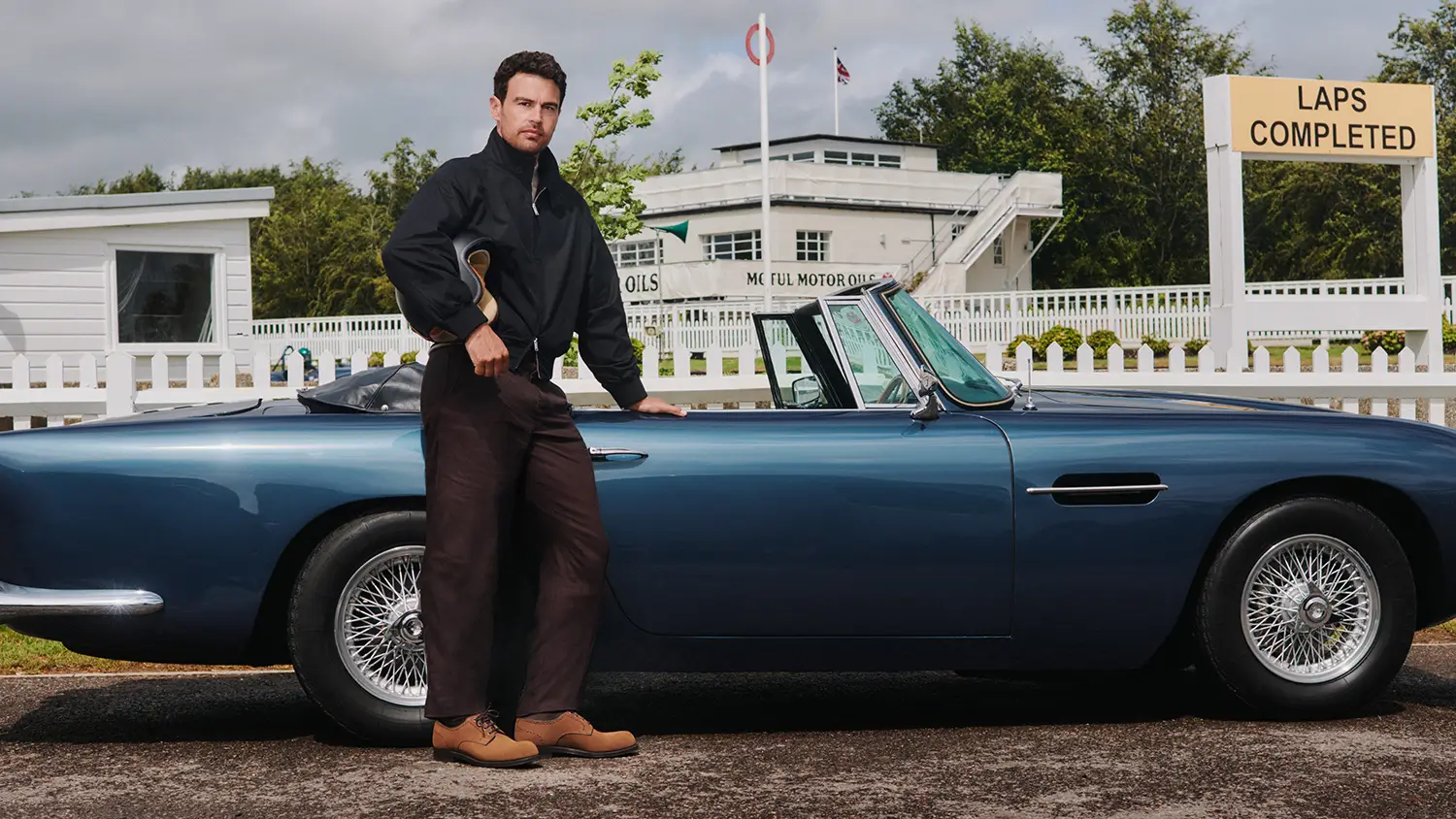
A Great Dane trots past a row of vintage racers. A man in soft tailor leans against a paddock fence, watching the pit lane rather than the track. Nobody in this scene is dressed for a race, and that is precisely the point. Church’s has built its Autumn/Winter 2026 campaign around a single, unhurried day at Goodwood Motor Circuit in West Sussex, a working relic of British motorsport history that has hosted racing since 1948. Photographer Samuel Bradley shot the story, and creative director David James returned to steer it, marking their second consecutive season working together on the brand’s seasonal campaigns.
There is no attempt here to dress a driver. Instead, the circuit becomes a backdrop for something closer to a country weekend: pit lanes standing in for garden paths, a paddock picnic replacing a formal lunch. The choice of location does real work. Goodwood sits on the estate of the Duke of Richmond and has functioned since the mid-twentieth century as a hub for both motorsport and country pursuits, hosting motor racing at its circuit since 1948 alongside horse racing, shooting and the annual Festival of Speed. Church’s leans into that dual identity rather than working around it, using a site built on both engineering and leisure to make a fairly direct comparison between the precision of a race-tuned engine and the handwork that goes into a bench-made shoe.
View this post on Instagram
Founded in Northampton in 1873, the house has spent a century and a half building shoes for exactly this kind of Englishness, and the campaign treats the circuit less as a stunt location than as a natural extension of the brand’s own history. Nothing about the set is rented for the day and then abandoned in the edit: the vintage cars, the paddock clutter, the Great Dane wandering through frame all read as details a location scout found rather than props a stylist arranged, which is part of why the campaign avoids feeling like a costume exercise.
show
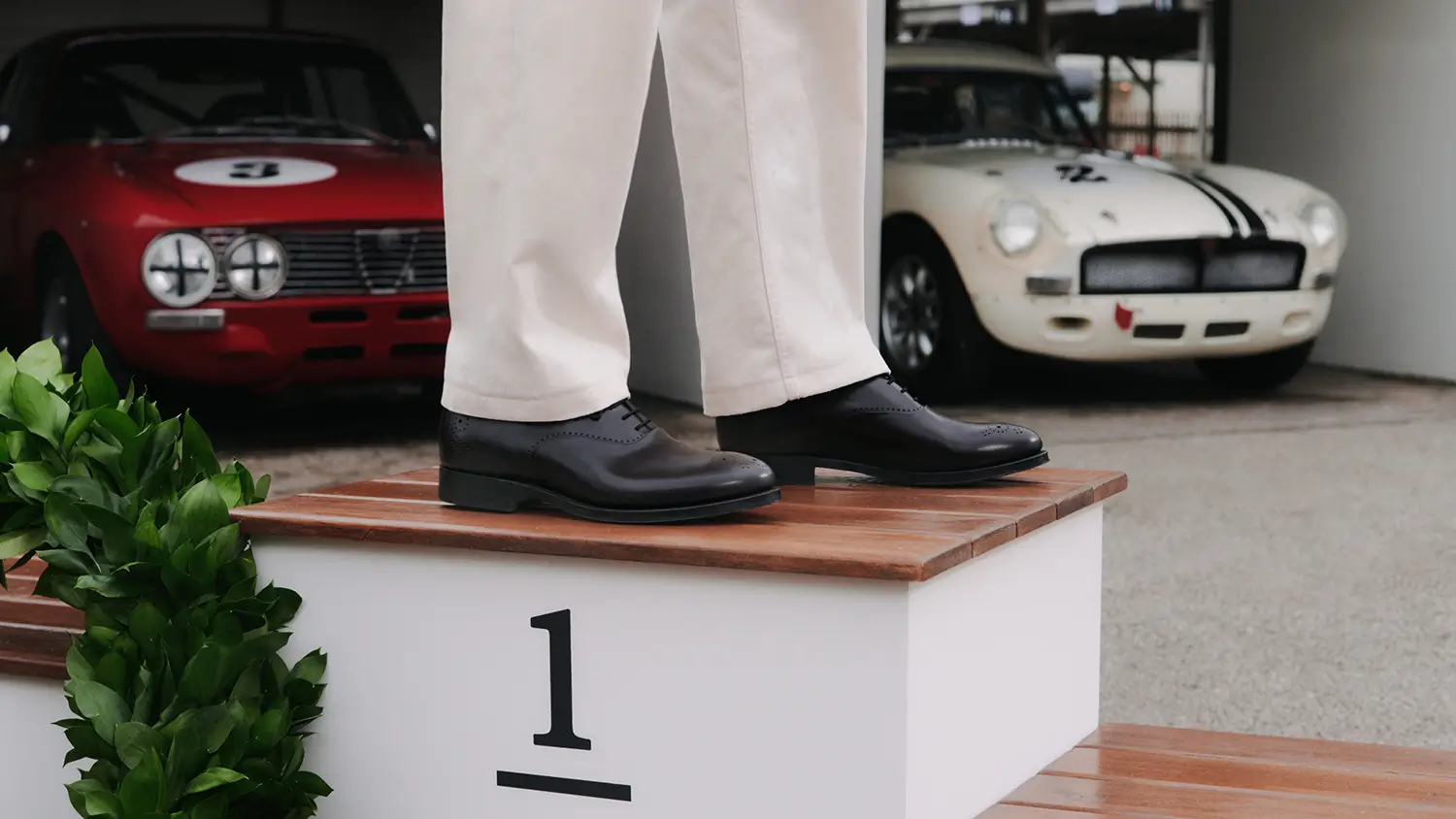
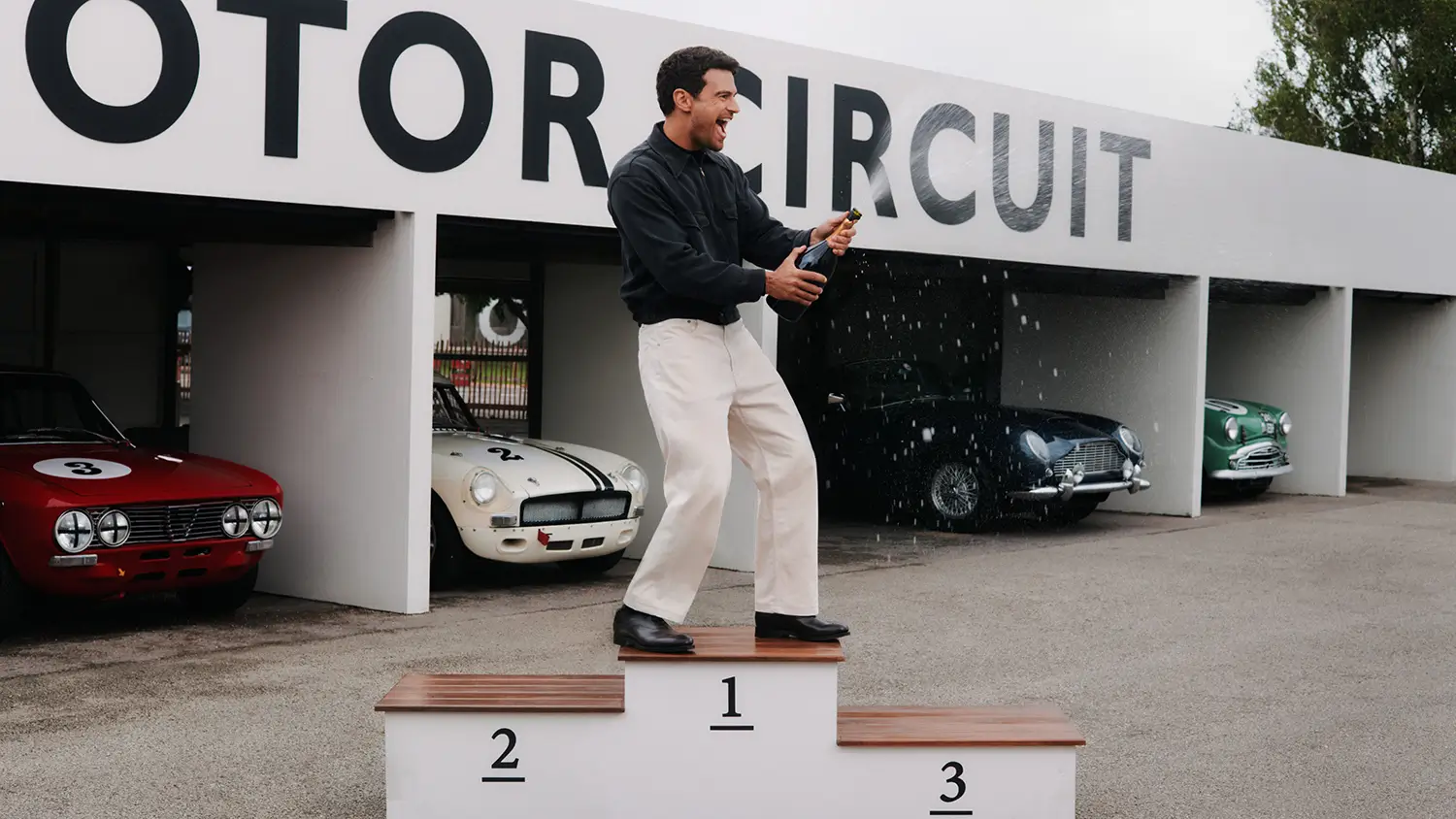
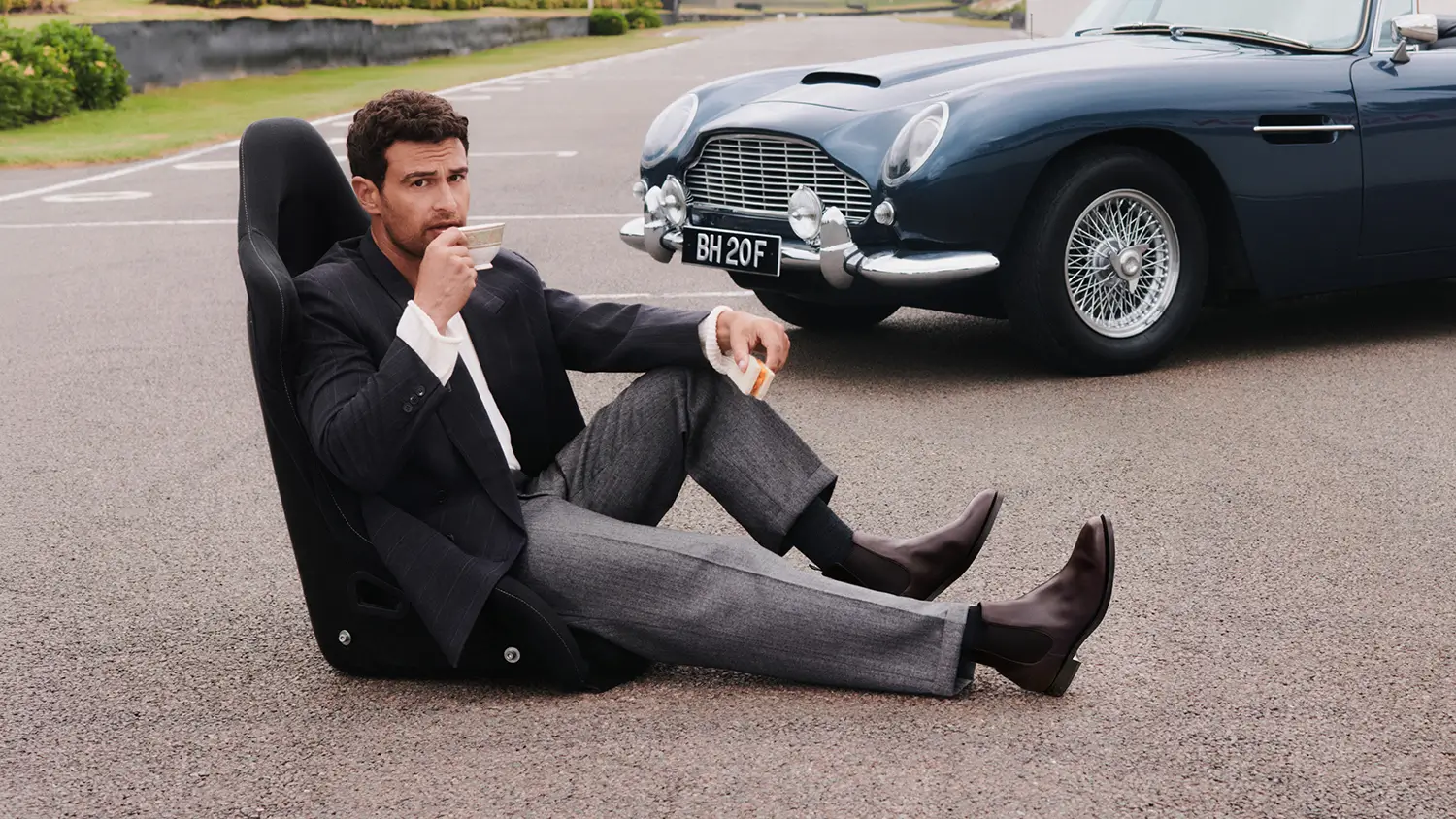
Theo James fronts the campaign for another season, moving through the day’s loosely plotted events with what more than one outlet has described as an unforced, faintly amused ease. He is photographed in the pit lane, at the wheel of a vintage car he never quite drives, and eventually on a small podium with a glass of champagne, closing out a narrative that reads more like a day out with friends than a product shoot. The humor is dry rather than broad: at one point he push-starts a stalled vintage Aston Martin, an image that turns a functional piece of footwear into a punchline without undercutting it.
James has become something close to a house face for Church’s, appearing in the brand’s campaigns across recent seasons, and the continuity shows in how comfortable the imagery feels. Nothing about his styling looks engineered for maximum polish. Tailoring sits softer on the shoulder than the brand’s older formalwear campaigns, jackets are worn open, and the shoes, not the suiting, carry the story from scene to scene.
The sequencing matters as much as any single frame. James starts the day in the pit lane in the Sidley, moves through the paddock in the Sidbury for the push-start scene, changes again for the picnic, and finishes at the podium in the evening. It is a structure borrowed more from a short film than a lookbook, and it lets Church’s introduce five separate silhouettes without ever staging a static product shot. The champagne on the podium is the campaign’s one concession to conventional luxury imagery, and even that is undercut by how little ceremony surrounds it: nobody is dressed for a trophy, they simply happen to be standing near one at the end of a long day outdoors.
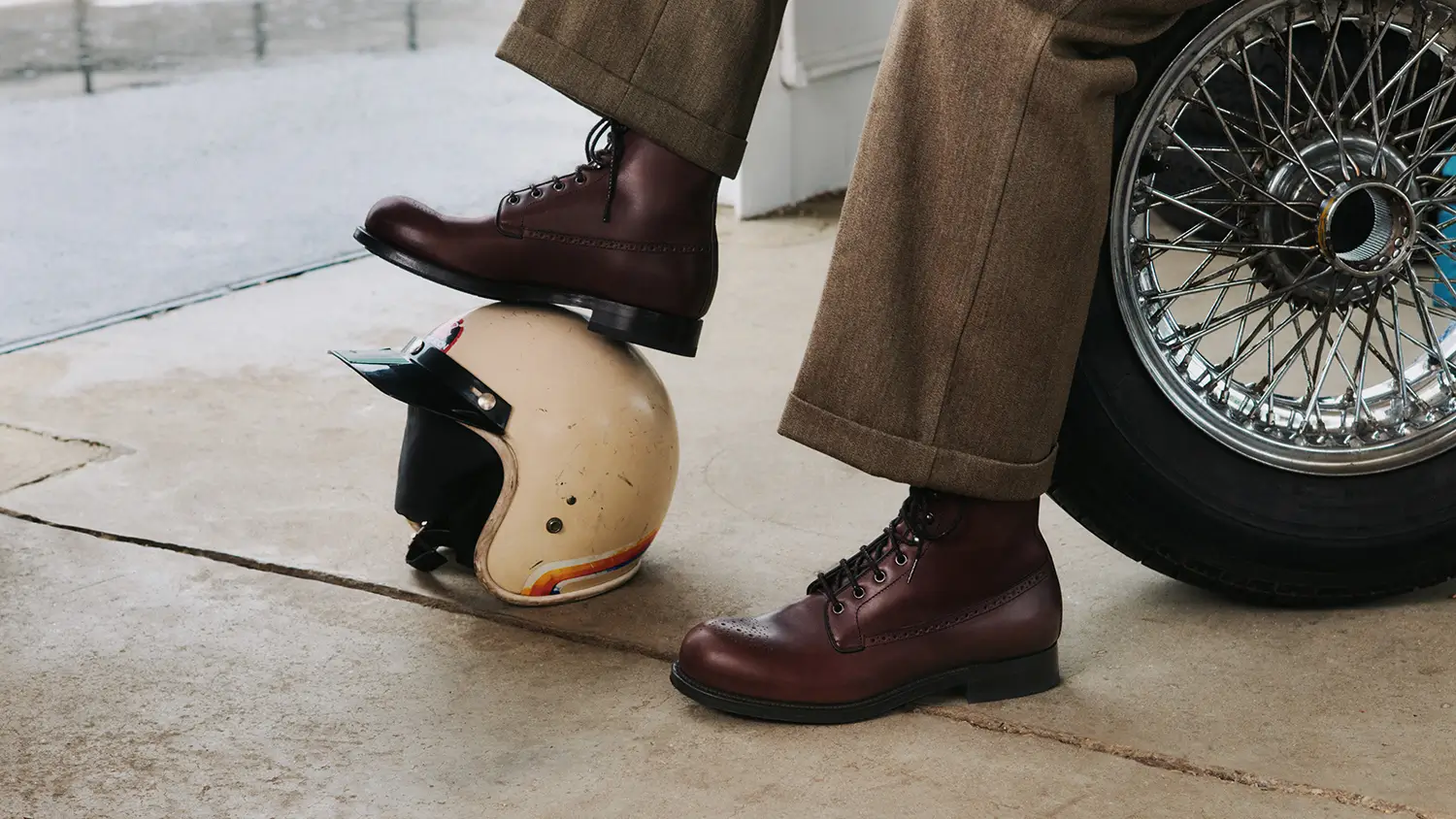
Dark brown leather lace-up boots worn with wide brown trousers beside a vintage racing helmet and wire-spoke car wheel.
nar
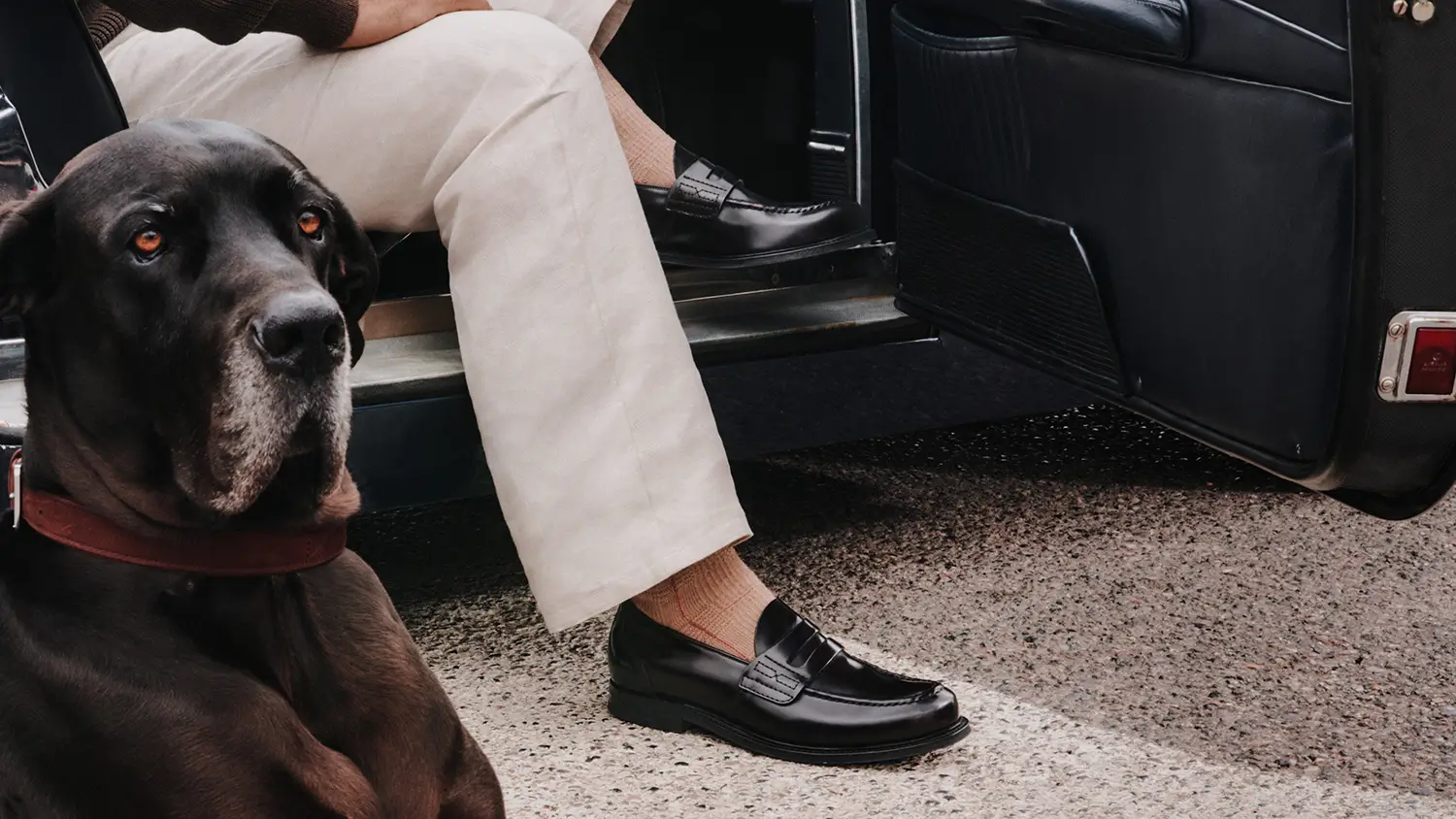
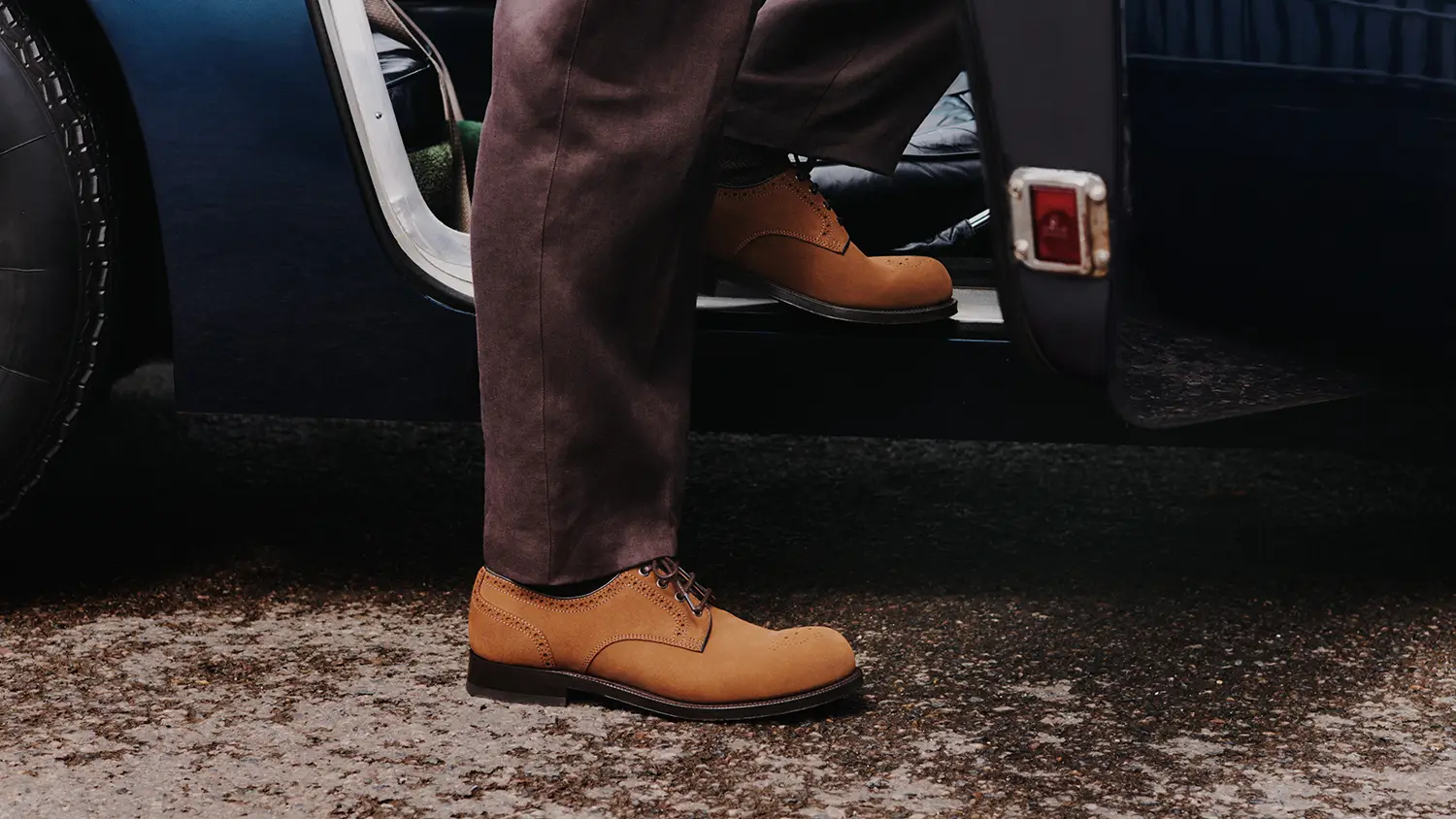
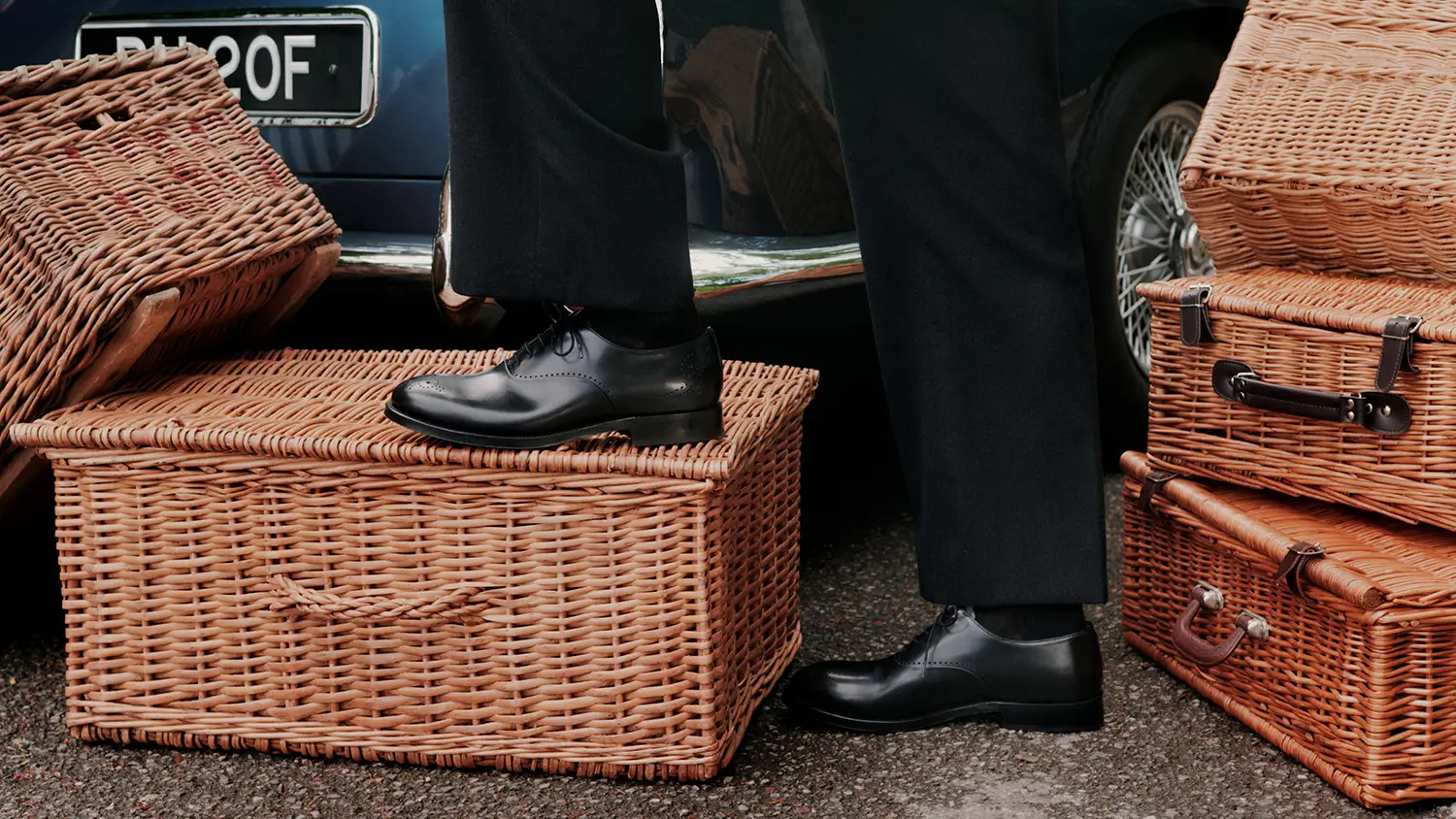
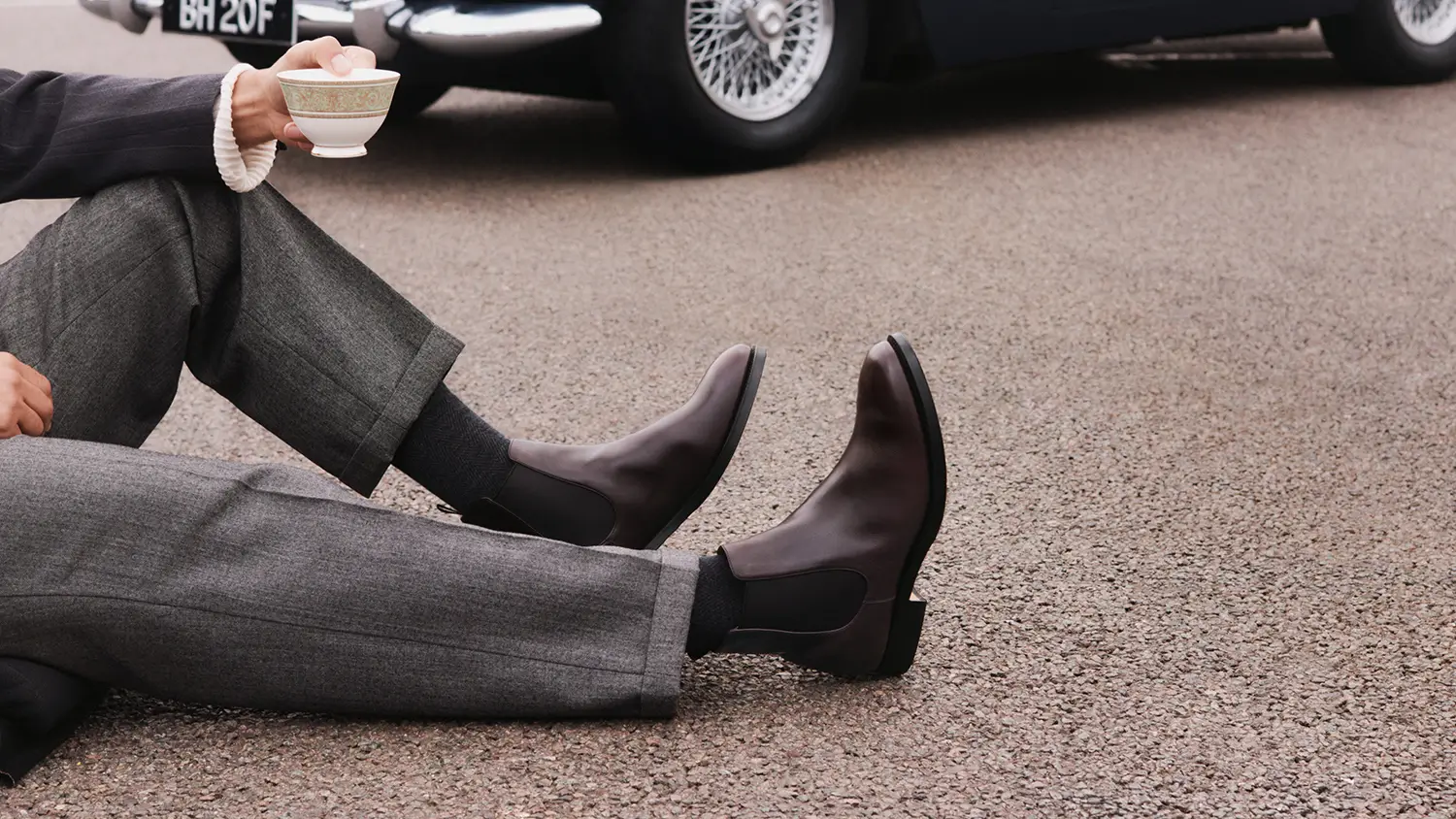
The collection unfolds through footwear rather than through a single hero product. James begins the day in the Sidley boot, cut in soft grain tan leather with a light brogue detail that keeps it from reading as purely utilitarian. He later changes into the Sidbury, a Derby rendered in a rich cocoa suede, worn for the push-start scene and generally styled for the campaign’s more relaxed stretches. The Skipton Oxford appears during an impromptu paddock picnic, offering a slimmer, more contemporary sil than Church’s traditional Oxford lasts. Rounding out the nar are the Stanhope Chelsea boot, built for a cleaner, more versatile line, and the Farsley penny loafer, which the brand pitches as the collection’s most adaptable piece, polished enough for tailoring but relaxed enough to survive a day at the track.
None of the five styles is treated as more important than the others. The campaign instead moves through them the way a person actually would over a day, boots at the start, a loafer by the afternoon, which gives the collection a lived-in logic that a straightforward product lineup would not. The Sidley’s tan grain leather and light brogue punching keep it readable as a boot built for outdoor wear rather than a dress boot pressed into service, while the Sidbury’s cocoa suede does the opposite job, softening a Derby sil that could otherwise read as too formal for a paddock. The Skipton, described in coverage as a streamlined take on the classic Oxford, is the closest thing in the lineup to a conventional dress shoe, and pairing it with a picnic scene rather than a boardroom is itself a small statement about where Church’s expects the shoe to actually live. The Stanhope Chelsea boot and the Farsley loafer round out the group as the collection’s most flexible pieces, built to move between the tailored and the casual without needing to be swapped out for the occasion.
form
The five campaign styles sit inside a wider group Church’s is calling New Formal, a collection built around the idea that formal footwear should not require a formal occasion to justify itself. The range spans Oxfords, Derbies, Chelsea boots and penny loafers, and its logic is less about introducing new shapes than about loosening the ones the brand already owns: softer finishes, more texture, silhouettes designed to sit as easily with denim as with tailoring. It is a fairly direct answer to a question most heritage shoemakers have been circling for a few years now, namely what a dress shoe is supposed to do when fewer of the people buying it actually dress for the office.
Church’s has been here before in spirit if not in name. The brand’s back catalogue is built on a handful of enduring lasts and constructions, and New Formal reads as a repackaging of that inheritance for a customer who wants the vocabulary of formalwear without its rigidity. What is notable is how little the campaign oversells the shift. There is no rhetoric here about reinventing the category, just five shoes photographed doing ordinary things at a racetrack.
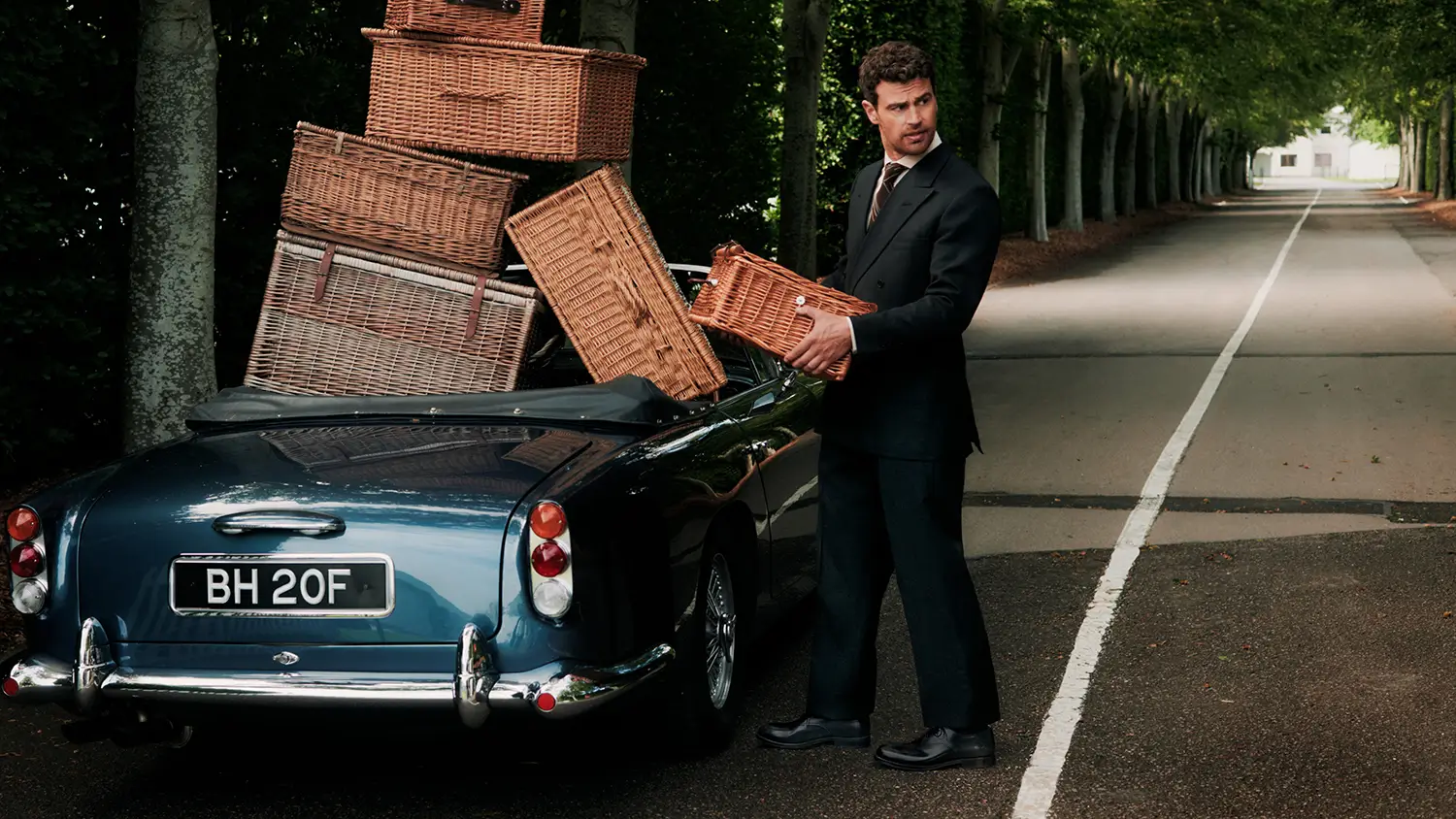
Man in a black suit and polished leather shoes loading wicker picnic baskets into a blue vintage convertible on a tree-lined road.
It is also, in a shh way, an admission that dress codes have loosened faster than most heritage shoemakers have been willing to say out loud. Oxfords and Derbies built strictly for suits have a shrinking pool of daily occasions to justify themselves, and brands that depend on those categories have spent the last several seasons finding ways to keep the form relevant without abandoning the construction standards that make them worth the price. New Formal is Church’s version of that argument: keep the shapes, soften everything around them, and let the style do the work of proving the shoes still belong in a modern wardrobe.
build
The collection’s materials are pitched squarely at the months it is named for. Coverage of the campaign points to robust construction throughout the range, polished leathers paired with heavier, more durable soling built to handle wetter, colder conditions rather than the lighter constructions Church’s tends to favor in spring and summer collections. That practical logic sits underneath the campaign’s more relaxed style: a boot needs to survive an actual English autumn before it can be photographed looking effortless in one.
The palette follows the same logic. Tan grain leather, cocoa suede and darker, weather-ready finishes replace the brighter or more polished tones associated with formal footwear, giving the collection a tonal consistency that reads as autumnal without leaning on obvious seasonal cues like plaid linings or heavy shearling. It is a restrained approach to a seasonal collection, one that trusts material and construction to signal the time of year rather than decoration.
fin
The Autumn/Winter 2026 collection had its first outing months earlier and in a very different register. In January, Church’s presented the line during Milan Men’s Fashion Week inside Palazzo Barozzi, staging the show as an imagined maestro’s studio built around a musical theme, complete with live recitals from musicians including Renato Grieco, Riccardo La Foresta and Agnese Menguzzato, and a soundscape curated by Ruggero Pietromarchi. That presentation opened with the Sunday Morning collection, a winter reworking of the brand’s signature sandal built in waxed suede or wool, cut in signature English patterns including herringbone chevron tweed and tartan. It also introduced the Regent range, built on the sturdier 133 Country last and pitched at what the brand described as a youthful country squire, a shoe meant to move between rural and urban settings without changing character.
The contrast between that Milan staging, ornate, orchestral, deliberately theatrical, and the stripped-back Goodwood story that followed it is part of what makes the campaign legible. Where the runway presentation argued for shoemaking as high craft, the Theo James campaign argues for the same shoes as everyday objects. Both readings point back to the same fact: Church’s has been owned by Prada Group since 1999, a relationship that has given the brand’s marketing budget and reach a scale most Northamptonshire shoemakers do not have access to, while the factory floor itself has stayed largely unchanged. The Goodwood campaign is, in that sense, a fairly honest piece of marketing: a company built on a single English town’s shoemaking tradition, dressed up for a global audience, but still telling a story about materials, construction and a very specific version of British life.
Related Articles
mfpen Takes the Office Wardrobe Off the Clock for Autumn Winter 2026
Sigurd Bank’s Copenhagen label pulls conference room tailoring into ordinary days, cut from recycled melton, […]