DRIFT AUDIO
Listen to this story
Choose a voice, then press play.
Sigurd Bank’s Copenhagen label pulls conference room tailoring into ordinary days, cut from recycled melton, dry Italian wool and leather scratched on purpose.
A calf-length black coat named after a conference. A bouclé polo named after a Rolodex. A brushed silver paper clip filed among the accessories. Read as a list, mfpen‘s Autumn Winter 2026 collection could pass for the contents of a 1990s supply cupboard, and then the fabric details start to undercut the joke. The coat is cut from melton respun out of discarded sweaters, the leather on the new deck shoe arrives already marked, and the season’s striped knit is built to loosen toward its owner rather than hold a factory shape. The Copenhagen label, which Sigurd Bank founded in 2015, has put the collection online with its Autumn Winter 2026 campaign circulating from early October, built around a deliberately small idea: take garments everyone recognizes and move them a few steps away from where they normally belong.
View this post on Instagram
Signal. What happened: mfpen has released its Autumn Winter 2026 menswear collection through its own online store and select stockists, alongside a campaign that frames the season around familiar garments pulled out of their usual context. Exact object: the mfpen Autumn Winter 2026 collection, anchored by the Conference Coat in Black Recycled Wool (7,300 DKK), the Sentence Peacoat in Ash Brown Recycled Wool (5,150 DKK), the Double Breasted Blazer in Dark Brown Dry Wool (4,850 DKK) and the Scout Deck Shoe in Scratched Black (3,200 DKK). When and where: avail now at mfpen.com, at the brand’s Copenhagen store at Møntergade 3C and through select stockists, with US and UK orders from the brand’s own site shipping duties paid. Source: mfpen’s own product listings and production values page, plus the season’s campaign release, which was out by October 2, 2026. Why it matters: mfpen has become a closely followed independent menswear label without a marketing budget, and this season pushes its recycled wool outerwear and its young footwear line further than before.
Bank has been circling the office for a while. Speaking with Sixtysix in January, he described Spring Summer 2026 as a collection about kids who went through a mall goth phase, grew up, and carried a trace of it into their desk jobs. Autumn Winter 2026 keeps the desk and lets the black nail polish go. The campaign framing describes formal tailoring reworked for everyday settings, with brushed and faded organic cotton, pilled bouclé jersey and scratched black leather all showing signs of age and movement. Put more simply, these are clothes that look as though they have already had a career.
stir
Scroll the label’s current men’s new arrivals and the vocab is impossible to miss. Shirting colourways carry names like Desktop Blue, Employment Stripe, Industry Stripe and Assistant Stripe. Not all of it is new-season stock, since the page mixes autumn pieces with summer holdovers, but the habit runs straight through and lands hardest on the cold-weather pieces.
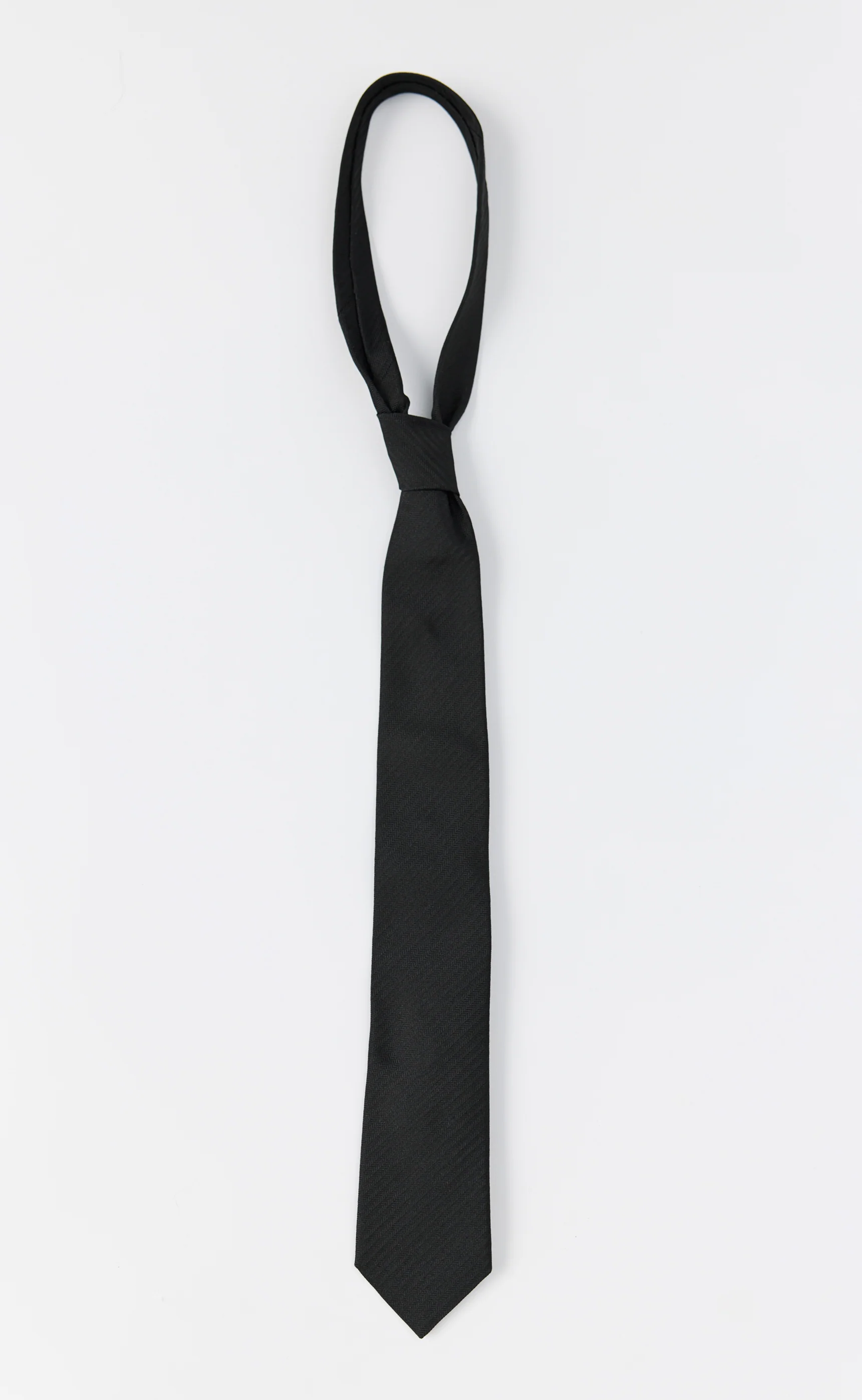
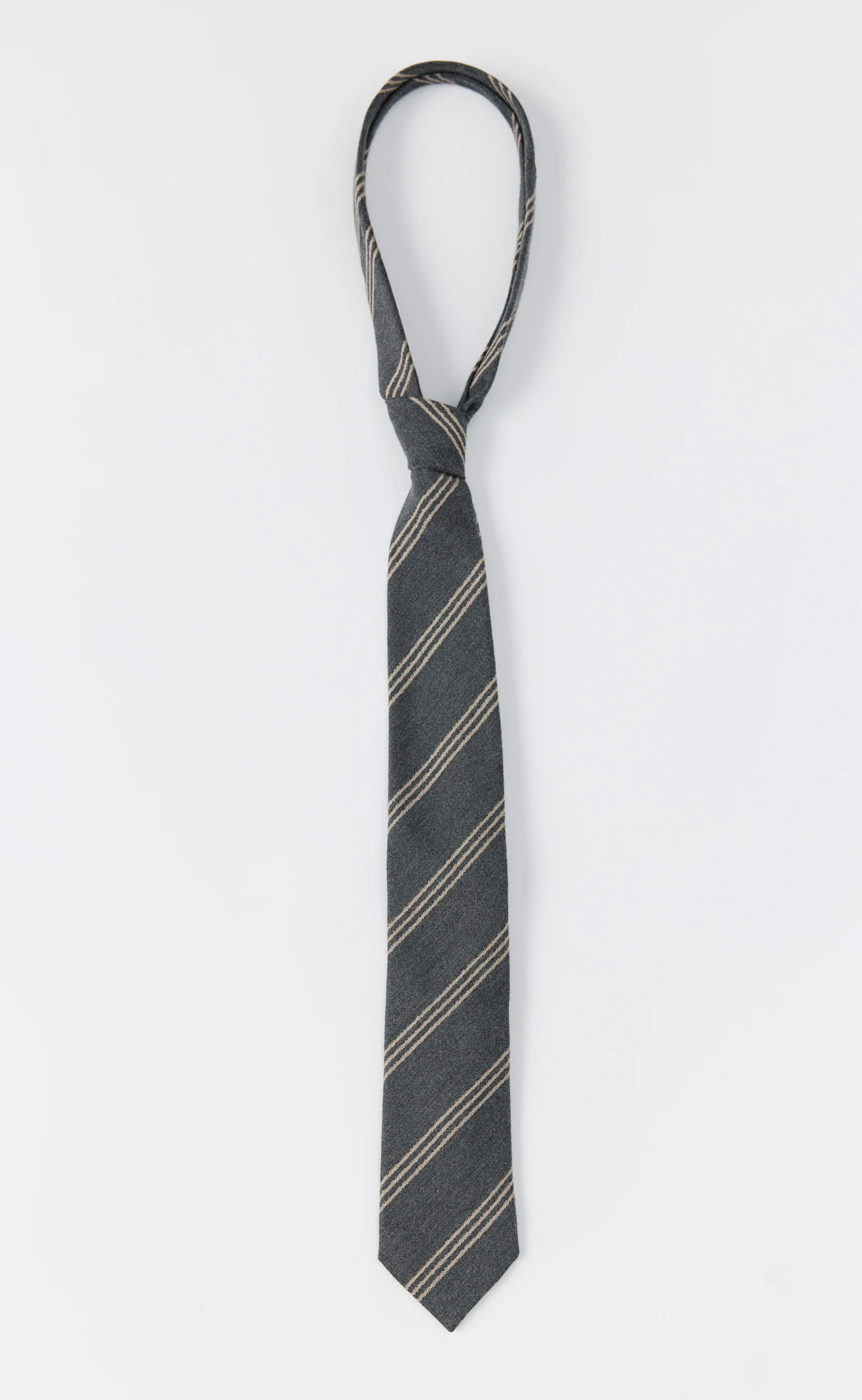
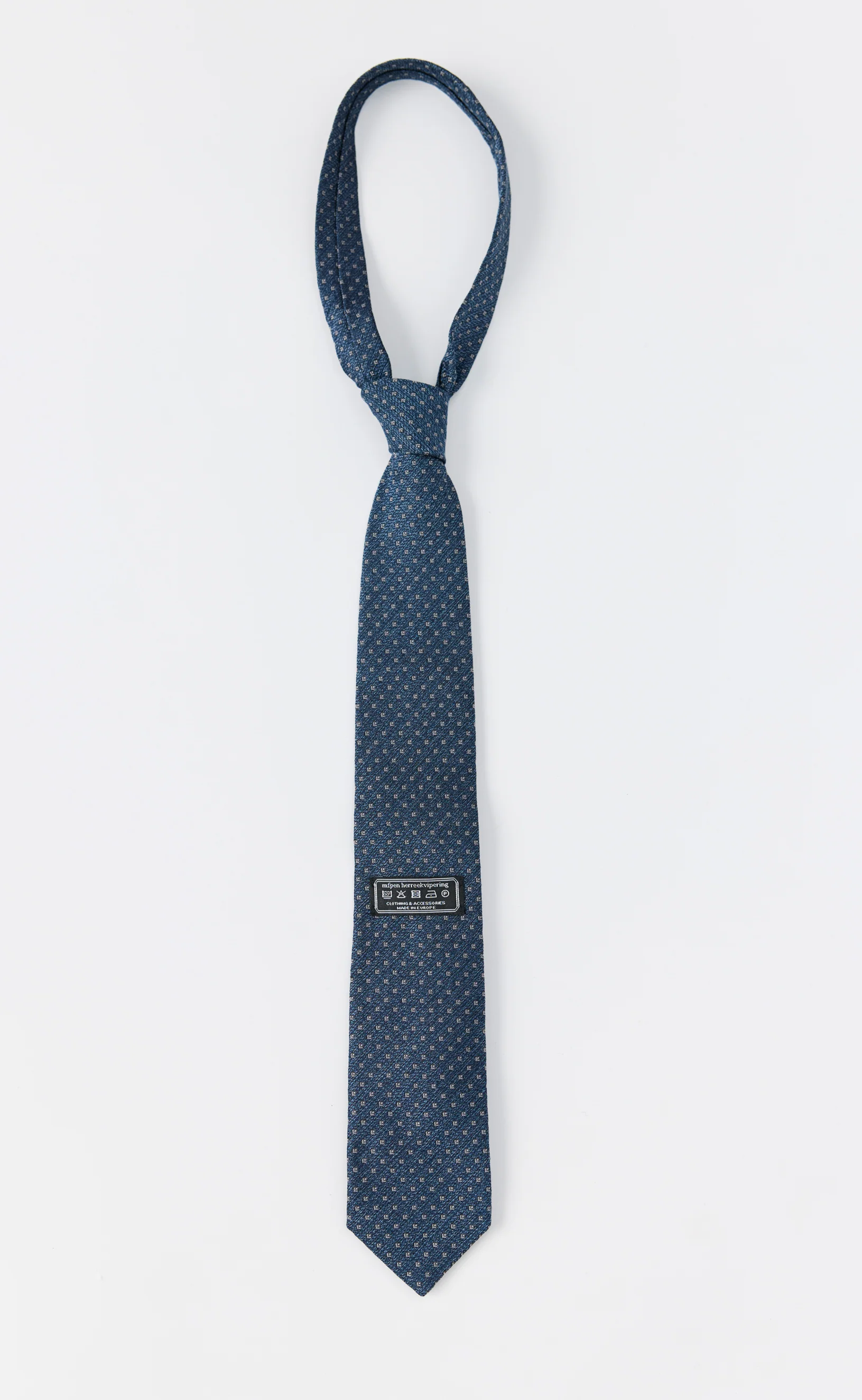
The Executive Shirt is the clearest example. It appears in Elegant Stripe, Industry Stripe, Ranch Check, PJ Stripe and Dark Brown Stripe across the current listings, priced from 1,800 to 2,150 DKK, and it is the shirt mfpen reaches for when styling the new tailoring. The Double Breasted Blazer is shown over the Elegant Stripe version with a tie in dusty royal blue and the scratched deck shoe, which is about as close to a corporate uniform as the label gets. Even then, the proportions stay loose enough to read as off duty.
The Rolodex Polo plays the same trick in jersey. Cut from a bouclé rib in a two-tone grey melange, it has an open placket, flatlock seams, split side seams and a relaxed, boxy shape, and it is garment washed and priced at 1,700 DKK. The brand describes the cloth as an organic cotton blend, and its composition line lists 60 percent recycled polyester and 40 percent organic cotton, a ratio worth noticing given that Bank has said mfpen rarely uses polyester and sticks to recycled versions when it does.
flow
The heaviest pieces in the season are also its most carefully sourced. The Conference Coat in Black Recycled Wool is a relaxed, calf-length coat with slightly dropped shoulders, notch lapels, flap pockets and a rear vent, fully lined in Italian cupro and closed with black urea resin buttons. At 7,300 DKK it sits at the top of the men’s new arrivals, and it also comes in a grey herringbone version at the same price. The cloth is a soft post-consumer recycled melton, and mfpen credits the spinning to Manteco, the family-run Italian mill, which rebuilds yarn from broken-down, end-of-life knitwear without chemicals or dyes.
Bank has described the logic of that kind of mill before, talking about a recycled wool trench from the previous season: the incoming sweaters are sorted by colour before they are broken down, so the finished fabric needs no further dyeing. With no dye involved, the coat’s black comes straight from a great many other people’s black sweaters. Manteco works out of the Prato textile district near Florence, where turning old wool back into new cloth has been a local trade for generations.\
The Sentence Peacoat in Ash Brown Recycled Wool uses a denser version of the same material, a recycled melton with a smooth, compact hand. It is oversized and cropped, double-breasted, with a wide notch lapel that buttons up into a stand collar, side welt pockets and buttoned cuffs, and it costs 5,150 DKK. A naval coat cut short and boxy is the season’s displacement idea at its most direct, and the styling leans into it. On mfpen’s own pages the peacoat is paired with a black crust leather derby, while the collection’s actual deck shoe ends up under a double-breasted blazer. The nautical ref have been shuffled and redealt.
The Double Breasted Blazer in Dark Brown Dry Wool comes from the other end of the wool spectrum. It is cut from a tropical wool woven in Italy with a dry hand feel, built with a half canvas and a light shoulder for what mfpen calls a relaxed tailored fit, with peak lapels and a single vent, for 4,850 DKK. Matching trousers in the same cloth run 2,700 DKK, so a full suit is there for anyone who wants one. Tropical wool is traditionally a warm-weather suiting cloth, so in an autumn collection the blazer reads as a layer meant to live under the melton rather than a winter garment in its own right. His grandfather was a tailor, Bank has said, though his own training was in production and sourcing, and he credits mfpen’s tailoring to a factory equipped to press shoulders, chests and lapels properly.
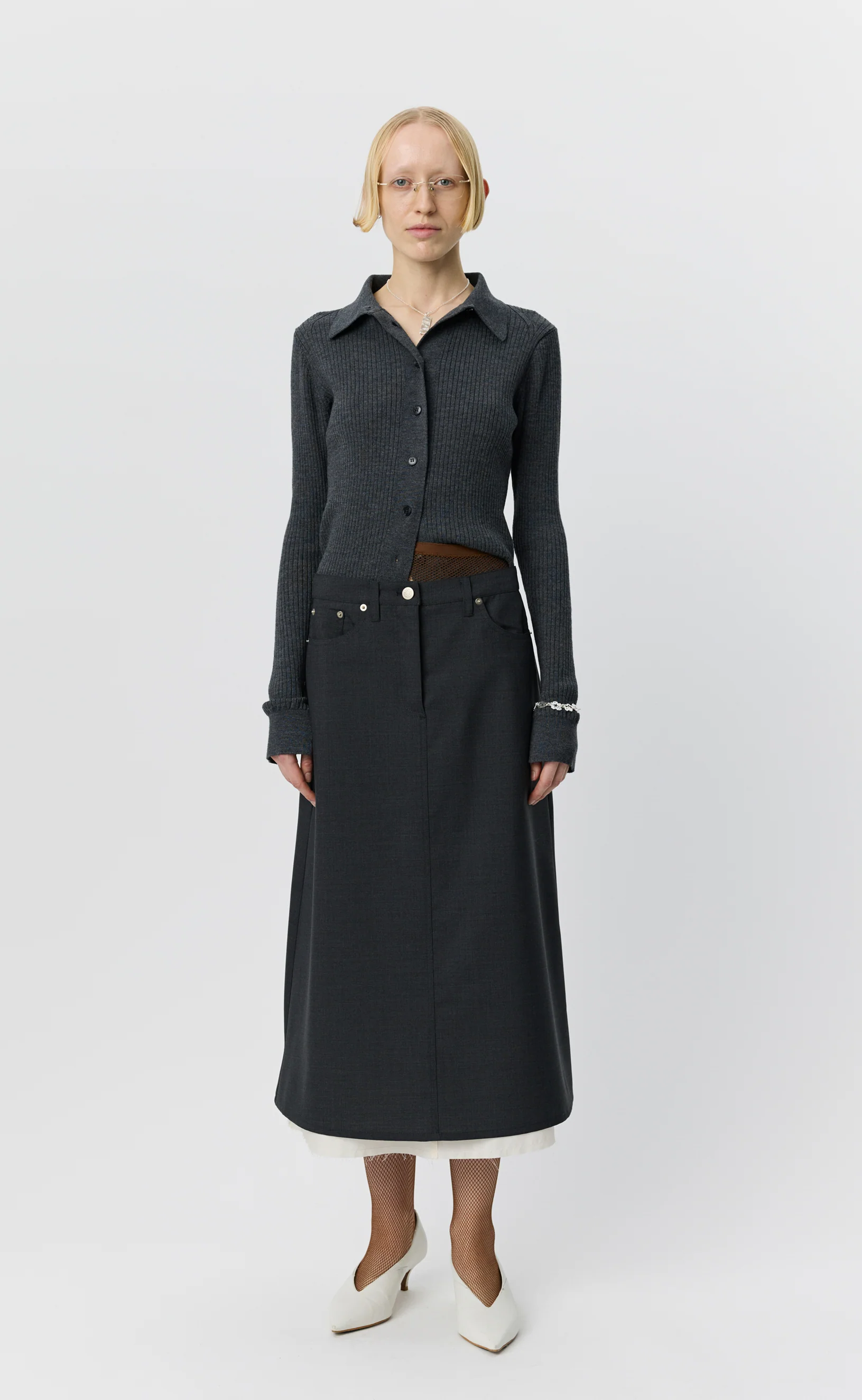
wear
The Union Jacket in Generation Plum is where the season’s interest in age gets most literal. It is cut from a garment-washed cotton denim with a dry hand, washed black with a deep red cast that reads as purple, and finished with a spread collar, side welt pockets, metal buttons and debossed star rivets at the sleeves. mfpen notes that the finishing gives each jacket its own tone and that the denim will keep changing as it is worn. It costs 3,350 DKK, and straight cut jeans in the same Generation Plum wash sit beside it at 2,100 DKK.
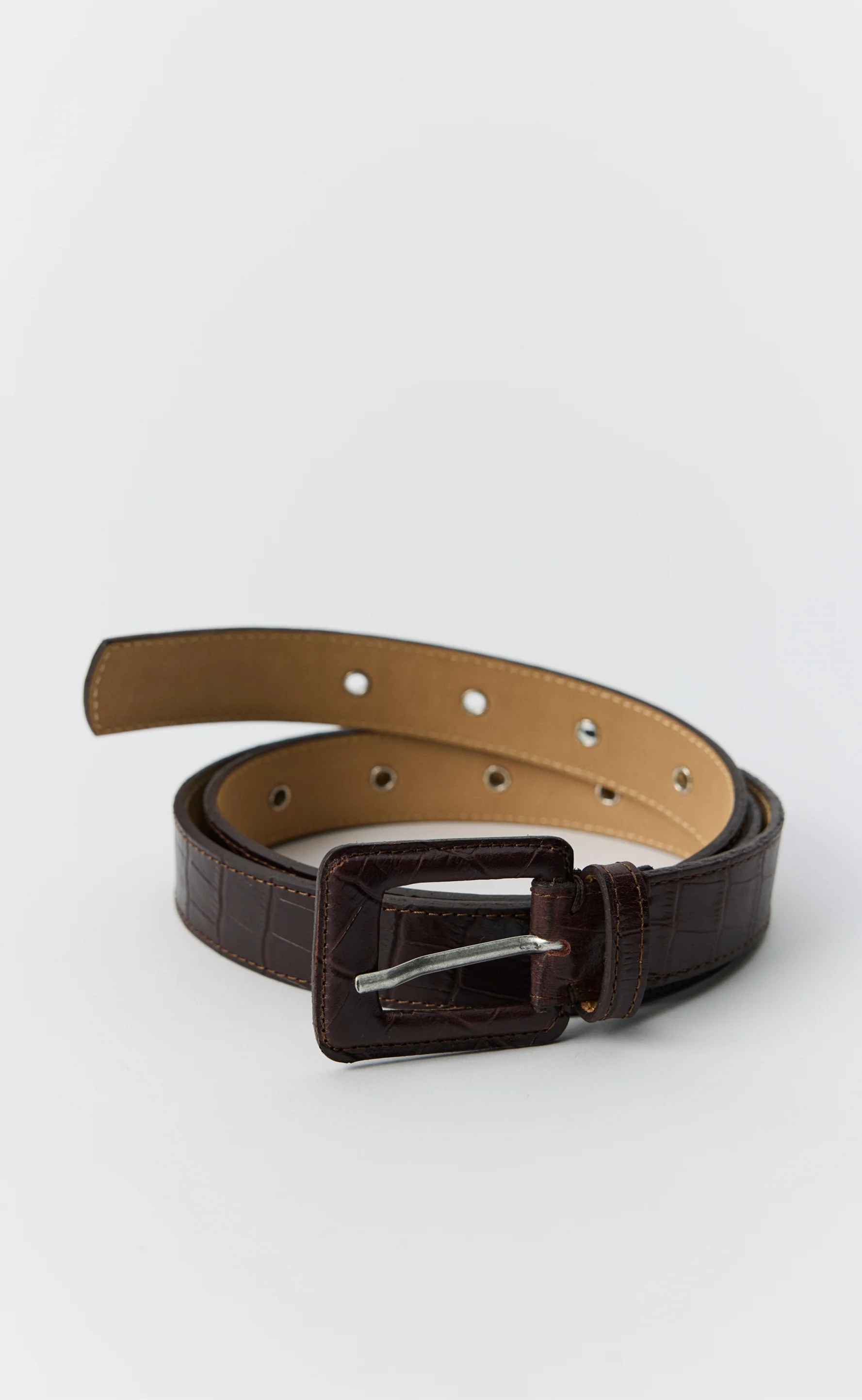
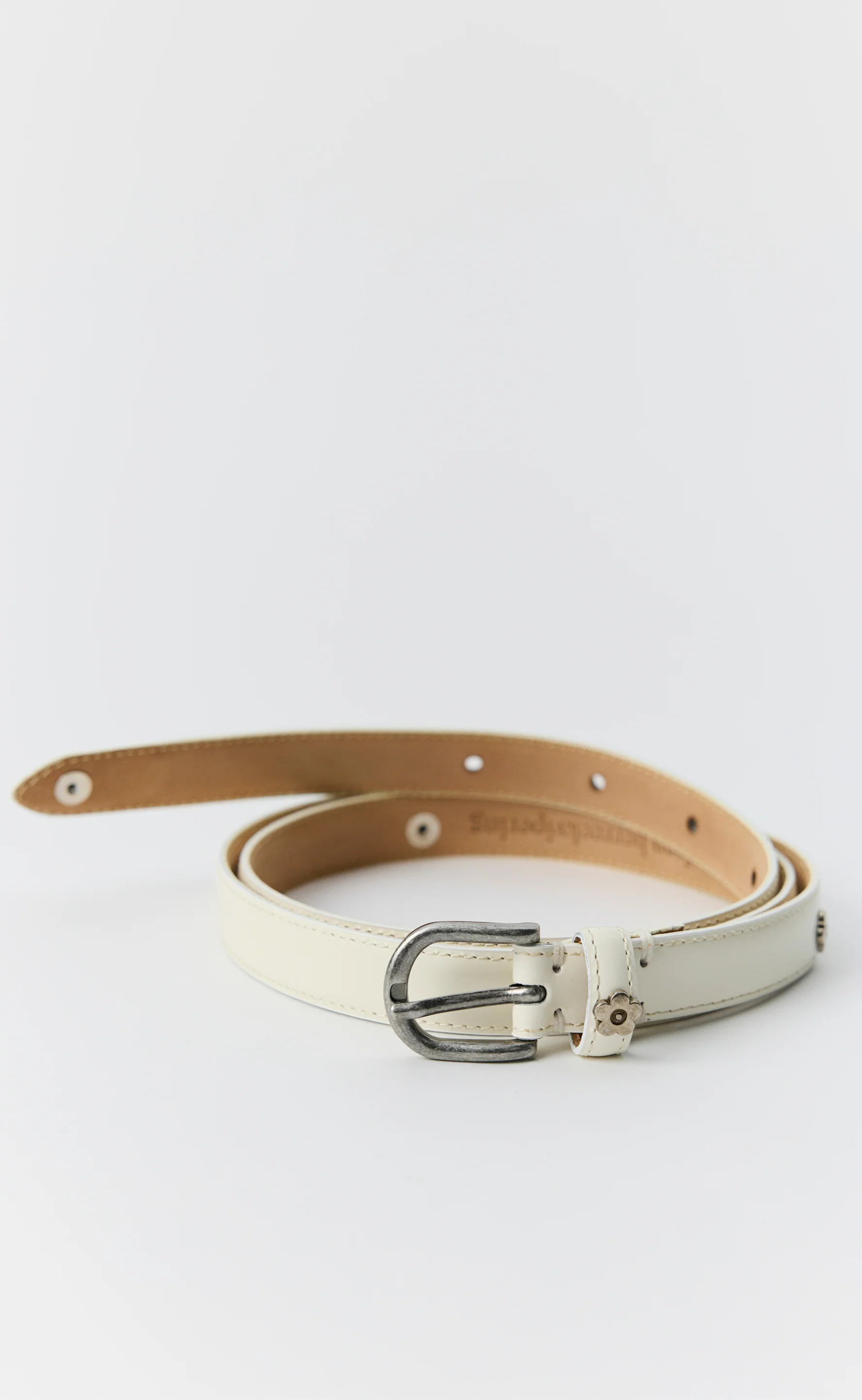
The jersey follows the same logic at a lower price. A relaxed long-sleeve tee in a colourway called Walnut Husk Pile is cut from a garment-washed, corduroy-like organic cotton jersey blend in sandy brown, with reversed flatlock seams and cuffed sleeves, for 1,400 DKK. It is styled on mfpen’s pages with black twill trousers, a black croc belt and the scratched deck shoe, a fair summary of how the label wants these pieces worn: texture against texture, with nothing pressed too sharp.
The Charming Sweater in Marina Stripe makes the case for patience. Knitted in Portugal from a soft Italian wool in ecru and navy stripes, it has a contrast ecru polo collar and exposed shoulder seams, and mfpen describes the yarn as deliberately free of the synthetic fibres that mass producers add for stability. The open structure is meant to expand with wear and settle to the body over time, which is why the label recommends storing it folded and drying it flat. It costs 2,850 DKK. Bank has a habit of nudging the stripe: a deadstock striped shirt from Autumn Winter 2025 felt too plain to him until the team punched holes through it.
show
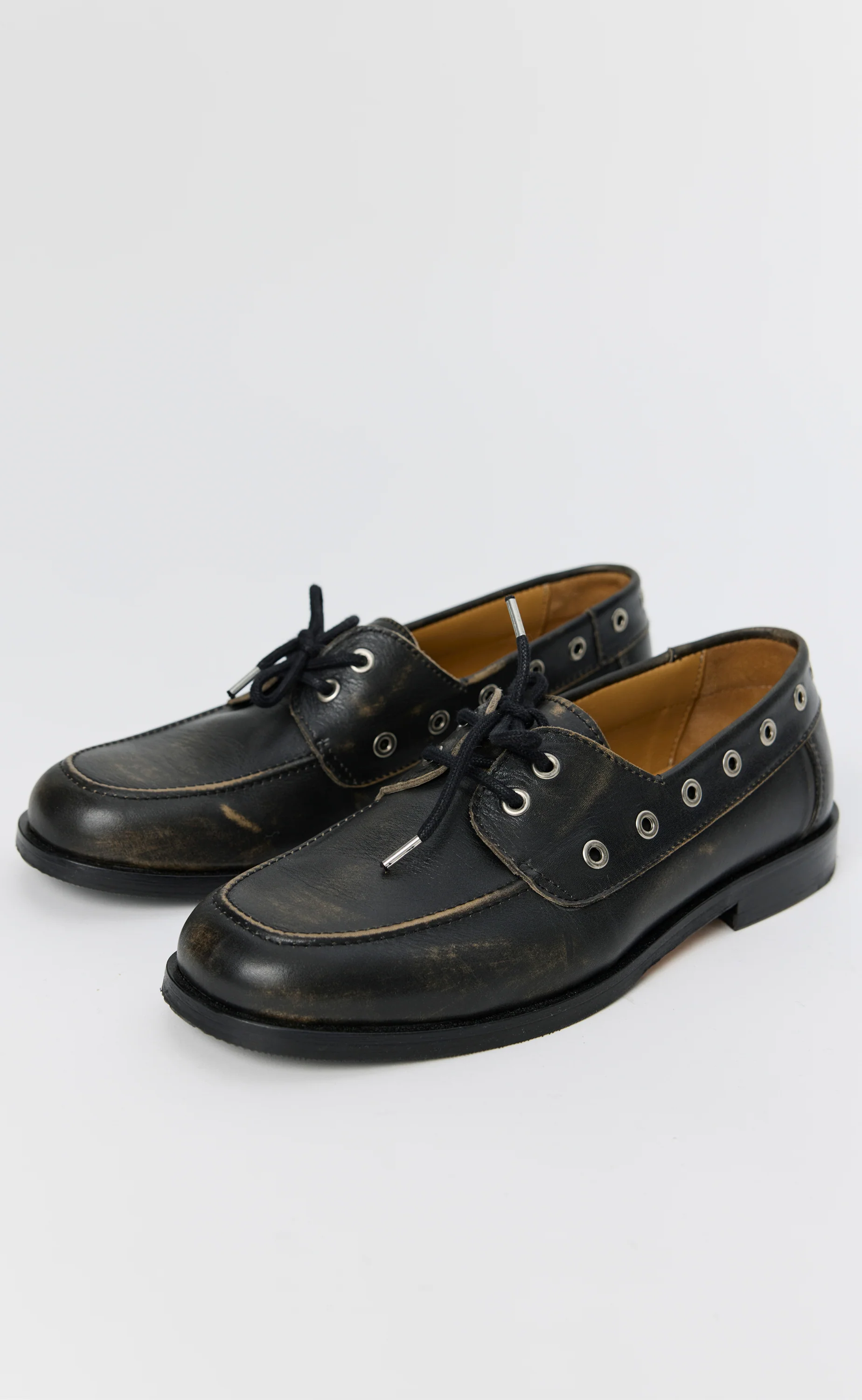
The Scout Deck Shoe is the clearest sign that mfpen’s footwear has moved past the trial stage. Made in Portugal from cow leather with an intentionally marked surface, it carries a moccasin apron stitch across the toe, black cotton laces through the vamp and a row of metal eyelets around the collar that are left empty, exactly where a classic boat shoe would thread its leather lace. Inside, it is fully lined in aniline leather. Underneath, a flexible handmade leather sole gets a rubber overlay for grip. It costs 3,200 DKK, and the label says the marks on the surface will keep developing as the shoe is worn.
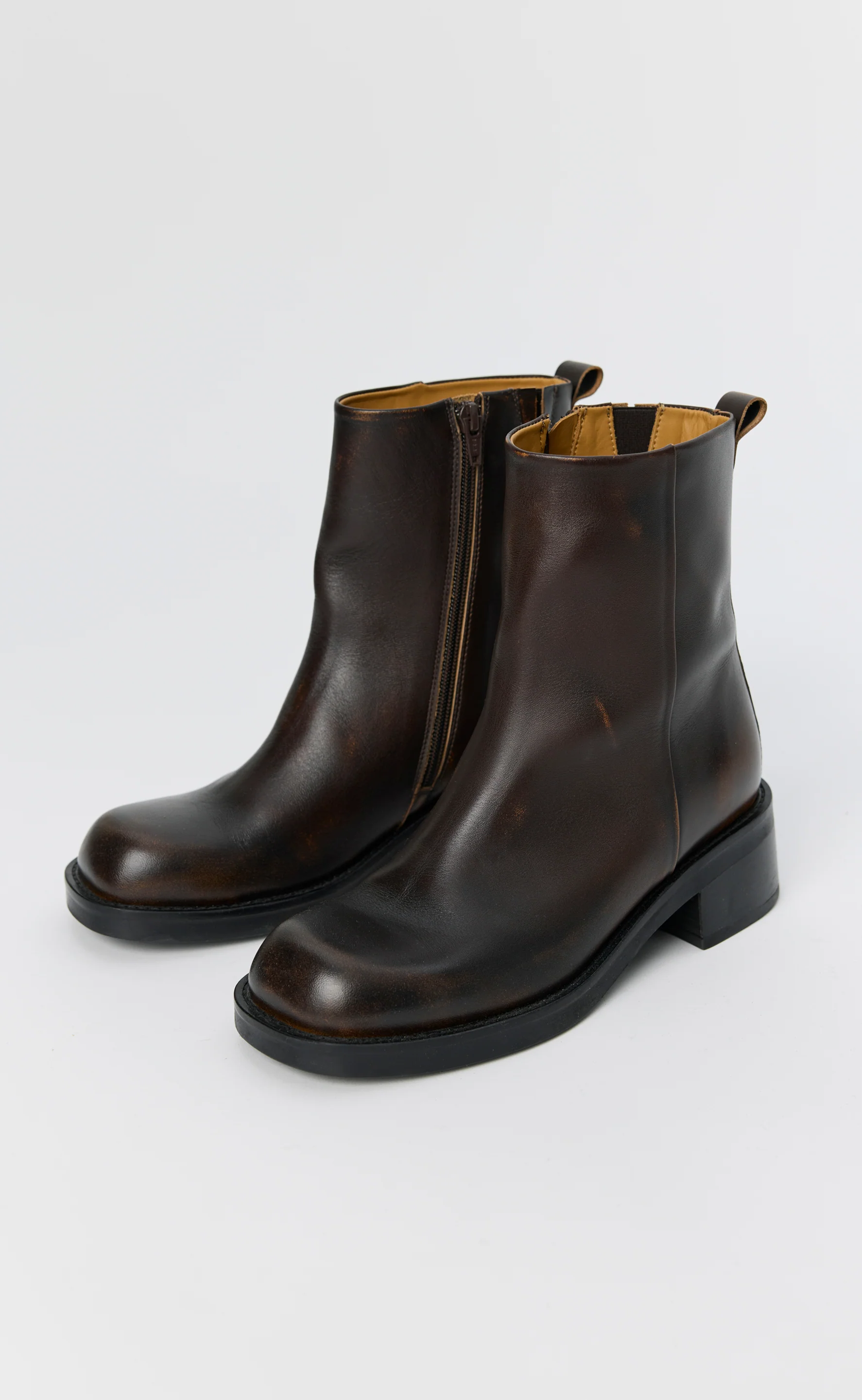
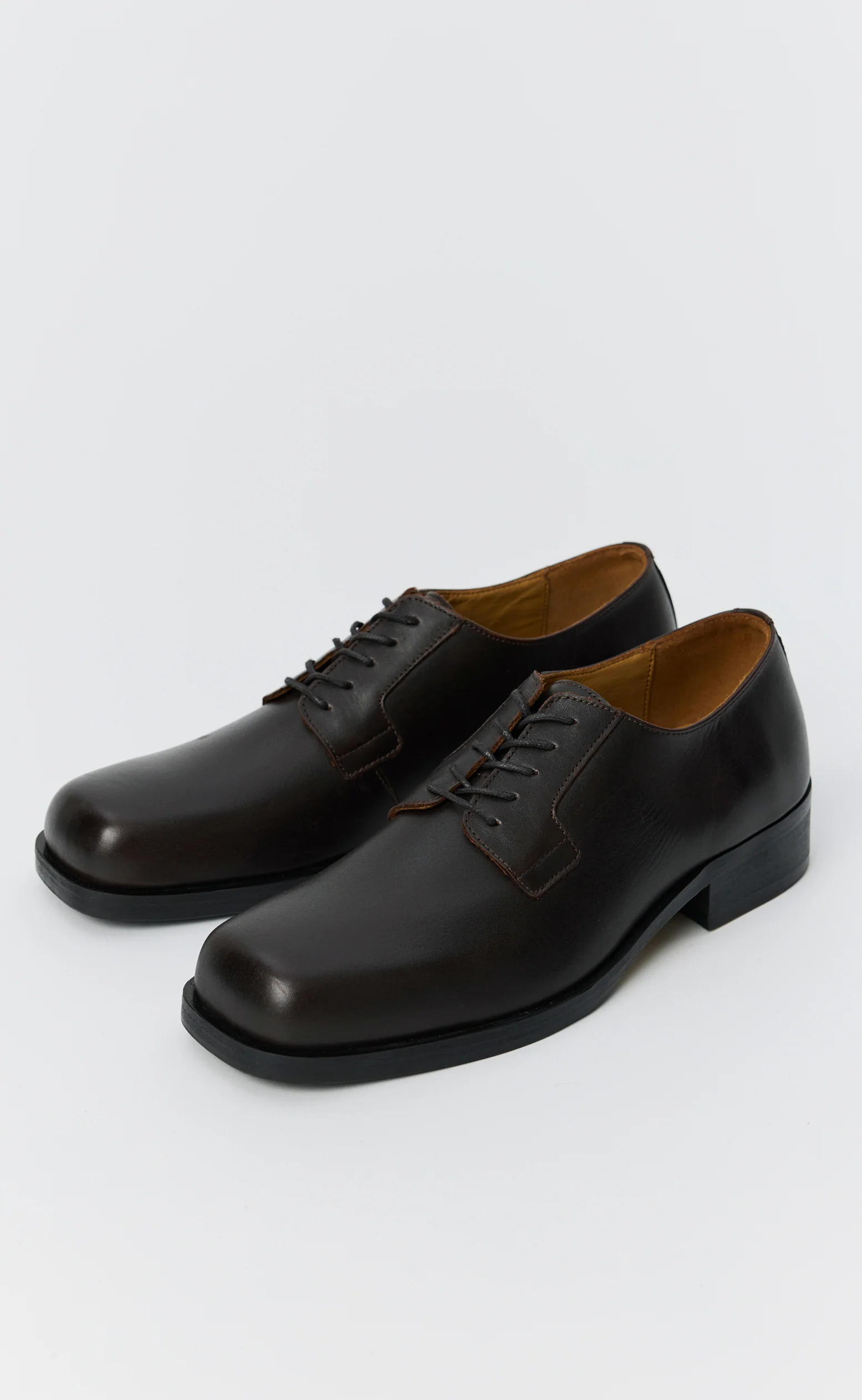
Around it sits a small but complete range: crust leather derbies in black and brown at 3,200 DKK, a black polido derby at 3,350 DKK and a brown loafer at 3,150 DKK. In January, Bank talked about footwear as one of the additions that keep pulling the company toward growth whether he wants it or not, since every new product category means more people to carry the workload. He said much the same about womenswear, launched roughly two years before that interview and now sharing fabrics and factory schedules with the men’s line.
fin
mfpen’s sourcing runs on what it calls a Responsible Hierarchy, laid out on its production values page. Deadstock comes first, meaning high-quality leftover fabric from overproduction elsewhere in the industry, mostly from Italian and Portuguese mills, with the brand drawing a line at fabric woven specifically to sit in stock. After that come recycled fibres, then cellulose-based fibres made in a closed loop, then lower-impact natural fibres such as certified wool, linen and hemp, with certified organic cotton as the fallback for jersey when neither deadstock nor recycled yarn is available.
That system has a visible side effect on the shop floor. Bank has explained that a deadstock run can mean 50 pieces of a style, or only 12, depending on how much fabric exists, and that the company hears plenty of complaints about how quickly things sell out. The main collection is shown to buyers in Paris, and once production orders go in, mfpen often adds another 10 or 12 styles, sometimes swapping in alternative deadstock when a popular piece runs out of cloth. The collection keeps growing through its own season, which helps explain why the new arrivals page reads more like a running ledger than a fixed lineup.
It is also a business that has grown without paid advertising. Bank has said he has no interest in forcing the brand into anyone’s phone feed, and recalled his accountant marvelling at the company’s growth without a marketing budget. He ran mfpen alone for its first five years and now leads a team of 13 across production, development and retail. Prices have climbed with inflation, he acknowledged, but he has pushed back on the idea of making clothes his own friends could not afford.
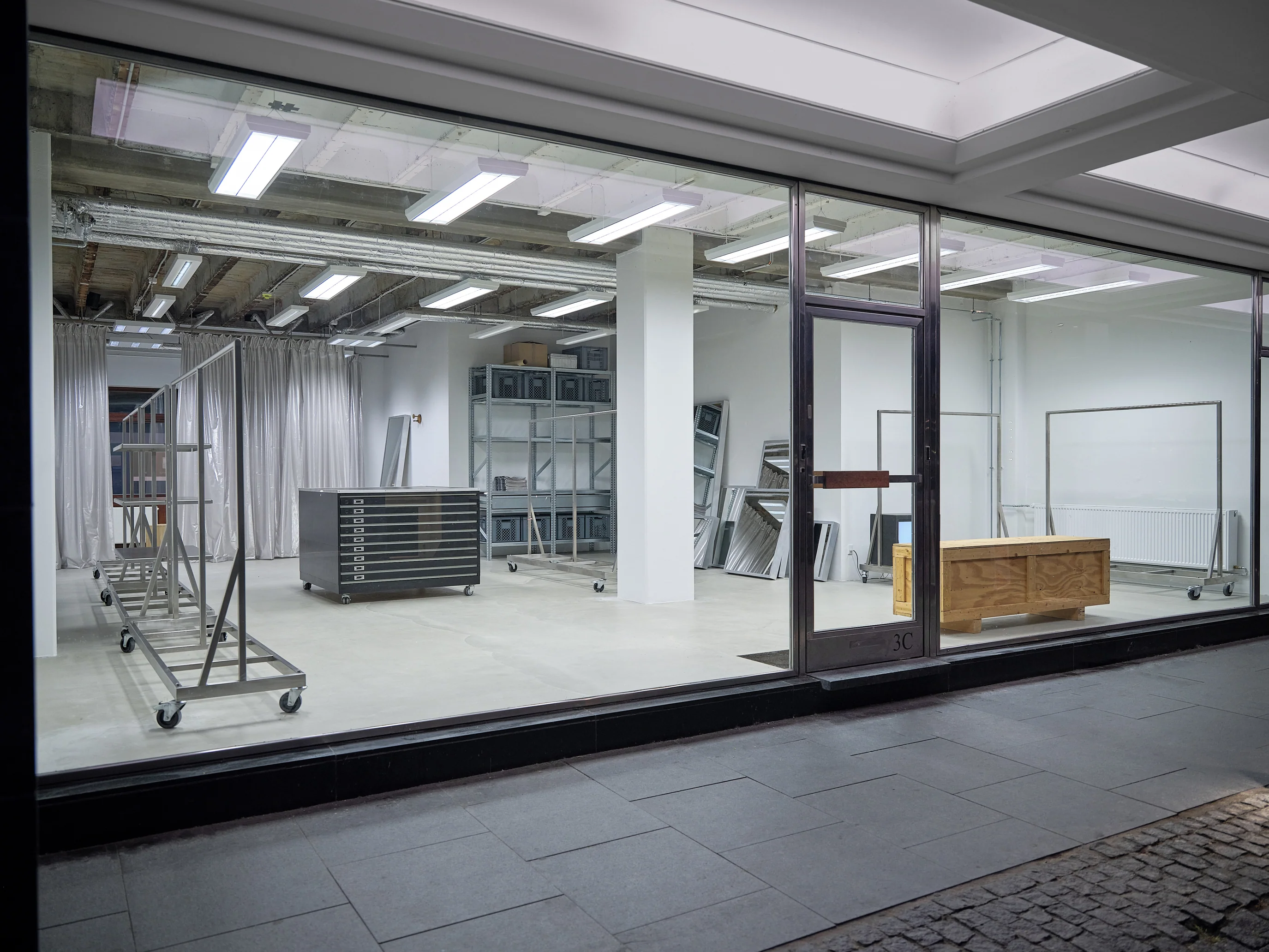
The physical home of all this is the mfpen Copenhagen store at Møntergade 3C in central Copenhagen, which carries the season alongside the brand’s online store and its stockists.
The most personal detail in the season is also the smallest. Asked in January how fatherhood had changed his work, Bank said it had not changed much, then mentioned that his daughter, almost six at the time, had drawn a print for the Autumn Winter 2026 collection, in handwriting he said looked nothing like a typical child’s.
Related Articles
Nice Things, Heavier: CABARET POVAL Moves Its Summer Slogan Onto an AW26 Crewneck
A two-word graphic from CABARET POVAL’s summer tees returns on a ¥19,800 crewneck, and the […]