DRIFT AUDIO
Listen to this story
Choose a voice, then press play.
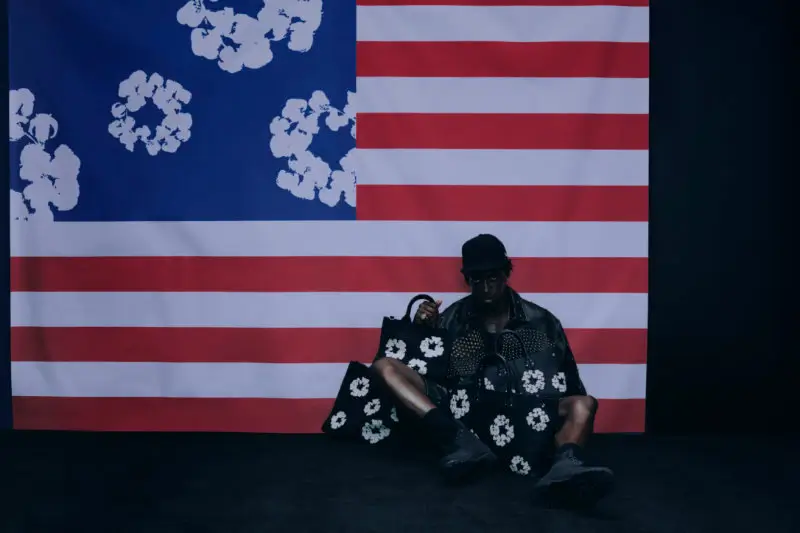
Denim Tears stands as a singular force. Founded by Tremaine Emory in 2019, the brand has consistently transformed garments into vessels of history, memory, and unapologetic cultural reclamation. With the announcement of its SS26 bag collection—the label’s first dedicated in-house bag category—Denim Tears takes another decisive step, extending its signature Cotton Wreath motif into functional accessories that bridge everyday utility with profound symbolic weight.
This launch arrives amid Denim Tears’ broader SS26 “Libertas” narrative, a collection that reclaims and reframes symbols of American freedom, most notably through the broken chains at the base of the Statue of Liberty. Yet the bags feel like a natural, almost inevitable evolution. After establishing its voice through denim collaborations (notably with Levi’s), in-house denim drops, and apparel rich with historical references, Emory now equips the wearer with portable extensions of the brand’s ethos—bags that carry not just belongings, but stories.
View this post on Instagram
sti
What began as an artistic gesture—initially appearing on denim jeans, hoodies, and sweatshirts in the brand’s inaugural collection timed to the 400th anniversary of slavery in America—has since become Denim Tears’ most recognizable and bootlegged icon. It has adorned pieces in collision with Levi’s, Champion, and others, evolving from subtle prints to oxidized studs, jacquard weaves, and now chain-stitch embroidery. Its persistence speaks to Emory’s commitment to storytelling: fashion as wearable archive, as conversation starter, as talisman.
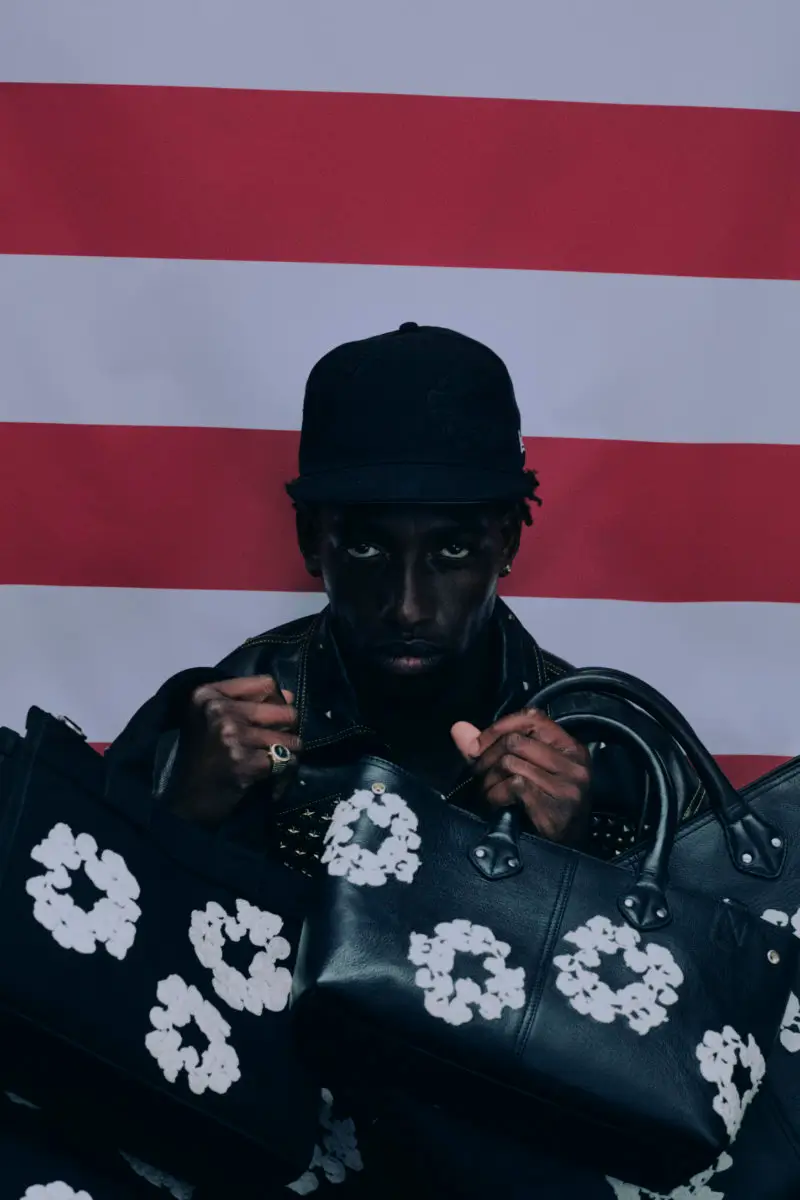
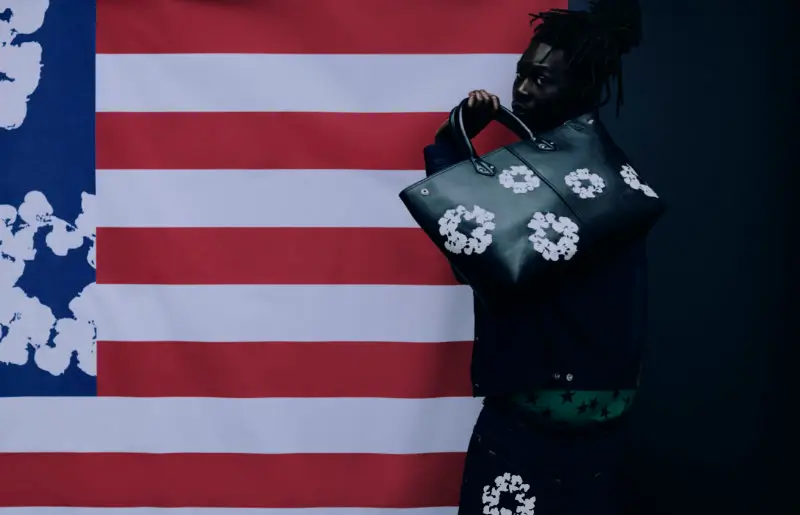
In the SS26 bags, the Cotton Wreath finds new expression through meticulous chain-stitch embroidery. This technique, with its textured, almost sculptural quality, elevates the motif from graphic flatness to tactile presence. On fabric, it evokes the laborious handwork of quilting traditions in the African American South; on leather, it gains a luxurious tactility that bridges street and high fashion.
versa
The collection comprises two primary styles, each available in two sizes, offering versatility without compromising the brand’s narrative depth.
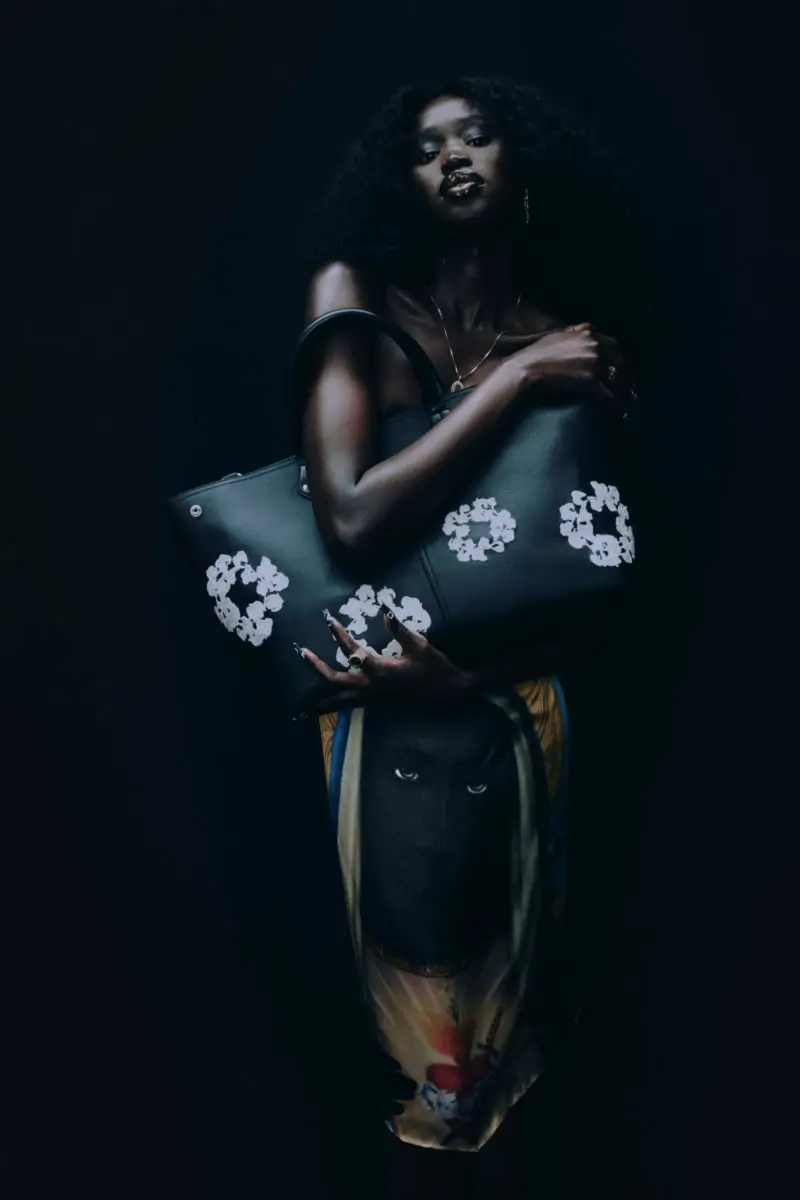
The Cotton Wreath Canvas Bag utilizes a robust 15oz cotton canvas, a material choice that directly nods to the brand’s denim roots. Heavyweight and durable, this canvas carries the weight of history literally and figuratively. The embroidered wreath adorns the surface prominently, transforming a practical tote into a statement piece. Ideal for daily commutes, work, travel, or weekend markets, it embodies the brand’s ethos of clothing (and accessories) that lives with the wearer through real experiences.
The Cotton Wreath Leather Bag, crafted from soft grain leather, introduces a more adaptable silhouette. Here, a clever side button mechanism allows the bag to transform: unbuttoned, it expands into a generous tote suited for laptops, books, or weekend essentials; buttoned, it cinches into a more structured, intimate form perfect for evenings out or more polished settings. This duality mirrors the multifaceted nature of diasporic identity—adaptable, resilient, capable of shifting contexts while retaining core essence. The leather’s softness contrasts beautifully with the structured embroidery, creating a piece that feels both luxurious and approachable.
Pricing, from available reports, positions these bags accessibly within the luxury conversation—significantly more attainable than comparable offerings from traditional maisons—while maintaining premium craftsmanship. This democratizing impulse aligns with Emory’s broader practice: making history and quality available beyond elite circles.
flow
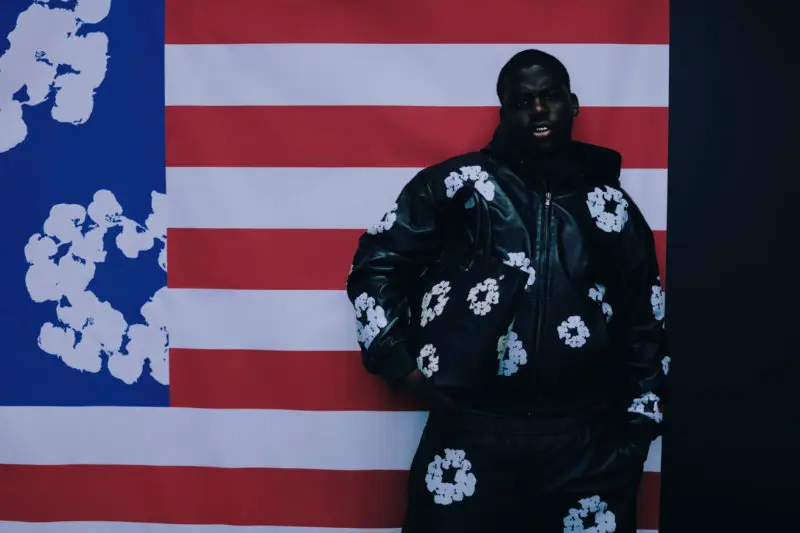
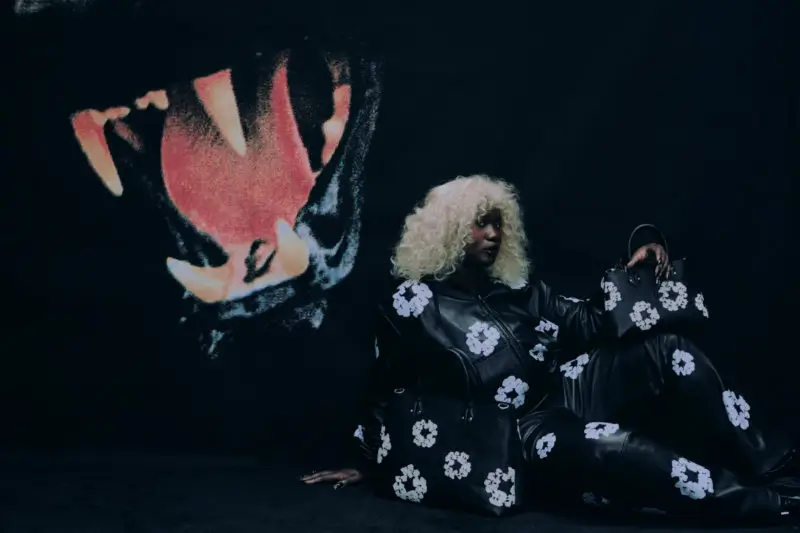
No Denim Tears release is complete without its visual narrative, and the SS26 bag campaign, shot by Gabriel Moses, extends the brand’s commitment to diasporic storytelling. Moses, a longtime friend and collaborator, brings a moody, cinematic eye that has defined some of the most compelling fashion imagery of recent years. His photographs for this collection immerse models in atmospheric settings that evoke memory, movement, and community.
Featured talents include Adit Ajhok Deng, Crystall Mess, and others, whose presence infuses the campaign with authenticity and multiplicity. Deng and Mess, with their distinct presences, embody the range of experiences the bags are designed to accompany—from the rhythm of city streets to more introspective or celebratory moments. The imagery avoids glossy perfection in favor of texture, shadow, and humanity, reinforcing Denim Tears’ visual language as one rooted in real lives rather than aspirational fantasy.
Moses’ work here feels like a continuation of Denim Tears’ ongoing dialogue with Black visual culture—photography as another layer of archive, capturing not just products but the cultural currents they navigate.
fracture
In an era where fashion often grapples with superficiality or fleeting trends, Denim Tears’ approach stands out for its depth. The Cotton Wreath bags are not mere accessories; they are portable monuments to memory. They invite the wearer to engage with complex histories—cotton’s role in the slave trade, the resilience of Black creativity, the ongoing reclamation of American symbols—while performing the mundane yet essential task of carrying one’s life.
This launch coincides with Denim Tears’ maturation. From its early days as a provocative voice in streetwear to its current status as a multimillion-dollar brand with in-house production capabilities, the label under Emory has proven that intellectual rigor and commercial success need not be at odds. Collaborations with figures like Virgil Abloh, Frank Ocean, and institutions across art and music have amplified this, but the core remains Emory’s singular vision.
The bags also speak to broader shifts in menswear and unisex accessories. As traditional boundaries between categories dissolve, functional pieces with narrative weight gain prominence. They align with a growing desire for items that endure—both physically and conceptually—in a world of fast fashion disposability. The adaptable leather bag, in particular, reflects contemporary needs: versatility for hybrid work/life realities, sustainability through timeless design, and personal expression through symbolism.

fin
As Denim Tears ventures further into accessories, one senses an expansion rather than a pivot. The Cotton Wreath, now seven-plus years strong, continues to mutate and find new homes—on canvas, leather, denim, and beyond. Future iterations might explore different scales, colorways, or even collaborations that deepen the motif’s exploration.
For Tremaine Emory, this feels like another chapter in a larger epic. His practice—drawing from personal heritage, rigorous historical research, and contemporary cultural dialogue—positions Denim Tears as more than a clothing brand. It is a cultural project, one that uses fashion’s accessibility to provoke thought, foster pride, and spark necessary conversations.
The SS26 bag collection invites us to carry that project with us. Whether slung over a shoulder on the subway, placed beside a desk during focused work, or accompanying an evening of connection, these bags embody the brand’s core tenet: that objects can hold memory, that style can educate, and that even the most everyday items can weave us into larger tapestries of resilience and beauty.

In embracing these bags, wearers become part of Denim Tears’ living archive—participants in a story that began in fields of cotton, survived unimaginable hardship, and now flourishes in the hands of those who choose to carry it forward. This is fashion at its most potent: not just worn, but lived, remembered, and passed along.
Related Articles

Fragment and Mammut Bring the Barryvox Back in Glacier Blue
Hiroshi Fujiwara’s second Mammut avalanche beacon leaves the Barryvox S2’s rescue brain untouched and changes […]