Every Balenciaga Hourglass Avenue Bag Carries Its Own Return Address

September 11, 2026
DRIFT AUDIO
Listen to this story
Choose a voice, then press play.
Balenciaga’s newest handbag softens a signature curve into something built for daily use, and stamps its own headquarters address right onto the lock.
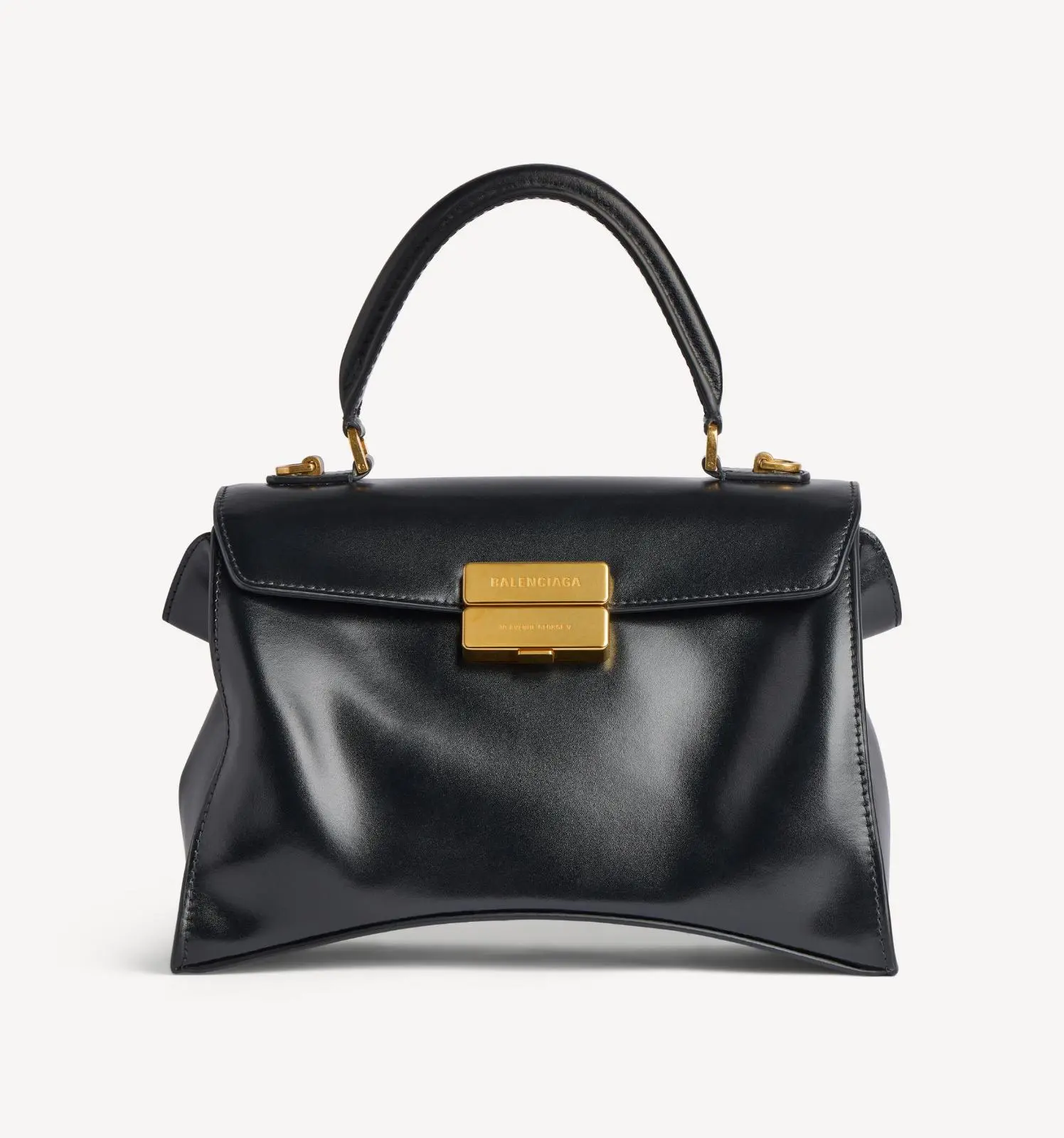
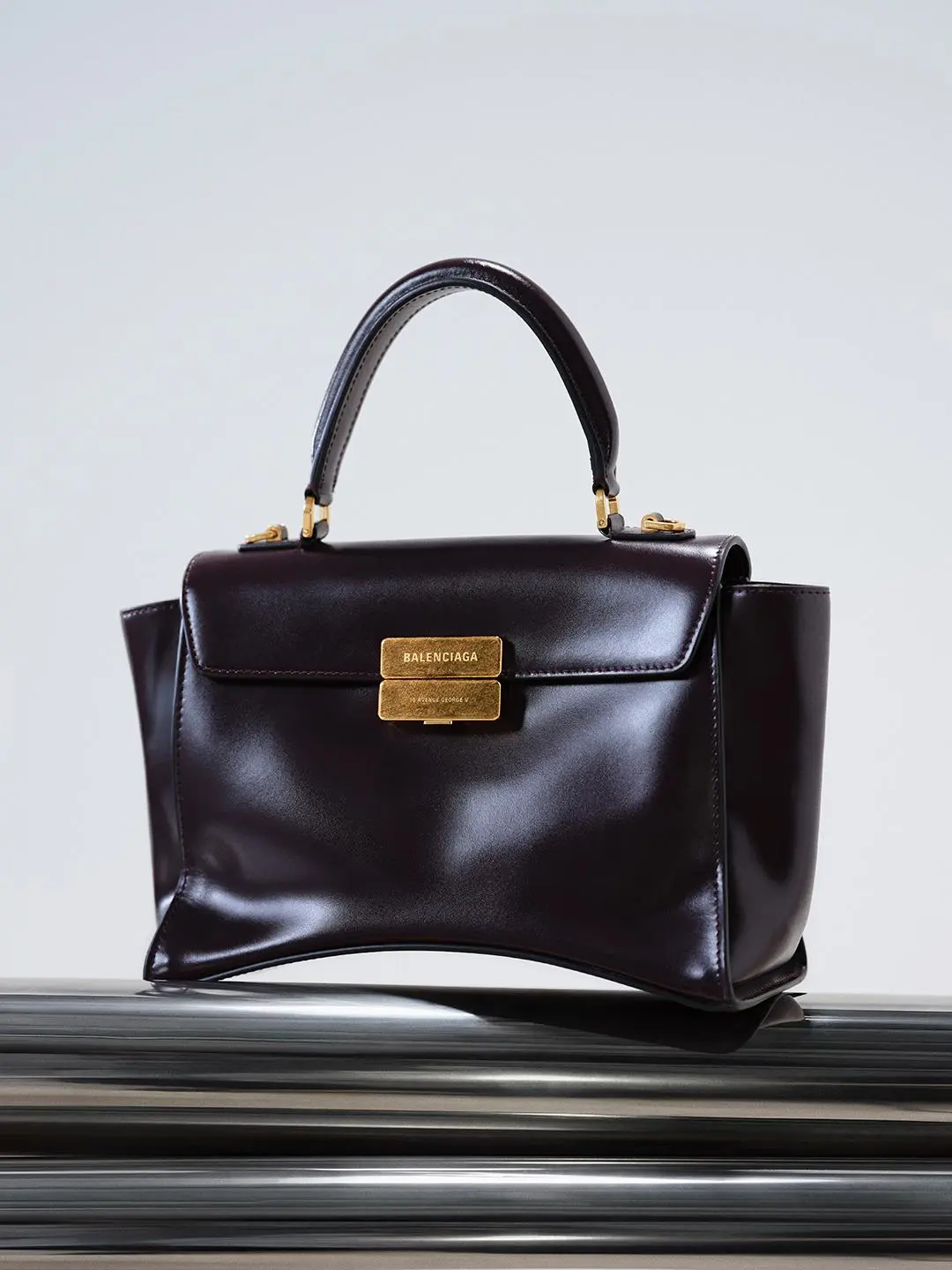
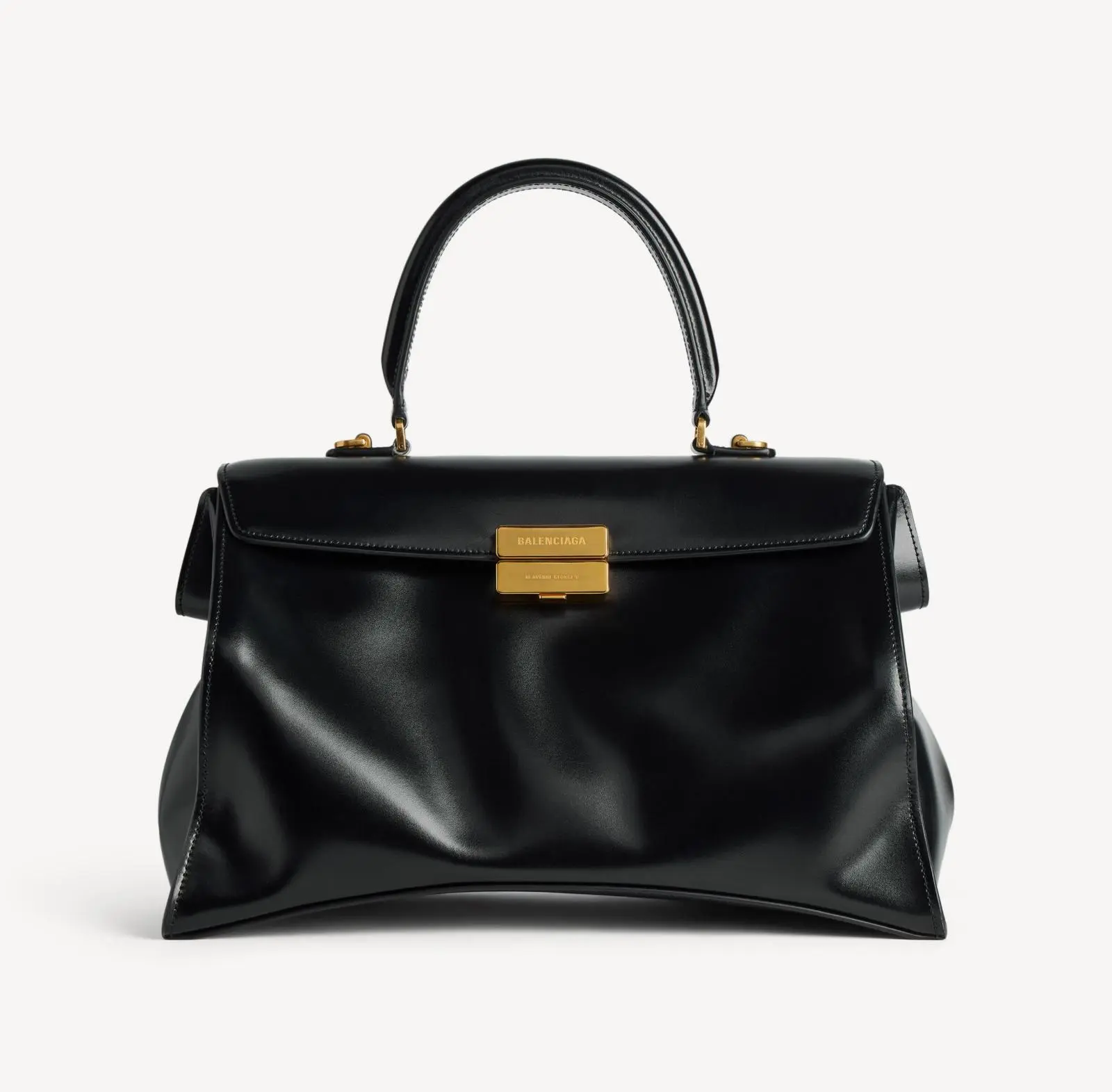
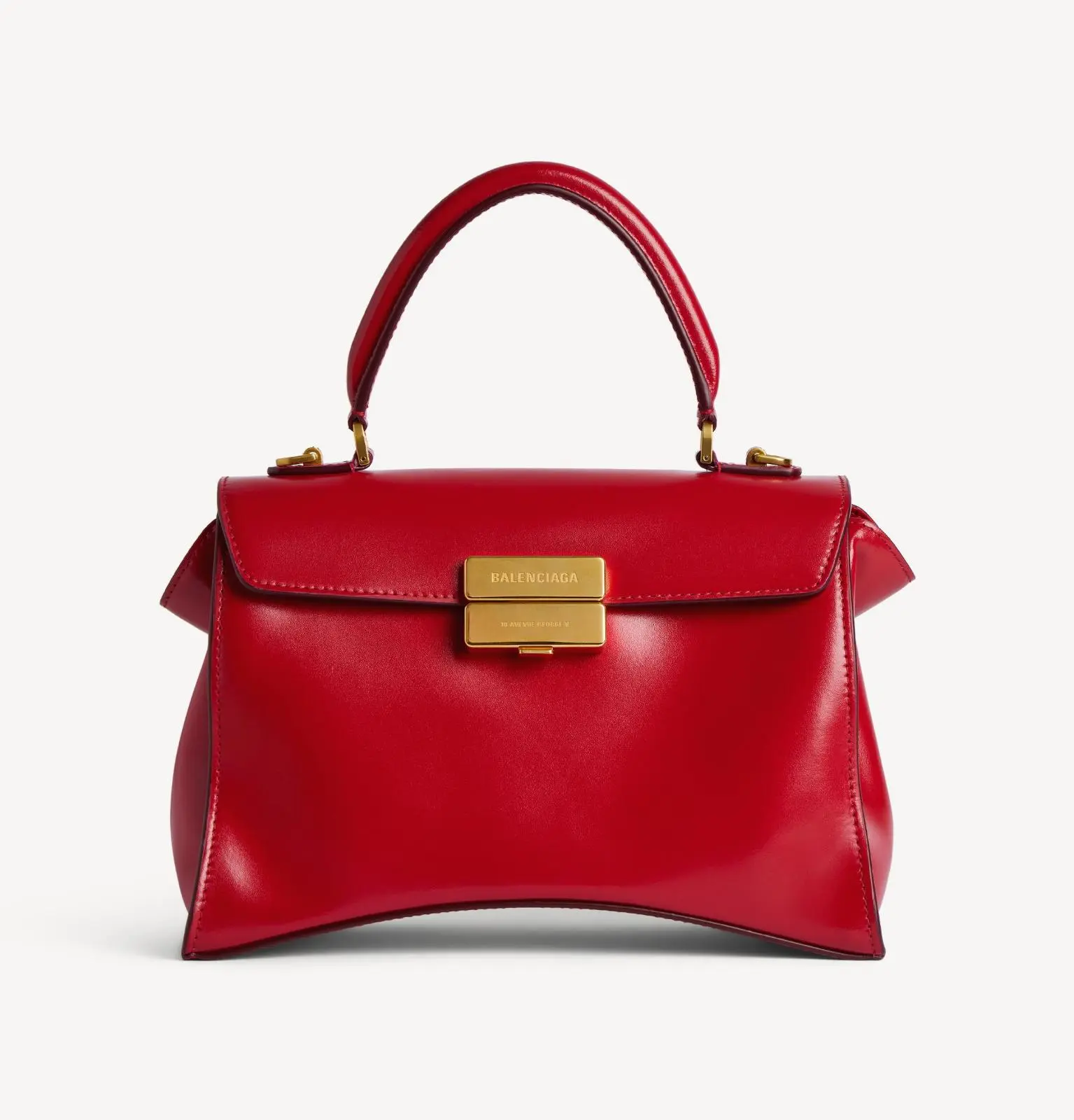
Fold the top flap of Balenciaga’s newest handbag shut and a small detail comes into focus at the lock: two min metal bars, joined together, engraved with the words “Balenciaga 10 Avenue George V.” That’s the real street address of the house’s Paris headquarters, the building Cristóbal Balenciaga worked from after moving his ateliers north from Spain, and where Balenciaga still operates today. It’s also where the new bag gets its name.
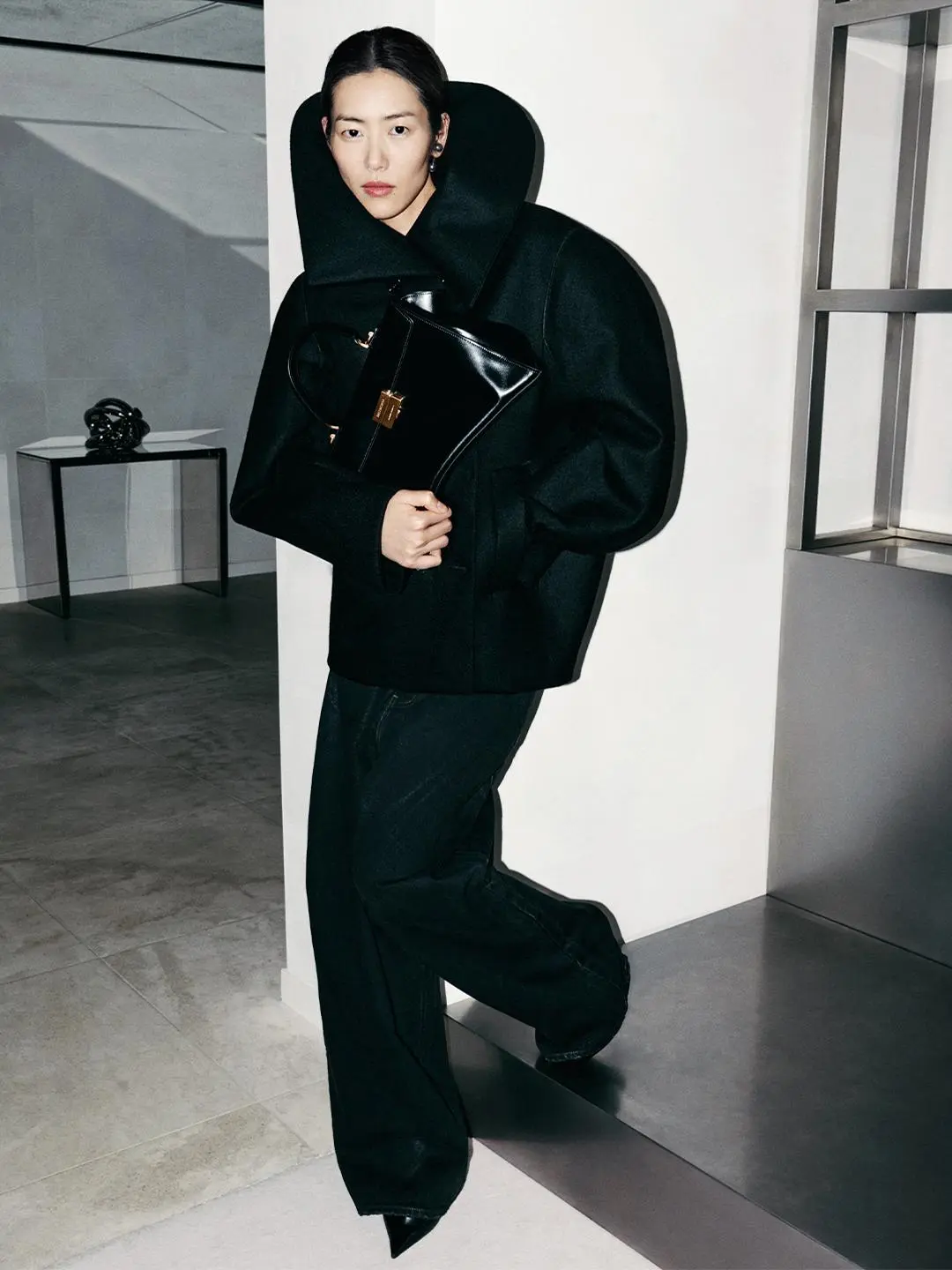
The Hourglass Avenue went on sale Thursday, September 10, 2026, in select Balenciaga boutiques and on balenciaga.com. It’s the newest handbag to carry creative director Pierpaolo Piccioli‘s sig at the house, and the first standalone release built entirely around his rework of one of Balenciaga’s oldest and most recognizable shapes: the Hourglass. Where the original bag leaned hard into architecture, with a rigid, sculpted base that refused to sit flush on a table, the Avenue keeps the family curve while giving it somewhere to soften. Piccioli has described wanting a bag that felt “architectural but soft at the same time,” a tension he’s now chased across two seasons at the house.
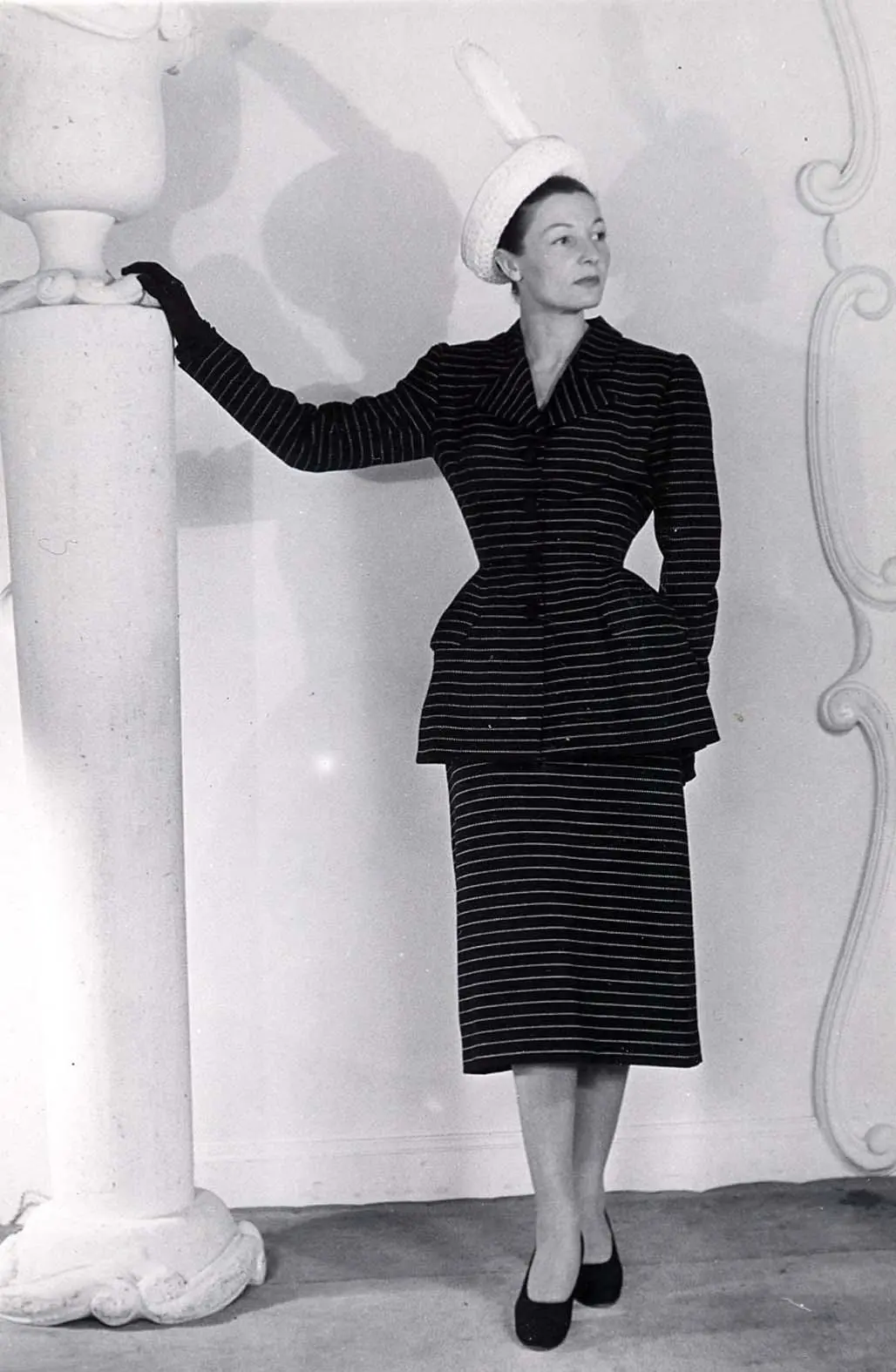
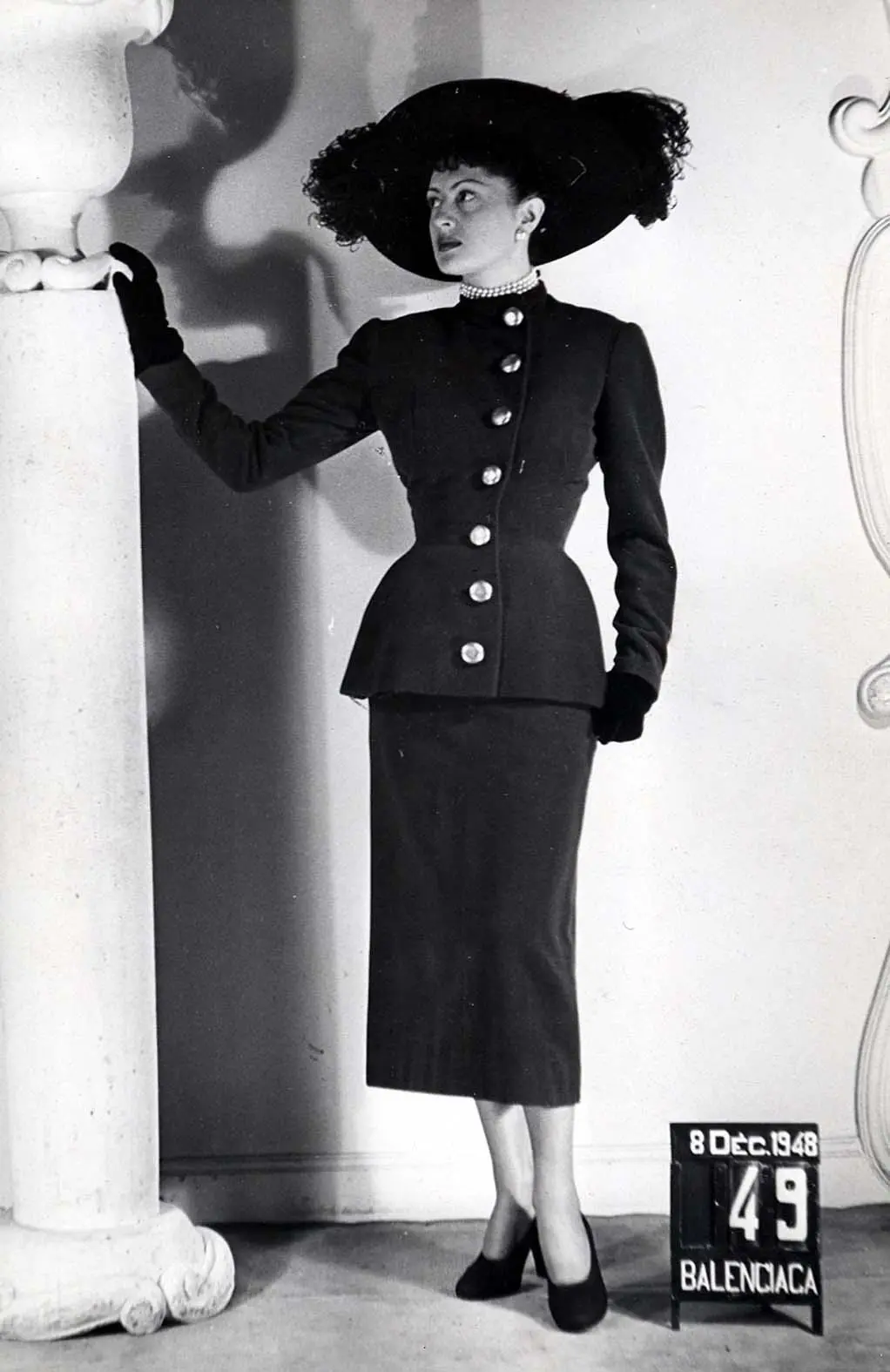
A vintage black and white photograph of a woman model a 1950s Christian Dior suit with a fitted, striped jacket and matching skirt, accessorized with a white hat and black gloves, posing with her arm resting on a white column.
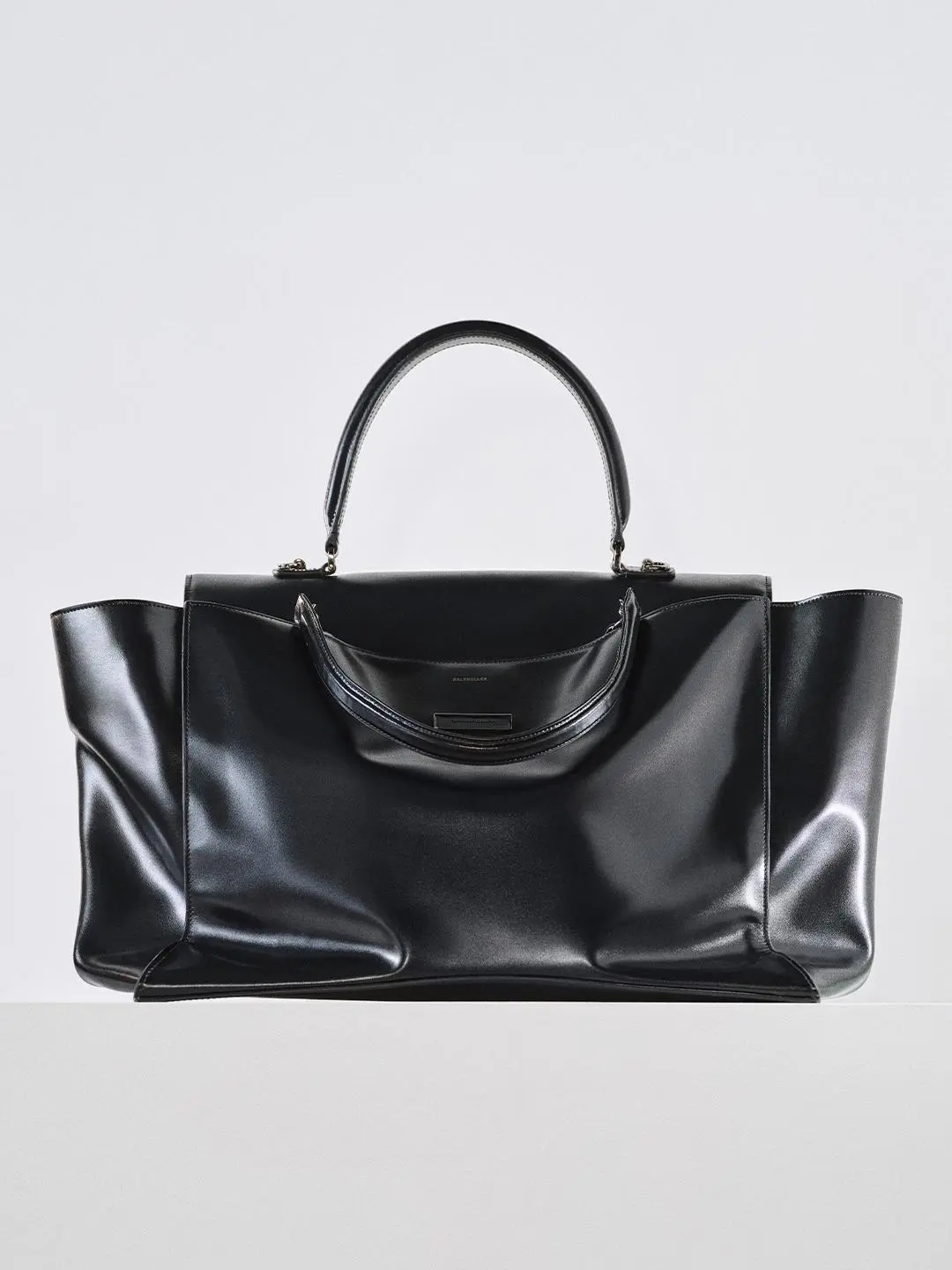
The bag arrives with a practical case for that softness: a hidden second handle for when it’s carry a full day worth of things, a detachable crossbody strap, and an elongated version that swaps the leather strap for a chain. All of it locks under a fold top flap, and all of it points back to a shape Cristóbal Balenciaga worked out nearly ninety years ago, long before anyone thought to put his name on an avenue.
It’s a small thing, an engraving on a lock bar, but it’s also a fairly direct statement of intent from a designer two seasons into a new job. Rather than reach for a logo or a slogan, Piccioli reached for a street address, the kind of detail that only means something to someone who already knows the house’s history. It’s a quieter way of saying the same thing Cristóbal Balenciaga’s tailoring said in 1943: that the shape and the construction should be doing the talking.
stir
The hourglass didn’t start as a bag. It started as a suit.
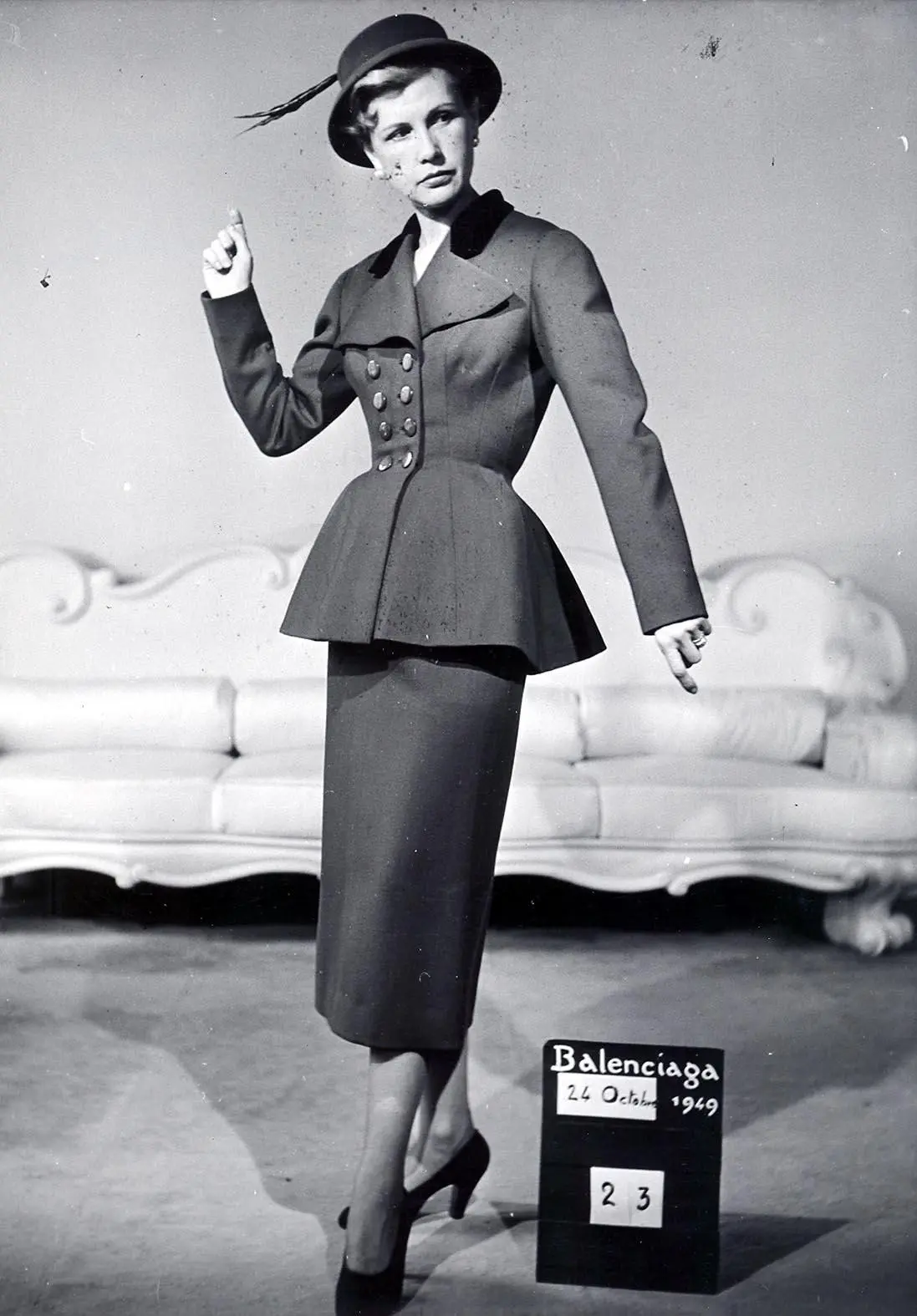
Cristóbal Balenciaga founded his house in San Sebastián in 1917, and the Basque Country’s traditional dress stayed with him long after he expanded those ateliers into Paris’s haute couture scene in 1937. Early Balenciaga collections leaned on that inheritance directly, borrowing motifs like mantilla lace and the structured, doll-like silhouette of Spain’s Infanta-style court dress. By his Summer 1943 collection, those references had sharpened into something new: tailor suits with peplumed jackets that nipped hard at the waist and flared just as hard below it. That sil became one of the house’s defining shapes, and the house started calling it, simply, the hourglass.
The construction behind it was specific. French fashion writers at the time used the word “Basque” to describe a fitted bodice styled after traditional Basque dress, and Cristóbal Balenciaga built his version through internal padding rather than the rigid boning of a corset. Seams were hidden inside the garment in a way that read as restrictive from the outside while leaving the wearer room to move. The house kept returning to the idea for years afterward, stretching it across voluminous jackets, dresses, and coats that extended well past the body’s natural proportions while holding onto that same curved architecture.
Cristóbal Balenciaga closed his own house in 1968 and never gave another interview about his methods, which is part of why later creative directors keep returning to that single Summer 1943 collection whenever they want to point back at the source of the house’s design language. The hourglass isn’t just one shape among many in the archive. It’s treated internally as close to a founding document, the clearest evidence of how its founder thought about volume before anyone called it “architectural.”
That’s the shape Balenciaga eventually applied to a handbag, more than seventy years later.
to
The original Hourglass bag arrived with Balenciaga’s Winter 2019 collection, designed under then creative director Demna. Its most distinctive feature was structural: a sculpted, concave base that curved upward and kept the bag from resting flat, a literal echo of the suspended, waist-cinched form Cristóbal Balenciaga had built into cloth decades earlier. It became one of the house’s signature accessories through the early 2020s, carried everywhere from red carpets to daily errands in leather, croc-embossed, and crystal-covered versions.
Demna led Balenciaga from 2015 until his own departure for Gucci in early 2025, a run that reshaped how the house talked about itself as much as how it dressed people. Under his direction, the Hourglass sat inside a much louder body of work, one built around exaggerated proportions, internet-native humor, and a willingness to court controversy that occasion cover over the clothes themselves. The bag mostly stayed out of that noise, doing its job as a commercial anchor while the runway did something else entirely.
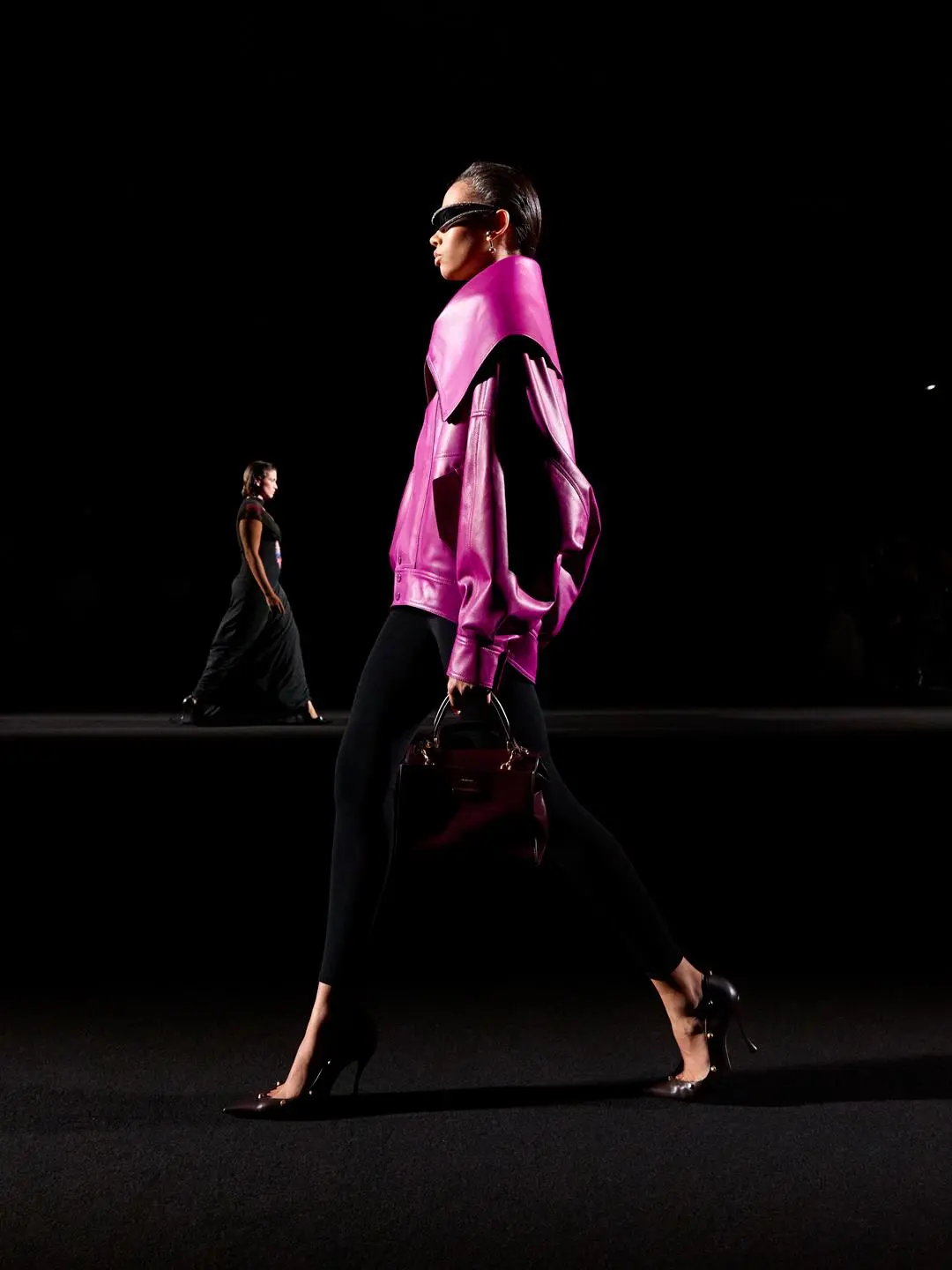
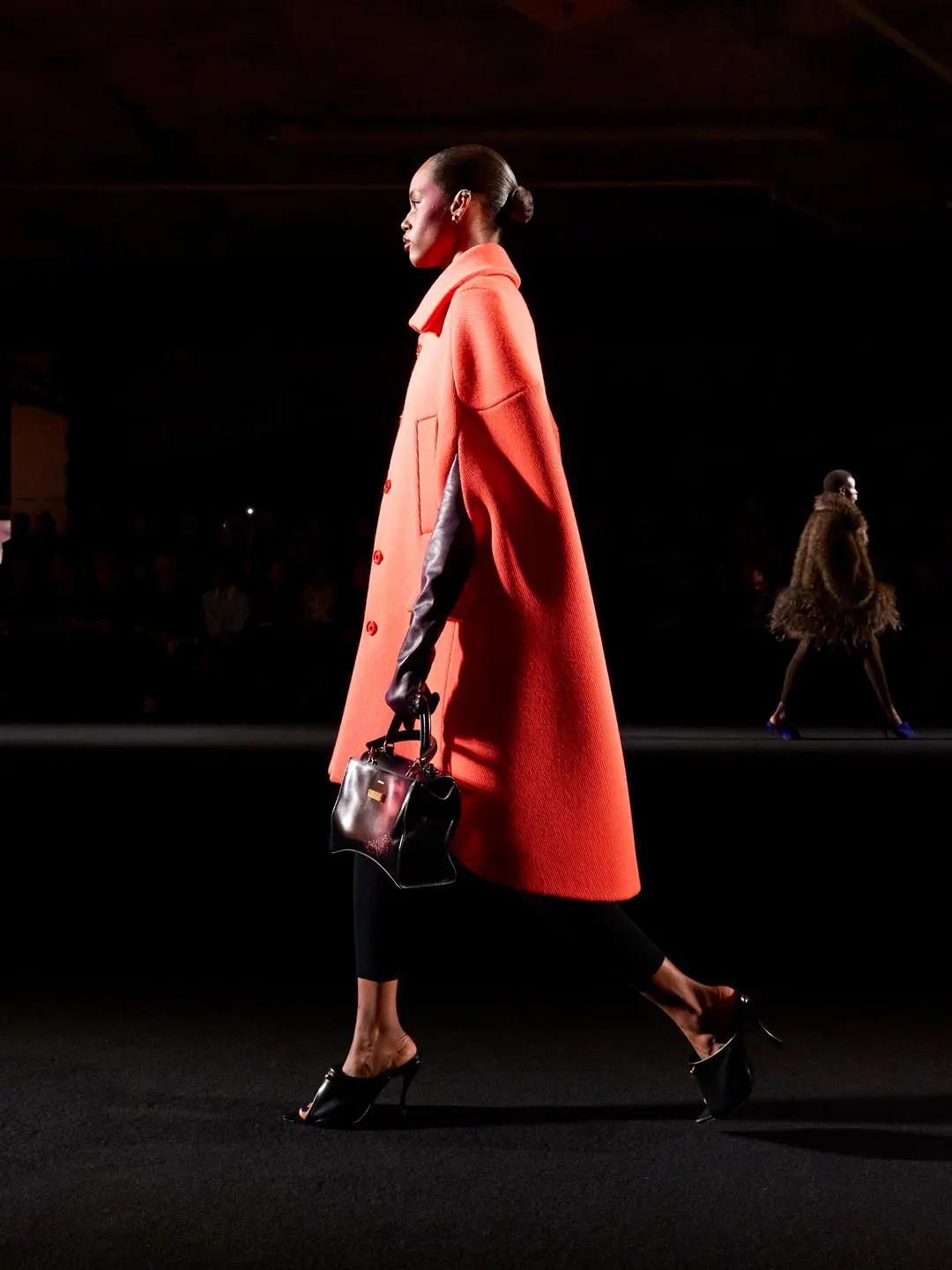
Piccioli inherited that shape when he was named Balenciaga’s creative director in May 2025, arriving after a 25 year run at Valentino (the last nine of them as sole creative director). His Balenciaga debut came for spring 2026, a collection built around a return to Cristóbal Balenciaga’s own methods of construction and form. The Hourglass Avenue belongs to what came next: ClairObscur, Piccioli’s second ready to wear collection for the house, shown March 7, 2026, in a darkened venue at the foot of the Champs-Élysées. The show’s environment was developed with Sam Levinson, creator of HBO’s Euphoria, whose wraparound screens played footage of the moon, ocean waves, and sunsets alongside teasers from the show’s upcoming season. Guests including Winona Ryder, Elizabeth Debicki, and Josh Hutcherson found seats in a room built entirely around the Renaissance painting technique the collection borrowed its name from: the study of volume and depth through contrasts of light and dark.
The Hourglass Avenue, referred to on the runway as the HG Avenue, debuted there alongside two other new silhouettes: the George Bag, which reinterprets the house’s double B emblem, and the Fan Bag, a mid-sized top-handle shape with a relaxed, belted closure. Longtime staples like the Rodeo and Le City also walked, several dressed in the same ombré leather and gradient crystal treatments used across the new bags. Eighty-one looks moved through the space that night, most of them under a single narrow strip of light.
Reviews of the collection leaned warm. AnOther Magazine singled out Piccioli’s tailoring and draped jersey dresses as the show’s strongest moments, describing a noble beauty in the pieces where the light-and-dark idea came through most clearly, even if some of the show’s darker staging made that effect hard to fully see live.
built
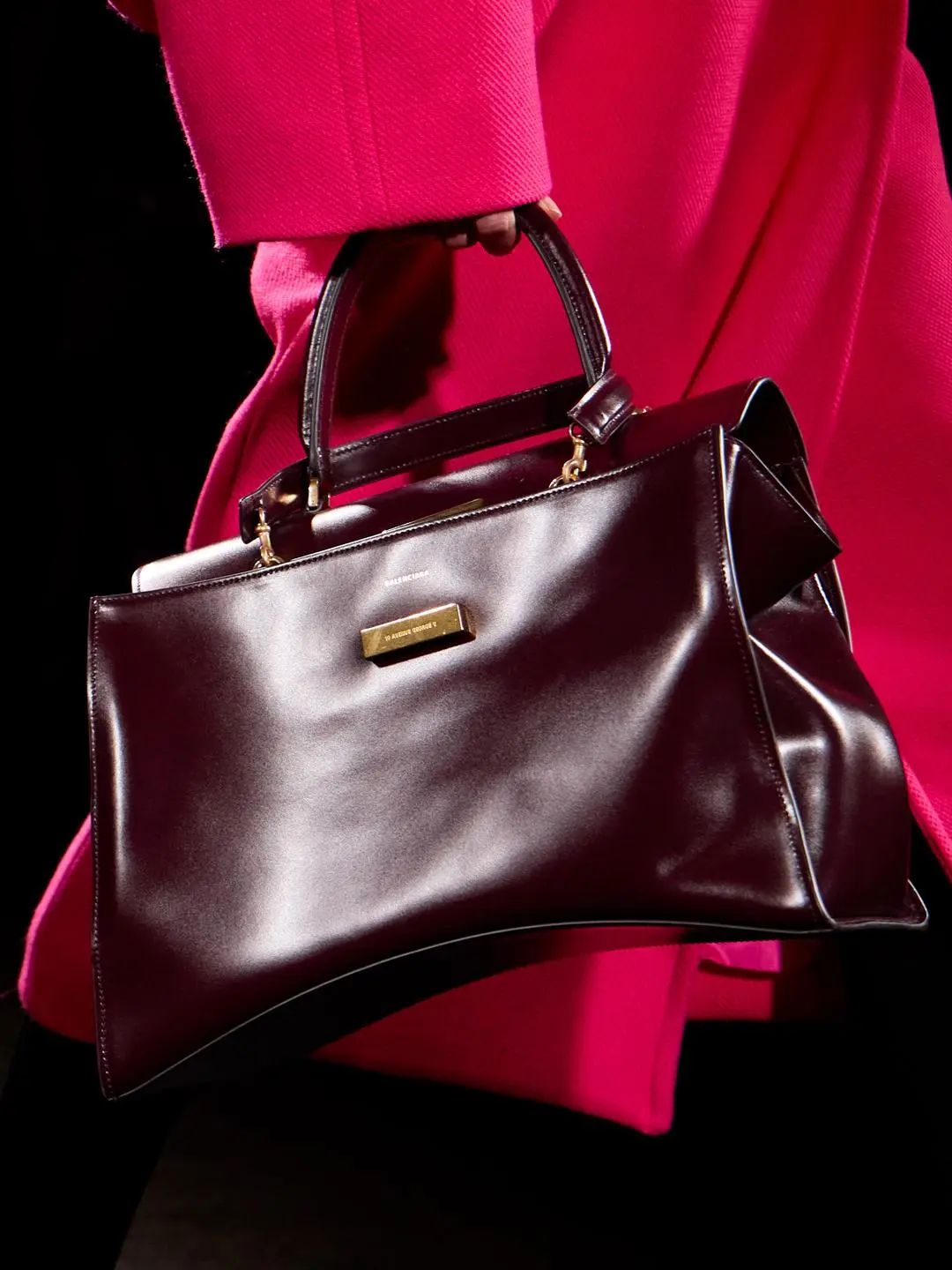
Piccioli’s version of the Hourglass keeps the family’s defining base curve, a rounded profile that still recalls the cinch of a fitted bodice, but applies it to a shape closer to a classic, utilitarian top-handle bag than to the original’s harder architecture. Balenciaga describes the construction as firm and relaxed at once, built to hold the recognizable Hourglass profile without the earlier bag’s rigidity.
View this post on Instagram
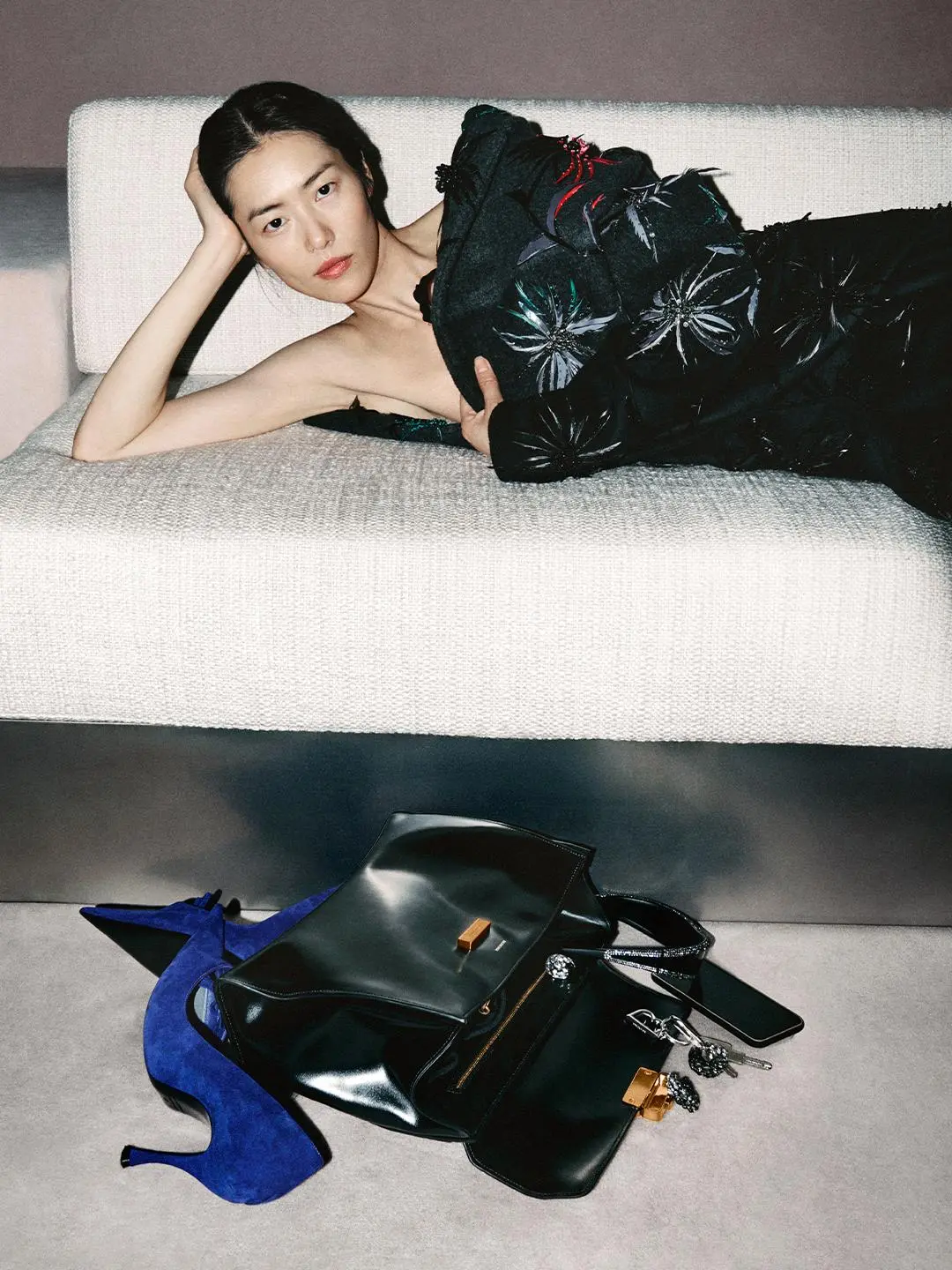
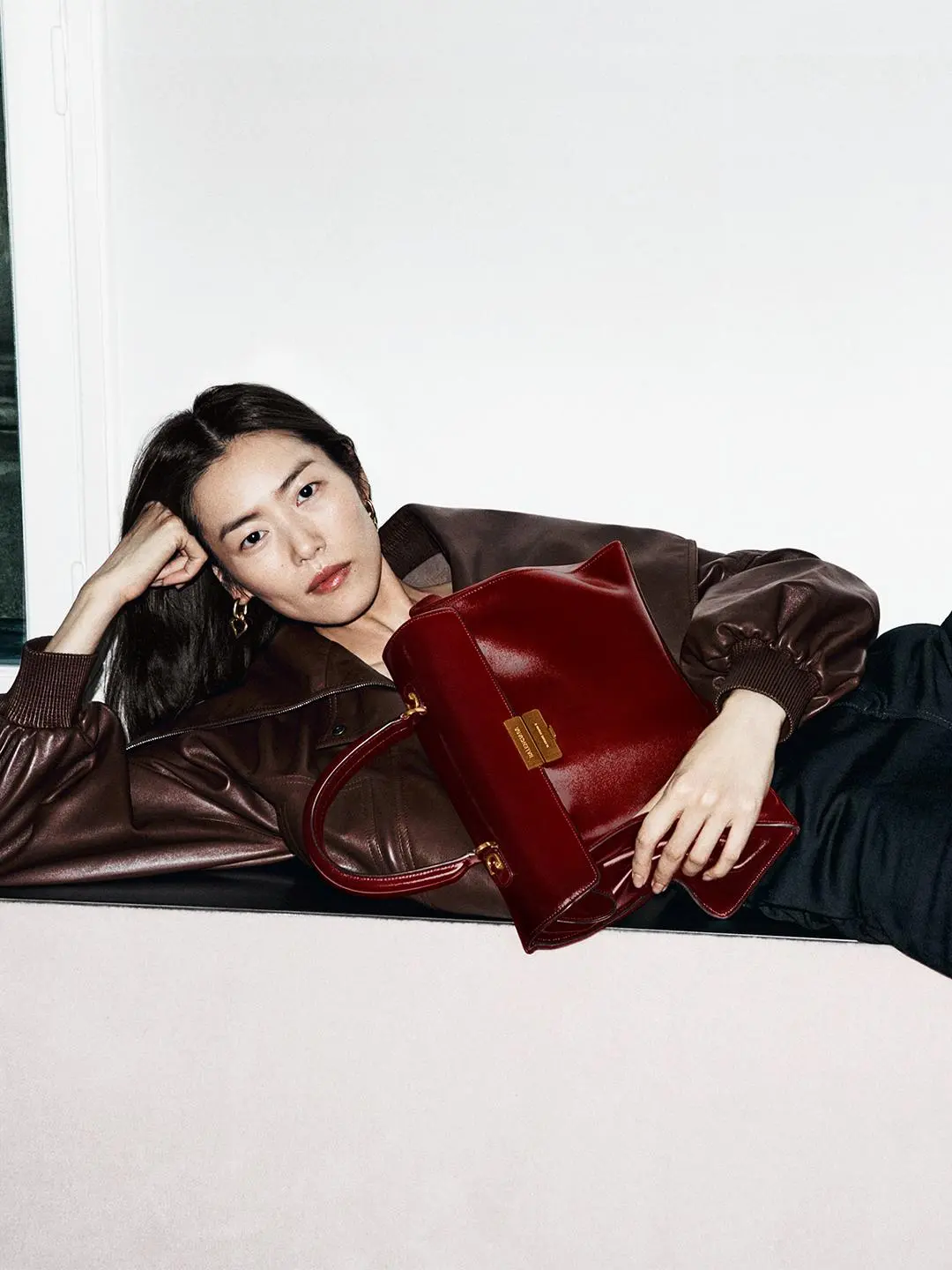
The body is cut from what the house calls reworked box leather, chosen for combining a supple hand feel with real structure. It carries a glossy finish designed to show its own creases as the leather ages and softens through use, a small departure for a house that has historically favored surfaces built to resist wear rather than record it. The hidden second handle sits underneath the main one, ready for days when the bag is fully loaded, while the detachable crossbody strap and the East West version’s chain give it more carrying configurations than the original ever offered. Larger sizes add an internal zippered pocket and an external flat pocket at the back for anything that needs to stay within reach.
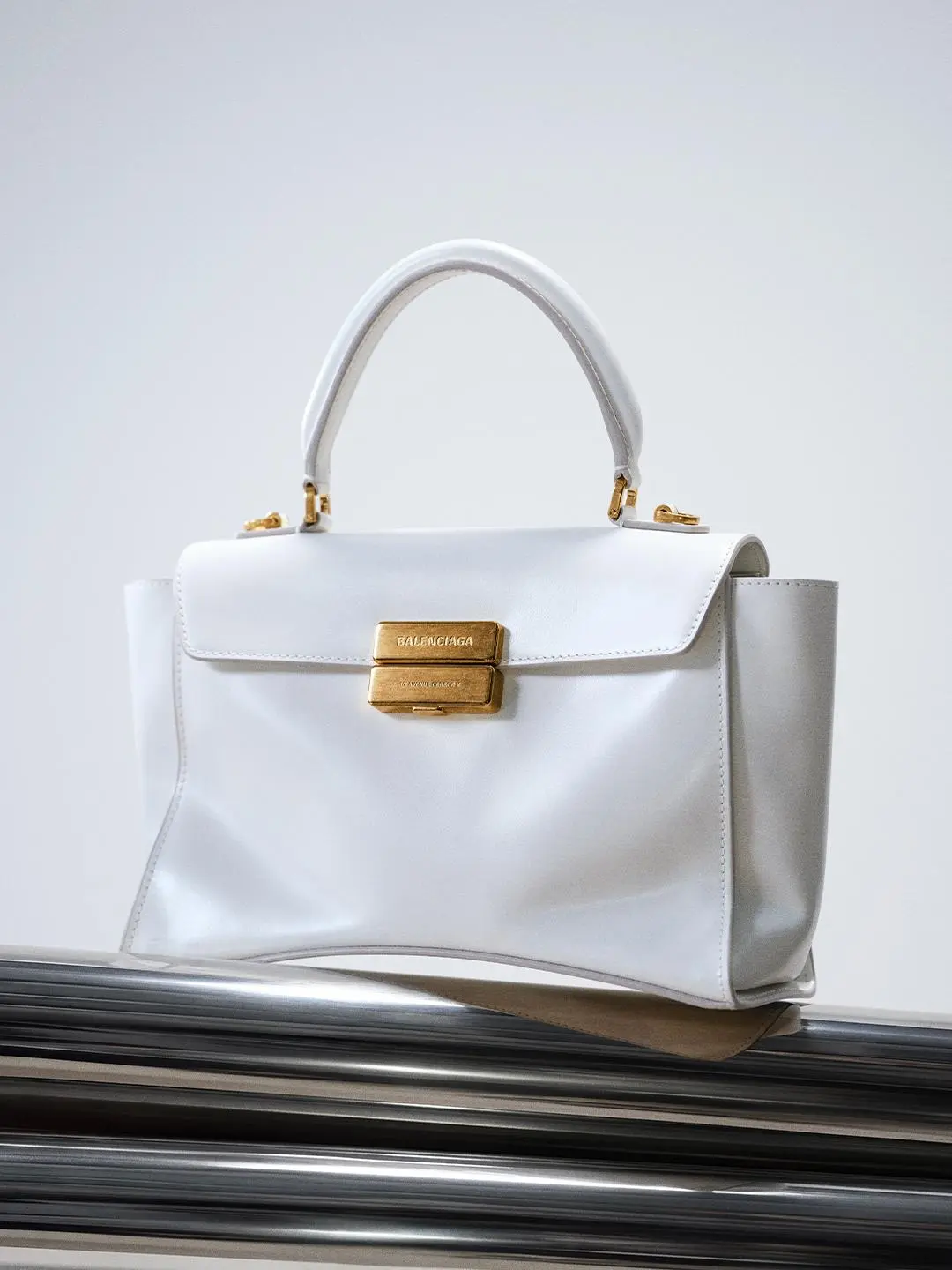
The lock itself does double duty as both closure and signature: two minimal metal bars meet under the folded top flap and carry that Avenue George V engraving, turning what’s usually just hardware into a small piece of house history riding around on someone’s arm.
That’s a departure from how the original Hourglass closed. Earlier versions of the bag relied on a concealed magnetic press-stud under the flap, useful but essentially invisible, doing its job without asking to be noticed. Making the lock itself a legible, engraved object is a small shift in priorities: instead of hiding the hardware, Piccioli is using it to carry the one detail in the entire bag that can’t be mistaken for anyone else’s design.
around
Accessor weren’t an afterthought in ClairObscur. Alongside the Hourglass Avenue, PurseBlog counted ombré leather and gradient crystal treatments running across nearly every bag that walked, including a boxy new take on Le City that had already launched for Pre-Fall. The George Bag carries a reworked version of the house’s double B hardware as its main identity rather than a shape borrow from the archive, while the Fan Bag takes a mid-sized top-handle sil and closes it with a loose, belt wrap instead of a lock.
Set against those two entirely new shapes, the Hourglass Avenue reads less like an experiment and more like a foundation. It’s the one bag in the group with nearly ninety years of house history behind it, and the one built to be worn daily rather than to introduce a new hardware language on its own.
five
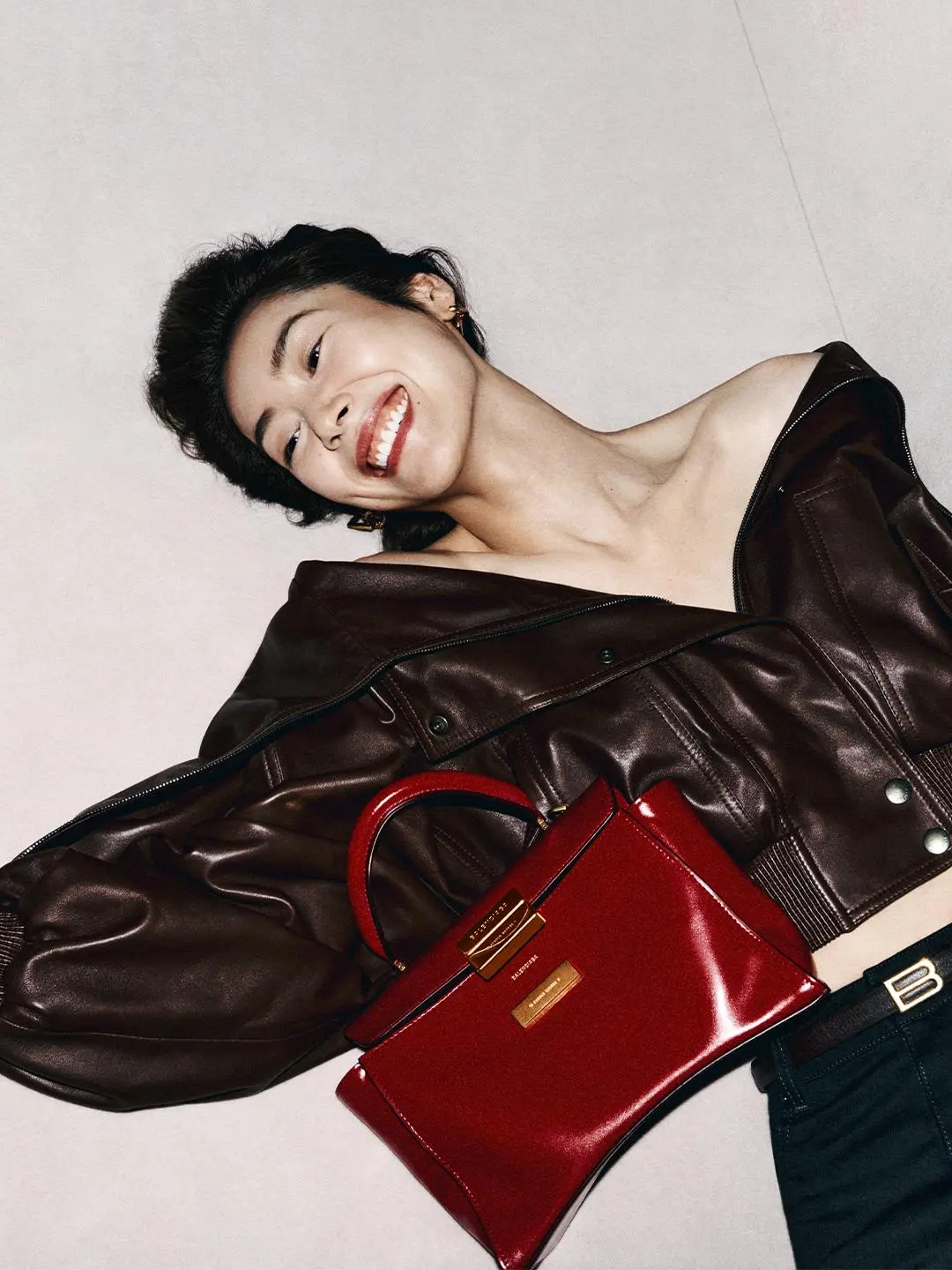
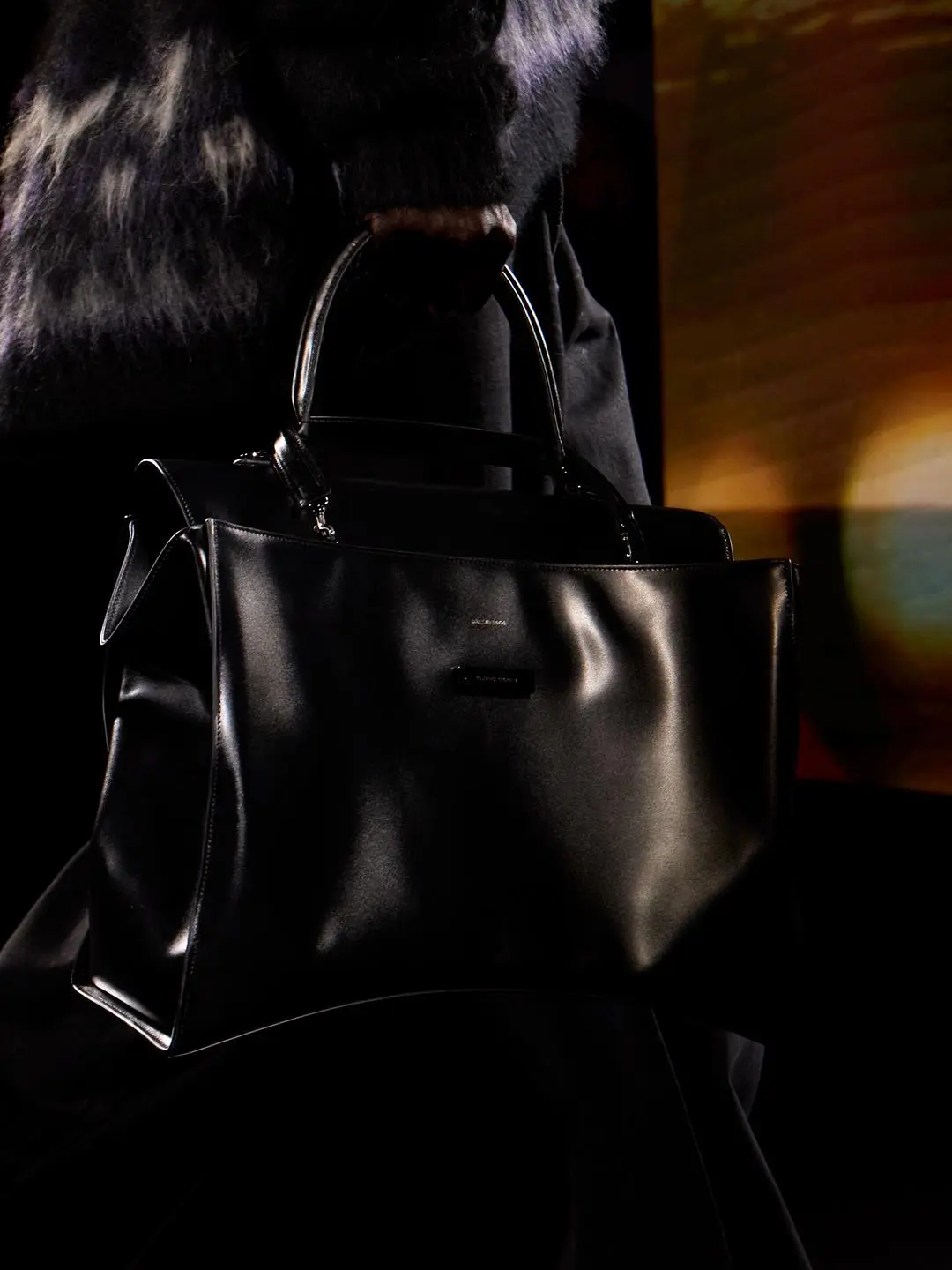
Balenciaga is launching the Hourglass Avenue in five options: black, a deep raisin, a carmine red, snow white, and a photo-printed treatment applied to shiny black box calf. The spread favors depth over brightness, in keeping with the shadow-and-light palette that ran through the entire ClairObscur collection, though the white and photo-printed versions give it at least two louder ways to wear it.
That’s a notably restrained palette for a bag family that has, over the past several years, stretched into glitter, crystal-covered, croc-embossed, python-print, and even solid brass editions running well into five figures. The Avenue’s five-option launch reads more like a leather-and-construction argument than a materials showcase, betting that the shape and the engraved lock can carry the bag on their own rather than needing an exotic surface to do it.
The bag is available now in select Balenciaga stores worldwide and on balenciaga.com, alongside the rest of the pieces that walked in March. Balenciaga has not published pricing for the Hourglass Avenue as of this writing, and none turned up in the house’s own release materials reviewed for this piece.
View this post on Instagram
ready
The Hourglass Avenue had a head start before its official rel. Since the ClairObscur show, the bag has already turned up on actresses Demi Moore and Cynthia Erivo, comedian and actor Rachel Sennott, THE BOYZ member Juyeon, actress Lily Collins, Chinese actress Ma Sichun, and actor Charles Melton. Many of them carried it while attending Balenciaga’s couture show in Paris this past July, months before anyone outside the house’s own guest list could buy one.
Related Articles
Billionaire Boys Club Rewrites the Country Club Dress Code for Fall ’26
A cotton pique polo and a chenille golf patch anchor Billionaire Boys Club’s push into […]