DRIFT AUDIO
Listen to this story
Choose a voice, then press play.
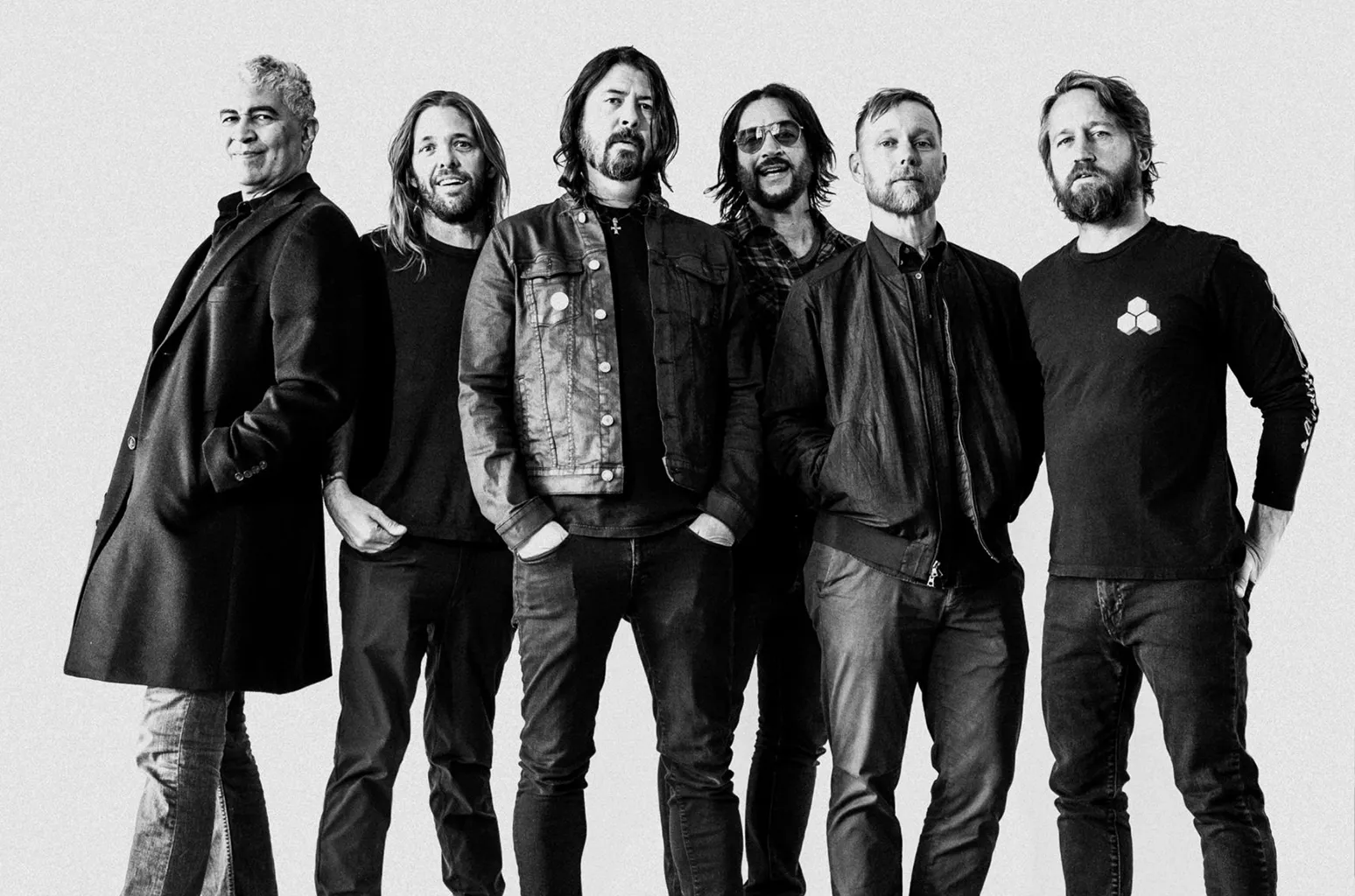
“Caught in the Echo” arrives not as a declarative comeback, but as a controlled recalibration from Foo Fighters. Where the band’s legacy has often leaned into immediacy—hooks, distortion, release—this track resists that instinct. It unfolds slowly, deliberately, positioning itself closer to atmosphere than impact.
There is no rush to define the song within its first moments. Instead, it establishes tone—muted, reflective, and spatially aware—suggesting a band more interested in depth than volume.
HERE IT IS… YOUR FAVORITE TOY!!!
New song out now: https://t.co/5nEmHylbugYour Favorite Toy full album arrives April 24!!!
Pre-order/save: https://t.co/ODTbXSFwLKArt by Morning Breath, Inc. pic.twitter.com/67ejCLNciA
— Foo Fighters (@foofighters) February 19, 2026
stir
The track opens with a restrained guitar figure, soaked in reverb, creating a sense of distance rather than presence. Each note lingers, expanding outward before dissolving. The production is intentional in its sparseness; space becomes an instrument in itself.
As the arrangement builds, additional layers enter with subtle precision—bass anchoring the low end without dominating, percussion arriving almost tentatively. Nothing feels abrupt. Everything is placed.
This architectural approach to sound design marks a shift. The song is not built around peaks and drops, but around accumulation. It grows inward rather than outward.
flow
At the center, Dave Grohl delivers a vocal performance that is notably restrained. Gone is the immediate push toward catharsis. Instead, Grohl holds back, allowing phrasing and tone to carry emotional weight.
His voice sits within the mix rather than above it. This choice alters the dynamic of the song. The vocal becomes part of the environment—another layer within the echo—rather than its focal point.
As the track progresses, there are moments of escalation, but they are measured. The intensity builds through repetition and nuance, not volume.
move
Lyrically, “Caught in the Echo” operates within a framework of memory and recurrence. The central metaphor—echo—functions as both sound and idea. It suggests experiences that continue to reverberate, long after their origin.
There is no clear resolution offered. The lyrics do not seek closure; they circle, return, and reframe. This cyclical structure reinforces the song’s thematic core: that certain emotions do not dissipate, but persist.
The writing is economical, avoiding overt declaration in favor of suggestion. Meaning emerges gradually, much like the music itself.
evolve
Within the broader context of Foo Fighters’ discography, the track signals an evolution. Earlier material often relied on dynamic contrast—quiet verses erupting into loud choruses. Here, the band operates within a narrower range.
This is not a limitation, but a choice. By compressing the dynamic field, the band shifts focus toward texture, tone, and progression. The result is a different kind of intensity—one that accumulates rather than explodes.
There are echoes of past work, particularly in the band’s more introspective moments, but they are reframed. Familiar elements are present, but their function has changed.
engineer
The production struck a central role in shaping the song’s identity. Reverb and delay are not used as embellishments, but as structural components. Sounds overlap, decay, and interact, creating a sense of depth that extends beyond the immediate listening experience.
This approach reinforces the thematic focus on resonance. The listener is not simply hearing the song; they are experiencing its afterimage.
The mix prioritizes cohesion over separation. Instruments blend into one another, forming a continuous sonic field rather than discrete parts.
show
This release suggests a band reconsidering its own parameters. Rather than reinforcing established expectations, Foo Fighters explore a quieter, more controlled space.
There is confidence in this restraint. It indicates a willingness to evolve without abandoning identity. The core elements remain—melody, structure, emotional clarity—but they are deployed differently.
“Caught in the Echo” does not reject the past. It reframes it.
fin
The nostalgic hype behind the band stands as a subtle but significant shift. It prioritizes depth over volume, atmosphere over immediacy, and resonance over release.
From the DRIFT archive: Central Cee’s “Booga” Pushes His Sound into a Sharper, More Self-Assured Era
Related Articles
Boldy James in Orbit With “Flowers at the Bezzle”
Detroit's most unhurried storyteller and a New York wildcard split under three minutes of Real Bad Man production, the advance single from Strobe Light.