
DRIFT AUDIO
Listen to this story
Choose a voice, then press play.
The Skate Film That Shredded Convention
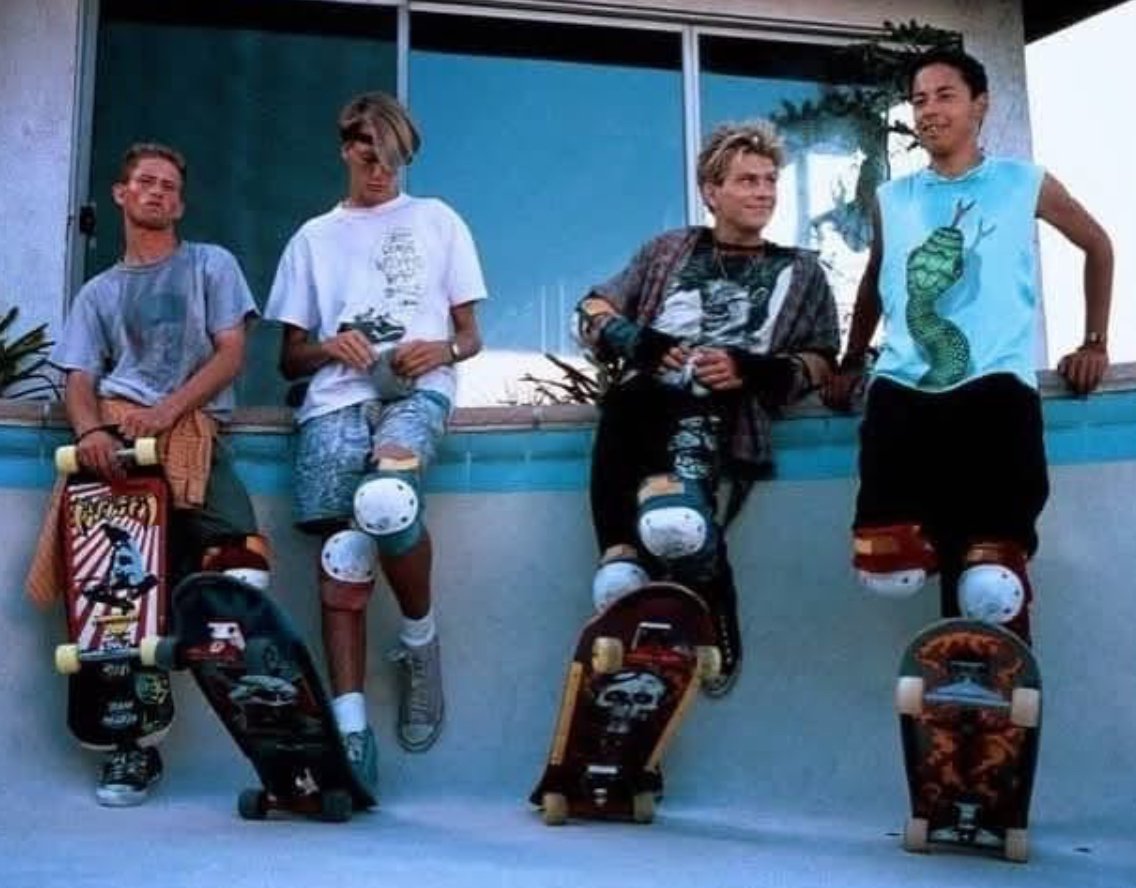
In 1989, a film was released that was too punk to be a blockbuster, too stylish to be a documentary, and too ahead of its time to be fully understood. Gleaming The Cube, directed by Graeme Clifford and starring Christian Slater, Max Perlich, Tony Hawk, and Tommy Guerrero, was marketed as a teen thriller, but beneath its surface, it was a snapshot of skateboarding at its cultural peak, and an early attempt to bring authentic skate life into the Hollywood frame.
What emerged was a film that, while not a box-office hit, became a cult classic. It offered the world a vision of California skate subculture told through the lens of cinematic tension and personal transformation. Most importantly, it brought real skaters onto the screen—not just as stunt doubles, but as characters and cultural icons.
The Plot: Thriller Meets Street-Style
At its core, Gleaming The Cube follows Brian Kelly (Christian Slater), a disaffected Orange County skater who gets pulled into a dark conspiracy following the mysterious death of his adopted Vietnamese brother. Brian’s transformation—from rebellious teenager to underground detective—unfolds in parallel with his connection to skating. He uses his board not just as sport, but as escape, expression, and resistance.
The film’s narrative loosely mirrors classic detective structures, but its true resonance comes through its setting: empty pools, suburban overpasses, garage ramps, strip-mall plazas, and that unmistakable Southern California light.
Casting Skate Credibility: Tony Hawk, Tommy Guerrero, and Max Perlich
What separated Gleaming The Cube from other youth-focused films of the ’80s was its casting of actual skaters, not just actors mimicking movement. Director Graeme Clifford, with guidance from skate legend Stacy Peralta (who served as second-unit director and technical advisor), made a deliberate decision to cast from the scene.
- Tony Hawk, just on the cusp of his first wave of superstardom, plays Buddy, one of Brian’s tight-knit skate crew members. Hawk doesn’t deliver long monologues, but his physicality, presence, and style radiate authenticity.
- Tommy Guerrero, another foundational figure from the Bones Brigade, plays Sam, another friend in the crew. Guerrero’s calm demeanor and unmistakable riding style ground the group in street-level credibility.
- Max Perlich, a breakout star from Drugstore Cowboy and Ferris Bueller’s Day Off, delivers an effortlessly natural performance as Yabbo, the offbeat friend who adds levity and balance to the film’s more dramatic turns. His skater-adjacent energy and comic timing made him an anchor for the crew’s on-screen dynamic.
Together with Slater’s moody lead, these four personalities form a portrait of late-’80s California youth—obsessed with independence, skating as rebellion, and the ever-present grind of identity.
Skating as Cinematic Language
While the film operates within a conventional mystery-thriller plot, its visual style borrows more from skate videos than noir tropes. Thanks to Stacy Peralta’s influence, Gleaming The Cube integrates dynamic camera movements, fish-eye lens perspectives, and long takes of uninterrupted riding—techniques familiar to anyone who grew up watching VHS skate tapes from Powell-Peralta or Santa Cruz.
There’s no attempt to glamorize the skating—it is presented raw, dangerous, and joyful. Slater’s character bombs hills at midnight, skates through construction sites, and drops into suburban bowls with the kind of abandon that can’t be faked.
In one standout moment, Hawk and the crew fly through a sequence under a freeway overpass, seamlessly blending narrative urgency with style. It’s a moment that lingers long after the plot has moved on.
The Title: What Does “Gleaming The Cube” Even Mean?
The phrase itself—“Gleaming the Cube”—originated from a 1983 Thrasher Magazine article that spoke cryptically about pushing style to its outer edge. In the film, it’s loosely defined as pushing one’s boundaries until everything is in perfect alignment, a metaphor that fits both skating and Brian’s emotional journey.
It’s a nonsensical phrase made sacred by skaters. Like “shralping” or “boneless,” it was never meant to be understood by the mainstream. It was a code word—a secret handshake, a joke that became doctrine. By titling the film this way, the filmmakers signaled they weren’t just mining skate culture—they were speaking to it.
The Fall Out: From Box Office Shrug to Cult Classic
When Gleaming The Cube first hit theaters, it landed quietly. Critics were confused, unsure whether to treat it as teen fluff or serious drama. Skate fans were divided, skeptical of any Hollywood interpretation of their sacred culture. But over time, something happened.
The film started appearing in bootleg skate shops, replayed on late-night cable, traded in underground VHS circuits. Kids discovered it not as a thriller, but as a time capsule—a visual map of how skating looked, sounded, and felt in 1989.
In retrospect, it served as one of the earliest films to:
- Showcase skaters as artists, not criminals
- Document the aesthetics of skate fashion—trucker hats, puffy high-tops, acid-washed denim
- Highlight the architecture of skate terrain—schools, curbs, abandoned pools
- Give real skaters screen time on their own terms
Its legacy has only grown, especially as Tony Hawk became a multi-generational icon and Christian Slater found his place as one of Gen X’s defining actors.
Impression: More Than a Movie, It Was a Movement
Looking back from 2025, Gleaming The Cube feels more relevant than ever. In an age where skateboarding is in the Olympics, where bespoke brands co-opt skate style, and where streaming culture mines nostalgia with surgical precision, this 1989 film remains beautifully unpolished.
It wasn’t perfect. But it was honest. It captured a subculture in motion—before it was branded, before it was edited for global palatability. With Max Perlich’s quirky realism, Tony Hawk’s inimitable ride, Tommy Guerrero’s cool defiance, and Christian Slater’s emotional arc, it told a story that was part fiction, part truth, and fully alive.
And that’s what skateboarding has always been about: risking the fall, trusting the movement, and gleaming whatever cube the world throws your way.
Related Articles

Garage Italia’s Electric Spiaggina Puts the Fiat 500’s Riviera Years on Battery Power
Ten kilowatts, rattan seats and a €85,000 starting price: Garage Italia's 500 Spiaggina rebuilds Ghia's 1958 beach car for the yacht crowd.