DRIFT AUDIO
Listen to this story
Choose a voice, then press play.
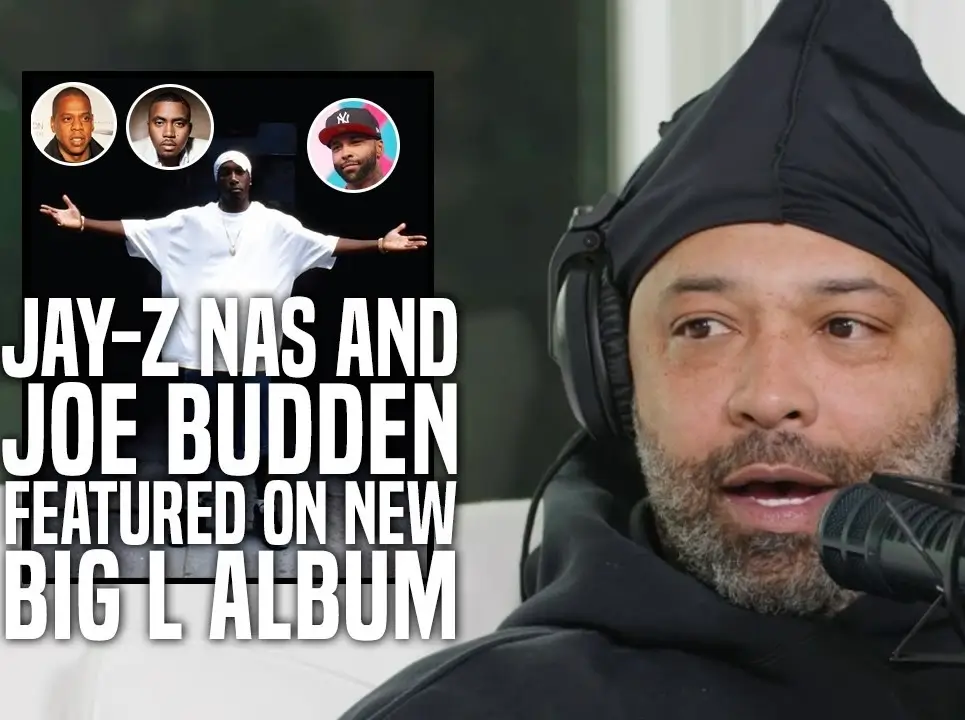
When it comes to rap commentary, few circles spark as much spirited debate as The Joe Budden Network. In their latest episode, the crew turned their focus toward one of the most anticipated and emotionally charged releases in years — the posthumous Big L album, a project featuring a who’s-who of hip-hop royalty, from Jay-Z and Nas to an unexpected appearance by Budden himself. What unfolded wasn’t just a review — it was a culture autopsy: an exploration of legacy, respect, and how a Harlem icon’s unfinished story is finally being told in 2025.
flow
Big L’s death in 1999 left an open wound in New York hip-hop — one filled with speculation about what could’ve been. His wordplay, agility, and flair for intricate storytelling had earned him comparisons to the likes of Big Pun and early-era Jay-Z. Fans had always wondered what a fully realized studio project would sound like if L had lived into the streaming era.
That question has finally been answered. The new posthumous album, meticulously curated by L’s brother Donald Phinazee alongside a team of original Diggin’ In The Crates (D.I.T.C.) members and contemporary producers, brings the Harlem MC’s verses to life with modernized production, archived freestyles, and a handful of new guest verses from artists who were either peers or disciples.
The release comes with heavy expectations — the kind of weight that only a name like Big L can carry. And if there’s one crew equipped to dissect that gravity, it’s Joe Budden and company.
reception
From the moment the podcast began, there was a sense of respectful tension. Joe, Ice, Ish, and Parks sat in the studio, each approaching the topic from a different emotional angle. Budden opened the floor with a statement that set the tone:
“It’s sacred ground, man. You don’t play around with a Big L record. You don’t update Big L — you preserve him.”
That line became the thesis for much of the discussion. The crew acknowledged how rare it is for a posthumous project to maintain artistic integrity while also appealing to modern ears. They cited examples ranging from Pop Smoke’s “Shoot for the Stars” to Mac Miller’s “Circles,” exploring how each handled legacy differently.
For Parks, the engineer and lifelong D.I.T.C. fan, the conversation was deeply personal. He noted how the mixing on the album managed to retain that ‘90s punch without feeling dated — crediting longtime collaborators like Showbiz for keeping the sonic DNA intact. Ice, meanwhile, focused on the lyrical interplay, highlighting how seamlessly Nas and Jay-Z approached their verses in tribute mode, rather than competition.
View this post on Instagram
nostalgia
The crew zeroed in on a handful of songs that defined the project’s emotional range. One in particular — “Back to 139th”— featured a spine-tingling sample of L’s 1998 “Ebonics” performance layered beneath a new verse from Jay-Z. It wasn’t just nostalgia; it was a full-circle moment. Budden described it as “the handshake that never happened in life,” a moment where two paths that once diverged finally crossed again.
Then came “Heaven For the Real Ones”, a reflective track featuring Nas and a digitized hook from L’s original freestyle tapes. Ish called it “the most grown-man record Big L never made,” noting how the production captured both the grit of Harlem stoops and the melancholy of lost potential.
But the biggest surprise was the track “Legacy Check”, featuring Joe Budden himself — a verse written and recorded specifically for this project. In it, Budden raps about survivor’s guilt, the pitfalls of fame, and the burden of critique — themes that mirrored his podcast persona. The irony wasn’t lost on anyone in the room.
“That verse hit harder because Joe’s always been the dude to speak to the uncomfortable,” Ice remarked.
“He didn’t try to out-rap L — he talked to him. That’s different.”
bal
The crew gave high marks to the album’s production, describing it as “grimy meets polished.” Parks broke down the engineering choices — analog saturation blended with digital clarity — that allowed the old L verses to sit comfortably beside modern features. The soundscape ranges from boom-bap drum loops to atmospheric soul samples, even a trap-tinged beat on the track “Rebirth in Harlem.”
Budden called it “the most balanced posthumous mix I’ve heard since Pac’s ‘Loyal to the Game’ — except this time they didn’t over-modernize.” That restraint, he said, preserved L’s cadence, allowing his rhymes to breathe instead of competing with excessive instrumentation.
The conversation also touched on the emotional weight of finishing another artist’s sentence — how producers, engineers, and curators become surrogate storytellers. Parks revealed that certain verses were pieced together from four-bar fragments, a painstaking process that took months of restoration.
harlem
As the episode neared its end, Budden turned introspective. He reflected on what Big L represented for an entire borough: Harlem’s swagger, intelligence, and street poetry embodied in one voice. The discussion became less about the album and more about what it means to keep a legend alive.
Ish drew a powerful comparison: “Big L is Harlem’s Basquiat — gone too soon, misunderstood while he lived, celebrated by everyone afterward.” Ice nodded, adding that this project serves as a blueprint for how to handle posthumous art with dignity — something hip-hop often struggles with.
They also discussed the cultural ripple effect: younger fans discovering L through streaming, TikTok snippets, and social media retrospectives. Parks argued that, for the first time, a posthumous hip-hop release feels curated for generational continuity rather than nostalgia.
impression
In his trademark reflective tone, Joe Budden ended the episode with a monologue that summarized the emotional gravity of the discussion:
“You can’t measure legacy in sales, streams, or charts. You measure it in how many people still feel you. Twenty-five years later, Big L still moves the room. That’s immortality.”
The room fell silent — a rarity on the JBN. For all the humor, tension, and opinion that fuels the show, moments like this remind listeners why Joe Budden’s platform matters: it’s one of the few spaces where hip-hop is treated as both art and archive.
Big L’s posthumous album may be a product of modern engineering, but as the podcast proved, his essence remains untouchable — raw, sharp, and entirely New York.
Related Articles
Two Chicago Lifers, One Wave: Kaicrewsade and Luke Titus on ‘#SWAG SURF’
Kaicrewsade's new album RAINBOW_ arrived on October 14, and its second track pulls in Chicago drummer and singer Luke Titus.