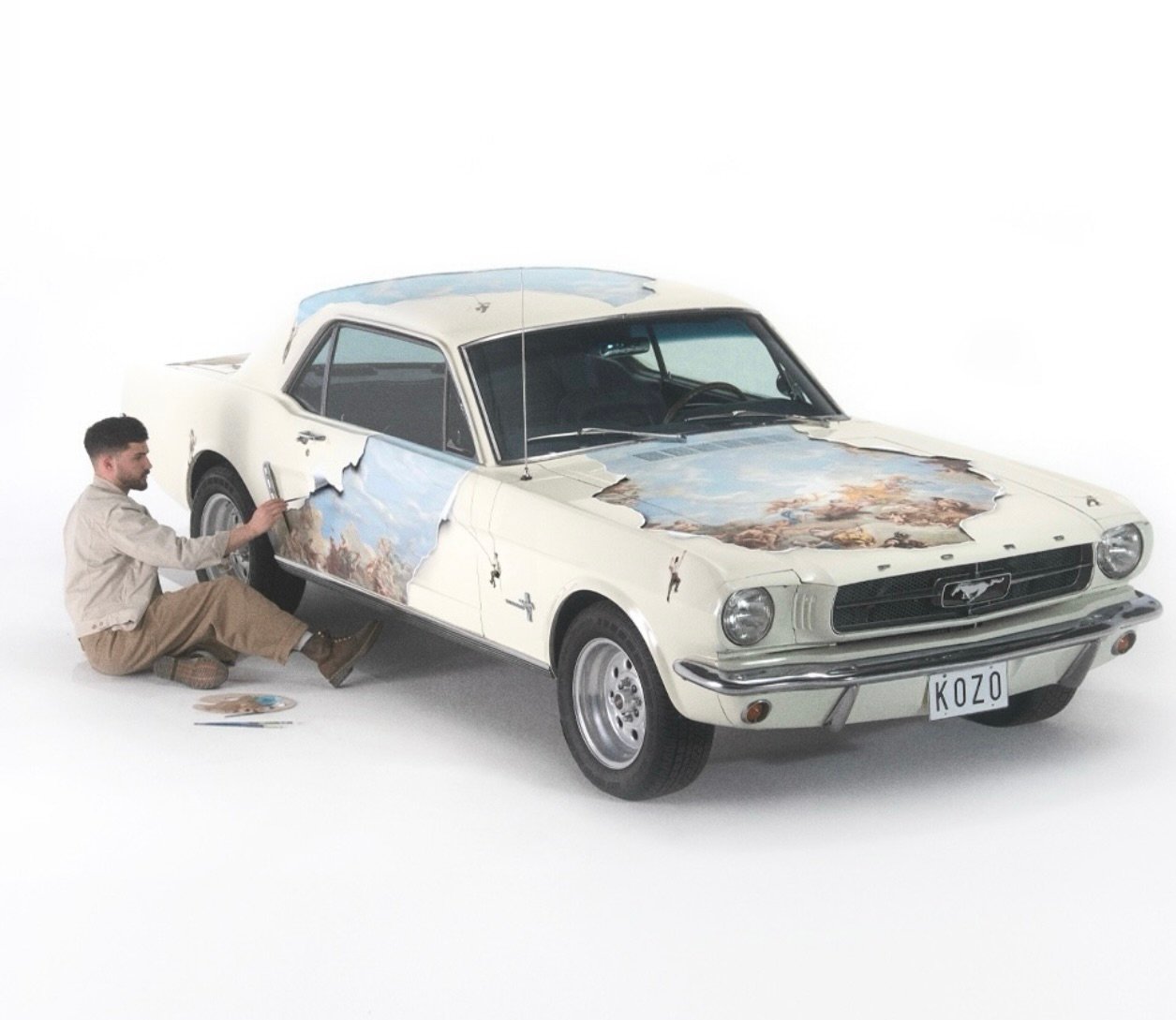
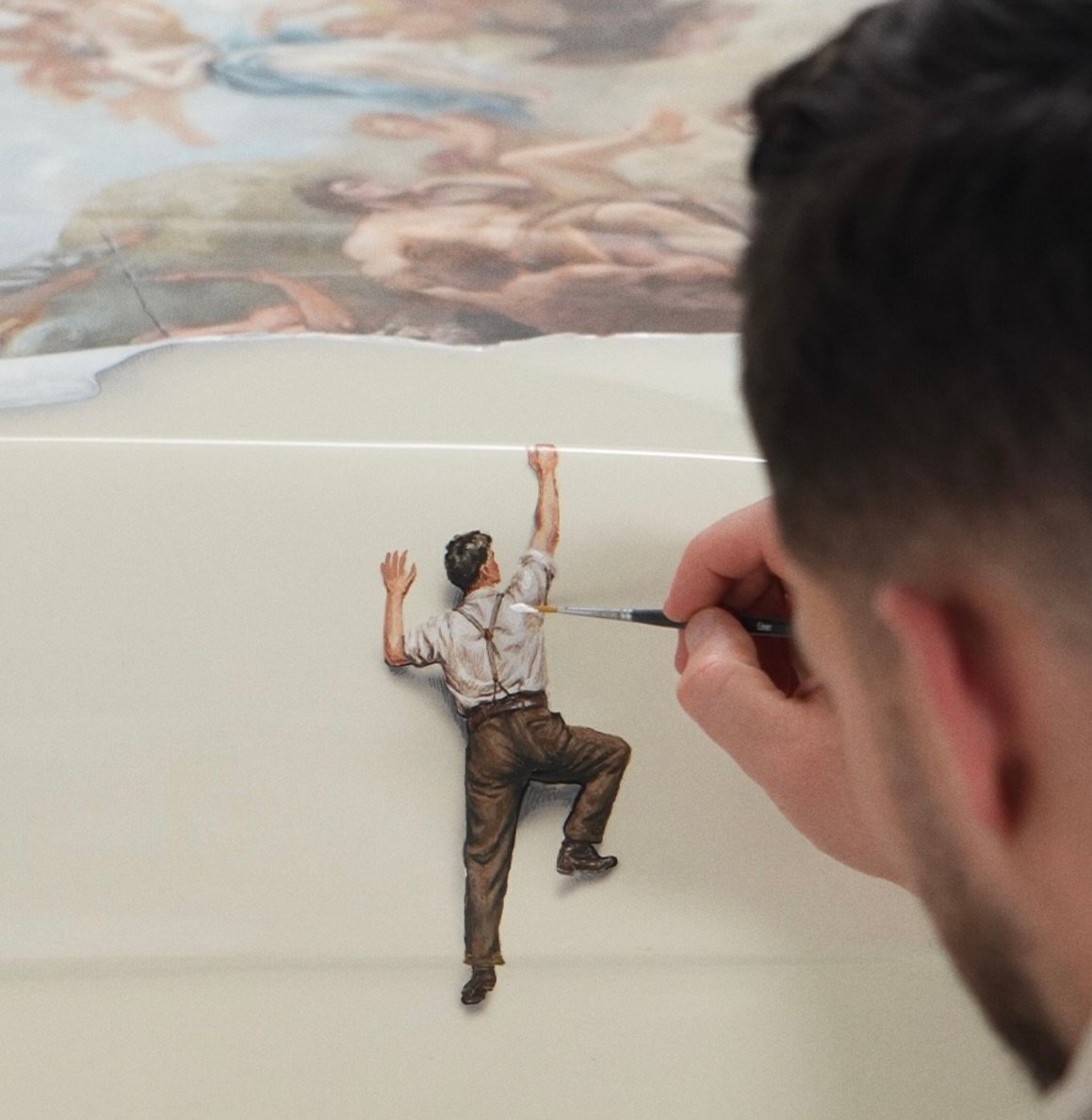
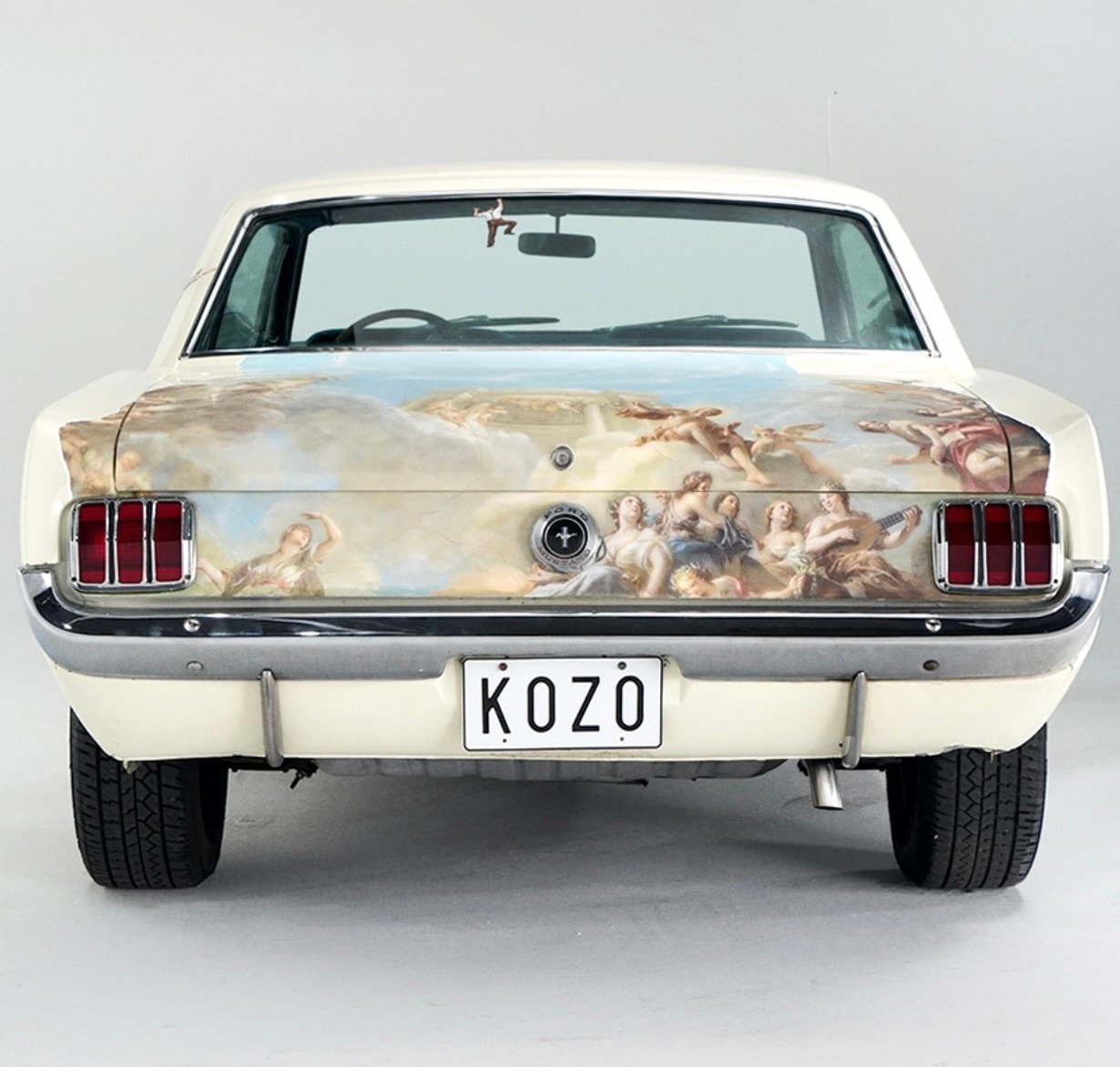
In the middle of New York City’s West Village, where cobblestone streets meet cutting-edge creativity, CART Department is set to unveil one of 2026’s most ambitious artistic fusions. On May 15, 2026, “Permanent Impermanence” — the latest project from renowned tattoo artist and contemporary visionary Kozo (@kozo_tattoo) — opens at Free Parking NYC, located at 16 Morton Street. This exhibition transforms a 1967 Ford Mustang Coupe into a mobile reinterpretation of The Apotheosis of Hercules, the iconic ceiling fresco from the Salon d’Hercule at the Palace of Versailles.
What began as a tattoo artist’s fascination with skin as canvas has evolved into a 500+ hour odyssey across steel, leather, and cultural memory. CART Department (@cartdept), a platform dedicated to celebrating the automobile as an art object, provides the unique stage. This isn’t just an art car — it’s a philosophical statement on permanence, decay, labor, and transcendence.
stir
Eden Kozokaro, known globally as Kozo, emerged from Israel’s vibrant tattoo scene and has since built a career that bridges fine art and body modification. With over one million Instagram followers, he pioneered colored micro-realism — hyper-detailed, photorealistic tattoos rendered in vibrant hues that blur the line between painting and ink. His early breakthrough came with a tattoo of The Persistence of Memory, proving that the human body could host Old Master complexity.
Kozo’s style draws from masters like Rembrandt, Vincent van Gogh, and Jacques-Louis David, but he infuses them with pop culture, surrealism, and modern narrative. He doesn’t just copy; he reinterprets. Moving beyond skin, Kozo translates designs onto canvas, marble, and now automotive surfaces, often incorporating a coil tattoo machine directly into the creation process. Needles embedded in the final works serve as signature elements, reminding viewers of the painful, intimate act of marking something forever.
His practice explores storytelling through emotion, history, and technique. In “Permanent Impermanence,” Kozo brings this ethos to an unlikely canvas: a classic American muscle car. The choice feels deliberate — a 1967 Mustang embodies raw power, freedom, and American optimism, now layered with 18th-century French grandeur and the ephemeral nature of tattoo art.
flow
François Lemoyne (1688–1737) created L’Apothéose d’Hercule as the ceiling for the Salon d’Hercule, one of the largest canvas ceilings in Europe at approximately 480 square meters (over 5,000 square feet). It depicts around 142 figures in a dramatic, cloud-filled ascent: Hercules, having completed his legendary labors, arrives at Mount Olympus in a chariot. Jupiter offers him marriage to his daughter Hebe, while gods, virtues, and defeated vices swirl in baroque splendor.
Lemoyne painted it on canvas before installation, a technical feat that allowed precise perspective control. The work symbolized Louis XV’s power and the triumph of virtue over chaos. Tragically, Lemoyne committed suicide just months after completion, adding layers of impermanence to an otherwise eternal-seeming ceiling.
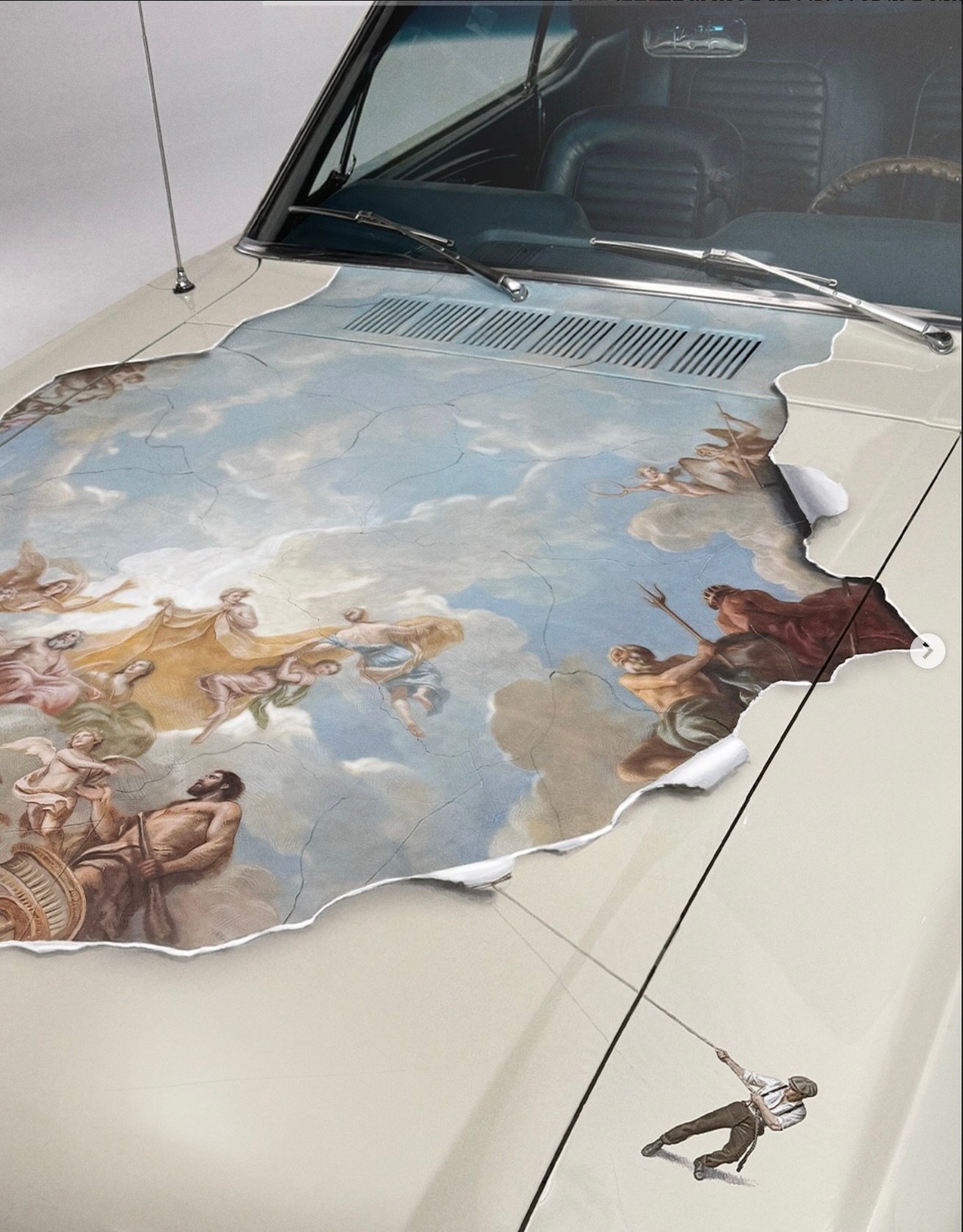
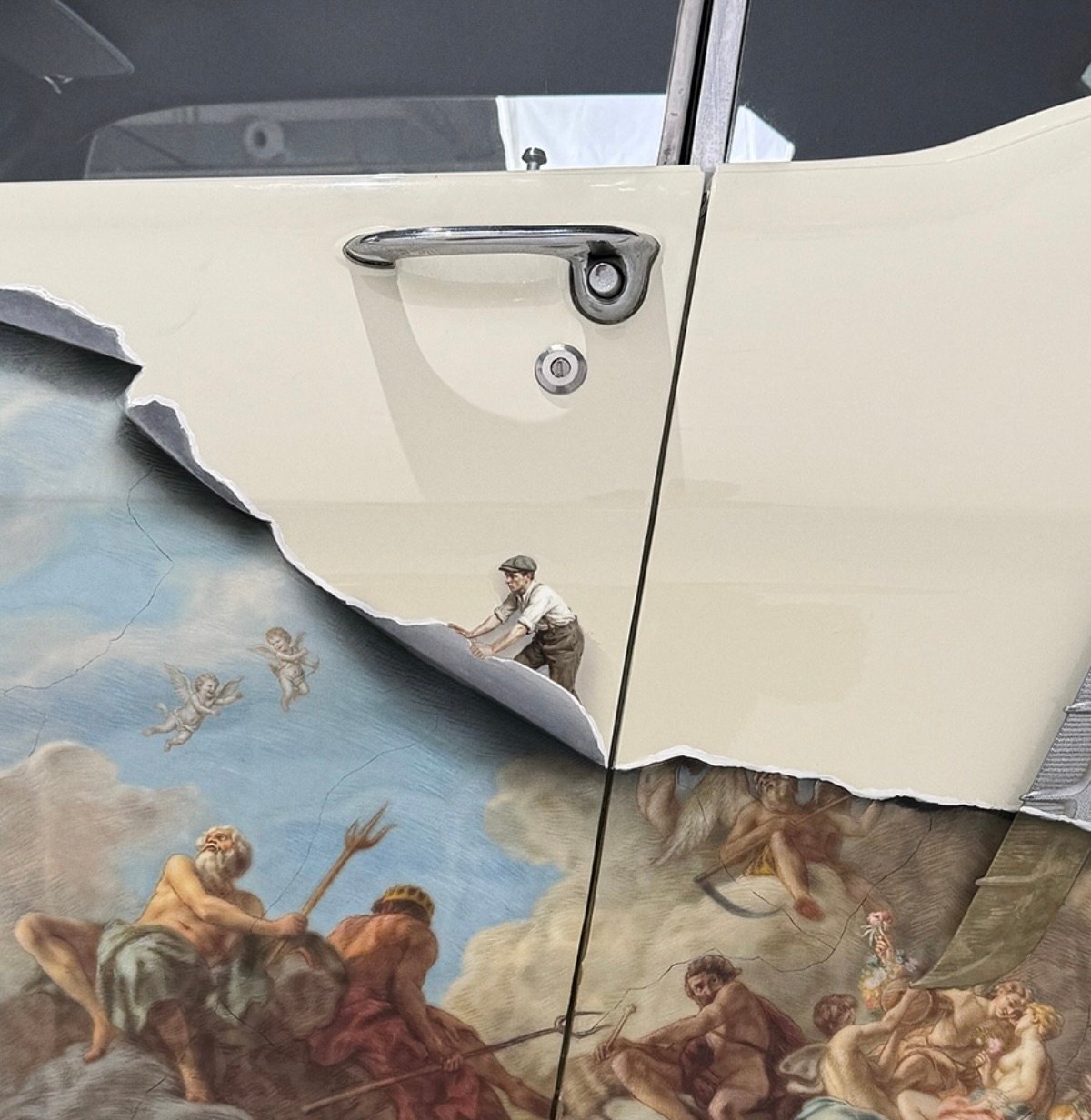
Kozo’s reinterpretation doesn’t merely replicate this ceiling. He adapts it to the contours of the Mustang’s body — hood, roof, doors, trunk — creating a dynamic, three-dimensional narrative that moves with the vehicle. The muscular lines of the 1967 Coupe become Herculean forms; chrome details catch light like divine rays piercing clouds.
scope
The project demanded more than 500 hours of meticulous work. Kozo and his team treated the Mustang like a living skin: priming, layering, and tattooing directly where possible. The exterior features hyper-detailed scenes from the Apotheosis — billowing clouds rendered in micro-gradients, muscular figures with tattoo-like shading, and symbolic elements like lions (Hercules’ Nemean lion) integrated into the car’s aggressive stance.
Color plays a central role. Kozo’s signature vibrant palette brings Lemoyne’s fresco to life in ways the original ceiling never could under museum lighting. Deep indigos, golds, crimsons, and ethereal whites pop against the Mustang’s classic lines, making the car appear both ancient and futuristic.
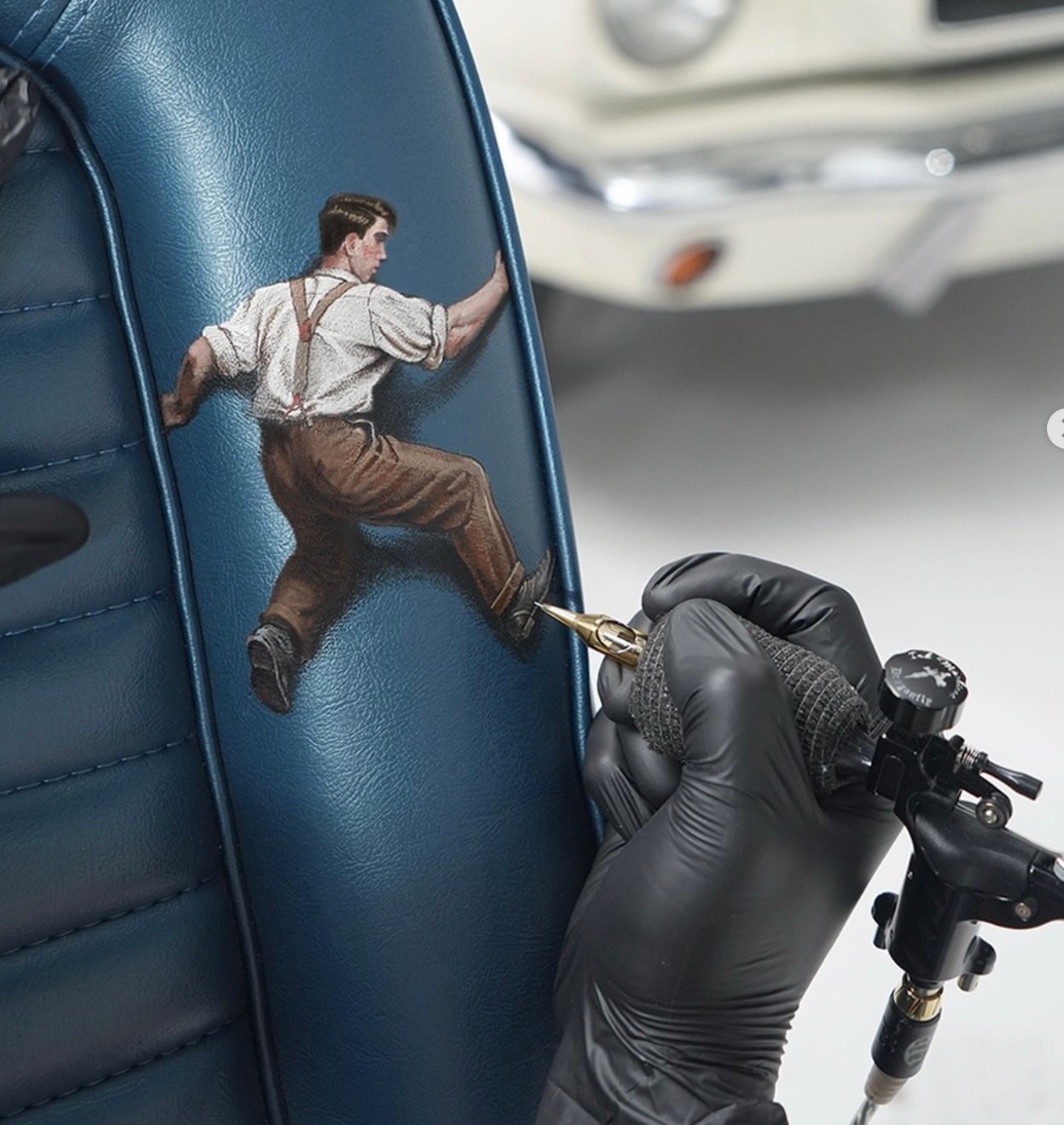
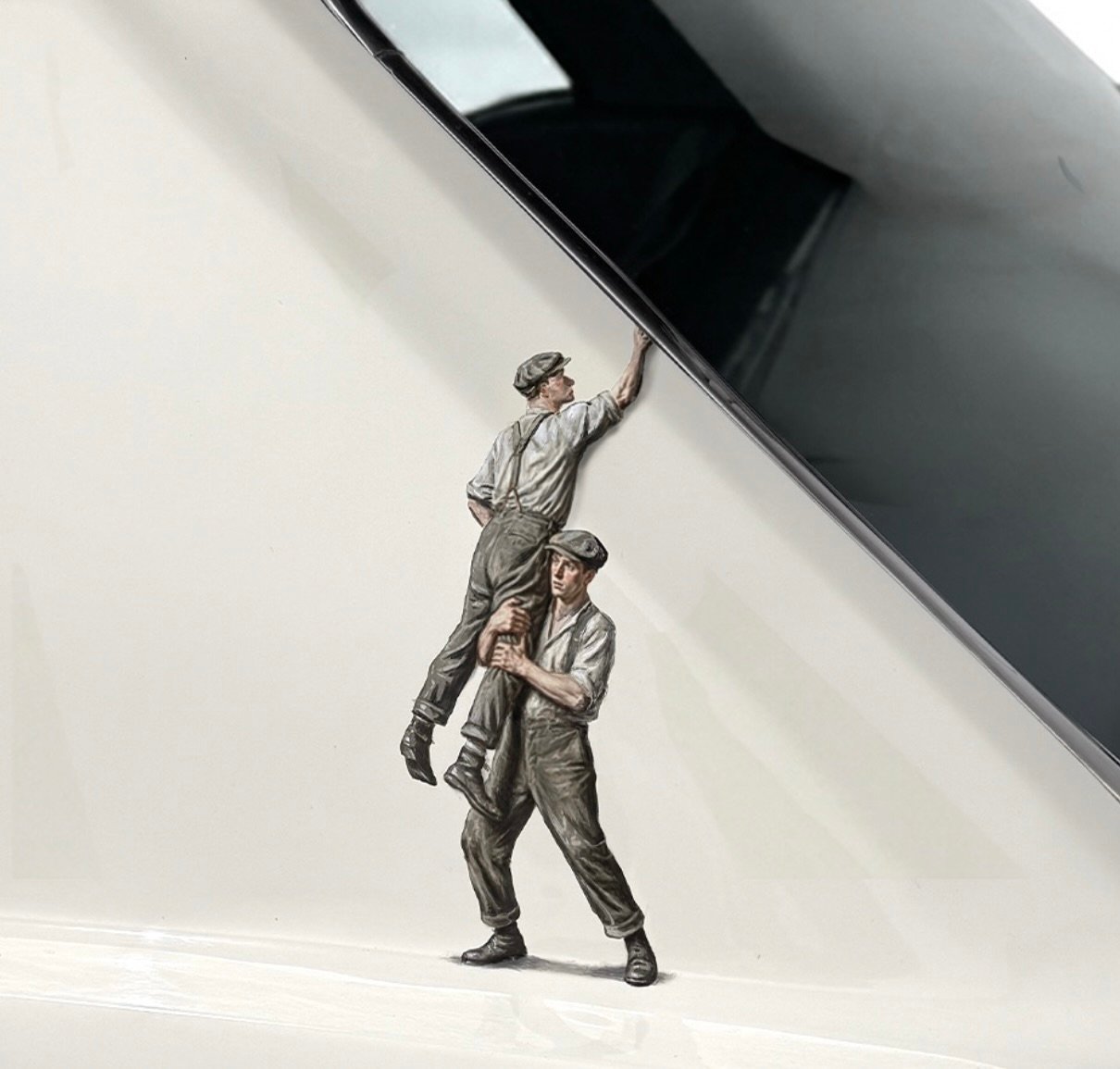
Beyond the exterior, the interior extends the narrative. Vintage leather seats bear fine tattoo-style motifs — subtle worker figures “uncovering” the divine imagery beneath layers of patina. This meta-layer comments on restoration, archaeology, and the act of revealing hidden beauty. Door panels, dashboard, and headliner continue the theme, creating an immersive environment where driver and passenger sit literally inside the myth.
The title “Permanent Impermanence” captures the paradox: tattoos and cars both promise longevity yet succumb to time. Ink fades on skin; paint chips on metal; leather cracks. Yet the ideas they carry — heroism, transformation, cultural memory — endure.
venue
CART Department, founded by noted collector Larry Warsh, champions automobiles as sculptural and cultural objects. Free Parking at 16 Morton Street functions as a dynamic gallery space in the West Village, previously hosting exhibitions like Keith Haring’s painted cars and Ai Weiwei Lego works. The venue’s industrial yet intimate setting complements the raw energy of an art car.
The exhibition opens May 15, 2026, with free admission during initial weeks (exact hours to be confirmed via @cartdept). Expect on-site viewing of the Mustang, possibly with Kozo present for talks or demonstrations. Additional works by Kozo — canvases, mixed-media pieces, and perhaps tattoo machine sculptures — will contextualize the car within his broader practice.
straddle
This project sits at multiple intersections. Tattoo culture has long influenced street art and contemporary painting; Kozo reverses the flow, elevating automotive customization into high art. The Mustang becomes a “vessel for classical grandeur,” as the announcement states — a modern chariot worthy of Hercules himself.
It also engages themes of labor. The 500+ hours mirror the exhaustive effort of Lemoyne’s fresco and the physical toll of tattooing. Subtle worker motifs on the seats honor the invisible hands behind masterpieces — restorers, fabricators, and artists’ assistants.
In 2026, amid debates on digital permanence versus physical decay, “Permanent Impermanence” feels timely. NFTs promise eternity but lack tangibility; this car exists in the real world, subject to rust, crashes, and patina — yet its story will outlive its materials.
show
Exterior Application: Custom techniques blending airbrushing, hand-painting, and direct tattoo machine work for texture.
Lighting Integration: The piece likely incorporates subtle LED elements to evoke divine glow, especially dramatic at night.
Mechanical Respect: The Mustang remains drivable, preserving its 1967 V8 spirit while transformed aesthetically.
Scale Adaptation: Fitting a ceiling composition onto a car required masterful foreshortening and modular storytelling across panels.
Collectors and enthusiasts will note parallels to famous art cars (e.g., Keith Haring’s vehicles or Yayoi Kusama’s dotted taxis), but Kozo’s micro-realism adds unprecedented detail and narrative depth.\
beyond
Kozo has exhibited at galleries like DTR Modern and collaborated across mediums. This marks a bold expansion into large-scale sculpture/installation. For CART Department, it continues a mission to redefine how we see vehicles — not mere transport, but canvases for cultural dialogue.
Visitors can expect an experience that rewards close inspection. Stand back for the overall heroic flow; approach for tattoo-like intricacies that reveal new stories with every angle.
impression
In an era of fleeting digital trends, “Permanent Impermanence” asserts the value of slow, laborious creation. It honors classical roots while embracing subcultural techniques. For New Yorkers and visitors, it offers a rare chance to witness art that moves — literally and figuratively.
The exhibition runs through late May or early June (details forthcoming). Mark your calendars for May 15 at 16 Morton Street. Whether you’re a tattoo aficionado, classic car lover, art historian, or simply curious about boundary-pushing creativity, this is unmissable.
Kozo’s Mustang doesn’t just reinterpret a ceiling — it drives classical mythology into the 21st century, tattooed indelibly onto American steel. In the process, it reminds us that true permanence lies not in materials, but in the stories we choose to ink, paint, and weld into existence.