DRIFT AUDIO
Listen to this story
Choose a voice, then press play.
Eleven years after shelving it at the height of his Dior Homme tenure, Kris Van Assche is bringing his namesake label back, smaller and sold direct to consumers.
Kris Van Assche closed his own label in 2015 with a handwritten letter to WWD, ten years into a business he had been running while sitting in the top design job at Dior Homme. Eleven years on, the Belgian designer is opening the doors again. WWD broke the news first, and Van Assche confirmed it on his own Instagram: KRISVANASSCHE returns around mid-September through a fully rebuilt version of krisvanassche.com, this time with both menswear and womenswear on the rail.
The path getting him here runs through some of the biggest names in French luxury. Van Assche graduated from Antwerp’s Royal Academy of Fine Arts in 1998, then moved to Paris to assist Hedi Slimane on the Yves Saint Laurent Rive Gauche Homme line before following him to Dior Homme. He launched his own label in 2005, took over the top design job at Dior Homme in 2007, and ran the two in parallel until 2015, when he closed his namesake brand to focus fully on Dior. At Dior Homme, he built a reputation for folding streetwear into rigorous tailoring, casting A$AP Rocky and Oliver Sim of The xx as faces of the house along the way. He left Dior Homme in 2018 for Berluti, taking the Italian leather house’s creative director role and pushing its signature leather patinas into ready to wear, at one point putting Gigi Hadid in a mint green suit flecked with feathers. He held that post until his April 2021 exit. His original label had its own retail footprint too: a Paris boutique at 16 rue Saint Roch, designed by the studio Ciguë and opened in June 2013, and two capsule collections made with American denim brand Lee in 2012 and 2013. In between the Dior Homme and Berluti chapters, in 2023, he published a five hundred and fifty page anthology of his fifty five collections, designed by the Paris studio M/M, a project that in hindsight reads like stocktaking before deciding what came next.
View this post on Instagram
Since leaving Berluti, he has spent four years building something closer to a personal practice than a fashion label: home objects, sculpture, a pair of brand collaborations, no seasonal calendar to answer to. What changes now is that clothing is back in the mix, on a scale he says is deliberately smaller than anything he has run before.
stir
The new collection sticks to a tight edit rather than a full range: around forty pieces across tailoring, shirts, trousers, skirts, dresses and knitwear, worked entirely in deadstock fabric so that quantities stay naturally small. Van Assche has described the approach as skipping the usual process of building a large collection and editing it down afterward, starting instead from the smaller selection itself. “What I’m doing now is very much smaller scale,” he told WWD.
Pricing lands in the designer segment, but toward its lower end: shirts in the neighborhood of 400 to 500 euros, jackets starting around 1,000 euros. That marks a deliberate departure from the pricing that defined his years at Dior Homme and Berluti, both owned by LVMH, and it lines up with a wider retreat from mega group price points that independent designers have been making across the last several fashion seasons. The collection sells exclusively through krisvanassche.com, with no wholesale distribution announced, and Van Assche has said he wants the label to move at its own pace rather than the traditional biannual calendar, releasing new pieces only when there is genuinely something new to say. He is working with a small team, handling production in house, and setting no external deadlines for himself, a method he has contrasted directly with the pace required at a house the size of Dior or Berluti.
scope
Everything Van Assche has made since leaving Berluti in 2021 will now live under the same roof. He has spent that time producing ceramics for the Belgian homeware brand Serax, beginning in 2025 with a vase collection named Josephine after his grandmother and following it with Rosamar, a series of urns, jars and pots that reworks childhood memories of summers on Spain’s Costa Brava into concrete textured clay with sharply blocked glazing. Alongside the ceramics sits a body of bronze sculpture made with Paris art dealer François Laffanour and his gallery, Laffanour | Galerie Downtown: fourteen sculptural vases collectively titled Nectar Vessels Bronzes, developed over two years and first shown at the gallery in 2025 before traveling to Milan Design Week in April 2026.
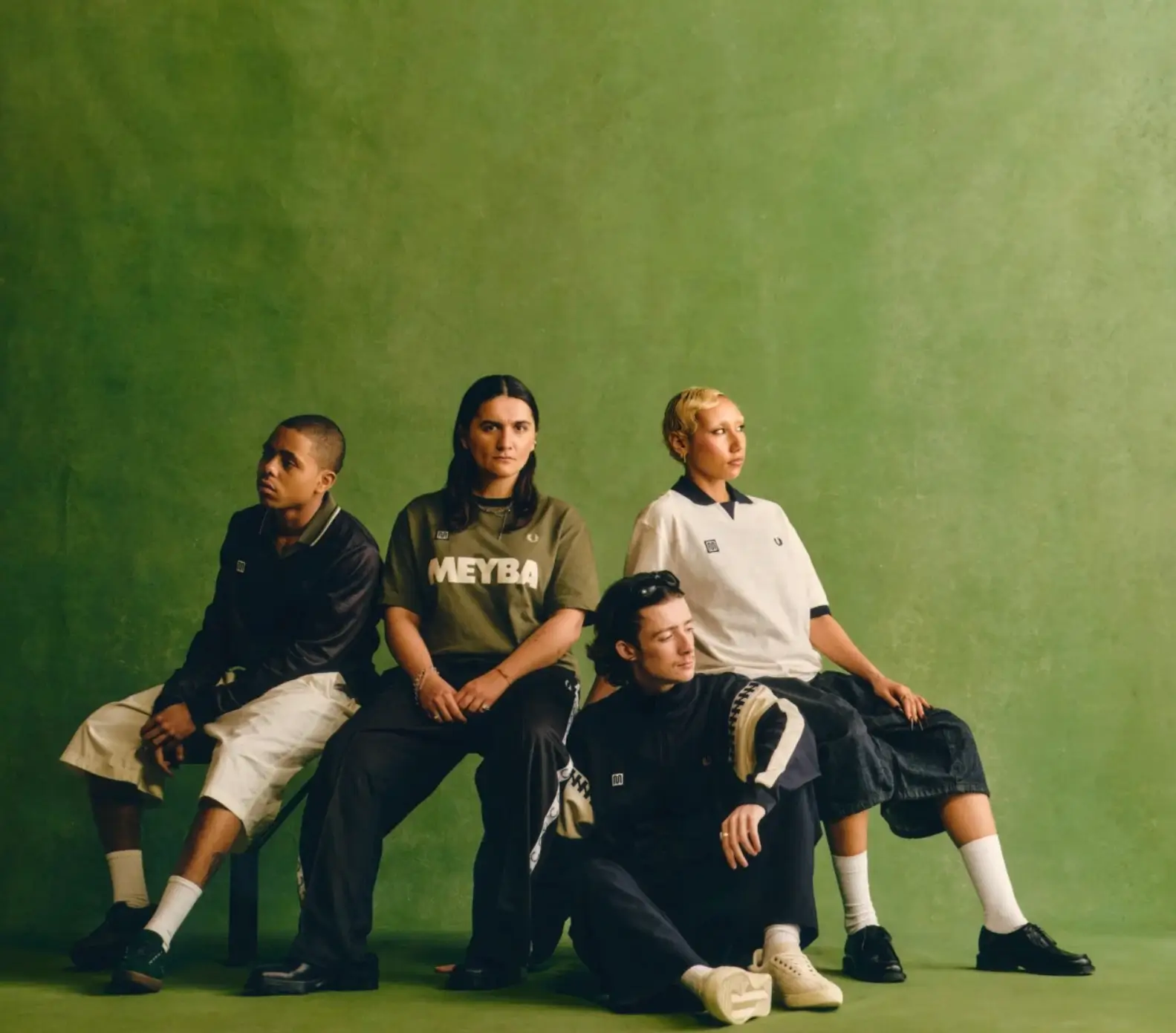
There have also been two fashion connect running in parallel: a thirteen piece apparel capsule with British heritage label Fred Perry, and an ongoing project with Anta Zero, the eco-conscious offshoot of the Chinese sportswear giant Anta, which debuted at Dover Street Market Paris and is currently on its second season. None of that stops. Van Assche has said the relaunched krisvanassche.com is meant to gather fashion and these other projects into one place, describing it as a single creative universe rather than a comeback that erases the last four years.
View this post on Instagram
her
Womenswear was part of the plan from the start, even if most of Van Assche’s career reads as menswear. He graduated from the Royal Academy of Fine Arts in Antwerp with a degree in womenswear in 1998, and briefly folded women’s pieces into his own label between 2008 and 2010, before it became, for the rest of its ten year run, a menswear house. The new collection puts that training back to use: among the teaser images released with the announcement is a women’s dress cut open at the back, a detail Van Assche called significant given how his career actually started. “In this sense, it is both a return and a new beginning,” he wrote on Instagram.
Early previews point to sharp, structured tailoring for men and a softer, more sensual line for women, with masculine and feminine codes sitting alongside each other rather than being kept apart. Some pieces revisit ideas from the earlier KRISVANASSCHE archive reworked into new proportions; others are entirely new. It reads as a return that leans on twenty years of vocabulary while still trying to feel current, closer in spirit to a small, personal atelier than to the kind of era-defining menswear house he ran at Dior Homme.
self
Van Assche’s return fits neatly into a pattern that has been building across independent fashion for several years now: designers who once ran major houses stepping back into smaller, more personal projects, deliberately outside the scale and calendar of the luxury conglomerates that employed them.
The longest running example is Stefano Pilati’s Random Identities, which the former Yves Saint Laurent and Ermenegildo Zegna creative director launched in 2018 with a debut runway show inside SSENSE’s Montreal headquarters. Based in Berlin, Random Identities has spent years building a moderately priced, unisex wardrobe around Pilati’s own idea of producing accessible clothes and presenting them in a high fashion context. The label went quiet for a stretch before rebooting with a new business partner and a Dover Street Market Paris distribution deal, plus a widely covered Zaracapsule collaboration.
The most recent addition to the pattern is Olivier Theyskens’ Boloria, backed by We Are One World, the Belgian company behind the Tomorrowland music festivals. Founded in Antwerp in 2025, Boloria gave Theyskens his first haute couture platform, debuting the eve of Paris’s July 2026 couture week with a collection called Le Monde Flottant, built around instability, memory and the beauty of the fleeting moment. It marked his first new label since he closed his own eponymous house and moved through creative director roles at Rochas, Nina Ricci and Theory.
Phoebe Philo’s namesake label, launched in 2023 after she left Celine, is the pattern’s one real exception: LVMH holds a minority stake in the business, giving one of Europe’s largest luxury conglomerates a foothold in a project otherwise built around the same small scale, direct to consumer logic as the others.
flow
In New York, Aaron Levine, the designer credited with reviving Abercrombie & Fitch and reshaping Club Monaco, launched his own label in November 2024 out of a Brooklyn studio, working in American made fabric with an emphasis on workwear, prep and outdoor references. Peter Do has taken a related but different route: rather than leaving his eponymous house, he has scaled back its seasonal runway rhythm in favor of a made to measure service, while running PD-168, a separate, more accessible offshoot label he launched in September 2025 built around three machine washable fabrics and an all black uniform system priced between 110 and 850 dollars.
Heron Preston fought a more literal battle to get here: after years inside New Guards Group, the Italian company that also built Off-White and Palm Angels into scale, he spent 2025 reclaiming full ownership of his own name and trademarks before relaunching his independent label on December 9, 2025 with a project called Foundation: Blue Line Edit, structured around small continuous drops rather than seasonal collections.
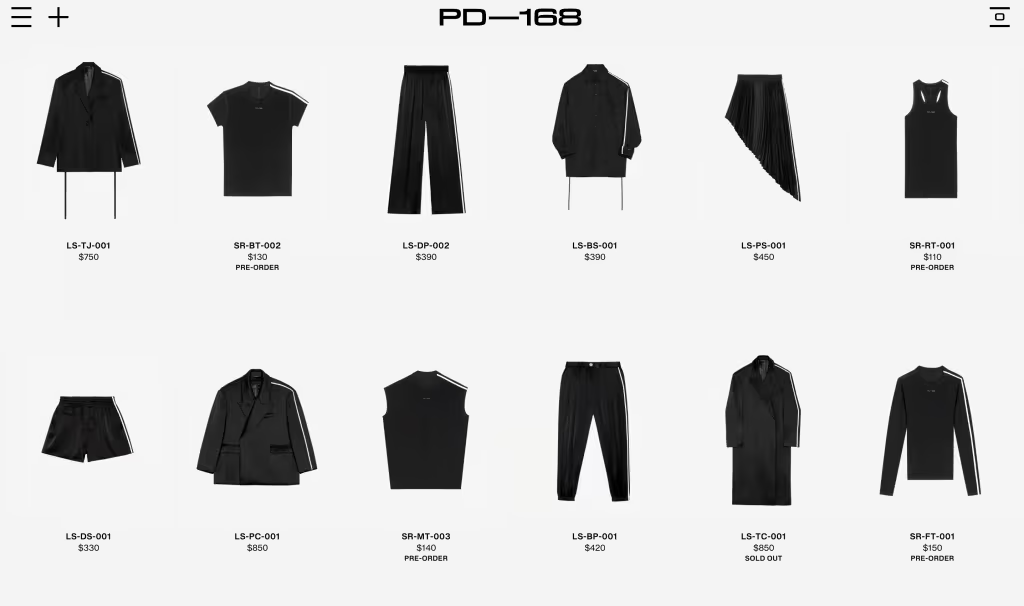
Peter Do’s PD-168, one of several designer-run offshoot labels built on a smaller, more accessible scale than the houses that made their founders famous
Shawn Stussy belongs on the same list, even if his return is the quietest of the group. S/DOUBLE, the label he founded in 2008 and shuttered in 2016, came back through a partnership with Globe co-founders Peter and Stephen Hill, soft launched through a handwritten mural outside Globe’s Australian headquarters and currently sold only in Australia.
The pattern isn’t limited to Belgium and France either. In September 2025, Japanese designer Takahiro Miyashita announced his own return to Number (N)ine, the punk and grunge inflected label he founded in 1997 and left in 2009, ending a sixteen year absence with a one line comeback post on the brand’s Instagram.
fin
What ties these projects together isn’t just biography. Nearly all of them skip traditional wholesale in favor of selling directly online, work in small production runs rather than committing to the volumes a department store order requires, and build a following through social media and word of mouth rather than a fixed runway calendar. It’s a structure that would have been difficult to sustain a decade ago, when a label without wholesale accounts had a hard time reaching customers outside its home market. Wider e-commerce reach and a larger appetite among shoppers for anything positioned as intimate or handmade have made the model workable again, even at these designers’ price points.
Every name on that list, Van Assche included, is running some version of the same playbook: small teams, tighter runs, direct sales, and a pointed distance from the mega group machinery most of them spent years working inside. Whether that adds up to a genuine shift in how designer fashion gets built, or simply a generation of veteran names finding their way back to work on their own terms, is still an open question once krisvanassche.com goes live in mid-September.
Related Articles
Fred Perry for Journal Standard Skips the Archive Entirely for Fall/Winter 2026
Three pieces designed entirely from scratch, none replicated anywhere in Fred Perry’s own collection. In […]