Leon Ransmeier’s Aluminum Chair Turns Structural Min Into Functional Sculpture
DRIFT AUDIO
Listen to this story
Choose a voice, then press play.
flow
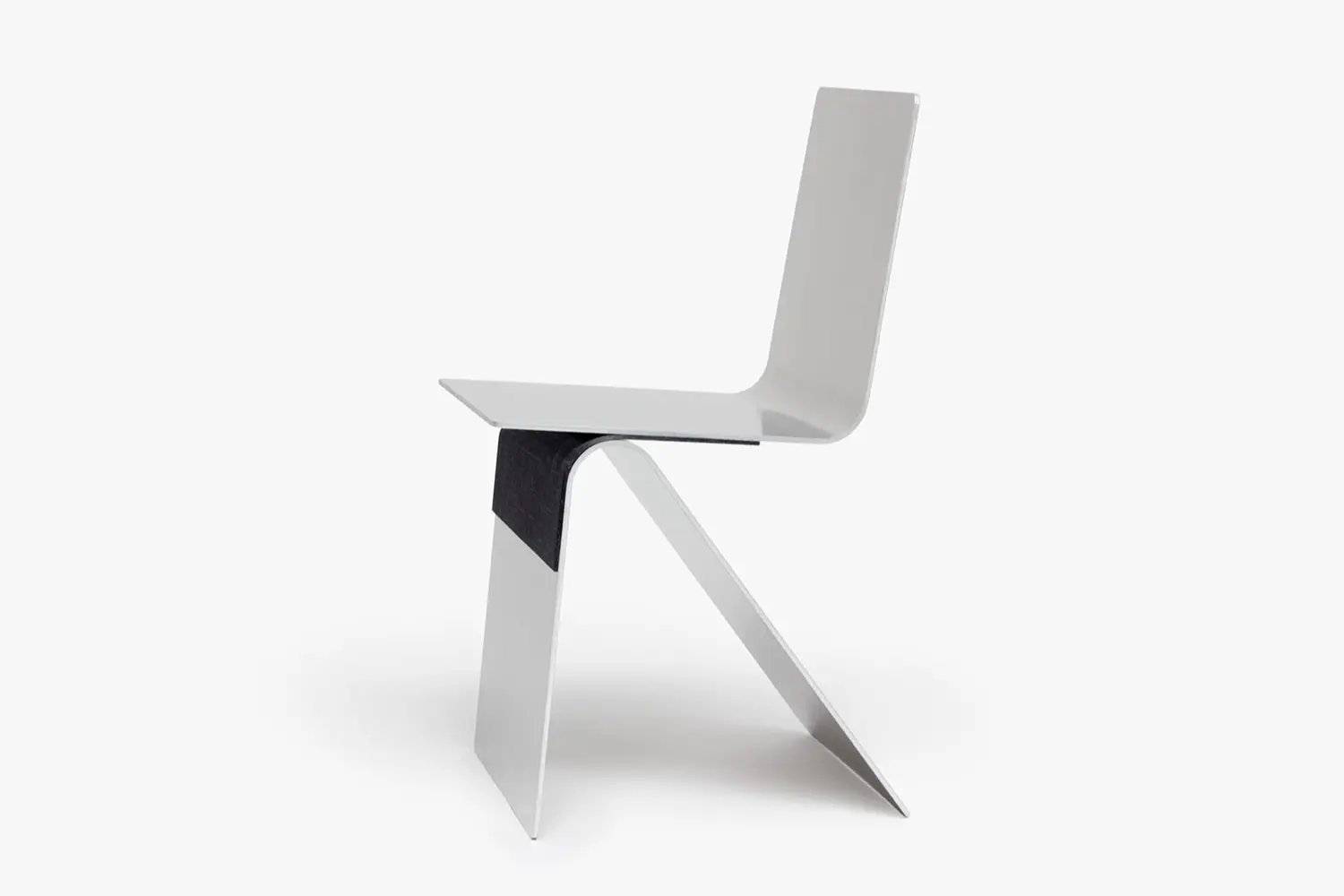
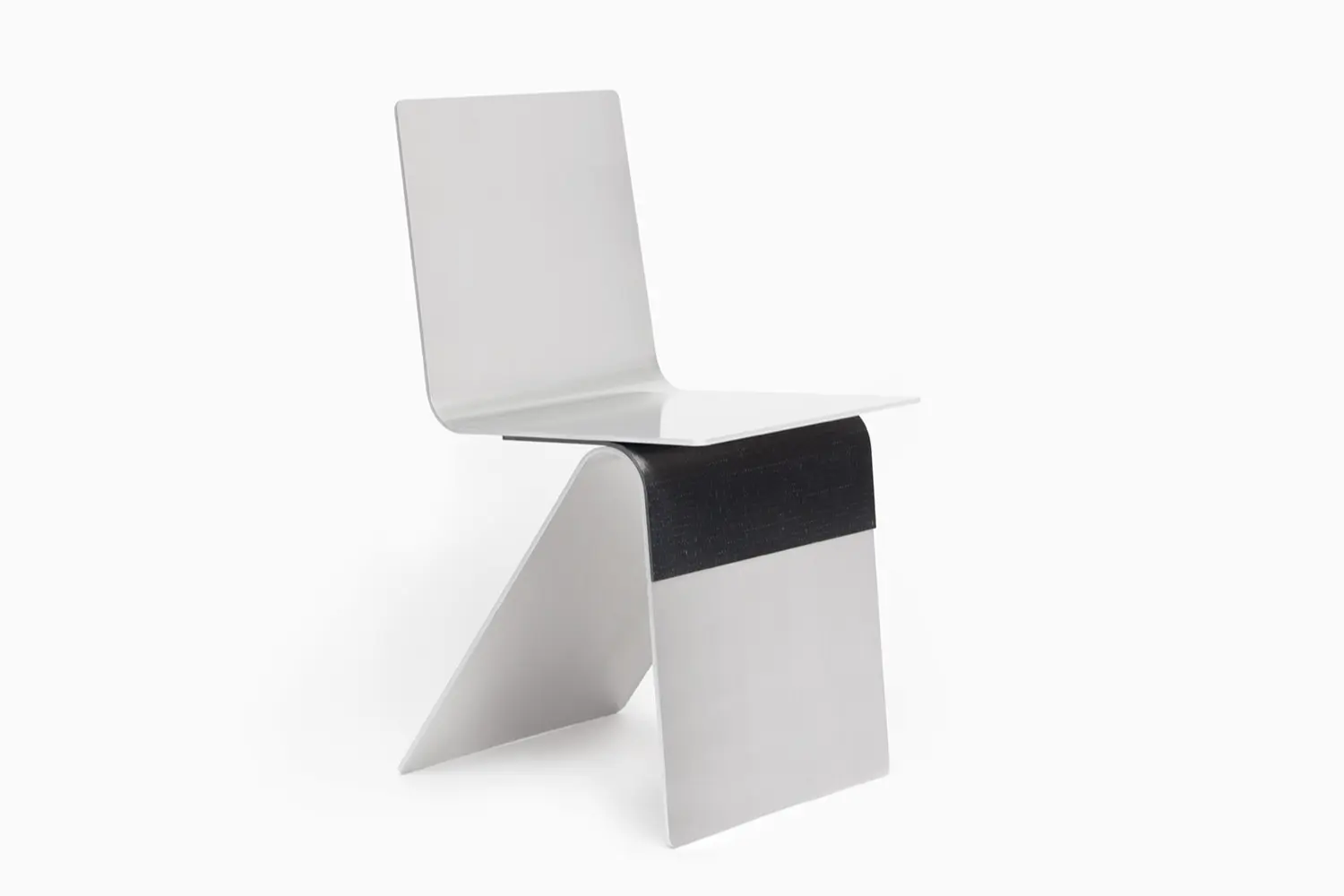
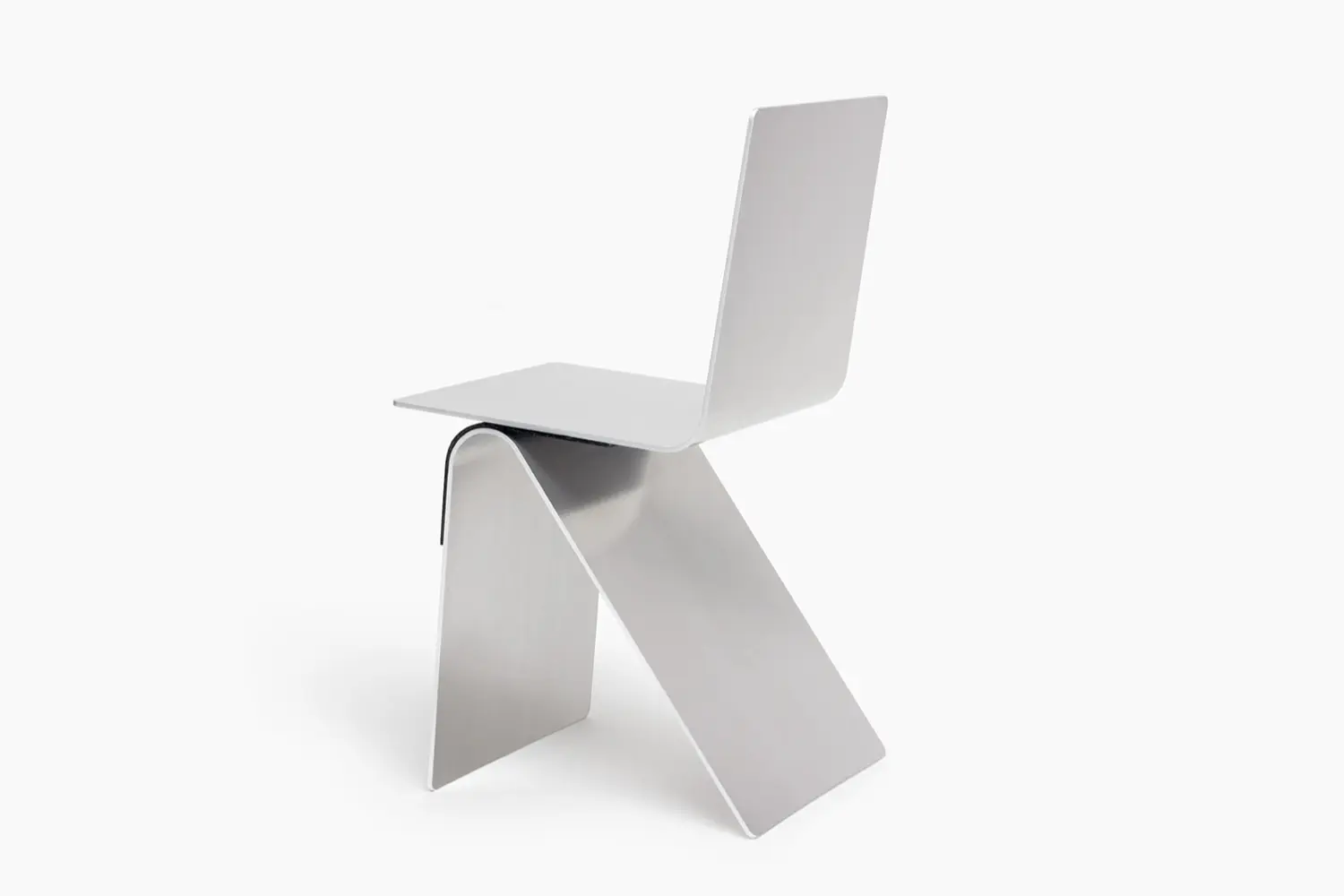
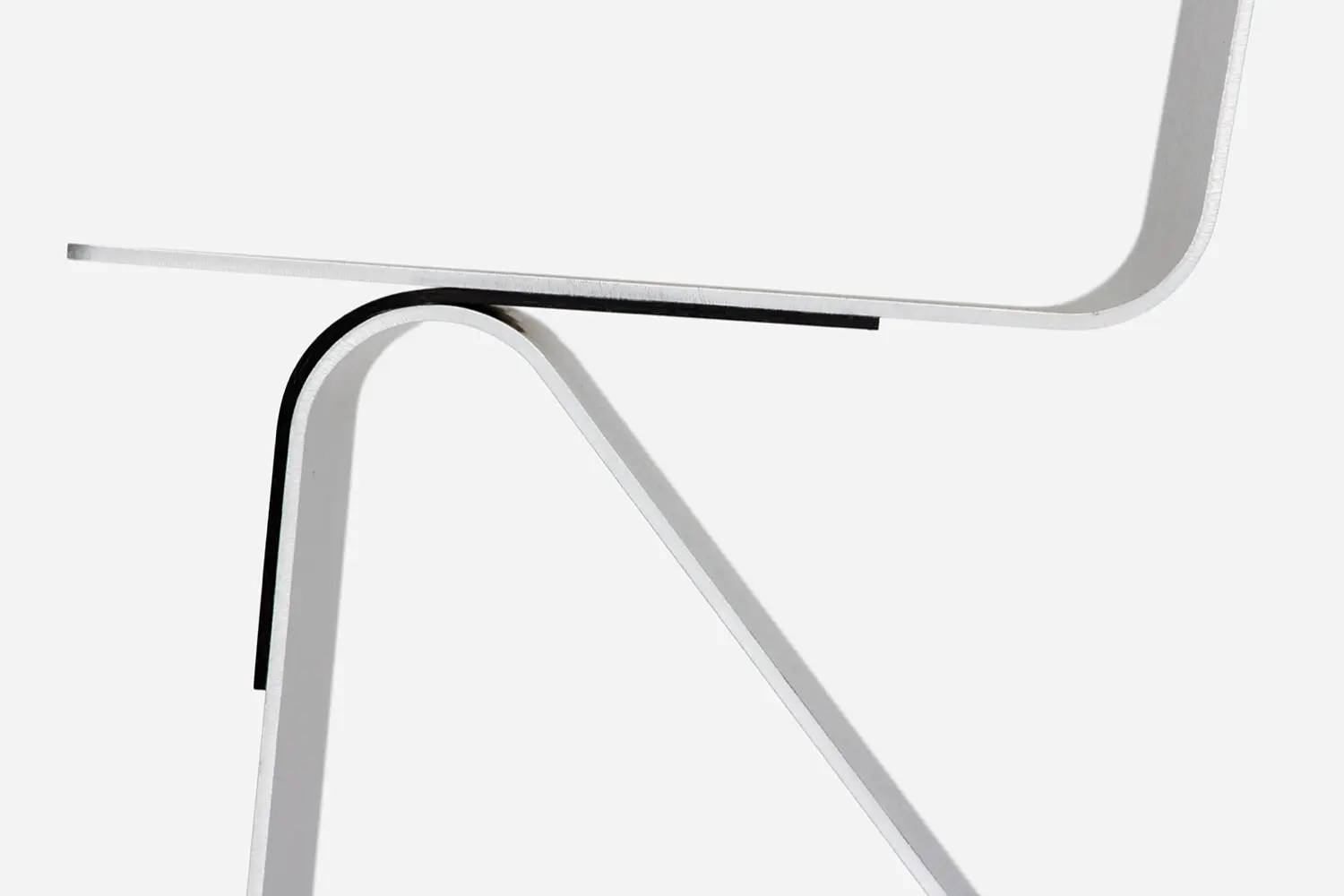
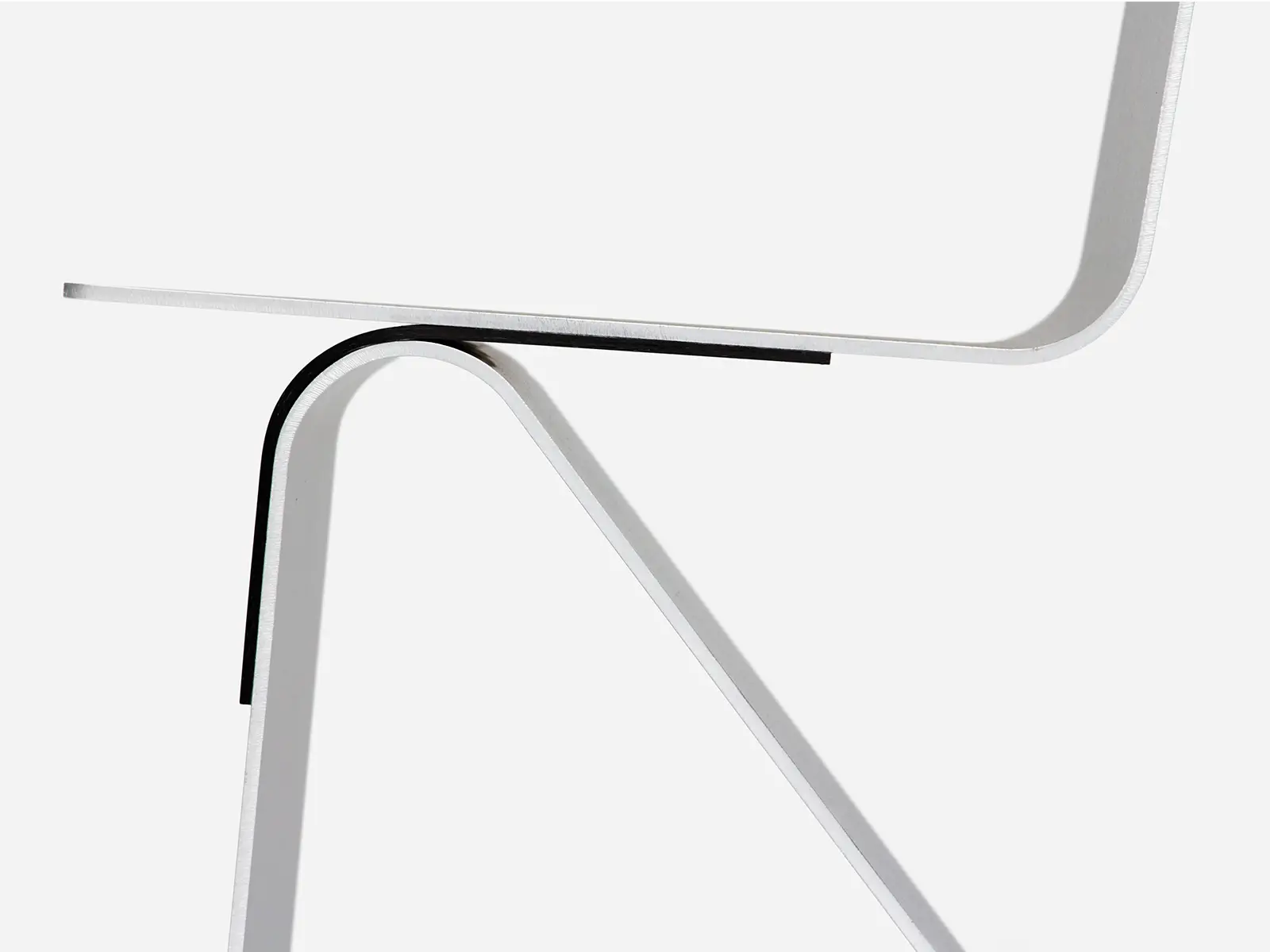
At first glance, the Aluminum Chair appears radically simple. Two folded aluminum panels intersect through a carbon fiber composite joint, supported by a sharply bent metal base. Yet beneath that stripped-back industrial appearance lies a sophisticated interaction between rigidity and flexibility.
The chair tilts backward through a pivot positioned near the front of the seat, while the carbon fiber flexes organically under body weight to create suspension-like movement. Instead of relying on visible mechanisms or traditional recline systems, the structure itself becomes the mechanism. The result is a chair that feels dynamic despite its sculptural stillness.
Its minimalism does not emerge from absence alone, but from precision. Every bend, exposed edge, and material transition carries functional purpose.
know
Born in New York in 1979 and educated at the Rhode Island School of Design, Ransmeier established his studio practice through an iterative, prototype-heavy process that emphasizes tactile experimentation and long-term usability. His philosophy often inverts the traditional modernist principle of “form follows function,” instead leaning toward a more nuanced relationship where use and form evolve simultaneously through making.
Across his broader portfolio—including seating for Herman Miller and furniture for Mattiazzi—Ransmeier consistently explores how industrial materials can produce warmth, responsiveness, and human-centered ergonomics without decorative excess.
The Aluminum Chair fits naturally within this lineage. It strips furniture back to structural essentials while still delivering comfort, movement, and emotional resonance through subtle physical interaction.
Aluminum Chair by Leon Ransmeier | Aesence
cept
The chair debuted within “U-JOINTS – Equations of a Universal Lifestyle,” curated by Aniina Koivu and Andrea Caputo during Milan Design Week 2018. The exhibition gathered designers and research studios investigating the concept of the “joint” across mechanics, architecture, material systems, and social structures.
Ransmeier’s contribution—sometimes internally referenced as “Carbon Tilt”—became one of the clearest expressions of that curatorial thesis. Rather than concealing the connection point between materials, the joint became the centerpiece of the entire object.
The carbon fiber layer functions as a living hinge, creating elasticity between rigid aluminum forms. This approach transforms what could have been a static sculptural chair into an active ergonomic system responsive to the human body.
Within the context of Milan’s often spectacle-driven design culture, the Aluminum Chair felt unusually restrained. It rejected ornamental theatrics in favor of concentrated experimentation and material honesty.
mat
The construction itself remains one of the project’s most compelling achievements.
Two folded aluminum sheets establish the primary geometry of the seat and support structure. Their brushed metallic surfaces communicate industrial clarity while remaining visually lightweight. The bends feel architectural rather than decorative, emphasizing planar transitions and engineered simplicity.
The carbon fiber composite joint introduces contrast both visually and functionally. Commonly associated with aerospace engineering and high-performance manufacturing, carbon fiber offers exceptional strength-to-weight performance while maintaining controlled flexibility. Here, it behaves almost like a suspension bridge between rigid forms.
Under pressure, the composite flexes naturally, allowing the seat to recline slightly while distributing weight more evenly across the body. This subtle responsiveness softens the severity often associated with minimalist metal furniture.
The chair ultimately operates less like a conventional seat and more like a controlled balancing system between tension and release.
min
What makes the Aluminum Chair particularly notable is how ergonomic responsiveness emerges directly from the materials themselves rather than additional cushioning or concealed engineering.
The slight backward tilt encourages relaxed posture without excessive recline. The flex point beneath the seat absorbs pressure organically. The absence of upholstery sharpens the visual purity of the object while reinforcing its industrial character.
Even visually, the chair communicates movement. The folded geometry creates directional energy, while the exposed carbon fiber introduces a subtle visual interruption within the otherwise monochromatic metallic composition.
This balance between static sculpture and active utility places the piece within a lineage of experimental seating that includes works by Gerrit Rietveld and contemporary parametric furniture systems, yet Ransmeier’s execution remains distinctly grounded in human-scale practicality.
shh
Although the Aluminum Chair never entered widespread commercial production, it has maintained lasting influence through editorial circulation and institutional design discourse. Publications like Leibal, Minimalissimo, and Aesencehave highlighted the chair as an important example of experimental furniture engineering rooted in minimalist form language.
Its relevance has only increased as contemporary furniture design increasingly prioritizes sustainability, material efficiency, modularity, and adaptive ergonomics. The chair’s reliance on recyclable aluminum, reduced component count, and direct material expression aligns naturally with broader conversations surrounding longevity and responsible production.
At the same time, its aesthetic restraint resonates strongly with contemporary architectural interiors where objects are expected to operate as both utility and spatial sculpture.
fin
Leon Ransmeier’s Aluminum Chair remains compelling because it resists excess at every level. It demonstrates how a chair can feel emotionally intelligent without visual noise, and how innovation can emerge from structural refinement rather than technological overload.
More importantly, it reframes the idea of support itself. Instead of imposing rigidity onto the body, the chair responds, flexes, and adjusts through carefully considered material interaction.
That subtle responsiveness becomes the project’s defining achievement.
In an era dominated by disposable design cycles and algorithm-driven aesthetics, the Aluminum Chair stands apart as an object rooted in experimentation, craft, and material understanding. It does not demand attention loudly. Instead, it rewards closer observation—revealing how a bend, a joint, and a slight flex can transform industrial minimalism into something unexpectedly human.
From the DRIFT archive: Make It Miu Miu: UNO® Becomes a Haute Lifestyle Object
Next article
HUMAN MADE x Pokémon 2026 Release: Full Guide →Related Articles

Under Rue de Castiglione, Liaigre Gives Hôtel Costes a Spa With No Hard Corners
A 20-meter lap pool, eight treatment rooms and not one sharp angle: Studio Liaigre’s spa […]