DRIFT AUDIO
Listen to this story
Choose a voice, then press play.
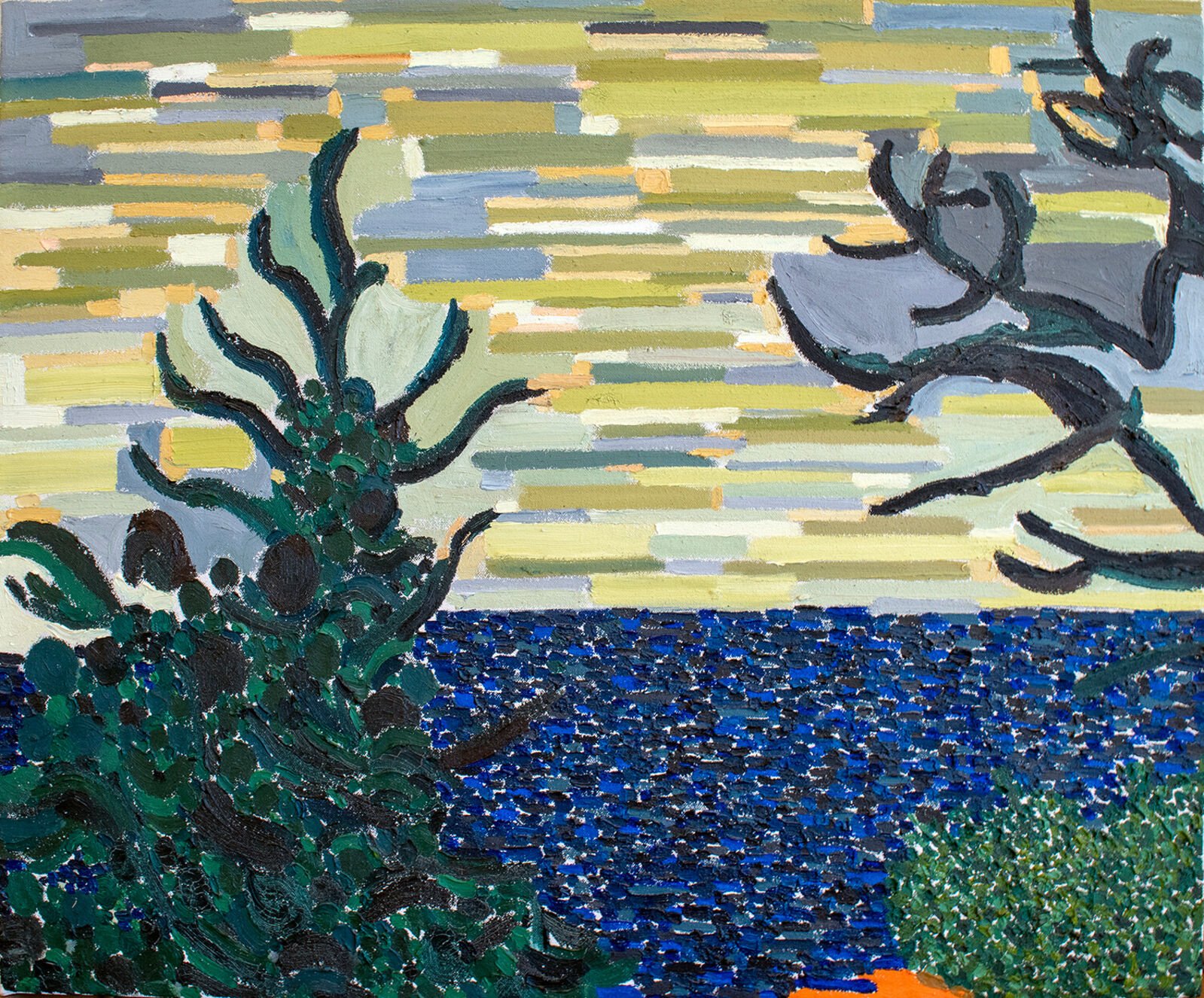
Lynne Drexler, an influential mid-century American painter, is celebrated for her bold, vibrant canvases that bridge abstraction and expressionism. Her work often reflects a harmony between form, color, and rhythm, and Storm Prelude (1985) is no exception. This masterpiece exemplifies Drexler’s ability to capture the emotional and visual intensity of natural landscapes while drawing upon her love for music and structured composition.
In this in-depth exploration of Storm Prelude, we will delve into its artistic elements, its significance within Drexler’s oeuvre, and the legacy of an artist who is only now gaining the recognition she deserves.
Lynne Drexler: A Brief Background
Born in 1928 in Newport News, Virginia, Lynne Drexler was inspired early on by the natural world. She studied under two titans of modern art: Hans Hofmann, a pioneer of abstract expressionism, and Robert Motherwell, one of the key figures in post-war American art. Both mentors instilled in her an understanding of color theory and formal abstraction, which became central to her work.
While many of her contemporaries gained fame in the mid-century New York art scene, Drexler’s trajectory was less conventional. Disillusioned by the commercial and competitive nature of the art world, she eventually retreated to Monhegan Island, Maine, where she developed a body of work characterized by vibrant palettes and dynamic, nature-inspired forms.
The Creation of Storm Prelude
In 1985, Drexler was firmly established on Monhegan Island, living in relative isolation and focusing intensely on her art. Storm Prelude embodies the connection she felt to her surroundings and demonstrates her mastery of translating nature’s energy into visual form.
Inspiration from Nature
The title Storm Prelude suggests an anticipation of a natural phenomenon, perhaps the buildup of energy before a storm sweeps across the island. This concept aligns with Drexler’s approach to art, which often captured the fleeting moods and movements of the natural world. The swirling forms and layers of color in the painting evoke the winds, shifting skies, and restless waves characteristic of a stormy seascape.
Musical Influence
Music played a pivotal role in Drexler’s creative process. As a trained musician, she often drew parallels between the structure of music and the composition of her paintings. In Storm Prelude, one can detect rhythmic patterns and harmonious juxtapositions of color that mirror the crescendos and tempo changes of a prelude—a musical form often used to set the stage for a larger work.
Visual Analysis of Storm Prelude
Storm Prelude is a vibrant, dynamic work that demands close observation to appreciate its layered complexity.
Composition
The composition of the painting is bold and energetic, with no clear focal point. Instead, Drexler employs a rhythmic distribution of shapes and colors that guide the viewer’s eye across the canvas. This approach reflects her training under Hans Hofmann, particularly his “push-pull” theory, which emphasizes the tension between flatness and depth.
Color Palette
Drexler’s signature use of bold, saturated colors is on full display in Storm Prelude. Deep blues and greens dominate the canvas, evoking the ocean and stormy skies, while fiery oranges, yellows, and reds suggest bursts of sunlight breaking through clouds or the warmth of land meeting water.
Her ability to layer colors creates a sense of depth and movement, as if the elements in the painting are constantly shifting, much like the weather.
Brushwork
Drexler’s brushwork in Storm Prelude is expressive and varied, ranging from thick, textured strokes to delicate, almost pointillist marks. These techniques imbue the painting with a tactile quality, inviting the viewer to imagine the physical sensation of wind and rain.
Abstract Representation
While Storm Prelude is not a literal depiction of a storm, its abstract forms and colors capture the essence of the experience. Drexler’s abstraction encourages viewers to interpret the painting through their own emotional and sensory lenses, making it a deeply personal and universal work at the same time.
Significance within Drexler’s Oeuvre
Storm Prelude is a quintessential example of Drexler’s mature style, which combines her early influences with the unique perspective she developed on Monhegan Island. It highlights several recurring themes and techniques in her work:
Nature as Muse
Drexler’s paintings often draw from her surroundings, translating the rugged beauty of Maine into compositions that are as much about feeling as they are about form.
Color as Emotion
For Drexler, color was more than a visual element—it was a language through which she expressed mood, energy, and movement.
Musicality in Art
Her background in music is evident in the rhythmic, almost melodic quality of her brushwork and compositions.
Legacy of Lynne Drexler and Storm Prelude
Despite her immense talent, Drexler remained underappreciated during her lifetime, overshadowed by male contemporaries in a male-dominated art world. However, recent years have seen a resurgence of interest in her work, with collectors and institutions recognizing her unique contributions to abstract expressionism and modern art.
Renewed Recognition
•Exhibitions: Retrospectives of Drexler’s work have brought her paintings to new audiences, highlighting her role as a trailblazer in abstract art.
•Market Value: The value of her works has risen significantly, with collectors drawn to her vibrant, emotionally resonant pieces.
Timeless Appeal
Storm Prelude exemplifies why Drexler’s art continues to resonate: it is timeless, capturing universal themes of nature, energy, and emotion through a lens that is both deeply personal and broadly accessible.
Impression
Storm Prelude (1985) is more than just a painting—it is a testament to Lynne Drexler’s ability to translate the chaos and beauty of nature into art that moves and inspires. Its dynamic composition, bold colors, and emotional resonance make it a standout work within her oeuvre and a significant piece in the broader context of 20th-century abstract art.
Related Articles
Modigliani’s Limestone ‘Tête’
Carved from a single block of limestone in Montparnasse more than a century ago, one of Modigliani's rare stone heads goes to auction for the first time…