DRIFT AUDIO
Listen to this story
Choose a voice, then press play.
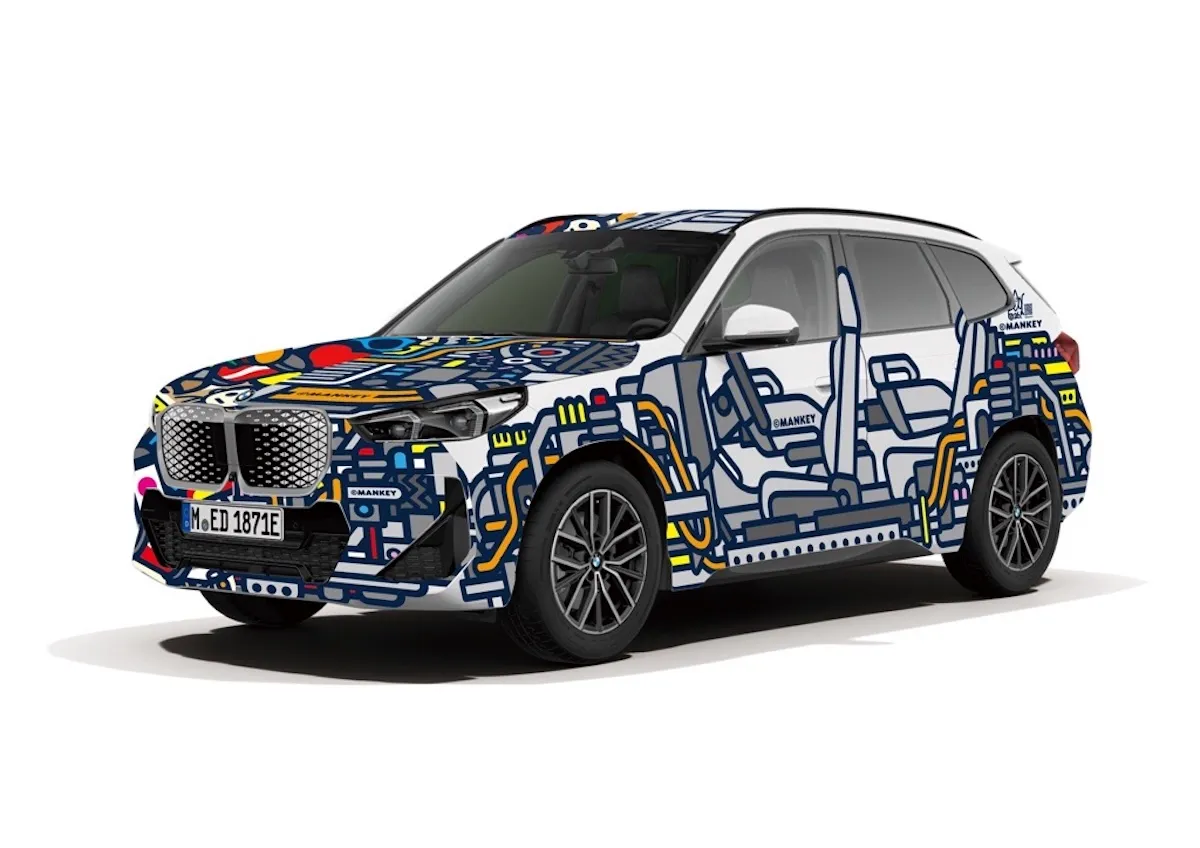
In the luminous galleries of Tokyo’s Azabudai Hills, where contemporary design converges with urban energy, Japanese graphic designer MANKEY has transformed the BMW iX1 into a rolling canvas that challenges our perceptions of mobility, materiality, and joy. Titled with a conceptual depth that echoes land art and know inquiry, MANKEY’s project embodies his creative theory: “The earth is the ultimate material.” This isn’t mere vehicle wrapping; it is a profound act of drawing on a three-dimensional canvas, where automotive engineering meets earthly origins, digital precision, and human emotion.
MANKEY’s BMW iX1 stands as a pivotal moment in the ongoing dialogue between luxury mobile and artistic expression. As BMW’s FREUDE by BMW space hosts this split-personality art object until early July 2026, the installation invites us to reconsider how vehicles—symbols of progress and freedom—can reconnect us to the primal matter from which all creation springs.
stir
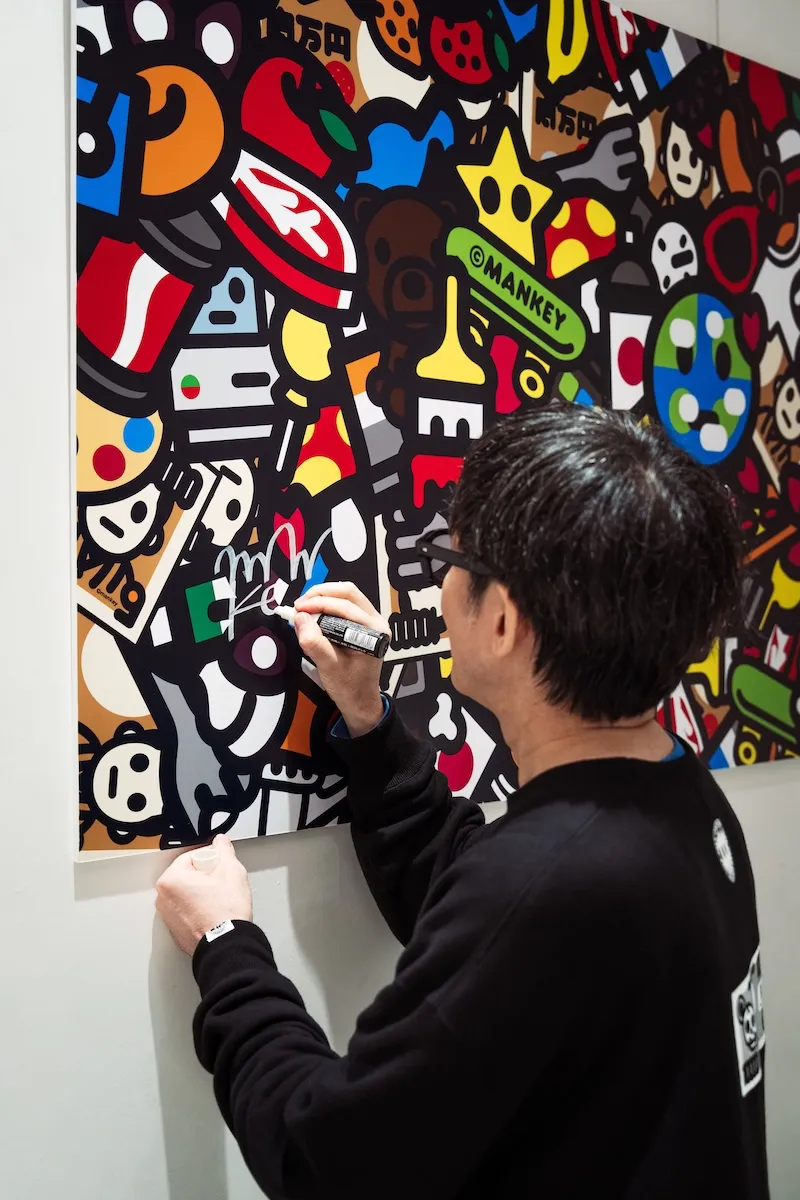
MANKEY, a veteran graphic designer with roots in streetwear and collide dating back to early A Bathing Ape projects, brings a layered sensible to BMW’s electric crossover. One side of the iX1 reveals intricate schematics of engineering—wiring diagrams, structure blueprints, and technical motifs that celebrate the precision of Bavarian manufacturing. The opposing side bursts with personal symbols of joy: vibrant icons, play graphics, and elements drawn from MANKEY’s view lexicon that evoke emotion, spontaneity, and culture resonance in Tokyo’s dynamic streets.
This dual is no accident. It mirrors the tension at the mid of MANKEY’s creative theory. “The earth is the ultimate material” posits that all human endeavor—either forging steel for a chassis, extracting lithium for batteries, or layering graphics on vinyl—ultimately traces back to terrestrial resources. Earth provides the clay for our canvases, the minerals for our pigments, the energy for our innovations. By “drawing” the iX1, MANKEY literalizes this: the car becomes a mobile sculpture, its body a stretched canvas where industrial earth (metals, composites) dialogues with artistic earth (ink, narrative, symbolism).
In high-end design parlance, akin to the precision of horology or the tactility of luxury streetwear, this project elevates the day act of driving into something contemplative. The iX1, BMW’s compact electric SUV, already represents a forward-looking fusion of show and sustainable. Under MANKEY’s hand, it becomes a vessel for deeper inquiry: How do we honor the earth while propelling ourselves into an electrified future?
flow
MANKEY’s assertion that “the earth is the ultimate material” resonates across art history and contemporary practice. It echoes land artists like Robert Smithson, who used cinders, soil, and site-specific interventions to highlight material, or other artists who have long treated land as both medium and metaphor. Yet MANKEY grounds it in the Japanese context—where wabi-sabi finds beauty in imperfection and transience, and where urban density meets reverence for natural cycles.
Consider the raw materials of the BMW iX1: aluminum from bauxite ores, rare earth elements for electric motors, recycled plastics derived from petroleum’s ancient organic legacy. MANKEY’s wrap doesn’t conceal these; it illuminates them. The engineering side exposes the car’s “bones”—a visual geology of human ingenuity built atop planetary resources. The joy side, meanwhile, humanizes this, infusing color and narrative drawn from lived experience on this earth.
This theory extends beyond the view. In an era of climate consciousness and material scarcity, MANKEY reminds us that creativity is extraction, transformation, and return. Drawing on canvas—whether traditional linen or a vehicle’s composite panels—involves the same earthly cycle: harvest, refine, express, decay. The iX1’s electric nature amplifies the point. Zero tailpipe emissions align with a philosophy of minimal disruption to the earth, yet the production chain demands mindful stewardship. MANKEY’s split design forces confrontation with this duality: the rational (engineering) and the affective (joy), both rooted in the same soil.
leg
BMW’s Art Car program, spanning over five decades, provides rich context. From Alexander Calder’s vibrant 3.0 CSL to Jeff Koons’ exuberant M3 GT2, these rolling masterpieces have treated automobiles as canvases for cultural commentary. MANKEY joins luminaries like Andy Warhol, David Hockney, and more recent collaborators in blurring lines between product design and fine art.
What distinguishes MANKEY’s contribution is its intimate, personal scale. While many Art Cars dazzle with spectacle, this iX1 whispers through its Tokyo-specific resonance. Displayed in FREUDE by BMW alongside MANKEY’s T-shirts and other works, it feels like a street-level intervention—accessible yet profound. The wrap’s vinyl medium itself ties back to “the earth”: petroleum-derived yet capable of transformative storytelling.
In design terms, the project aligns with trends in automotive customization and experiential haute. Think of limited-edition shoe or watch dials that incorporate earthly elements—meteorite, wood, stone. MANKEY’s iX1 does this on a grander scale, turning a production vehicle into a unique statement piece that questions standardization in the EV age.
show
Delving deeper into the execution reveals MANKEY’s graphic prowess. The engineering side employs schematic precision: clean lines, exploded views, and data views that nod to BMW’s engineering heritage. It’s a love letter to the invisible—torque curves, battery architecture, aerodynamic flows—that power silent, efficient motion.
Conversely, the joy side assembles a collage of personal iconography. Drawing from his streetwear background, MANKEY layers symbols that spark delight: perhaps abstracted faces, urban motifs, or play distortions evoking Tokyo’s pop culture vital. The split creates a dynamic tension as the car moves; viewers encounter shifting personalities depending on perspective, much like the multifaceted nature of modern identity.
Materially, the high-quality wrap ensures durability for exhibition while allowing the iX1’s underlying form—its kidney grille, sleek proportions, and athletic stance—to shine. This restraint honors the vehicle’s design language, treating it as sacred canvas rather than overwriting it. In fashion-design parlance, it’s akin to a perfectly tailored garment that enhances the wearer’s essence.
straddle
MANKEY’s theory gains urgency amid global conversations on sustainable luxury. Electric vehicles like the iX1 promise reduced environmental footprints, yet their materiality—mining impressions, end-of-life recycling—demands transparency. By foregrounding “the earth is the ultimate material,” the artist advocates for conscious creation: designs that celebrate origins rather than obscure them.
In streetwear and sports-fashion crossovers, this resonates. Just as collections between Nike and artists infuse shoes with narrative depth, MANKEY’s iX1 infuses mobile with story. It show to a Gen Z audience seeking authenticity—vehicles (or garments) that reflect values of joy, heritage, and planetary respect.
The Tokyo setting amplifies this. Azabudai Hills, a nexus of innovation and culture, mirrors the project’s blend of tradition and futurism. Japan’s design philosophy—minimal yet meaningful—infuses MANKEY’s work, creating a bridge between Western automotive prestige and Eastern contemplative aesthetics.
parallel
Extending MANKEY’s theory invites broader reflection. In horology, watchmakers source materials from the earth (enamel, gems, metals) to craft timepieces that transcend utility. In art, painters grind pigments from minerals. In fashion, sustainable designers return to organic fibers. MANKEY universalizes this: every act of creation is an earthly dialogue.
For the iX1 specifically, it positions the electric crossover as more than transport—it’s a medium for joy in an increasingly digitized world. The “drawing” process—conceptual sketches evolving into full-scale application—parallels traditional artistry while leveraging modern tech (digital mockups, precision printing). This hybridity defines 2026 design: rooted in earth, propelled by innovation.
fin
As the installation concludes its run, MANKEY’s BMW iX1 leaves an indelible mark on BMW’s Art Car narrative and contemporary Japanese design. It proves that a graphic designer with street roots can command a luxury canvas with a know weight. “The earth is the ultimate material” becomes a rallying cry for creatives everywhere: honor the source, infuse with joy, innovate responsible.
MANKEY doesn’t just wrap a car; he draws our attention back to fundamentals. In the hum of an electric motor and the swirl of graphic storytelling, we rediscover the planet’s generous materiality—and our joyful responsible within it. The BMW iX1, thus transformed, rolls not just forward in progress, but deeper into meaning.
From the DRIFT archive: London Streets Print by Arina Iastrebova Captures the Soul of a Rainy City