Marcel at Sotheby’s: Roman and Williams Transform the Breuer Building Into New York’s Most Cin Dining Destination

May 31, 2026
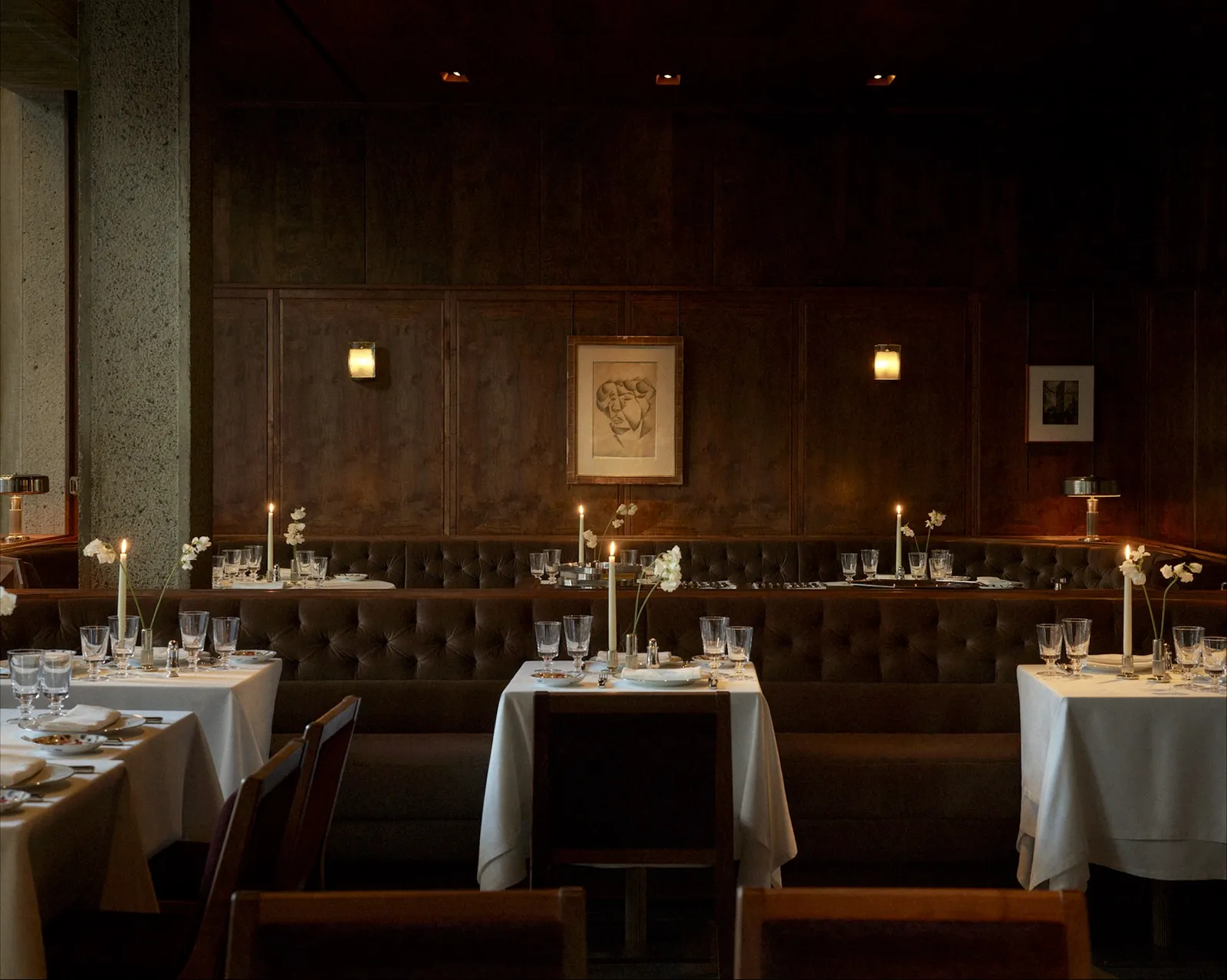
In Sotheby’s new global HQ, Roman and Williams creates a dining destination that packs in atmosphere, narrative, and some seriously delicious eats – including a recipe from Marcel Breuer’s childhood.
The descent into Marcel feels like stepping onto a film set. You enter the Breuer Building at 945 Madison Avenue on the Upper East Side, navigate the monumental Brutalist staircase or a thoughtfully added entry, and emerge into a world where raw concrete meets rich walnut paneling, where the hum of an open kitchen mingles with the low murmur of deal-making over wine from Sotheby’s cellars. Candlelight flickers across museum-quality artworks that aren’t just for show—they’re for sale. This isn’t mere dining; it’s a living gallery where culture, commerce, and craft converge.
Named for the building’s architect, Marcel Breuer, the restaurant opened in April 2026 as part of Sotheby’s transformation of the iconic 1966 structure into its global headquarters. Designed, owned, and operated by Roman and Williams in partnership with the auction house, Marcel represents the culmination of the firm’s holistic approach: interiors, furniture, lighting, tabletop, branding, and guest experience all under one creative view. It is their second restaurant after the beloved La Mercerie in SoHo, but far more ambitious.
View this post on Instagram
stir
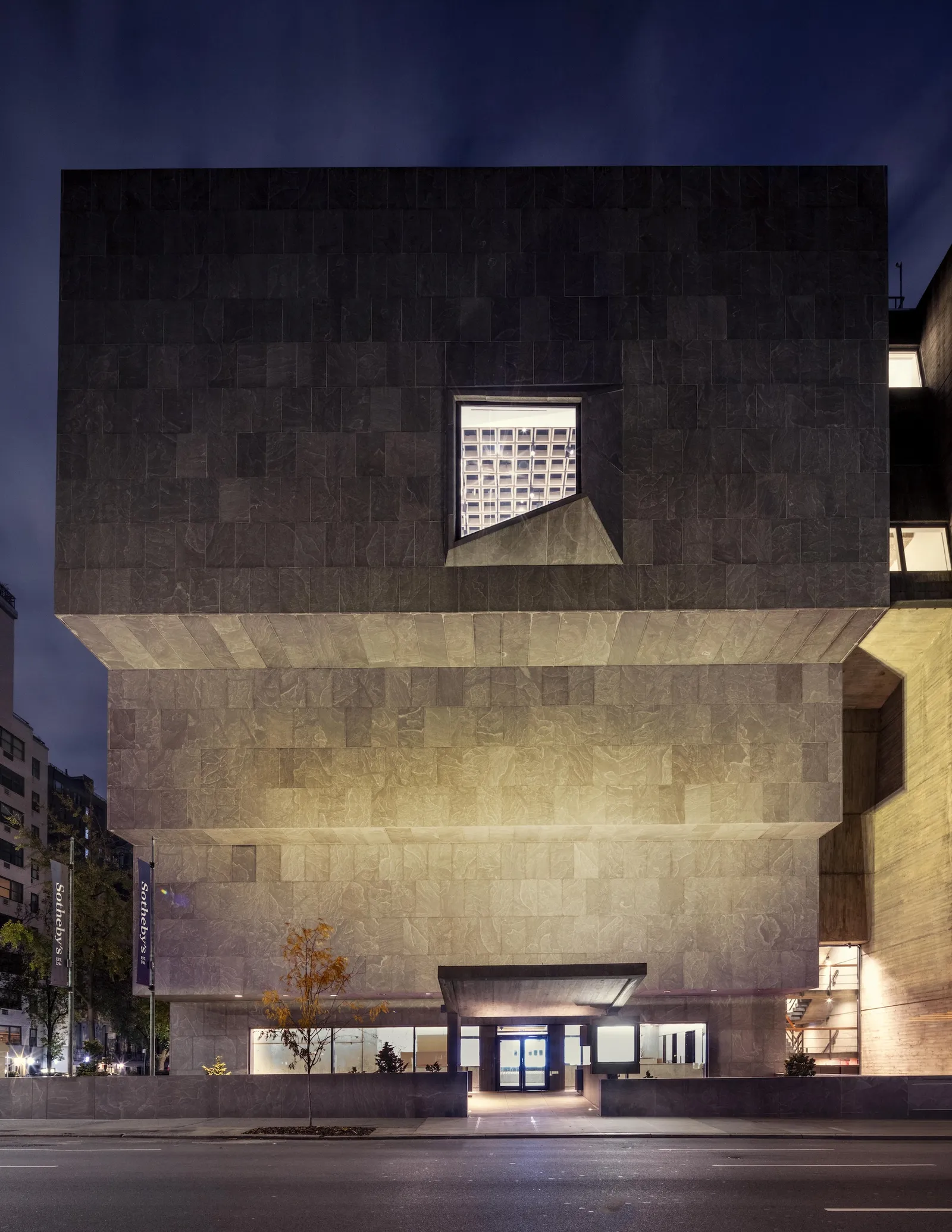
Designed by Hungarian-born architect Marcel Breuer as the third home for the Whitney Museum of American Art, the structure is a quintessential example of Brutalism—bold, unapologetic, and intellectually rigorous. Its cantilevered granite facade, trapezoidal “Cyclops eye” windows, bush-hammered concrete, bluestone floors, and coffered ceilings project power and permanence. Completed in 1966, it later housed outposts of the Metropolitan Museum of Art and the Frick Collection before Sotheby’s acquired it in 2023 for a reported $100 million.
Herzog & de Meuron, working with PBDW Architects, led a sensitive renovation that preserved Breuer’s core character while updating it for 21st-century use. The result is a “quasi-invisible” refresh: restored lobby lamps, enhanced systems, flexible gallery spaces, and an auction room ready for the global art market. Sotheby’s reopened the building in November 2025, positioning it as a free-to-enter hub for exhibitions, sales, and now, hospitality.
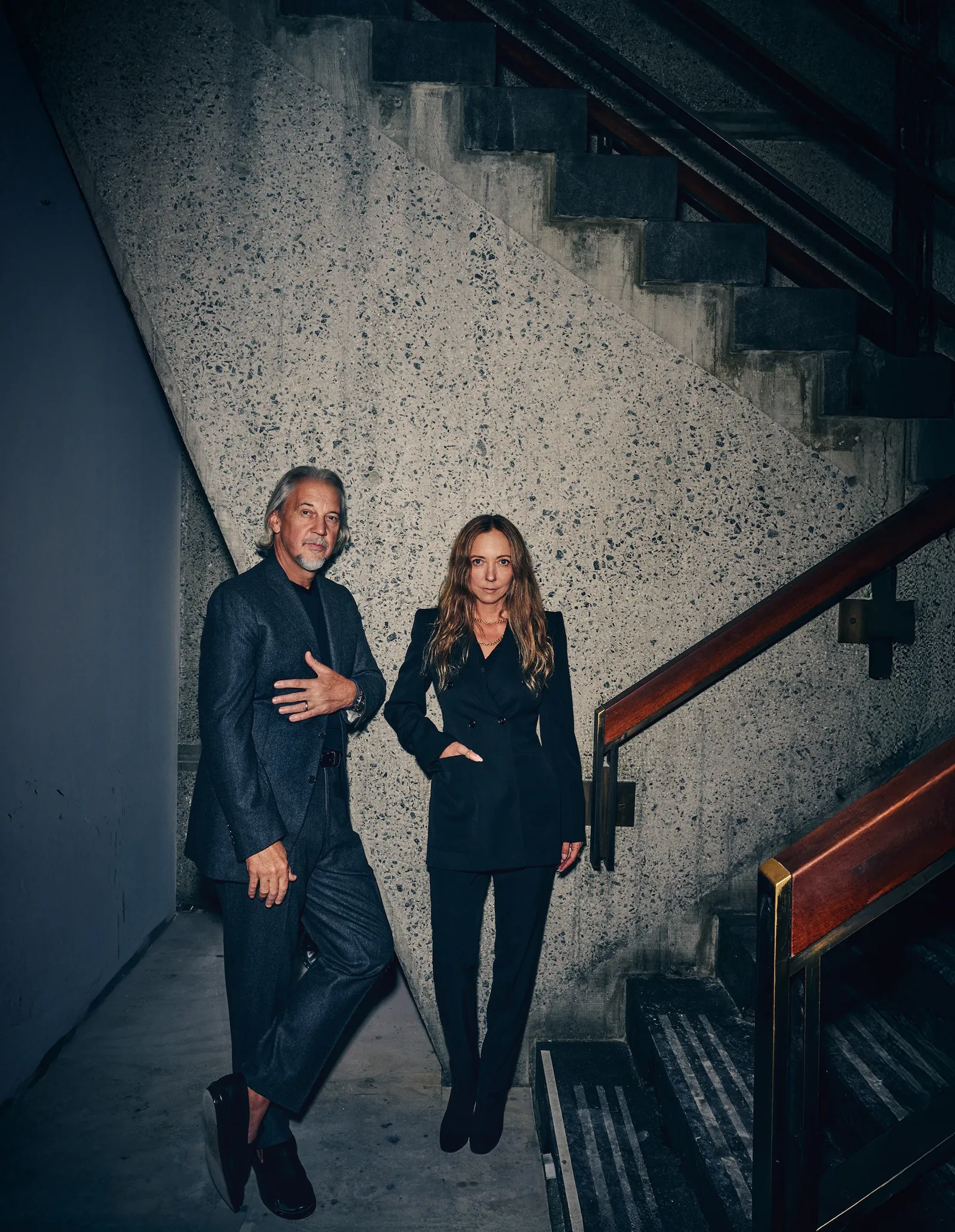
Roman and Williams founders Robin Standefer and Stephen Alesch approached the project with deep reverence for Breuer. Research revealed shared values: serial collecting, making, intellectual curiosity, and a Bauhaus-influenced commitment to honest materials and functional form. “The building is this big, powerful being, but we’re not afraid of it,” Stephen Alesch has said. “We love this beast. We want to dance with it.”
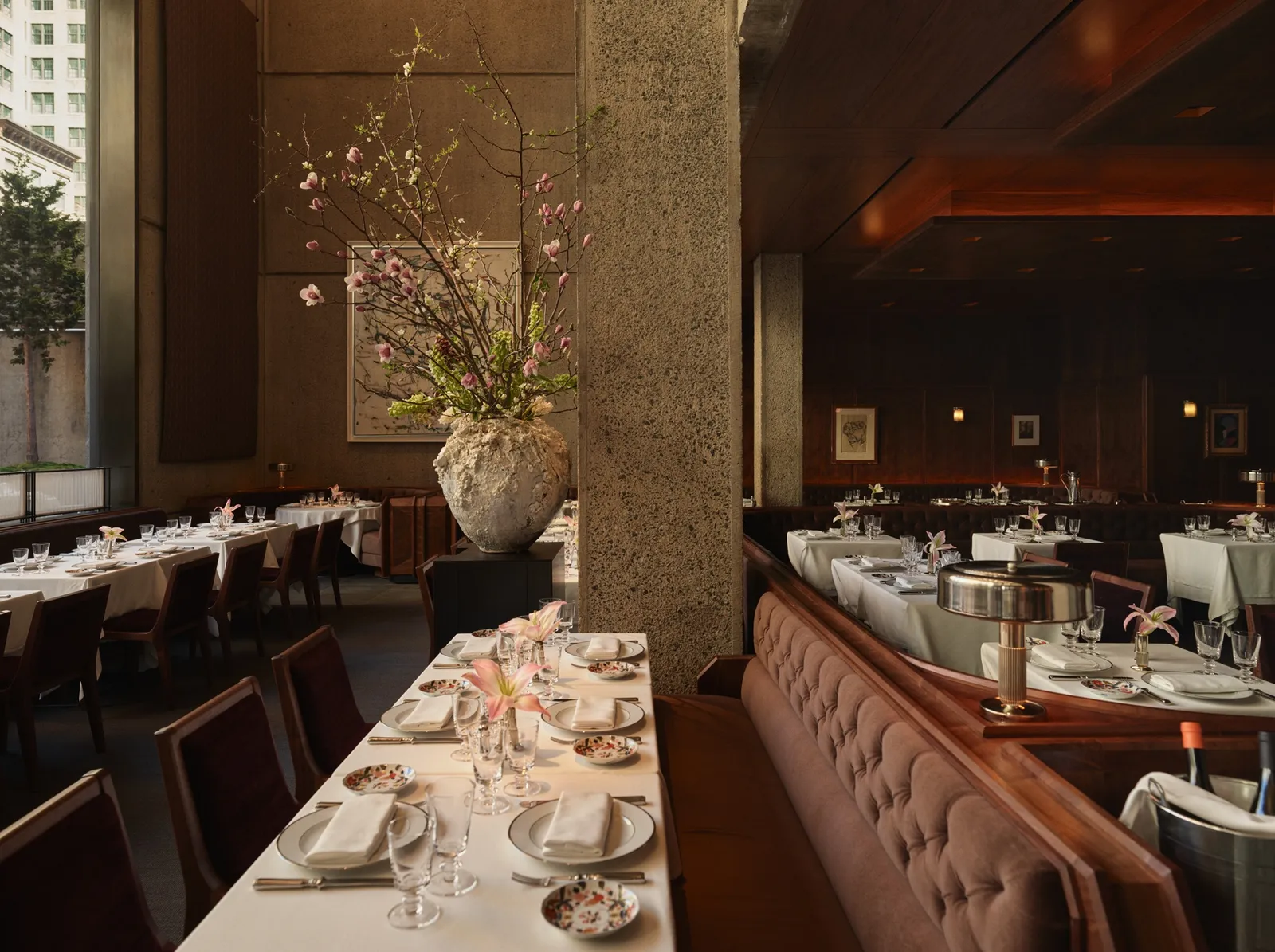
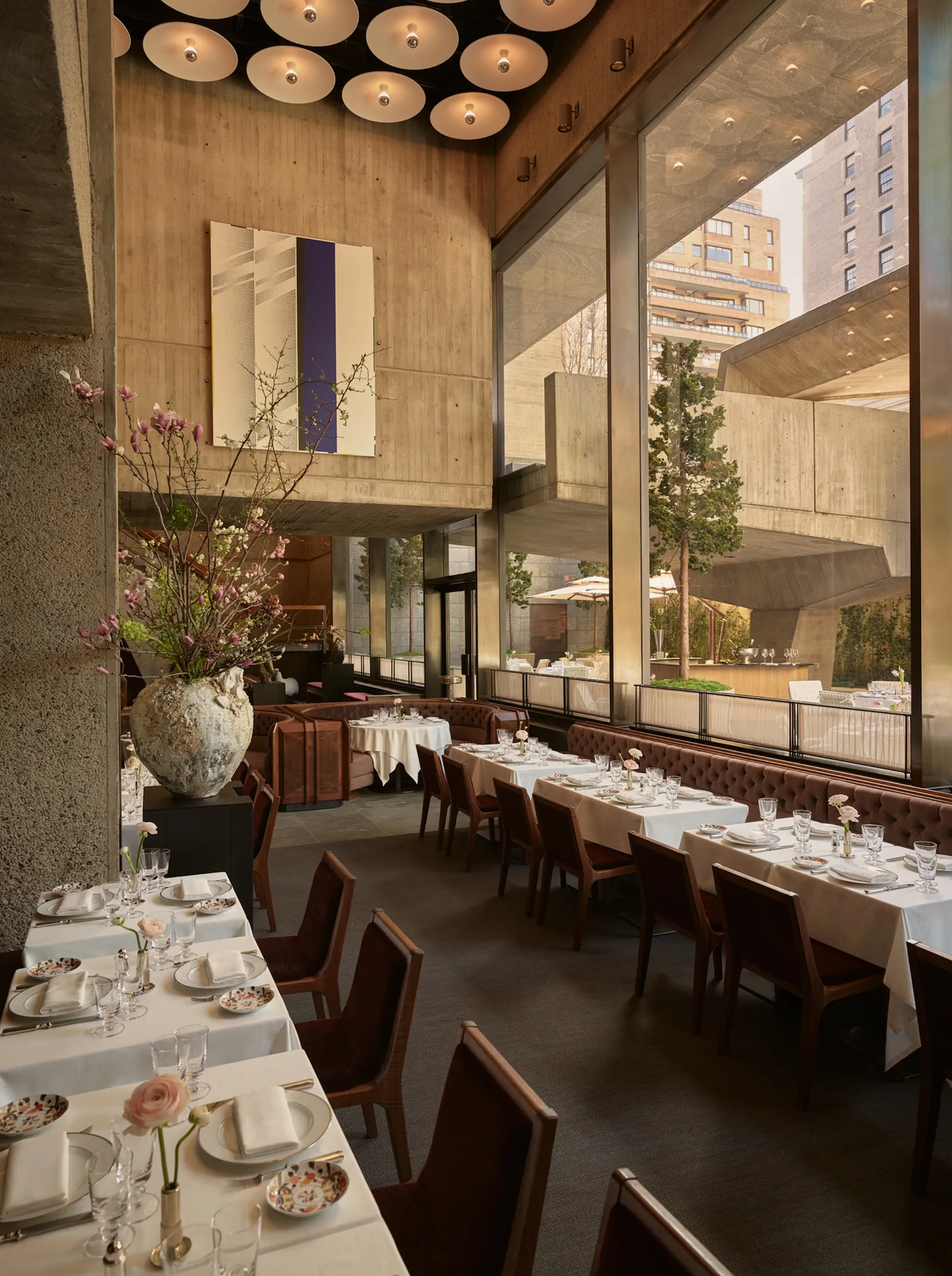
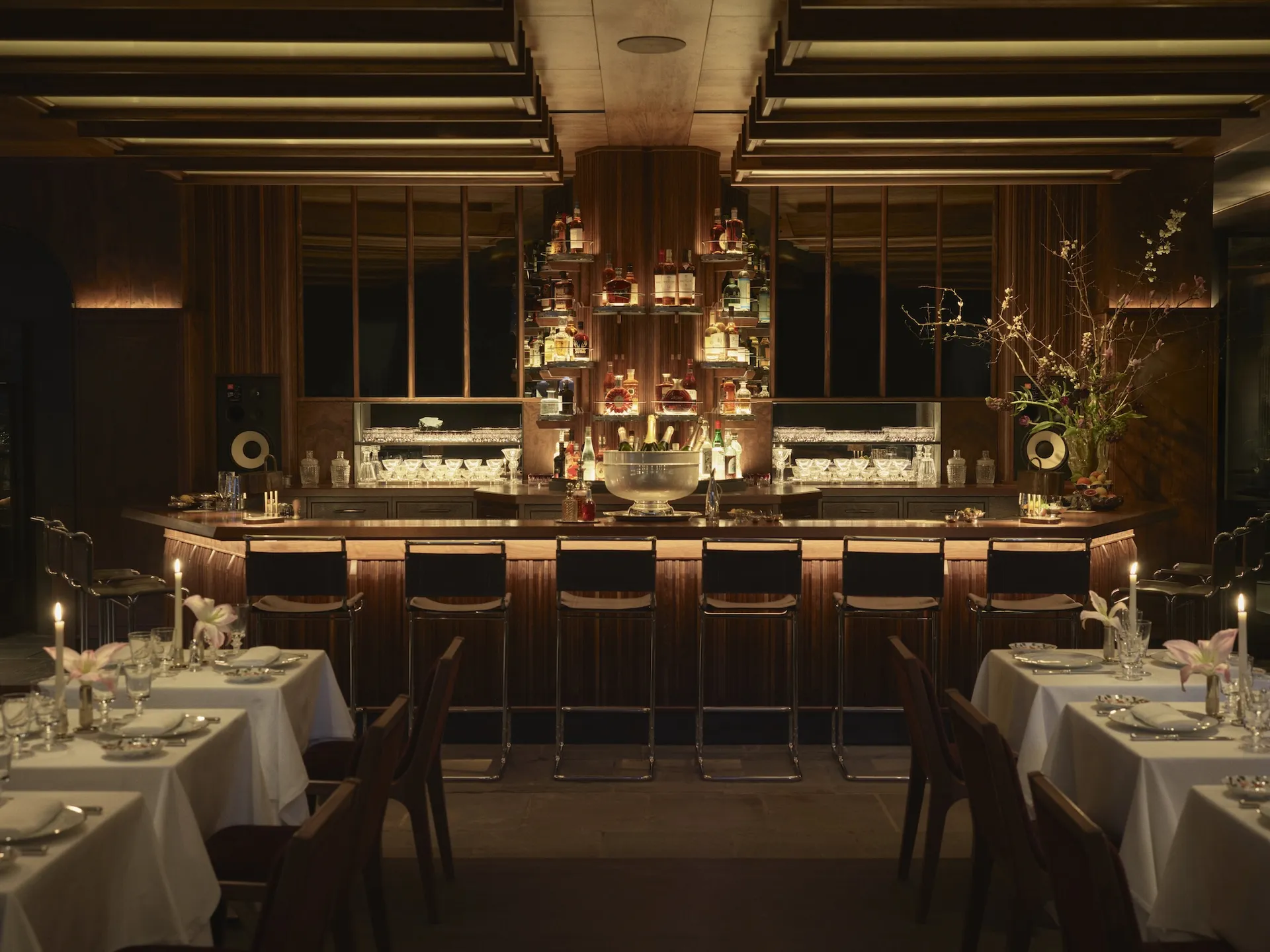
Rather than camouflage the Brutalism, they entered into dialogue. The restaurant occupies the lower level, where the architecture’s weight meets intimate warmth. Walnut paneling—Claro and Black Figured varieties, book-matched to celebrate natural grain anomalies—clads walls and ceilings. Triangular window geometries echo in banquette arms, beveled millwork, and trapezoidal credenzas. Tufted mohair banquettes in a dusty cocoa hue nod to 1966 Upper East Side refinement. Custom Roman and Williams Guild lighting in cast bronze complements vintage Breuer pieces.
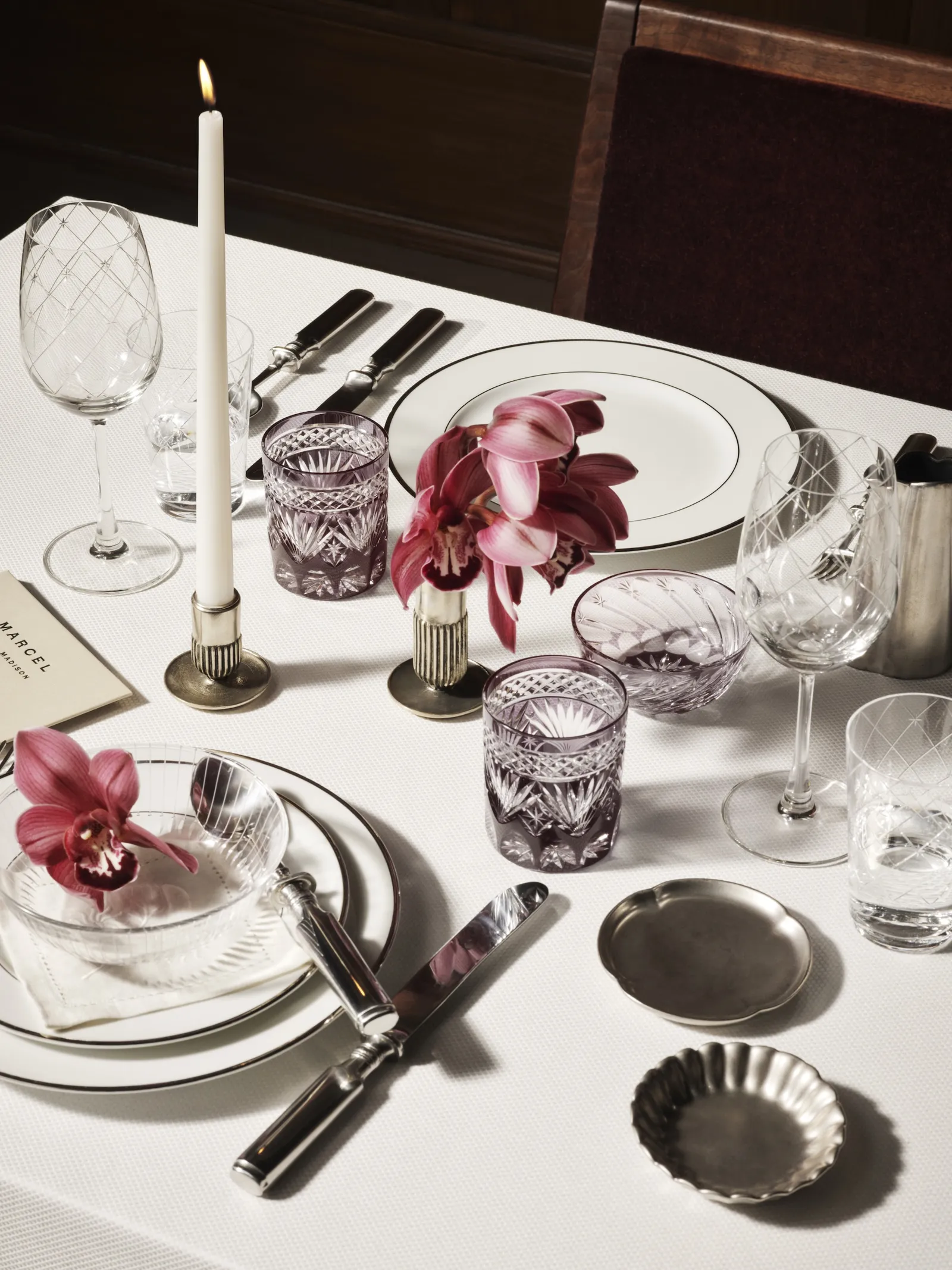
The space seats about 140, with views into a sculpture garden and an open kitchen at its heart. A pâtisserie counter (La Mercerie Pâtisserie) operates alongside, extending the experience from morning to night. Every detail—from furniture to glassware—forms the “Marcel Collection,” available for purchase, blurring lines between dining and acquisition.
cin
Robin Alesch has described owning and designing a restaurant as “the most cinematic thing you can do.” At Marcel, that vision manifests in staged movements: diners descending the dramatic staircase into warm, low-lit intimacy; the theater of the open kitchen; rotating Sotheby’s masterworks on the walls (think de Kooning, Frankenthaler, Kelly) alongside vitrined objects. The room changes with each visit as pieces sell and new ones arrive.
This narrative layering extends beyond visuals. Marcel embodies an “eco-system” where art, design, food, and commerce coexist without the constraints of a traditional museum. Guests can admire a painting, bid on it mentally or literally, and pair it with a meal. The Brutalist shell provides drama; Roman and Williams adds humanity—texture, warmth, tactility.
Critics have noted the tension. Some praise the warmth injected into cold concrete; others, like in Grub Street, call it “overcurated” with walnut overlays softening Breuer’s “magisterially chilly interior.” Yet even skeptics acknowledge the ambition: a dining room as living gallery in one of New York’s most significant architectural landmarks.
flow
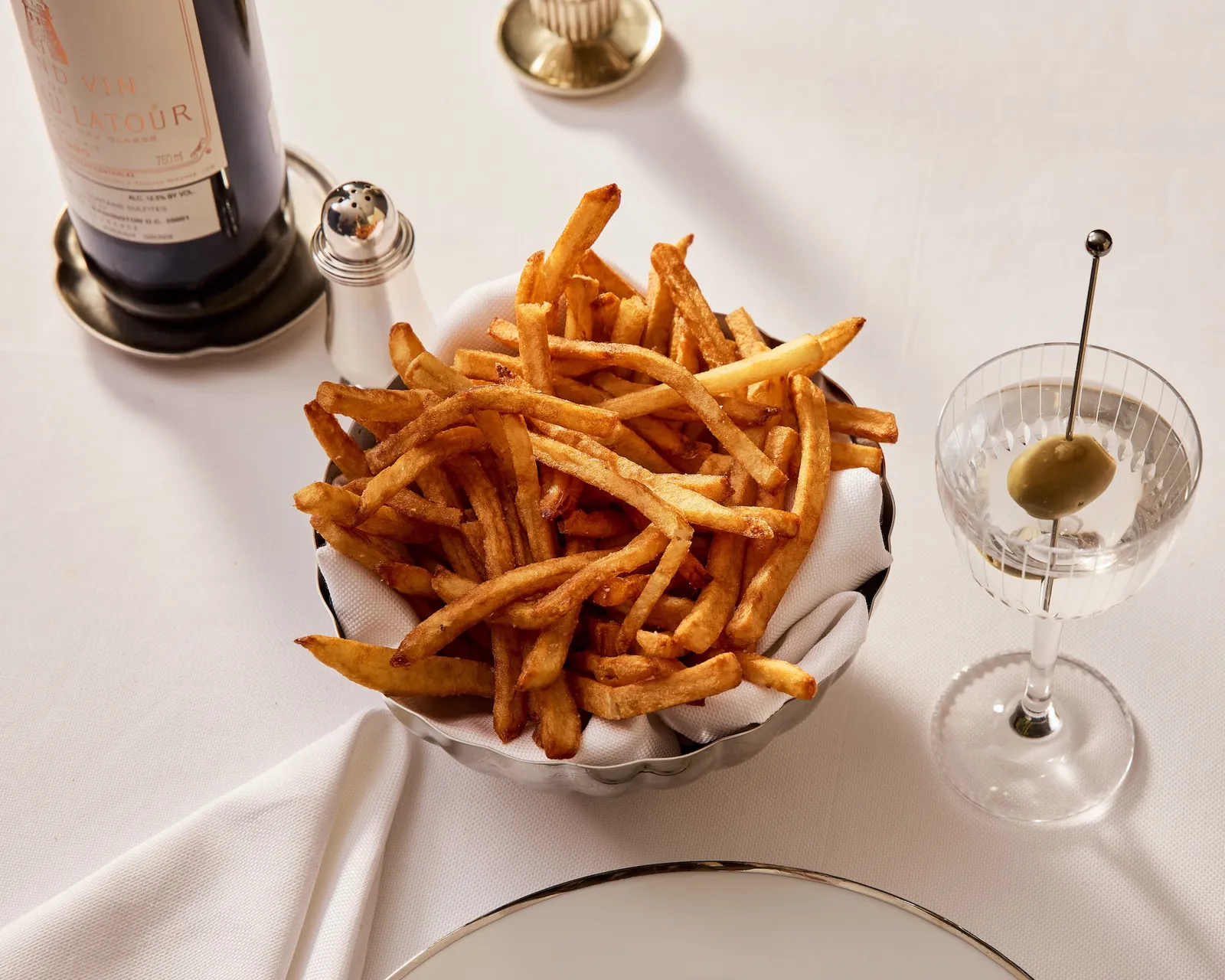
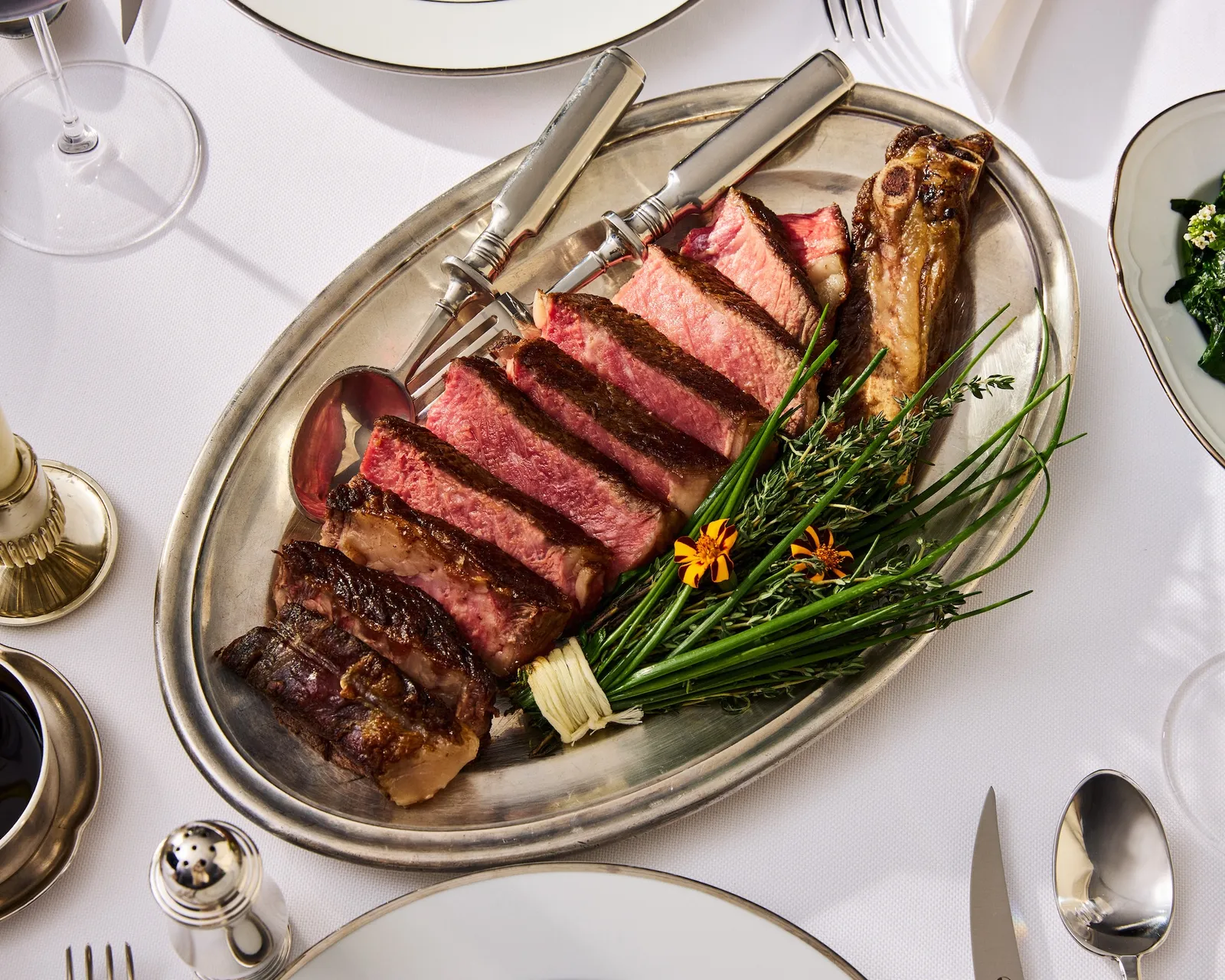
Chef-partner Marie-Aude Rose, who also helms La Mercerie, leads the kitchen with executive chef Juan Moncalvo. The menu is labeled “continental”—rooted in French technique but expansive, reflecting Breuer’s Hungarian heritage and broader influences. Expect escargots, sole meunière, confit duck legs, côte de boeuf, and a “Que voulez-vous” section for customizable steaks or fish.
Standouts nod to history and memory. Chicken paprikash honors Breuer’s roots, rumored to draw from his mother’s recipe—a comforting Hungarian dish with tender chicken in a paprika-spiced sauce, evoking childhood in a modernist master’s life. Desserts shine, with pastry chef Rae Gaylord offering Dobos tortes, madeleines, and Paris-Brest.
Inspiration flows from art too. Rose cites Claude Monet’s Giverny—its blue kitchen and yellow dining room—as sparking ideas like lobster with turmeric sauce. The menu balances discipline with range, allowing French classics alongside personal and architectural storytelling.
Wines come from Sotheby’s collections, often available for purchase. Cocktails arrive in weighty Brutalist-inspired coupes. The overall effect is refined yet approachable, serious about craft without stuffiness.
kismet
Robin Standefer and Stephen Alesch built their reputation on total environments. From the Boom Boom Room to the Met’s British Galleries and their Guild shop/restaurant hybrid, they excel at blending historical reverence with contemporary vitality. Marcel pushes this further: a complete vision encompassing every sensory and commercial element.
Their Guild produces custom pieces for the space—lighting, furniture, tabletop—that extend the dialogue with Breuer. Materials emphasize honesty: heavy forms meet lightness, weight meets warmth. This mirrors the architect’s own explorations of form, shadow, and human scale.
The partnership with Sotheby’s was natural. The auction house offered freedom to create a vibrant ecosystem, unlike more rigid institutional settings. The result feels like an extension of the firm’s know: objects tell stories, spaces shape experiences, and commerce can elevate culture.
straddle
Marcel arrives at a moment when New York’s culture institutions blur boundaries. Auction houses like Sotheby’s compete with museums not just for sales but for experiences. Restaurants have long been social and artistic hubs—think The Four Seasons or past gallery cafés—but Marcel integrates dining into the art market more seamlessly.
Its location enhances this. The Upper East Side’s mansion-lined streets contrast with the Breuer’s modernist punch. Inside, the restaurant activates the building’s lower level, drawing visitors beyond exhibitions into sustained engagement. Outdoor seating and all-day elements (breakfast, lunch, brunch on weekends) broaden accessibility.
Reviews highlight its status as a “mandatory visit” on the social circuit. High-profile sightings—David Geffen, Lauren Santo Domingo, Kelly Wearstler—underscore its role as a power-dining spot. Yet the design aims for broader appeal: cinematic but intimate, narrative-driven but delicious.
scope
Central to Marcel’s storytelling is the chicken paprikash. Breuer, born in 1902 in Pécs, Hungary, grew up in a cultured environment before studying at the Bauhaus and reshaping modernism. This dish evokes that heritage—simple, soulful, rooted in paprika-rich Hungarian cuisine.
While exact family recipes remain private, Marcel’s version likely features bone-in chicken simmered in a sauce of onions, Hungarian sweet and hot paprika, garlic, tomatoes or peppers, and finished with sour cream or crème fraîche for velvety richness. Served with egg noodles or spaetzle, it bridges Old World comfort with refined technique.
In the context of Breuer’s concrete legacy, it humanizes the architect. A man who designed monumental forms also enjoyed humble, flavorful home cooking. Including it on the menu is a gesture of kinship—Roman and Williams connecting through craft across decades. Diners taste not just food, but narrative.
fin
Marcel isn’t static. Rotating artworks ensure novelty. The pâtisserie extends hours and offerings. As Sotheby’s HQ evolves, the restaurant will host events blending auctions with dinners, further embedding it in the cultural calendar.
It exemplifies a trend: hospitality as cultural infrastructure. In an era of experiential consumption, spaces like this—where you can eat, admire, and acquire—feel prescient. Roman and Williams has created more than a restaurant; they’ve crafted a chapter in the Breuer Building’s ongoing story.
Descending those stairs, one enters not just a dining room but a dialogue across time: Breuer’s rigor meeting contemporary warmth, Hungarian flavors alongside French finesse, art and commerce in harmonious tension. In a city of fleeting trends, Marcel offers substance, craft, and a cinematic escape grounded in New York’s architectural and cultural bedrock.
Related Articles
Jonathan Anderson Just Redesigned What a Dior Bag Is Supposed to Do
A new hardware update to Cannage arrives for Winter 2026/2027, and it might be the […]