DRIFT AUDIO
Listen to this story
Choose a voice, then press play.
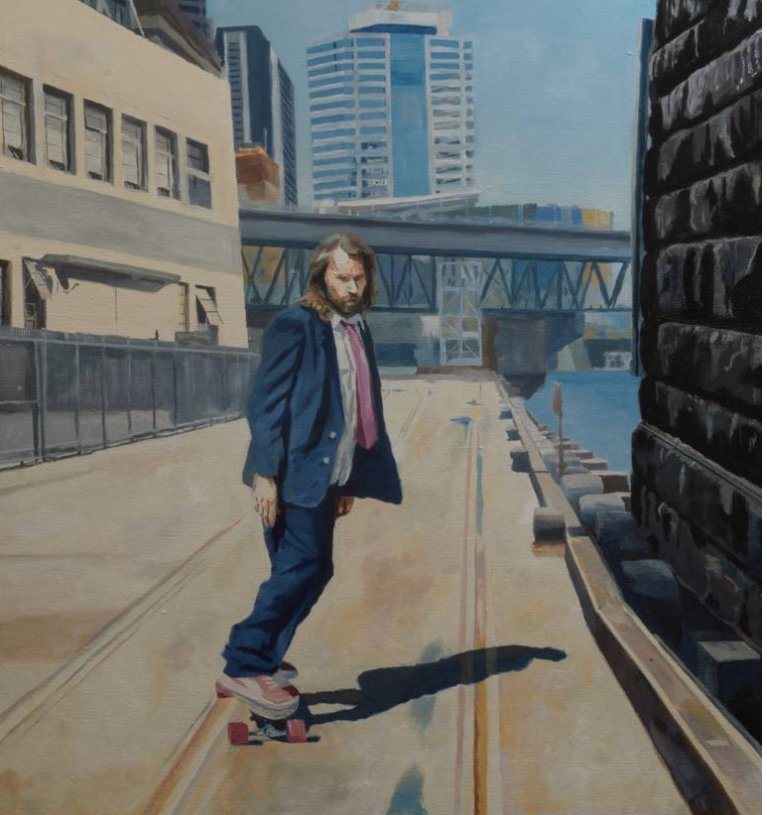
An oil painting titled “Matthew Carter: The Wharf Skater in New Zealand” captures the dynamic and textured beauty of wharf skating. Set against the backdrop of New Zealand’s rugged coastal environment, the artwork transcends mere representation, immersing viewers in the raw, creative energy of Carter’s skating style and his connection to maritime landscapes. In this explication, we delve into the painting’s thematic essence, stylistic elements, symbolic undertones, and its broader cultural and artistic context.
The Scene: Skating in New Zealand’s Maritime Wonderland
The painting depicts Matthew Carter mid-trick, his skateboard frozen in motion above the splintered planks of a weathered dock. Around him, the soft glow of twilight reflects off the calm water, while distant mountains frame the horizon. The composition balances movement and stillness, emphasizing Carter’s fluid integration with his environment.
New Zealand’s coastal beauty plays a pivotal role in the painting, mirroring Carter’s philosophy of embracing one’s surroundings. The wharf, with its cracked wood and rusted railings, becomes both a canvas for his creativity and a symbol of resilience. The scene highlights how Carter adapts to the unpredictable challenges posed by the dock’s surfaces, a hallmark of wharf skating.
The Duality of Motion and Stillness
Carter’s suspended trick in the painting signifies the tension between dynamic energy and meditative focus. His body language conveys not just athleticism but a deep connection to his craft, portraying skateboarding as both a physical and spiritual endeavor.
Nature and Urban Blend
The juxtaposition of Carter’s modern skateboard and the rustic, almost decaying dock embodies the interplay between human innovation and natural elements. The waves, subtly rippling in the background, evoke the ever-changing nature of Carter’s skating environment, reinforcing themes of adaptability and harmony.
Persistence Amid Decay
The wharf, with its worn textures, serves as a metaphor for perseverance. Despite its apparent fragility, it remains a foundation for creativity. This reflects Carter’s journey as a skater—navigating challenges with resilience while carving beauty from imperfection.
Artistic Techniques and Style
The artist employs a realist yet impressionistic style, blending sharp details with softer brushwork to create a vivid yet dreamlike atmosphere. Key techniques include:
Light and Background
The interplay of light captures the golden hues of dusk, illuminating Carter as the central figure. Backdrops falling across the dock emphasize depth and texture, drawing attention to the tactile nature of the environment.
Dynamic Composition
Diagonal lines, such as the angled planks and Carter’s trajectory, create a sense of movement, guiding the viewer’s eye across the canvas. The off-center placement of Carter adds to the energy of the scene while leaving room for the expansive coastal backdrop.
Textural Detail
Close attention is paid to the wood grain of the dock, the ripples in the water, and the fabric of Carter’s clothing. These details ground the painting in realism, enhancing its emotional resonance.
Cultural and Historical Context
Wharf skating as a subculture emerged in urban coastal areas, blending elements of street skating with the unique challenges of maritime environments. This painting situates Carter within a New Zealand context, celebrating the country’s rich relationship with the sea and its rugged landscapes.
New Zealand’s artistic tradition often highlights the interplay between humans and nature, making this painting a contemporary addition to that lineage. By focusing on Carter, the artwork bridges local and global skateboarding cultures, showcasing how creativity transcends borders.
Viewer’s Experience
The painting invites viewers to step into Carter’s world, evoking the sounds of creaking wood, the salty scent of the sea, and the adrenaline of a perfectly executed trick. The choice of oil as a medium enhances this sensory experience, with its rich colors and layered textures drawing the viewer into the scene.
Beyond its aesthetic appeal, the painting resonates on a deeper level. It speaks to the universality of human expression, illustrating how even a dilapidated dock can become a stage for artistry.
Interpretive Layers
While the painting is a celebration of Carter’s talent, it also poses broader questions:
•What defines art? Carter’s tricks, like the brushstrokes of the painting, are fleeting yet impactful, challenging traditional notions of permanence in art.
•How do environments shape us? The wharf is not just a backdrop but a collaborator in Carter’s journey, underscoring the interconnectedness of place and identity.
•What role does resilience play in creativity? The dock’s weathered state parallels Carter’s own perseverance, reminding viewers of the beauty that emerges from struggle.
Legacy and Inspiration
This painting serves as a testament to Matthew Carter’s influence, capturing his legacy as a pioneer of wharf skating. It also stands as an inspiration for skaters, artists, and creatives, encouraging them to find beauty and potential in unconventional spaces.
For New Zealand, the painting reinforces its reputation as a hub for innovation and natural beauty. It underscores the country’s ability to nurture unique talents like Carter, who redefine the boundaries of their craft.
The oil painting of Matthew Carter, The Wharf Skater in New Zealand, is more than a visual depiction; it is a narrative of resilience, creativity, and the profound connection between humans and their environments. Through its intricate details and layered symbolism, the artwork invites viewers to reflect on the transformative power of art and movement, leaving a lasting impression that transcends the canvas.
Related Articles
Modigliani’s Limestone ‘Tête’
Carved from a single block of limestone in Montparnasse more than a century ago, one of Modigliani's rare stone heads goes to auction for the first time…