MEDICOM TOY 30th ANNIVERSARY EXHIBITION: A Milestone in the World of Art Toys and Cultural Convergence

June 5, 2026
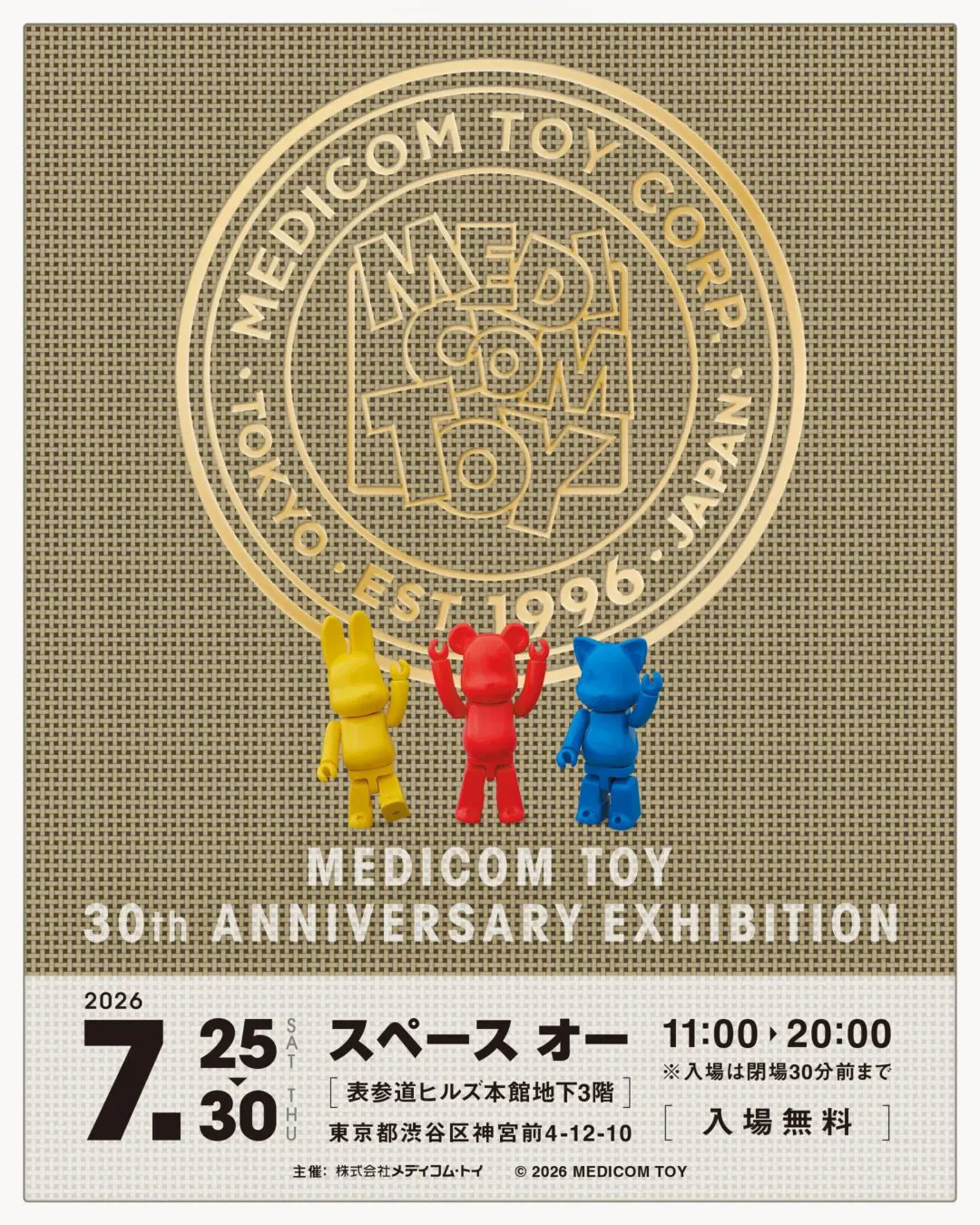
In the center of Tokyo’s fashionable Omotesando district, where haute boutiques and architectural landmarks converge to define contemporary Japanese design sensibility, a significant culture event is set to unfold. From July 25 to July 30, 2026, Space O at Omotesando Hills Main Building B3F will host the MEDICOM TOY 30th ANNIVERSARY EXHIBITION. This free-entry showcase, open daily from 11:00 AM to 8:00 PM (with last admission 30 minutes before closing), promises to celebrate three decades of innovation at the intersection of toys, art, fashion, and pop culture. Centered on the iconic BE@RBRICK, the exhibition arrives at a pivotal moment, marking not just a corporate anniversary but a testament to how a simple bear-shaped figure has reshaped global collectible culture.
For devotees of design and streetwear, this event is more than a product launch; it is a pilgrimage. Past exhibitions at the same venue have drawn long queues and fervent collectors, transforming Space O into a vibrant pop-up gallery where new releases, archival displays, and immersive themes collide. As Medicom Toy approaches this milestone, anticipation builds around what new narratives, connection, and large-scale installations will define the 30th anniversary celebration.
View this post on Instagram
stir
Medicom Toy’s story begins in 1996, when Tatsuhiko Akashi, then a computer industry professional seeking creative fulfillment, founded the company in a modest space in Tokyo’s Ebisu district—reportedly sharing premises with a tonkatsu restaurant. Disenchanted with the rigid corporate world, Akashi channeled his childhood passion for toys and American pop culture into a venture that would soon challenge traditional notions of playthings.
Early efforts focused on licensed figures and limited-edition products. Success came with the KUBRICK line in 2000—a blocky, articulated figure inspired by filmmaker Stanley Kubrick and echoing Lego aesthetics. Named partly after the Japanese word for nine (reflecting its nine-part construction), the Kubrick laid the groundwork for what would become Medicom’s signature style: precise engineering, cultural reverence, and collectible appeal.
The true breakthrough arrived in 2001. Tasked with creating gifts for attendees of the World Character Convention, Akashi devised a clever hybrid: grafting a bear head onto the Kubrick body. Thus, BE@RBRICK was born—initially a promotional item that quickly evolved into a consumer phenomenon. The first standard release, a simple 7cm (100%) white figure with a blue bear head and red “@” logo, captured imaginations with its minimalist charm and blank-canvas potential.
This origin story underscores a core know at Medicom: resourcefulness, skittish, and a deep respect for pop-cultural icons. Akashi’s view transformed what could have been a one-off novelty into a platform for artistic expression, where the bear’s simple form—cylindrical limbs, articulated joints, and smooth torso—serves as an ideal medium for reinterpretation.
flow
At its essence, BE@RBRICK is deceptively straightforward: an anthropomorphic bear figure available in scales from 100% (approximately 7cm) to towering 1000% (around 70cm). Yet this simplicity is its genius. The figure’s modular design and neutral base invite infinite customization—graphic prints, thematic overlays, material experiments, and high-concept collabs.
Over 25 years, BE@RBRICK has connected with an extraordinary roster spanning fashion, art, music, film, and haute. Streetwear powerhouses like BAPE, Supreme, and CLOT; high fashion names including Chanel, Louis Vuitton, and Comme des Garçons; artists such as KAWS, Hajime Sorayama, and Van Gogh Museum interpretations; and pop icons from Disney, Star Wars, and Pokémon. Each partnership expands the bear’s cultural footprint, turning it into a wearable statement, a gallery piece, or a limited-edition grail.
The culture impression is profound. BE@RBRICK helped pioneer the modern art toy movement, blurring boundaries between toy, design object, and fine art. Celebrities from Pharrell Williams to DJ Khaled have amassed impressive collections, while auction houses and resale markets attest to their investment value. Large-scale 1000% figures command attention in exhibitions and homes alike, their presence evoking both nostalgia and forward-looking creativity.
Beyond commerce, BE@RBRICK embodies themes of identity, heritage, and fusion. Japanese craftsmanship meets global influences; childhood wonder encounters adult sophistication. In an era of digital saturation, these tangible, limited objects offer a counterpoint—a physical connection to creativity and community. The bear’s enduring appeal lies in its universality: approachable yet sophisticated, play yet profound.
show
Since 2003, Medicom Toy’s annual exhibitions have become a calendar highlight for collectors worldwide. Space O at Omotesando Hills—a sleek, subterranean venue beneath one of Tokyo’s most prestigious shopping destinations—provides the perfect stage. Its location in the fashion-forward Omotesando district aligns seamlessly with Medicom’s ethos, where toys transcend play to become lifestyle and design statements.
Past themes reveal a commitment to immersive storytelling. “Candy Town” (2024) brought colorful, whimsical energy; “If MEDICOM TOY Had Existed 100 Years Ago” (2025) imagined a century of craftsmanship through a historical lens. These events typically feature hundreds of new releases across lines like BE@RBRICK, MAFEX, UDF, sofubi (soft vinyl), and more, alongside special displays, archives, and limited sales.
The 25th and 20th anniversary editions amplified the scale, drawing international attention and reinforcing Medicom’s role as a bridge between Japanese toy culture and global hype. Visitors experience not mere retail but spectacle: rows of oversized BE@RBRICKs, thematic installations, and the electric atmosphere of shared discovery.
For the 30th anniversary, expectations are sky-high. While full details are slated for announcement around June 24, 2026, patterns suggest a rich program: exclusive anniversary editions, perhaps retrospective displays tracing evolution from Kubrick roots to contemporary art collaborations, and innovative installations that honor the brand’s journey. The venue’s history as a consistent home since the 20th anniversary adds layers of continuity.
scope
Medicom Toy’s ascent mirrors broader shifts in contemporary culture. In the 1990s and early 2000s, the rise of streetwear and designer toys reflected a democratization of luxury and self-expression. BE@RBRICK epitomizes this: accessible in small sizes, aspirational in larger formats, and endlessly customizable to reflect personal taste or culture commentary.
Fashion crossovers have been particularly potent. Collaborations with brands like Nike, Human Made, and Jacquemus position BE@RBRICK as a wearable or displayable totem of taste. In horology and design circles, parallels emerge with limited-edition watches or architectural objects—rarity, narrative, and craftsmanship driving desire.
Artistically, BE@RBRICK aligns with movements like Pop Art and Superflat, where high and low culture intermingle. Artists use the figure to explore consumerism, nostalgia, and identity. Exhibitions elevate it to gallery status, while public installations and pop-ups democratize access. In music and entertainment, ties to figures like A$AP Rocky or Charli XCX contexts further embed it in lifestyle narratives.
Sustainability and heritage discussions also surface. As brands increasingly emphasize craft and legacy, Medicom’s consistent quality and innovative use of materials offer a model. The 30th anniversary provides an opportunity to reflect on evolution—perhaps incorporating retro-futurism, Japanese craftsmanship traditions, or forward-looking themes like AI and digital-physical fusion, resonant with Invent Blog’s explorations of cultural trends.
clue
Attendees at the 2026 exhibition can anticipate a multifaceted experience. New BE@RBRICK series releases, special 30th-themed colorways or chases, complementary lines (MAFEX action figures, sofubi characters), and immersive displays. Lottery systems or limited-purchase rules, common in past events, ensure fairness amid high demand. The free admission and central Tokyo location make it accessible, yet the hype ensures an energetic crowd.
For the Invent Blog readership—discerning enthusiasts of fashion, design, streetwear, and cultural crossovers—this event represents more than toys. It exemplifies how objects can carry stories, foster community, and drive innovation. In an age of fleeting digital trends, Medicom Toy demonstrates the power of tangible heritage and creative collaboration.
The 30th anniversary exhibition will likely weave retrospection with anticipation: honoring Akashi’s foundational view while charting the next chapter. Even if you’re a seasoned collector hunting rarities, a design aficionado appreciating form and function, or a culture observer noting shifts in hype and heritage, Space O in late July 2026 is the place to be.
As doors open on July 25, the bear will once again stand tall—symbolizing resilience, creativity, and the joyful persistence of play in adult worlds. Thirty years in, Medicom Toy isn’t just surviving; it’s thriving, brick by iconic brick, shaping how we see art, fashion, and the objects that define our times.
Related Articles
Hyrule’s Cutting Room Floor: The Scrapped Ocarina of Time Ideas That Could Save the Switch 2 Remake
A muted Direct reveal has fans nervous. Decades of cut content sitting in Nintendo’s archive […]