DRIFT AUDIO
Listen to this story
Choose a voice, then press play.
Super Mario is more than just a video game character. Over the past few decades, he has become an enduring cultural icon, influencing art, fashion, and popular media in ways that few other characters have achieved. One of the most compelling manifestations of his influence is the proliferation of Super Mario-themed street art found across cities worldwide. This genre of street art has emerged as a vibrant and visually engaging expression of fandom and nostalgia, often transforming mundane urban landscapes into colorful tributes to one of gaming’s most beloved franchises.
We take a photo journey through the world of Super Mario-themed street art, exploring its stylistic elements, thematic significance, and the cultural contexts in which it exists. By delving into specific works, artists, and locations, we aim to uncover how these murals, graffiti, and installations reflect the broader cultural impact of Super Mario and engage with issues such as urban revitalization, public art, and the interplay between digital and physical spaces.
The Origins and Evolution of Super Mario Street Art
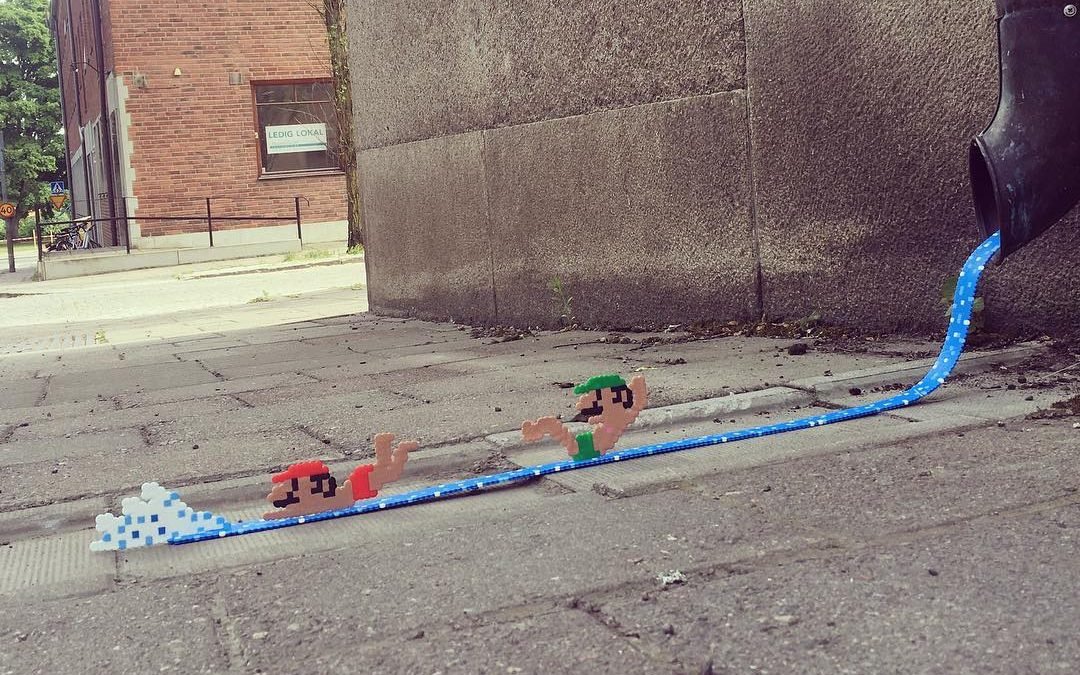
Super Mario-themed street art began to gain momentum in the early 2000s, at a time when video game culture was becoming more widely accepted as a legitimate form of artistic expression. Initially, the artwork was primarily created by anonymous street artists who were inspired by the 8-bit graphics and pixelated designs of early Mario games. These artists often used stencils, spray paint, and mosaic tiles to replicate the blocky aesthetics of the original Nintendo Entertainment System (NES) games. Classic images such as Mario jumping, power-up mushrooms, and coin blocks began appearing on urban walls and alleyways, serving as both nostalgic reminders of childhood and playful disruptions of the urban environment.
One of the earliest known examples of Super Mario street art is the series of mosaic installations by the French street artist Invader, who became famous for placing pixelated characters from video games on buildings around Paris. His work, which often features Mario alongside other 8-bit characters like Space Invaders, blends video game culture with the visual language of traditional street art, creating a bridge between digital and physical art forms.
As the movement evolved, new artists began incorporating more elaborate and stylized interpretations of Mario, Luigi, Princess Peach, and other characters. The advent of social media and online platforms like Instagram allowed artists to share their work with a global audience, leading to a proliferation of Mario-themed murals and graffiti in cities such as New York, Los Angeles, Berlin, and Tokyo. Today, Super Mario street art has become a diverse and multifaceted genre, ranging from simple tags and stencils to large-scale murals and interactive installations.
From Pixelated to Pop Art
One of the most striking features of Super Mario-themed street art is the diversity of styles and techniques employed by artists. Some works remain faithful to the original 8-bit or 16-bit graphics, emphasizing the pixelated aesthetic that defined early Mario games. These pieces often use stencils or small ceramic tiles to recreate the digital look, with each “pixel” represented by a distinct square of color. This approach not only pays homage to the limitations of early video game graphics but also highlights the ingenuity of artists who adapt digital imagery to physical media.
Other artists opt for a more contemporary approach, reimagining Mario and his friends in the style of pop art or surrealism. For instance, in the Wynwood Walls art district of Miami, a large mural by artist Ron English depicts Mario as a muscular, hyper-realistic figure, subverting the character’s traditionally cartoonish appearance. This piece, titled *Mighty Mario*, challenges viewers to reconsider their perceptions of Mario, blurring the lines between innocence and power, nostalgia and parody.
In New York City’s Lower East Side, a collaboration between street artists King Bee and Buff Monster resulted in a mural that juxtaposes the colorful world of Super Mario with the gritty textures of urban graffiti. The mural features Mario navigating a surreal cityscape filled with monstrous versions of Goombas and Koopa Troopas, blending elements of street art, comic book illustration, and psychedelic pop art. The bold use of color and intricate detailing in this mural reflect the influence of contemporary art movements on Super Mario-themed street art, demonstrating how artists are pushing the boundaries of what this genre can achieve.
Thematic Significance: Nostalgia, Resistance, and Urban Play
Thematically, Super Mario-themed street art is rich with layers of meaning that go beyond mere tribute. At its core, the genre is deeply rooted in nostalgia, with many works serving as visual love letters to a character and franchise that defined the childhoods of countless individuals. By placing Mario in unexpected urban contexts, artists tap into a collective memory that resonates with viewers, evoking a sense of shared cultural history.
However, Super Mario street art is not solely about nostalgia. It also engages with themes of resistance and subversion, as artists use the character to critique social and political issues or disrupt the monotony of urban life. For example, a mural in Berlin’s Kreuzberg district reimagines Mario as a graffiti artist himself, spraying a giant question block onto a blank wall. The piece, titled *Mario the Rebel*, symbolizes the act of reclaiming public space and challenges conventional notions of who gets to create and control art in the city.
Similarly, a series of Mario-inspired pieces by British street artist Banksy critique consumer culture and the commodification of art. In one notable work, Mario is depicted as a tired, disillusioned figure sitting atop a pile of gold coins, his once-joyful smile replaced by a weary expression. The juxtaposition of Mario’s cheerful image with themes of exhaustion and disillusionment serves as a powerful commentary on the relentless pursuit of wealth and success, suggesting that even cultural icons are not immune to burnout and disillusionment.
Beyond resistance, Super Mario-themed street art also encourages a sense of playfulness and whimsy. Many pieces invite interaction from viewers, incorporating elements of the game world into the real world. In Tokyo’s Harajuku district, for instance, an installation by the artist Shigeo Kaneda uses three-dimensional blocks and pipes to create a “real-life” Super Mario level, complete with platforms and ladders that passersby can climb and explore. This interactive approach transforms the street into a playground, blurring the lines between art and environment, and inviting viewers to step into the fantastical world of Mario.
Super Mario Street Art and Urban Revitalization
Super Mario-themed street art has also played a role in urban revitalization projects, helping to transform neglected areas into vibrant, engaging spaces. Cities like Detroit and Mexico City have commissioned Mario-inspired murals as part of larger efforts to beautify neighborhoods and promote community engagement. These projects often involve collaboration between artists, local residents, and city officials, highlighting the potential for public art to foster dialogue and bring people together.
For instance, in Mexico City’s Roma Norte neighborhood, a massive mural by the artist collective Boa Mistura features Mario and Luigi running along a vibrant mosaic of colors and shapes. The mural, which covers the entire side of a building, was created in partnership with local youth groups and aims to inspire creativity and optimism in a community that has faced economic challenges. The project has become a source of pride for residents and a popular destination for tourists, demonstrating how Super Mario street art can contribute to the cultural and economic vitality of a city.
Super Mario’s Enduring Legacy in Street Art
Super Mario-themed street art is a testament to the character’s enduring cultural significance and versatility. Through a wide range of styles, techniques, and themes, artists around the world have reinterpreted Mario and his friends in ways that resonate with contemporary audiences while honoring the franchise’s legacy. Whether serving as a nostalgic tribute, a form of resistance, or a playful reimagining of urban spaces, Super Mario street art continues to evolve, proving that the impact of this beloved video game character extends far beyond the screen.