DRIFT AUDIO
Listen to this story
Choose a voice, then press play.
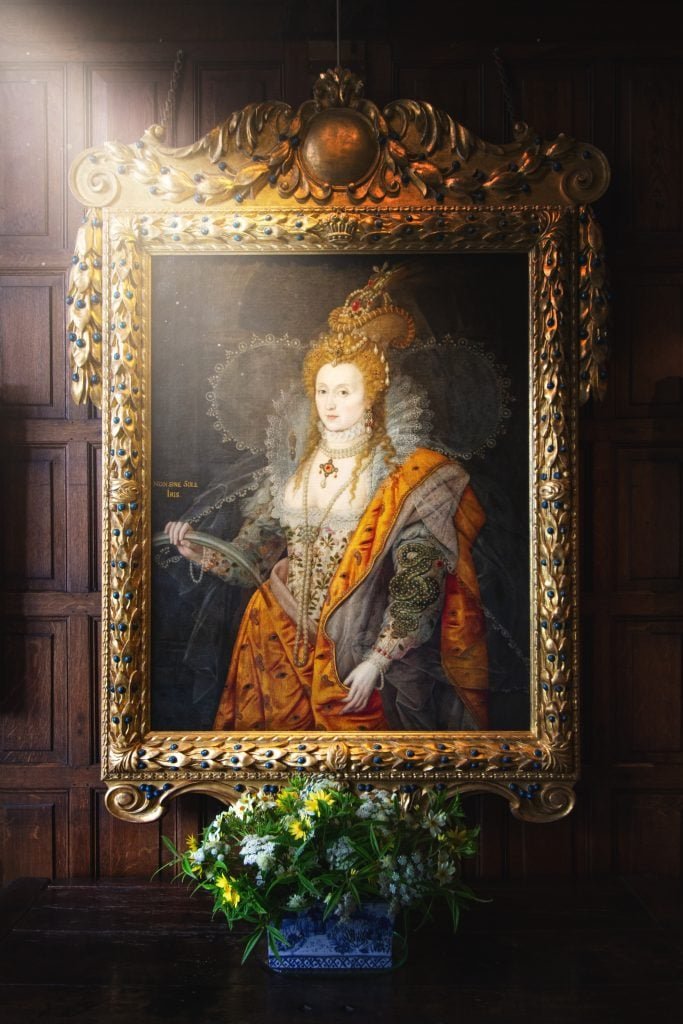
The restoration of the famed “Rainbow Portrait” of Queen Elizabeth I has revealed intriguing new details about its creation and symbolism. Painted between 1600 and 1603, the portrait has long fascinated scholars and the public with its depiction of an ageless Elizabeth, holding a rainbow with the Latin inscription “Non sine sole iris” (No rainbow without the sun). The painting, which recently returned to Elizabeth’s childhood home at Hatfield House, underwent meticulous conservation, uncovering new findings that further illuminate its history and significance.
One of the most significant revelations is that the portrait is now considered to be posthumous, rather than completed during Elizabeth’s lifetime. Nicole Ryder, the conservator in charge, found underdrawings suggesting that the face was created using a pre-existing pattern, indicating that Elizabeth did not sit for the portrait herself. Instead, the artist took liberties to present an idealized, youthful version of the queen, akin to what we might consider “Photoshopping” today. This artistic approach aligns with the Tudor-era emphasis on portraying Elizabeth as the “Virgin Queen,” eternally youthful and chaste, despite her being in her 60s when the portrait was created.
The restoration process also uncovered that several elements of the painting had changed over time. For example, Elizabeth’s cloak, currently appearing orange, was originally painted red and lined with purple made from crushed insects. The once-vibrant rainbow, now faded to gray, was initially depicted in a spectrum of colors, further enhancing the painting’s visual symbolism. The cloak also features curious motifs like floating eyes and ears, symbolizing Elizabeth’s all-seeing and all-hearing nature, as well as a serpent on her sleeve, representing wisdom.
Another fascinating aspect of the restoration is the potential attribution of the painting. While traditionally ascribed to various artists, including Federico Zuccaro, Isaac Oliver, Nicholas Hilliard, and Marcus Gheeraerts the Younger, new evidence suggests a possible link to John de Critz. A bill of payment in the Hatfield House Archives details de Critz’s work on a portrait of the queen, which could correlate with alterations revealed during the conservation process. This discovery offers a fresh perspective on the elusive authorship of the “Rainbow Portrait”.
The painting’s return to Hatfield House’s Marble Hall, where it serves as a focal point, marks a significant moment in its history. Hatfield House itself holds deep historical connections to Elizabeth I, who spent part of her childhood there and was later confined at Hatfield by her half-sister, Queen Mary. The house and its grounds, including the famous “Elizabeth Oak,” where the queen learned of her ascension to the throne, provide a fitting backdrop for this iconic representation of the monarch.
Despite these findings, the portrait remains enigmatic, with many symbols and motifs open to various interpretations. The restoration has provided new clues, but much of the portrait’s purpose and creation are still shrouded in mystery. As Vannis Jones Rahi, head of archives and collections at Hatfield, noted, “This portrait of Elizabeth is enigmatic because there is so much that is still unknown surrounding the painting’s purpose and creation and so much rich symbolism that can be interpreted differently through so many different lenses”.
The Rainbow Portrait’s conservation journey and the discoveries made along the way continue to add layers to our understanding of Elizabethan art and iconography, making it a masterpiece that will likely intrigue and inspire for generations to come.