DRIFT AUDIO
Listen to this story
Choose a voice, then press play.
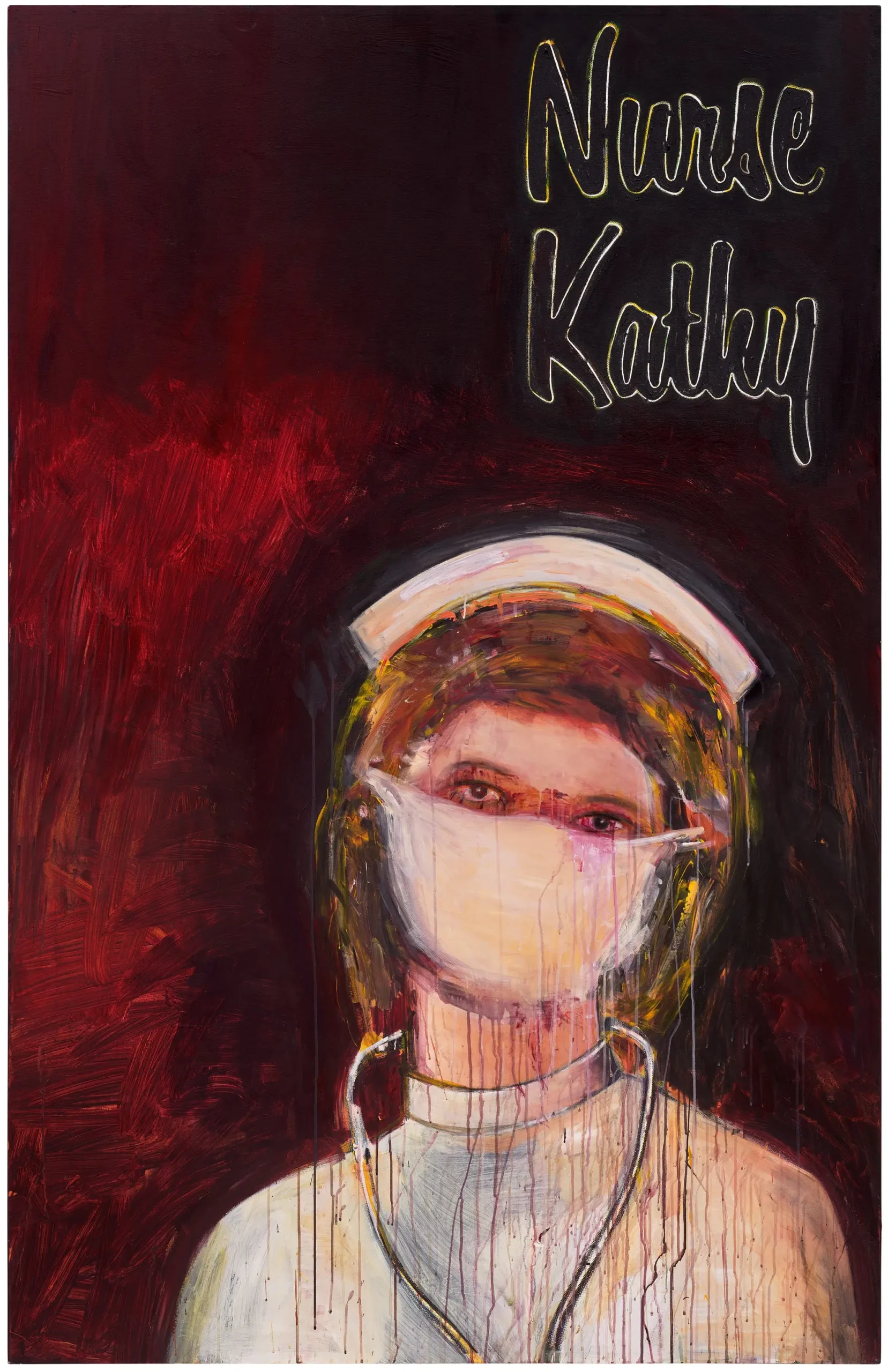
Richard Prince’s “Nurse Kathy” (2006–2008) stands among the most recognizable works from the artist’s infamous Nurse series, a body of work that transformed forgotten mid-century pulp paperback imagery into one of the defining view languages of postmodern American art.
stir
The large-scale mixed-media painting—executed in inkjet print and acrylic on canvas—depicts a masked nurse rendered with both seductive glamour and psychological unease. Dressed in a stark white uniform and partially concealed behind a surgical mask, the figure appears suspended between fantasy, anonymity, and threat. Prince overlays the appropriated paperback imagery with gestural drips, smeared acrylics, and luminous fields of color that evoke the emotional intensity of Abstract Expressionism.
flow
The work originates from Prince’s long-running fascination with vintage pulp romance novels, particularly nurse-themed paperbacks from the 1950s and 1960s. Rather than inventing imagery from scratch, Prince scanned and enlarged existing covers before reworking them through painterly intervention. “Nurse Kathy” specifically preserves the typography and view melodrama of the source material while simultaneously destabilizing it through abstraction, concealment, and scale.
scope
What makes the Nurse paintings culture potent is the tension they sustain between attraction and critique. The nurse archetype historically functioned within American popular culture as a fetishized figure—professional yet romanticized, caring yet sexualized. Prince amplifies these contradictions rather than resolving them. The surgical mask erases individuality while introducing horror-film undertones, transforming the caregiver into an inscrutable presence. Paint drips resembling blood or bodily residue disrupt the pristine whiteness associated with medical imagery.
gen
The series also occupies a critical place within appropriation art and the legacy of the Pictures Generation. Alongside figures like Cindy Sherman and Sherrie Levine, Prince challenged conventional ideas of originality and authorship by repurposing preexisting media imagery. His earlier rephotographed Marlboro advertisements already dismantled myths surrounding American masculinity; the Nurse works extend that strategy toward femininity, labor, and desire.
ref
In view, “Nurse Kathy” exists in dialogue with painters like Jackson Pollock and Willem de Kooning. Prince’s drips, stains, and gestural marks parody the heroic masculinity historically associated with Abstract Expressionism while merging it with disposable pulp aesthetics. This collision between “high” and “low” culture remains central to the painting’s enduring relevance.
leg
Commercially and institutionally, the Nurse series became one of the defining successes of Prince’s career. Exhibited through major galleries including Gagosian and Gladstone Gallery, the paintings achieved blue-chip auction status, with several works surpassing eight figures at auction. “Nurse Kathy” itself emerged during a mature period of the series when Prince intensified the abstraction and psychological charge of the compositions.
culture
The work’s legacy extends far beyond fine art. The Nurse imagery influenced fashion connections, music culture, and broader conversations about image ownership in the digital era. In retrospect, Prince’s method of sampling, recombination, and recontextualization appears strikingly prophetic in an age dominated by memes, repost culture, and AI-generated imagery.
impression
At its core, “Nurse Kathy” remains deliberately unresolved. It oscillates between critique and complicity, glamour and grotesque, irony and sincerity. That ambiguity is precisely what allows the work to persist as one of the defining American artworks of the early twenty-first century—an image that continues to provoke debates about gender, authorship, fantasy, and culture consumption.
Related Articles
Joël Andrianomearisoa Finds More Than One Black in a Square of Buttons
In La Guerre des Boutons I, a field of ordinary fasteners turns a modest textile […]