DRIFT AUDIO
Listen to this story
Choose a voice, then press play.
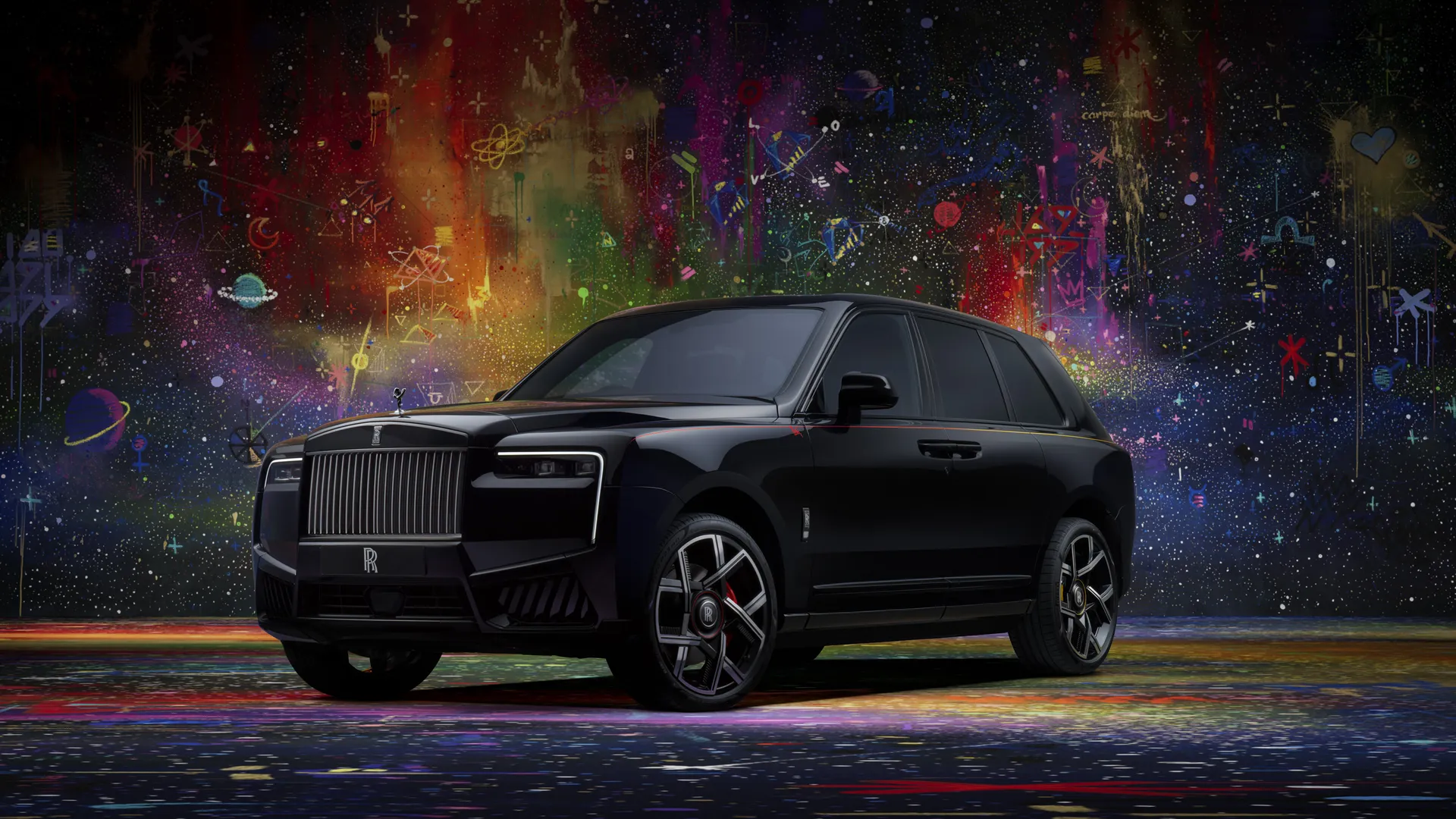
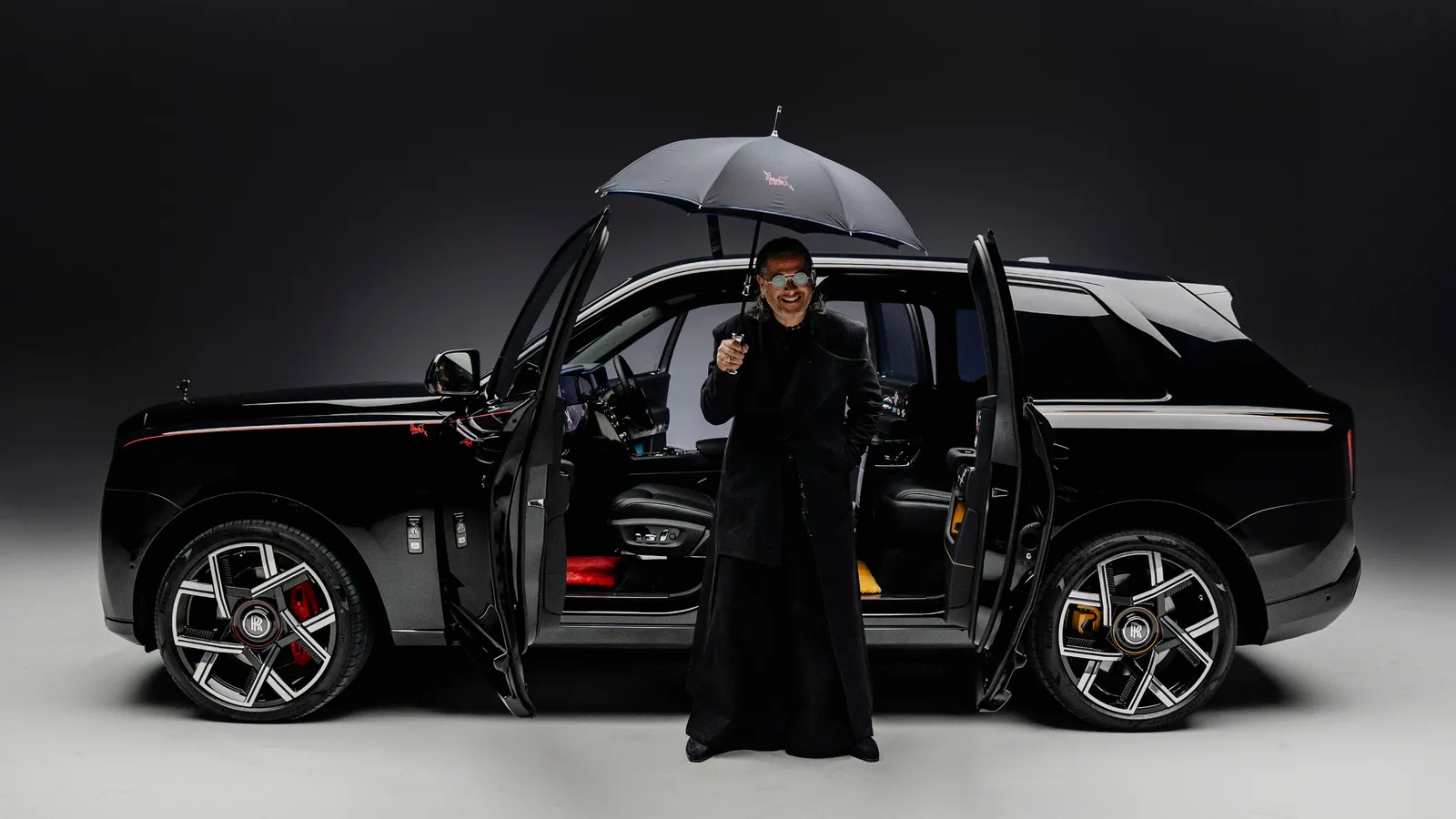
In May 2026, Rolls-Royce Motor Cars unveiled one of its most audacious Bespoke projects to date: the Black Badge Cullinan by Cyril Kongo. Just five examples exist, each a one-of-one private commission curated through the marque’s Private Offices in New York, Seoul, and Goodwood. These are not mere custom SUVs but rolling canvases where the raw energy of street art collides with the pinnacle of British luxury craftsmanship. At the heart of each vehicle lies “The Kongoverse”—French-Vietnamese artist Cyril Kongo’s vibrant, cosmic universe of imagined planets, mathematical formulae, atomic symbols, pyramids, and drifting constellations.
This connection marks a bold evolution for Rolls-Royce. Black Badge, the marque’s darker, more subversive alter-ego, has long appealed to clients who crave edge alongside opulence. Pairing it with Kongo—a pioneer who rose from tagging Parisian walls in the 1980s to exhibiting in galleries worldwide—feels both inevitable and revolutionary. The project fuses two worlds: the spontaneous, rhythmic improvisation of graffiti and the meticulous, multi-layered precision of Rolls-Royce Bespoke.
stir
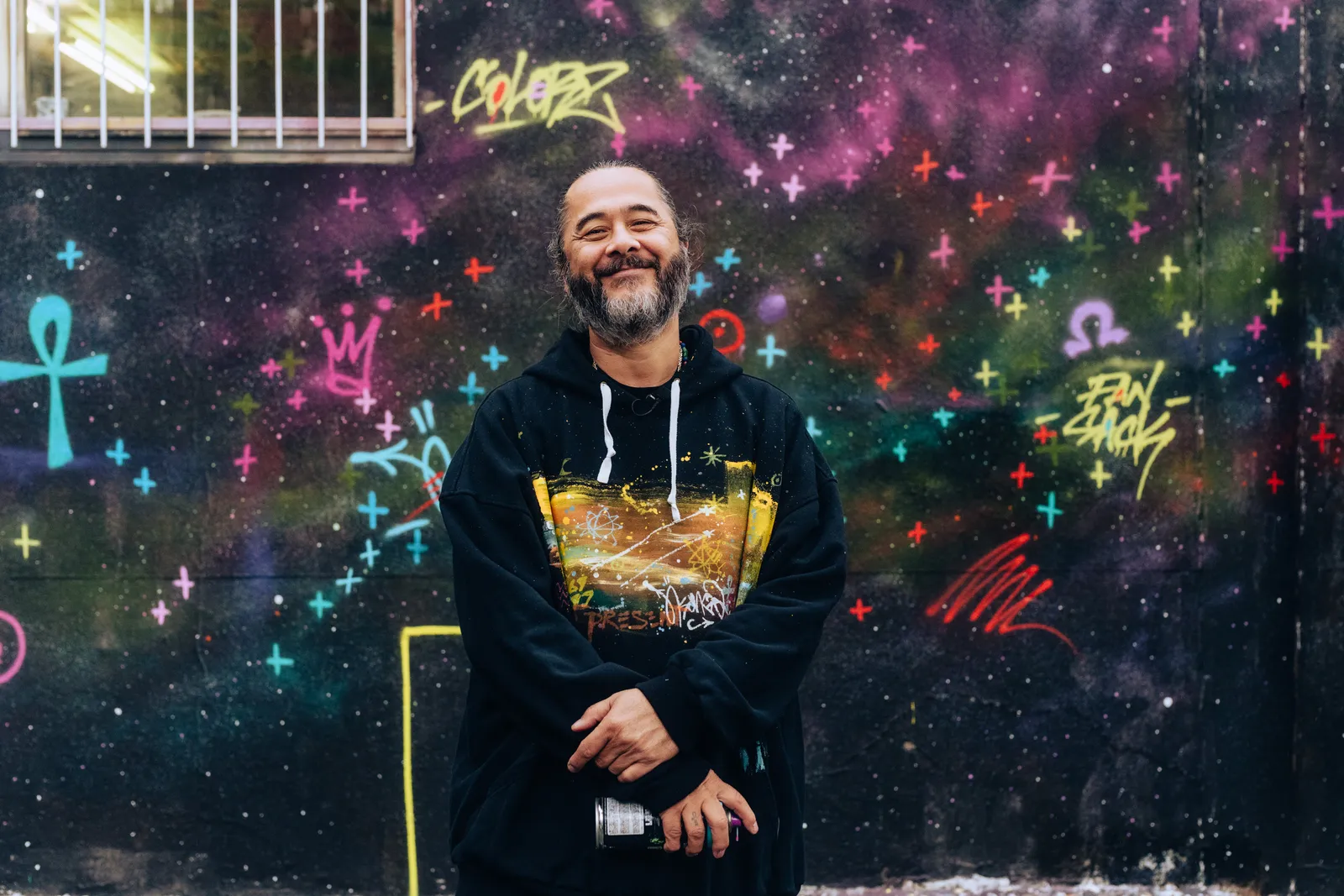
Cyril Phan, better known as Kongo, was born in 1969 in Toulouse, France, to a Vietnamese father and French mother. He spent his early childhood in Vietnam until the fall of Saigon in 1975, then lived for several years in Brazzaville, Republic of the Congo—where his artist name originates. Arriving in France as a political refugee, the young Kongo struggled with language and turned to drawing as expression. In 1986, as a teenager, he began tagging walls in Paris. By 1988, he had joined the legendary MAC (Mort Aux Cons) crew, painting monumental murals across Europe and the United States, collaborating with New York’s TATS Cru.
Kongo’s early work embodied the raw, ephemeral spirit of street art. Huge frescoes on walls and trains captured the energy of hip-hop culture and urban rebellion. Yet he always saw graffiti as a language—with codes, letters, and rhythm—capable of transcending vandalism. In 2002, with MAC, he co-founded Kosmopolite, France’s first international graffiti festival, which later went global. This helped legitimize the form, offering workshops and shifting perceptions.
By the 2000s, Kongo transitioned to studio work and gallery exhibitions. His style—rooted in bold, colorful lettering and calligraphic abstraction—evolved into complex compositions blending cultural memory, fantasy, and science. Major shows followed: a 2011 solo exhibition “De la rue jaillit la lumière,” murals at Paris La Défense, and exhibitions in Seoul. Luxury collaborations elevated his profile further: Hermès scarves, Richard Mille watches, Daum crystal, Karl Lagerfeld projects, and even an Airbus ACJ TwoTwenty cabin. Kongo’s art now commands gallery prices and collector interest worldwide.
His philosophy remains rooted in movement and connection. He compares painting to jazz: “You move, but everything stays connected.” This rhythmic approach proved perfect for transforming the interior of a Cullinan into a cohesive, immersive artwork.
View this post on Instagram
flow
Unlike traditional art-car projects where artists deliver designs for factory execution, Rolls-Royce embedded Kongo deeply. Six months before production, he gained a dedicated workspace at the Home of Rolls-Royce in Goodwood, becoming part of the Bespoke Collective. He met specialists, shared tools, and painted every element by hand alongside artisans.
Phil Fabre de la Grange, Head of Bespoke, described it as “unprecedented”: a continuous exchange fostering curiosity and confidence. Kongo pushed boundaries—requesting over 70 custom paint colors for the Starlight Headliner—and Rolls-Royce rose to the challenge. This residency allowed spontaneous creation true to graffiti’s spirit while meeting the marque’s exacting standards.
Domagoj Dukec, Director of Design, noted that Private Offices identified demand for bold contemporary art among daring collectors. Kongo’s expressive style resonated with Black Badge’s intensity. The result: five unique expressions of a shared theme, all sold to collectors before public reveal.
ext
From outside, restraint prevails—fitting Rolls-Royce’s ethos of discovery. Each Cullinan wears Blue Crystal Over Black paint: a deep black base with lacquer infused with blue metallic particles that shimmer, appearing almost blue in certain lights. This creates a mysterious, cosmic depth.
A groundbreaking feature is the first-ever Gradient Coachline. On the left flank, Phoenix Red transitions to Forge Yellow; on the right, Mandarin fades into Turchese. Kongo’s distinctive “tag” motif weaves into both lines. Brake calipers behind the 23-inch Part Polished Black Badge wheels match these colors individually. Bespoke umbrellas in the doors feature the tag on their canopies, and Illuminated Treadplates carry the Phoenix Red graphic.
Kongo intended the exterior as a subtle invitation: “The more you explore, the more you see.” The car hints at the explosion of tincture and imagination awaiting inside.
int
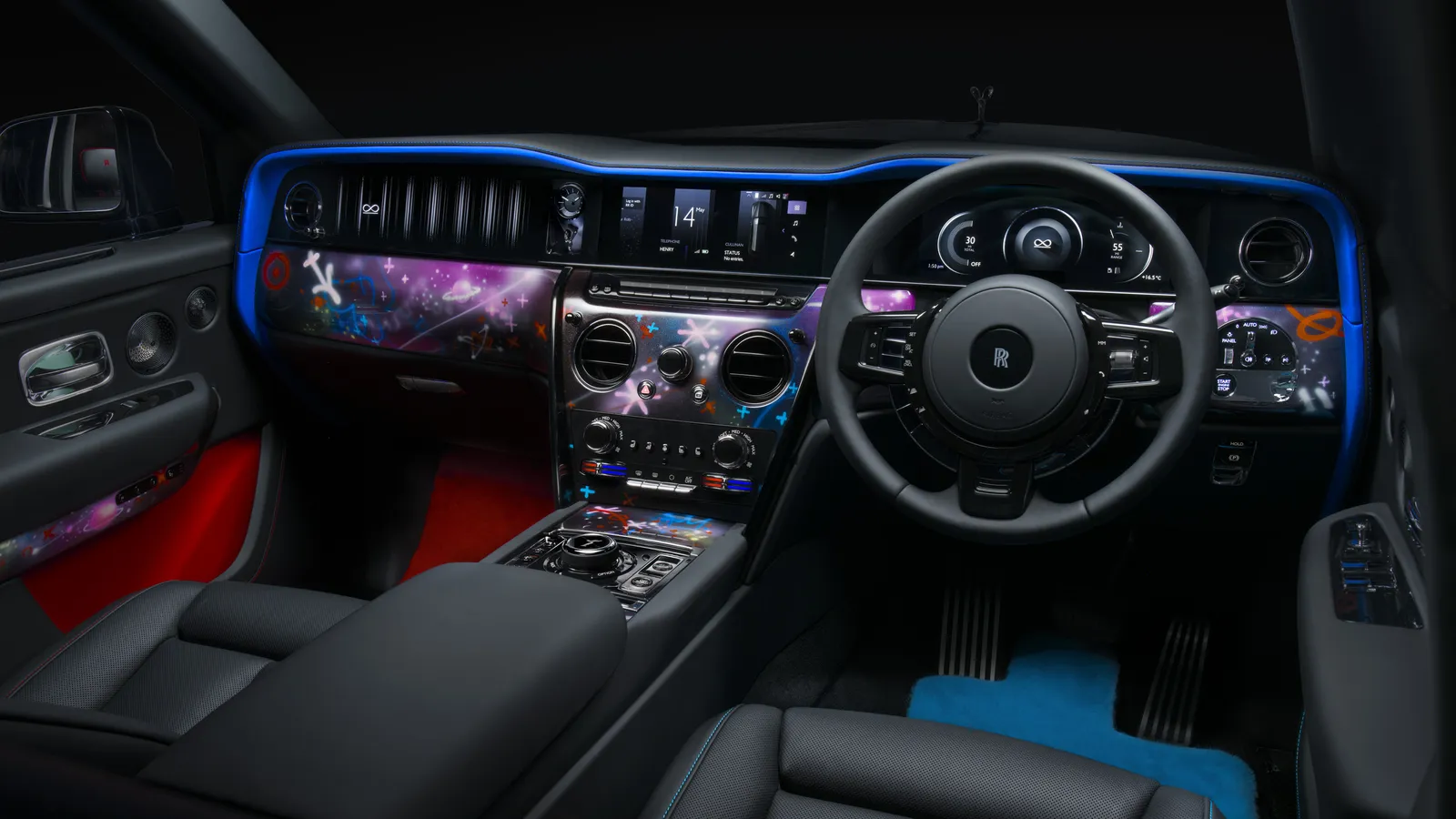
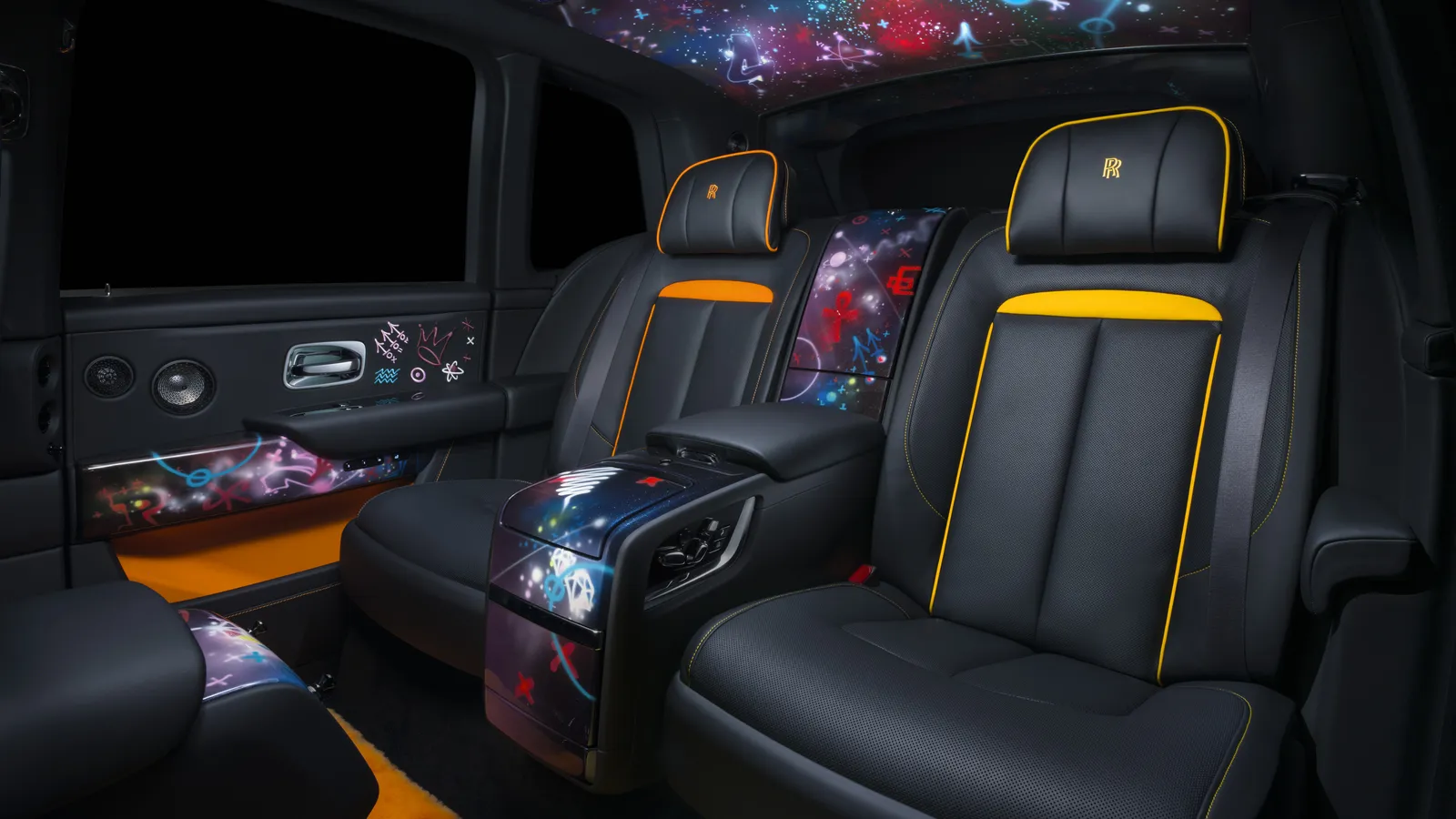
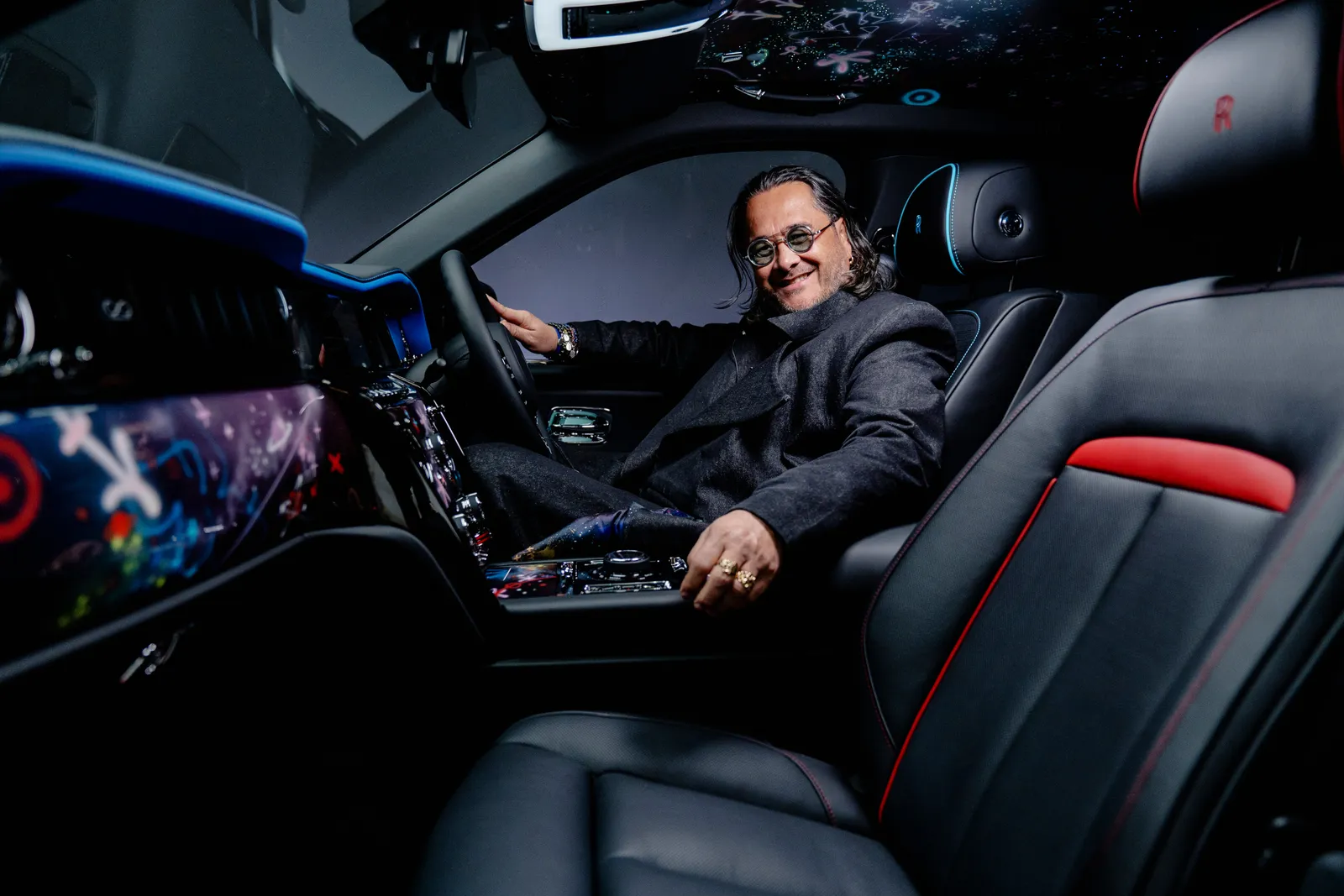
Step inside, and the transformation is complete. The cabin divides into four vibrant zones: Phoenix Red for the driver’s seat, Turchese for the front passenger, and Forge Yellow and Mandarin for the rear. These burst through stitching, piping, seat inserts, RR monograms, and lambswool carpets. The foundation remains Black, allowing colors to pop dramatically.
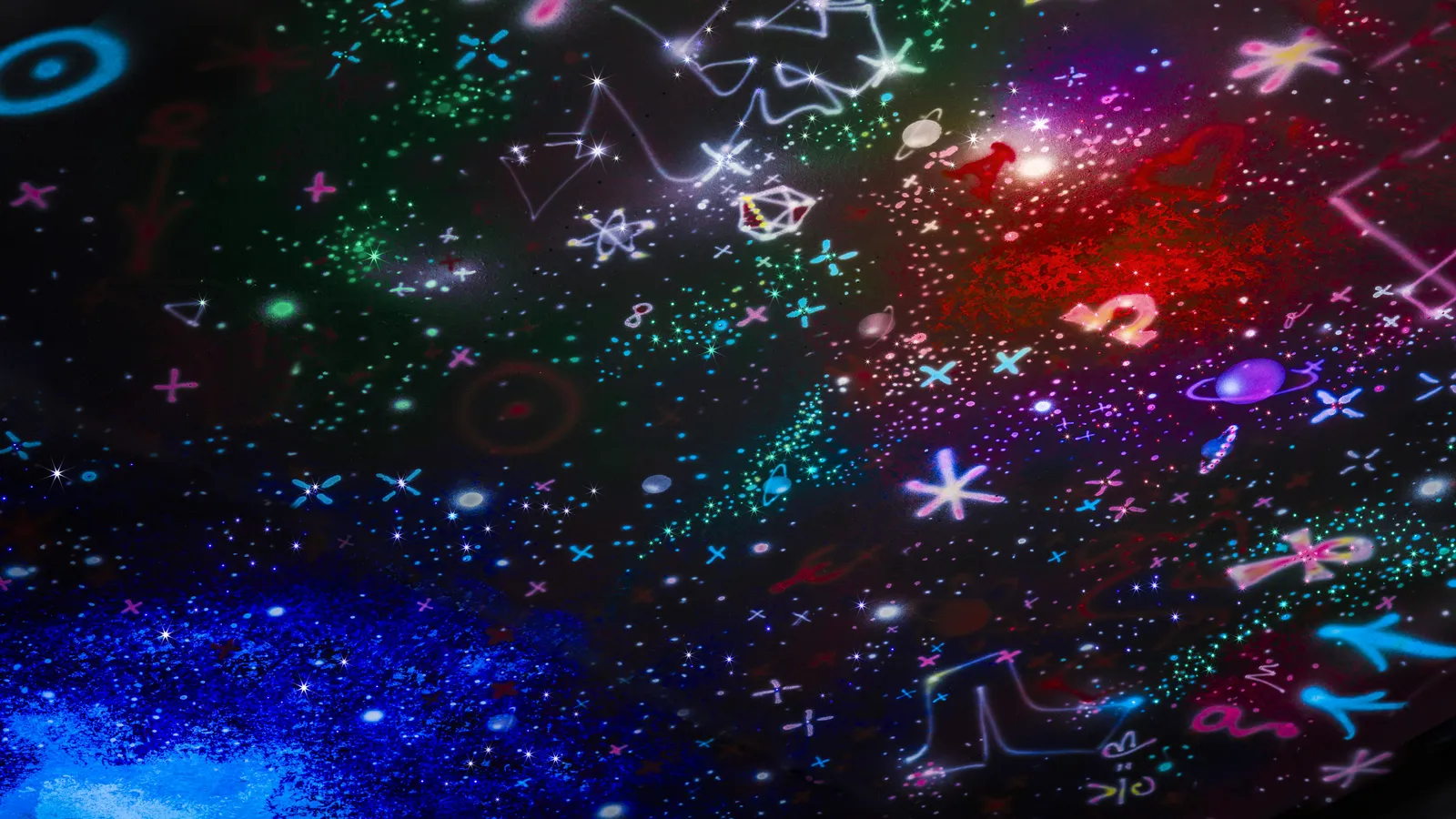
The centerpiece is the Starlight Headliner—1,344 fibre-optic “stars” hand-painted by Kongo into a dynamic cosmic scene. He treated it as installation art, incorporating imagined planets, constellations, atomic diagrams, and quantum physics formulae (inspired by sharing a studio with his physicist brother). Over 70 custom colors were mixed; Kongo applied them with sponges, airbrushes, and brushes. He personally marked star positions and colors (including reds, yellows, blues, greens). Eight shooting stars streak across, one spanning the full length—a Rolls-Royce first. Hidden details include his tag painted inside sun visors and luggage compartment lids, embroidered on door leather.
The woodset—19 veneered pieces across fascia, consoles, picnic tables, and the rear Waterfall—forms a continuous composition. Prepared in black lacquer, Kongo airbrushed his Kongoverse motifs directly onto them. Artisans then applied ten layers of lacquer, sanding and polishing each for depth and protection. The artwork flows seamlessly across surfaces, maintaining rhythm and connection.
Kongo reflected: “We talked about how to make the piece groove… painting is like jazz.” The result feels alive, immersive, and personal—each of the five cars unique yet unified in theme.
craft
This project highlights Rolls-Royce’s Bespoke mastery. Hand-punching and placing every star, protecting painted veneers without losing vibrancy, and executing gradient coachlines required innovation. The collaboration extended the marque’s legacy of working with creatives (think past art cars or Phantom commissions) into deeper co-creation.
For Kongo, letting go of the finished works mirrors parenthood: “You let it go, and you never know where [they] will go.” The cars now live with owners worldwide, embodying destiny, imagination, and individuality.
sig
The Black Badge Cullinan by Cyril Kongo arrives at a moment when luxury brands increasingly embrace contemporary art to engage new collectors—particularly in Asia and among younger ultra-high-net-worth individuals. Seoul’s involvement in curation reflects growing Asian interest in both Rolls-Royce and street-art-infused luxury. Kongo’s journey from Parisian suburbs to Goodwood symbolizes broader acceptance of graffiti as high art.
Priced effectively in the high hundreds of thousands (base Cullinan Black Badge starts around $500,000+, with extensive Bespoke adding significantly), these are collector pieces likely to appreciate. They join a lineage of automotive art—BMW Art Cars, Ferrari commissions—but stand out for their fully hand-painted, habitable interiors.
Technically, the Cullinan remains unchanged: a 6.75-liter twin-turbo V12 delivering effortless power, all-wheel drive, and the magic-carpet ride that defines Rolls-Royce. The artistry enhances rather than compromises the driving experience. Owners gain a private gallery on wheels.
fin
This commission cements Rolls-Royce’s position at the intersection of automotive excellence and cultural patronage. By inviting Kongo into its sanctum, the marque has produced not just vehicles but moving artworks that challenge perceptions of luxury. The Kongoverse—fantastical yet grounded in science, rhythm, and personal history—mirrors the brand’s own blend of heritage and innovation.
As one of the five cars glides through city streets or glimmers under starlight, its painted ceiling glowing with custom constellations, it embodies the infinite power of imagination Kongo celebrates. In a world of mass production, these five Cullinans reaffirm the value of individuality, craft, and bold creative mixology.
Rolls-Royce has expanded its artistic horizons, proving that even the most refined luxury can embrace the vibrant, untamed energy of the streets. The Kongoverse has found its quintessential vessel—and the roads will never look quite the same.
From the DRIFT archive: PANTONE’s 2026 Color of the Year Takes Shape With Play-Doh and Post-It Editions
Related Articles
Inside the Ferrari Line Where V12s, Hybrids and the Electric Luce Share One Workforce
In Maranello, the electric Luce, a hybrid V8 and a twelve-cylinder Purosangue now share one assembly line and one workforce.