DRIFT AUDIO
Listen to this story
Choose a voice, then press play.
In This Story
- Monolithic Concrete Form and Material
- Framing Nature Through Architecture
- Compact Footprint, Rich Spatial Experience
- Interior Design: Light, Texture, and Stillness
- The Design Know of Marte.Marte Architekten
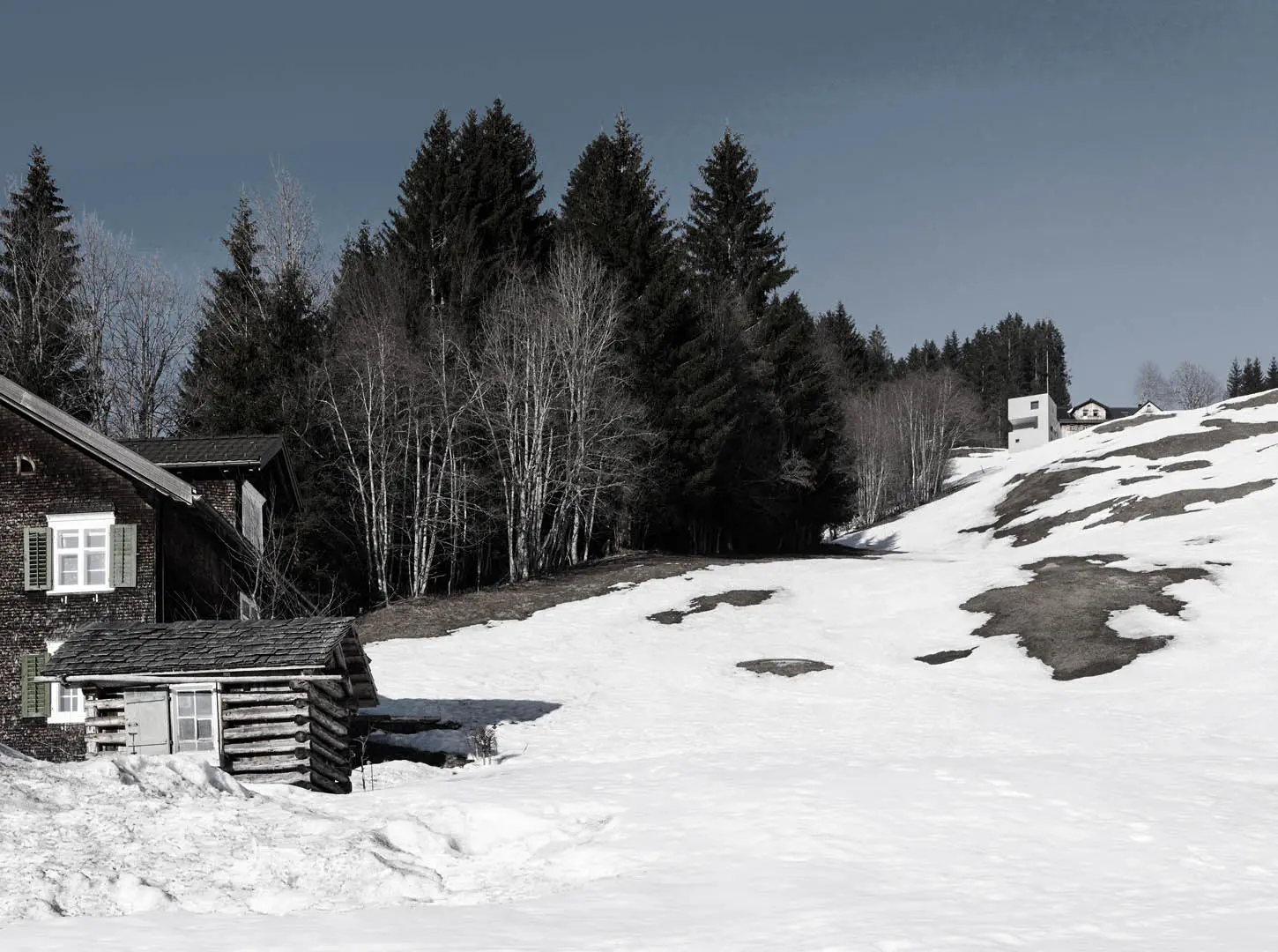
In the rugged terrain of Vorarlberg’s Laternser Valley, where steep slopes meet dense forest and the elements assert their dominance, Schutzhütte 2 emerges not as a bold statement but as a quiet affirmation of architecture’s primal duty: protection. Designed by the Austrian brothers Bernhard and Stefan Marte of Marte.Marte Architekten, this compact concrete tower, completed around 2011–2013, distills the built environment to its most elemental form. It is a monolithic volume that neither competes with the dramatic Alpine landscape nor dissolves into it, but rather negotiates a deliberate, mediated dialogue between human presence and untamed nature.
View this post on Instagram
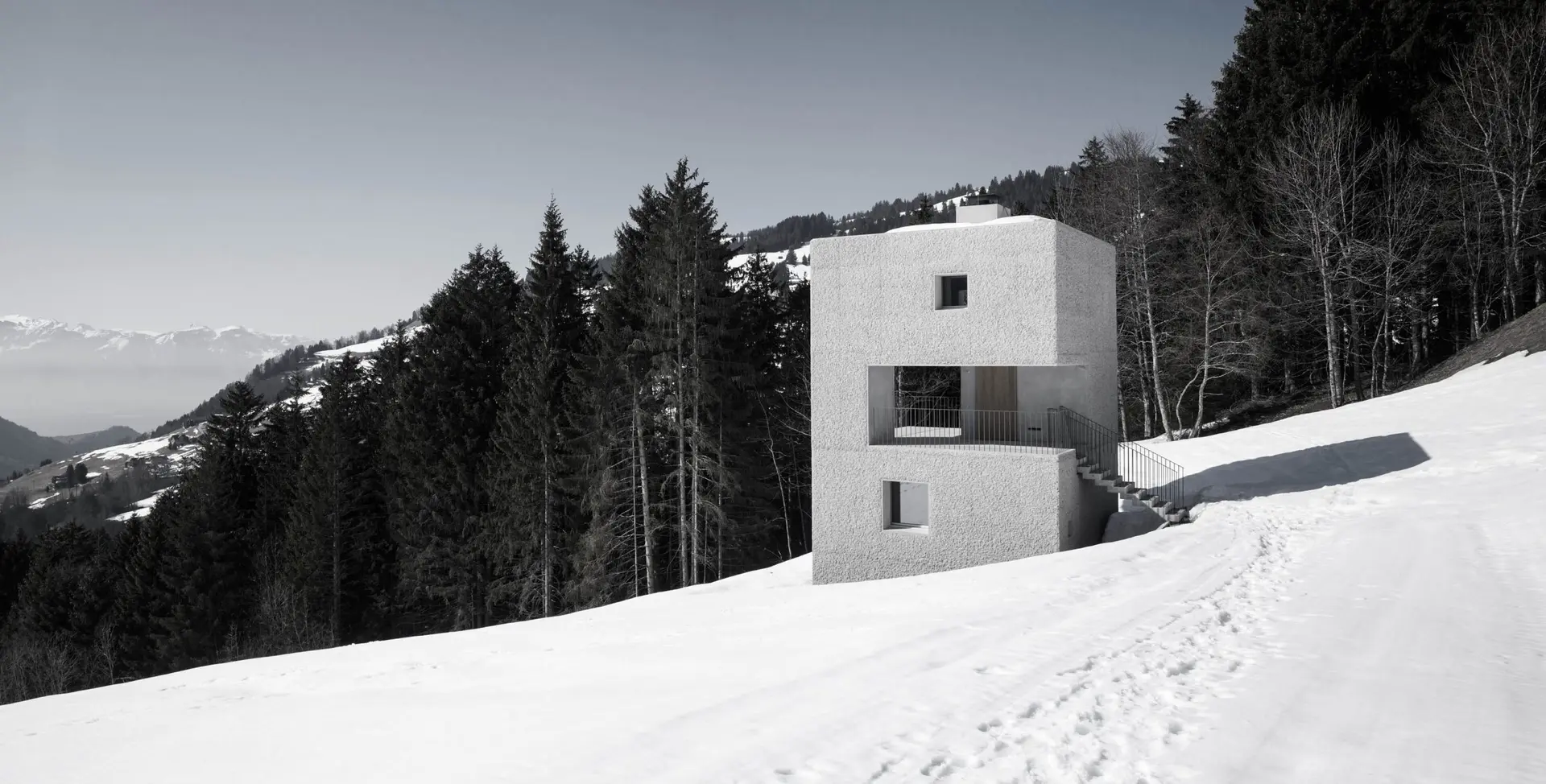
The project’s name, “Schutzhütte” (literally “protective hut” or shelter), evokes traditional mountain refuges—simple structures offering respite from storms, cold, and isolation. Yet Marte.Marte’s interpretation transcends vernacular nostalgia. It reimagines the shelter as a precise, almost sculptural object: a raw concrete bastion that feels simultaneously ancient and contemporary, primitive in its materiality yet refined in its geometry. Standing on a steep hillside at the edge of a wooded ravine, below a larger wooden house belonging to a community of sisters, the building rises modestly from a small hollow along a narrow path. Minimal site disturbance preserves the terrain’s integrity; only a discreet access path was introduced.
stir
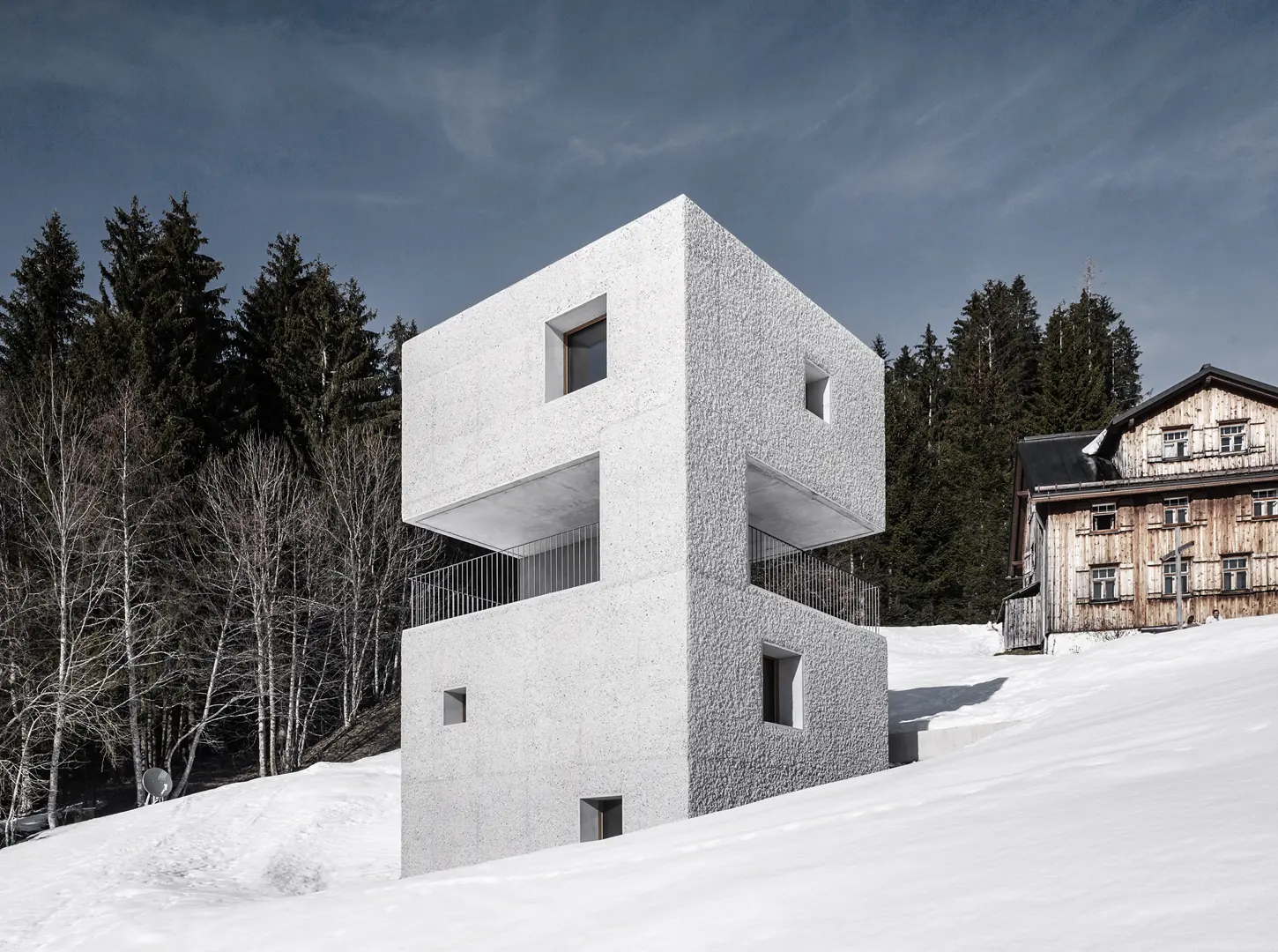
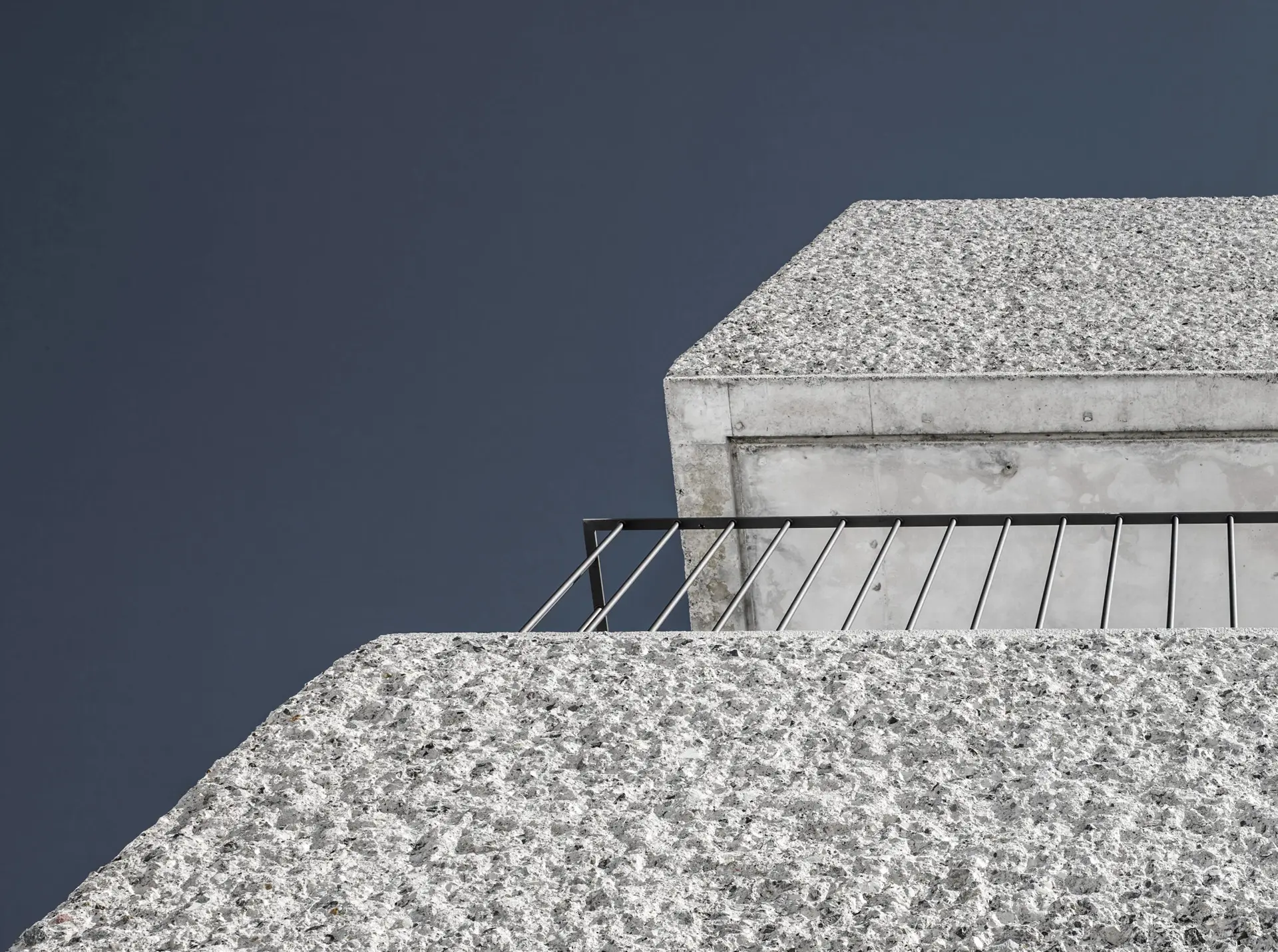
The structure’s exterior is defined by its homogeneous cast-in-place concrete, carefully hewn and textured to reveal the material’s inherent tactility. Its ash-gray tone blends subtly with the meadow greens of summer and contrasts poetically with winter’s white blanket. Sharp edges and a near-abstract, tower-like silhouette create an uncompromising geometry—square in plan, vertical in emphasis—that recalls both historical fortifications and pixelated digital forms. Sparse, square openings of varying sizes are punched into the double-walled concrete shell, distributed across elevations in a composition best appreciated from oblique angles.

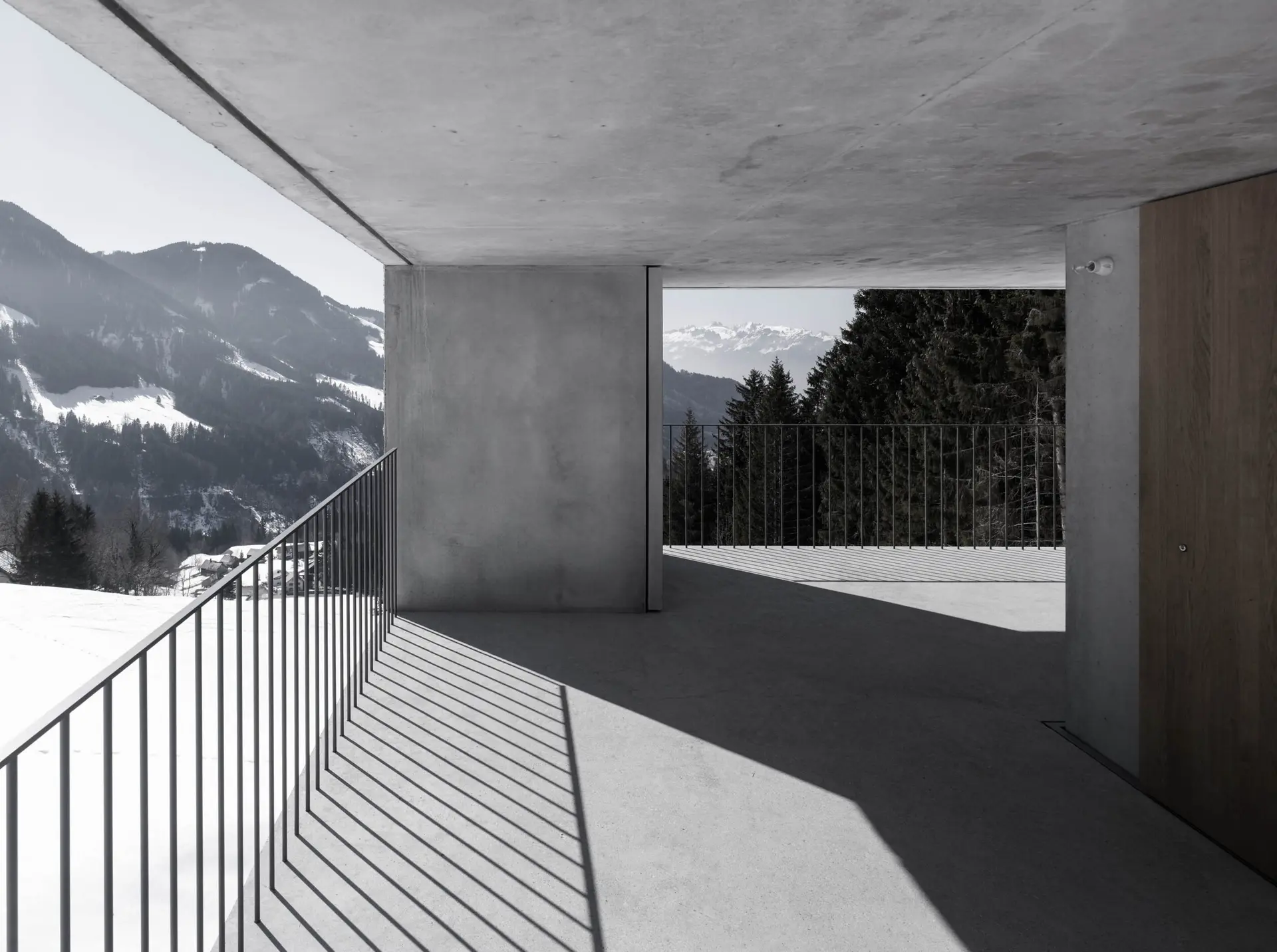
These apertures are intentional and restrained, framing curated glimpses of the surrounding mountains, forested slopes, and valleys while shielding the interior from harsh winds and exposure. The entrance level features a dramatic subtraction: the volume narrows to two supporting corner piers, creating a covered, weather-protected veranda accessible by stairs. This gesture provides panoramic views through the structure itself—an architectural “hole” that enhances the sense of permeability without compromising solid. Anthracite metal railings blend with the surrounding branches, while a heavy untreated oak door adds warmth and gravitas to the otherwise austere facade.
With a gross floor area of approximately 102.6 m² (floor area 87 m², volume 491.4 m³ on a 485.4 m² site), the building is deliberately compact. Its modest footprint belies a spatially rich interior made possible by the robust double-wall construction, which allows for deep reveals and integrated functionality. Built by local contractors like Amann Bau, with concrete works by Weikelstorfer and other regional specialists, the project exemplifies Vorarlberg’s tradition of high-quality craftsmanship married to contemporary minimalism.
straddle
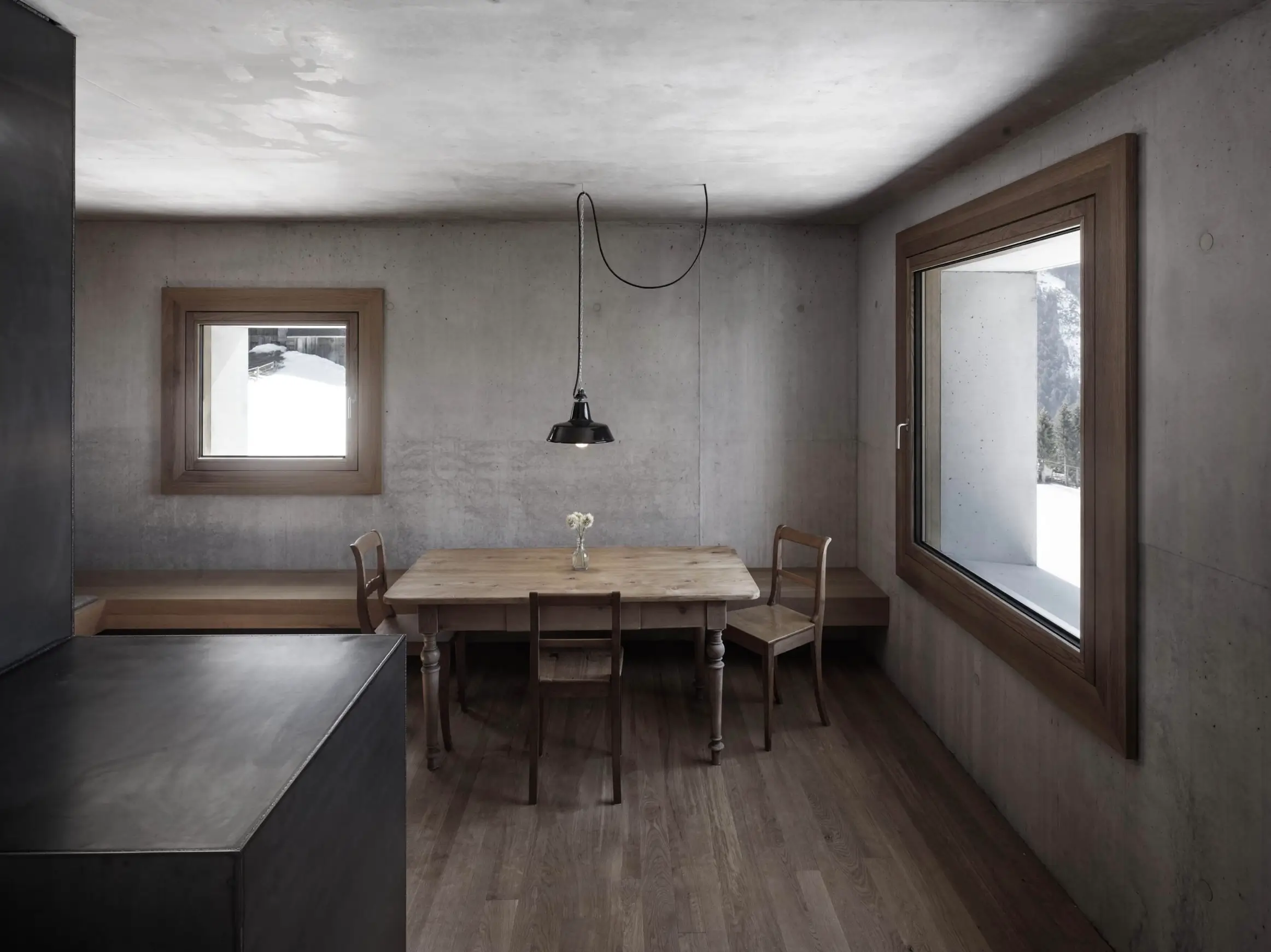
Inside, Schutzhütte 2 cultivates an atmosphere of introspective clarity. The raw concrete surfaces—unadorned walls, floors, and ceilings—dominate, their subtle imperfections and textural variations animated by light. Oak elements (doors, window frames, built-ins) introduce organic warmth and scale without ornamentation. Black metal accents complete the restrained palette, creating a cohesive, almost monastic material language.
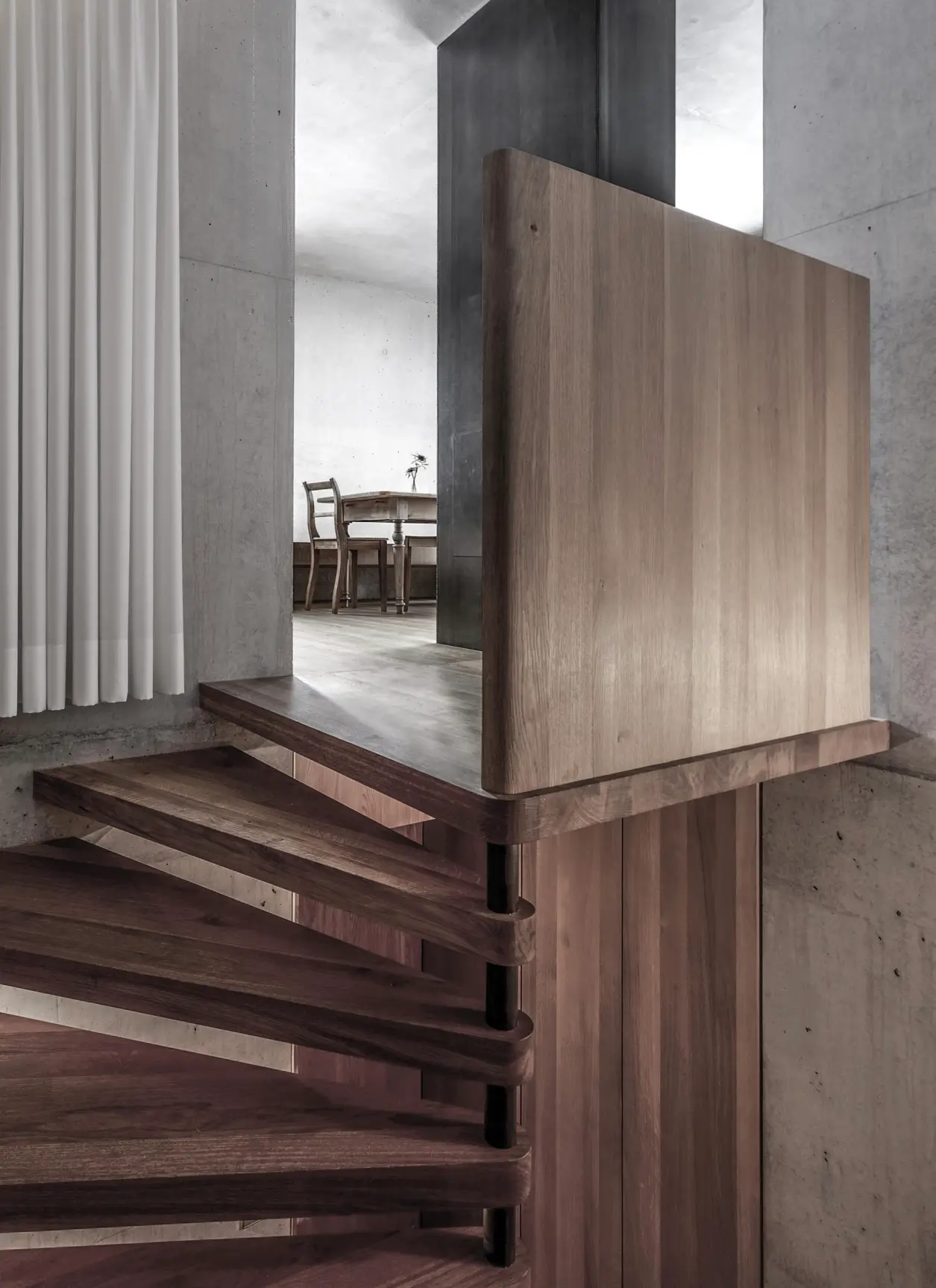
A spiral staircase within the tower core connects the levels efficiently. The upper floor houses the primary living area, open to the framed landscape views. Below, private bedrooms and relaxation spaces interlock like a three-dimensional puzzle, maximizing the limited volume while preserving privacy and intimacy. Window reveals, framed in broad solid oak “passpartouts,” transform each opening into a living picture—focusing the inhabitant’s gaze on specific vistas of peaks, slopes, and woodland. Light enters selectively, grazing surfaces to emphasize depth, shadow play, and the concrete’s tactile presence. There are no superfluous distractions; proportion, material, and calibrated illumination foster a profound sense of stillness.
This interior does not prioritize conventional domestic comfort—soft furnishings or decorative excess—but rather a deeper experiential refuge. It heightens one’s awareness of the environment outside while providing psychological and physical shelter. In an era of climate uncertainty and digital overstimulation, such spaces remind us of architecture’s capacity to ground us in the physical world.
scope
Founded in 1993 by brothers Bernhard and Stefan Marte in Weiler, Vorarlberg (later based in Feldkirch), Marte.Marte Architekten has built a reputation for stringent abstraction, material rigor, and deep site responsiveness. Their practice spans private homes, culture buildings, infrastructure, and education facilities, often winning competitions and awards for works that balance reduction with experiential richness. Projects like this Schutzhütte exemplify their approach: reinventing with each commission rather than adhering to a rigid stylistic philosophy, though recurring motifs include exposed concrete, geometric clarity, and a respectful yet assertive relationship to place.
The firm’s sensitivity to Vorarlberg’s Alpine context—marked by traditional wooden farmhouses (Stadel), dramatic topography, and a culture of resourceful building—is evident here. Schutzhütte 2 echoes the solidity of local stone or timber structures but translates them into modern concrete language. It has garnered international recognition, including the Red Dot Design Award (product design category, 2012) and German Design Award (2014), affirming its status as a refined architecture object.
arch
Schutzhütte 2 sits within a lineage of Alpine shelters and minimalist retreats that respond to extreme environments. Compare it to Peter Zumthor’s elemental works or Herzog & de Meuron’s precise interventions—though Marte.Marte’s tower feels more tower-like and defensive. It also dialogues with contemporary trends in “essential” architecture: small footprints, durable materials suited to climate challenges, and designs that prioritize longevity over trends.
In a warming world with shifting weather patterns, concrete’s mass offers thermal stability and resilience. The building’s “over generations” durability, as noted in project descriptions, positions it as a counterpoint to disposable architecture. Its reductionist ethos aligns with broader cultural movements valuing mindfulness, sustainability through longevity, and reconnection with the physical landscape—themes resonant in fashion, design, and culture today, where heritage craft meets forward-thinking minimalism.
theory
Visiting or inhabiting Schutzhütte 2 is a multi-sensory exercise in presence. Externally, the structure’s sculptural quality changes with seasons and light: stark against snow, softer amid green meadows. Internally, the interplay of shadow and concrete fosters contemplation. The spiral stair creates a vertical journey akin to ascending a mountain path, reinforcing the building’s role as both shelter and vantage point.

This is not architecture for spectacle but for lived experience. It demonstrates how minimalism, when executed with precision, can be deeply moving—stripping away excess to amplify awareness of material, light, proportion, and context. In the words of the architects’ ethos, each project reinvents; here, the reinvention yields timelessness.
extent
For design enthusiasts and cultural observers, Schutzhütte 2 offers lessons applicable beyond architecture. Its material honesty echoes trends in luxury fashion and product design—raw textures, intentional restraint, and objects built to endure. Think of brands emphasizing heritage techniques alongside innovation, or cultural spaces that prioritize atmosphere over ostentation. In an age of visual overload, such projects advocate for deliberate curation: sparse openings as visual editing, concrete as canvas for light.
The project also prompts reflection on human-nature relations. By mediating exposure and refuge, it models a respectful coexistence—neither domination nor erasure. This resonates with contemporary discussions on sustainability, place-making, and the psychological benefits of minimalist environments.
shell
The double-walled concrete shell provides structural integrity and insulation potential while enabling the subtracted volumes. Local expertise ensured flawless execution of the exposed surfaces. Oak from regional sources adds continuity with Vorarlberg tradition. The compact program—efficient vertical circulation, puzzle-like private zones—optimizes every cubic meter without sacrificing spatial quality.
leg
Schutzhütte 2 stands as a quiet landmark in Marte.Marte’s oeuvre and minimalist Alpine architecture. It proves that reduction need not mean austerity in experience; rather, it can deliver profound depth. In stripping architecture to protection, the Mar tes have created a structure that protects not only the body but also the spirit—offering clarity amid complexity.
As we navigate an era defined by rapid change, projects like Schutzhütte 2 remind us of architecture’s enduring power to shelter, frame, and elevate our relationship with the world. It is both a product of its rugged site and a universal meditation on essence—primitive yet precise, austere yet immersive. A true exercise in architectural reduction that enriches through restraint.
Related Articles
Miffy Gets Her Ceremony Best: United Arrows Dresses Dick Bruna’s Rabbit for KIDDY LAND’s 80th
A Miffy mascot in United Arrows’ formal-occasion wardrobe, and a pouch where she peeks out […]