DRIFT AUDIO
Listen to this story
Choose a voice, then press play.
In This Story
In the scintillating mid of 1970s New York, where disco beats pulsed through Studio 54 and American fashion found its sleekest voice, Roy Halston Frowick—simply Halston—crafted not just garments, but entire worlds. His Olympic Tower atelier on Fifth Avenue was more than an office; it was a mirrored sanctum of min glam, where red carpets met infinite reflections of the Manhattan skyline. At the center of this vision sat a chair unlike any other: the SOM79, a cantilevered steel masterpiece designed exclusively for him by Skidmore, Owings & Merrill (SOM). Out of production for nearly five decades, this iconic seat is back, reissued with thoughtful updates by Ikonstudio in partner with SOM. It’s a revival that feels both nostalgic and utterly contemporary—a bridge between fashion’s golden era and today’s demand for enduring, versatile design.
This isn’t mere re-edition nostalgia. The SOM79 embodies the intersection of architecture and couture, structure and sensuality. With fresh finishes, refined ergonomics, and sustainable consideration, the new collection honors its heritage while speaking to modern lives—whether in a creative studio, a opulent home, or a forward-thinking workspace.

stir
By the late 1970s, the Iowa-born designer had risen from milliner to the undisputed king of American fashion. He dressed Jackie Kennedy, Elizabeth Taylor, and Bianca Jagger in fluid Ultrasuede caftans and bias-cut gowns that celebrated movement and simplicity. “More simple, more American, more contemporary,” Halston famously declared. His approach to interiors mirrored this ethos.
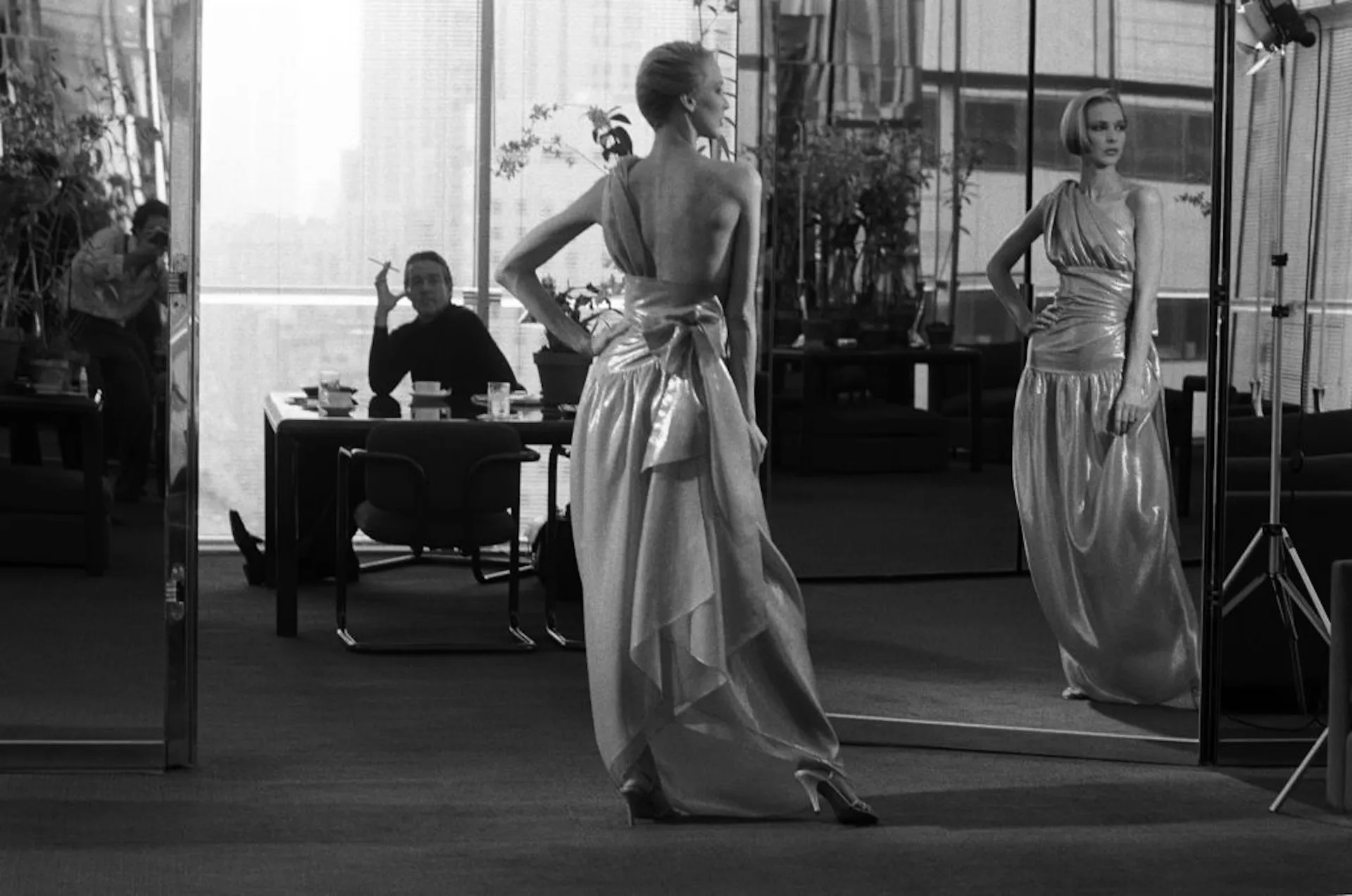
In 1978, Halston relocated his operations to the 21st floor of the Olympic Tower, a SOM-designed skyscraper completed in 1975. The 51-story glass-and-steel monolith on Fifth Avenue, rising dramatically beside St. Patrick’s Cathedral, offered sweeping views from Central Park to Wall Street. Halston, with assistance from Gruzen & Partners, transformed the 12,000-square-foot U-shaped space into a theatrical masterpiece. Floor-to-ceiling mirrors, a luminous frosted-glass ceiling, and dark-red carpet created an environment of dramatic min. “High up in New York, everything is gray,” he explained. “I needed something that would stabilize the space so the room wouldn’t float.”
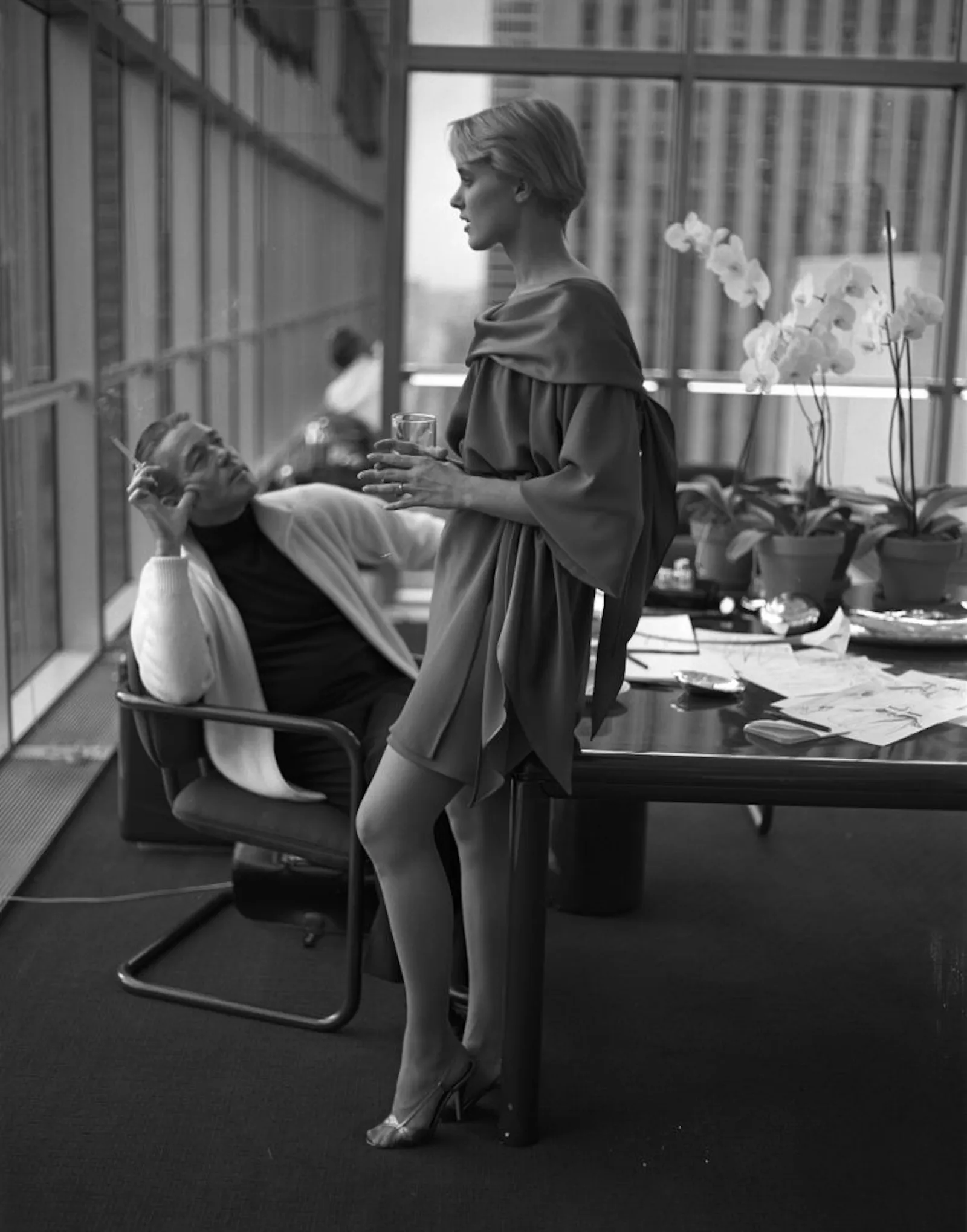
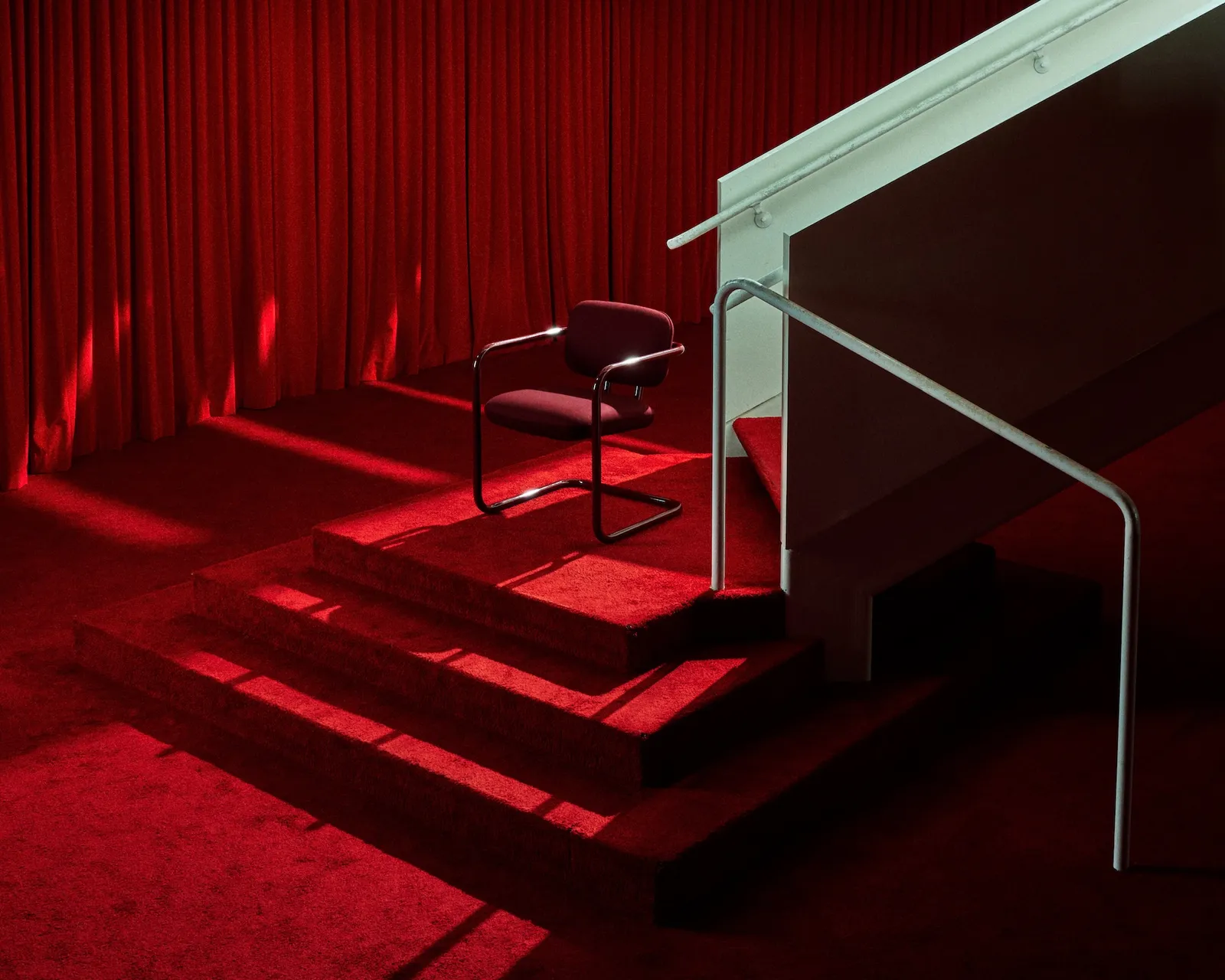
White orchids—costing a small fortune annually—provided the primary decoration. Filing cabinets were banished; clutter had no place. Halston’s desk was a crimson-lacquered Parsons table by SOM’s Charles Pfister. When he spotted it, legend has it he ordered 30. Then came the pivotal question: “And how about a chair? What can you design for me?” A year later, in 1979, Pfister delivered the SOM79—a racerback cantilevered chair in red-on-red, perfectly suited to the mirrored hall that doubled as a runway, dining room, and private salon. Roughly 20 of these chairs graced the space, pulling up to tables for fittings, meetings, and legendary gatherings.
The office wasn’t just functional; it was performative. Mirrored partitions could open into a grand theater for fashion shows. Front-row seats were reserved for the likes of Andy Warhol, Liza Minnelli, and Diana Vreeland. The SOM79, with its sleek tubular steel frame and supportive curve, embodied Halston’s know: elegant, unfussy, and engineered for life in motion.

flow
Charles Pfister, who led SOM’s interiors group for 15 years, was the vision craftsman. SOM, renowned for modernist icons like the Willis Tower and John Hancock Center, had long championed “total design”—extending architecture principles down to furniture. Pfister’s SOM79 was no exception. Its cantilevered steel frame delivered comfort through intelligent structure rather than excessive padding, creating a tension between industrial precision and organic sense.
Viewed from any angle, the chair reveals a continuous, sculptuel line—much like a well-cut Halston dress. “It doesn’t seem like a coincidence that such a shapely, curved chair would find resonance in a fashion studio,” notes SOM partner Julia Murphy.
The chair’s racerback silhouette and chrome gleam captured the era’s shift: a softening of the hard-edged modernism of the prior decade. In Halston’s red-drenched space, it provided both vision drama and practical elegance, supporting the designer’s whirlwind of creativity. Though produced exclusively for him, its potential as a classic was evident from the start. Yet, like many custom pieces from architecture firms, it remained archived—until now.
contempo
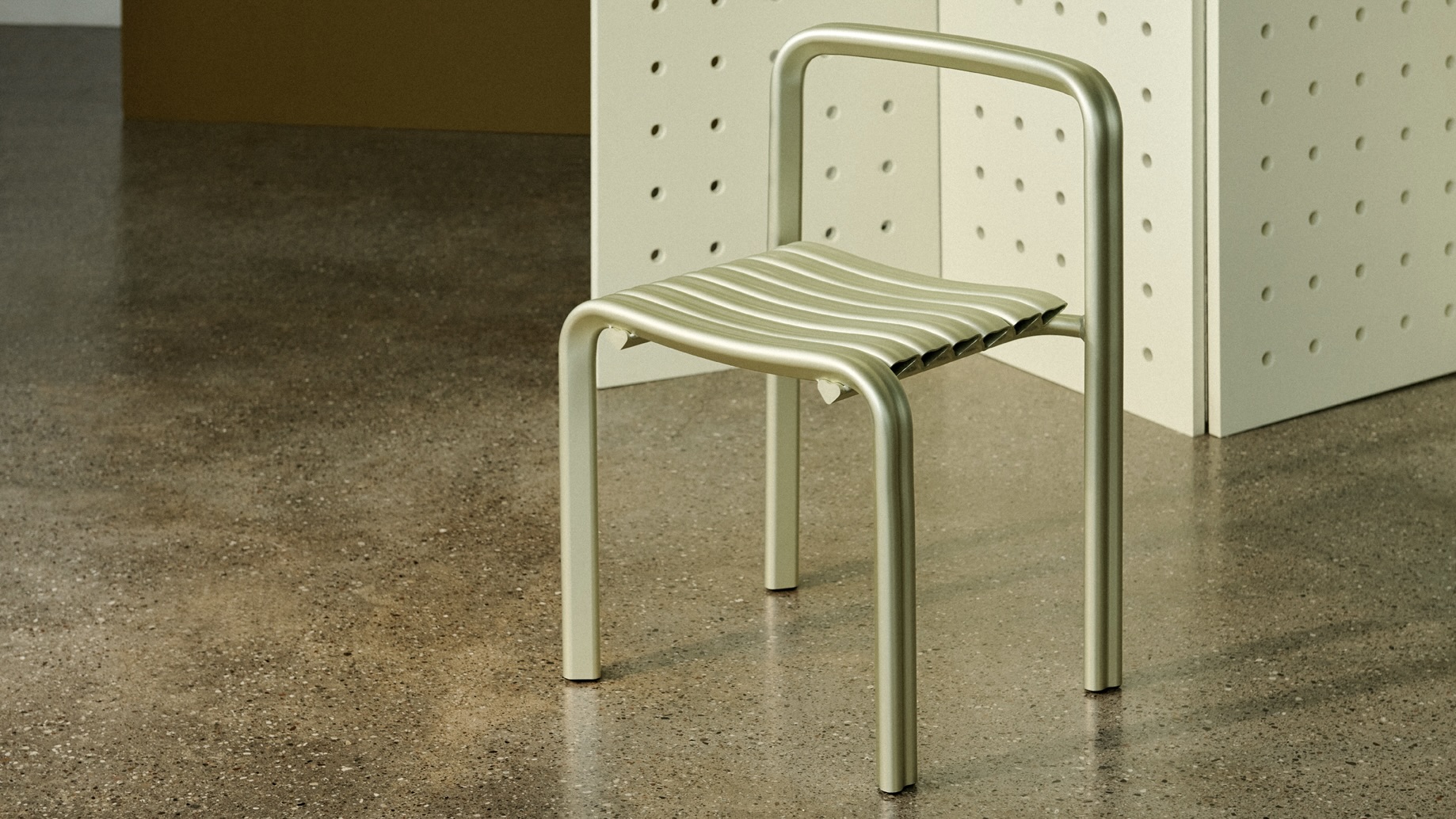
Nearly 50 years later, SOM has partnered with Ikonstudio (under Teknion) to bring the SOM79 back into production. Launched in 2026, the collection includes the original chair alongside a complementary table—newly envisioned but faithful to Pfister’s lang. This isn’t a rote reproduction; it’s a careful evolve.
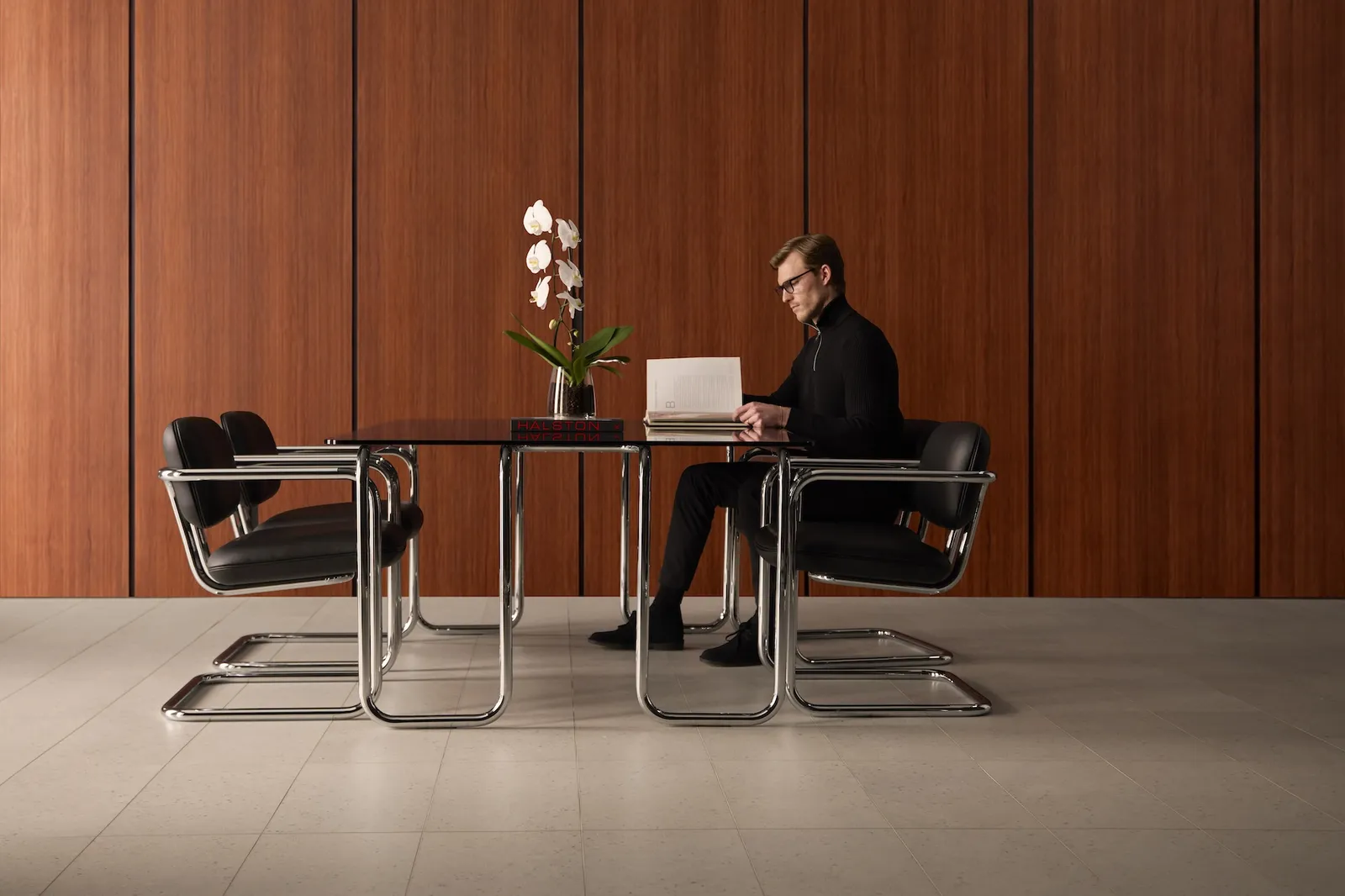
Key updates respect today’s standards without compromising soul. The hand-polished chrome frame now uses safer trivalent plating, replacing outdated hexavalent processes while retaining that signature high-gloss allure. Ergonomics have been subtly refined—seat dimensions adjusted for modern bodies—while preserving the cantilevered comfort that relies on structure over cushioning. Sustainability is woven in: repairable components, recyclable materials, and eco-conscious fabrics and foams.
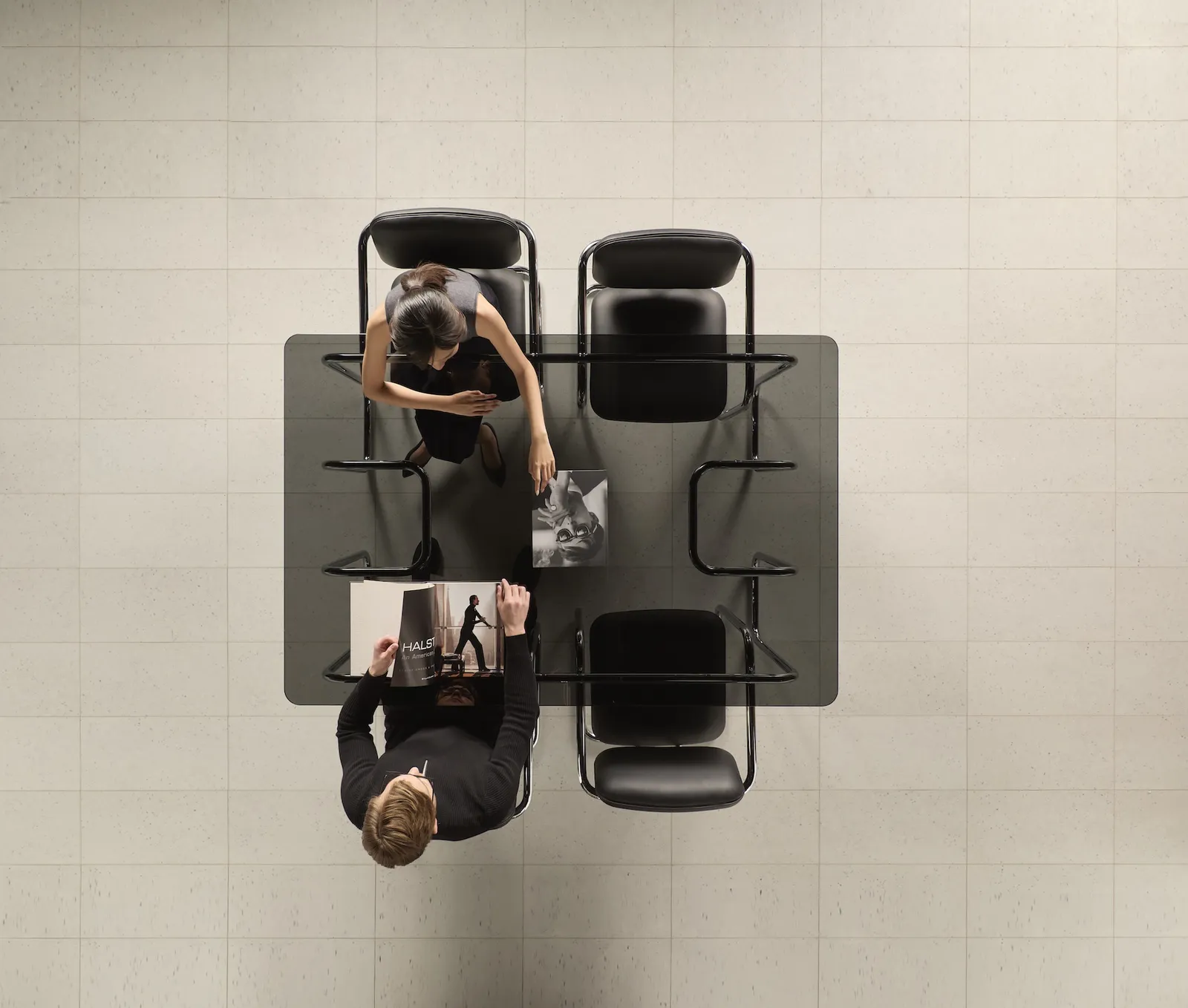
The SOM79 table extends the design DNA. Its tubular steel frame forms an “H” motif when viewed through the 12mm glass top—a subtle nod to Halston. Versatile as a dining, work, or gathering surface, it completes a family of pieces that transition effortlessly between residential, office, and hospitality settings.
Teased at New York Design Week and launched during Chicago Design Days, the collection has already garnered acclaim. Exhibitions by Rarify and partnerships highlight SOM’s rich furniture archive, positioning the SOM79 as a cornerstone of American design revival.
why
The SOM79’s return arrives at a perfect cultural moment. Fashion and design are rediscovering 1970s glamour—not the excess, but the confident minimalism Halston championed. Think of today’s renewed interest in archival revivals, sustainable luxury, and spaces that blend work, creativity, and social ritual. The chair fits seamlessly into this narrative.
In an age of digital fatigue and hybrid living, its physicality offers grounding. The cantilevered form invites you to sit, lean, and engage—much like Halston’s clothes encouraged movement and presence. It bridges high fashion and everyday architecture, proving that great design transcends categories. For creatives in streetwear, horology, art, or music scenes (echoing Halston’s own crossovers with Warhol and beyond), it’s an object that signals discernment and heritage without ostentation.
Broader trends amplify its relevance. SOM’s total design ethos—pioneered in corporate campuses and now revived—aligns with demands for cohesive environments. As offices evolve beyond cubicles into dynamic hubs, and homes double as studios, versatile pieces like the SOM79 shine. Its purity of form complements everything from mid-century modern to contemporary min, while the updates ensure longevity and responsibility.
endure
What elevates the SOM79 beyond trend is its timeless balance. The tubular steel frame provides inherent strength and view lightness. The upholstery—classically dark leather in the reissue—ages gracefully, developing character over time. It’s comfortable for long hours at a desk or elegant evenings at a table, proving that modernist restraint can be supremely livable.
For collectors, it represents a direct link to Halston’s legacy: a designer who democratized haute while maintaining impeccable standards. For architects and interior designers, it’s a testament to SOM’s multifaceted genius. And for anyone furnishing thoughtful spaces, it’s an investment in beauty that lasts.
As Julia Murphy of SOM reflects, these pieces emerged from a time when architecture firms engaged every scale of the built environment. That philosophy endures. The SOM79 isn’t just furniture; it’s a cultural artifact reborn—proof that great design, like great fashion, never truly fades. It evolves, adapts, and inspires anew.
fin
SOM’s revival of the SOM79 chair is more than a product launch; it’s a celebration of connection, innovation, and the power of objects to shape culture. From Halston’s mirrored Olympic Tower—where fashion shows blurred into dinners and dreams—to contemporary interiors worldwide, this chair carries stories of ambition, elegance, and forward momentum.
n
From the DRIFT archive: Timex x MM6 Maison Margiela T80: A Digital Classic Reimagined in Gold-Tone Steel · Playdate: A Return to Focused Joy in a World of Infinite Noise
Related Articles

Miffy Gets Her Ceremony Best: United Arrows Dresses Dick Bruna’s Rabbit for KIDDY LAND’s 80th
A Miffy mascot in United Arrows’ formal-occasion wardrobe, and a pouch where she peeks out […]