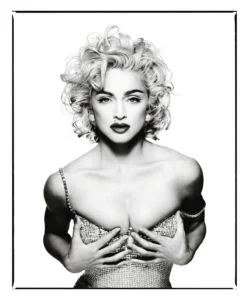
Scotch & Soda × Jean-Michel Basquiat Spring 2026: When Art Leaves the Canvas and Enters the Street
April 25, 2026
0


DRIFT AUDIO
Listen to this story
Choose a voice, then press play.
This spring, art doesn’t hang. It moves. It breathes. It walks down the street.
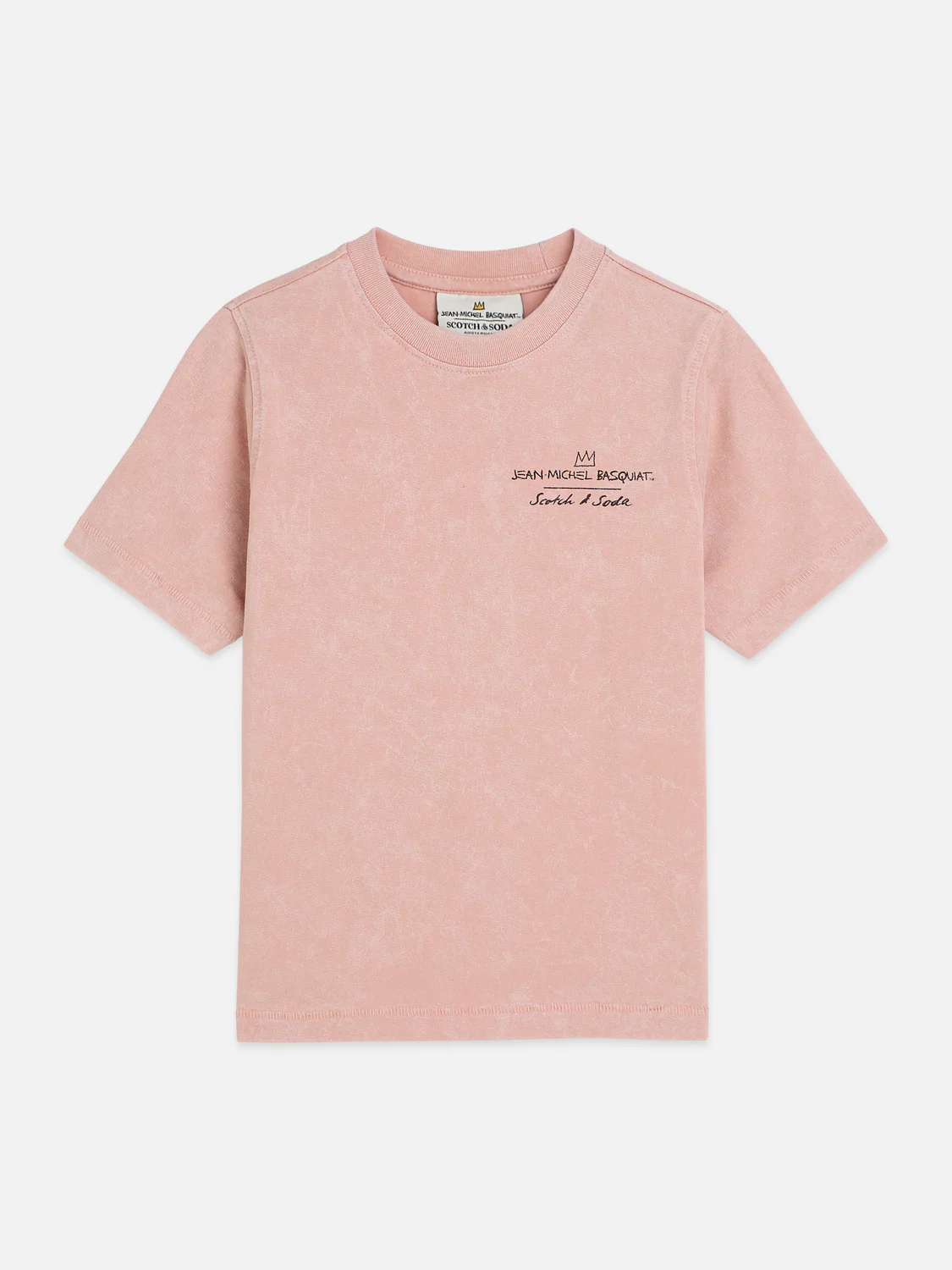
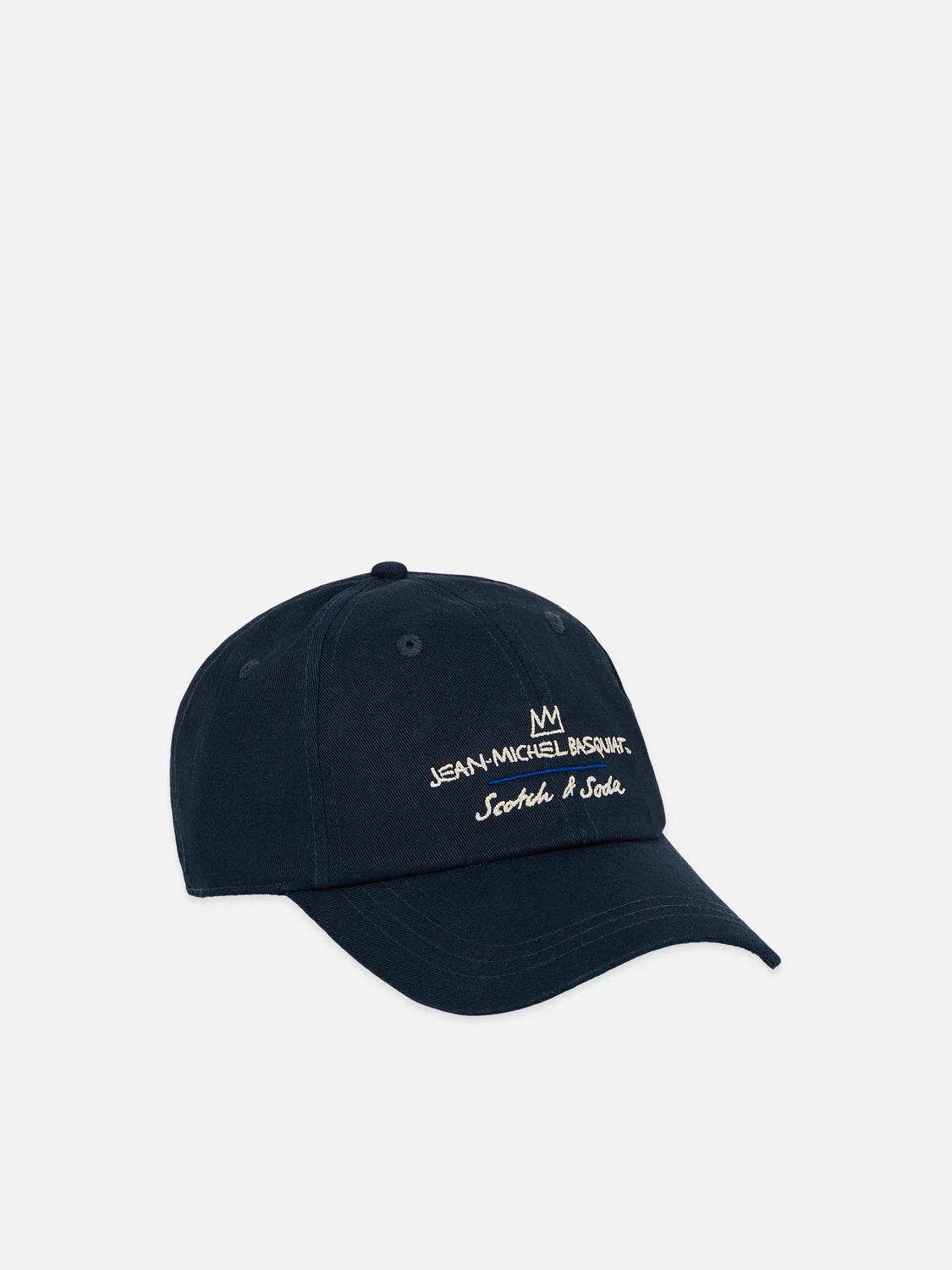
Scotch & Soda’s Spring 2026 capsule collection, created in collide with the Estate of Jean-Michel Basquiat and licensed by Artestar, isn’t just fashion. It’s a statement. A reclamation. A living extension of one of the most urgent artistic voices of the 20th century. What once existed in the charged stillness of canvas now unfolds in motion—on bodies, in transit, within the unpredictable choreography of everyday life.
Bold lines. Raw expression. Creativity without limits.
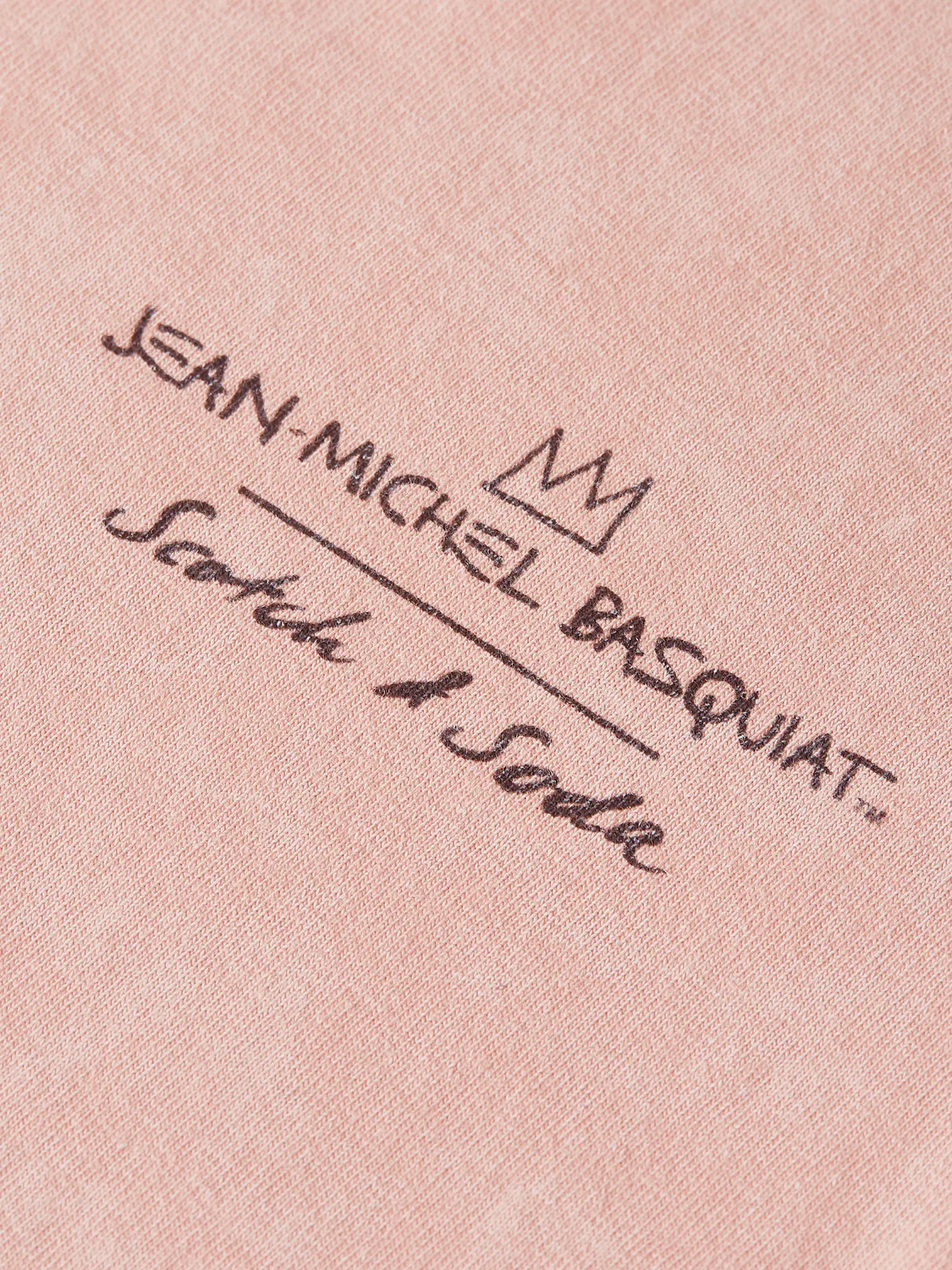
These aren’t stylistic gestures. They’re structural codes. They form the internal logic of the drop. This is Basquiat’s language—not quoted, not reproduced, but reactivated. His crown. His text. His fractured figures. Now stitched into tees, printed across denim, suspended across oversized shirts. Not as homage. Not as trend. But as continuation—an ongoing sentence rather than a closed chapter.
This collection doesn’t bring art closer. It dissolves the distance entirely. It makes contact unavoidable. It places the work in circulation, where it can be altered, interrupted, reinterpreted. It insists that art is not a destination, but a condition—something lived rather than observed.
And it’s available now.
stir
Jean-Michel Basquiat didn’t paint to be understood. He painted to be felt.
Emerging from the coded graffiti language of SAMO in late-1970s downtown New York, Basquiat constructed a view system that resisted containment. Words collided with images. Symbols destabilized meaning. There was no hierarchy between street and gallery—only surface, only urgency.
His compositions moved like thought itself—fragmented, recursive, unresolved. Crowns hovered above figures not to glorify, but to question power. Text appeared, disappeared, reappeared—crossed out yet still legible, insisting on presence even in erasure. Bones surfaced beneath skin, not as anatomy, but as exposure—truth stripped of comfort.
There was nothing accidental in this chaos. Each gesture was deliberate. Each mark carried weight. Basquiat layered references—Primordial diasporic histories, jazz improvisation, colonial critique, medical diagrams—into works that refused singular interpretation. He didn’t offer answers. He constructed environments.
To encounter Basquiat was not to decode, but to enter.
And now, that system shifts mediums.
The Scotch & Soda × Basquiat capsule does not attempt to simplify this complexity. It absorbs it. It translates it into garments that carry the same tension—between clarity and fragmentation, control and disruption.
The crown appears again—not ornamental, not softened. It asserts. It interrupts. It refuses neutrality.
It is no longer positioned above a painted figure.
It is positioned on the wearer.
This isn’t appropriation. It’s activation.
flow
Translating Basquiat’s work into apparel is not an act of reproduction. It is an act of restructuring.
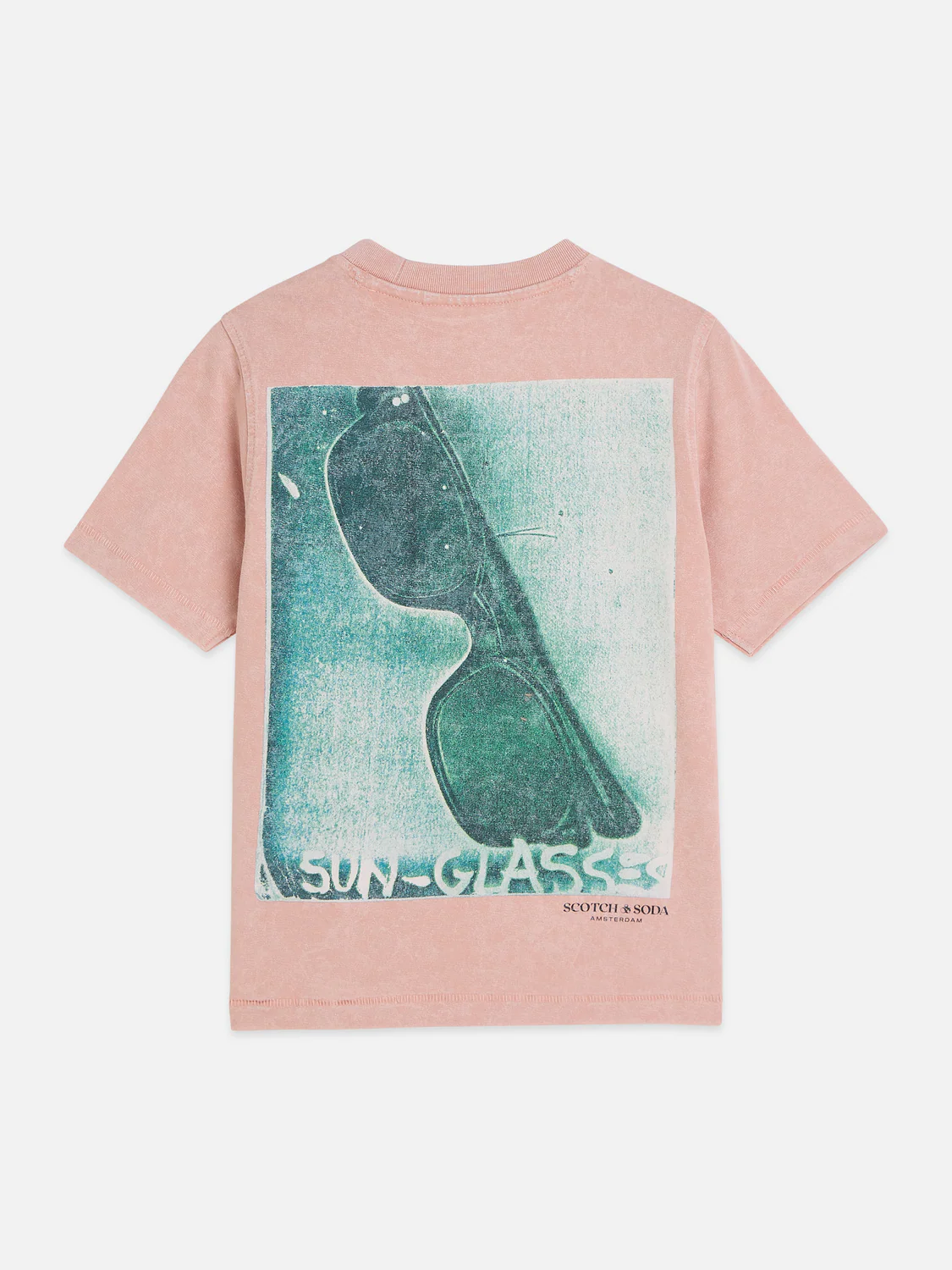
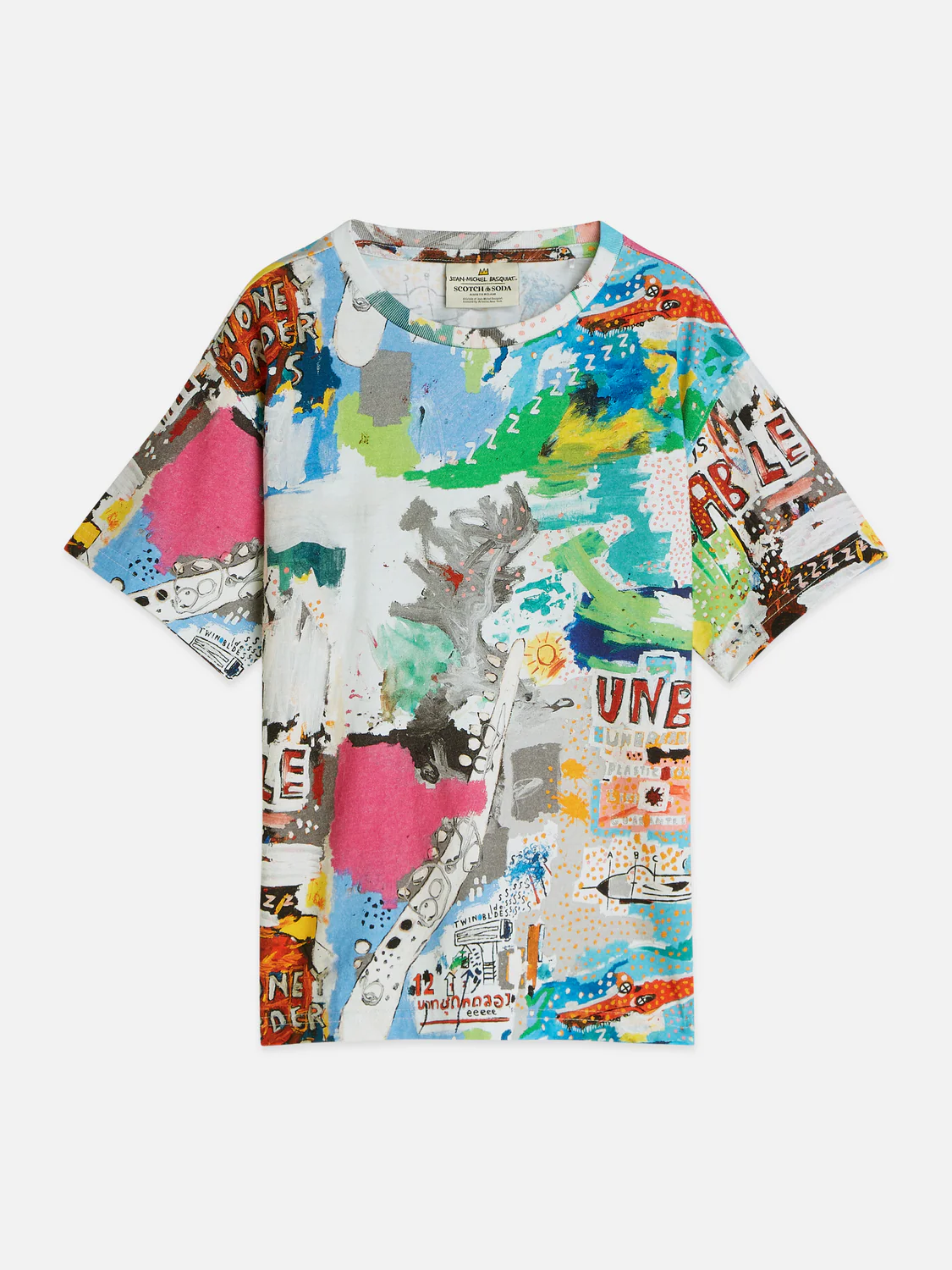
The collection avoids the literal. It does not flatten entire paintings into prints. Instead, it extracts fragments—jagged lines, primal text, symbolic figures—and repositions them within the architecture of clothing. These fragments function as interventions, not embellishments.
Placement is intentional. Off-center. Cropped. Partially obscured. The garment becomes a field rather than a frame—something to be navigated rather than simply seen.
The color palette remains faithful to Basquiat’s emotional spectrum: black and white as structural anchors, punctuated by bursts of red, yellow, and deep blue. These tones operate as signals as much as they do aesthetics. Black grounds. White opens space. Red disrupts. Yellow alerts. Blue deepens.
Material selection reinforces this translation. Organic cloth fabric provides softness without fragility—capable of holding graphic intensity while remaining breathable and wearable. Denim becomes a mutable surface, echoing the improvisational nature of Basquiat’s original materials—doors, scrap wood, found objects.
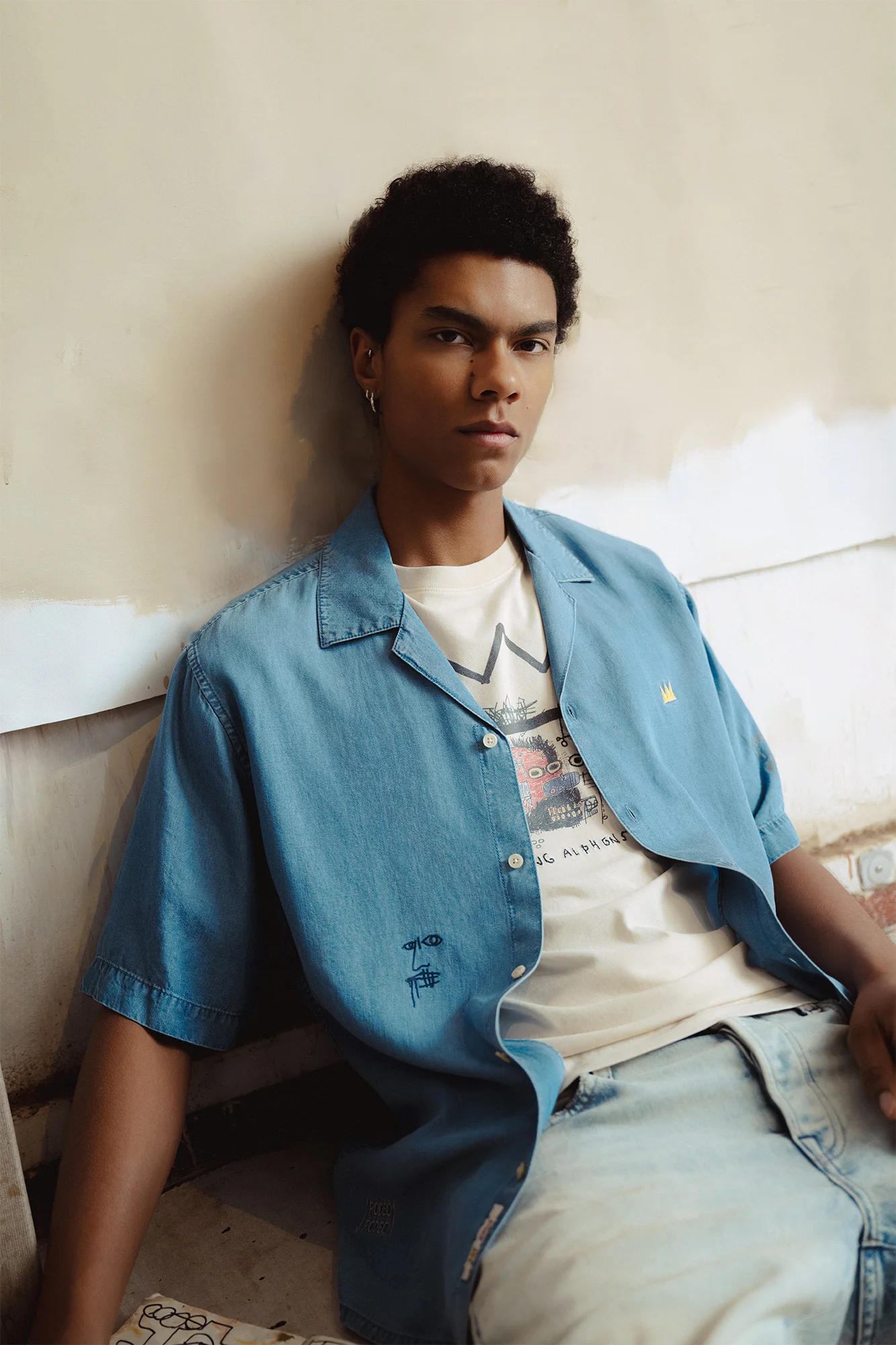
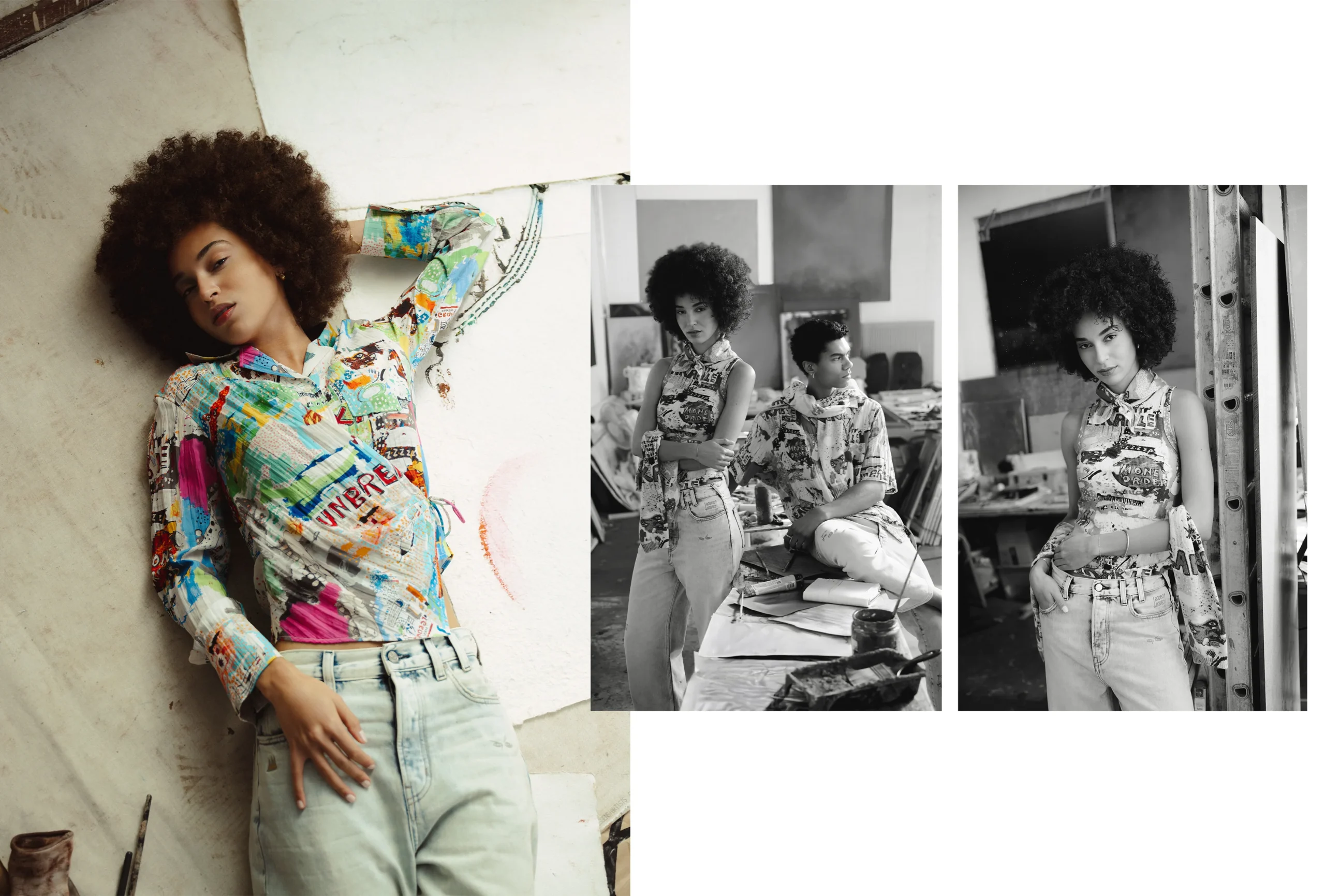
Silhouettes expand. Oversized tees, relaxed shirts, wide-cut jackets—forms that resist restriction. There is space within these garments. Space for motion. Space for layering. Space for reinterpretation.
A graphic tee becomes a site of inscription. The crown hovers, text cuts across the body, placement slightly destabilized. A denim jacket reads like a work in process, motifs appearing as if mid-gesture. Oversized shirts layer imagery in ways that mirror Basquiat’s compositional density—nothing isolated, everything in conversation.
Even accessories carry intent. Tote bags transform into mobile canvases—objects that move through daily routines while carrying visual weight.
Every piece is unisex. Not as a marketing gesture, but as a philosophical stance. Basquiat’s work existed outside boundaries. This collection follows that logic.
idea
What distinguishes this capsule is not only its view translation, but its relationship to time.
Basquiat’s works were never static. They carried the marks of their making—layered, altered, sometimes intentionally distressed. Time was embedded within the surface.
This collection adopts that principle.
These garments are not designed to remain pristine. They are designed to evolve. To crease. To soften. To absorb the traces of wear. In doing so, they move closer to Basquiat’s original ethos—where process matters as much as outcome.
A tee worn repeatedly begins to fade, the print softening at the edges. A jacket develops structure through use, its surface shifting subtly. Each change is not degradation. It is accumulation.
The wearer becomes part of the work.
This approach disrupts the logic of seasonal fashion. It resists disposability. It resists immediacy without memory. Instead, it proposes continuity—garments that extend beyond the moment of purchase into lived experience.
In this sense, the collection exists between fashion and artifact.
It is not just anti-fast fashion.
It is anti-forgetting.
choice
This collection does not ask you to resemble Basquiat. It asks you to engage with his energy.
A crown on a jacket is not branding. It is a provocation. Who holds power? Who defines value? A word—“HERO,” “KING,” “SAMO”—is not decoration. It is a fragment of an ongoing dialogue.
Because the garments are built for movement—relaxed, layered, responsive—they adapt to the wearer. They shift depending on context, styling, and environment. Worn alone, they speak directly. Layered, they create new tensions, new meanings.
There is no fixed interpretation.
This openness is deliberate. It resists the prescriptive nature of contemporary fashion, where looks are often predetermined and replicated. Instead, it returns authorship to the individual.
Meaning is not embedded in the garment.
It is constructed through wear.
Each outfit becomes a variation. Each wearer becomes a participant.
In this way, the collection extends Basquiat’s methodology—where meaning was always fluid, always contingent.
rare
To engage with Basquiat’s work is to engage with responsibility.
Every piece in the Scotch & Soda × Basquiat capsule is officially licensed through Artestar on behalf of the Estate of Jean-Michel Basquiat. This ensures that the translation from canvas to garment remains grounded in authenticity and care.
No motif is used without approval. No symbol is detached from its context without consideration. The process is not extractive—it is collaborative.
This is view in the restraint of the designs. There is no oversaturation, no attempt to maximize view impression through excess. Instead, there is precision—each element placed with intent, each reference preserved in complexity.
Basquiat is not reduced to aesthetic shorthand. He remains a voice—one that continues to speak on race, power, identity, and creative autonomy.
And that voice remains intact.
The collection extends beyond product. Portions of proceeds contribute to cultural initiatives that expand access to art for underrepresented communities. This reflects Basquiat’s belief in art as a form of access—a means of entering spaces that were historically closed.
The collection does not simply circulate imagery.
It participates in a broader cultural framework.
straddle
At its core, this capsule exists within tension.
Scotch & Soda introduces structure—proportion, tailoring, material awareness. Basquiat introduces disruption—fragmentation, unpredictability, resistance. The result is not seamless integration. It is dialogue.
This dialogue is visible in the garments themselves. Prints appear slightly misaligned, disrupting symmetry. Silhouettes maintain form while allowing movement. Color interrupts neutral space without resolving it.
Nothing is overly polished. Nothing is entirely raw.
This balance prevents the collection from becoming purely aesthetic. It maintains conceptual weight. It retains friction.
And that friction is essential.
It keeps the work from settling into comfort. It keeps it active, unresolved, in motion.
fin
The Scotch & Soda × Basquiat Spring 2026 capsule is now available—online and in select stores.
But availability here is not the endpoint. It is the entry point.
This is not a limited drop defined by scarcity. It is a system defined by movement. A suggestion that art can exist beyond institutional frameworks—circulating through streets, through bodies, through daily life.
Wear it. Live it. Make it yours.
Because art was never meant to stay on the wall.
It was meant to walk.
It was meant to speak.
It was meant to be free.
Read Drift’s related feature, Scotch & Soda Printed Mid-Length Swimshort.
Related Articles
Yasuhiro Toyoda Paints Cider In Oil And Sand
80 by 80 centimeters. Oil and sand matiere on canvas over wood. Unique. Signed on […]