DRIFT

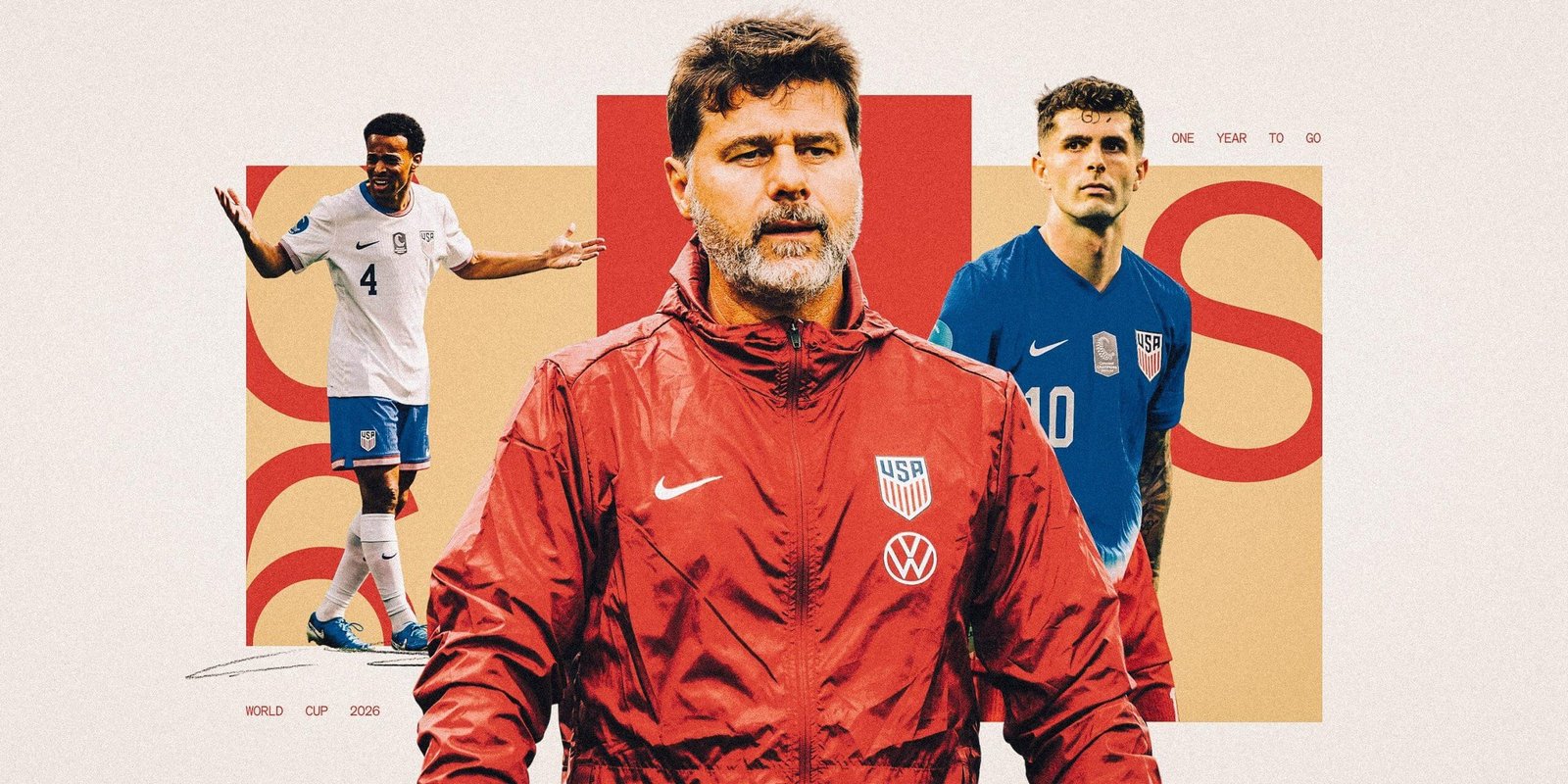
In exactly twelve months, the world will be watching as the United States Men’s National Soccer Team steps onto the pitch to begin their 2026 FIFA World Cup campaign—a tournament the nation will co-host with Canada and Mexico. It should be a time of celebration, anticipation, and pride. But instead, the mood is one of uncertainty, disbelief, and anxious expectation. After a string of four consecutive losses—their worst run since 2007—the countdown to their first match feels less like the build-up to a coronation and more like a race against collapse.

The latest defeat, a harrowing 4–0 humiliation at the hands of Switzerland on Tuesday night, has sent shockwaves through the program. And though the final whistle blew thousands of miles away in Zurich, the echo has reverberated across every training ground, boardroom, and television studio from Kansas City to Miami. For a nation trying to assert itself as a footballing superpower, the result was a stinging reminder of the gulf that remains between ambition and reality.

A Tattered Campaign in the Making

The numbers are not just ugly—they’re damning. Four losses in a row, with an aggregate goal difference of 11–2, has reduced what once seemed a golden opportunity into a crisis-in-waiting. The team’s cohesion has evaporated, the midfield looks tactically confused, and the defense—long the foundation of US resilience—has been porous at best.

Critics point to disorganized pressing, an inability to hold possession under pressure, and a consistent failure to convert promising moments into tangible outcomes. This isn’t just a tactical collapse—it’s a psychological one. And all of it is happening just as the world’s biggest footballing event approaches American soil.

Enter Mauricio Pochettino: Hope or Hail Mary?

When news broke earlier this year that Mauricio Pochettino—the Argentine tactician best known for his transformative spells at Tottenham Hotspur and Paris Saint-Germain—would be taking the reins of the USMNT, there was cautious optimism. Here was a coach renowned for man-management, for elevating young talent, for instilling tactical identity.

But the optimism was tempered by two realities. First, his reported $6 million annual salary, partially financed by billionaire hedge fund magnate Ken Griffin, suggested that this hire was not just a footballing decision, but a calculated PR maneuver. Second, the results have simply not followed. Pochettino’s first matches in charge have been plagued by indecision—his lineups lack consistency, and his tactical setups appear mismatched to the talent pool.

Supporters of the coach argue he needs time. “Let him build,” they plead. But time is a luxury not afforded in the countdown to a home World Cup. Every training session, every friendly, and every press conference now carries the weight of national expectation.

The Talent: A Generation on the Brink

What makes this unraveling all the more painful is that, on paper, the USMNT roster is arguably the most talented generation in its history. The midfield duo of Weston McKennie and Tyler Adams commands respect across Europe. Christian Pulisic, while often injured, remains a talismanic figure. Gio Reyna, Folarin Balogun, and Yunus Musah are the kind of young, dual-nationality stars the federation used to dream of recruiting. Matt Turner, between the sticks, has shown flashes of world-class potential.

And yet, this group has yet to truly click. Pulisic drifts in and out of matches. Reyna remains injury-prone and inconsistent. Balogun, still adapting to the international game, has yet to find the net in critical moments. There is a collective sense that the pieces are all here—but no one has yet figured out the puzzle.

A Fractured Fanbase, A Looming Spectacle

For American soccer fans—diehards, casuals, and skeptics alike—this World Cup was meant to be a watershed. It was meant to be the moment the sport planted its flag definitively on U.S. soil, a coming-of-age party on par with the 1994 tournament, but louder, bolder, and more permanent.

Instead, fan sentiment has soured. Stadiums no longer buzz with the same blind hope. Online discourse swings wildly between doom and delusion. Supporter sections at recent matches have begun to voice frustration not only with performances on the field, but with the broader direction of U.S. Soccer. The chants have grown sharper, the critiques more pointed.

Still, the infrastructure continues to rise. From SoFi Stadium in Los Angeles to MetLife Stadium in New Jersey, from Arrowhead in Kansas City to Mercedes-Benz in Atlanta, the venues are being prepped to host the world. Marketing campaigns are rolling. Sponsors are lining up. The stage is being set.

But the team itself? Still looking for an identity.

Tactical Misfires and Philosophical Drift

A large part of the USMNT’s problems can be traced back to tactical drift. Under previous coach Gregg Berhalter, the team was sometimes criticized for being overly rigid—but it at least had structure. Under Pochettino, that structure appears to have dissolved, replaced by experimentation without coherence.

The team now vacillates between high-press and passive shape, between possession-heavy play and frantic transitions. The backline has struggled to play out from the back, often resorting to long balls that isolate the forwards. And set pieces, long a reliable source of American goals, have grown aimless.

Perhaps more concerning than the tactical mess is the emotional malaise. Gone is the grit that defined teams of the past—the bunker-down resilience of 2010, the unshakable belief of 2002. In its place is a kind of muted professionalism, a going-through-the-motions ethos that, while common in elite club football, does not resonate with national teams built on spirit.

Off the Pitch: The Politics of Progress

Off the field, the USMNT’s story is also one of power, money, and ideology. The hiring of Pochettino, underwritten in part by Ken Griffin, reveals the growing influence of private capital on what was once a more insular federation. Some see this as a necessary modernization—others fear it represents a dangerous commodification of national identity.

The federation, for its part, has stayed quiet, continuing its messaging around “long-term development” and “trusting the process.” But insiders whisper of growing tensions between players and staff, between executives and financiers, between short-term expectations and long-term projects.

The youth pipelines are humming—MLS academies, USL investments, and overseas loans are producing talent at unprecedented rates. But development alone is not enough. As the team’s poor form continues, it becomes clear: talent without execution is just potential unfulfilled.

The Road Ahead: Twelve Months to Rewrite the Script

There are, thankfully, twelve months left. A year to shift course. To recalibrate. To heal injuries. To forge chemistry. To find not just tactics, but purpose.

The schedule ahead is tight. The team will face Brazil, Germany, Ghana, and South Korea in friendlies before the end of the year. A regional tournament may be used to simulate group stage intensity. And Pochettino—if he survives the summer—must finalize a core squad, establish roles, and teach a system that suits the players he has, not the ones he wishes he had.

The media will hound him. Pundits will pounce. Every roster decision will be scrutinized, every captain’s armband debated. The countdown will not be gentle. But it will be fair. The World Cup, after all, is not a gift. It is an earned moment. And right now, the United States is dangerously close to squandering its own.

A Nation Watching Its Reflection

Perhaps what’s most at stake here isn’t just tournament results or international prestige—it’s the image of American soccer to itself. The 2026 World Cup is not just about football. It’s about belonging to the global game on equal footing. It’s about proving that the U.S. can nurture world-class talent, host with grace, and compete with dignity.

There’s still time. But not much. And the clock isn’t slowing.

Related Articles
Skeletor stands at the center of a fiery battlefield in Masters of the Universe, wielding a ram-skull staff while surrounded by armored skeletal warriors, glowing red eyes piercing through the smoke and flames of Eternia's dark war-torn realm

Masters of the Universe Review: Nicholas Galitzine Powers a Surprisingly Fun Fantasy Epic

In the post-COVID era of fragmented attention and cultural exhaustion, launching a big-budget franchise film […]

Modern data center facility with a solar-panel-clad exterior, bright green administrative offices, and secure perimeter fencing, showcasing sustainable digital infrastructure and renewable energy integration

Lombardy’s Data Center Boom: Balancing Digital Ambition with Environmental Responsible

Lombardy has emerged as Italy’s primary hub for new digital infrastructures, particularly data centers—vast complexes […]

In a highly anticipated reunion after 24 years, Adidas Originals and Coca-Cola have joined forces once again to celebrate the FIFA World Cup 2026™. The collaboration revives their iconic 2002 partnership from the Japan-South Korea tournament, now reimagined for the biggest global sporting event of 2026, co-hosted by the United States, Canada, and Mexico. Set to launch on June 6, 2026, this collection masterfully blends Adidas' streetwear heritage with Coca-Cola's timeless branding, creating a vibrant fusion of football culture, nostalgia, and modern style. The drop arrives at a perfect moment. With the World Cup kicking off on June 11, 2026, fans worldwide are gearing up for a summer of football excitement. This collaboration isn't just merch—it's a cultural statement that merges two legendary brands under the banner of "Originals are the Real Thing," a clever twist on Coca-Cola's famous slogan. Historical Context: A Reunion 24 Years in the Making Adidas and Coca-Cola first collaborated during the 2002 FIFA World Cup, producing limited-edition pieces that captured the era's energy. That partnership helped define early 2000s football-streetwear crossover culture. Fast-forward to 2026, and the brands are back with fresh energy, leveraging Adidas' deep FIFA ties (as an official partner) and Coca-Cola's long-standing sponsorship of the tournament. The 2026 edition promises to be historic as the first 48-team World Cup, spanning three countries and generating unprecedented global hype. This collab taps into that momentum, offering fans wearable pieces that celebrate both brands' legacies while looking forward to the future of football fashion. Collection Overview and Design Philosophy The Adidas Originals x Coca-Cola collection fuses 2000s street style with classic sporting aesthetics. Expect bold reds, creams, whites, and silver accents inspired by Coca-Cola's iconic packaging—think classic script logos, droplet detailing, and can-inspired motifs. The lineup spans footwear, apparel, and accessories, divided into two visual directions: one logo-heavy and graphic-forward, the other drawing from vintage advertising aesthetics. Designs pay homage to Coca-Cola's visual language while staying true to Adidas Originals' archival roots. High-quality materials, attention to detail, and versatile silhouettes make these pieces suitable for both match-day wear and everyday street style. The campaign, featuring young football star Lamine Yamal and a diverse cast in everyday scenes building anticipation for the tournament, reinforces themes of originality and shared cultural moments. Footwear Highlights Footwear takes center stage in this collaboration, with reimagined takes on iconic 2000s Adidas silhouettes: Samba and Superstar Models: These classics get Coca-Cola treatment with white/cream/red colorways and prominent script branding. The Samba blends street heritage with football roots, while the Superstar II features weathered bases and bold side panels. Expected pricing around $110–$130. Adistar Control 5: A standout with droplet detailing mimicking condensation on a cold Coke can. This model brings performance-inspired design into lifestyle territory. Predator Sala: Indoor/hybrid style with silver-and-red accents, nodding to predatory precision on the pitch and Coca-Cola's bold energy. Climacool 1: Revived with breathable tech and Coke-inspired graphics, perfect for warm summer days. Megaride F50: A highlight paying tribute to the iconic Coca-Cola glass bottle, with unique contours and refreshing design cues. Each pair incorporates thoughtful details like embroidered logos, custom insoles, and packaging that mimics vintage Coke crates or cans. These shoes are built for durability and comfort, appealing to sneakerheads, football fans, and casual wearers alike. Apparel and Accessories Beyond kicks, the collection offers a full lifestyle range: Track Tops and Jerseys: Standout jerseys fuse retro Coca-Cola advertising from different eras into cohesive football designs. Track jackets feature signature three stripes alongside Coke branding, in vibrant reds and classic whites. Shorts and T-Shirts: Relaxed fits with graphic prints, ideal for casual wear or layering. Expect motivational football motifs blended with refreshing beverage references. Accessories: A bright red airliner bag stands out as a functional statement piece. Additional items may include caps, socks, and tote bags carrying the collaborative spirit. The apparel emphasizes comfort with premium cotton blends, mesh panels for breathability, and oversized silhouettes popular in contemporary streetwear. Unisex sizing and inclusive fits make the collection accessible to a broad audience. Cultural Impact and Fan Appeal This collaboration resonates on multiple levels. For football fans, it represents national pride and global unity ahead of the 2026 tournament. Sneaker enthusiasts will appreciate the nostalgic 2000s revival mixed with modern execution. Streetwear collectors see it as a prime example of how heritage brands can innovate through partnerships. In an era where sports and fashion increasingly intersect, Adidas and Coca-Cola deliver pieces that transcend the pitch. Wear them to watch matches at home, attend watch parties, or hit the streets in any host city—New York, Los Angeles, Toronto, or beyond. The designs are versatile enough for gym sessions, festivals, or daily commutes. The timing aligns perfectly with rising interest in football in North America, boosted by the co-hosting nations. Young talents like Lamine Yamal in the campaign help bridge generational gaps, attracting newer fans while satisfying longtime supporters. Where to Buy and Release Details The collection launches globally on June 6, 2026, via: Adidas CONFIRMED app (for early access and raffles) Adidas.com Select retailers and flagship stores worldwide Some regions may see staggered drops, with Japan and other markets getting early access. Prices are expected to range from $50–$150 depending on the item, making it relatively accessible compared to ultra-limited drops. Pro Tips for Copping: Enable notifications on the CONFIRMED app. Check local stock at Adidas stores in major cities. Monitor resale platforms post-drop for exclusive colorways, but be wary of markups. Size up slightly for oversized apparel fits. Given the World Cup hype, popular items like the Sambas and jerseys are likely to sell out quickly. International shipping is available, but factor in potential customs delays. Styling Suggestions Match Day Look: Pair a collaborative jersey with classic black shorts and Samba sneakers for effortless fan style. Streetwear Rotation: Layer a track top over a graphic tee with wide-leg pants and the Megaride F50 for a bold urban ensemble. Casual Summer: White Superstar with denim shorts and the airliner bag for a refreshing, vacation-ready vibe. These pieces mix seamlessly with existing Adidas or neutral wardrobes, maximizing versatility. Broader Context in 2026 Fashion and Sports The Adidas x Coca-Cola drop is part of a larger wave of high-profile collaborations tied to the World Cup. Adidas continues its dominance in football kit design, while Coca-Cola leverages its sponsorship with collectibles, bottles, and experiential activations like the Trophy Tour. In the sneaker industry, this collab exemplifies the ongoing trend of lifestyle reinterpretations of performance silhouettes. It also highlights how global brands use major events to drive cultural conversations around unity, originality, and joy—core values for both companies. Sustainability notes (based on Adidas' broader initiatives) suggest some pieces may incorporate recycled materials, aligning with modern consumer expectations. Looking Forward: Legacy and Excitement As the countdown to kickoff continues, this collection serves as the perfect prelude to an unforgettable summer of football. Whether you're a die-hard supporter, a fashion-forward collector, or someone seeking motivation through style, the Adidas Originals x Coca-Cola FIFA World Cup 2026 lineup delivers. Expect potential restocks, special event exclusives in host cities, and continued campaign content featuring more athletes. This isn't just clothing—it's a ticket to participate in the global celebration of the beautiful game. Mark your calendars for June 6, 2026. Refresh your wardrobe, lace up those Sambas, and get ready to cheer on your team in style. The "Real Thing" meets the Originals in what promises to be one of the most talked-about releases of the year. This collaboration captures the essence of football's universal appeal: bringing people together through shared passion, iconic brands, and unforgettable moments. As the world prepares for 2026's expanded tournament, Adidas and Coca-Cola remind us that some partnerships are truly timeless.

Adidas Originals x Coca-Cola Collection: FIFA World Cup 2026

In a highly anticipated reunion after 24 years, Adidas Originals and Coca-Cola have joined forces […]