DRIFT AUDIO
Listen to this story
Choose a voice, then press play.
For over a decade, smart home technology has promised convenience, control, and connection. We’ve taught our homes to conjure music on command, adjust the thermostat with a whisper, and unlock the front door for the dog walker. Yet for all their intelligence, one truth has remained fixed: they stay put.
A speaker on the kitchen counter cannot check if your aging mother has gotten out of bed. A camera in the hallway cannot follow your toddler as they stray toward the backyard. A smart display in the living room cannot sense when someone hasn’t moved in hours — and decide, on its own, to respond.
That is the quiet limitation of the connected home as we know it: brilliant at responding, yet blind beyond its vantage point. It waits. It does not look.
Until now.
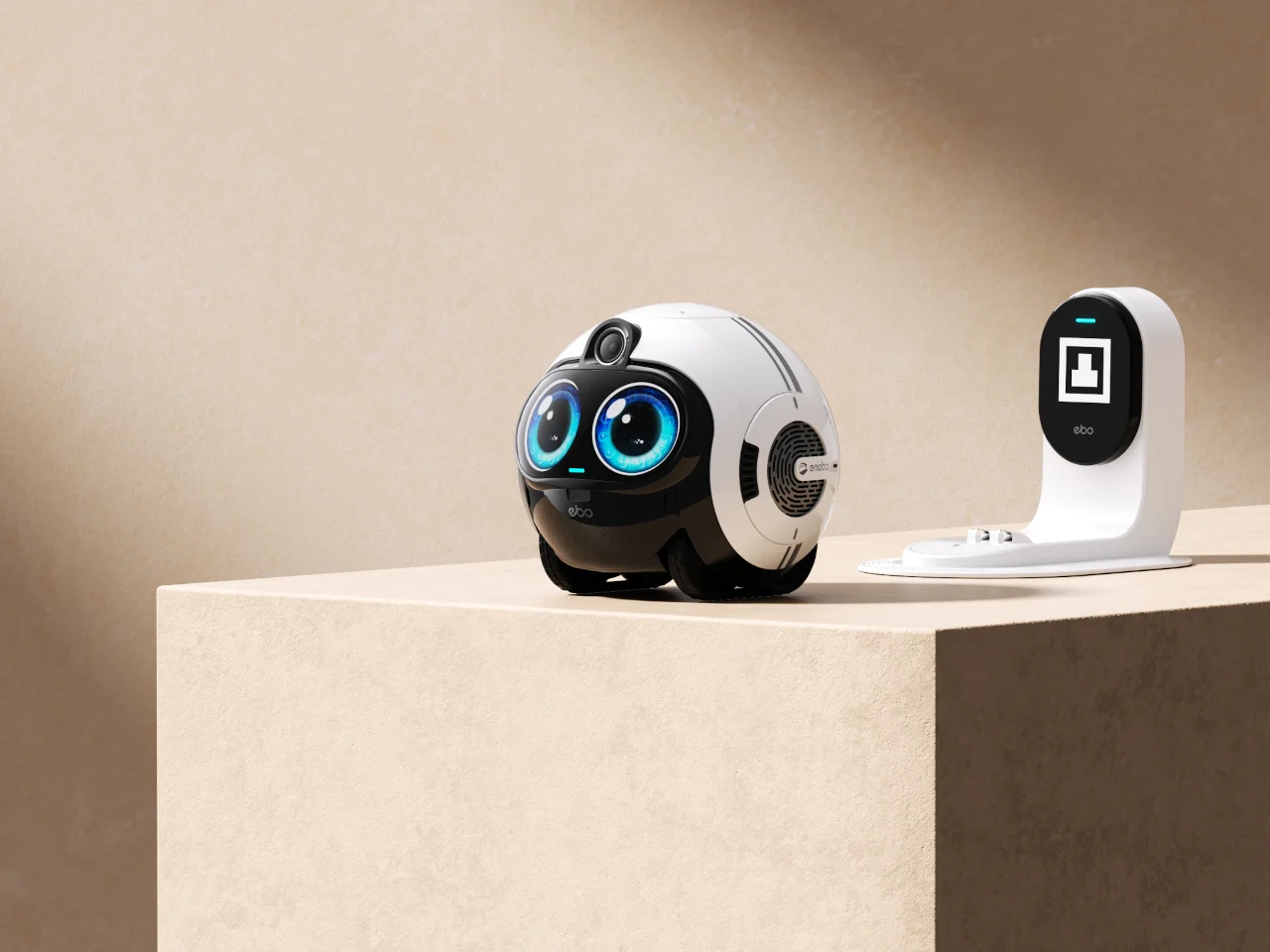
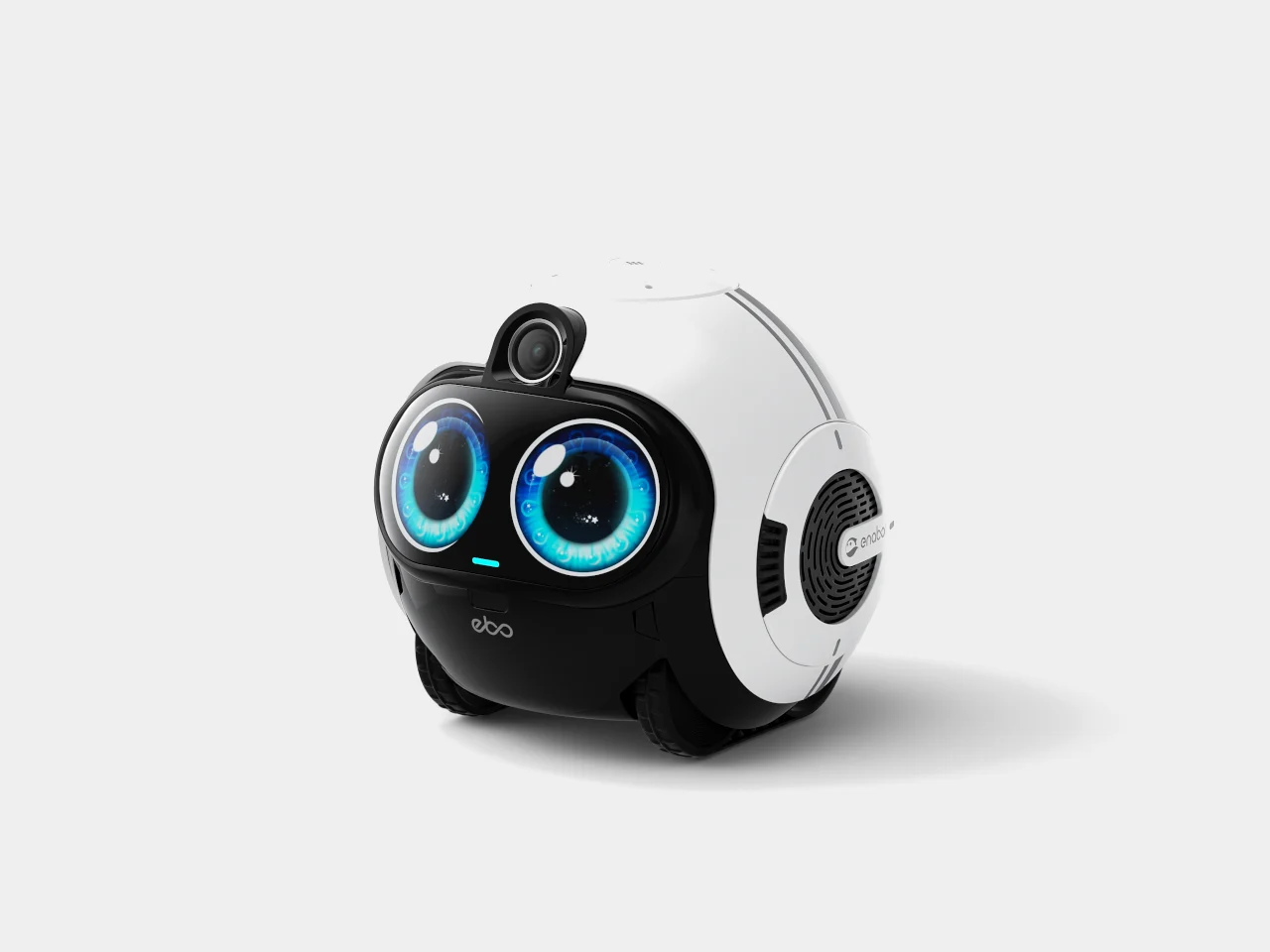
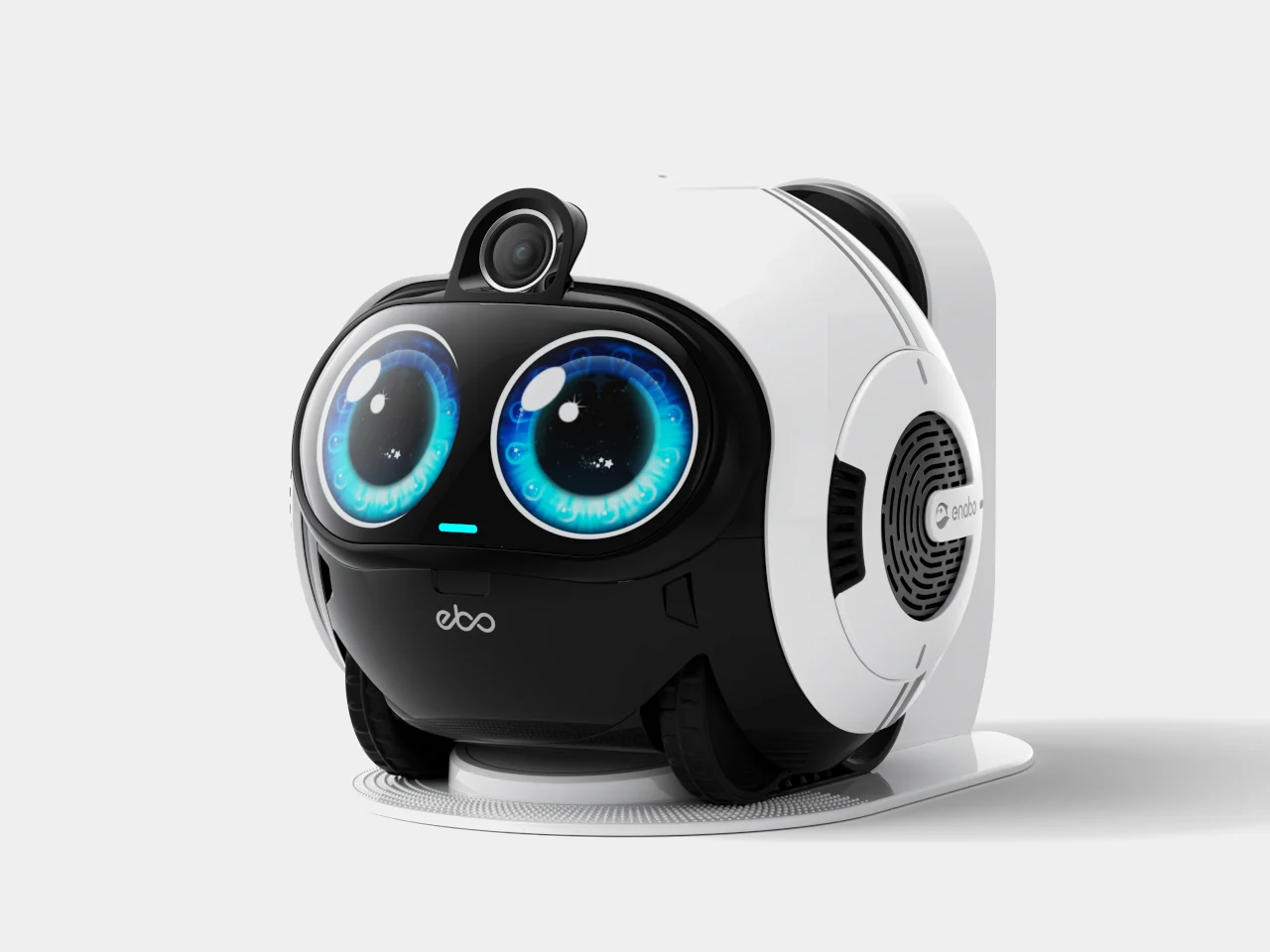
Enter the EBO Max FamilyBot by Enabot — a compact, round-bodied robot, roughly the size of a football, defined by oversized expressive eyes and the ability to move freely through the home. Not just another smart device, but something closer to a presence. A mobile participant. A companion that does not wait to be called — it goes looking.
And in that shift — movement, initiative, presence — the smart home begins to change its meaning.
View this post on Instagram
stir
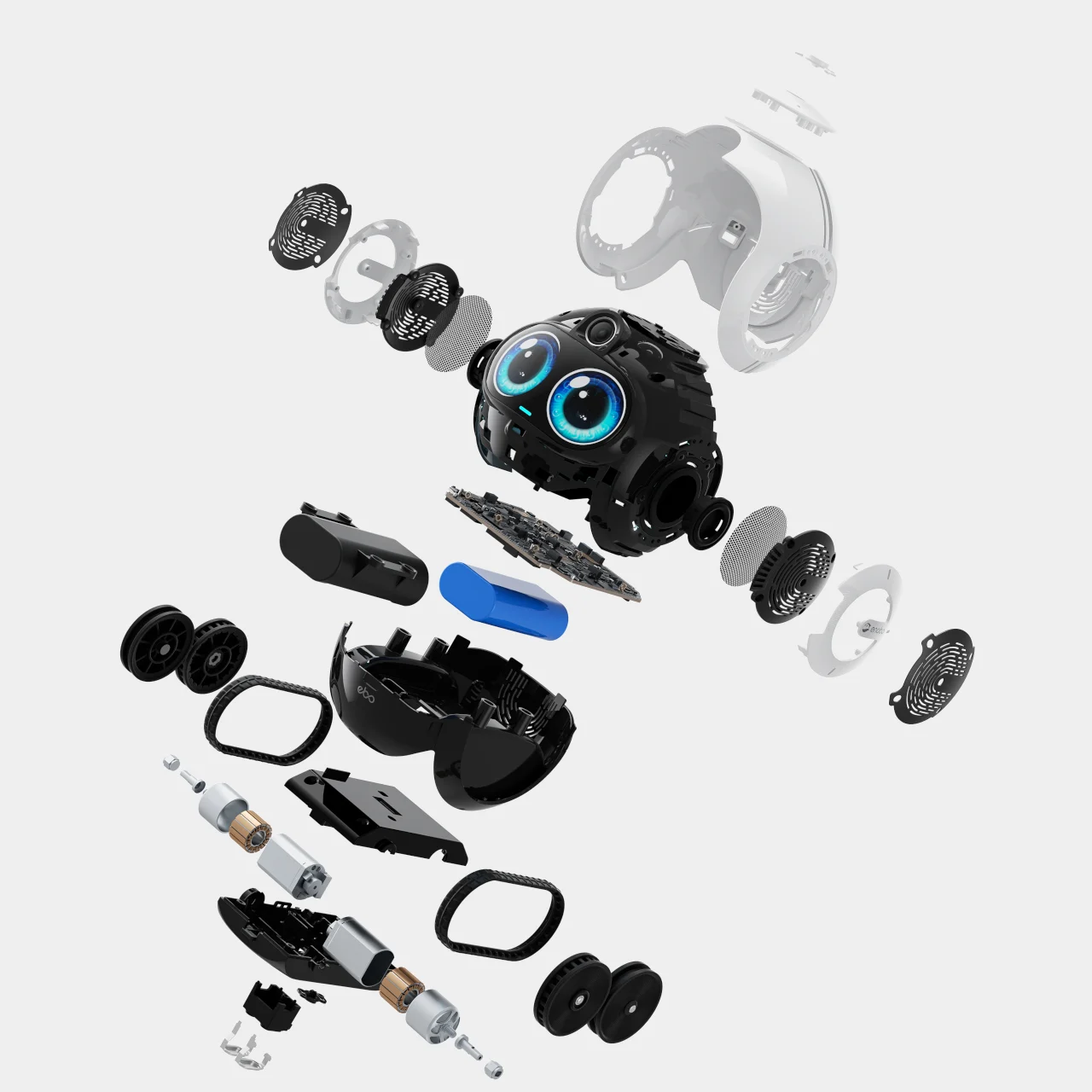
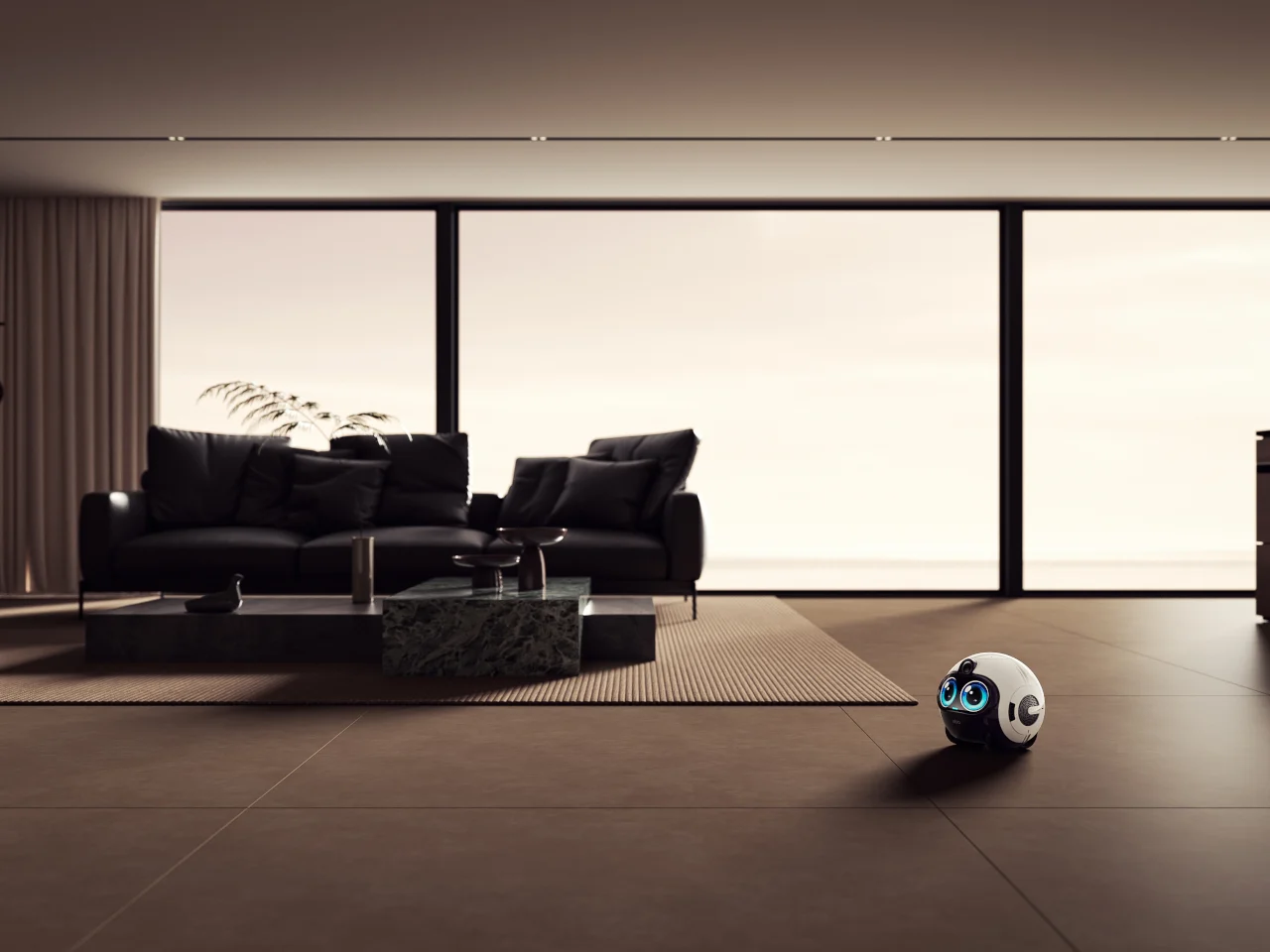
The EBO Max is not designed for stillness. It is built for motion. A low-profile body, softly contoured, paired with omnidirectional wheels, elicits it to glide across hardwood, tile, and carpet with near-silent ease. It moves under furniture, around corners, through thresholds — mapping the home in real time, learning spatial rhythms, adjusting to disruption.
A chair pulled out. A toy left behind. A door half-closed.
It adapts.
But its intelligence is not only spatial. It is behavioral.
The EBO Max learns faces, patterns, routines. It builds a quiet archive of daily life. And within that archive, it begins to recognize absence.
If your father usually has breakfast by 8:30, but by 10:00 there is still no movement, the system does not wait for instruction. It notices. It moves. It checks. And then — gently — it informs.
No command issued. No interface engaged. Just observation, followed by action.
For families, this is not automation. It is awareness.
lang
The most immediate feature is also the most disarming: the eyes.
Large. Animated. Responsive.
They are not ornamental. They are communicative.
When the robot listens, they widen. When processing, they narrow. When preparing to move, they shift direction first — a small, readable cue of intent. Recognition appears not as data, but as brightness. Familiarity, expressed visually.
This is not accidental design. It is rooted in how humans read attention — through eyes, through subtle motion, through perceived awareness.
The result is a machine that does not simply observe — it appears to acknowledge.
For older users, this softens the edge of surveillance. For children, it transforms function into familiarity. For caregivers, it reframes utility as partnership.
The device does not feel imposed. It feels present.
theory
The EBO Max does not define itself through a single function. It exists in overlap — between care, companionship, and observation.
Elder Care, Without Intrusion
It detects prolonged inactivity. It initiates soft check-ins. It offers reminders, not alarms. It moves toward the individual rather than requiring fixed infrastructure. The home remains intact — unmodified, unmonitored in excess — yet quietly responsive.
Parenting, Without Constant Vigilance
A toddler does not move within boundaries. The robot follows. It observes. It relays presence without demanding it. Video becomes fluid, not fixed. Monitoring becomes ambient rather than obsessive.
Distance, Softened
For families separated geographically, the EBO Max becomes a moving point of connection. Not a call placed into space, but a presence that travels. A grandparent does not wait for someone to appear on screen — they arrive.
Pet Awareness
Even animals respond to continuity. A moving presence, a familiar voice, a soft interruption to absence. Small gestures, but meaningful in the quiet rhythms of daily life.
imply
Mobility introduces tension. Movement implies observation. Observation raises concern.
Here, the system answers deliberately.
Processing occurs on-device. Recognition is contained. Data is not defaulted outward. Recording is conditional, not constant. Boundaries can be drawn — physically, digitally — through no-go zones and user control.
Most critically, the robot signals its awareness. It does not watch invisibly.
This is not surveillance architecture. It is selective attention — calibrated, visible, and limited by design.
show
For years, the question has been how to make homes more intelligent. More sensors. More inputs. More commands.
But intelligence without movement remains incomplete.
The EBO Max reframes the question: not how a home responds, but how it attends.
Because care is not static. It requires movement. Checking. Following. Noticing irregularity — and acting within it.
A system that waits is efficient.
A system that looks is attentive.
And that distinction is where the shift occurs.
scope
Something else emerges over time — something less technical.
The device is named. Spoken to. Acknowledged.
Not because it imitates humanity, but because it occupies space consistently. It appears. It returns. It witnesses.
And in that repetition, it becomes part of the environment — not as infrastructure, but as presence.
fin
The EBO Max does not replace care. It does not substitute human presence. It does not resolve every absence.
What it does is simpler — and more fundamental.
It notices.
When someone has not moved.
When a child is alone.
When a room is quieter than it should be.
And in that noticing, it introduces a different kind of safety — one that is not reactive, but aware.
Smart homes were built around control.
This is something else.
A home that pays attention.