DRIFT AUDIO
Listen to this story
Choose a voice, then press play.
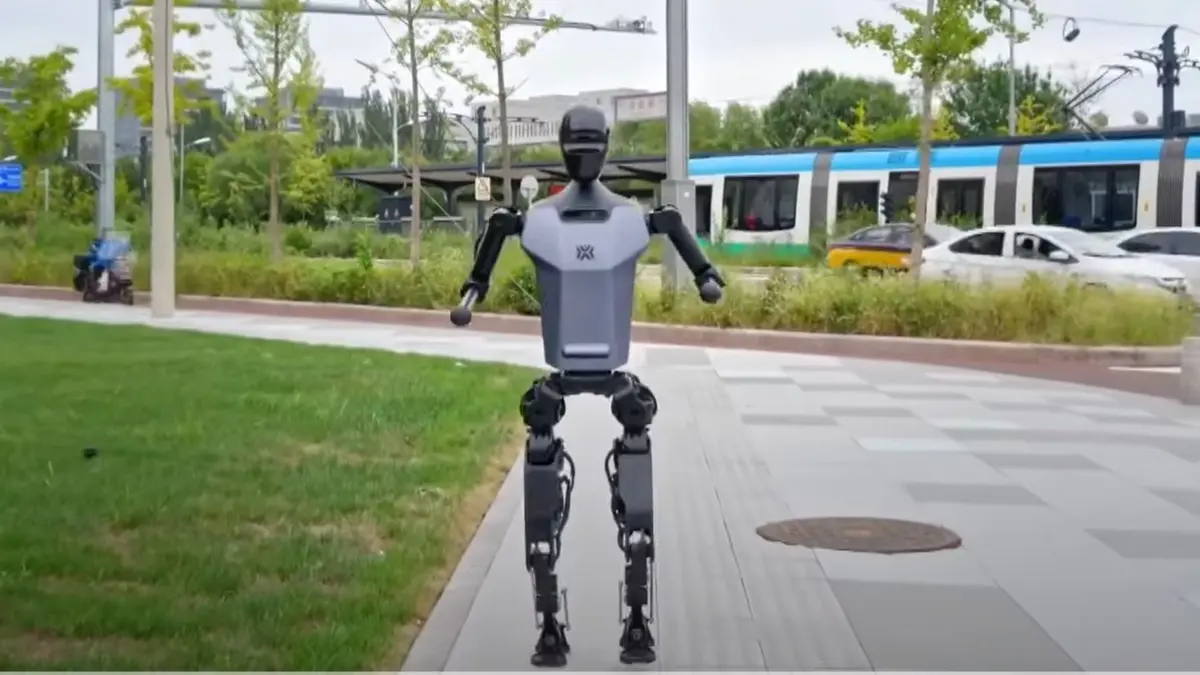
The unveiling of the world’s first open-source electric humanoid robot marks a pivotal moment in robotics and artificial intelligence, transforming the landscape of innovation and accessibility. This groundbreaking development enables enterprises, research institutions, and independent developers to access the robot’s platform, reducing the costs and time associated with development and integration. By offering an open-source platform, the creators aim to accelerate the adoption of humanoid robots, bringing the technology closer to real-world applications across industries.
The Vision Behind an Open-Source Humanoid Robot
The creation of an open-source humanoid robot stems from a desire to break down barriers in robotics development. Traditionally, humanoid robots have been costly and complex, with proprietary technologies limiting access to a select few institutions with the resources to invest in such advanced research. By transitioning to an open-source model, the robot’s developers aim to democratize the technology, fostering a collaborative environment where engineers, researchers, and developers can contribute to and benefit from the platform’s capabilities.
This approach to open-source robotics allows for accelerated problem-solving and innovation, as contributors from various fields can work together to enhance the robot’s capabilities. By sharing the code, hardware design, and development tools, the creators empower the global tech community to push the boundaries of what humanoid robots can achieve, paving the way for applications in healthcare, manufacturing, service industries, and beyond.
Reducing Development Time and Costs
One of the most significant benefits of making the humanoid robot platform open-source is the potential to drastically cut down development time and costs. Proprietary robotics platforms often require expensive licensing fees, specialized hardware, and dedicated teams to maintain, making development time-consuming and costly. By offering an open-source framework, developers can bypass these barriers, accessing the robot’s platform without the typical financial constraints.
This approach enables smaller companies and research institutions to experiment with humanoid robotics, bringing new ideas and applications to the forefront. For example, startups working on automation in healthcare or companies developing robotic assistance in elder care can now build on this platform, customizing it to meet specific needs without incurring prohibitive costs. In this way, the open-source humanoid robot becomes a tool that supports innovation and entrepreneurship, giving companies of all sizes the chance to explore new uses for robotics.
Accelerating Innovation Through Collaboration
Open-source technology has long been a catalyst for rapid innovation, and the humanoid robot platform is no exception. By opening up the platform, developers around the world can collaborate on improvements, troubleshoot issues, and share insights, all of which accelerate the development process. This collective knowledge base drives forward innovation in ways that proprietary platforms cannot achieve, as ideas and solutions emerge from a wide range of perspectives and expertise.
This open-source model enables robotics and AI researchers to develop and test new algorithms, sensors, and motion-control systems without having to start from scratch. For example, researchers focusing on computer vision, natural language processing, or machine learning can integrate their models into the humanoid robot’s framework, seeing how these technologies interact with physical movement and human-like behavior. This level of interdisciplinary collaboration has the potential to unlock new capabilities for humanoid robots, ultimately leading to more robust and versatile systems.
Key Features of the Open-Source Humanoid Robot
The open-source humanoid robot is designed to be accessible yet advanced, with a range of features that make it suitable for research, development, and practical applications. The robot’s electric-powered limbs and joints enable smooth, realistic movement, allowing it to perform tasks that require precision and dexterity. Unlike many earlier humanoid robots that relied on hydraulic systems, this electric design is quieter, more energy-efficient, and easier to maintain, making it a practical choice for integration into various environments.
The robot is also equipped with an array of sensors, including cameras, proximity sensors, and pressure-sensitive touch sensors, which provide it with spatial awareness and the ability to interact with objects and people. These sensors enable the robot to perceive its surroundings and respond accordingly, allowing developers to program it for tasks that require fine motor skills and human interaction. For example, in healthcare, the robot could be programmed to assist patients with limited mobility by performing tasks such as fetching items or monitoring vital signs.
Moreover, the open-source platform includes an adaptable software framework that supports machine learning and artificial intelligence algorithms. This feature allows developers to train the robot for specific tasks, enhancing its ability to learn from interactions and adapt to changing environments. This adaptability is crucial for real-world applications, as it allows the robot to operate autonomously in unpredictable settings, from customer service in retail stores to patient care in hospitals.
Applications Across Industries
The open-source humanoid robot’s versatility and adaptability make it suitable for a wide range of applications across industries. In healthcare, for instance, the robot could assist medical staff by performing repetitive tasks, freeing up time for healthcare professionals to focus on patient care. The robot could also serve as a companion for elderly patients, providing assistance with daily tasks, monitoring health, and offering companionship—an application that becomes especially important in aging populations where caregiver shortages are common.
In manufacturing, the humanoid robot can work alongside human employees, handling tasks that require precision or endurance. By integrating the robot into assembly lines, companies can automate repetitive tasks, improving efficiency while reducing physical strain on human workers. The open-source platform also allows manufacturers to customize the robot’s functionality to meet the specific needs of their production processes, from quality control to handling hazardous materials.
In the service industry, the humanoid robot has potential applications in customer service and hospitality. Imagine a robot that can greet customers, provide directions, answer frequently asked questions, or even carry luggage in hotels. Such a robot would be especially valuable in high-traffic environments, where consistent, high-quality customer service is essential. Additionally, the open-source nature of the platform allows businesses to program the robot to reflect their brand’s tone and personality, creating a unique customer experience.
Education and Research Advancements
The open-source nature of the humanoid robot platform is a boon for education and research. Universities and research institutions can now access a sophisticated robotics platform without the high costs associated with proprietary systems, making it easier to train the next generation of engineers and computer scientists. By working directly with an advanced humanoid robot, students can gain hands-on experience with robotics, programming, and AI, preparing them for careers in a field that is rapidly advancing.
In research, the open-source platform provides an ideal testbed for experimental algorithms and AI models. Researchers working on machine learning, motion control, or human-robot interaction can leverage the platform to conduct experiments, analyze data, and refine their theories. This collaborative, open-source approach accelerates scientific discovery, as researchers from different institutions can share their findings, refine each other’s work, and collectively push the boundaries of what humanoid robots can achieve.
Addressing Ethical and Social Considerations
While the open-source humanoid robot presents exciting opportunities, it also raises important ethical and social considerations. With access to advanced robotics technology now open to a broader audience, there is an increased need to address issues such as privacy, safety, and the potential for misuse. Open-source platforms offer immense flexibility, but this also means that developers have greater responsibility to consider the ethical implications of their applications.
One area of concern is the use of humanoid robots in surveillance and security. With the robot’s sensors and AI capabilities, it could be used to monitor spaces or individuals, raising privacy concerns. To address these issues, developers and researchers will need to establish guidelines for responsible use, ensuring that the technology is applied in ways that respect individuals’ rights and do not infringe upon privacy.
Furthermore, as humanoid robots become more common in workplaces and public spaces, questions about job displacement and the impact on the human workforce arise. While the robot’s open-source nature makes it adaptable for a range of tasks, there is a risk that widespread adoption could lead to a reduction in demand for certain jobs. Policymakers and industry leaders will need to consider ways to balance technological advancement with the welfare of the human workforce, exploring opportunities for retraining and creating new roles that work alongside robotics.
The Future of Open-Source Robotics
The launch of the world’s first open-source electric humanoid robot is a milestone that reflects the potential for collaborative innovation in robotics. By opening up access to a sophisticated humanoid platform, developers worldwide now have the opportunity to experiment, innovate, and contribute to a shared vision for the future of robotics. This open-source model democratizes robotics, encouraging creativity and ingenuity, and ultimately accelerating the development of technology that could benefit society in countless ways.
As more developers and institutions engage with the open-source humanoid robot platform, we are likely to see rapid advancements in robotics capabilities. With contributions from a diverse range of experts, the robot’s functionality will continue to expand, enabling new applications and setting new standards for what humanoid robots can achieve. This collaborative approach also fosters a sense of community within the robotics field, where knowledge-sharing and teamwork drive progress.
The open-source humanoid robot represents a new era in robotics, where access to cutting-edge technology is no longer limited by financial constraints or proprietary restrictions. By making the robot’s platform open-source, the creators have unlocked a world of possibilities for developers, researchers, and industries worldwide. This move has the potential to revolutionize fields as diverse as healthcare, manufacturing, education, and service, allowing humanoid robots to become an integral part of our everyday lives.
As this open-source platform grows and evolves, it is likely to become a cornerstone of future robotics development, inspiring a generation of innovators to explore the full potential of humanoid robots. Through connection and shared knowledge, we may soon see a world where humanoid robots are as common and as essential as the computers and smartphones we use today, transforming how we work, interact, and navigate the complexities of the modern world.
Related Articles

Garage Italia’s Electric Spiaggina Puts the Fiat 500’s Riviera Years on Battery Power
Ten kilowatts, rattan seats and a €85,000 starting price: Garage Italia's 500 Spiaggina rebuilds Ghia's 1958 beach car for the yacht crowd.