DRIFT AUDIO
Listen to this story
Choose a voice, then press play.
retail
YSL Beauty building a hotel-style pop-up in Shanghai is a sharp reflection of how beauty retail is evolving globally. The space is not structured around quick transactions or isolated product testing. Instead, it functions as an environment people move through gradually, emotionally, and socially. Guests check in, receive a room key, navigate themed interiors, and experience the collection through atmosphere rather than through traditional merchandising alone. The product remains central, but it is absorbed into something larger: hospitality, storytelling, ritual, and immersion. In a category where nearly every formula, texture, and shade can already be discovered online within seconds, brands increasingly compete through experience rather than availability.
View this post on Instagram
This shift feels especially relevant in beauty because the category itself has become hyper-view. Lipsticks, blushes, fragrances, and skincare launches circulate instantly across TikTok, Xiaohongshu, Instagram, and livestream commerce ecosystems. Consumers can access reviews before products even arrive in stores. Dupes emerge almost immediately. Retail spaces therefore have to justify physical presence differently. What matters now is not only what consumers buy, but how long they remain emotionally engaged while encountering it. YSL Beauty understands this change clearly, and the LoveNude Hotel transforms retail into something experiential, cinematic, and spatially narrative-driven.
inside
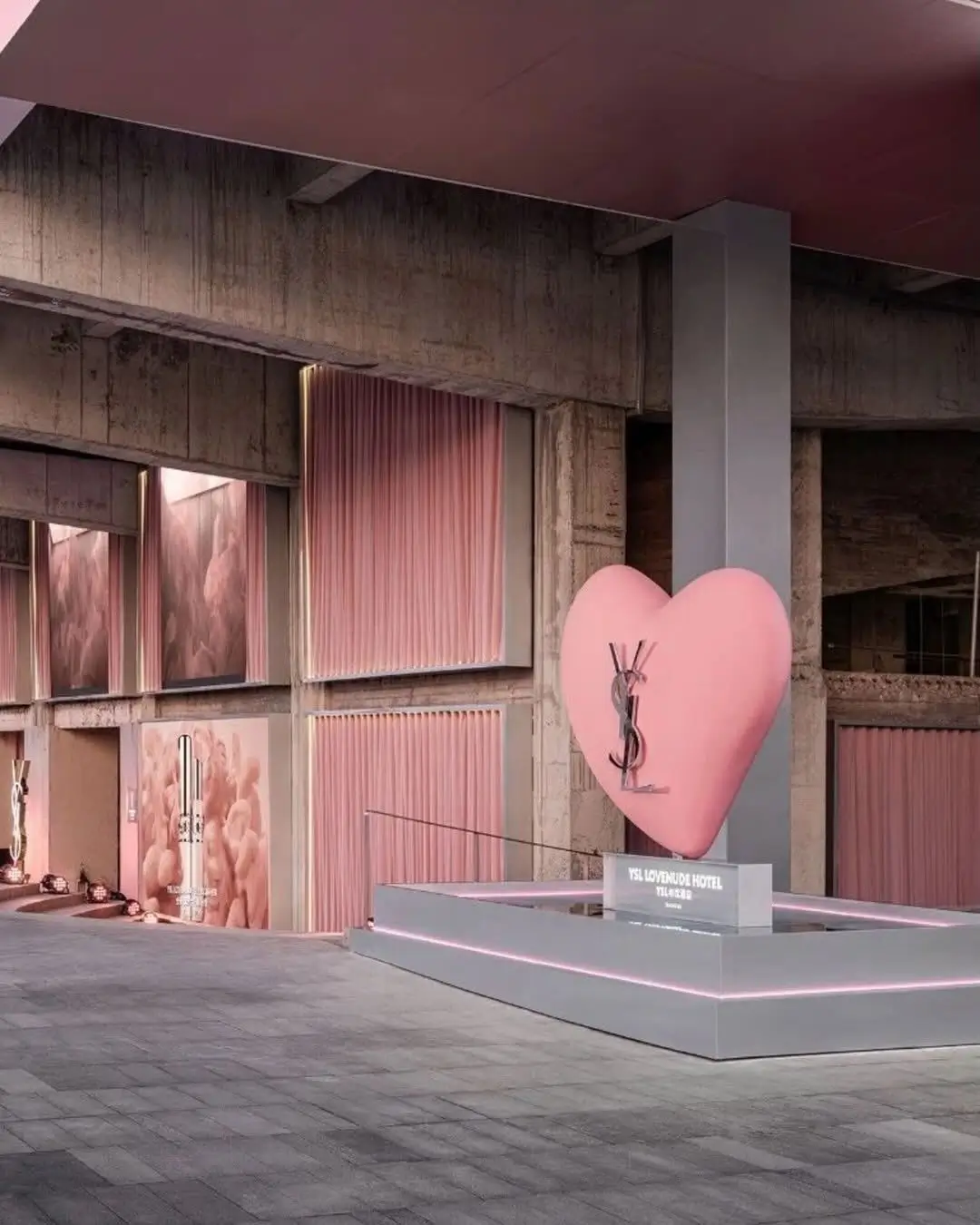
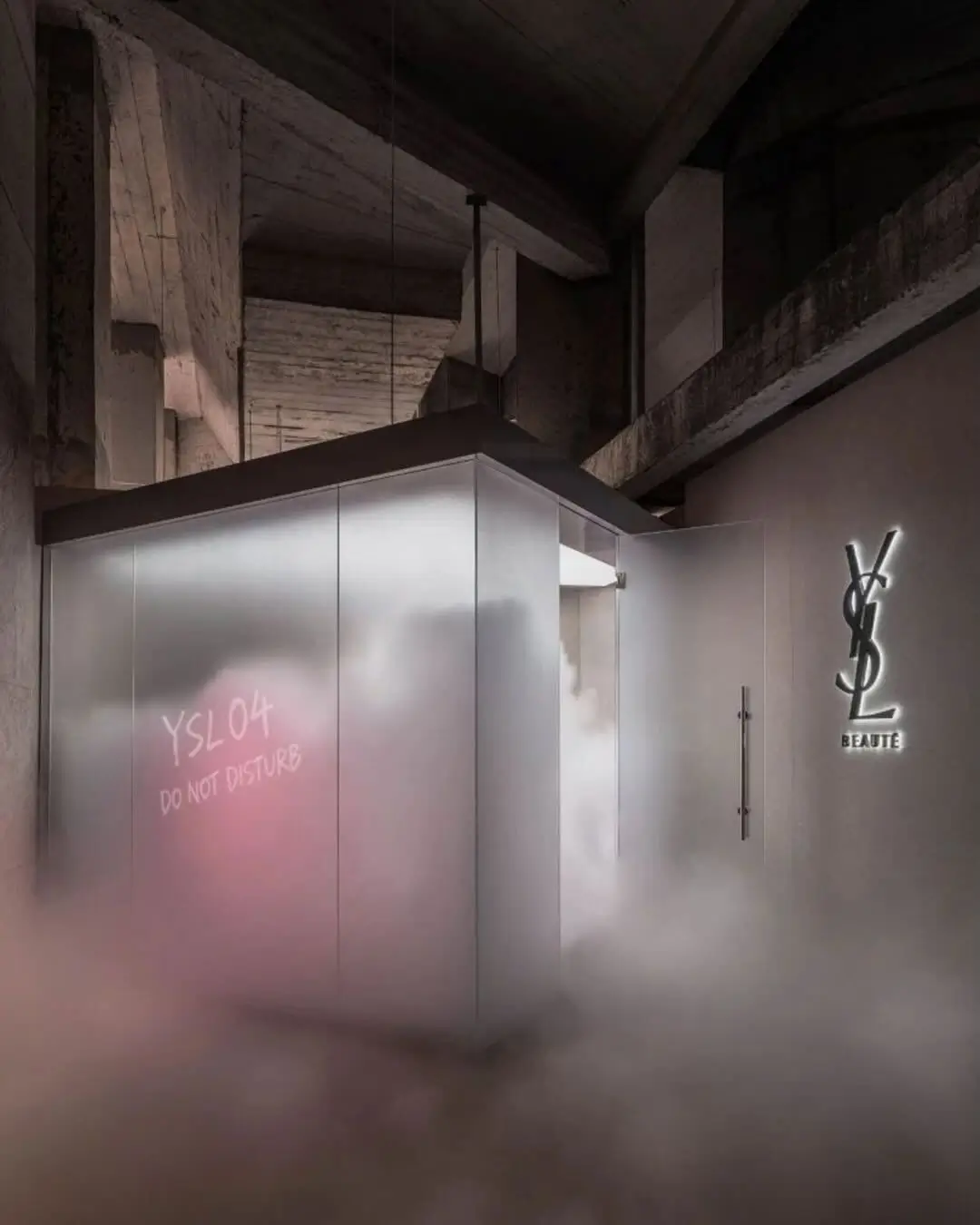
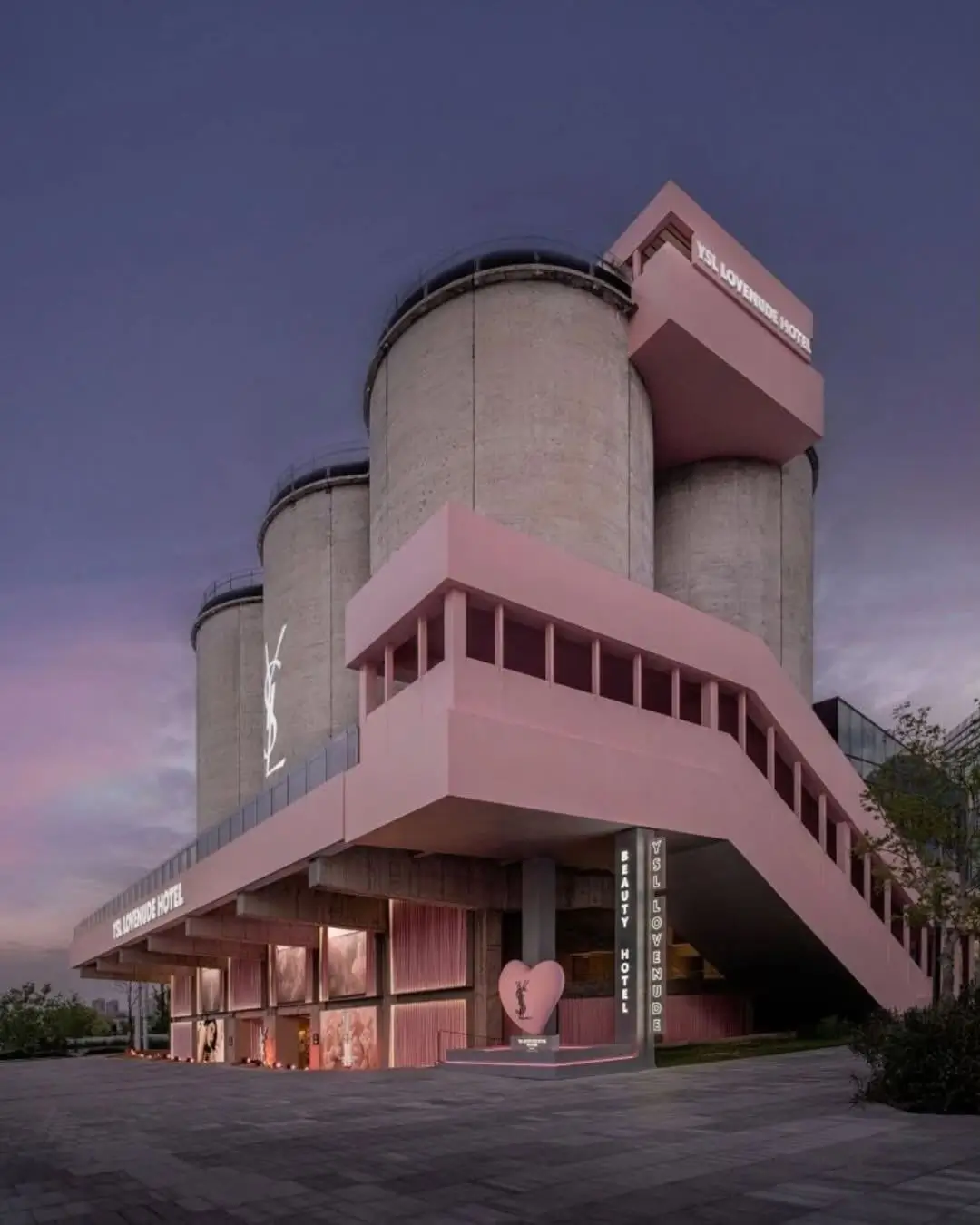
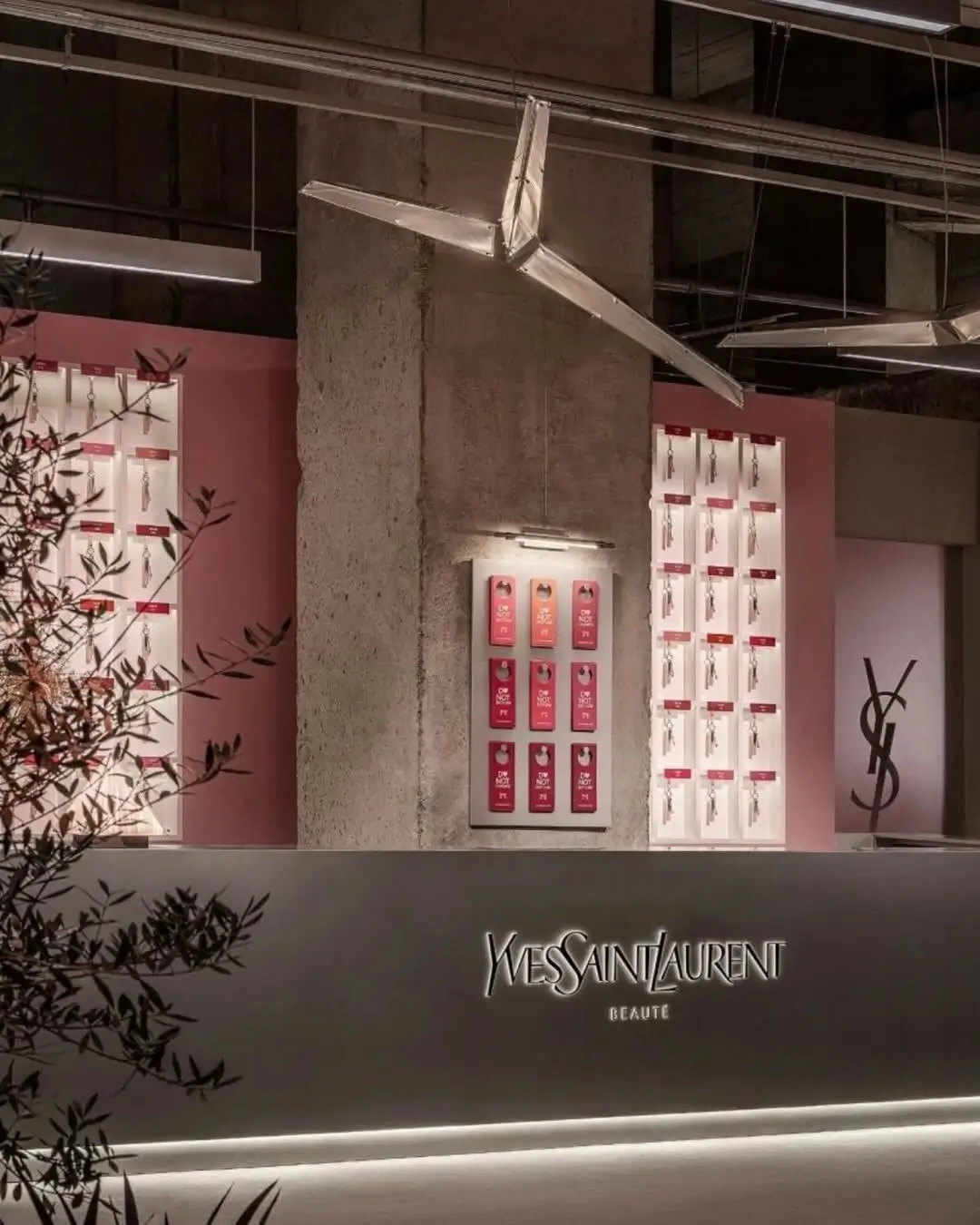
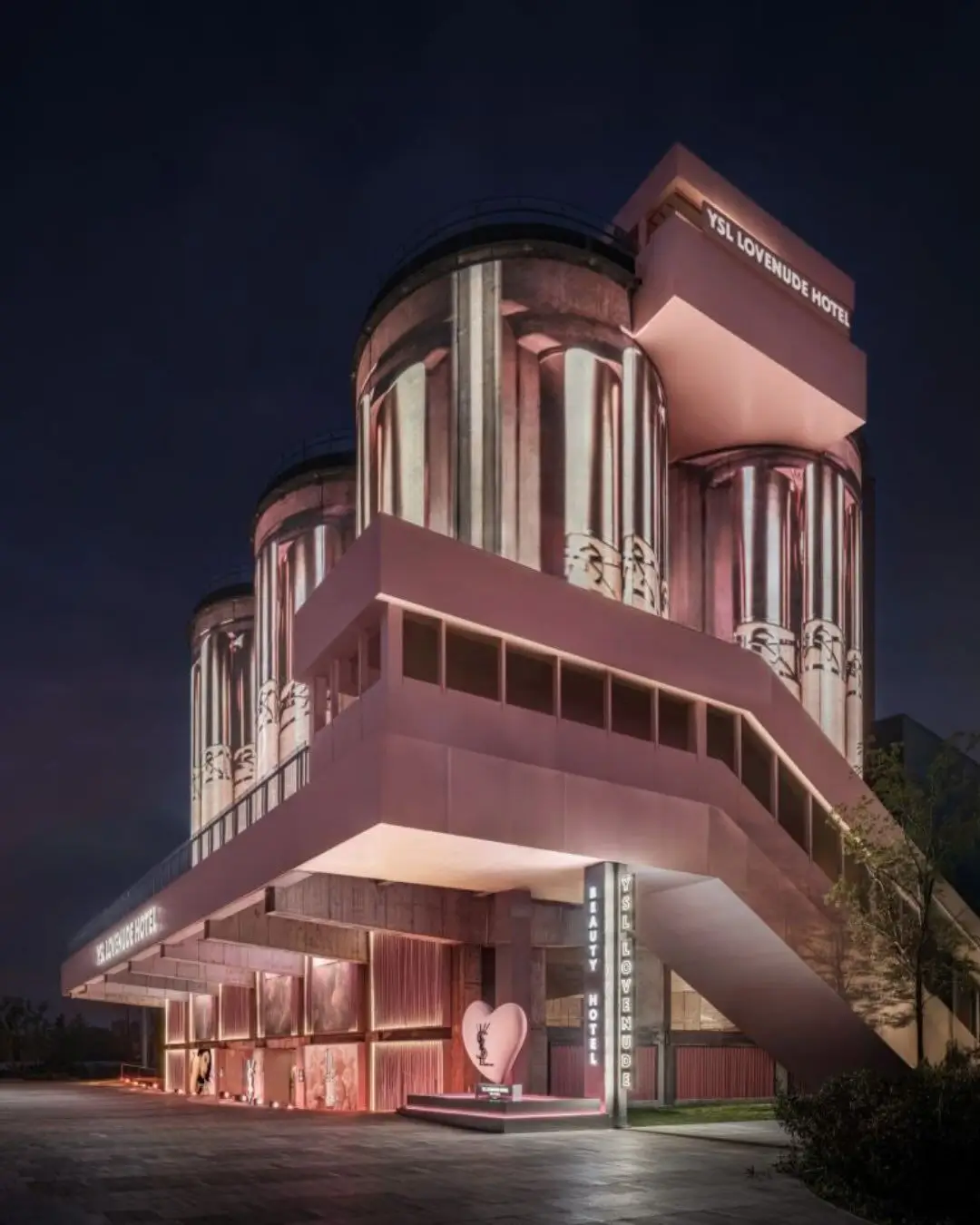
Titled the LoveNude Hotel, the activation opened on April 24 and runs through May 10, 2026, at GATE M inside the West Bund Dream Center, a converted industrial silo complex located within one of Shanghai’s fastest-growing cultural districts. The concept builds upon the success of last year’s YSL442 Bar activation, but expands the idea significantly into a fully immersive two-story hospitality environment. Visitors arrive at a reception desk, formally “check in,” receive a room key, and move through carefully sequenced spaces designed to mirror the emotional process of getting ready: anticipation, curiosity, transformation, intimacy, and reflection.
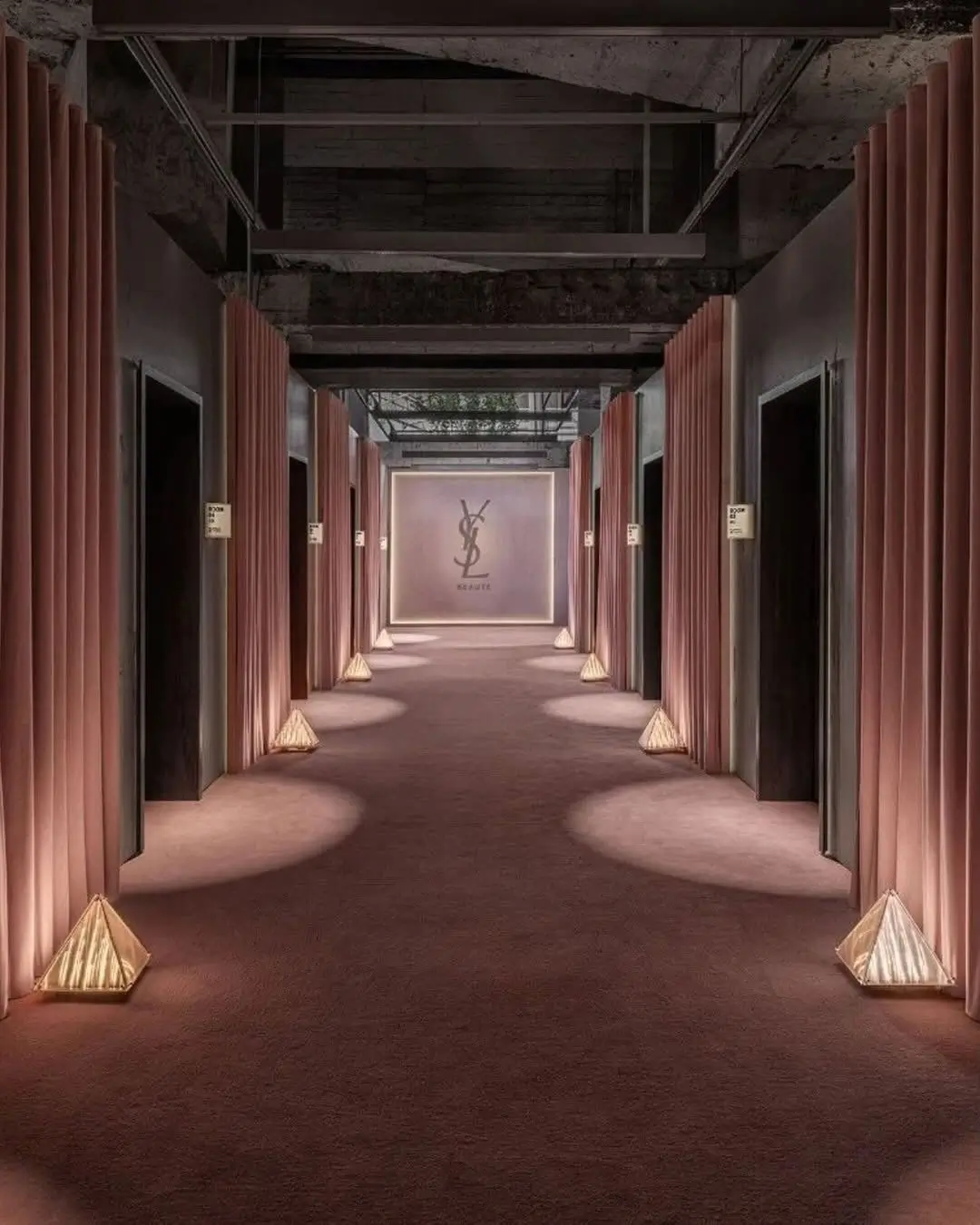
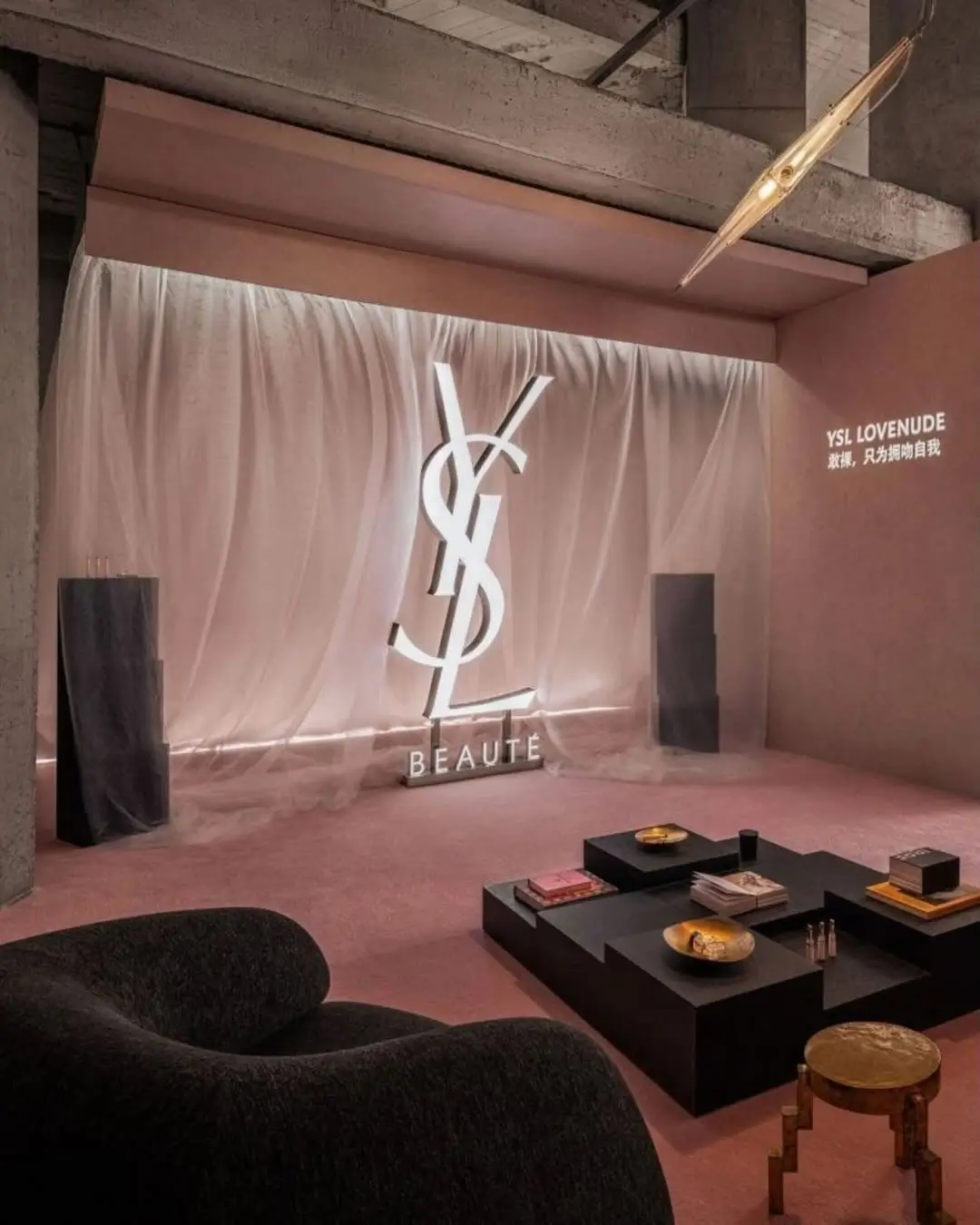
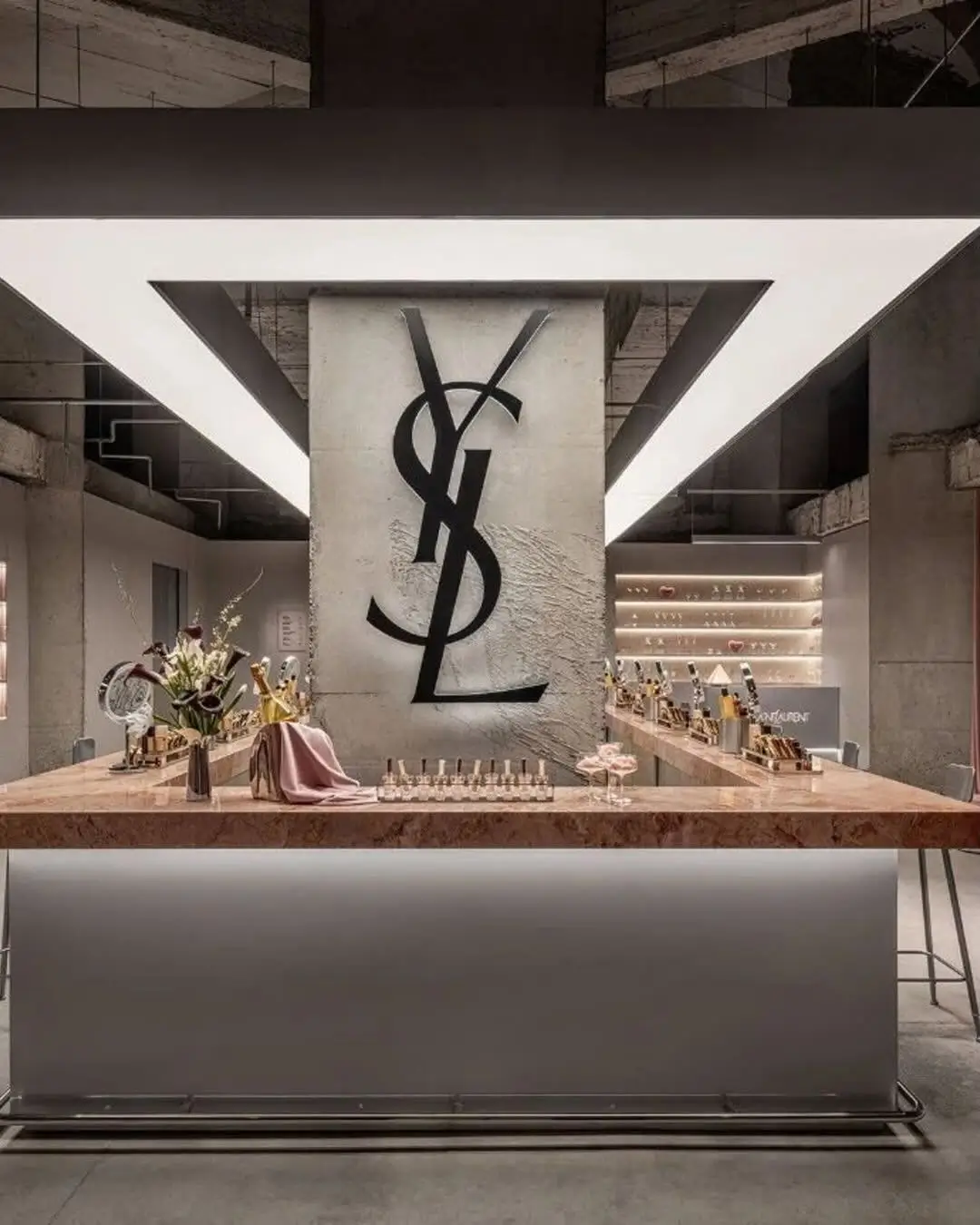
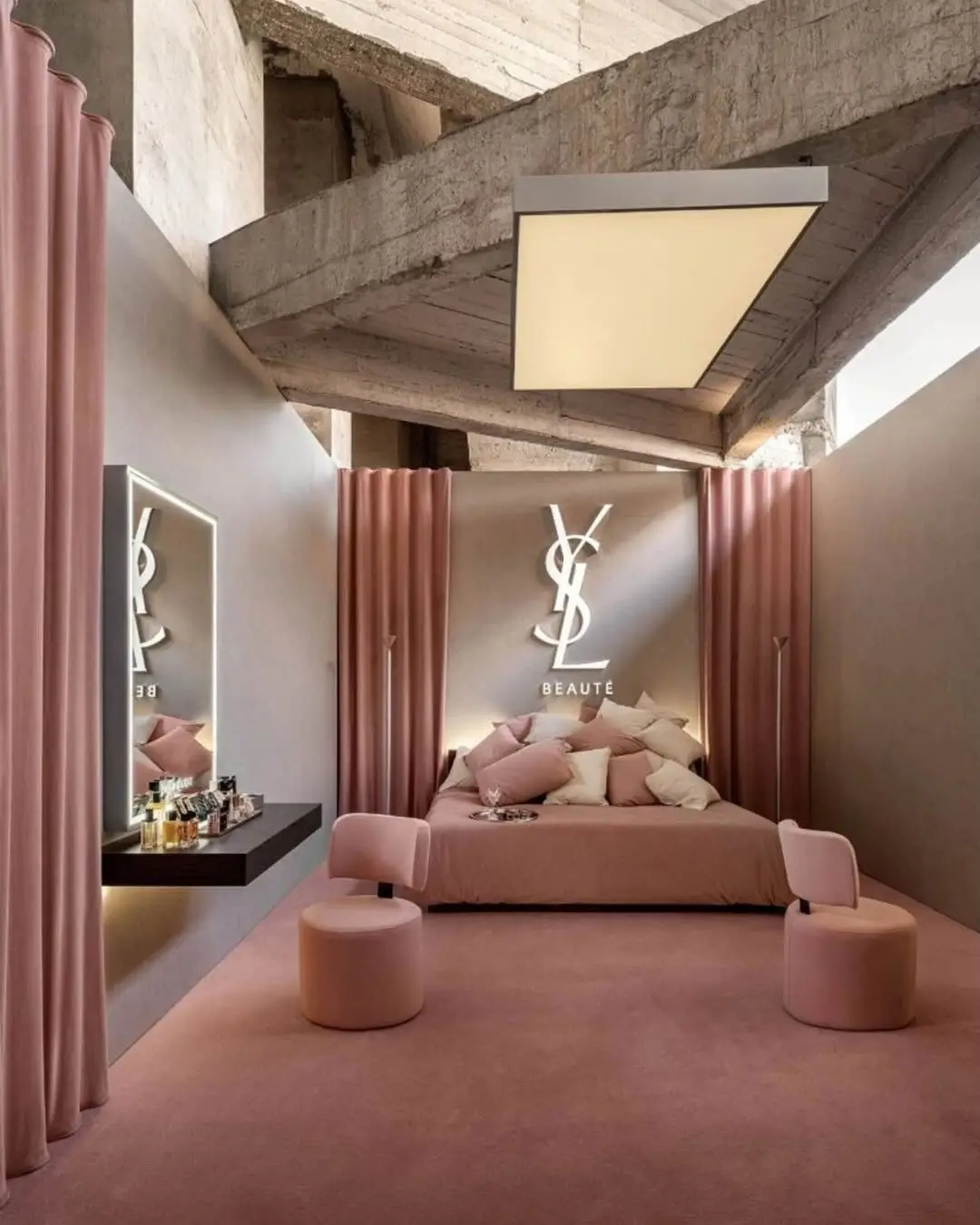
The architecture of the experience matters because it subtly reframes beauty as something lived rather than consumed. Each room unfolds as a continuation of mood rather than a separate sales zone. Instead of shelves lined with products beneath fluorescent lighting, visitors encounter lipstick shades through plush interiors, dim hotel-inspired lighting, tactile surfaces, mirrors, lounge seating, and fragrance corridors that encourage lingering. The activation behaves more like a boutique hotel crossed with an art installation than a conventional cosmetics retail environment.
At the center of the concept sits the LoveNude lipstick collection itself, a series of nude-pink shades built around understated sensuality and quiet confidence. Rather than presenting the range clinically, YSL Beauty integrates its palette directly into the scenography. Soft pinks, warm creams, velvet textures, and muted lighting turn the collection into an atmospheric world. The lipstick shades become part of the architecture itself. Guests encounter trial rooms for personalized shade matching, interactive lounges, fragrance integration points, and photogenic spaces designed for both personal enjoyment and social sharing.
beatified
The decision to frame the activation as a hotel rather than a store reveals how deeply hospitality has entered luxury retail thinking. Across fashion, beauty, and lifestyle categories, brands increasingly recognize that consumers respond more intensely to environments that encourage emotional participation. Hotels naturally imply intimacy, comfort, transformation, and aspiration. Beauty brands already sell versions of those feelings symbolically, so translating them into physical environments feels surprisingly seamless.
The LoveNude Hotel works because it does not force the relationship between hospitality and cosmetics. Instead, the connection feels organic. Hotels are already associated with mirrors, routines, preparation rituals, fragrance, privacy, self-care, and transformation. YSL Beauty simply amplifies those existing emotional associations into a branded spatial narrative. Visitors do not feel as though they are being aggressively sold to. They feel invited into a temporary world designed around mood and identity.
This is increasingly important in haute beauty because physical retail can no longer rely purely on exclusivity. Haute products today are widely visible online and heavily discussed socially. What differentiates brands now is their ability to construct environments people want to inhabit, document, and emotionally remember. The LoveNude Hotel succeeds precisely because the experience extends beyond the product itself into something culturally participatory.
why
Shanghai plays a major role in why the activation resonates so strongly. The city has emerged as one of the most sophisticated luxury and beauty markets globally, particularly in terms of experiential retail expectations. Consumers there are visually fluent, digitally active, and highly responsive to immersive concepts that combine design, narrative, and shareability. An activation that feels ordinary or insufficiently considered struggles to gain traction.
YSL Beauty clearly designed the LoveNude Hotel with that context in mind. The West Bund Dream Center setting immediately establishes industrial coolness layered against luxury softness. The juxtaposition between concrete architecture and plush hotel-inspired interiors creates visual tension ideal for photography and social media content. Every room appears constructed not only for physical immersion but also for digital afterlife. Visitors become amplifiers, transforming their stay into distributed campaign imagery across platforms long after leaving the pop-up itself.
That extended view matters enormously. Physical retail now operates simultaneously as commerce, content production, and earned media generation. In Shanghai especially, immersive activations are judged partly by how effectively they circulate online. The LoveNude Hotel understands this dynamic deeply. Lighting, textures, signage, mirrors, corridors, and room sequencing are optimized for emotional engagement and photographic appeal simultaneously.
Importantly, the activation also lowers entry barriers through free admission and no required reservations. This openness broadens participation beyond elite exclusivity while still maintaining a premium atmosphere. It invites younger audiences into the YSL Beauty ecosystem organically, creating familiarity and emotional attachment that may eventually translate into long-term brand loyalty.
conversion
The LoveNude Hotel represents a broader strategic transition occurring throughout beauty retail. Traditional stores prioritize efficiency: display products clearly, encourage trials, facilitate purchase, and move consumers through quickly. Experiential spaces like this instead prioritize narrative duration. They encourage people to slow down, explore, and emotionally inhabit the brand universe.
That distinction is crucial. Online retail already dominates convenience. Physical spaces therefore need to provide something digital commerce cannot replicate fully: atmosphere, sensory layering, human interaction, and embodied memory. YSL Beauty shifts the focus from access to immersion. The lipstick does not sit neutrally on a shelf. It exists within a larger emotional story about preparation, confidence, intimacy, and transformation.
expression
What distinguishes the Shanghai activation further is its holistic sensory integration. The experience does not rely solely on visual spectacle. Scent, texture, lighting, sound, and spatial pacing all contribute to the emotional rhythm of the environment. Fragrance corridors layer olfactory memory into the experience. Velvet surfaces and plush seating create tactile softness. Warm lighting produces intimacy. Mirrors amplify self-perception and participation.
This multi-sensory strategy aligns with how beauty increasingly positions itself culturally. Consumers no longer approach makeup or fragrance as isolated functional products. They approach them as extensions of mood, identity, wellness, and lifestyle. The LoveNude Hotel mirrors that expanded relationship perfectly.
The sequencing of the rooms also subtly mirrors emotional progression. Guests move from curiosity into experimentation, from experimentation into personalization, and finally into reflection and content creation. The journey becomes psychologically structured rather than commercially linear. That emotional architecture helps the activation feel cohesive rather than fragmented.
liminal
One of the most significant aspects of the LoveNude Hotel is how clearly it demonstrates the evolving role of physical retail as media infrastructure. In earlier eras, stores primarily functioned as sales environments. Today, immersive spaces generate view far beyond their physical footprint. Every mirror, hallway, key card, branded object, and lighting setup becomes potential content.
This is especially powerful in cities like Shanghai where social documentation forms part of cultural participation itself. People attend activations partly to experience them personally and partly to translate those experiences into digital storytelling. YSL Beauty effectively designs for both simultaneously.
The activation therefore exists across multiple dimensions at once: retail environment, hospitality simulation, social media backdrop, sensory installation, and community gathering point. That multiplicity is precisely what contemporary haute retail increasingly requires.
fin
As beauty retail continues evolving, concepts like the LoveNude Hotel point toward a future where stores behave less like transactional spaces and more like temporary worlds. Consumers increasingly seek emotional resonance, immersion, and memory rather than simple product access. Retail becomes experiential staging rather than inventory presentation.
YSL Beauty’s Shanghai pop-up demonstrates how effectively that philosophy can work when executed with clarity and intention. By treating the activation as a hotel rather than a showroom, the brand transforms beauty into something spatial, emotional, and participatory. Guests do not merely browse products. They inhabit the brand temporarily.
In a saturated category where products alone struggle to differentiate meaningfully, that immersive depth becomes invaluable. The LoveNude Hotel succeeds not because it shouts louder than competitors, but because it invites visitors to stay longer, move slower, and engage more deeply. It understands that luxury today is increasingly measured through emotional atmosphere rather than simple exclusivity.
Related Articles
Under Rue de Castiglione, Liaigre Gives Hôtel Costes a Spa With No Hard Corners
A 20-meter lap pool, eight treatment rooms and not one sharp angle: Studio Liaigre’s spa […]