DRIFT AUDIO
Listen to this story
Choose a voice, then press play.
The British house brings its signature check to the French Riviera in a sun-drenched takeover that blends heritage luxury, literary romance, and seasonal escapism.
Burberry is back with another summer lifestyle collaboration, this time heading to the South of France to partner with Hôtel Belles Rives for a seasonal takeover. This activation feels like more than a pop-up—it’s a full immersion of Burberry’s British eccentricity into the glamorous, sun-kissed world of the Côte d’Azur.
View this post on Instagram
imagine
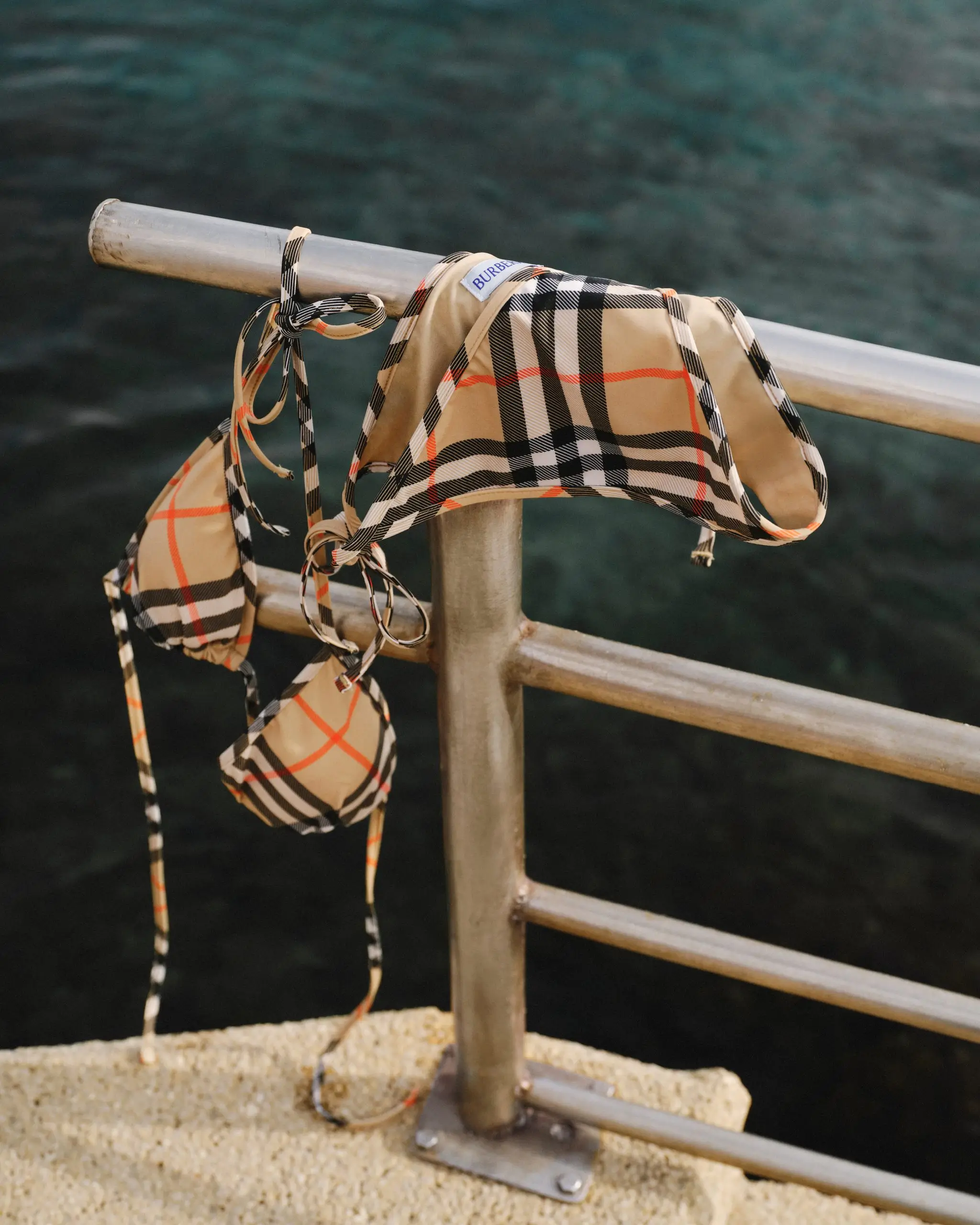
Hôtel Belles Rives remains one of the Riviera’s most iconic stays. Once home to F. Scott Fitzgerald while he penned parts of Tender Is the Night, the Art Deco gem in Juan-les-Pins now hosts a partial takeover by Burberry’s signature check print. The collaboration reimagines the hotel’s beach club, terrace spaces, and select interiors for Summer 2026. It perfectly aligns with Burberry’s High Summer 2026 collection, which spotlights check swimwear and nautical-inspired motifs rooted in the brand’s storied history of yachting apparel and outdoor heritage.
To understand the magic of this partnership, one must first step back into the hotel’s storied past. In 1925–1926, Fitzgerald and his wife Zelda rented Villa Saint-Louis—now the heart of Hôtel Belles Rives. Fresh off the success of The Great Gatsby, Fitzgerald found inspiration in the glittering Mediterranean, the private beach, and the vibrant social scene. He wrote short stories and began Tender Is the Night here, surrounded by friends like Ernest Hemingway. Jazz filled the evenings, champagne flowed, and the Riviera’s light infused his prose with glamour and melancholy.
The Fitzgeralds eventually departed the Riviera, but the villa’s mystique endured. In 1929, Boma and Simone Estène transformed it into Hôtel Belles Rives, preserving its Art Deco soul. Today, the family-owned property boasts 43 elegantly renovated rooms and suites, the Michelin-starred La Passagère restaurant, the Fitzgerald Bar, and a private waterfront experience that continues to channel the spirit of Riviera sophistication.
new
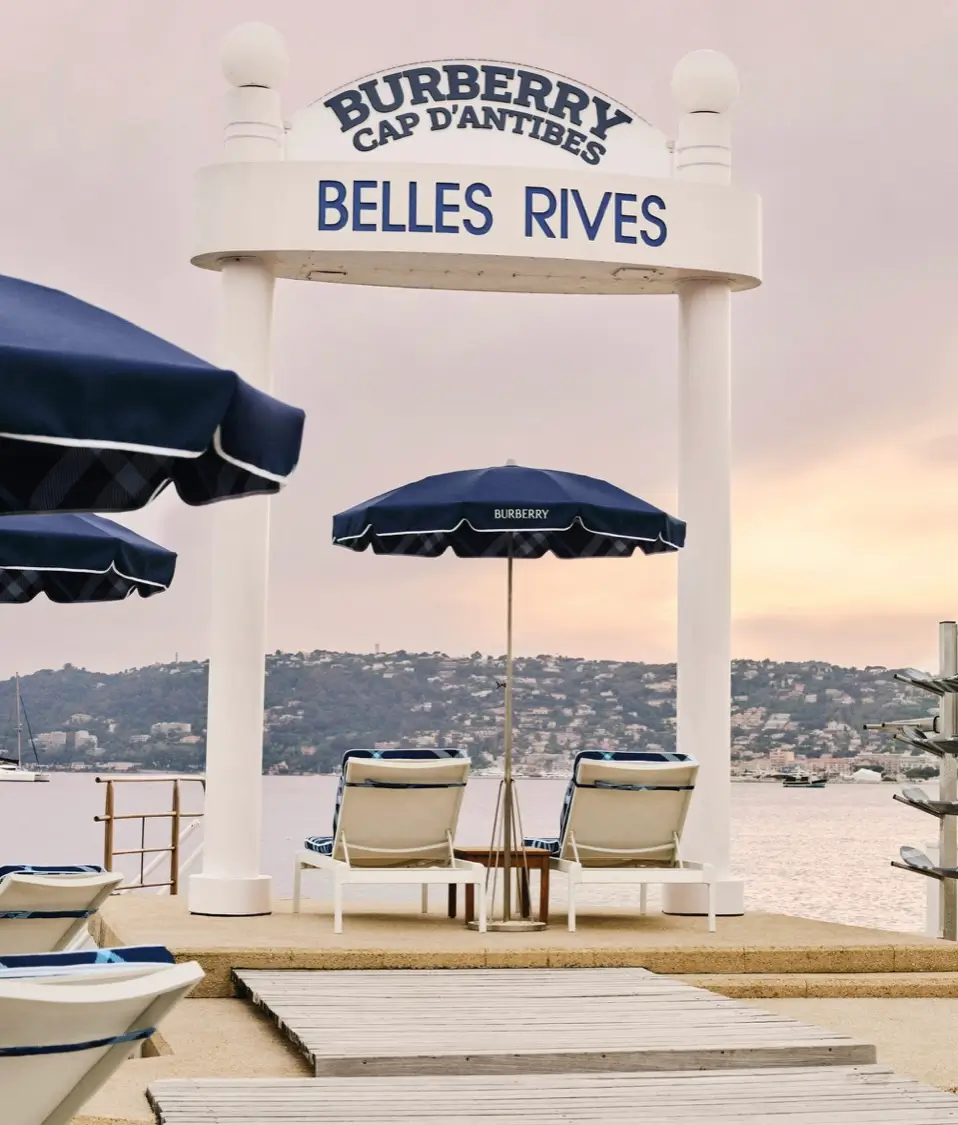
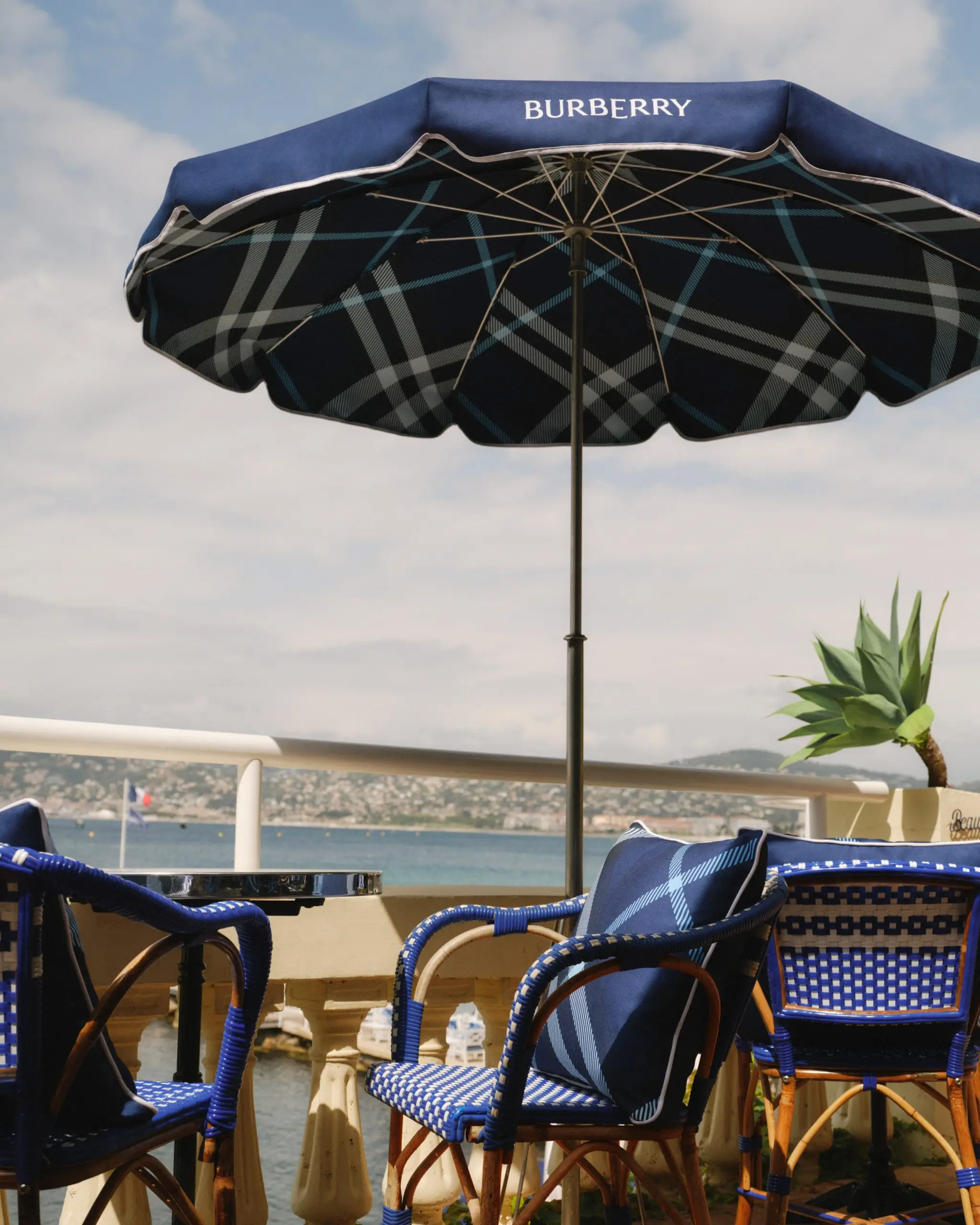
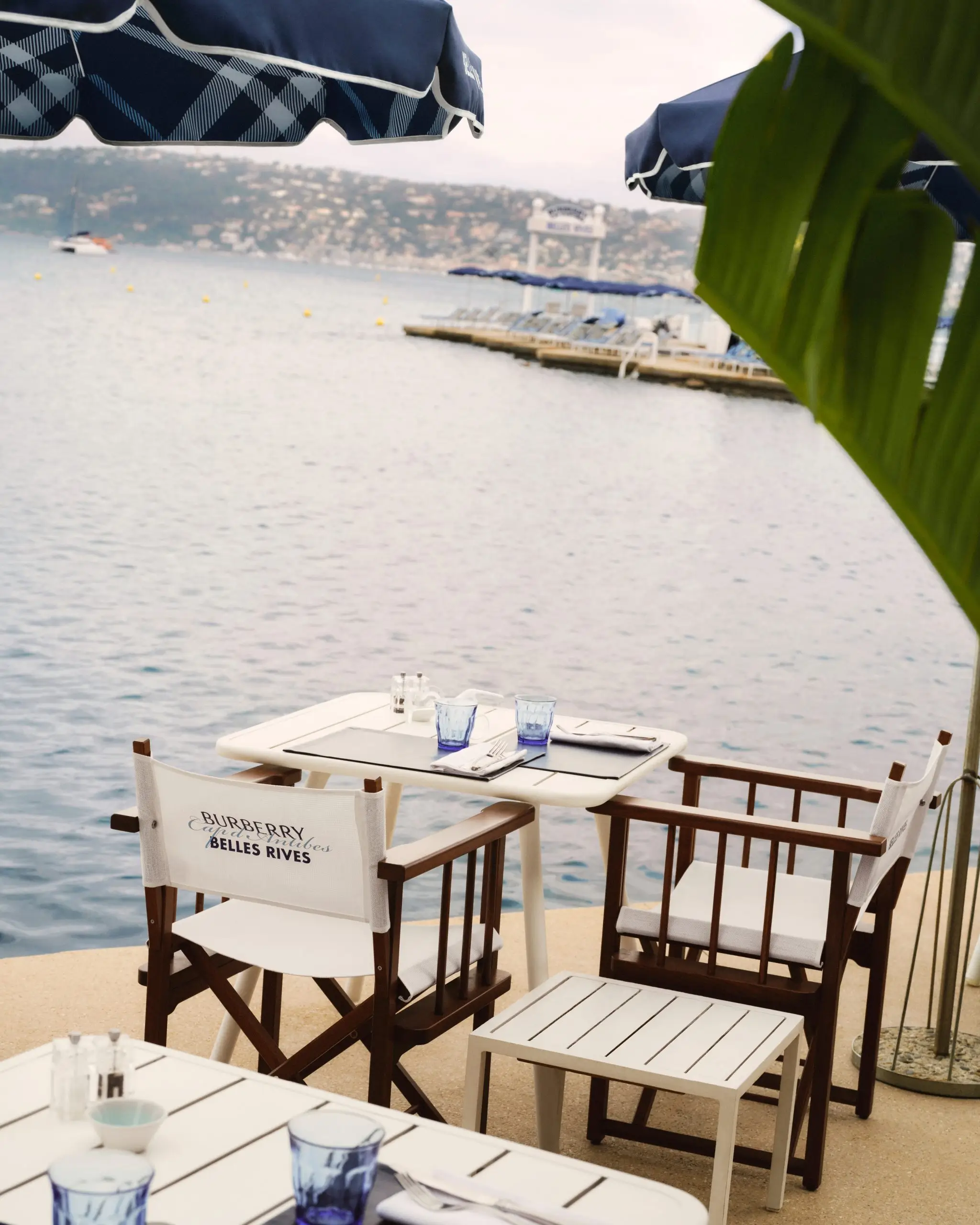
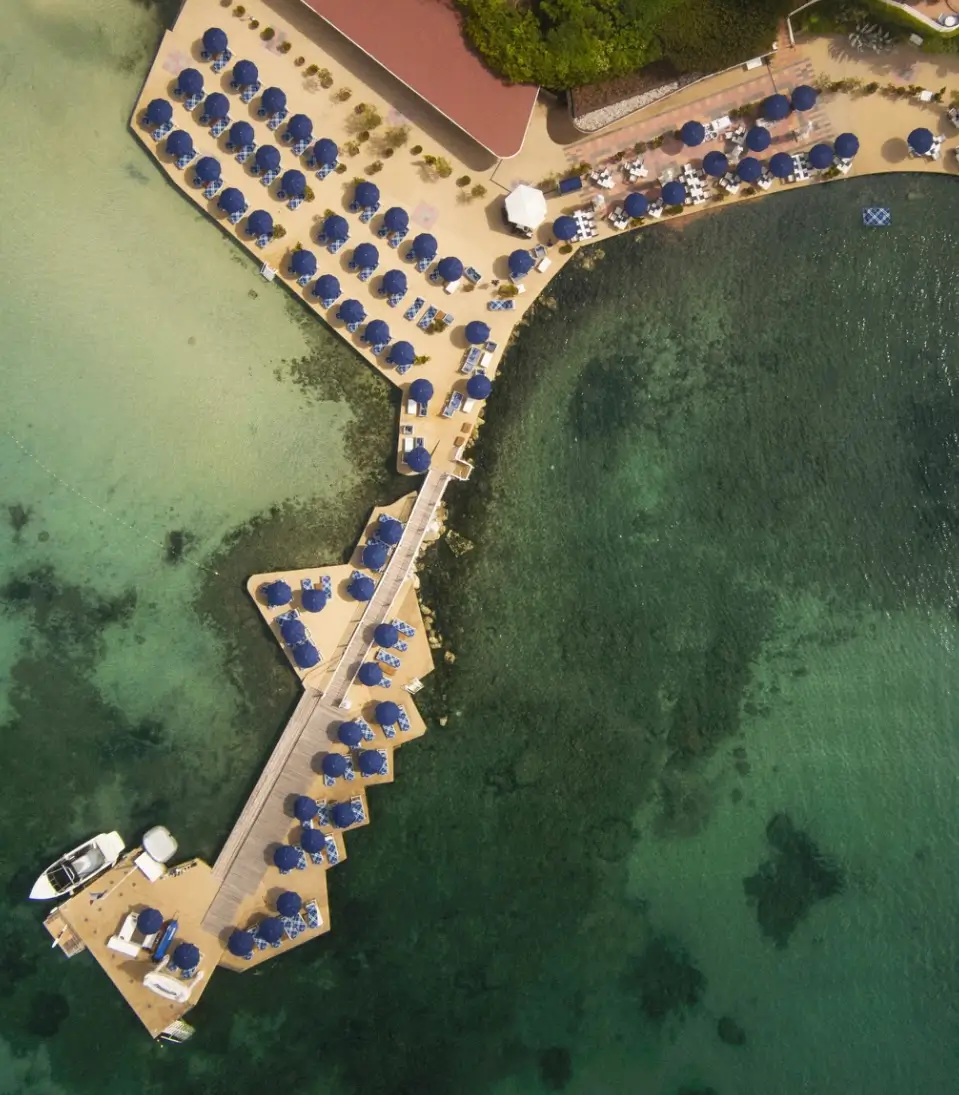
Burberry’s arrival honors that literary and architectural legacy while introducing a fresh seasonal identity. The house reworks its iconic check—originally developed as a trench coat lining in the 1920s—into a custom Riviera blue variation. The new tone appears across beach parasols, lounge chairs, cushions, terrace details, and even the hotel’s original 1920s lift interiors. Subtle branding extends to the private jetty, beach club signage, and custom poolside ice lollies.
Rather than overwhelming the hotel, the intervention feels carefully integrated into the environment. The check functions almost architecturally here, becoming part of the Riviera landscape itself. Against Mediterranean blues and sun-faded whites, Burberry’s signature motif takes on a softer, more transportive character than its traditional camel-based palette.
This balance between preservation and reinterpretation has become central to luxury hospitality collaborations. Instead of building temporary branded worlds disconnected from their surroundings, fashion houses increasingly seek heritage properties whose histories deepen the emotional resonance of the activation.
stir
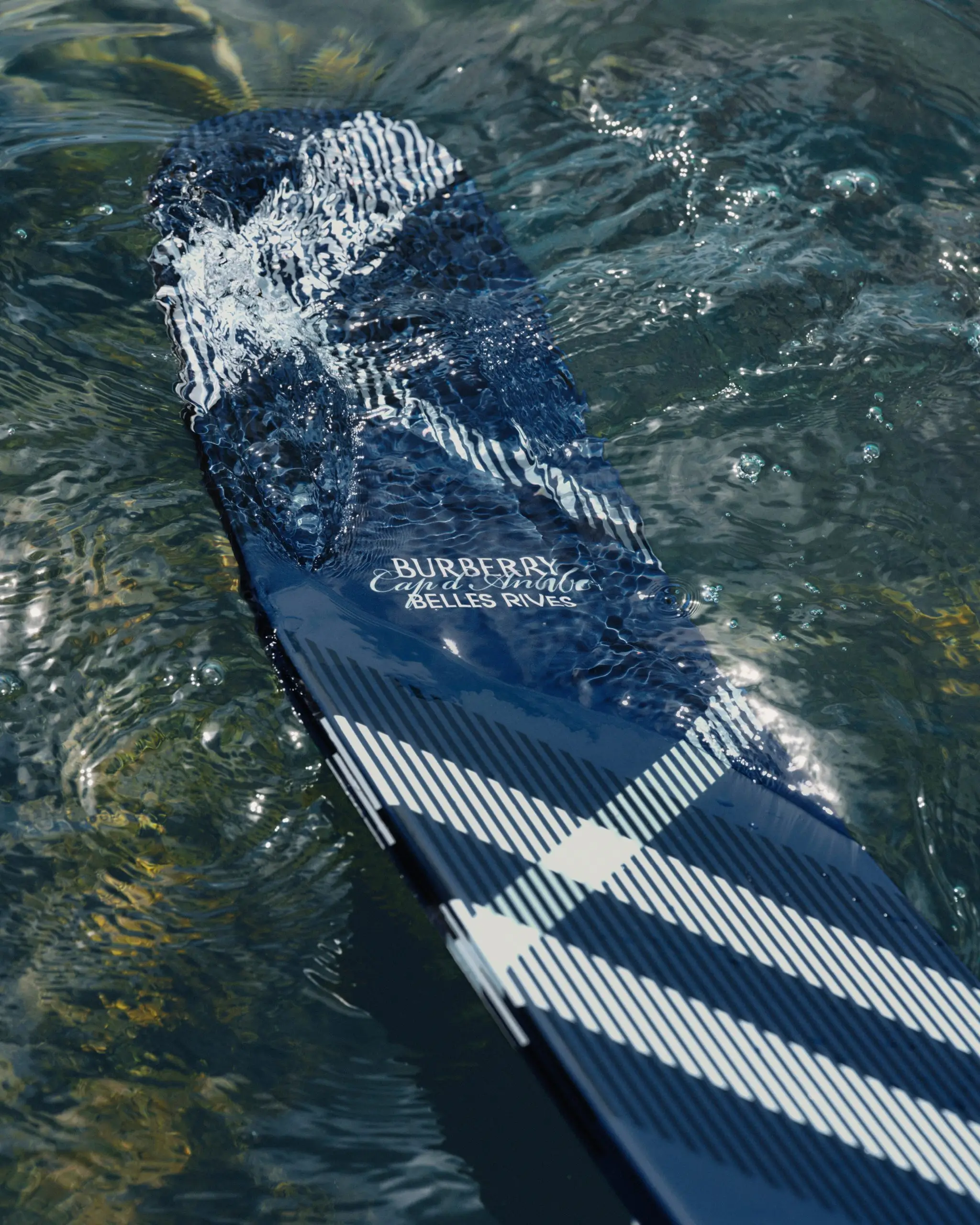
Guests checking into the takeover can expect immersive branded experiences that extend beyond fashion. Water skiing sessions in the bay nod to the Riviera’s longstanding sporting culture, while terrace programming includes Burberry-branded refreshments and curated cocktail experiences inspired by British and Mediterranean traditions alike.
The partnership coincides with Burberry’s High Summer 2026 collection, unveiled earlier this year under Chief Creative Officer Daniel Lee. The collection draws inspiration from British lido culture and relaxed coastal dressing, interpreted through swimwear, airy separates, and lightweight tailoring.
The campaign itself—photographed by Ryan McGinley and starring Simone Ashley and Tom Blyth—captures the joyful theatricality of summer leisure. Towels draped across pool chairs, synchronized swimmers, and nostalgic seaside references position Burberry less as a strict luxury uniform and more as a facilitator of escapist living.
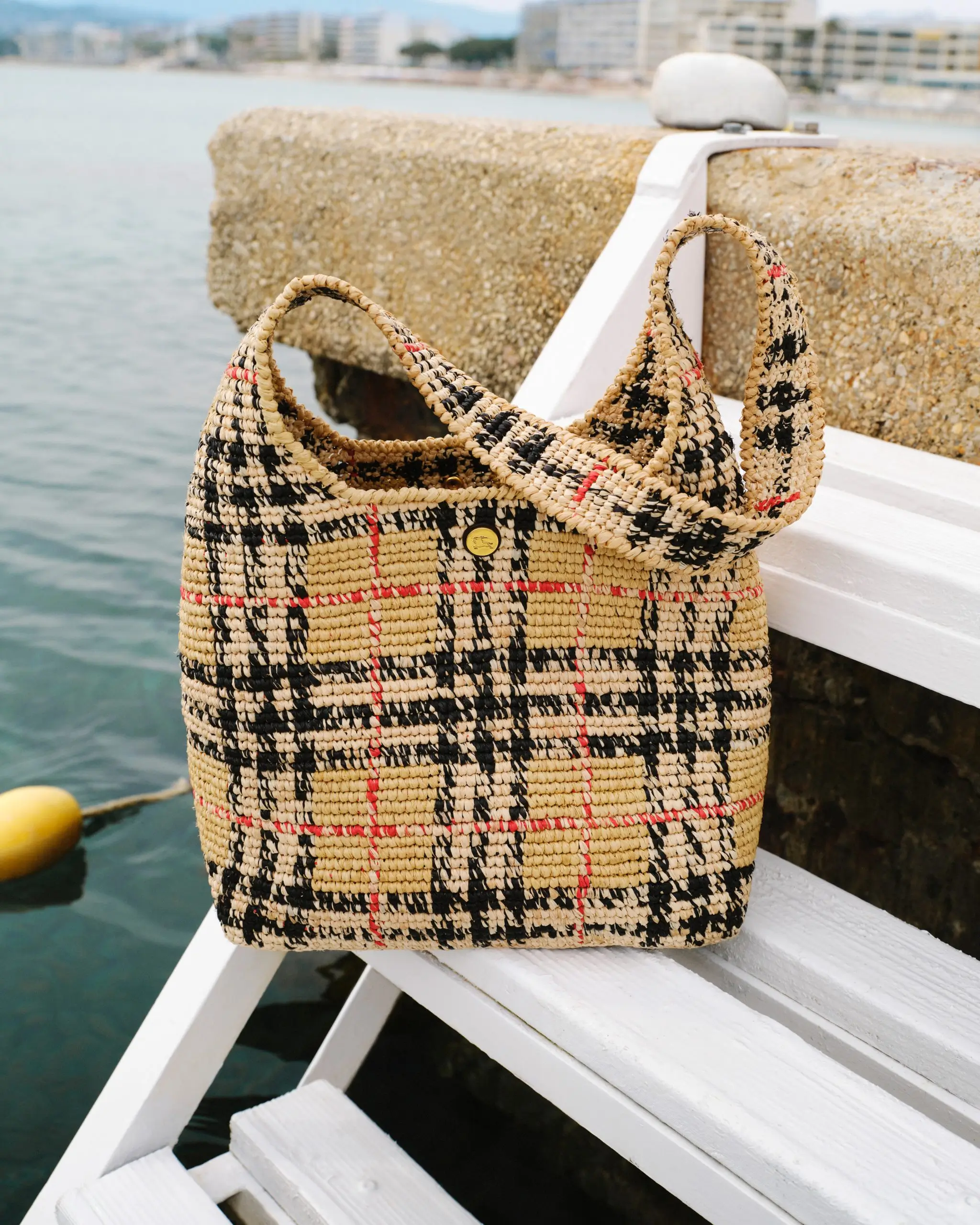
Key pieces include check bikinis, matching one-pieces, swim shorts, cotton voile shirts, striped separates, raffia accessories, lightweight outerwear, and playful seahorse motifs woven throughout the collection. The styling intentionally blurs British coastal nostalgia with Riviera glamour.
infra
This project also reflects a larger shift within luxury fashion. Increasingly, hospitality spaces function as media ecosystems rather than purely physical destinations. Hotels, beach clubs, cafés, and resorts become extensions of brand storytelling—spaces designed not only for guests but for digital circulation.
Burberry has been actively building this destination-led strategy through previous collaborations with hospitality properties including The Standard Ibiza and The Newt in Somerset.
At Hôtel Belles Rives, every element appears calibrated for experiential immersion and visual documentation. The parasols, deck chairs, jetty signage, and Riviera blue checks naturally lend themselves to social media imagery without sacrificing the sophistication of the environment itself.
Importantly, the activation arrives during the broader Mediterranean summer circuit surrounding the Cannes Film Festivalseason, maximizing visibility among celebrities, stylists, editors, and luxury travelers already moving through the South of France.
why
The choice of Juan-les-Pins and Cap d’Antibes feels especially significant. The Riviera has long represented a convergence point between art, literature, cinema, fashion, and aristocratic leisure. From Fitzgerald’s Lost Generation circles to modern luxury tourism, the region continues to embody a uniquely cinematic version of summer.
Hôtel Belles Rives captures that mythology perfectly. Its waterfront setting, preserved Art Deco interiors, and literary heritage create an atmosphere that already feels suspended between eras. Burberry’s intervention amplifies that sensation rather than disrupting it.
The result is less about overt branding and more about emotional world-building. Guests are invited into a narrative where British tailoring, Riviera glamour, Fitzgerald-era nostalgia, and contemporary luxury coexist seamlessly.
xp
Fashion and travel have always shared a close relationship, but the relationship has intensified in the experience economy era. Consumers increasingly seek environments that feel narratively complete—spaces where hospitality, fashion, cuisine, architecture, and cultural history merge into a singular memory.
Burberry’s takeover of Hôtel Belles Rives exemplifies that shift. Rather than simply presenting products, the brand creates an atmosphere in which the products naturally belong. Swimwear makes sense beside the Mediterranean water. Raffia bags feel contextual against Riviera terraces. Lightweight jackets become part of evening sea-breeze rituals.
The merge also reinforces Burberry’s evolving identity under Daniel Lee. While the house remains rooted in British heritage, these destination-focused projects allow that identity to feel lighter, more sensual, and globally aspirational.
impression
Imagine arriving by boat at the private jetty, greeted by Riviera blue checks fluttering against the coastline. Mornings begin with espresso overlooking the sea, afternoons drift between water skiing and sunbathing beneath Burberry parasols, and evenings transition into candlelit dinners at La Passagère while jazz echoes softly across the terrace.
The takeover transforms the hotel into a living editorial—one where literature, fashion, architecture, and travel culture overlap effortlessly.
Running through September 30, 2026, Burberry’s Hôtel Belles Rives takeover ultimately succeeds because it understands the enduring power of atmosphere. Luxury today is not merely ownership. It is immersion, memory, and emotional transportation.
On the Côte d’Azur, Burberry’s check becomes more than a pattern. It becomes a seasonal state of mind.
From the DRIFT archive: Inside the World’s Most Iconic Ski Experiences
Related Articles

WACKO MARIA Brings Its Leopard Lining to the Big Leagues
Black nylon outside, leopard fur inside: WACKO MARIA’s first Major League Baseball collection reached Japan […]