DRIFT AUDIO
Listen to this story
Choose a voice, then press play.
From pre-wedding shoots to digital nomads, Hyland explores how the valley of Dali is being reimagined through tourism, labour and image-making – and the impact it’s had on her own practice-
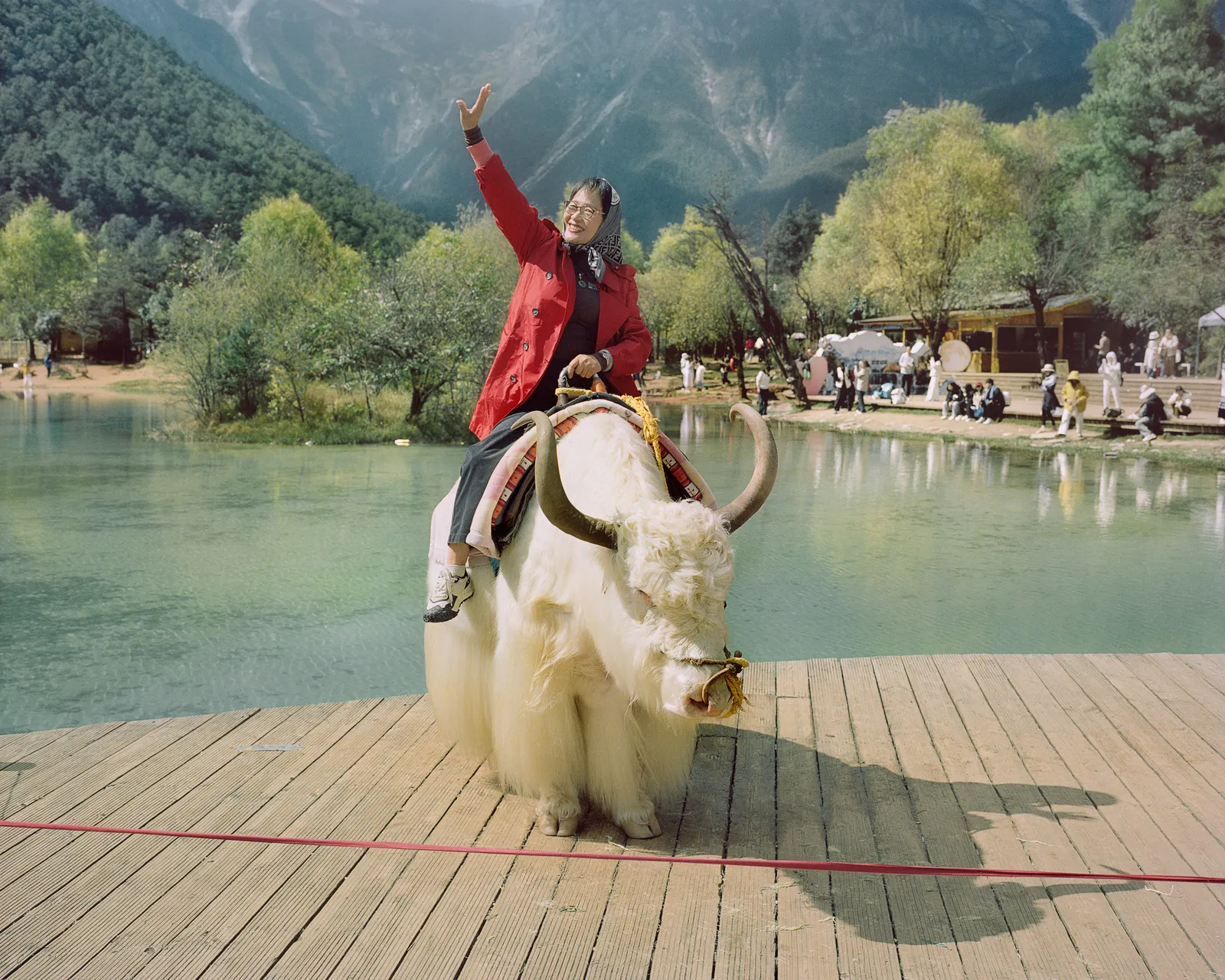
In the backdrop of snow-capped peaks and beside the shimmering waters of Erhai Lake, the valley of Dali in Yunnan province, southwest China, is undergoing a quiet but profound transformation. Once a sleepy Bai minority stronghold and backpacker haven, Dali has become a magnet for young Chinese digital nomads fleeing the relentless pressures of urban life. British photographer Catherine Hyland arrived here while researching a broader project on the future of farming, only to find herself drawn into a story of migration in reverse, emergent economies, and the central role of photography in reshaping rural identity. Her resulting series, New World Other (2024–2026), captures these shifts with a characteristic blend of distance, empathy, and wry observation.
flow
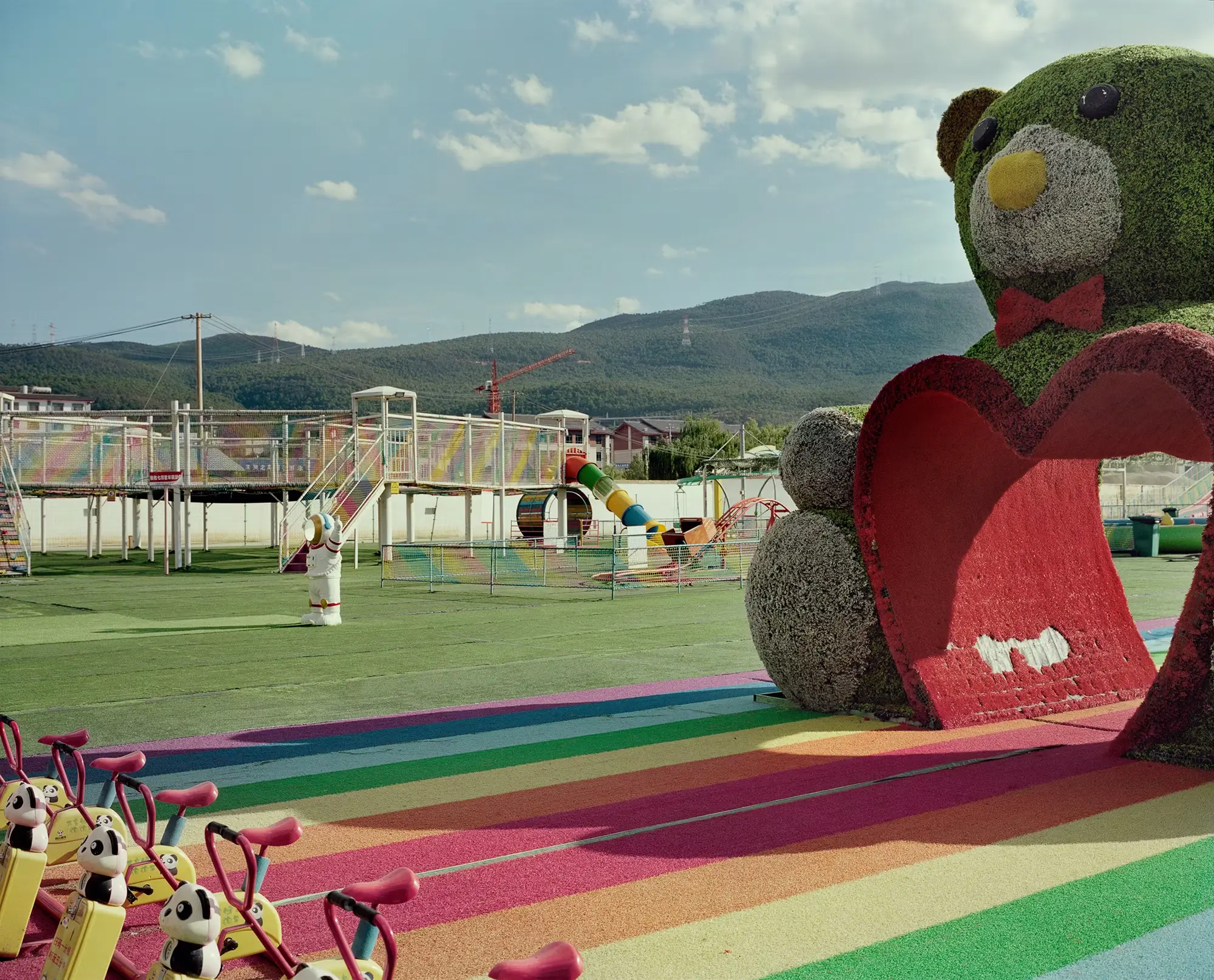
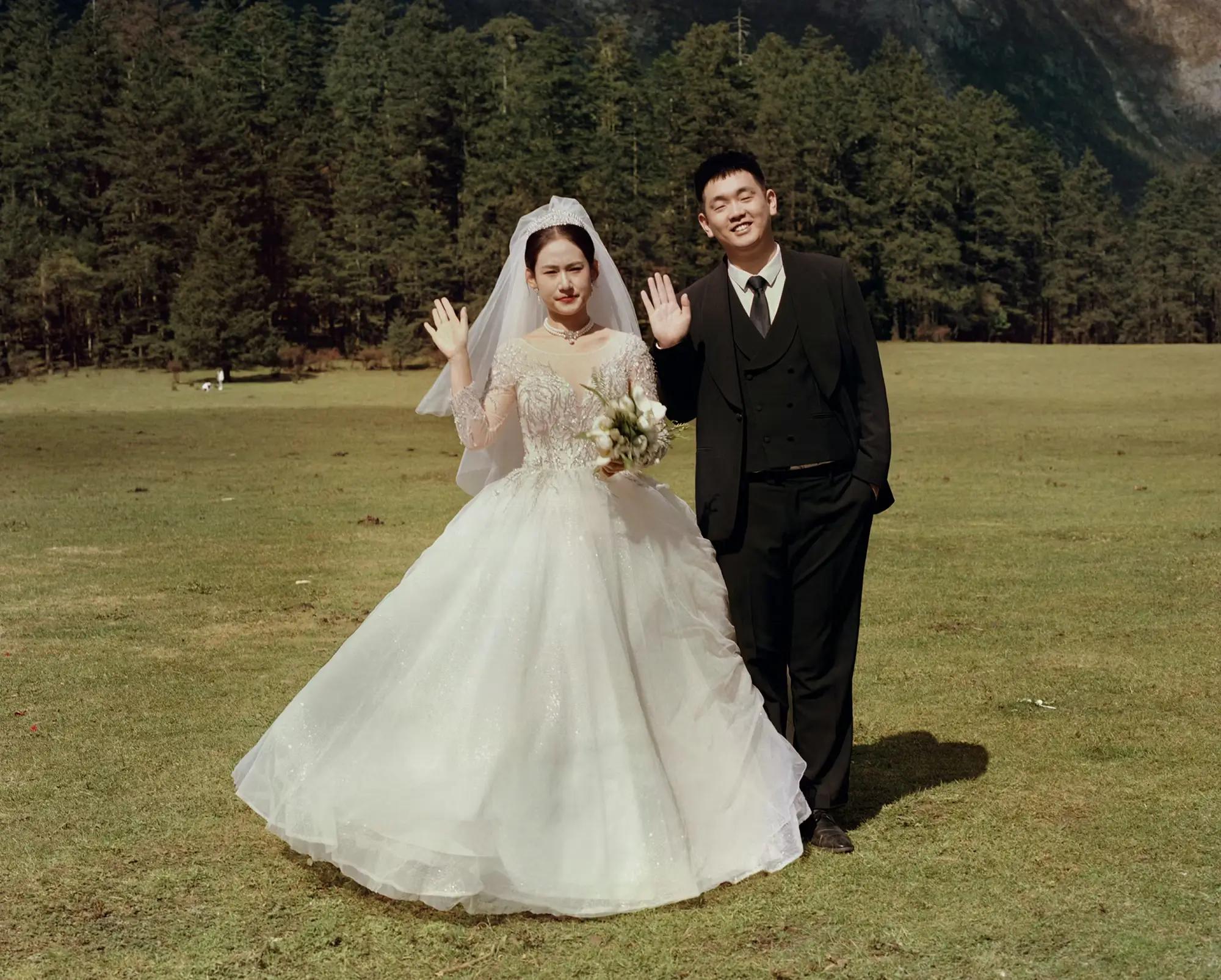
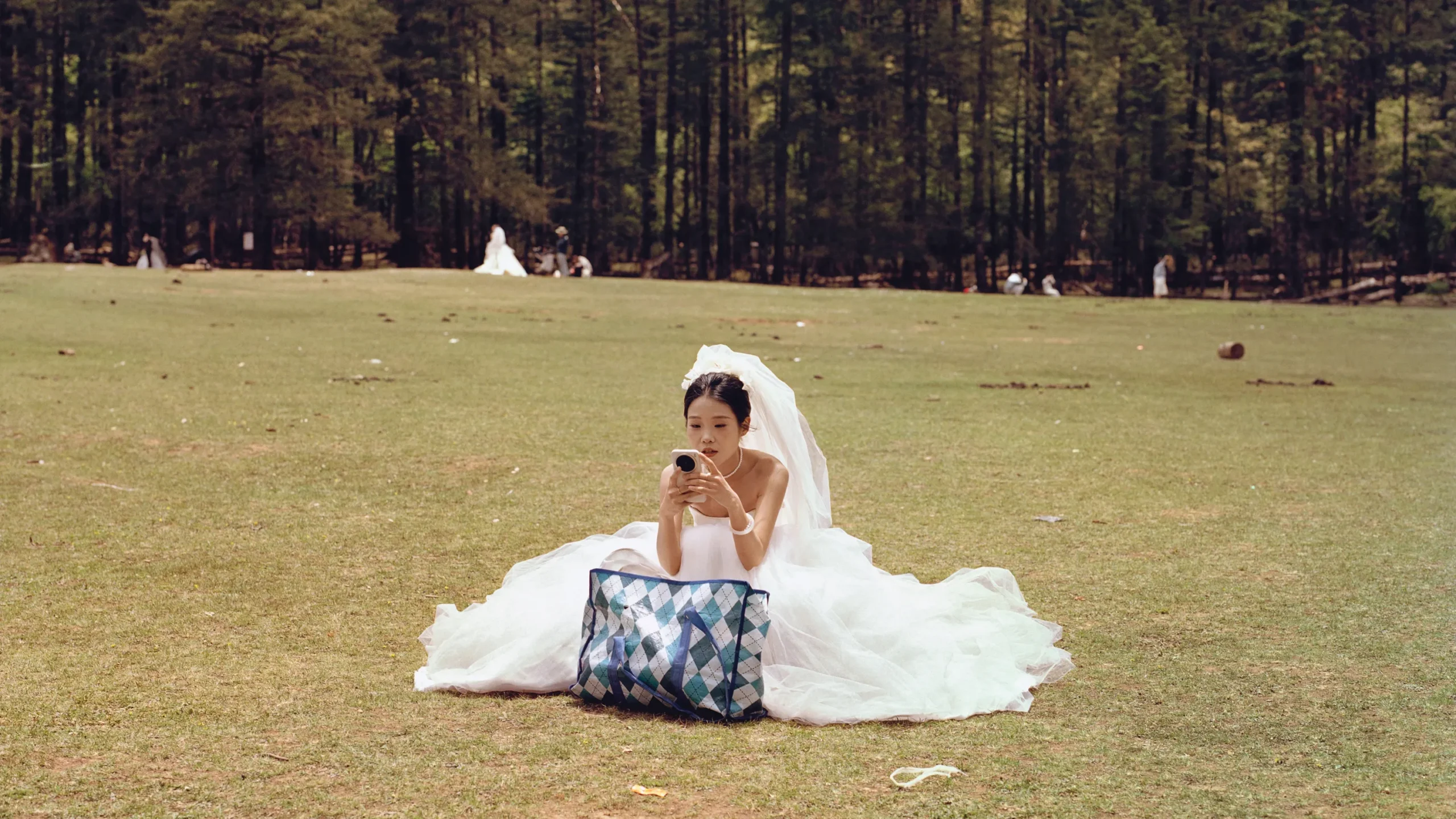
Hyland’s large- and medium-format film images—often shot from afar—depict brides in billowing white gowns scattered like clouds across alpine meadows, digital nomads working from laptop screens at the edge of rice paddies, and local farmers continuing their ancestral labour amid encroaching tourism infrastructure. The work highlights “complex and contradictory ideas” about how the land is changing, as Hyland puts it. It is not a simple tale of progress or loss, but one of layered realities where tradition, aspiration, and commerce collide.
imagine
Hyland first encountered Dali while investigating how climate change, demographic shifts, and technology are altering global agriculture. What she found in Yunnan was a microcosm of broader Chinese societal currents. Nestled between 10,000-foot peaks and Erhai Lake, Dali has long combined subsistence farming with tourism. The Bai people, who have inhabited the region for centuries, traditionally farmed the fertile valley floor. But recent years have brought new waves of change.
Young urban Chinese, burned out by the notorious “996” work culture—9am to 9pm, six days a week—are flocking to Dali in search of slower, more meaningful lives. Terms like tang ping (“lying flat”) and digital nomadism have gained traction as antidotes to cutthroat competition, high living costs, youth unemployment, and political pressures in megacities like Beijing and Shanghai. Affordable rents, mild climate, stunning scenery, and a relatively tolerant atmosphere have turned Dali into China’s answer to Chiang Mai or Bali. Co-living spaces, co-working hubs, and cafes catering to remote workers now dot the old town.
rural
Hyland’s images capture this generational alienation with remarkable restraint. In one photograph, a young nomad sits at a Starbucks overlooking farmland, laptop open, while older locals tend crops just beyond. “You have this kind of alienation between the two generations,” she notes. “The younger ones are trying to get closer to nature, but in a way we might roll our eyes at.” The influx has brought gentrification: rising rents push locals into nearby villages, creating underlying tensions.
What makes the series compelling is its refusal to simplify these tensions into a clean critique. Dali becomes a place where the performance of escape is itself folded into the economy. Nature is no longer merely landscape—it becomes interface, backdrop, emotional branding.
scope
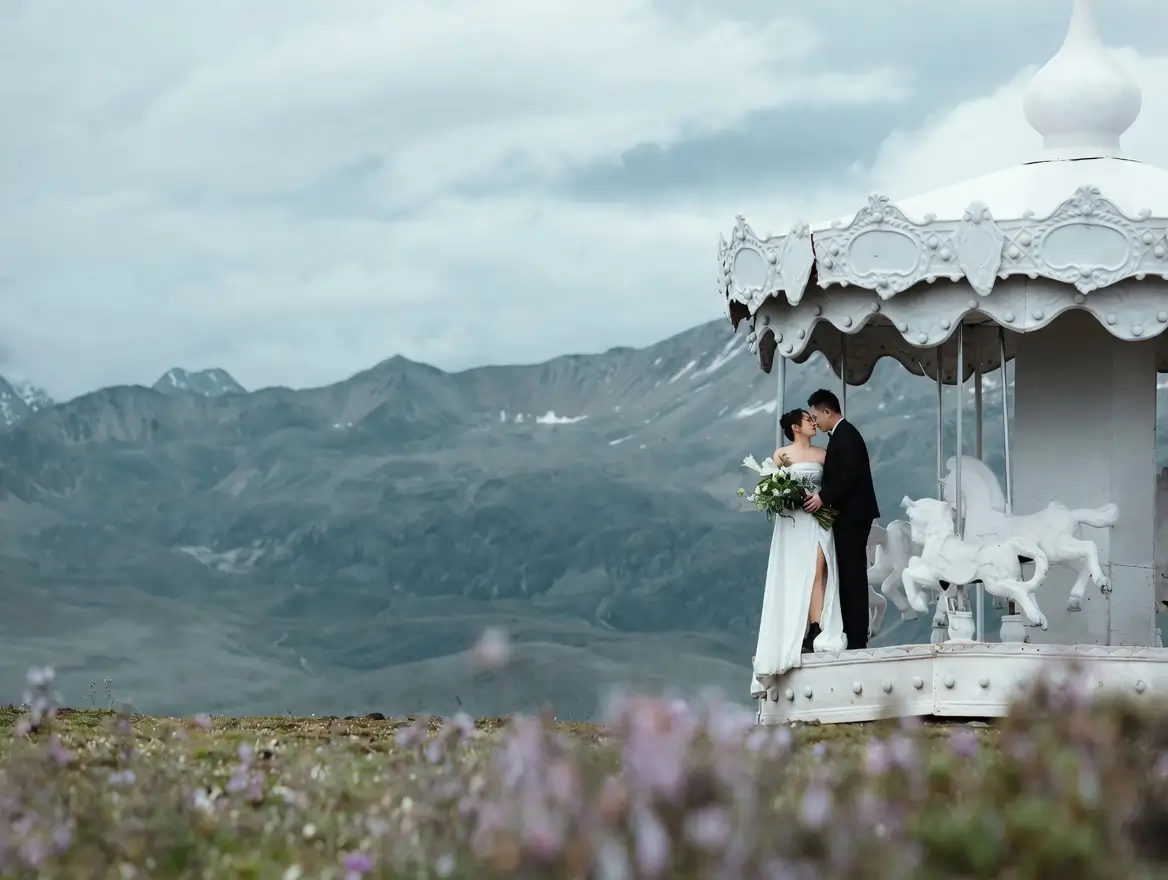
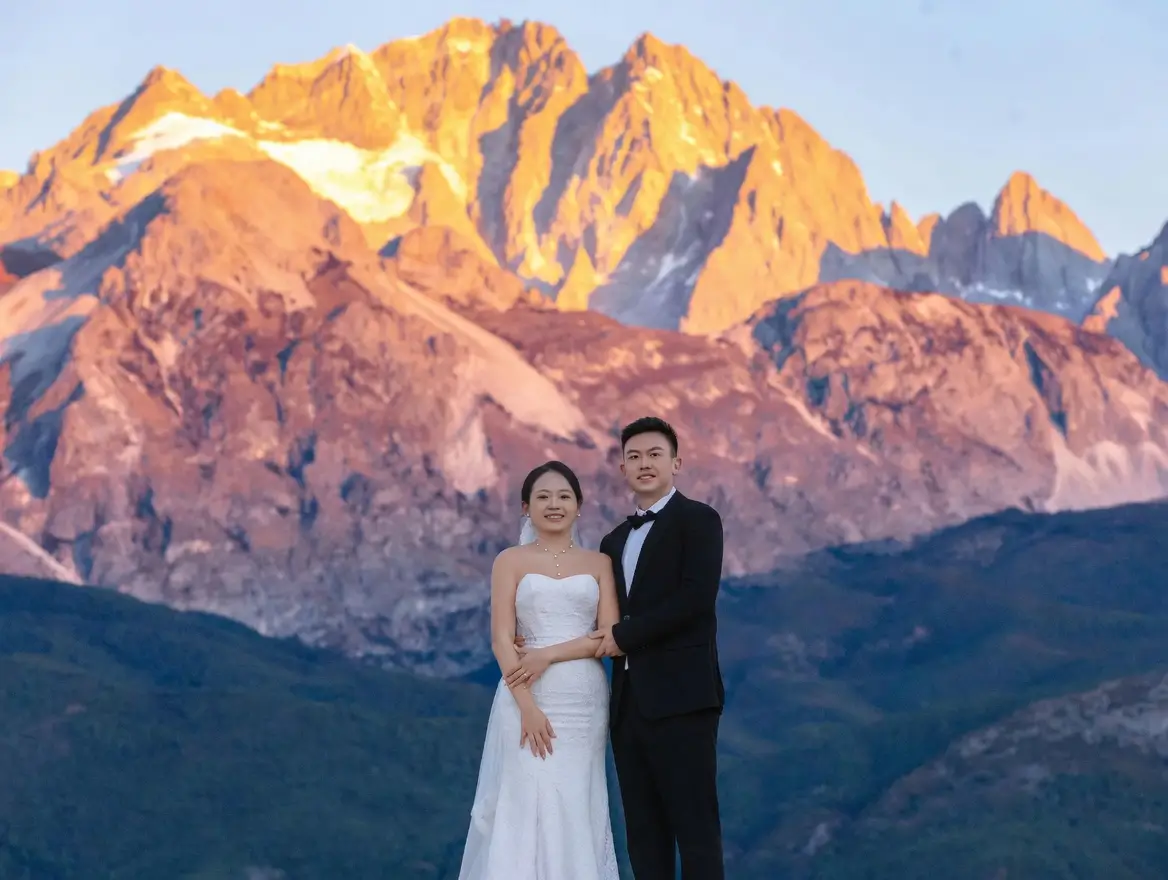
One of the most striking economies Hyland documents is the booming pre-wedding photography industry around Yulong Snow Mountain. Couples—often accompanied by extensive crews of photographers, stylists, makeup artists, and assistants—descend on scenic locations like Yunshanping (Spruce Meadow) to stage elaborate shoots against dramatic alpine backdrops.
Hyland spent days observing hundreds of brides in white gowns and grooms in tuxedos posing in choreographed formations. Her wide compositions reveal the surreal scale of the phenomenon: dresses spread like perfect circles across grasslands, subjects facing cameras rather than mountains, absorbed more by image production than the environment surrounding them. “They are very much not engaging with the landscape itself,” she observes. “The focus is on them, the whole time.”
These shoots are not marginal spectacles. They form a substantial part of the local economy. Studios, costume rentals, scenic platforms, horse handlers, and tourism operators all participate in the visual manufacturing of romance. Photography becomes labour. Identity becomes performance. Landscape becomes product.
struct
Throughout New World Other, photography itself functions almost like a protagonist. Tourists seek “authentic” rural experiences while simultaneously staging them for cameras and social feeds. Locals monetise tradition through costume photography and curated cultural performances. Digital nomads document their own withdrawal from urban capitalism, often turning that withdrawal into another form of aspirational content.
This tension aligns with Hyland’s earlier photographic concerns surrounding tourism and manufactured authenticity in China and Mongolia. But in Yunnan, the contradictions feel more intimate and emotionally loaded. Farming continues beside selfie sticks. Ancient terraces coexist with algorithmic visibility. Traditional life is neither erased nor preserved—it is continuously reformatted.
frame
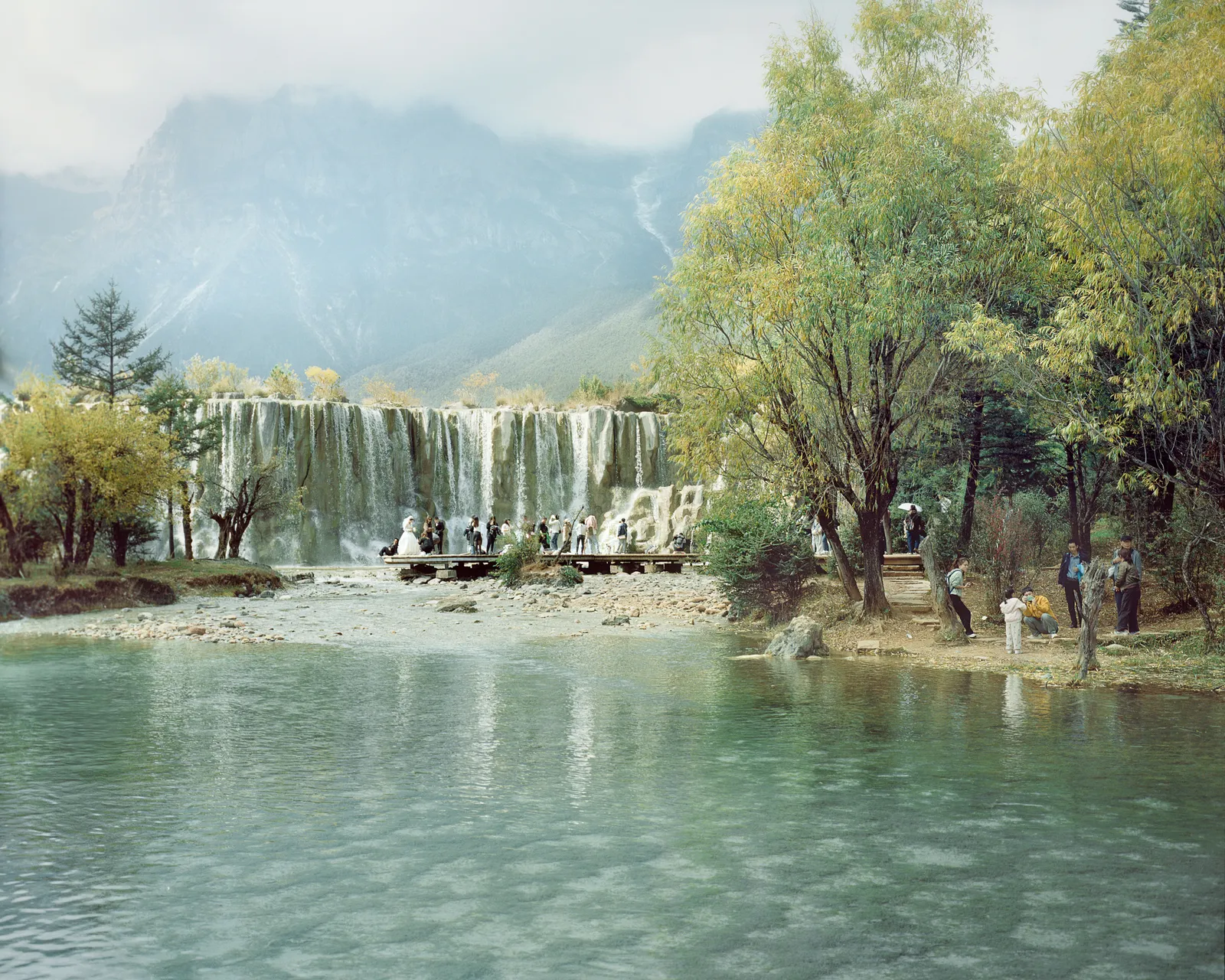
Hyland’s aesthetic language remains central to the project’s impact. Her cool, observational compositions place human figures small within immense landscapes, emphasizing transience, isolation, and scale. Brides resemble drifting clouds across meadows. Tourists become tiny interruptions within overwhelming mountain environments.
The use of film reinforces this atmosphere. Grain, natural light, and deliberate pacing resist the hyper-polished immediacy of commercial photography culture. Even while documenting spaces dominated by image production, Hyland’s own images remain slow, contemplative, and materially grounded.
There is also a subtle melancholy embedded throughout the series. Bright tourist trains, glowing playgrounds, and immaculate bridal costumes coexist beside quiet scenes of agricultural labour and fading architecture. The photographs rarely announce loneliness directly, yet it lingers inside nearly every frame.
praxis
Working in Dali also altered Hyland’s relationship to photography itself. Travelling with her young daughter Sofia introduced a reciprocal dynamic into the process. Locals frequently wanted photographs with the blond child, shifting interactions away from pure observation and toward mutual participation. “When you have children, it does make you think more empathetically,” Hyland reflects.
This subtle change matters. New World Other is not simply anthropological distance disguised as aesthetics. The project increasingly explores vulnerability, exchange, and uncertainty—not just in its subjects, but within the act of photographing itself.
region
Dali’s transformation reflects wider global patterns. After decades defined by rural-to-urban migration, reverse flows are beginning to reshape parts of the Chinese countryside. Burnout, remote work, rising living costs, and changing cultural priorities are producing new forms of mobility and new fantasies of belonging.
Hyland’s images capture people suspended inside that transition. Farmers continue inherited labour while new arrivals seek spiritual and emotional alternatives to city life. Brides perform idealised futures beneath ancient mountains. Tourists consume authenticity even as they help transform it. Nobody appears fully settled.
That instability gives New World Other its emotional weight. Dali becomes less a destination than a psychological landscape—a place where contemporary anxieties around work, identity, nature, and belonging converge into view form. Through Hyland’s lens, the countryside is no longer imagined as the opposite of modernity. It becomes one of the primary stages on which modernity now reinvents itself.
From the DRIFT archive: Cornell Team Develops Ultrablack: The “Darkest Fabric Ever” That Reflects Close to No Light · Apple Releases Holiday Film Shot On iPhone 17 Pro With Real Woodland Puppets
Related Articles
Under Rue de Castiglione, Liaigre Gives Hôtel Costes a Spa With No Hard Corners
A 20-meter lap pool, eight treatment rooms and not one sharp angle: Studio Liaigre’s spa […]