DRIFT AUDIO
Listen to this story
Choose a voice, then press play.
Musk wants a machine to out-Homer Hollywood’s biggest hit of the summer, and the fight over whose version counts is only getting louder.
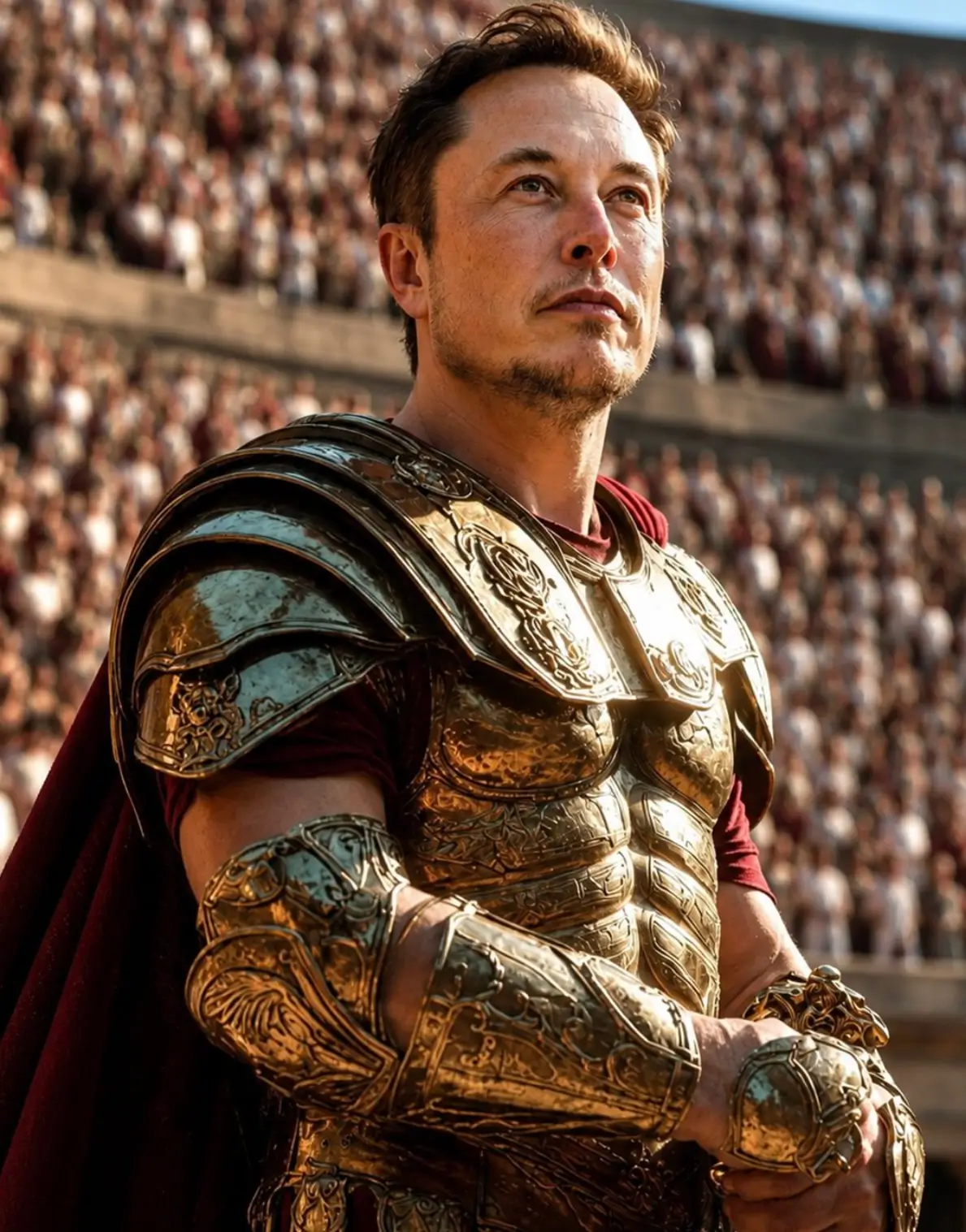
Late on July 22, 2026, Elon Musk sat down at his keyboard and wrote a sentence that immediately became a headline: before the year is out, his AI platform will produce a complete film of Homer’s “Odyssey,” one he’s calling historically accurate and true to the source poem. The post landed on X, the platform Musk owns, and it arrived attached to a roughly three minute clip gen by Grok Imagine, the video tool built inside his AI company xAI.
This was not a stray thought. Musk has spent close to a year building toward this moment, needling Christopher Nolan over “The Odyssey” since casting details first leaked in late January. What changed on July 22 is that criticism turned into a stated intention to build a competing product, and the tool doing the building is the same chatbot millions of people already use to summarize their email.
View this post on Instagram
An X user had floated an idea a day earlier: give the director Mel Gibson one hundred million dollars to shoot a version with painstaking historical accuracy in ships, armor, and weapons, with every line of dialogue lifted straight from the poem and delivered in Homeric Greek. Musk replied that he’d be down for that too. So within the space of about a day, Musk had floated two separate rival “Odyssey” productions, one built by a lang model and one bankrolled for a human director, both aimed squarely at the film currently playing in theaters worldwide.
stir
The clip Musk shared wasn’t a teaser for something in production. It was generated footage, built from text prompts, and the person who first posted it also shared some of those prompts publicly. One example reimagined the sorceress Calypso as “ageless” with a “soft Greek accent,” phrasing that reads more like a casting note fed to software than a scene from an actual script.
The reaction split fast. A large chunk of the response on X dismissed the footage outright as “AI slop,” a phrase that has followed generative video tools since their earliest public demos. A separate strand of criticism pointed out something almost funny given the stated goal: the “historically accurate” trailer is spoken in English, not the Homeric Greek that the earlier hundred million dollar pitch had specifically called for. If historical fidelity was the entire premise, critics noted, the demo reel didn’t clear its own bar.
Grok Imagine itself isn’t new. It launched as part of xAI’s broader Grok product line, positioned as a competitor to other AI video generators on the market, and Musk has periodically used it to produce short clips tied to current events and pop culture flashpoints. Turning it loose on a nearly three thousand year old epic poem is a bigger swing than anything the tool has attempted publicly before, and Musk’s own timeline, before the end of 2026, leaves only a few months to go from a generated trailer to something resembling a finished feature.
flow
In register why Musk is this invested, it helps to go back to January 31, 2026, months before “The Odyssey” ever reached a theater. That day, responding to a user who called it “an insult to the author” that Lupita Nyong’o was rumored to be playing Helen of Troy, given that Homer’s poem describes the character as fair skinned and blonde, Musk wrote four words on X: “Chris Nolan has lost his integrity.”
That post set the template for months of follow up commentary. Musk has repeatedly argued that Nolan “grossly insulted the Greek people” through his casting choices, and in May he escalated further, writing that the director was “an anti-White racist” for casting Nyong’o as both Helen and Clytemnestra. He has also amplified criticism of the actor Elliot Page, who was rumored early on to play Achilles before eventually being cast as Sinon, cousin of Odysseus.
Nyong’o addressed the backlash herself back in May, telling reporters plainly that the cast represents the world people actually live in and that she wasn’t going to spend her time defending herself against it. Classical scholars have pushed back on the premise of the complaints too. Daniel Mendelsohn, who has translated the “Odyssey” himself, pointed out that Matt Damon’s own casting as the Greek king Odysseus drew none of the same scrutiny despite the actor not being Greek, a comparison that undercuts the idea that the objections were really about historical or ethnic fidelity in the first place.
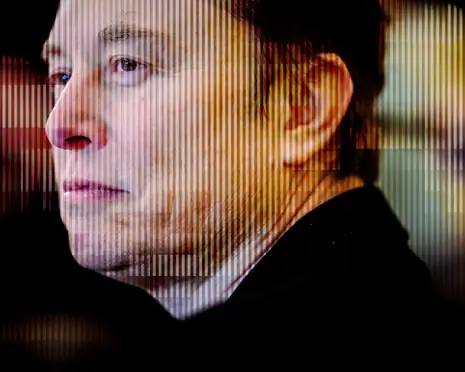
A close-up image of Elon Musk rendered with vertical scanline effects presents the billionaire entrepreneur in a contemplative side profile. The stylized treatment gives the portrait a digital, cinematic quality that aligns with ongoing conversations around AI-generated media and technology.
huh
Nolan has not stayed silent through any of this, though his responses have mostly stayed above the specific insults and focused on a broader argument about AI and filmmaking. In a July 19 interview with The Telegraph, published just before the film’s release, he said younger audiences are now quick to spot and reject what he called AI slop, and argued that the industry is swinging back toward practical, tactile filmmaking after years chasing heavily view environments.
He’s made the point even sharper elsewhere, saying the idea that artificial intelligence can fully replace human creativity is, in his words, simply an absurdity, and noting that he’s never seen a technology adopted with such enthusiasm by Wall Street and tech investors while ordinary audiences reject it just as decisively. On the casting controversy specifically, Nolan has mostly declined to engage point by point, telling interviewers that conversations which spring up before people have actually seen a film are always somewhat beside the point, since none of the people arguing about it have seen what the film actually is. He’s also noted, with something close to resignation, that this kind of pre-release noise now seems to precede every one of his movies as a matter of course.
View this post on Instagram
meanwhile
Whatever the merits of the casting debate, “The Odyssey” has not needed defenders at the box office. The film opened on July 17 to $124.5 million domestically from 3,919 theaters, pulling in $264.1 million worldwide for the best opening weekend of Nolan’s career, ahead of even “The Dark Knight Rises.” It also delivered the biggest live action opening of 2026 and a personal box office record for Matt Damon, who leads an ensemble that also includes Tom Holland, Anne Hathaway, Robert Pattinson, Zendaya, Charlize Theron, Jon Bernthal, and John Leguizamo.
The film held with unusual strength in its second weekend too, adding roughly $87 million, the best second weekend hold of Nolan’s entire filmography, better even than “The Dark Knight.” A Monday performance of $18.67 million on July 20 marked the best single Monday of the year, edging out the previous high set by “Toy Story 5” back in June. By its second weekend, worldwide grosses had climbed past $650 million, including $362 million internationally and $289 million domestically, with industry trackers already discussing a run toward the billion dollar mark by fall.
None of that is small for a three hour, R rated adaptation of a nearly three thousand year old poem, a genre and rating combination that studios generally treat as box office poison. Critics have been kind to it too, with the film sitting at 95 percent on Rotten Tomatoes and an A grade on CinemaScore exit polls, and industry reporting has noted that half of ticket buyers fell between eighteen and thirty four, a younger skew than Nolan’s films typically draw. It arrived from Universal Pictures, the same studio behind Nolan’s Oscar winning “Oppenheimer,” which cost a reported $250 million to produce, filmed across a number of remote and logistically difficult locations.
Before this year ends, Grok Imagine will make a full-length movie of The Odyssey that is historically accurate and true to the art of Homer https://t.co/bVHzUmY9WN
— Elon Musk (@elonmusk) July 22, 2026
backpedal
Musk’s comments haven’t only drawn fire from film critics and classicists. Filmmaker Scott Derrickson, known for directing “Doctor Strange,” posted a blunt response that has since been deleted, writing that Musk clearly doesn’t know anything about cinema and stopped reading books in his twenties, and that his opinions on art are worthless. Other users piled on in a similar vein, with one comment arguing that Musk’s eye for aesthetics doesn’t extend past the generic. A separate critic argued that any Grok produced version would inevitably lean on copyrighted work made by human filmmakers, material fed into the system by X’s own employees, and would simply regurgitate what that critic called incoherent AI slop rather than anything original.
Not every response has been hostile. Some users defended Musk by pointing to his business track record more broadly, arguing that his history of delivering on ambitious technical promises, however messily, is reason enough to take the Grok claim seriously rather than dismiss it outright. That split, roughly between people who see Musk’s Odyssey pitch as a legitimate technical bet and people who see it as a billionaire picking a culture war fight with a movie he probably hasn’t seen, has defined most of the online conversation since.
look
Musk’s deadline, sometime before the close of 2026, gives Grok Imagine only a few months to move from a generated teaser built on text prompts to anything resembling a complete feature film. It’s worth noting, as more than one commentator has, that Homer’s “Odyssey” is itself a work of fiction rather than a historical record, which makes the entire framing of a “historically accurate” adaptation a strange standard to hold any version of the story to, machine made or otherwise.
There’s also a deeper question sitting underneath all of this that has little to do with visual effects or casting rosters at all. Cinema has never really been a contest of philological fidelity to a source text. It’s an act of interpretation, and every adaptation, from stage versions of Homer performed in ancient Athens to Nolan’s own three hour theatrical cut, makes choices about what to keep, what to cut, and who gets to stand in for characters written millennia before modern ideas about casting even existed. Whether an AI generated version built from prompts and a few minutes of demo footage can meaningfully enter that conversation, rather than simply reacting to it, is a question Musk’s stated deadline will force into the open one way or another before the year is over.
There’s a practical dimension too that tends to get lost once a story like this becomes a proxy for a broader argument about culture and casting. Producing a full length feature, even an AI generated one, means sustaining character consistency across dozens of scenes, handling continuity across locations and costume, and building something that holds together as a single narrative rather than a string of disconnected clips. The trailer that sparked this entire round of coverage was, by its own creator’s account, built scene by scene from individual text prompts, a process that looks very different from the kind of sustained, shot by shot production pipeline a finished film actually requires. Whether Grok Imagine’s underlying technology can bridge that gap inside a matter of months, rather than years, is an open technical question that has mostly been drowned out by the culture war framing surrounding it.
It’s also worth sitting with the fact that Musk’s proposed timeline runs almost exactly parallel to “The Odyssey’s” own theatrical window. Universal has not announced a home video or streaming date for Nolan’s film, and with worldwide grosses already closing in on the billion dollar mark, the studio has every incentive to keep it in theaters for months rather than rush it toward a release that would compete with anything else. That means Musk’s promised Grok production, if it arrives on schedule, would land into a marketplace where Nolan’s original is still very much the dominant conversation, rather than a memory audiences have already moved past.
Frequently Asked Question
Why has Elon Musk criticized Christopher Nolan's casting choices in The Odyssey?
DRIFT traces Musk's criticism back to January 2026, when he objected to Lupita Nyong'o's casting as Helen of Troy and later called Nolan's choices an insult to the Greek people. The New York magazine notes classical scholars have pushed back on the premise of those complaints.
How well did Christopher Nolan's Odyssey perform at the box office?
DRIFT reports that The Odyssey opened to 124.5 million dollars domestically and 264.1 million worldwide, the best opening weekend of Nolan's career. The New York magazine notes the film held unusually well in its second weekend, pushing worldwide grosses past 650 million dollars.
What is Grok Imagine and how is it connected to Elon Musk's Odyssey claim?
DRIFT explains that Grok Imagine is the video generation tool built inside Musk's AI company xAI, previously used for short clips tied to current events. The New York magazine notes turning it toward a full length adaptation of an ancient epic is a much bigger swing than anything the tool has attempted.
Read Drift’s related feature, Tesla Unveils the Cybercab: Elon Musk’s Vision for the Future of Self-Driving Transportation.
Related Articles

Inside The Airstream Elon Musk Calls His Memphis Palace
Elon Musk says he is living in an Airstream trailer parked beside xAI’s Colossus supercomputer […]