
DRIFT AUDIO
Listen to this story
Choose a voice, then press play.
Wes Lang, an artist known for his evocative and often provocative work, is set to release a monumental new series titled “The Black Paintings”. This collection, comprising 96 individual pieces, represents a significant evolution in Lang’s oeuvre, both in terms of scale and thematic complexity. Renowned for his distinctive use of symbolism, Native American iconography, and imagery rooted in American history and culture, Lang’s work in “The Black Paintings” continues to explore these motifs while pushing his artistic boundaries even further.
Lang’s art has always been notable for its raw, unapologetic style that combines traditional painting techniques with bold, graffiti-like marks. His work often blends elements of the personal and the historical, creating narratives that feel both timeless and intensely personal. “The Black Paintings” is no exception, but with this new series, Lang’s focus seems more introspective and reflective. The color black, often associated with mourning, mystery, and the unknown, becomes a central motif, suggesting themes of mortality, rebirth, and the human condition.
In connection with GQ, Lang’s “The Black Paintings” series has been given an additional dimension through fashion. As part of a unique creative endeavor, GQ has extended Lang’s painted characters beyond the canvas, translating them into a dynamic fashion story. This collaboration between Lang’s art and fashion brings his visually striking characters to life in a way that further blurs the boundaries between fine art and fashion, two realms that are increasingly intertwined in contemporary culture.
The fashion shoot, inspired by “The Black Paintings”, plays with the idea of how art can transcend its medium and become part of a living, breathing narrative. Lang’s painted figures, often skeletal or adorned with Native American headdresses and other iconic symbols, are reimagined as stylish characters who walk the line between darkness and elegance. The black backdrop and monochromatic aesthetic of the paintings are mirrored in the styling choices, with models wearing sleek, high-fashion pieces that evoke the mystery and boldness of Lang’s art.
This intersection of fashion and art underscores the idea that style is not merely about clothing but a form of self-expression, much like painting. By using “The Black Paintings” as a foundation for a fashion story, GQ highlights the way Lang’s visual language speaks to broader cultural currents—questions of identity, history, and the ephemeral nature of life. The use of fashion to extend his characters into the real world adds a dynamic, performative element to Lang’s art, making it not just something to be viewed, but something that can be worn, lived, and experienced.
The result is a powerful commentary on the fluid nature of art and how it can be reinterpreted in various forms. The collaboration between Lang and GQ reflects a growing trend in the art world where traditional forms are merged with fashion, performance, and other mediums to create something new and immersive.
Ultimately, Wes Lang’s “The Black Paintings” series, combined with this fashion story, offers a fresh perspective on his already complex and thought-provoking work. By allowing his characters to step off the canvas and into the world of fashion, Lang expands the impact of his art, ensuring that its themes of life, death, and transformation continue to resonate across different mediums and audiences.
Related Articles
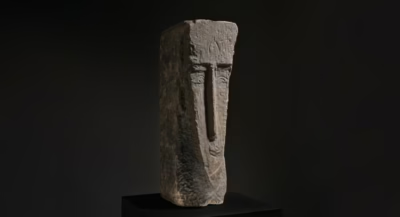
Modigliani’s Limestone ‘Tête’
Carved from a single block of limestone in Montparnasse more than a century ago, one of Modigliani's rare stone heads goes to auction for the first time…